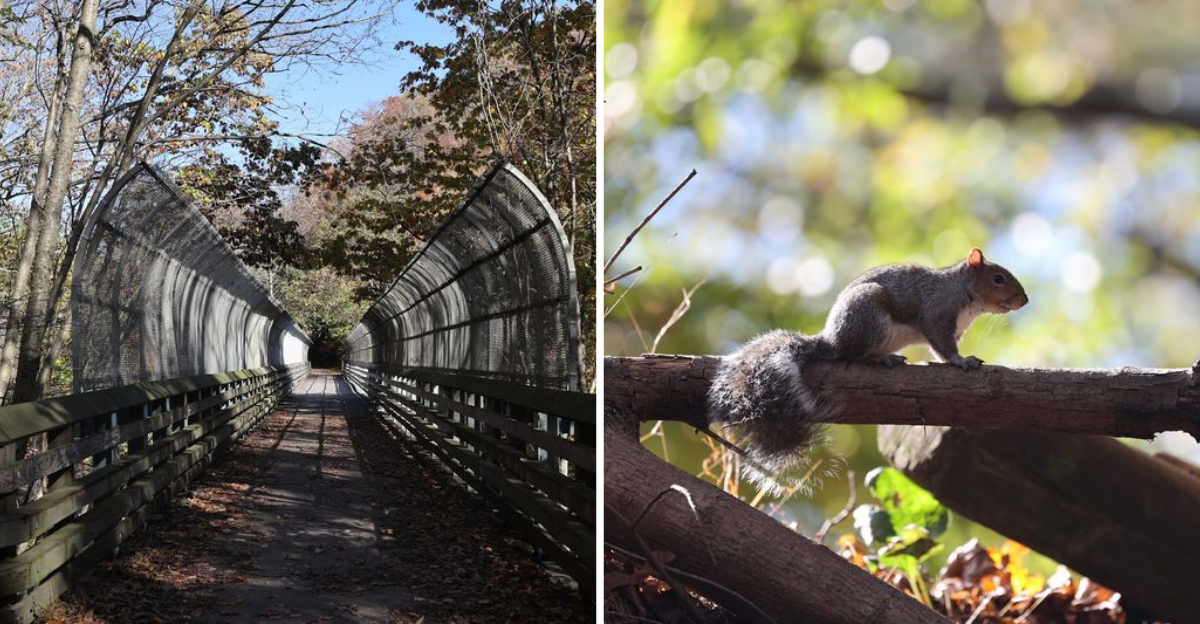
New Jersey has a way of recycling history; who knew abandoned railways could double as scenic gyms for people who hate treadmills?
What used to be trains rattling through is now a forest trail with trestles that feel like secret bridges to another era.
I once walked it on a crisp fall day and kept imagining the ghosts of commuters rushing past me. The mix of history and nature makes it feel like you’re sneaking into a storybook.
So tell me, would you rather hike a trail with trees alone or one that whispers old railway tales as you go?
It’s the kind of place that makes you slow down and appreciate both the past and the present.
The Railroad Roots That Started It All
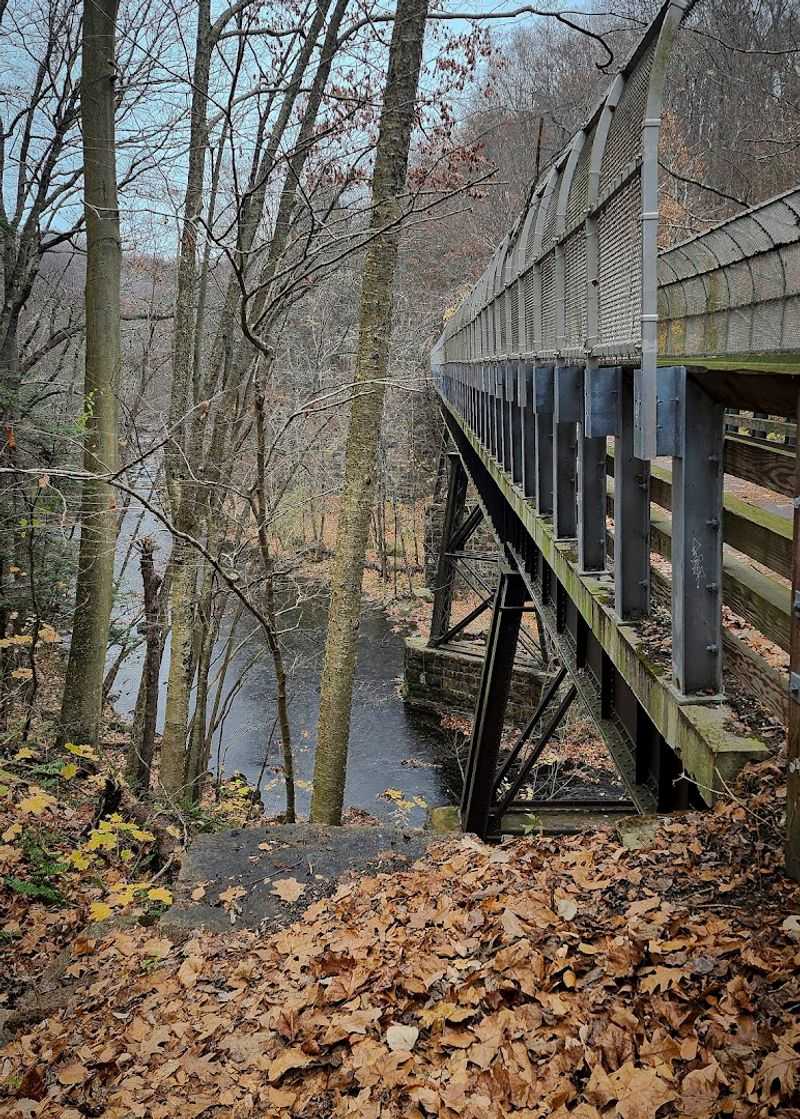
Back in 1876, this trail was not a trail at all. It was a working railroad called the High Bridge Branch of the Central Railroad of New Jersey, built specifically to haul iron ore from Morris County mines down to the Taylor Wharton Iron and Steel Company in High Bridge.
Passenger service eventually started in 1932 but lasted only three short years before it ended in 1935. Freight trains kept rolling through until 1976, when the line finally went quiet for good.
That industrial backbone is what makes walking here feel different from a typical nature path. You are literally stepping along a corridor that once carried raw materials through the New Jersey hills.
Small sections of original track still peek out from the ground near the High Bridge trailhead, sitting on old wooden ties.
Those remnants are easy to miss if you are moving fast, but slowing down to look at them connects you to something real.
The transition from working railroad to public trail happened in the mid-1990s, when Columbia Gas Transmission laid a pipeline beneath the old railbed and the surface rights passed to county parks departments.
History and recreation, sharing the same ground.
Crushed Stone, Flat Grade, and Pure Accessibility
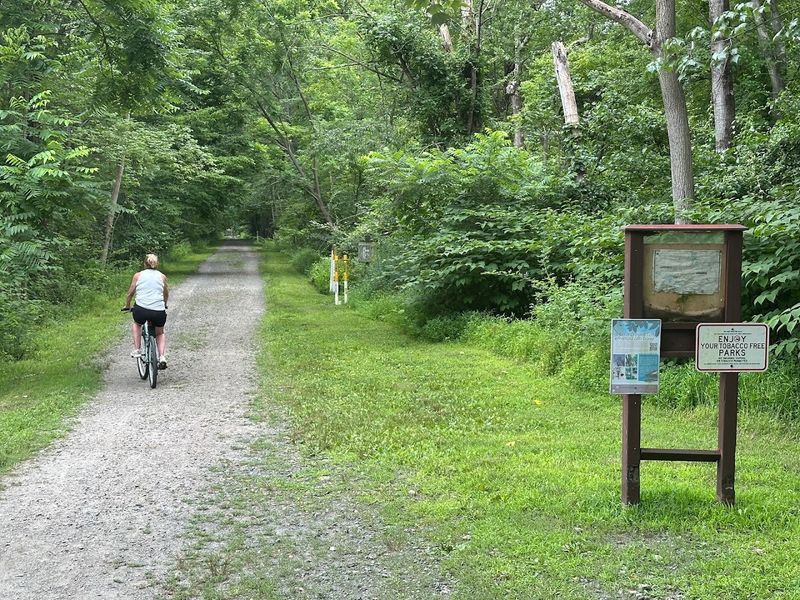
One of the first things you feel underfoot is how smooth and well-maintained the surface is. Most of the Columbia Trail runs on fine crushed stone, which is firm enough for road bikes but forgiving enough for a long walk in regular sneakers.
Because it follows a former railroad corridor, the grade stays remarkably gentle throughout. Railroads were engineered for heavy freight, not steep climbs, so the trail barely tilts in any direction for miles at a stretch.
That flatness is a genuine gift for families with young kids, older hikers, or anyone who just wants to move without constantly bracing their knees. A short paved section greets you right at the High Bridge start, which makes the transition onto the main path feel smooth and intentional.
The trail runs for 15 miles one way, from High Bridge in Hunterdon County all the way to Washington Township in Morris County. Round trips on e-bikes have been clocked at around 22 to 30 miles total.
Whether you go two miles or twenty, the path meets you exactly where you are, no special gear or experience required.
Ken Lockwood Gorge and the Bridge That Stops You Cold
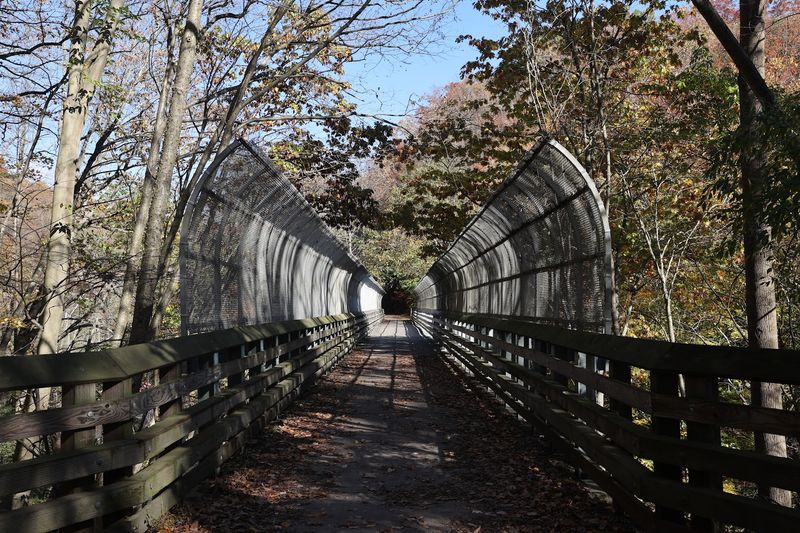
Nothing on the trail quite prepares you for the Ken Lockwood Gorge. The forest opens up just enough to reveal a 250-foot steel bridge sitting 80 feet above the South Branch of the Raritan River, and the view from the middle of that structure is the kind that makes you stop walking entirely.
High cliff walls rise on either side, the river churns below, and the sound of rushing water fills the gorge in a way that feels almost theatrical. It is the scenic centerpiece of the whole route, and it earns every bit of that reputation.
The bridge itself is a piece of engineering history repurposed for leisure, which feels perfectly appropriate given the trail’s origins. Crossing it on a clear morning with mist still sitting on the water below is an experience that sticks with you long after the drive home.
Fishing is popular along the Raritan River here, and the gorge section tends to attract birdwatchers as well. The combination of elevation, water, and dense canopy creates a habitat that supports a surprising range of wildlife.
It is the kind of spot that rewards anyone who takes the time to pause and really look around.
Wildlife Encounters Along the Riverbank
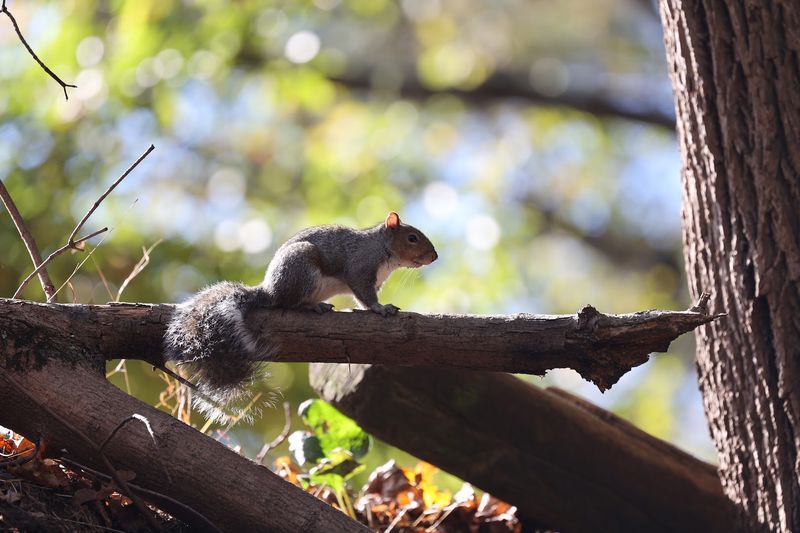
The Columbia Trail passes through a genuinely diverse range of habitats, and the wildlife along the route reflects that variety in the best possible way. White-tailed deer are a common sight, especially in the quieter early morning hours when the trail has not yet filled with cyclists and hikers.
Raccoons, coyotes, squirrels, and chipmunks all make regular appearances depending on the season and time of day. The section near the Raritan River tends to be especially active, with birds darting between the trees and occasionally landing close enough to get a good look.
Birdwatching along this trail is genuinely rewarding because the mix of riparian woodland, open meadow, and dense canopy creates layered habitat. Bring binoculars if that is your thing, and move slowly through the gorge section for the best chances of spotting something interesting.
Spring and fall tend to offer the most dramatic wildlife activity. Deer are more visible when the underbrush thins out, and migratory birds pass through in impressive numbers.
Even a short walk in the right season can turn into an unplanned natural history lesson, which is a surprisingly satisfying way to spend a morning outdoors.
The Taylor Steelworkers Historical Greenway Connection
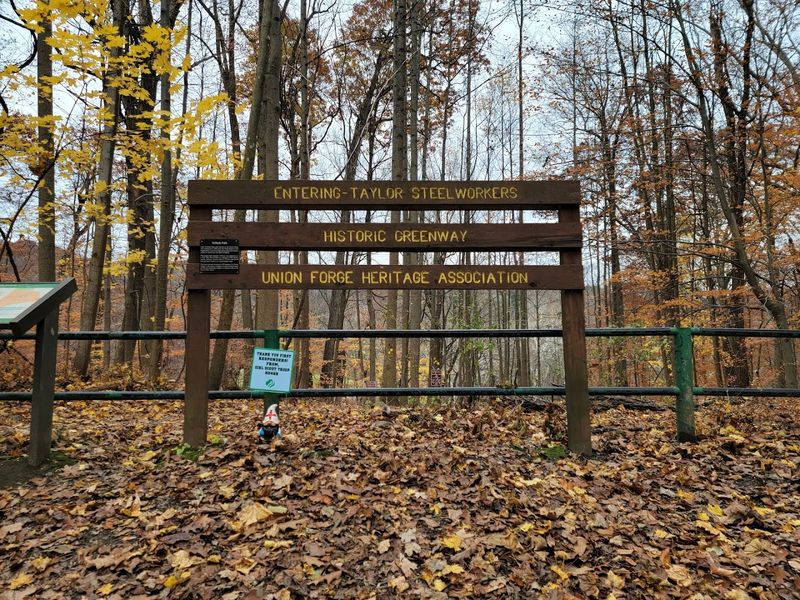
About a quarter mile from the Borough Commons in High Bridge, a separate 6.5-mile trail branches off and connects to a network of historic sites that most visitors do not even realize exist.
The Taylor Steelworkers Historical Greenway links the Columbia Trail to places like the TISCO Complex and the Lake Solitude Dam.
The TISCO Complex is the former Taylor Wharton Iron and Steel Company facility, which was the entire reason the original railroad existed in the first place. Walking through its remnants gives the trail’s industrial history a physical shape that is hard to get from reading about it.
Lake Solitude Dam adds a scenic water element to this side route that feels completely different from the main gorge section.
The combination of industrial archaeology and natural landscape along the Greenway makes it feel like a bonus trail tucked inside an already excellent trail.
Most people who visit the Columbia Trail for the first time focus entirely on the main 15-mile corridor, which makes complete sense. But returning visitors who venture onto the Greenway consistently describe it as a revelation.
It adds historical depth to a trail that already has more going on beneath the surface than it first appears.
Cycling, Horses, and Multi-Use Trail Culture
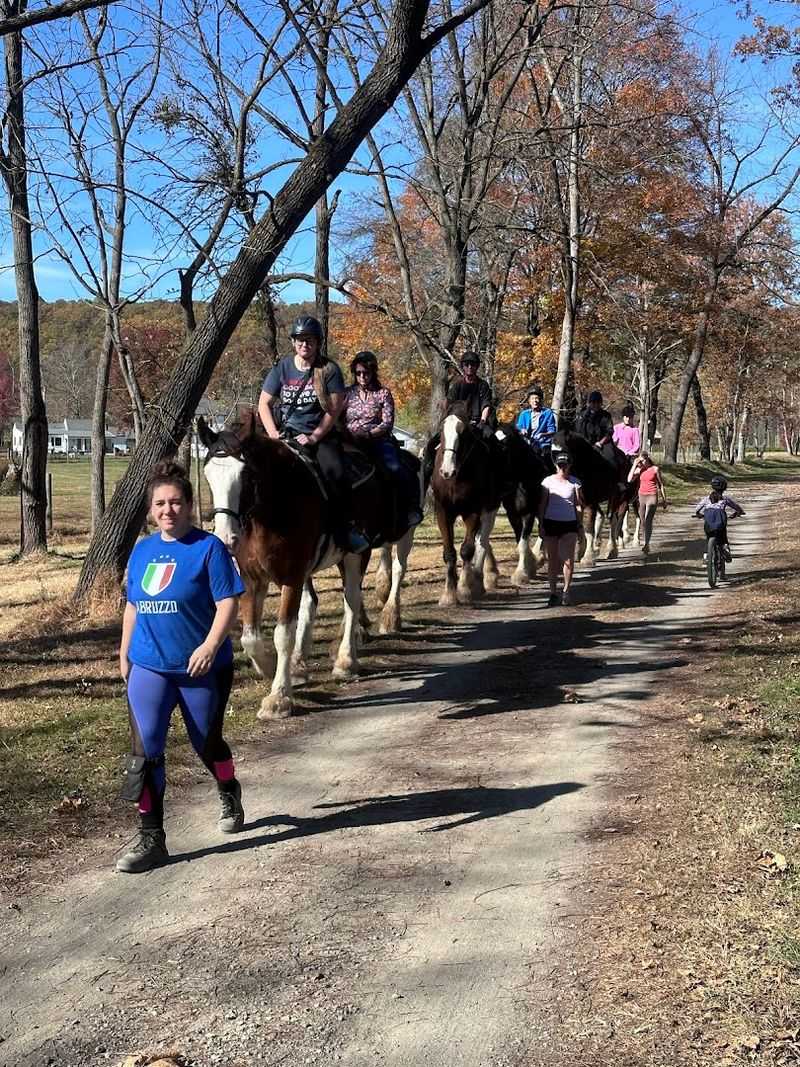
The Columbia Trail genuinely earns its multi-use designation in a way that not every shared path can claim. Cyclists, hikers, and horseback riders all use the same corridor, and the wide, flat surface accommodates everyone without feeling crowded on most days.
E-bikes have become especially popular here, and the gentle grade makes them a natural fit. A round trip of 22 miles takes roughly two hours at a comfortable cycling pace, which is a satisfying half-day outing that does not leave you completely exhausted.
Fat tire bikes handle the crushed stone surface particularly well, and the slight downhill return gradient toward High Bridge gives tired legs a small but welcome assist on the way back.
Road bikes can manage the surface too, though the packed gravel section requires a bit more attention than pavement.
Horseback riders add a distinctly rural character to the experience that you do not often find on suburban trails. Sharing the path with horses, cyclists, and walkers simultaneously sounds chaotic in theory but tends to work smoothly in practice.
The trail has enough width and enough community etiquette to keep everything moving comfortably, and that shared culture is part of what makes it feel like a living, breathing community resource.
Trailhead Amenities and the High Bridge Starting Point
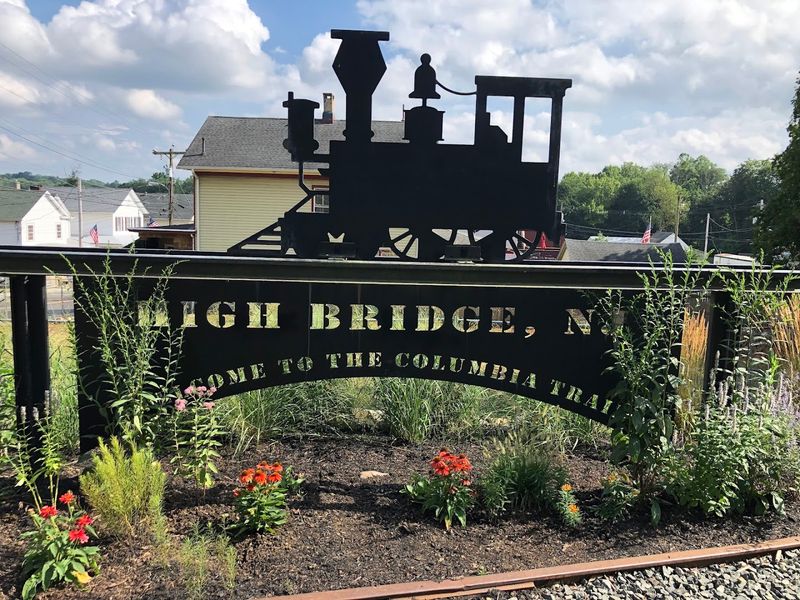
Starting at the High Bridge trailhead on Main Street sets you up well before you even take your first step.
The parking lot is large and free, which matters more than it sounds on busy weekend mornings when popular trails in the region can turn into parking nightmares before 9am.
A permanent brick restroom building with flushing toilets, running water, and soap is now available at the trailhead, which is a genuine upgrade from the portable facilities that were in place for years. Clean bathrooms at a trailhead are the kind of amenity that sounds boring until you actually need one after a long drive.
The area right near the entrance has a small cafe and a few shops worth exploring before or after your walk. Having coffee within reach of a trailhead feels like a small luxury that makes the whole outing more enjoyable.
A small blue toy exchange box near the start adds a community touch that immediately signals what kind of place this is. The trailhead also features historical markers and informational signage that give context to the railroad history before you head out.
It is a well-considered starting point that respects both the trail’s history and the practical needs of the people using it today.
Planning Your Visit to the Columbia Trail
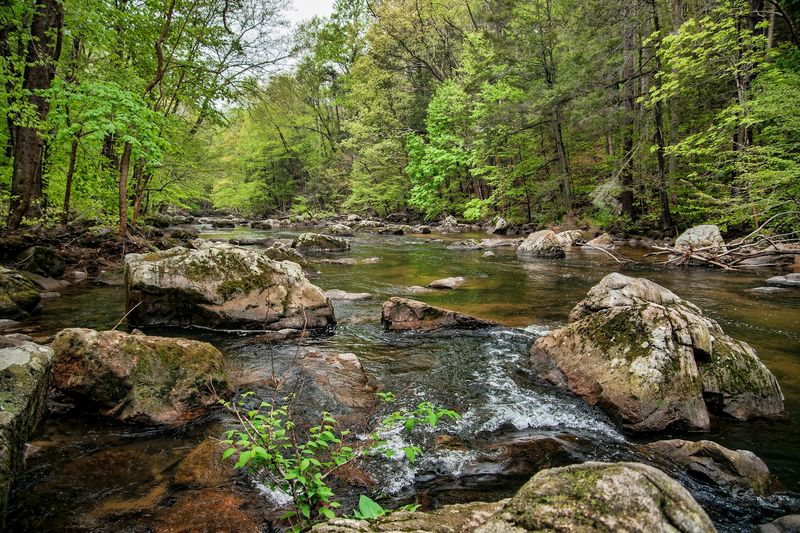
The Columbia Trail trailhead at 77 Main Street in High Bridge is open most days starting at 6:30 or 7:30 in the morning, with closing times around 8:30 in the evening depending on the day.
Wednesday opens slightly earlier than the rest of the week, which is worth knowing if you want a quiet midweek morning walk.
Bringing water is essential, especially for longer rides or walks. The trail does not have water fountains along the route, so packing enough for your full planned distance is just basic preparation.
Snacks matter too, particularly for multi-hour outings.
Layers are a smart call in spring and fall when the temperature under the tree canopy can feel noticeably cooler than the parking lot. Sunscreen matters less here than on exposed trails because the forest cover is so dense, but open meadow sections near the northern end of the trail do get direct sun.
Dogs are welcome and very common on the trail, so bringing a leash and being prepared to share the path with enthusiastic four-legged hikers is part of the experience.
Address: 77 Main St, High Bridge, NJ.
Dear Reader: This page may contain affiliate links which may earn a commission if you click through and make a purchase. Our independent journalism is not influenced by any advertiser or commercial initiative unless it is clearly marked as sponsored content. As travel products change, please be sure to reconfirm all details and stay up to date with current events to ensure a safe and successful trip.
