Imagine a train station that moonlighted as a bridge operator.
Set away in a quiet corner of New Jersey, this hidden relic once held the mechanical keys to a massive swing bridge over the Passaic River.
While it spent years waving passengers along, its most dramatic chapter arrived decades after the last ticket was punched.
Left as a hollow shell, this mysterious landmark eventually vanished in a blaze of glory during the early eighties, leaving behind only rusted tracks and whispers of its dual life.
The Origins of West Arlington Station
Back in 1867, a company called the Montclair Railroad was chartered with big ambitions and a lot of track to lay. By 1873, trains were rolling through what would eventually become the Arlington section of Kearny, Hudson County, New Jersey.
The area was still finding its identity, and the station that served it kept changing names to match.
Early maps from 1873 and 1880 show the railroad cutting through the township without a named stop here. By 1888, a geologic survey map finally marks a station, calling it Kearney Station.
It held that name through the 1892 map before being renamed West Arlington from 1898 onward, a label it would carry for the rest of its operating life.
That kind of name evolution tells a story about a growing community trying to define itself. The station sat along what is now County Road 699, overlooking Passaic Avenue and North Midland Avenue.
It was one of two Erie Railroad stops in Kearny, part of the New York and Greenwood Lake Railroad line.
The Swing Bridge That Made This Station Unusual
Most commuter stations are just platforms and waiting rooms. West Arlington Station had something far more interesting on its resume: control over a swing bridge.
The eastbound platform depot housed an interlocking tower that operated the WR Draw, also known as the West Arlington Drawbridge.
This bridge crossed the Passaic River between Newark and Kearny, allowing river traffic to pass through when needed. The interlocking system installed in 1914 featured 16 levers, each one responsible for operating the bridge or managing the associated track switches.
Sixteen levers might not sound like much, but coordinating a moving bridge with active rail traffic required serious precision and focus.
The tower operator had to time everything carefully, making sure trains cleared the bridge before it swung open for boats, then closing it again before the next train arrived. It was a mechanical ballet performed daily, mostly without fanfare.
That kind of hands-on infrastructure management feels almost impossibly hands-on by today’s standards, which makes standing near the site of that old tower feel genuinely remarkable.
How the 1914 Interlocking System Worked
Railroad interlocking systems were engineering marvels of their time, and the one installed at West Arlington in 1914 was no exception. The setup used 16 physical levers to control both the swing bridge mechanics and the track switches associated with the crossing.
Each lever had a specific job, and pulling the wrong one at the wrong moment could cause serious problems.
The system was designed to prevent conflicts, meaning it physically stopped an operator from opening the bridge if a train was approaching on that section of track. That kind of built-in safety logic was ahead of its time in many ways.
Before computers and digital sensors, mechanical interlocking was the smartest tool railroads had for keeping everything moving safely.
Operating this tower required training and attention to detail every single shift. The job was unglamorous but absolutely essential.
Without someone managing those 16 levers, the WR Draw could not function, and neither could the rail traffic that depended on it. The 1914 installation represented a serious investment in infrastructure that served the region for decades before passenger service finally ended.
Passenger Service Ends in 1966
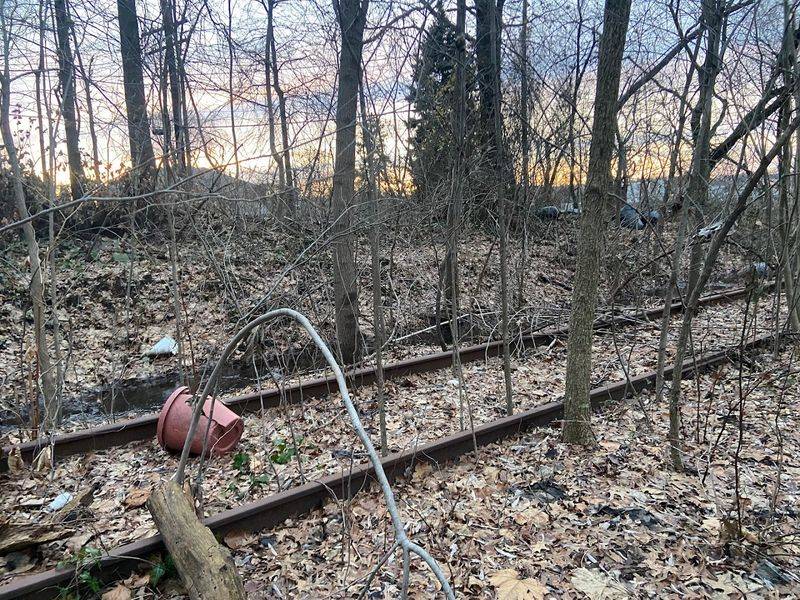
September 30, 1966 was the last day a passenger train stopped at West Arlington Station. After that date, the platforms went quiet, the depot sat idle, and the community that once relied on the stop had to find other ways to get around.
It was a common story playing out across New Jersey during that era, as car culture reshaped how people moved through the region.
The station did not disappear immediately after service ended. Buildings have a way of lingering even after their purpose is gone, standing like stubborn reminders of what used to be.
The depot on the eastbound platform kept standing for another 17 years after the last train departed.
Those 17 years of abandonment left the structure exposed to weather, neglect, and eventually something far worse. Seeing a building outlast its usefulness by nearly two decades is both sad and oddly hopeful, as if the structure itself refused to accept that its story was over.
West Arlington Station kept standing until 1983, when it ran out of luck in a very dramatic way.
The Fire That Ended It All in 1983
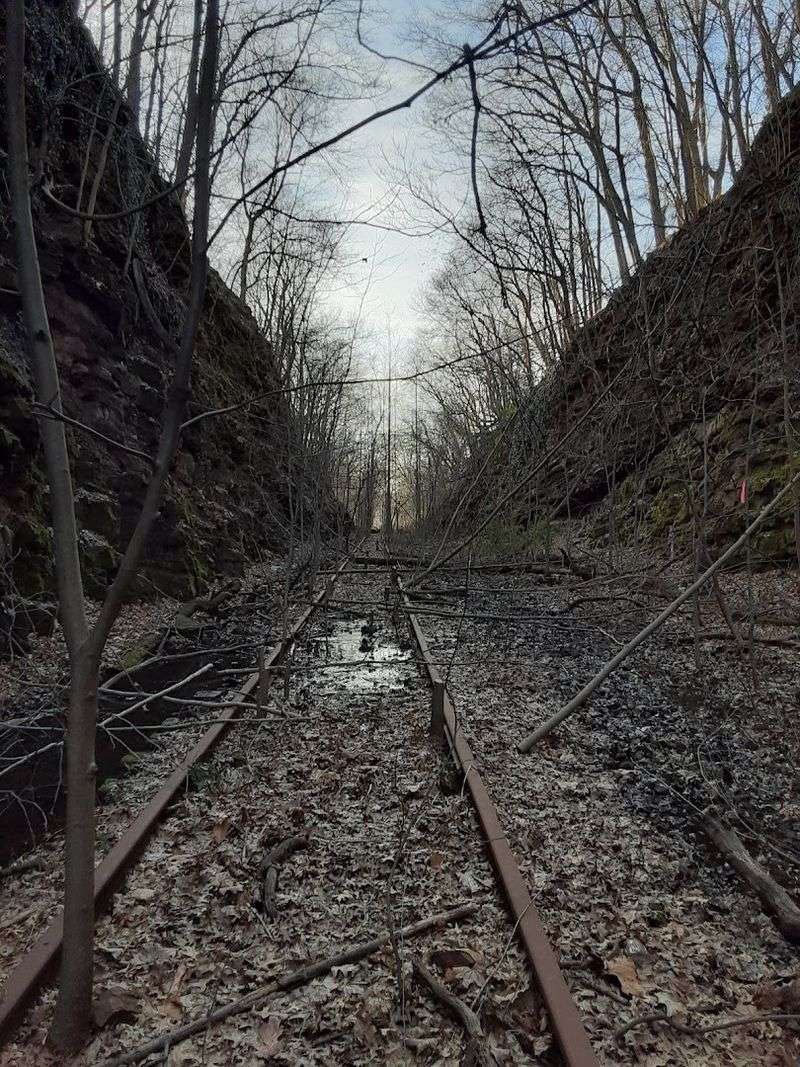
Fire has a way of making decisions that time and budget never quite get around to making. In 1983, the abandoned depot on the eastbound platform at West Arlington Station burned down, erasing the last major physical structure from the station’s active years.
The cause of the fire is not the point. The result is what matters.
A building that had survived passenger service ending, bridge operations winding down, and nearly two decades of abandonment was gone in a single event. What the years of neglect could not fully erase, the flames finished off.
It is the kind of ending that feels both sudden and inevitable when you look back at the timeline.
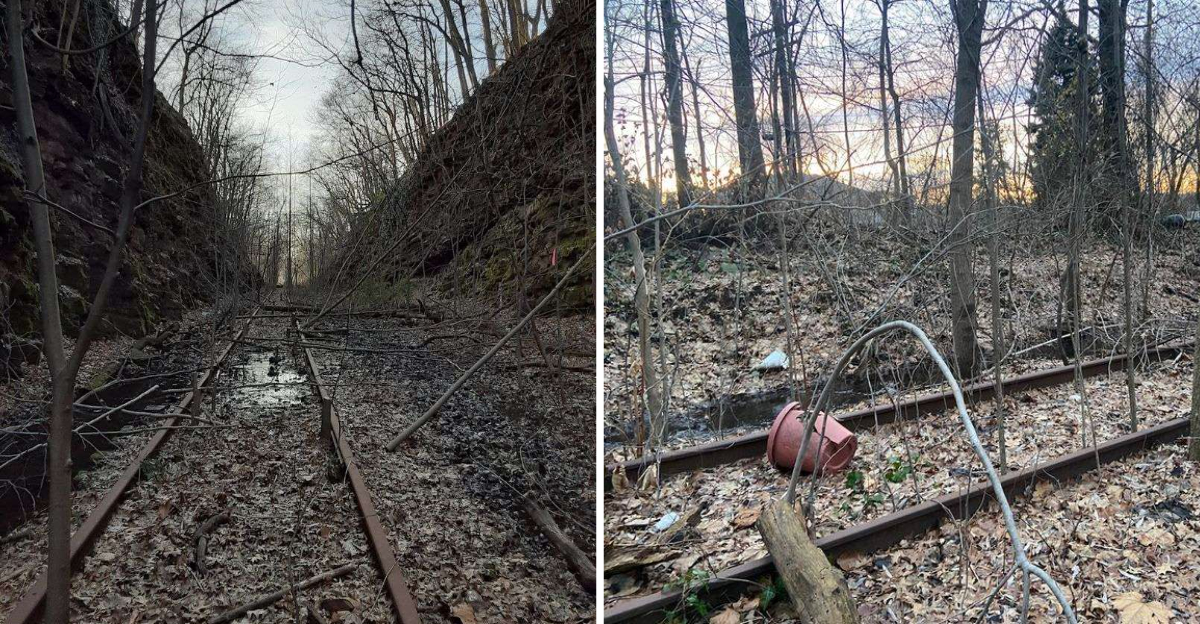
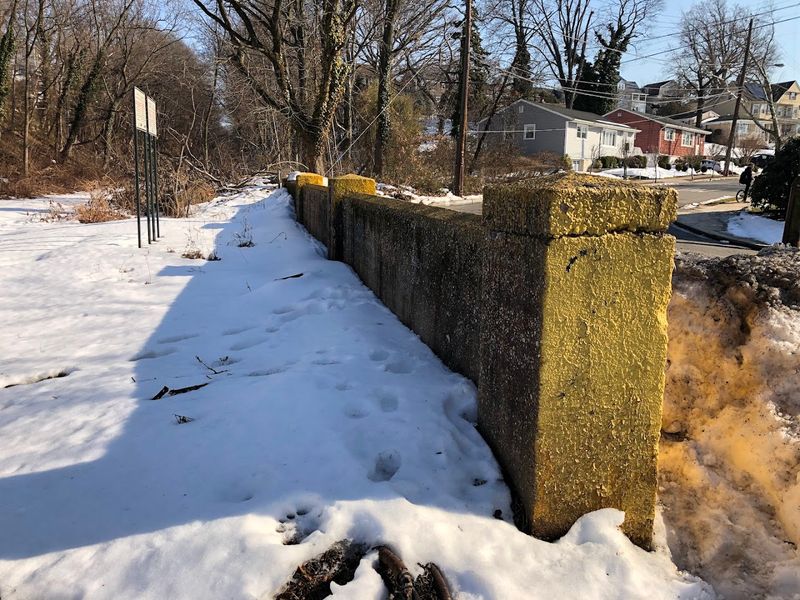
After 1983, the site became something closer to a ruin than a station. Concrete remnants, overgrown vegetation, and the silent rail line are what remain today.
Visiting the spot now, you have to use your imagination to reconstruct what stood here. The fire took the physical evidence but left the history intact, and that history turns out to be surprisingly rich for a small commuter stop in Hudson County.
What Remains at the Site Today
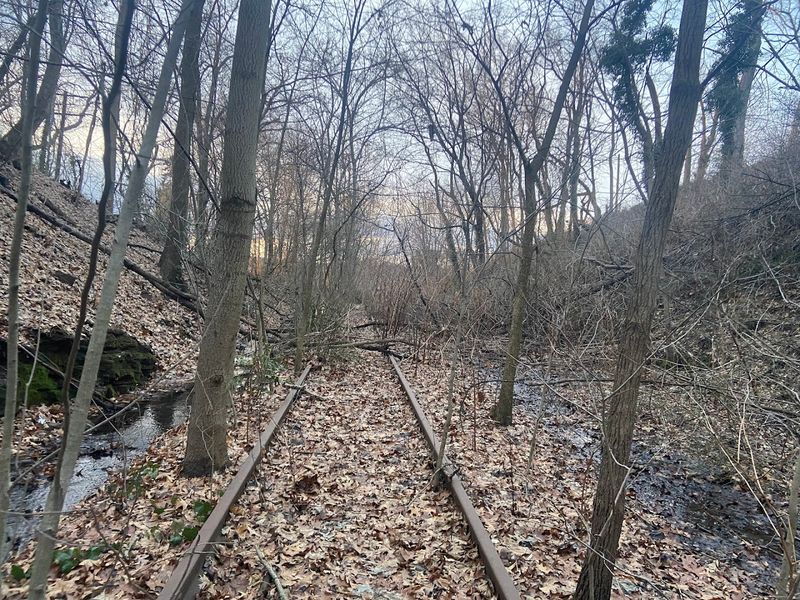
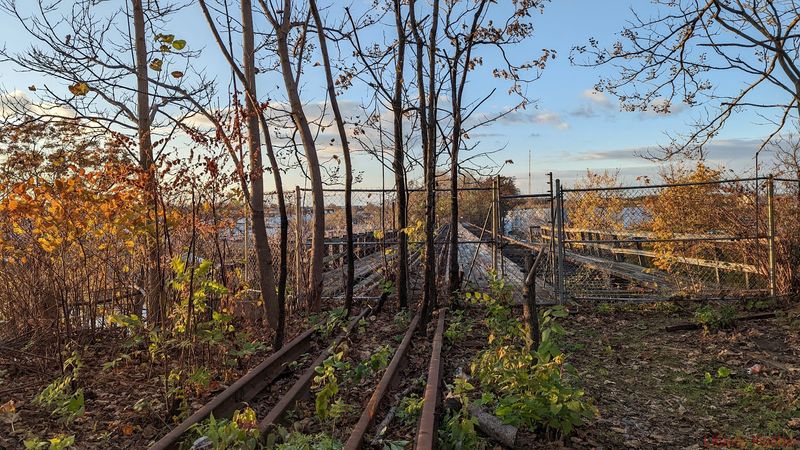
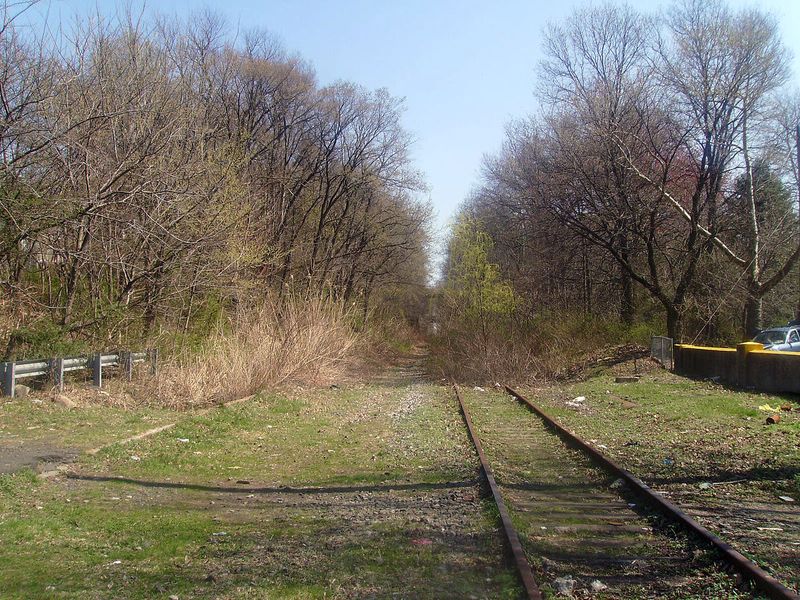
Walking the site of West Arlington Station today requires some imagination and a good pair of shoes. The rail line itself is fully abandoned, with tracks hidden under decades of vegetation and the platforms reduced to scattered concrete.
There is no signage welcoming visitors, no interpretive displays explaining what happened here.
What you do get is atmosphere in abundance. The quiet is genuine, the kind that only exists in places people have mostly forgotten.
Birds are apparently fond of this spot, with birdwatching being one of the more peaceful activities visitors mention when they talk about spending time here.
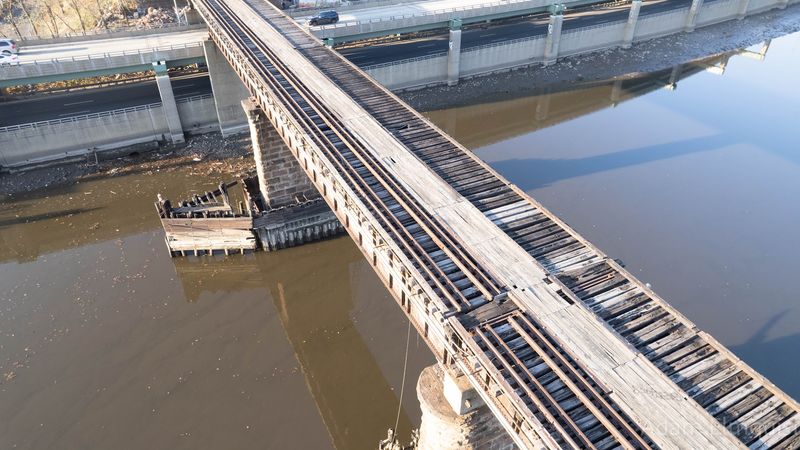
The WR Draw swing bridge is still visible but completely out of service. It has been welded into a closed position, meaning it will never swing open again for river traffic.
That welded bridge feels like a fitting symbol for the whole site: frozen in place, neither fully gone nor fully functional. The area sits along County Road 699 and is technically railroad property, though the surrounding landscape has grown wild enough to feel more like a nature corridor than an infrastructure remnant.
The WR Draw Bridge Today
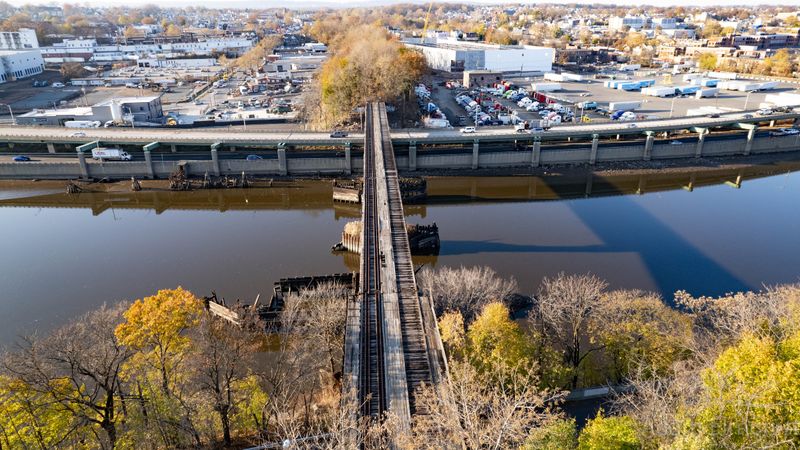
The West Arlington Drawbridge, locally known as the WR Draw, is one of those structures that commands attention even in its current state of permanent stillness.
Crossing the Passaic River between Newark and Kearny, it was once a working piece of regional infrastructure tied directly to the railroad operation at the station.
Swing bridges work by rotating horizontally around a central pivot point, allowing river vessels to pass on either side. When the interlocking system at West Arlington was active, operators used those 16 levers to time the bridge’s movement with the rail schedule.
That coordination kept both rail and river traffic moving without catastrophe.
Today the bridge sits welded shut, unable to rotate and no longer serving any transportation purpose. From a distance it still looks functional, which makes the reality of its permanent closure feel a little strange.
Plans associated with the Essex-Hudson Greenway trail conversion include hopes that the bridge could eventually be reopened for pedestrian use, letting hikers cross the Passaic River and explore the dramatic rock cut to the east. That would be a genuinely exciting development for the area.
Why This Forgotten Station Still Matters
Places like West Arlington Station matter because they hold the shape of decisions made long ago. The railroad that came through here connected communities, moved workers, and tied the region together in ways that modern commuters still benefit from indirectly.
Understanding that history adds texture to everyday life in New Jersey.
The station’s story touches on industrial engineering, urban planning, community identity, and even the economics of mid-century transportation policy. That is a lot of meaning packed into a few concrete remnants and a welded-shut bridge along County Road 699.
Visiting the site is not about finding a polished attraction. It is about standing in a place where things actually happened and letting the silence tell you something.
The swing bridge once moved on command. Trains once stopped here on schedule.
People once waited on these platforms with somewhere to be. All of that is gone now, but the outline of it remains, and that outline is worth knowing about.
Address: 726-758 County Rd 699, Kearny, NJ.
