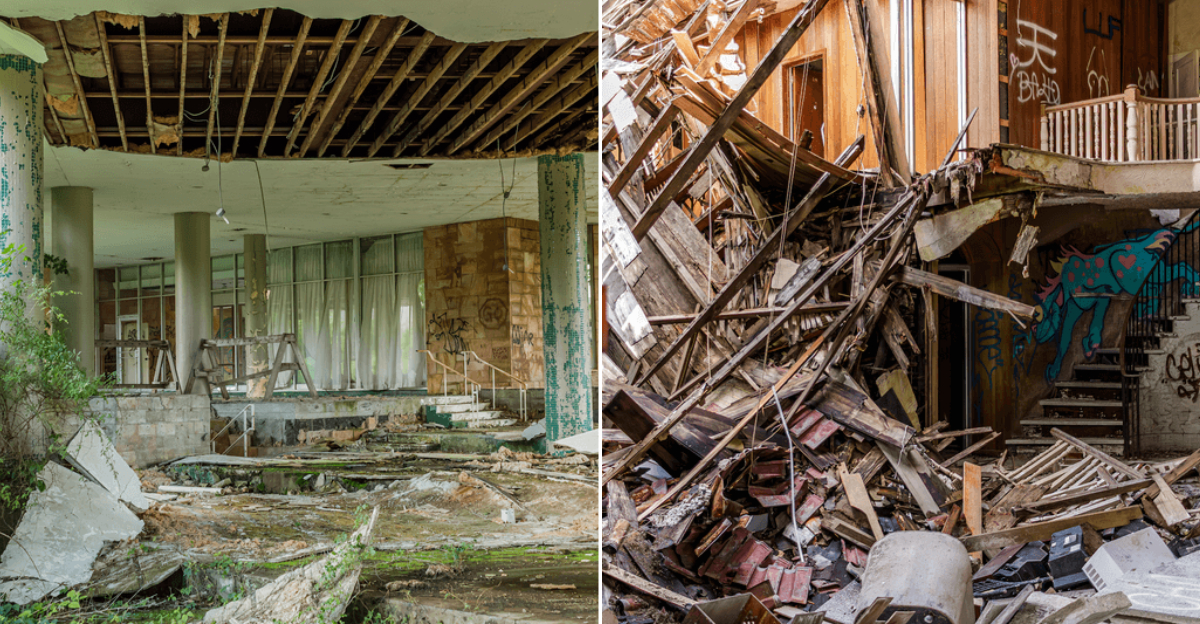
I drove past the faded welcome sign and stopped at the edge of a massive parking lot that nature has started to reclaim. Weeds poke through cracked asphalt, and a sprawling white hotel looms against the Catskill sky, its windows dark and empty.
This abandoned New York resort was once a glamorous escape where families swam in pools and danced under chandeliers. Now it is too huge to save and too costly to clear, so it just sits there, crumbling quietly year after year.
Locals tell stories of the old days when the place buzzed with laughter, but now the only sounds are wind and birds nesting in the broken eaves.
I walked close enough to see the peeling paint and boarded doors, and I could not help wondering what it would take to bring something this big back to life.
The answer, it seems, is nothing. Some ruins are not meant to be fixed. They just exist, a strange reminder of what New York used to be.
That First Look From The Road
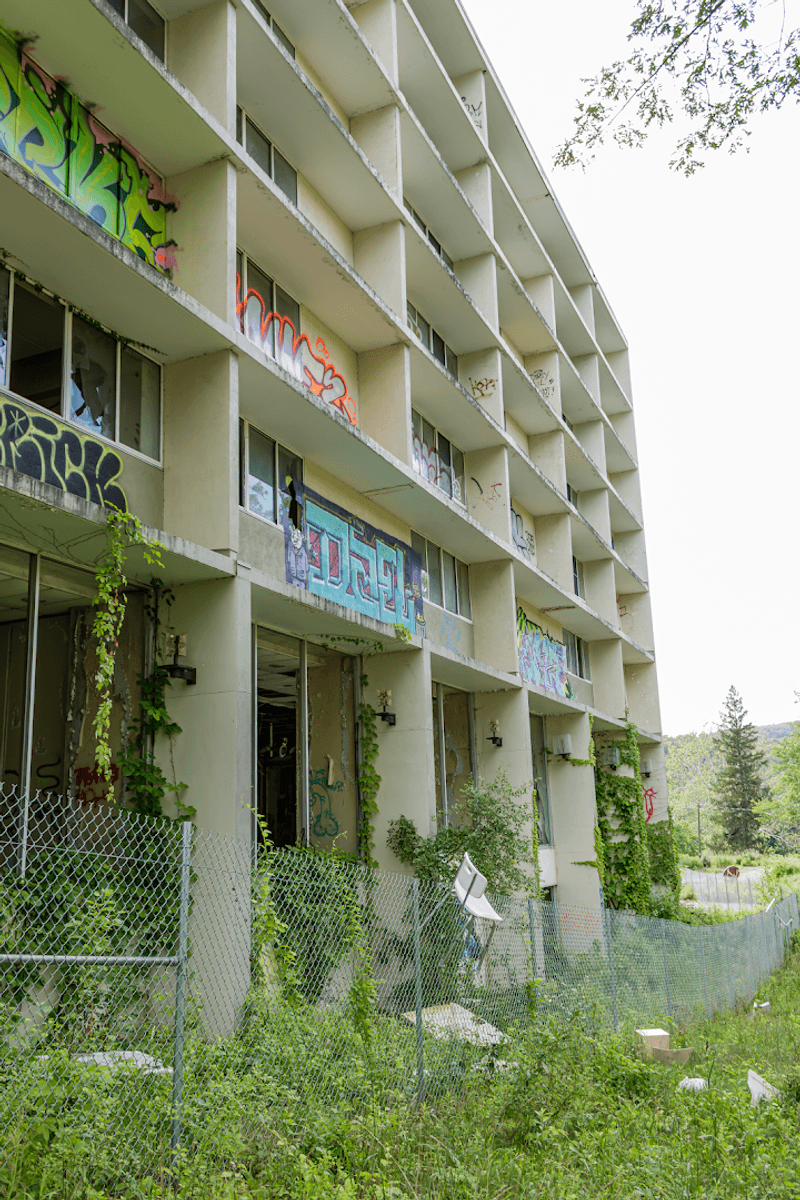
The first thing that gets you is the scale, because this place does not peek out from the trees so much as hover over them like it still expects guests to arrive by dinner. You come around the road in Ellenville and suddenly the old resort is right there, broad and pale and oddly theatrical against the green slopes.
Even in its silence, it has that oversized Catskills confidence that makes you understand why people still talk about it.
What feels strange is that the building does not read like a ruin from far away, at least not at first. It still carries itself like a place built for routines, lobbies, chatter, windows glowing at dusk, and someone asking whether you want to head to the dining room or sit out a little longer.
That lingering sense of purpose is probably why it sticks with you, because the shell still looks like it remembers what it was meant to do.
Standing there, you are not just looking at an abandoned hotel in New York. You are looking at a resort that grew too big to rescue easily and too complicated to erase quickly, which is a very Catskills kind of heartbreak.
The Nevele feels less like a closed building and more like a huge unanswered question sitting on the hillside.
Where It Sits And Why That Matters
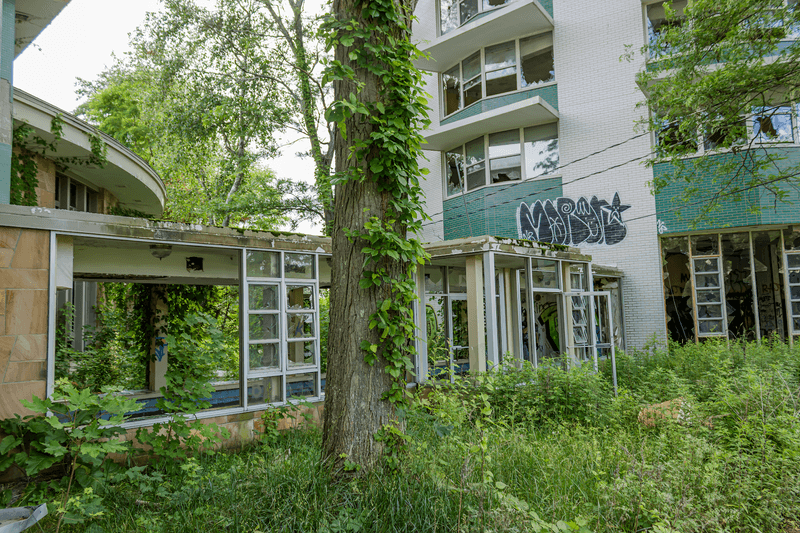
Here is the part that makes the whole thing feel even more surreal: the Nevele Grand Hotel sits at 1 Nevele Rd, Ellenville, NY 12428, in a setting that still looks made for a classic mountain getaway. The slopes around it are soft and green, the roads feel quiet without being remote, and the wider valley keeps the place from feeling tucked away.
You can see exactly why this corner of New York once pulled city families up into the hills for long stays and big weekends.
The location also explains why the building still carries so much emotional weight for people who know the Catskills. It is not hidden deep in the woods where only explorers would ever notice it, and it is not folded into a busy strip where life simply moved on around it.
It sits in that uneasy middle ground where memory and visibility keep meeting each other every single day.
That matters because abandoned places fade faster when nobody has to look at them. The Nevele does not get that luxury, and honestly neither does Ellenville.
It remains part of the local landscape, part of the regional story, and part of the ongoing question of what New York should do with landmarks that are still physically here but functionally gone.
A Resort Built For A Whole World
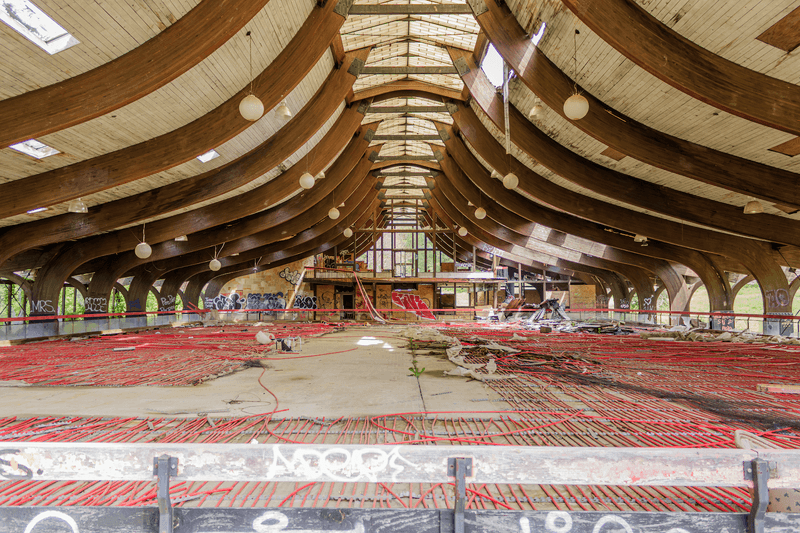
Once you understand that the Nevele was never just a hotel, the whole property starts making more sense. This was part of the old Catskills resort world, where a place had to feel like its own self-contained universe, with enough rooms, activity spaces, dining areas, and social life to keep people fully occupied without much reason to leave.
It belonged to that larger New York mountain tradition where vacation meant settling in, seeing familiar faces, and letting the outside world drop away for a while.
That history still hangs over the structure, even if you are only seeing it from the outside or catching glimpses of empty interiors in photographs. The bones of the place suggest movement, schedules, group meals, long conversations, and the kind of built-in togetherness that those old resorts were famous for.
You can feel that this was designed for a crowd, not for a quiet boutique escape or a quick overnight stop.
I think that is part of why its abandonment feels so outsized. When a tiny motel closes, it feels sad but manageable.
When a giant resort world stops functioning, it leaves behind something much heavier, because the emptiness is not just physical space. It is the collapse of an entire way people once vacationed in the Catskills.
Why Saving It Is So Hard
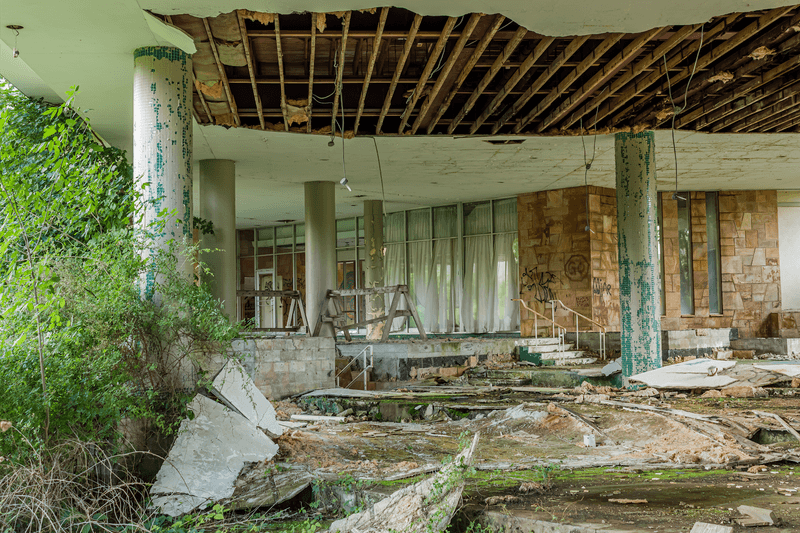
This is where the story stops being romantic and starts getting brutally practical. A place this large is not just an old building with peeling paint and a sad lobby, because every corridor, utility system, roofline, and sealed room adds another layer of cost, risk, and delay.
People love the idea of saving a landmark until they are staring at the actual scale of what restoration would demand in money, planning, cleanup, and long-term use.
That is especially true in the Catskills, where sentiment can be strong but financing still has to make sense. A giant resort cannot come back on nostalgia alone, and it definitely cannot come back if nobody can answer the basic question of what it would realistically become afterward.
Hotel, housing, mixed use, something else entirely? Until there is a believable plan, the building keeps sitting there, too famous to ignore and too complicated to solve quickly.
And then there is the simple fact that deterioration never pauses while people debate. Weather keeps working, materials keep aging, and each delayed season makes the next one harder.
So when people say the Nevele is too huge to save, it is not just dramatic phrasing. It is a very grounded description of what happens when a resort grows far beyond what easy rescue can handle.
Why Clearing It Is Not Simple Either
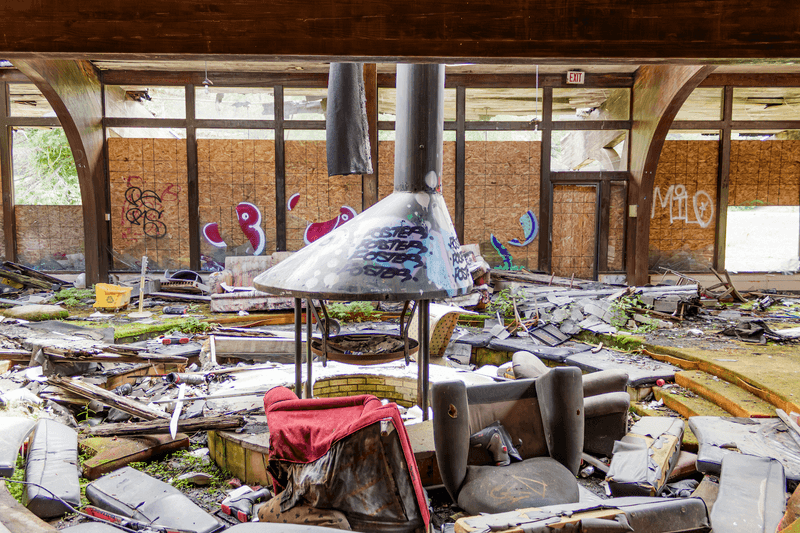
You might look at the Nevele and think, fine, if saving it is unrealistic then why not just clear it and move on? That sounds straightforward until you remember how big the property is, how complex old resort sites can be, and how much planning has to happen before any major removal work makes sense.
Demolition at this scale is not a quick sweep of the lot, especially when the land itself is valuable and the next chapter is still being argued over.
Old resorts usually leave behind more than walls. There can be infrastructure buried under the grounds, utility questions, access concerns, and the usual mix of environmental review and redevelopment logistics that turn simple opinions into very slow real-world processes.
In New York, especially, those steps matter, because once a site this visible changes, the consequences are long and public.
That is why the Nevele keeps feeling stuck between states. It is not actively welcoming anyone, but it is also not gone enough to stop shaping the view, the local conversation, and the future of the property.
For Ellenville, that creates a weird kind of permanent pause, where the building remains both an obstacle and a landmark at the exact same time.
The Borscht Belt Ghost Around It
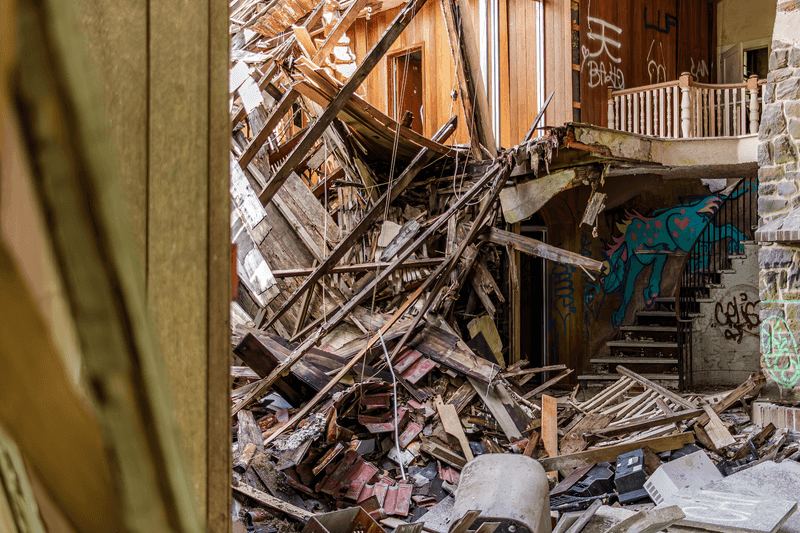
What really gives the Nevele its weight is that it is carrying more than its own story. It belongs to the wider Borscht Belt history, that huge Catskills vacation culture that shaped weekends, summers, family traditions, entertainment, and social life for generations of people from New York and beyond.
Even if someone never stayed here, they usually know the feeling the place represents, because the region still holds that memory in a very real way.
You can sense that history in the scale of the resort and in the way people still talk about these properties with a mix of affection and disbelief. There was a time when mountain resorts like this formed a whole social map, and you could spend a season moving through meals, activities, dances, family visits, and friendships without ever feeling far from the center of things.
That kind of world leaves a strong afterimage when it disappears.
So the abandoned shell is not just architecture. It is a reminder of how travel patterns changed, how communities changed, and how a full regional culture can shrink before the buildings that served it do.
In that sense, the Nevele feels haunted less by ghost stories and more by memory itself, which honestly can be even harder to shake when you are standing nearby.
What The Building Feels Like Now
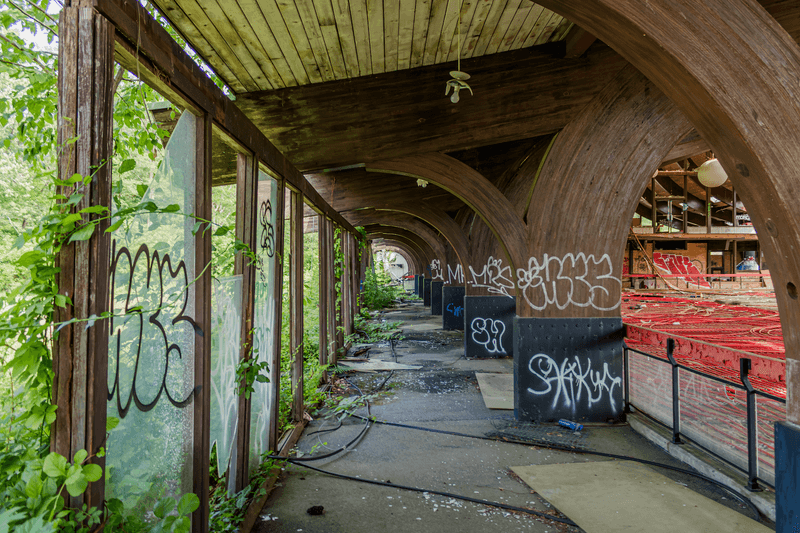
There is a particular sadness to places that still look like they are waiting for instructions, and the Nevele has that feeling in a big way. It does not read like a romantic stone ruin that nature has fully taken back, and it does not look neatly repurposed into something fresh and tidy either.
Instead, it hangs in that uncomfortable middle space where traces of hospitality are still visible, but the life that once made sense of them is gone.
Maybe that is why photos of the property can feel so eerie without trying too hard. Empty windows, broad exterior lines, and those leftover gathering spaces all hint at habits that stopped midstream, as if the building expected the usual rhythm to return after a short pause.
When a place built for welcome becomes still for this long, the silence starts feeling heavier than the concrete.
I do not mean spooky in a cheap way. I mean emotionally weird, like standing near a conversation that ended years ago but somehow still has presence in the air.
In the Catskills, where so many old resorts slipped away through closure, demolition, or reinvention, the Nevele stands out because it still feels visibly caught between memory and matter, and you can sense that tension almost immediately.
What To See Nearby If You Visit
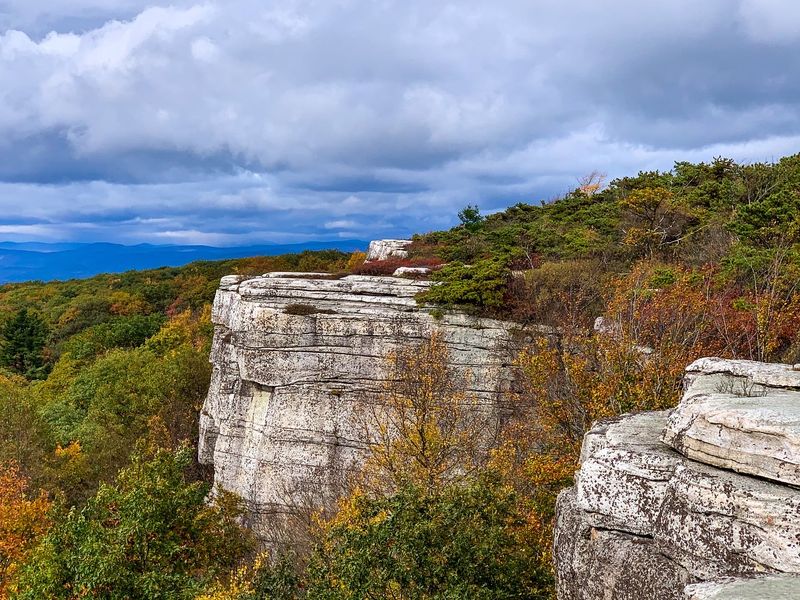
If you are coming out this way, I would not make the drive only about staring at an abandoned building from a respectful distance. Ellenville is close to some genuinely beautiful landscape, and pairing the Nevele story with the surrounding area helps the whole trip feel fuller and more grounded.
Sam’s Point Preserve in Cragsmoor is the obvious place I would mention first, because the ridge views and open feeling of that part of the Shawangunks are such a strong contrast to the heavy stillness of the resort.
You can also spend time just getting a feel for the valley and the town itself, which matters more than racing between photo stops. The old resort story lands differently when you have seen the streets, the hills, and the way this part of New York sits between mountain drama and everyday life.
It stops feeling like internet lore and starts feeling like local geography with real emotional residue.
That is probably the best way to approach a visit anyway. Let the Nevele be one part of the experience, not the whole thing.
The Catskills are bigger than any one abandoned landmark, and seeing the surrounding places reminds you that while one era may linger in concrete and glass, the wider region is still very much alive around it.
The Question Nobody Can Quite Finish
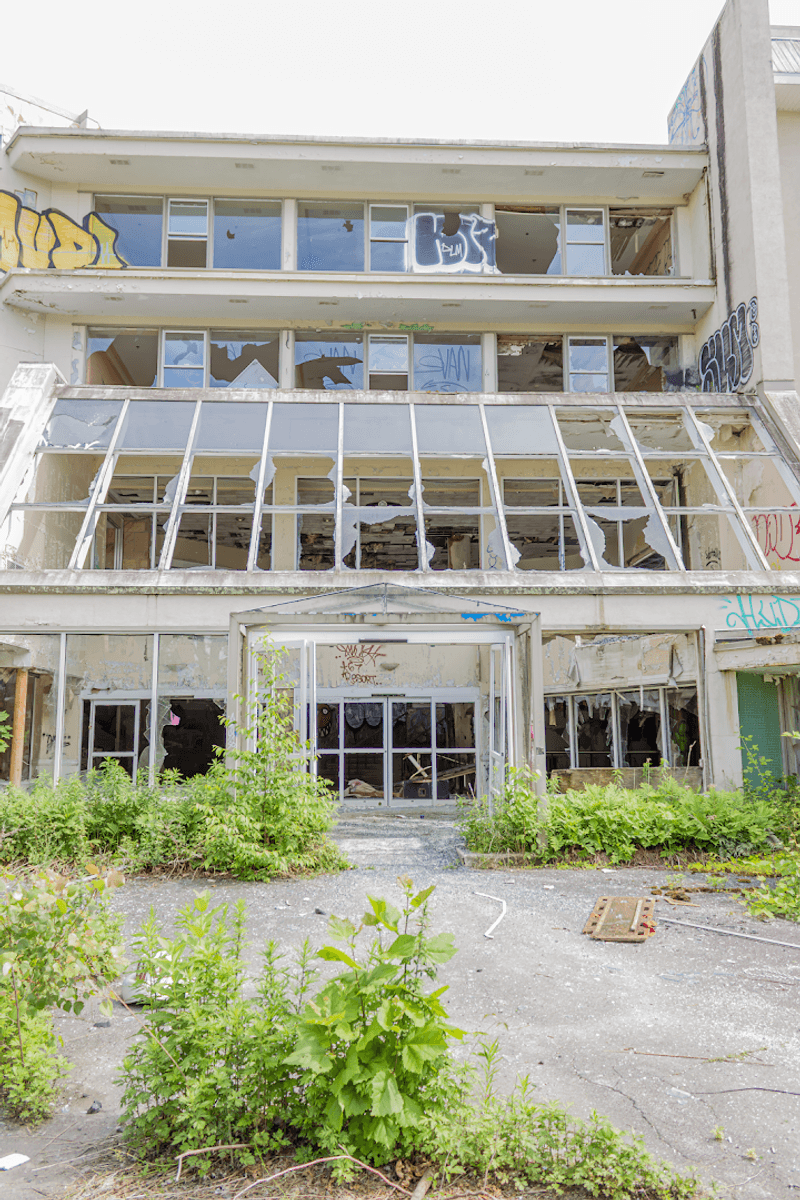
By the time you leave, the question that stays with you is not whether the Nevele mattered, because that part is already obvious. The real question is what a place like this is allowed to become after its original life is over, especially when its size keeps every option difficult.
In New York, old landmarks often inspire big feelings, but feelings alone do not tell you whether to rebuild, remove, or rethink the whole site from the ground up.
That unfinished question is probably why the resort still draws attention. People are not only reacting to decay or nostalgia, and they are not just chasing the drama of abandonment either.
They are looking at a very visible example of what happens when history, land use, memory, and money all collide in one enormous structure that refuses to disappear on a comfortable schedule.
Honestly, I get why it lingers in your head. The Nevele is not a clean story with a neat ending, and maybe that is exactly why it feels so representative of the Catskills right now.
Some places vanish, some places adapt, and some places stand there for years asking everyone the same unresolved question: what do you do with a giant past that is still taking up space in the present?
