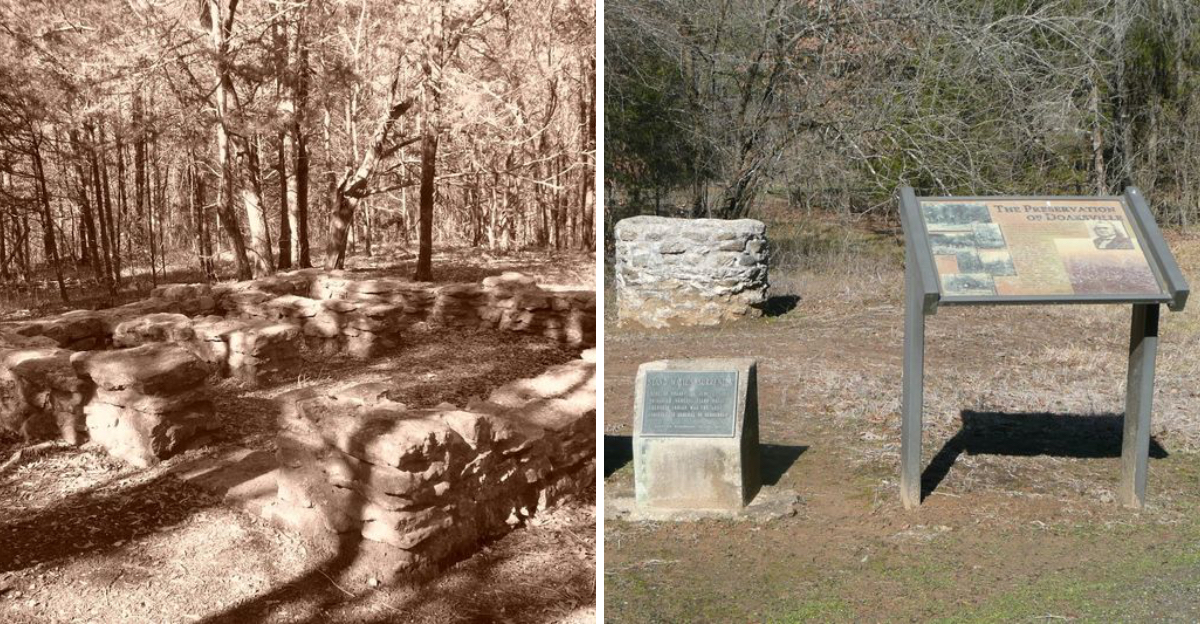
Every now and then you stumble onto a place that makes you pause and wonder how it managed to stay off your radar for so long. There is a quiet stretch of southeastern Oklahoma where an entire ghost town sits waiting, its past buried just beneath the soil and scattered across a short trail anyone can walk.
This is not a reconstructed theme park or a polished museum experience. It is the real thing, raw and overgrown, carrying the weight of Choctaw history, Civil War collapse, and a town that simply faded away when the railroad decided to go elsewhere.
Standing at the edge of the trail, you can almost hear the echoes of what once was a thriving capital city, a place of trade, diplomacy, and survival.
The story of this forgotten Oklahoma frontier town is one of the most layered, emotionally complex, and surprisingly overlooked chapters in the entire American Southwest.
If you have ever felt that pull toward places where history has not been cleaned up or prettied for tourists, this trail is going to hit you differently than any landmark you have ever visited. Pack comfortable shoes, bring water, and prepare to walk through time.
A Ghost Town Hiding in Plain Sight
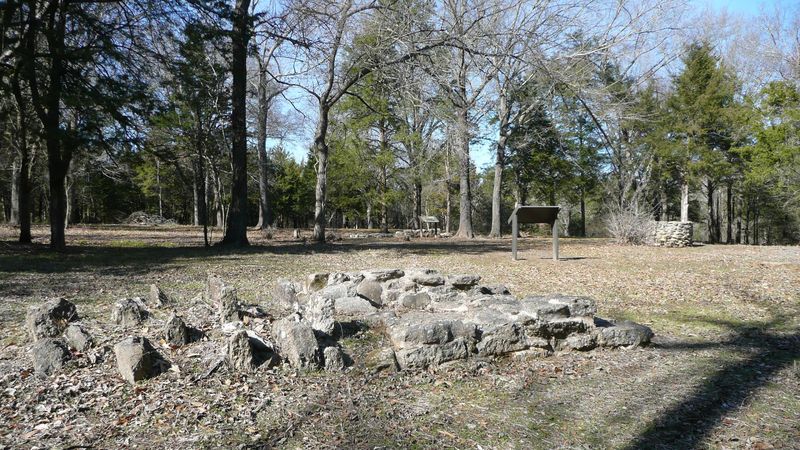
Most ghost towns announce themselves with dramatic ruins and crumbling facades. This one keeps its secrets close, letting the landscape do the talking instead of grand architecture.
The Old Doaksville Townsite History Trail sits off Red Road near Fort Towson, Oklahoma, and it begins at the northern edge of Fort Towson Cemetery.
From there, a walkable trail heads east toward the former townsite, passing through land that was once home to one of the most important settlements in the entire Choctaw Nation.
The whole thing is open 24 hours a day, every day of the week, which means you can visit at dawn when the light filters through the trees in long golden streaks.
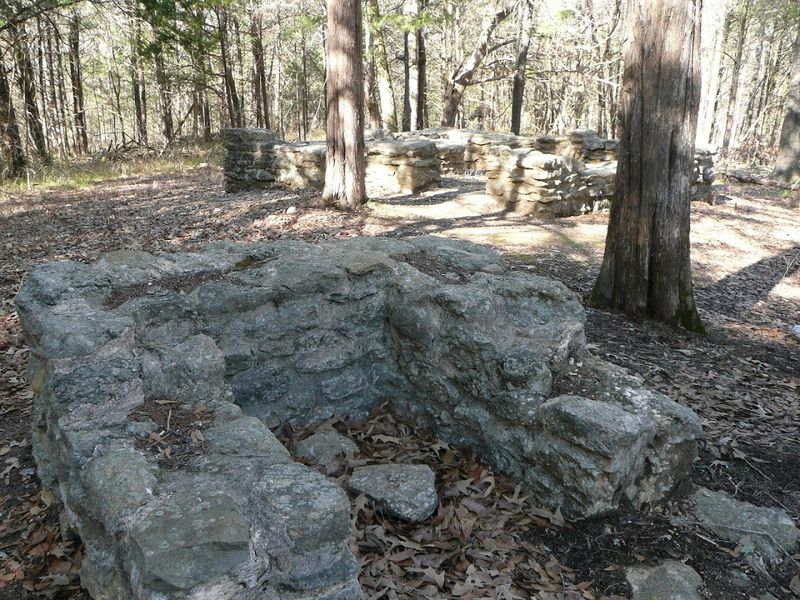
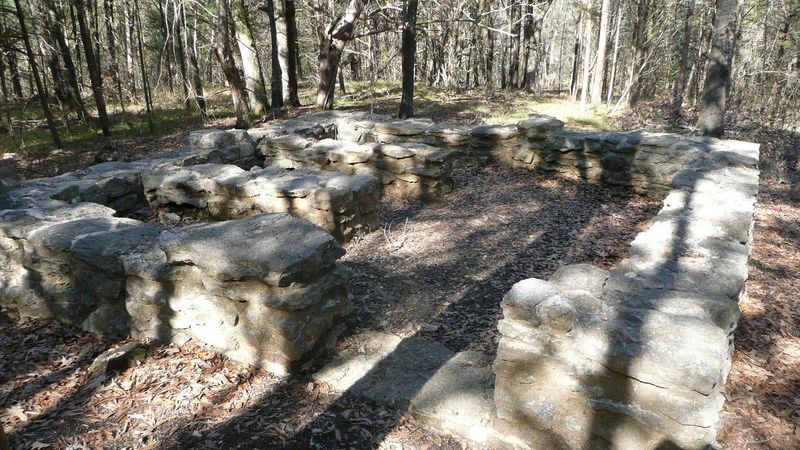
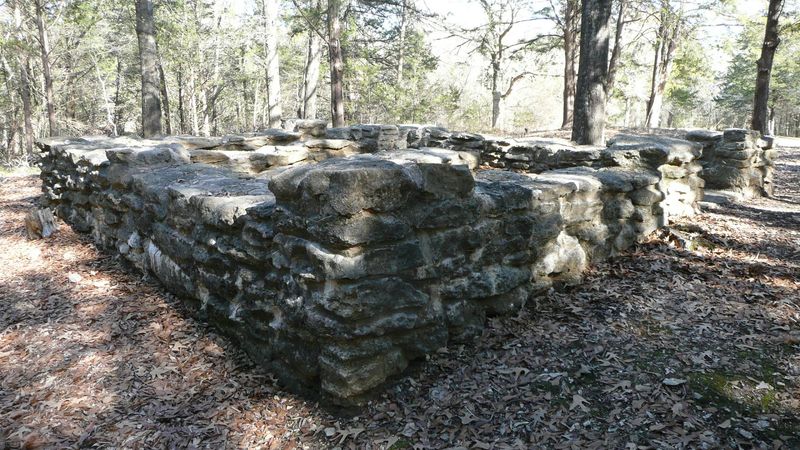
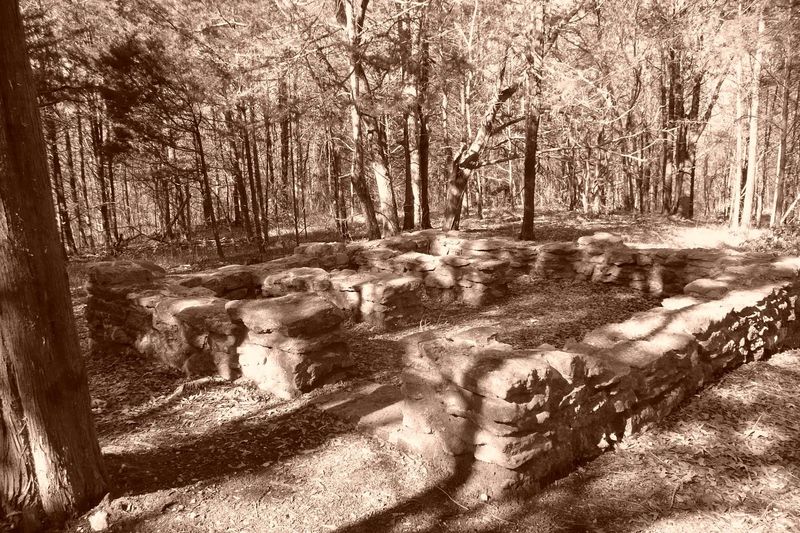
What makes this place so striking is how ordinary it looks at first glance. There are no towering stone walls or collapsed buildings dramatically posed for photographs.
Instead, you get depressions in the earth, scattered remnants, and interpretive markers that slowly piece together a story far bigger than the quiet field in front of you.
Doaksville was not a forgotten backwater. It was a real, functioning capital city of the Choctaw Nation during the 1830s, and the trail gives you just enough context to feel the weight of that fact as you walk through what remains of it today.
How Doaksville Became the Choctaw Capital
Before it became a ghost town, Doaksville was a place of real political power. Understanding how it rose to prominence makes walking its trail feel much more meaningful than just a casual stroll through the woods.
The story starts with a trading post established by the Doak family in the early 1800s. After the forced relocation of the Choctaw people from Mississippi under the Indian Removal Act, Doaksville became a destination point along what is now recognized as the Choctaw Trail of Tears.
Thousands of people arrived here after an agonizing journey, and the settlement quickly grew into something larger than a simple trading post.
By the mid-1830s, the Old Doaksville Townsite History Trail marks the ground where Doaksville officially became the first capital of the Choctaw Nation in Indian Territory. That is not a small historical footnote.
That is a major chapter in the story of Indigenous governance and resilience in North America.
The town grew to include stores, law offices, a printing press, and a newspaper. For a time, it was genuinely buzzing with political and commercial activity.
Walking the trail today, knowing all of this, turns every unmarked patch of ground into something worth pausing over. The soil here has stories in it that most Oklahoma visitors never get the chance to hear.
The Trail of Tears Ends Right Here
There is a particular kind of heaviness that settles over you when you realize you are standing at the endpoint of one of history’s most painful journeys.
The Old Doaksville Townsite History Trail is recognized as the terminus of the Choctaw Trail of Tears, and that fact alone makes this place unlike almost anywhere else in Oklahoma.
The Choctaw removal from Mississippi began in 1831, and the forced marches through brutal winter conditions killed thousands of people before they ever reached Indian Territory.
Those who survived eventually made their way to this area of southeastern Oklahoma, near the Red River, where Doaksville offered at least the possibility of rebuilding something.
Calling this place a refugee camp feels almost too clinical for what it actually was. It was where exhausted, grieving, and displaced families tried to reconstruct an entire civilization from scratch.
The fact that they succeeded in establishing a functioning capital here is remarkable by any measure.
Walking the trail with this context in mind is a very different experience from a casual nature walk. The informational markers along the path help connect the dots, but the emotional weight comes from the land itself.
There is a stillness here that feels earned rather than accidental, and it stays with you long after you drive back out on Red Road.
Fort Towson and the Town It Built, Then Broke
Fort Towson and Doaksville had a relationship that was equal parts symbiotic and complicated. The military post was established in 1824, years before the Choctaw removal, and its presence shaped everything about how the surrounding area developed.
The fort created demand. Soldiers needed supplies, services, and commerce, and Doaksville grew up to meet that demand.
Merchants, traders, lawyers, and craftspeople set up shop knowing the fort’s population would keep business moving. For decades, the two communities fed each other in a way that made both stronger.
But when Fort Towson was permanently closed after the Mexican-American War in 1854, the economic engine that had kept Doaksville humming began to sputter. Businesses that had depended on military contracts and soldier spending found the ground shifting beneath them.
The Old Doaksville Townsite History Trail passes through land where all of that commercial activity once happened, and the contrast between what was and what remains is quietly striking.
Then came the Civil War, which hit this region especially hard. The Choctaw Nation was caught in the conflict between the Union and the Confederacy, and the fighting devastated the plantation-based economy that had taken root in the area.
Crops were destroyed, infrastructure collapsed, and Doaksville never fully recovered from the combination of blows it absorbed during those years.
The Civil War Chapter Nobody Talks About
Most Civil War history in popular culture focuses on the eastern theater, Virginia, Pennsylvania, and the famous generals who fought there. But southeastern Oklahoma had its own brutal chapter of that war, and the Old Doaksville Townsite History Trail sits right at the heart of it.
The Choctaw Nation formally aligned with the Confederacy in 1861, a decision driven by geography, economic ties, and political pressure rather than simple loyalty. The consequences were severe.
Union forces and Confederate forces both moved through this region, and the resulting destruction of crops, homes, and infrastructure left communities like Doaksville struggling to survive.
By 1863, the situation had deteriorated enough that the Choctaw capital was officially moved from Doaksville to Chahta Tamaha, also known as Armstrong Academy.
The political heart of the Choctaw Nation was beating elsewhere now, and Doaksville was left without the institutional anchor that had given it purpose and identity.
Walking through the townsite today, it is easy to see this as just an empty field. But knowing the Civil War tore through here, stripped it of its economy and its government in just a few years, gives the emptiness a very specific texture.
This was not gradual decline. It was rapid collapse, and the land still carries that abruptness in the way it sits so quietly now.
The Railroad Delivered the Final Blow
If the Civil War wounded Doaksville, the railroad finished the job. It is one of those brutally common stories in American frontier history: a town thrives, a railroad gets built nearby, and the town either adapts or disappears.
Doaksville did not get a chance to adapt.
When railroad construction pushed through southeastern Oklahoma, the tracks were laid south of Doaksville, closer to the old Fort Towson area. That decision was not made with any particular malice toward Doaksville, but the effect was devastating.
Commerce, people, and energy all migrated toward the railroad line, because that was where goods could move efficiently and where new economic opportunities were forming.
The community that grew up around the railroad and the old fort location absorbed whatever remained of Doaksville’s population and commercial life. The original townsite was left behind, literally and figuratively, as the region’s center of gravity shifted south.
Standing at the Old Doaksville Townsite History Trail today, this is the final piece of the puzzle that explains why the place looks the way it does. No dramatic fire, no single catastrophe.
Just a series of hard blows spread across several decades, each one removing another reason for people to stay. By the late 19th century, Doaksville existed only in memory, in documents, and in the soil you are walking on when you visit the trail.
What the Trail Actually Looks and Feels Like

Before you get too deep into the history, it helps to know what you are actually walking into when you show up at the trailhead. The Old Doaksville Townsite History Trail is not a difficult hike.
It is a relatively short, accessible walk that most people in reasonable health can handle without much preparation.
The trail begins at the north end of Fort Towson Cemetery and heads east through a mix of open and wooded terrain.
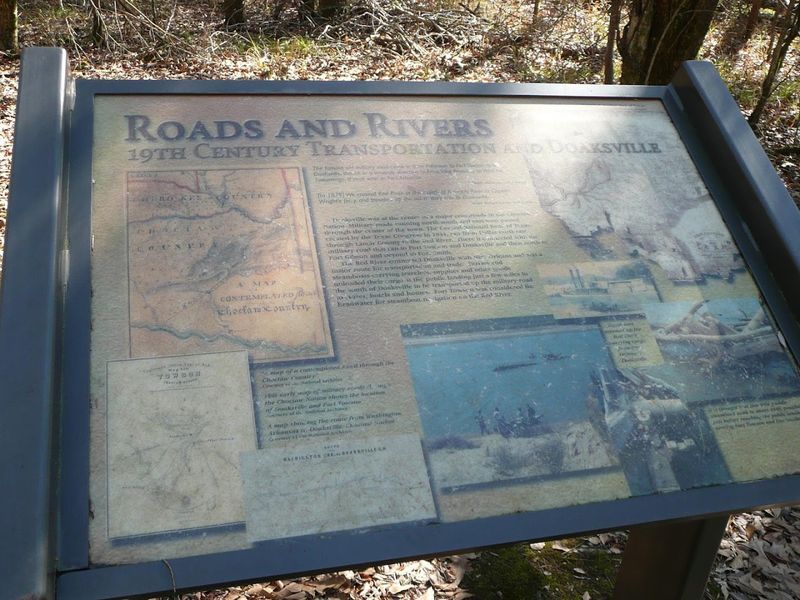
The path is maintained well enough that you are not fighting through dense brush, and the informational markers placed along the route do a solid job of orienting you to what you are seeing and where you are standing in relation to the original townsite layout.
The setting itself has a quality that is hard to describe without sounding overly dramatic. It is quiet in a way that feels significant rather than just peaceful.
The trees are tall, the undergrowth is green, and the whole landscape carries a sense of age and layered time that you do not get at more heavily developed historical sites.
Because the trail is open 24 hours a day, visiting at sunrise or just before sunset gives you a version of the experience that is genuinely different from a midday visit.
The light does something interesting to the landscape at those hours, and the absence of other visitors adds to the sense of being somewhere that has not quite decided to fully reveal itself yet.
Practical Tips for Making the Most of Your Visit
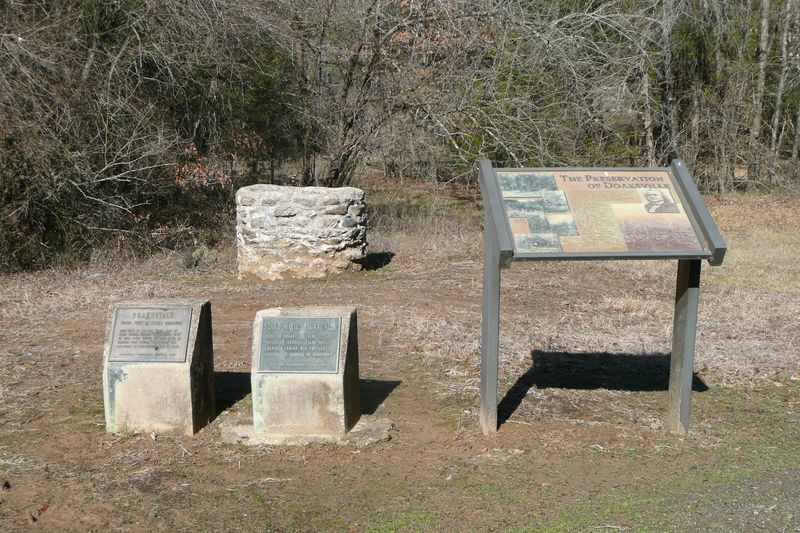
Showing up prepared makes a real difference at a site like this, because the Old Doaksville Townsite History Trail is not the kind of place that holds your hand through the experience. There is no gift shop, no visitor center, and no guided tour waiting for you at the entrance.
Wear closed-toe shoes with decent traction, especially if you are visiting after rain when the trail can get muddy and slick in spots.
Bring water regardless of the season, because southeastern Oklahoma summers are legitimately hot and humid, and even a short walk can leave you more drained than you expected.
Spending some time reading about Doaksville before you go pays off in a big way. The interpretive markers on the trail are informative, but arriving with background knowledge lets you connect the dots faster and feel the full weight of what you are standing in the middle of.
The website at redriverhistorian.com has solid historical context worth reading the night before your visit.
The site is located at Red Road in Fort Towson, Oklahoma 74735, which is in Choctaw County in the southeastern corner of the state. Cell service can be inconsistent in this area, so downloading maps or directions ahead of time is a smart move.
Plan for at least an hour, and give yourself permission to linger wherever the markers make you stop and think.
Dear Reader: This page may contain affiliate links which may earn a commission if you click through and make a purchase. Our independent journalism is not influenced by any advertiser or commercial initiative unless it is clearly marked as sponsored content. As travel products change, please be sure to reconfirm all details and stay up to date with current events to ensure a safe and successful trip.
