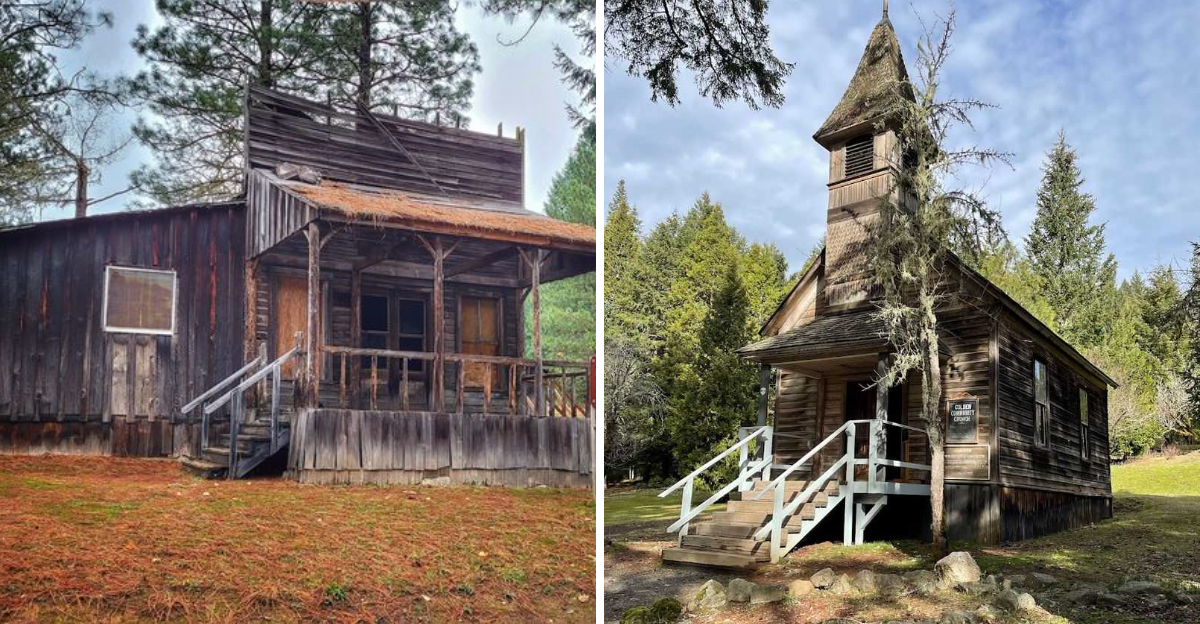
A scattering of old wooden buildings sits quietly off a rural highway where most drivers never bother to stop. I parked the car and walked toward weathered cabins and a schoolhouse frozen in time from Oregon’s pioneer days.
Oregon has a forgotten village with no admission fee and hardly any visitors to disturb the peaceful silence. The structures creak gently in the wind and you can peek through dusty windows at furniture left behind long ago.
I stood in the old general store and imagined pioneers trading supplies and sharing news from faraway towns. Oregon really preserves a piece of history where curious explorers can wander freely without crowds or gift shops or entrance gates.
The grass grows tall around the buildings and wildflowers add splashes of color to the quiet scene. I spent an hour reading faded signs and wondering about the families who built their lives here over a century past.
The whole place feels like a secret handed down only to those who take the time to find it. You leave feeling like a time traveler who stumbled into a chapter of history most people will never read.
Getting There: The Easy Drive Off Interstate 5
One of the best things about this place is how ridiculously easy it is to reach. Golden State Heritage Site sits just a few miles off Interstate 5, near the small town of Wolf Creek in southern Oregon.
The drive from the highway takes roughly five to ten minutes.
You follow a winding road through second-growth forest. The route is paved and manageable for most vehicles, including sedans and small RVs.
Parking is on the right side of the road as you approach the site. The signs can be easy to miss, so slow down and keep your eyes open.
There is a designated pull-off area where visitors are expected to park.
A caretaker is sometimes present on site. Visitors who park on the wrong side of the road near the buildings have reportedly been redirected, so following the posted signs matters.
The drive itself is scenic and sets the mood perfectly before you even step out of the car.
The Historic Church: Standing Tall After 150 Years
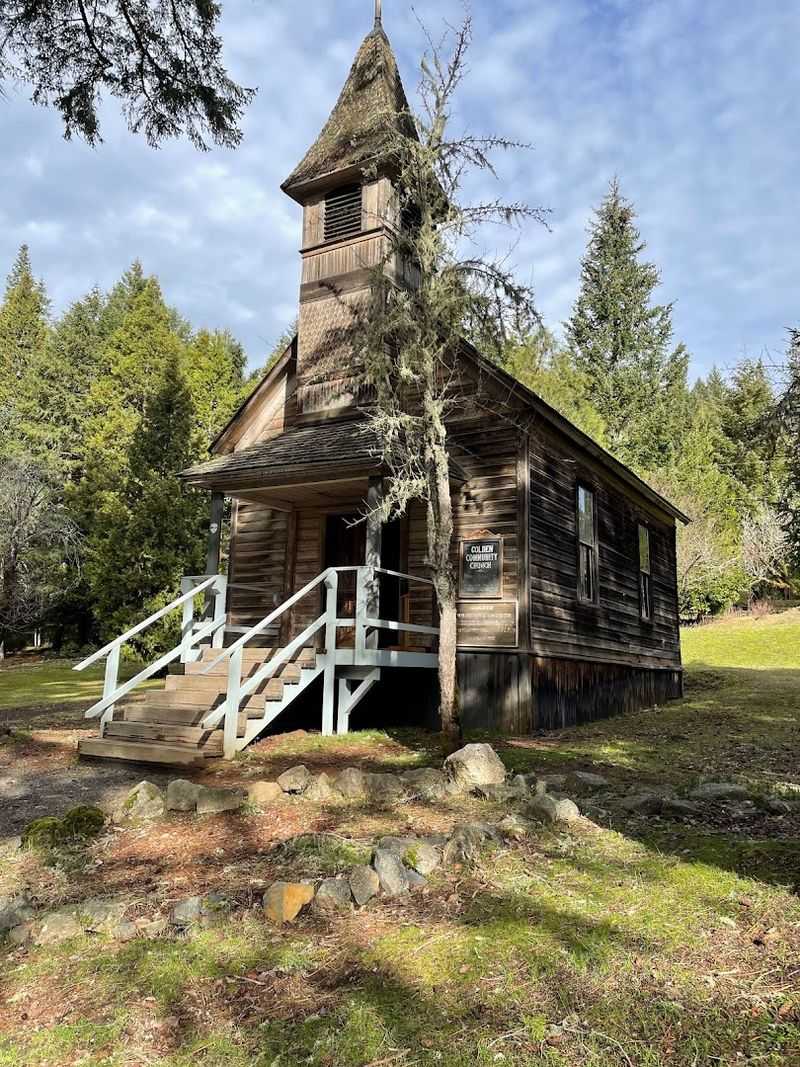
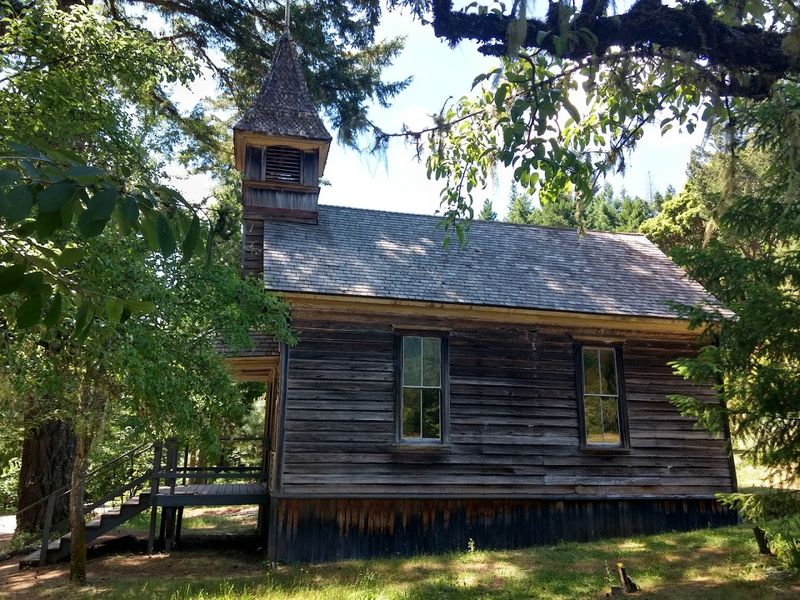
The church at Golden is one of those buildings that just hits differently when you first see it. It stands white and weathered against the green of the surrounding forest, looking almost too perfect to be real.
Visitors can go inside when the site hosts are present, typically between 8 AM and 8 PM.
Stepping through the door feels like crossing a threshold into another century. The wooden pews, the simple altar, the narrow windows letting in soft light.
Everything is spare and honest, the way frontier worship spaces tended to be.
Interestingly, Golden was unusual for a mining town. It had two churches and no saloons.
That detail alone says something meaningful about the community that built this place.
The church has been carefully preserved and is one of the most photographed structures at the site. Even looking at it from the outside, it carries a quiet dignity that is hard to describe but easy to feel the moment you arrive.
The One-Room Schoolhouse: Where Pioneer Children Learned
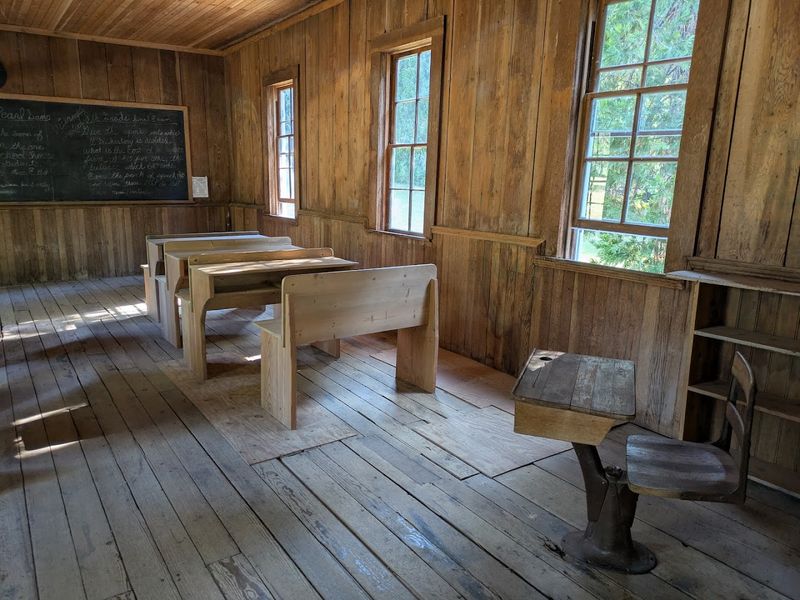
Right alongside the church stands the old schoolhouse, and it quickly became my favorite building at the entire site. There is something about a one-room school that makes history feel immediate and real.
You can picture the children sitting at rough wooden desks, learning to read and write in this small, sun-filled room.
The schoolhouse is also accessible to visitors when hosts are on site. The interior is simple but evocative, with just enough original detail remaining to spark your imagination about daily life here in the 1800s.
It was closed for repairs during some past visits, so conditions can vary. Checking ahead or simply being prepared for limited access is a smart move.
Even if the door is closed, looking through the windows gives you a clear sense of the space.
The building itself is in remarkably good condition given its age. Preservation volunteers have worked hard to keep it standing.
That kind of dedication to history is something worth appreciating when you visit.
The General Store and Other Remaining Structures
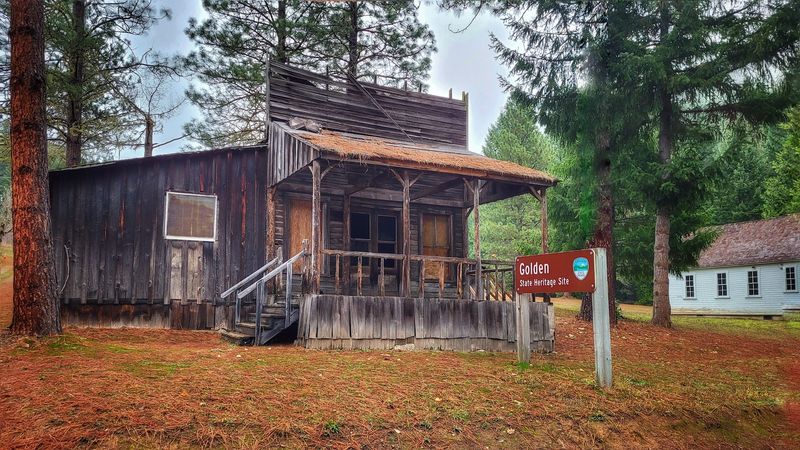
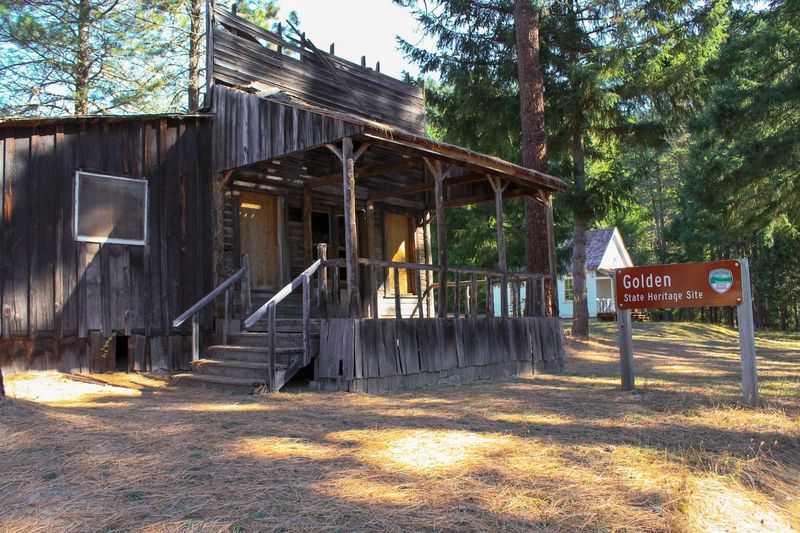
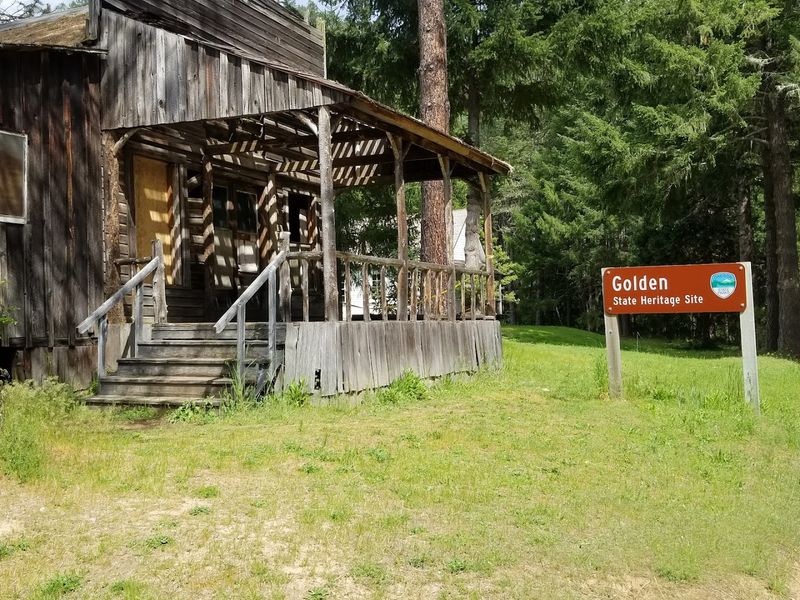
Beyond the church and schoolhouse, several other structures dot the property. The old general store is one of the most striking.
Its wooden deck sags slightly, and the walls have taken on the silver-gray tone of very old timber.
Visitors have described standing on that deck and feeling an unusual rush of sensation, something between lightheadedness and a strong awareness of the past. Whether you believe in that kind of thing or not, the atmosphere is undeniably powerful.
Most of the additional buildings cannot be entered, but you can look through windows and observe the interiors from outside. Information signs near each structure explain what the building was used for and who may have lived or worked there.
There is also the collapsed Ruble House, which has been cleared of brush. Plans exist to eventually re-erect the structure, though funding and resources remain limited.
Seeing a building mid-collapse is its own kind of history lesson, honest and unfiltered.
The Old Graves: A Quiet and Thought-Provoking Corner
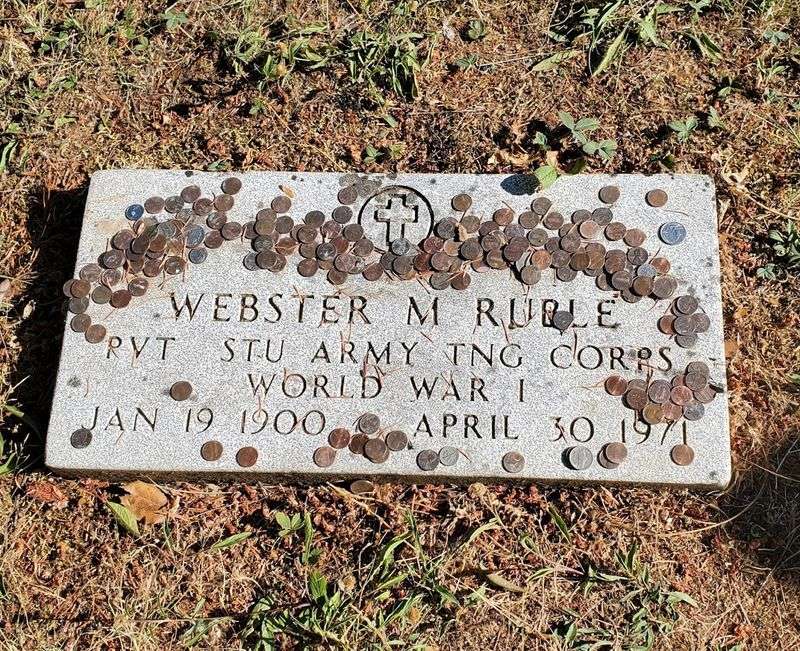
Near the edge of the site, three graves stand in a small cluster. They are quiet and easy to overlook if you are moving quickly.
One marker identifies a gold miner. Two others mark veterans.
The surnames on the graves do not match the most prominent family names associated with Golden. That mystery has puzzled visitors for years, and the site does not offer a definitive explanation.
Sometimes history leaves gaps, and those gaps are their own kind of story.
Standing at those graves, you feel the full weight of what it meant to live and die in a remote mining settlement in the 19th century. No big city nearby.
No easy access to medicine or supplies. Just the land, the work, and the community you built around yourself.
The graves are well-maintained and treated with respect. They serve as a reminder that Golden was not just a collection of buildings.
It was a place where real people made real lives, and some never left.
The Ghost Town of Golden: A Forgotten Oregon Mining Village
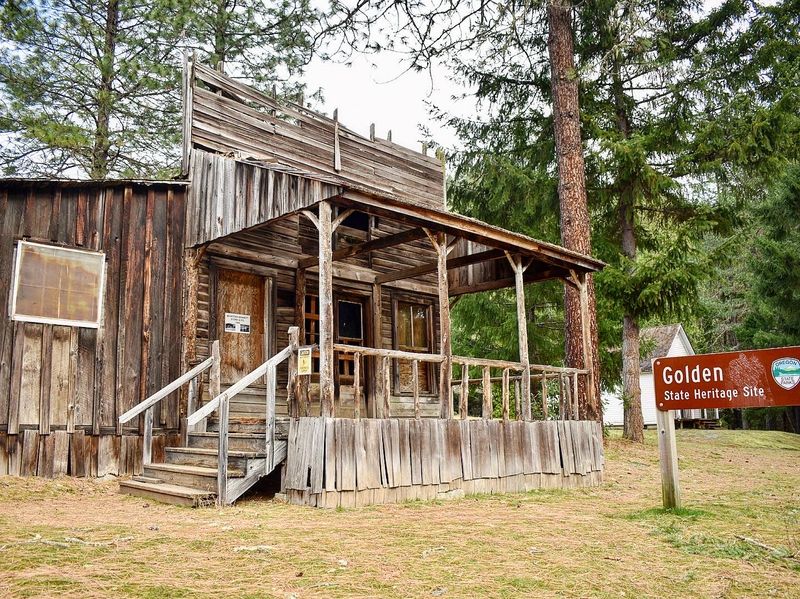
Not many people can say they have wandered through a genuine 19th-century mining town. Golden, Oregon was a real working community, active from roughly 1850 to 1913.
At its peak, it was a busy gold mining settlement tucked deep in the hills of Josephine County.
The town had homes, churches, and a school. It had families, children, and daily life.
Then the gold ran out, and people simply moved on, leaving the buildings to stand quietly in the trees.
Today, the site is managed as part of Oregon State Parks. The preserved structures give visitors a rare, unfiltered look at pioneer life.
There are no ticket booths, no tour guides pushing you along, and no crowds blocking your view.
Walking through Golden feels genuinely personal. You can take your time reading the information signs posted around the property.
Each one adds another layer to the story of the people who once called this remote valley home.
The Gold Mining Trail: A Walk Back to the Creek
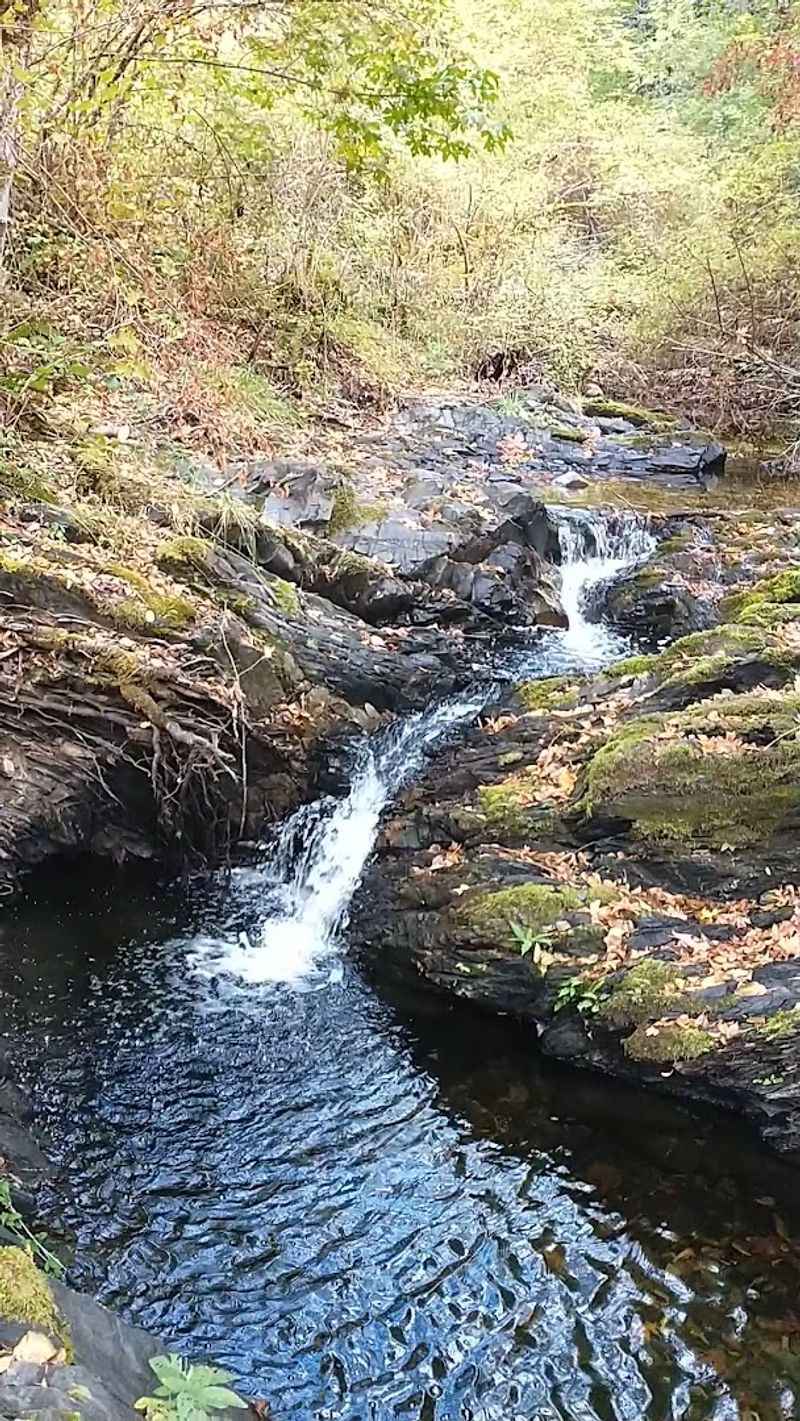
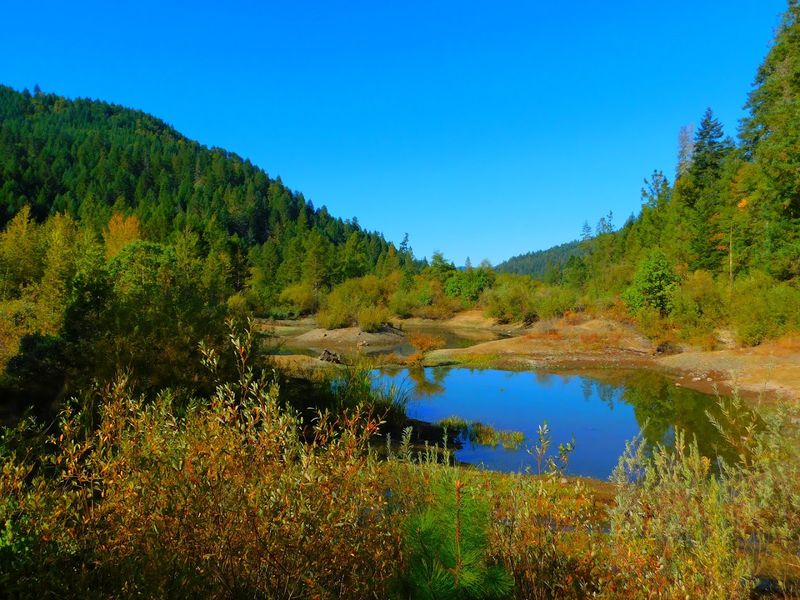
Across the road from the main buildings, a trail leads down toward the creek where gold mining once took place. It is an easy, relatively short walk, accessible to most visitors without any special gear or fitness level required.
The creek has been undergoing impressive restoration work. Mining activity historically disrupted the natural flow and ecology of waterways, and the work happening here is bringing the creek back to life in a meaningful way.
Along the trail, you might spot geese resting near the water, turtles sunning on logs, or other wildlife going about their day. The eucalyptus trees near the water add an unexpected and pleasant scent to the air.
The old mining ponds are visible from parts of the trail. They are a striking reminder of just how much human activity reshaped this landscape over decades of extraction.
The contrast between the restored sections and the altered terrain makes the walk genuinely educational. Pack water and wear comfortable shoes for this short but rewarding hike.
Ghost Adventures Filmed Here: The Spooky Side of Golden
If you have ever watched the television show Ghost Adventures, you may already know about Golden. The crew filmed an episode here, drawn by the town’s atmospheric buildings and its long, layered history.
That episode introduced a lot of people to this place for the first time.
Whether you are a believer in the paranormal or a firm skeptic, the Ghost Adventures connection adds a fun layer to any visit. Some visitors report unusual sensations near the general store, a sudden lightheadedness or a feeling of being watched.
Others feel nothing at all and simply enjoy the history.
Any nighttime activities at the site need to be coordinated in advance with the ranger at Wolf Creek. The site is not set up for unsupervised after-dark visits.
That said, even a daytime visit carries a certain atmospheric charge that is hard to shake.
The show helped put Golden on the map for a new generation of history and mystery enthusiasts. It is one reason visitor numbers have grown steadily over recent years.
Practical Tips Before You Visit Golden State Heritage Site
A little planning goes a long way when visiting Golden. The site has no restrooms inside the main area, though a porta-potty is available across the road from the schoolhouse.
There is no running water on site, so bring your own.
There are also no trash cans at Golden. The rule is simple: pack it in, pack it out.
Keeping this place clean is part of what allows it to remain free and accessible for everyone.
Guests may bring pets on the grounds but must keep them on a leash at all times. The site does not allow animals inside the buildings.
There is no smoking permitted anywhere on the property.
Watch for poison oak along the trail and near some of the buildings. It grows abundantly in this part of Oregon, and brushing against it is unpleasant.
At least one visitor has spotted a black bear on the road nearby. Stay alert and enjoy the wildlife from a respectful distance.
The site remains free to enter and open year-round.
Why Golden State Heritage Site Deserves More Attention
There are not many places left in the American West where you can walk through a genuinely preserved 19th-century community for free. Golden is one of them.
The fact that it remains largely unknown makes it even more special.
A film crew partially restored the site in the 1950s as a film set for the TV show Bonanza and several western movies. That restoration helped preserve structures that might otherwise have collapsed entirely.
Today, Oregon State Parks manages the site, though funding has historically been limited.
Volunteers and on-site hosts carry a lot of the weight here. The hosts keep a red binder full of local history, and they are happy to share it with curious visitors.
That personal touch makes the experience feel warm rather than institutional.
Golden rewards slow, curious visitors the most. Give yourself at least an hour, read the signs, walk the trail and sit on one of the picnic benches and just listen to the forest.
Address: Golden State Heritage Site, Wolf Creek, OR 97497
