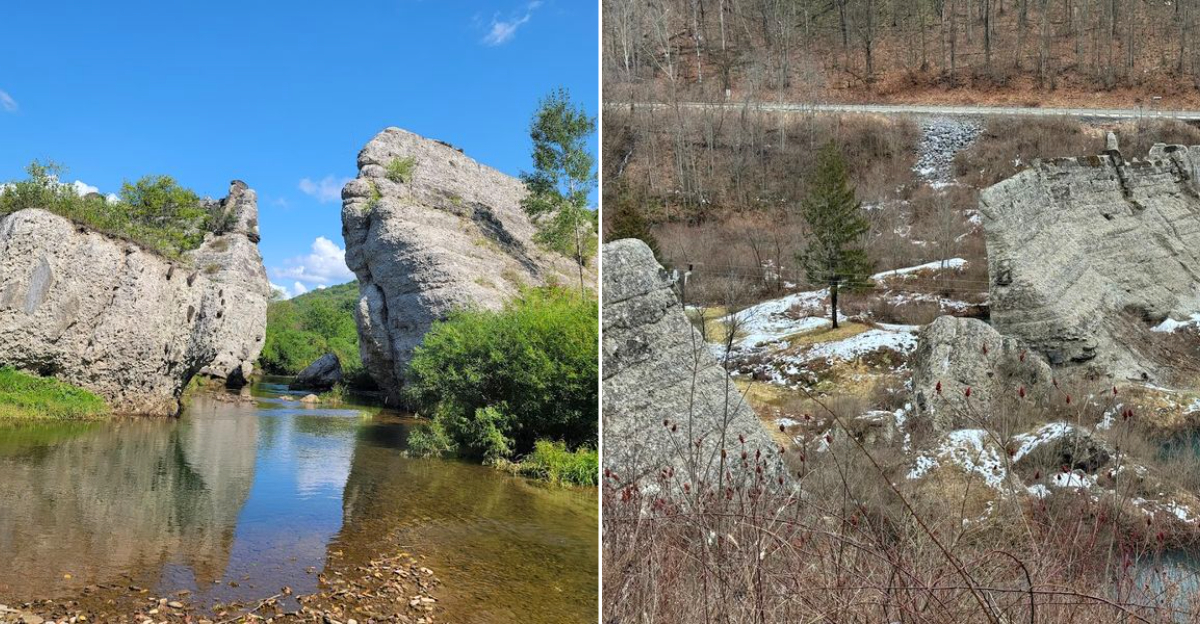
You know those abandoned places that should look completely broken down by now, and yet somehow still seem to be holding their ground? That is exactly the strange effect this Pennsylvania dam ruins site has.
The moment you see it, the whole place feels far more intact than most people expect from something left behind so long ago. That is what makes it so fascinating right away.
Instead of a few scattered remains forcing you to imagine the rest, you get ruins that still hold enough shape, structure, and presence to make the past feel unusually close. The scale helps, the quiet around it adds even more, and the preserved look makes the whole setting feel a little eerie without trying too hard.
It is the kind of place that makes you stop longer than planned, because the better it has held up, the harder it is to stop looking at it. By the time you leave, this Pennsylvania site feels less like a ruin and more like a piece of history that never fully gave in.
Stone Ruins That Still Look Startlingly Intact
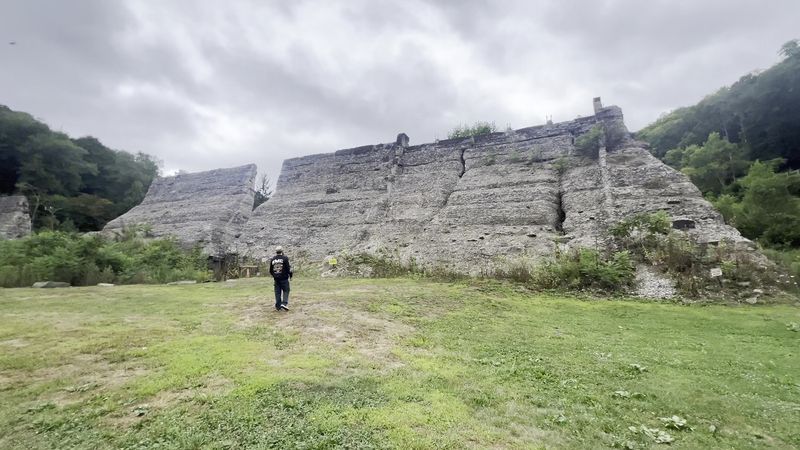
Pulling into Austin Dam Memorial Park at 5384 State Route 872 N, Austin, PA 16720, the first thing that lands is the height and heft of those broken concrete walls. They feel solid in a way photos never quite catch, like the valley just learned to live with them.
From a few steps back, the lines still read as a dam, which is wild considering everything that happened here.
Walk along the grass and you can trace the curve, the spillway outlines, and the breaks where water muscled its way through. The blocks seem squared and purposeful, even with jagged edges and missing faces.
Light slides across the surfaces and shows old formwork marks, and you realize how much human hand is still visible inside this quiet place.
It is not pretty in a tidy sense, but it is strangely clean in spirit, like the site decided to hold its posture. The valley frames it, and the trees sit back just enough to let your eyes study the shapes.
You can stand there and feel the weight of decisions and materials and time.
That is what feels startling out here in Pennsylvania. The ruins have not melted into rubble, and they have not been polished into a monument.
They meet you exactly where they are, tough and clear, and you can move around them without losing the thread of what they were and what they became.
Why This Dam Site Feels Frozen In Time
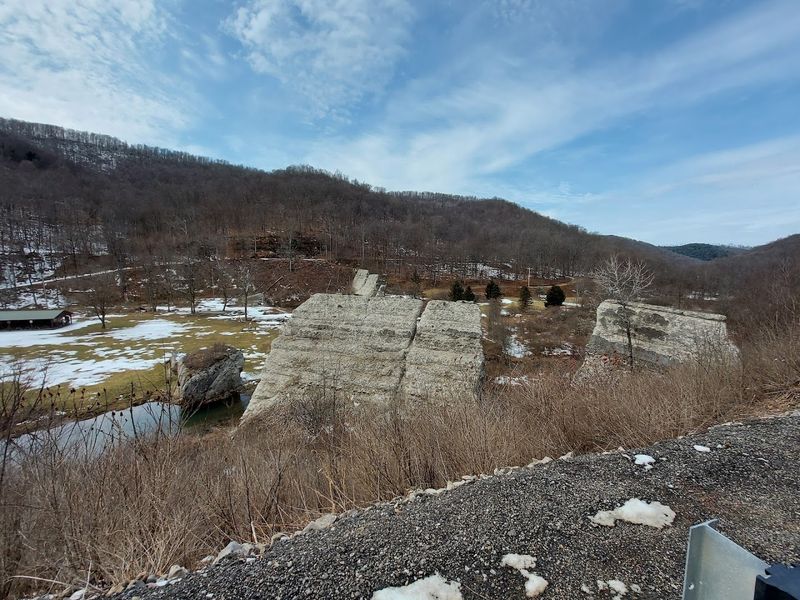
There is a hush hanging over this valley that makes everything feel paused, like someone hit a big invisible button and walked away. The concrete stands still, the creek keeps a steady voice, and the hills hold the sound so it does not rush off.
Even the wind seems to take its time as it slides through the grass and past the broken walls.
Part of it is the scale. The shapes are huge, but they are not fussy, and your brain can outline the old structure without squinting.
You look left, you look right, and the scene fills itself in as if the rest could be sketched with a pencil.
Another part is the way people behave here. Folks speak softly without being told, and footsteps slow down.
You are not tiptoeing, but you are paying attention, and that changes everything.
In Pennsylvania, there are plenty of historical places that get busy and loud, but this one leans into quiet. It is accessible without being crowded, open without losing its privacy.
By the time you circle back to your car, you get the sense that the day out here barely moved, and somehow that feels right.
A Pennsylvania Disaster Site With Lasting Visual Power
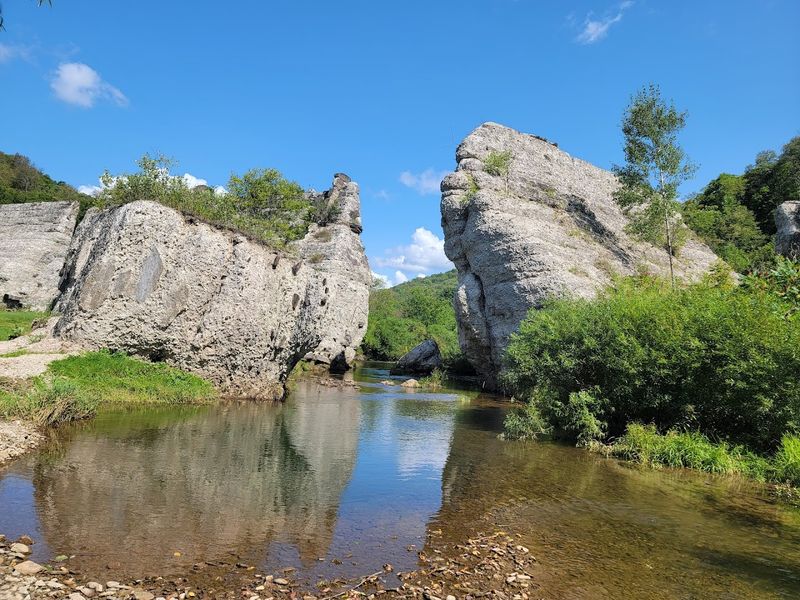
Some places pull your eyes in and do not let go, and this is one of them. The walls rise and tilt, and each angle seems to collect stories the way corners collect leaves.
Even if you know the broad strokes, standing here makes the narrative far less abstract and far more physical.
I kept noticing how light defines the edges. In the morning, the shadows carve deep channels that make the breaks look like open mouths.
Late day, the surfaces glow and the cracks soften, which somehow makes the whole thing feel heavier.
It is not about spectacle so much as presence. You can see where water once moved, and you can feel how mass sometimes yields all at once.
That mix of stillness and implied motion is why the scene sticks with you long after you leave.
This is Pennsylvania telling a hard story in a language of concrete, rock, and water. No velvet rope can make that land more careful than it already is, and no plaque can sum it neatly.
What lasts is the picture in your head, layered with texture and weather and the sound of the creek working on its own clock.
The Valley Setting That Makes The Ruins Hit Harder
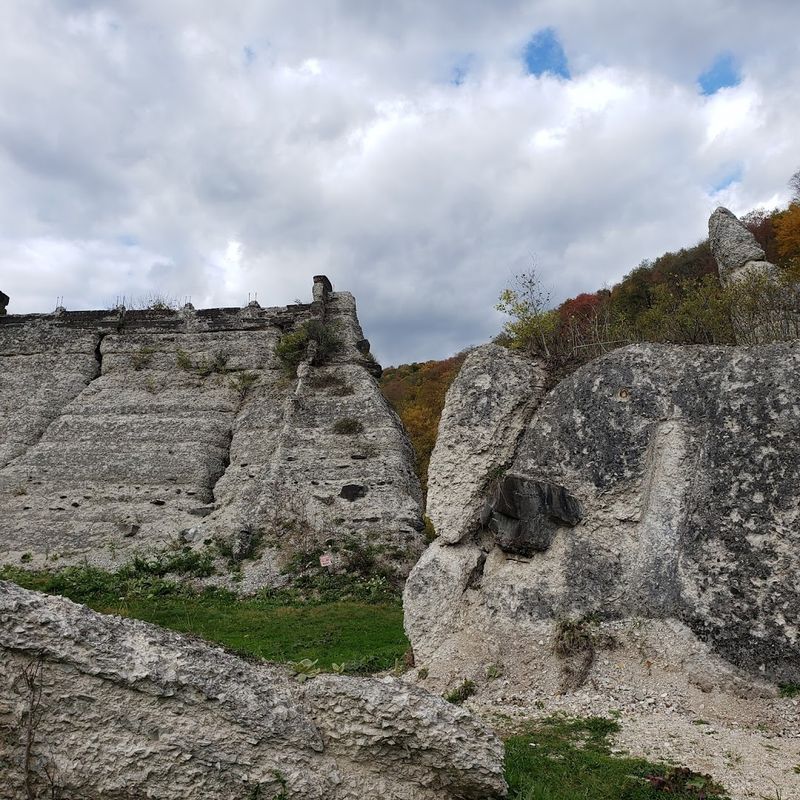
If the dam pieces were dropped in a city lot, they would still be impressive, but this valley turns them into a movie scene. The slopes tuck in around the concrete, and the creek threads the bottom like a line under a sentence.
From almost any angle, your eyes move from the walls to the trees and back again like they are in conversation.
The setting also helps with scale. The hills give you a ruler without needing numbers, and suddenly the size lands in your body instead of just your head.
On a clear day, the sky feels close enough to press a palm against, which only adds to the sense that the place is holding its breath.
Walk a little, and details stack up. Ferns at the edges, grass brushing your legs, patches of wildflowers leaning into the sun.
Even the gravel feels calm underfoot, like it knows it is part of the story now.
Out here in Pennsylvania, valleys carry memory in a way flat ground rarely does. The shape funnels your focus and keeps you present.
By the time you look back at the walls, they seem bigger and more legible, and the whole scene lands with a quiet thud you feel in your chest.
How The Broken Concrete Still Tells The Story
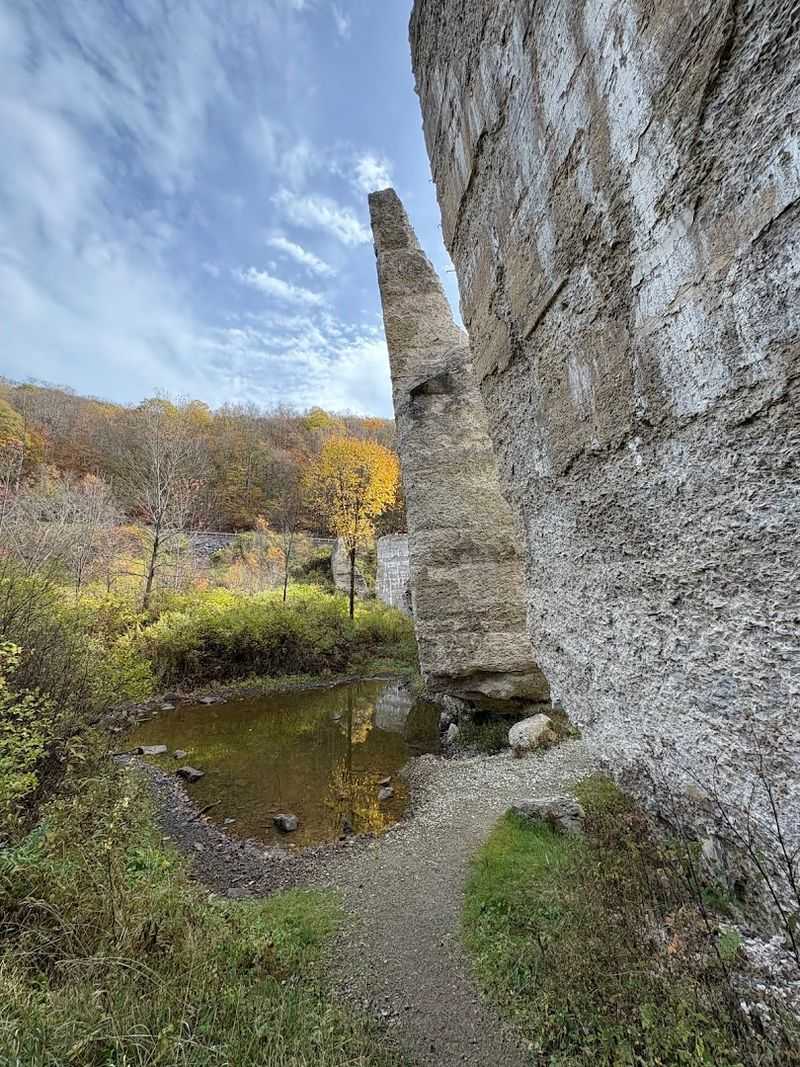
Lean in close to the concrete and you can read it like a diary. There are form lines where boards once pressed, little air pockets that look like frozen bubbles, and edges that show how a break travels when it finds a weakness.
Every surface has a clue if you give it a patient look.
You can trace where water chewed through and where pressure settled. Some faces are surprisingly smooth, and others bristle with rough aggregate that grabs the light.
It is not clean damage, but it is legible, and that difference matters when you are trying to imagine what happened.
Try running a finger across a cool patch, and you might feel the tiny ridges left by old molds. You see faint stains in one corner and realize they are telling you which way the flow once leaned.
None of this needs a guide if you are willing to slow down.
That is the gift of this Pennsylvania site. The monument is the material itself, and the narrative is the way it fractured.
You stand there, breathing easy, hearing the creek, and you can feel the story click into place without a single loud cue.
Why The Site Feels So Strangely Well Preserved
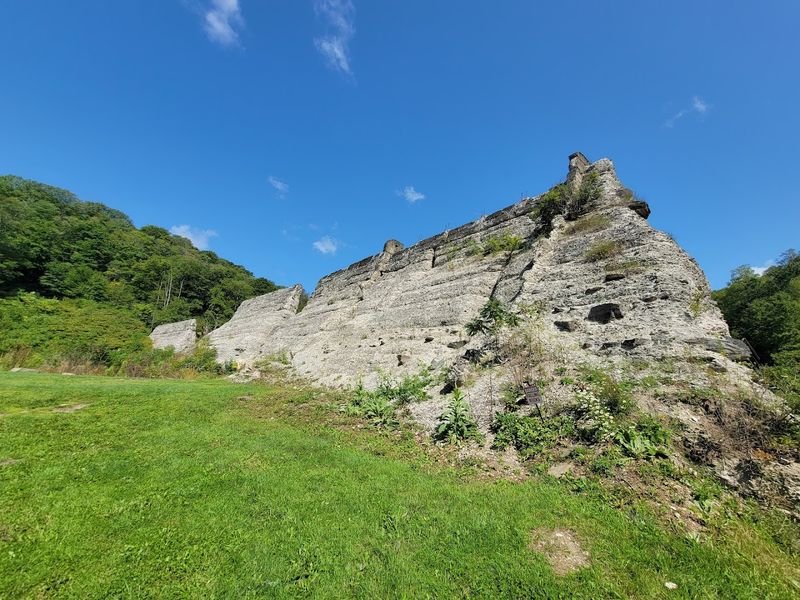
It is wild how intact everything feels, and a lot of that comes from simple care matched with respectful distance. The grounds look tended without being manicured, and the concrete has been left to speak for itself.
That balance keeps the place honest, which is why your brain reads it as preserved rather than polished.
Weather has worked on the surfaces, sure, but not in a way that blurs the shape. Edges still catch light, corners still declare their angles, and the big masses stand right where your eyes expect them.
You are not squinting to guess what it used to be.
Another reason is the setting itself. The valley shelters the pieces from chaos, and the creek keeps steady company without tugging at the seams.
It all feels like a truce between nature and memory.
As Pennsylvania spots go, this one holds a rare line between access and reverence. You can approach, you can study, but you never feel like the place is being staged.
That is exactly why it lives in your head as strangely well preserved.
A Memorial Park Built Around Massive Historic Remains
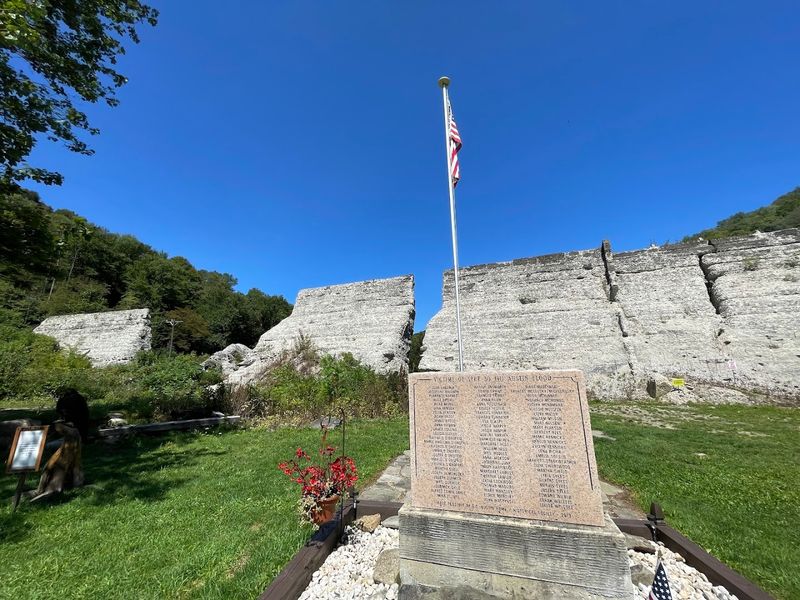
I love that the memorial lives in the open and the open lives in the memorial. Instead of tucking the ruins behind ropes, the park wraps the experience around them, so you are always aware of both the story and the space you are walking through.
It feels generous, and it feels honest.
The memorial elements do their work without drama. Names and memory sit within sight of the structures that shaped the town, and the simplicity keeps the emphasis where it belongs.
You take it in, you breathe, and you keep moving with a little more care in your steps.
The scale of the remains anchors the park, which means the lawn, the creek, and the trails all orbit that central gravity. Nothing competes with it, yet nothing hides from it either.
The design trusts visitors to handle what they see.
That is a very Pennsylvania way to hold history. Practical, respectful, and grounded.
You leave with a fuller picture, not just of what failed, but of how communities carry memory forward in a landscape that keeps on living.
The Quiet Atmosphere That Makes The Ruins Even More Striking
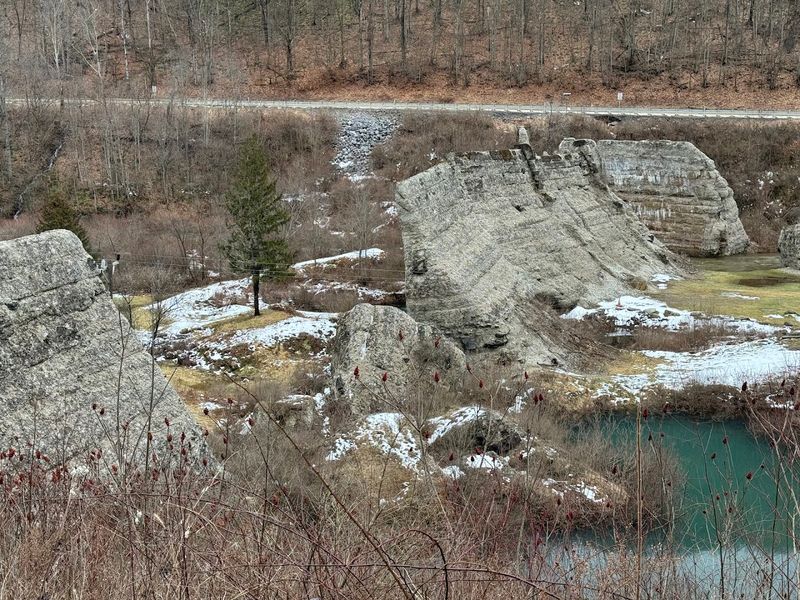
Silence is not empty here, it is layered. You hear water, you hear a bird far off, and then you notice the kind of quiet that lets your thoughts settle.
That hush wraps the concrete in a way that makes the shapes feel sharper and the spaces between them feel important.
When people do speak, voices stay easy and low. It is not a rule, it is just the tone the place sets.
If you come with a friend, you find yourself pointing with a nod more than with words.
Quiet changes how you look. Instead of scanning fast, you pick a line in the wall and follow it with your eyes, and the details unfold.
The more you pause, the more you notice small shifts in color, small bends in broken edges, small clues that add up.
In a state like Pennsylvania where so many outdoor spots buzz with activity, this calm feels like a gift. It is not lonely, it is just respectful.
And in that stillness, the ruins stand taller without anyone needing to make them grand.
Why Austin Dam Still Feels Astonishingly Intact
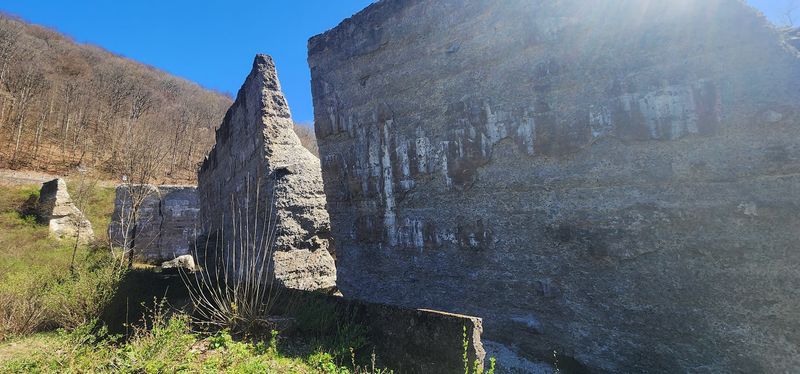
Here is the thing I keep coming back to. Even with breaks and missing sections, the outline is there, and your head can rebuild it without strain.
That is the difference between scattered debris and a living ruin, and it is why this place keeps surprising people.
The pieces stand in logical positions, and the land still cradles them in the original footprint. You can see how water once pressed against a face, how the spill path likely tracked, and how the load once traveled.
It adds up quietly but completely as you walk.
Another reason it feels intact is what you do not see. There is very little that distracts or clutters the scene, and the maintenance feels light but thoughtful.
The result is a space where history breathes on its own terms.
If you are making a loop through northern Pennsylvania, this is the stop that lingers after the drive fades. The ruins meet your curiosity with clear shapes and steady calm.
You leave feeling like you did not just look at history, you stood inside its outline and listened while the valley held the echo.
Dear Reader: This page may contain affiliate links which may earn a commission if you click through and make a purchase. Our independent journalism is not influenced by any advertiser or commercial initiative unless it is clearly marked as sponsored content. As travel products change, please be sure to reconfirm all details and stay up to date with current events to ensure a safe and successful trip.
