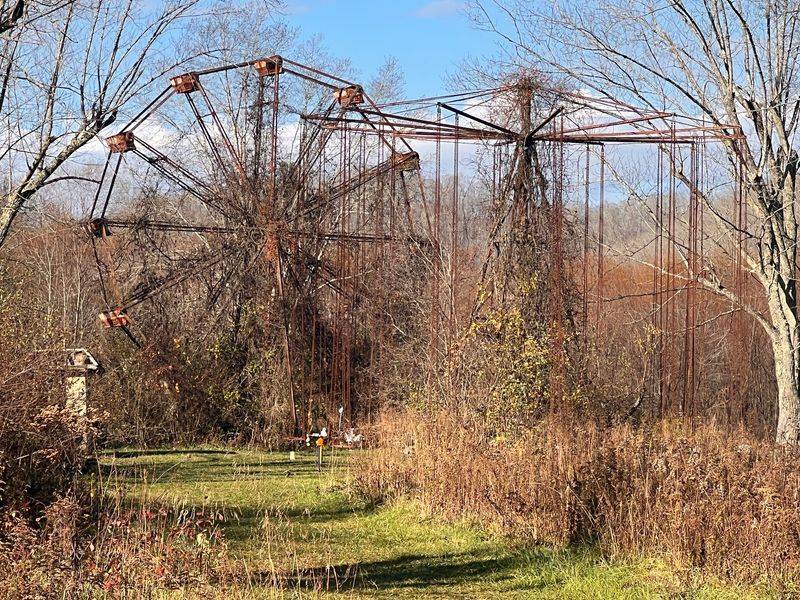
Some places in West Virginia sneak up on you, tucked down a quiet country road where you would never expect to find anything at all. Then the trees open up, and a rusty Ferris wheel is peeking over the treetops like it forgot the party ended decades ago.
This old lake park was built so coal country families could laugh, swim, and ride on summer afternoons. Today it stands frozen in time, and once you hear its story, you may find yourself planning a trip before you finish reading.
A Quiet Hollow in Mercer County
Picture a winding drive through southern West Virginia, past green ridges and tiny communities, until a gravel lane leads you somewhere that feels almost secret. Lake Shawnee Amusement Park sits in Mercer County, near Princeton and the small community of Rock.
At first glance, the setting looks peaceful. There is a pretty lake, open fields, and trees that crowd right up to the edges of the property.
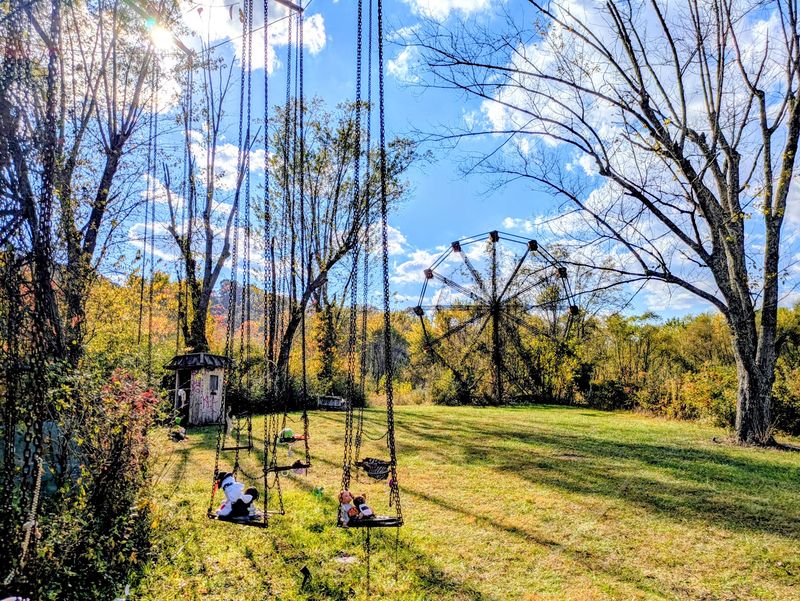
Then you notice the tall, rust-colored Ferris wheel and an old swing ride standing silent in the grass, and the whole scene suddenly feels different.
The park is private property, not a public playground where you can wander in on a whim. Visits happen through guided tours booked ahead of time, which keeps the grounds protected and gives everyone a proper introduction to the land.
That structure matters, because the story here is long and layered.
Folks who grew up in coal country may already know the name. For many families, it once meant sunny weekends and cold swims.
For newer visitors, it has become famous for something else entirely: an eerie, beautiful stillness that makes it one of the most talked-about spots in the Mountain State. Both versions of the place are worth understanding.
Roots Reaching Back Thousands of Years
Long before anyone dreamed of Ferris wheels, this valley had already seen centuries of human life. Archaeological findings reportedly suggest people lived and gathered here as far back as around 500 B.C., and the land is widely believed to have been a Native American burial ground.
Fast forward to the late 1700s. Records point to 1783 or 1785, when a frontier settler named Mitchell Clay brought his family to roughly 800 acres in this valley.
Life on the frontier was hard, and conflict between settlers and Native peoples was common across the region.
A raiding party came to the Clay homestead, and the family suffered a terrible loss. Two of the Clay children did not survive the attack, and a third was taken away and never came home.
Local history sometimes calls the event the Clover Bottom Massacre.
It is a heavy chapter, and guides at the park today treat it with care. Visitors often say the tour does a respectful job explaining how these earlier lives shaped the land.
Knowing this history adds real weight to a walk around the property, because you understand that the rides are only the newest layer of a very old story. The ground itself holds the rest.
Summer Fun for Coal Camp Families
Back in 1926, a man named Conley Trigg Snidow, Sr. bought the land and saw a chance to give working families something special. Mercer County was coal country, and miners and their kids needed a place to cool off and have a good time close to home.
So he built one. Over the years the park grew to include a Ferris wheel, a swing ride, a swimming pool, a racetrack, concession stands, a dance hall, and cabins where families could stay overnight.
For a lot of households, a trip here was the highlight of the whole summer.
Imagine the sounds back then. Kids splashing in the pool, music drifting out of the dance hall, the creak of the Ferris wheel lifting riders above the treetops.
It was the kind of simple, affordable fun that defined the good old days in small-town West Virginia.
Plenty of older folks in the region still carry memories of places just like it, where Sunday clothes got traded for swimsuits and a nickel or two stretched a long way. If your parents or grandparents grew up near Princeton or Bluefield, there is a fair chance they knew this park well.
Ask them. Their stories might surprise you.
Accidents That Dimmed the Lights
Not every summer ended happily, and the park’s story took a sad turn during its operating years. Two drowning accidents reportedly happened here, including one involving a young boy whose arm was said to have become stuck in a drain pipe in the swimming pool.
Then came 1966. A young girl was riding the swing ride when a delivery truck backed into her seat, and she lost her life.
Of all the park’s history, her story is the one visitors seem to remember most, and it is closely tied to the swings that still stand today.
Not long afterward, around 1966 or 1967, the park closed its doors. Reports often point to a failed health inspection as the official reason.
Whatever the full mix of causes, the laughter and music stopped, and the grounds began their long slide into quiet.
Hearing these details during a tour can feel heavy, but guides share them with obvious respect. Many visitors describe leaving with a sense of tenderness toward the children connected to this place.
Rather than turning tragedy into a cheap thrill, the telling tends to honor the families involved. That gentle approach is part of why the park feels meaningful rather than simply spooky.
Gaylord White’s Hopeful Comeback
Sometimes a place grabs hold of a person and will not let go. That seems to have been true for Gaylord White, a former employee who purchased the land in the 1980s with big dreams of bringing the park back to life.
Work began on new attractions, and that is when the ground revealed something nobody expected. Archaeological excavations reportedly turned up Native American artifacts along with 13 human skeletons, most of them children.
The discovery gave real weight to the long-held belief that this was an ancient burial site.
Even so, the park did reopen for a short time. Visitors could ride again, and for a moment it looked like a revival might stick.
It lasted only a single season. High insurance costs are the reason most often given for the second closure, and the gates shut once more.
Here is a fun side note from the property’s later years: the land also hosted mud bogs in the 1980s, and one visitor mentions spotting an old dump truck with a water tank used for those events just outside the park. Bits and pieces like that make the grounds feel like a scrapbook of different eras, each one leaving something behind.
The Ferris Wheel and the Silent Swings
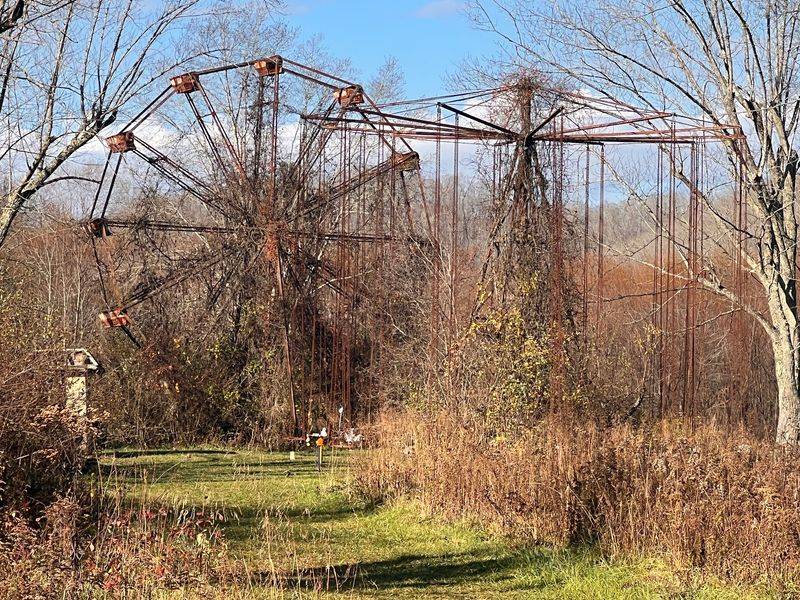
Two rides remain, and they steal the whole show. The Ferris wheel rises above the field in shades of rust and faded paint, while vines creep up its frame as if nature is slowly claiming it back one bolt at a time.
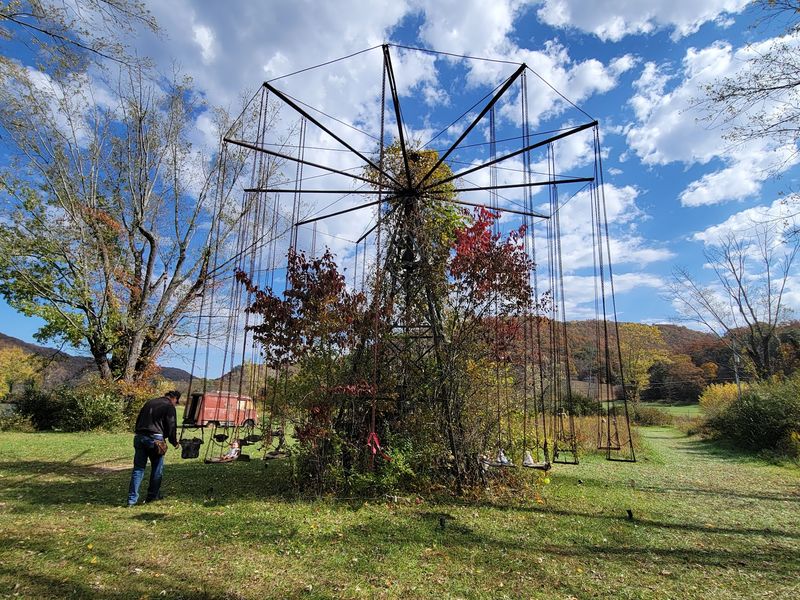
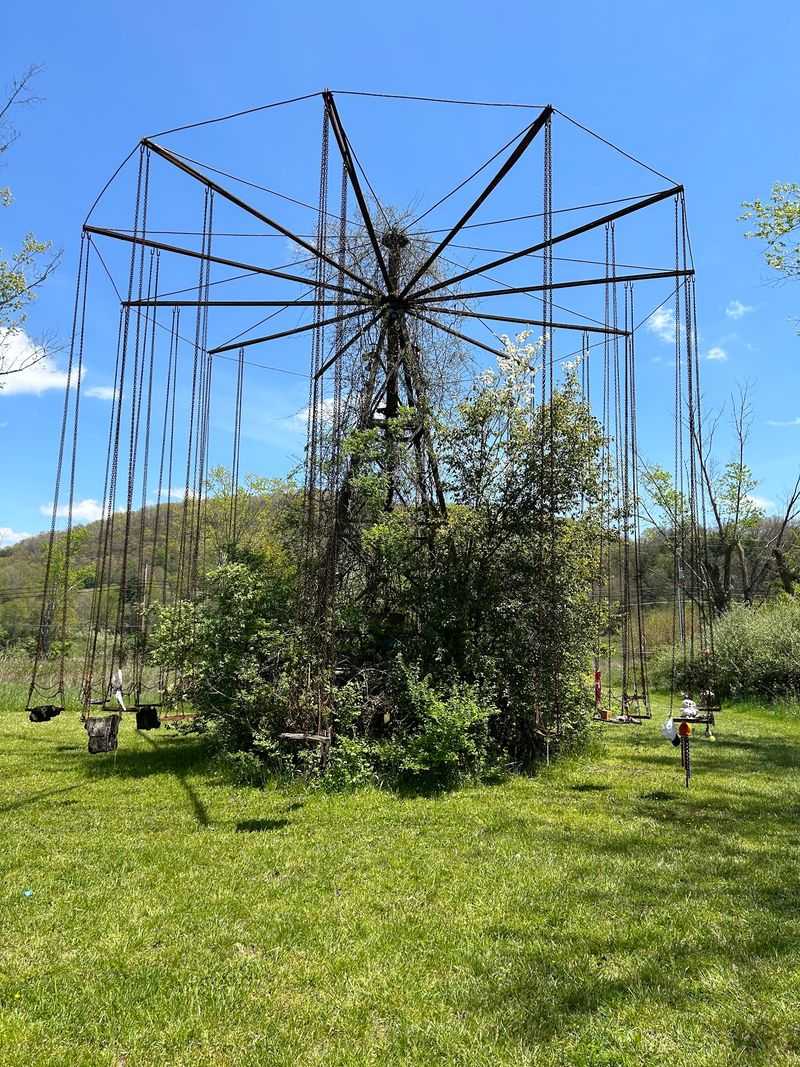
Nearby stands the motorized swing ride, its chains and seats hanging still. Against the sky, the pair creates a silhouette that photographers travel long distances to capture.
An antique ticket booth, weathered and shedding its paint, adds another touch of old-time charm.
According to visitors, these are the only rides left because the others were sold off years ago. That makes the survivors feel even more precious, like the last two guests still waiting at a party long after everyone else has gone home.
Timing can change the experience. One visitor suggested coming in September or later, when summer greenery thins out and the structures stand out more clearly.
In peak summer, leaves and vines wrap everything in a lush green blanket that is lovely in its own way but can hide some details.
Either way, standing beneath that wheel is a strange, stirring moment. It is fun and melancholy at the same time, which sums up this park pretty well.
Offerings, Orbs and Whispered Tales
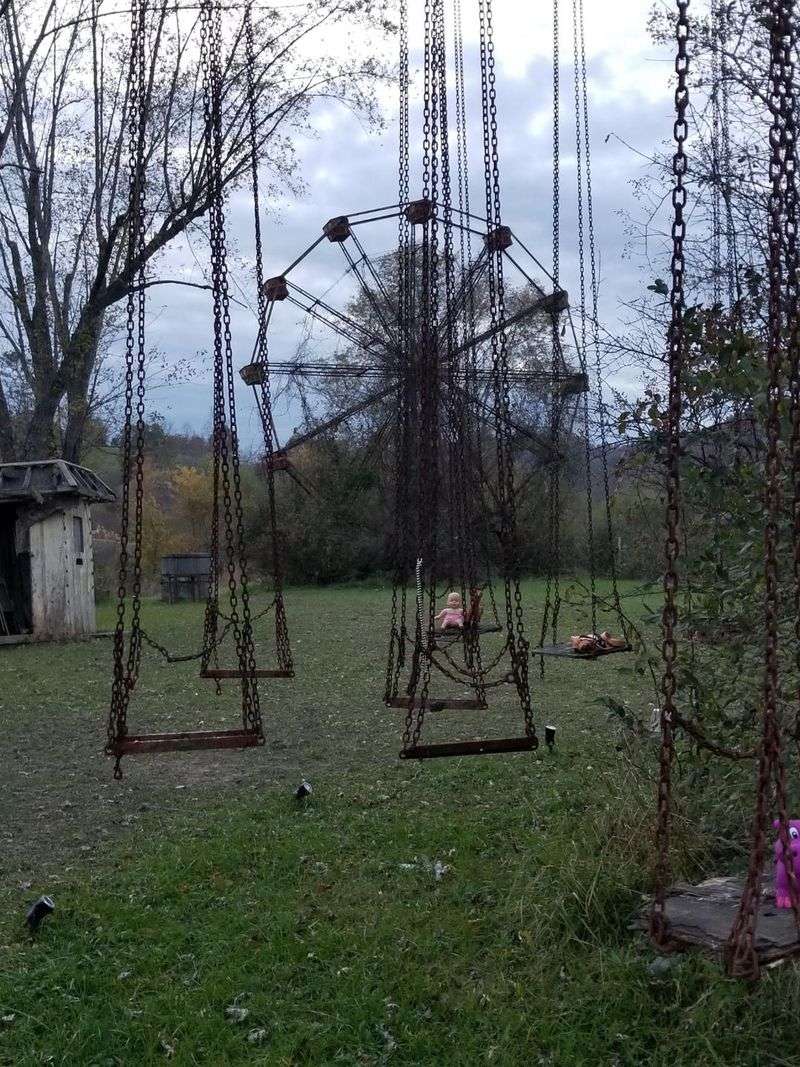
Walk up to the swing ride and you will likely stop in your tracks. The seats are covered in stuffed animals, dolls, and small toys left by visitors, a colorful and touching tribute that many guests find both sweet and unforgettable.
Why leave toys? Many people bring them as gifts for the children believed to linger here.
Some regulars recommend packing pinwheels, helium balloons on ribbons, or loose tobacco as a respectful offering for Native American spirits.
The park is often called one of the most haunted places in the world. Reported happenings include children’s laughter with no kids around, swings moving on their own, strange orbs in photos, chanting, and even the feeling of small, cool hands.
Television has noticed too, with appearances on shows like Ghost Lab, The Most Terrifying Places, The UnXplained, and Portals to Hell with Jack Osbourne.
Still, experiences vary a lot. Some visitors say they caught remarkable evidence during overnight stays.
Others honestly admit nothing unusual happened, yet they loved the visit anyway and would happily return. That balance feels right.
You can come as a believer, a skeptic, or simply someone curious, and the place tends to meet you wherever you stand.
More to Explore Than Two Rides
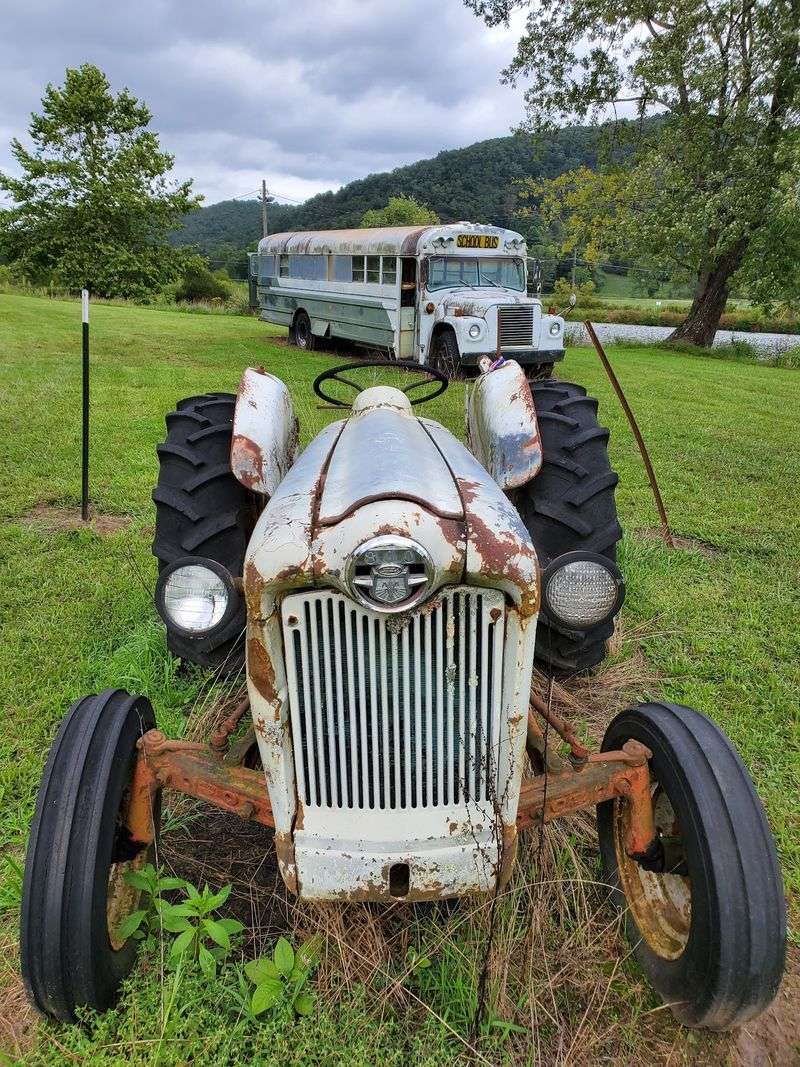
Plenty of first-timers arrive expecting only the famous wheel and swings. Then they start wandering and find far more tucked around the grounds.
Visitors mention old abandoned cars and buses scattered across the property, along with vintage playground sets slowly weathering in the grass. One guest even described climbing aboard one of the buses and feeling something they could not quite explain.
For fans of rural decay, these relics make wonderful subjects.
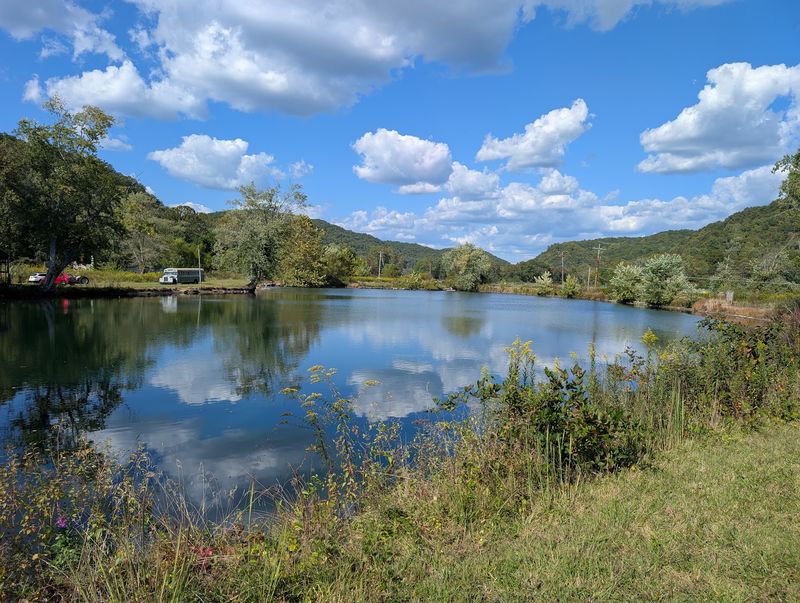
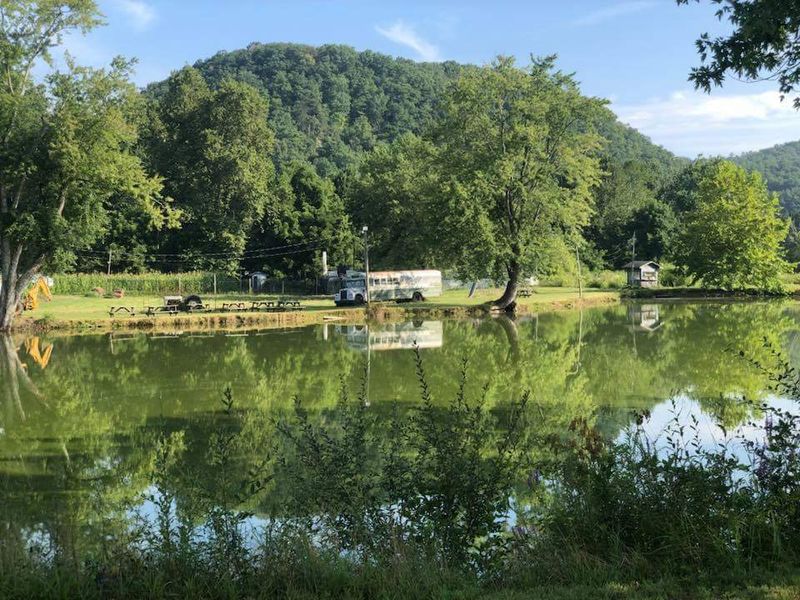
And then there is the lake. More than one visitor has called it beautiful, and it softens the mood of the whole property.
Still water, reflected trees, and the hush of the valley make it a lovely spot to pause between photos.
Opinions differ on how much there is to shoot. One photographer felt the property offered too little for the price, while another spent nearly three hours happily capturing everything in sight.
The difference seems to come down to expectations. If you only want the Ferris wheel, you might finish quickly.
If you enjoy textures, rust, and forgotten corners, you could lose track of time.
Wear sturdy shoes. The ground includes gravel, packed dirt, and grass, and you will want to roam comfortably.
Chris White and the Guided Tour
Ask almost anyone who has visited, and one name keeps popping up: Chris. Chris White, son of former owner Gaylord White, leads the tours, and guests constantly describe him as knowledgeable, funny, and deeply passionate about the land.
Tours begin with the big picture. Chris walks groups through the ancient history, the frontier years, the amusement park era, the archaeological finds, and the reasons people believe the grounds are active.
Visitors say he keeps the suspense going and answers questions with ease.
Families with young kids have praised his patience, too. One parent shared how welcome her sons felt, which is not always the case at historical sites.
That warmth leaves a lasting impression.
Once the guided portion wraps up, usually after an hour or two, you are free to explore on your own. Many guests call this the best part, since you can linger wherever you like and take as many pictures as you want.
Just let the staff know when you head out.
Another nice touch: one visitor noted that money spent here goes back into the park. Supporting the tour helps keep this odd, wonderful piece of West Virginia history standing for years to come.
Booking, Prices and Getting There
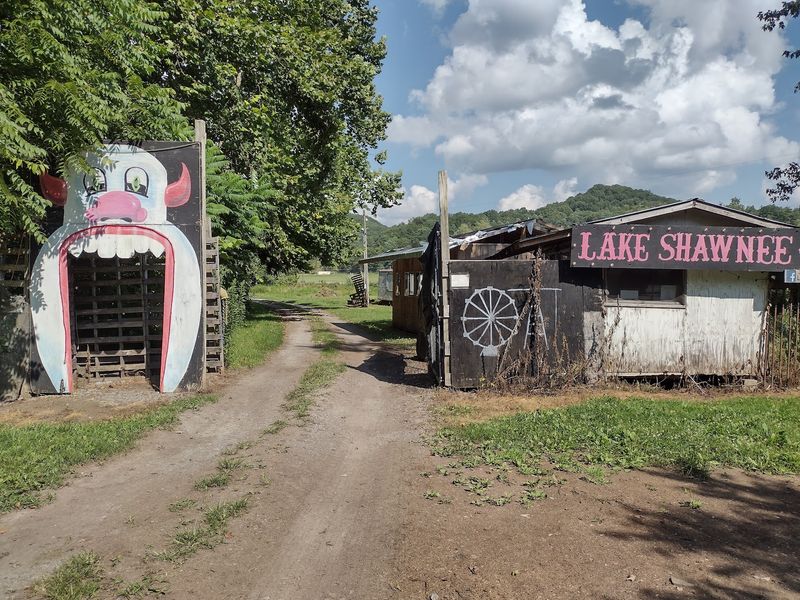
Planning ahead is a must. Because the park is private property and every visit starts with a guided tour, you will need to book online through wvlakeshawnee.com before you go.
Showing up unannounced will not get you through the gate.
After booking, guests say they receive texts with instructions, including a heads-up to check in about an hour before arriving and even photos showing where to park. That kind of hand-holding is a pleasant surprise on a back road.
Pricing has varied over time. One visitor reported daytime tours around $38 and overnight visits around $100, while another mentioned paying about $40.
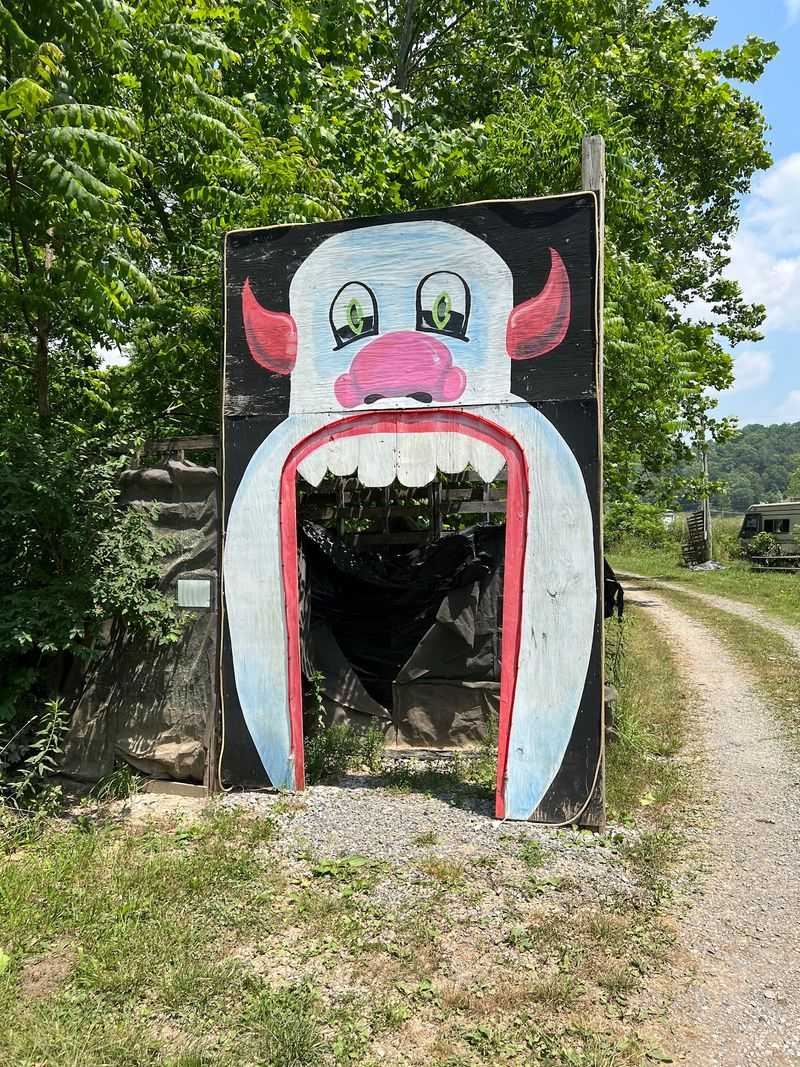
Check the website for current rates, since costs may change. Daytime history and photography tours are offered, along with overnight investigations and seasonal Dark Carnival events in the fall.
Give yourself several hours. Many guests spend two to three hours between the tour and their solo wandering.
A few practical notes: gravel, dirt, and grass cover parts of the property, so motorcyclists should ride carefully. Rain can make the ground soft, and one overnight guest needed a winch to free their rig.
The park sits at 470 Matoaka Rd, Rock, WV 24747.
A Soft Verdict for Curious Travelers
So, is it worth the trip? For most folks, the answer leans toward yes, with one small asterisk about knowing what you want before you go.
Paranormal fans tend to adore it. History lovers find the layers of the land fascinating.
Photographers who enjoy decay, rust, and old vehicles usually leave happy, though anyone hoping for a huge property might feel it runs a bit small. Families, skeptics, and nostalgic locals have all found something to appreciate here.
What stands out most is the feeling. One guest described the grounds as sacred and curious, and that phrase fits beautifully.
Another said being left to wander in the moonlight was a moment they would never trade. Those are the kinds of memories that stick.
There is also something very West Virginia about it all. A park built to bring joy to coal camp families still draws people from near and far, kept going by a family that clearly loves it.
Rather than fading away quietly, it found a second life as a place of stories.
If you have memories of summer parks from the good old days, this one may stir them right up. Bring a pinwheel, and bring your curiosity.
