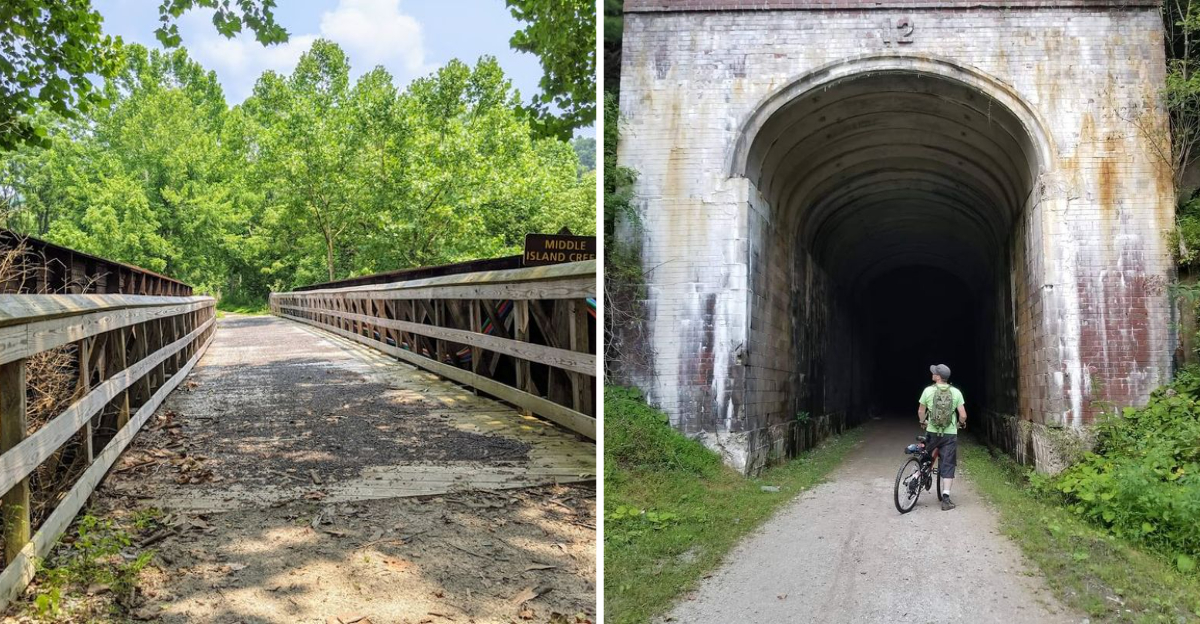
I love a good transformation story.
This one starts with a forgotten railroad track, overgrown and silent, rusting quietly in the West Virginia woods.
Then someone brilliant said, what if people biked here instead?
Now you can pedal through dark tunnels, roll over old iron bridges, and feel the ghost of train whistles while your tires spin on smooth gravel.
It is strange and wonderful to ride where locomotives once roared.
The tunnels get properly dark, so bring a light and a little courage.
Did I mention there are thirteen of them? Thirteen chances to feel like an explorer on two wheels.
Whether you are a serious cyclist or just someone who likes a slow cruise with good views, this trail delivers.
West Virginia really knows how to recycle.
A Railroad Born in the 1800s That Never Really Died
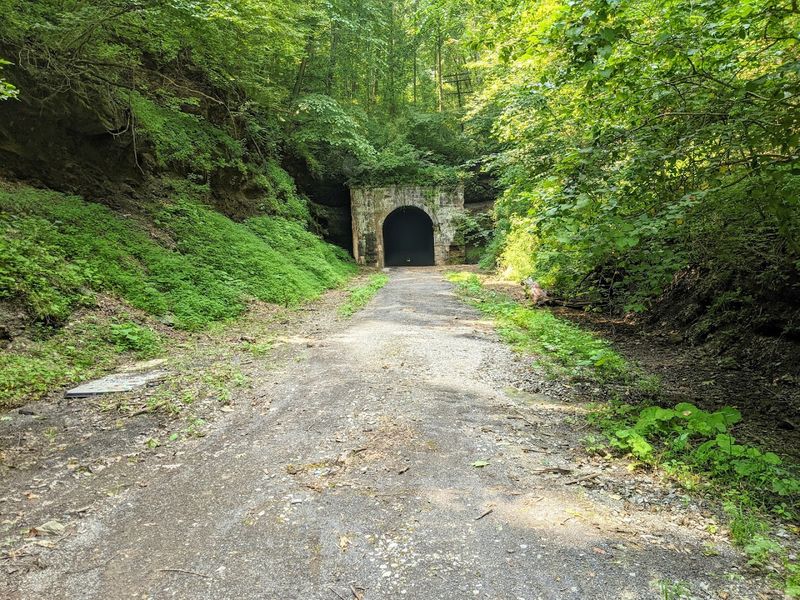
Some trails feel like trails. This one feels like history you can actually ride through.
The North Bend Rail-Trail follows the original route of the Baltimore and Ohio Railroad’s Northwestern Virginia Railroad, a line that was engineered between 1853 and 1857 with surprisingly modern precision for its era.
The B&O line was considered a marvel at the time. Engineers held the maximum grade to just 1.5 percent, which was a serious flex back when most rail lines were rough and uneven.
That careful construction is exactly why the corridor still works so well as a trail today.
After the last train rolled through in 1985, the state of West Virginia purchased the entire CSX corridor for around $320,000. The North Bend Rails-to-Trails Foundation formed in 1989 and pushed hard to make the trail a reality.
By 1991, the first sections opened to the public, and the full 72-mile stretch eventually became accessible over the following years. History did not die here.
It just changed modes of transportation.
72 Miles of Trail Stretching Across Four Counties
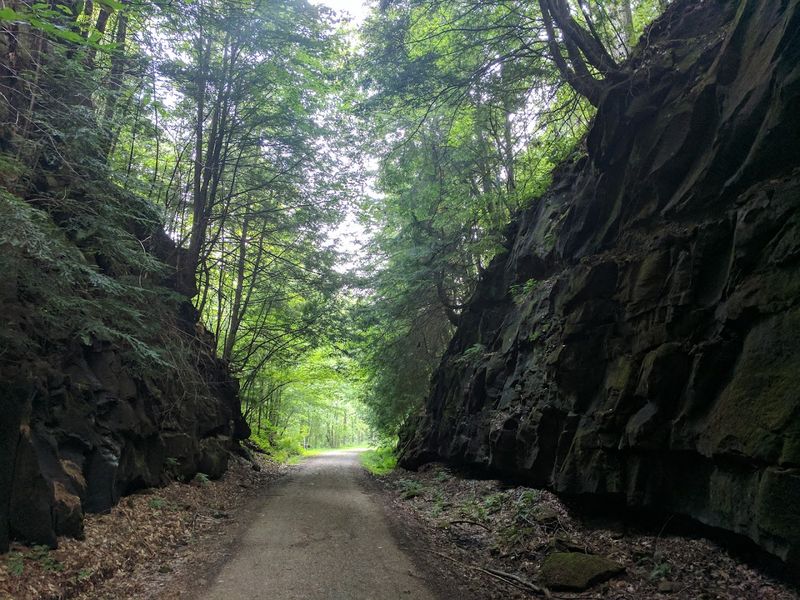
Seventy-two miles sounds like a lot until you are actually out there and realize you could easily spend a full weekend just hitting the highlights.
The trail runs from Parkersburg near Interstate 77 all the way east to Wolf Summit, close to Clarksburg, cutting through Wood, Ritchie, Doddridge, and Harrison counties.
Much of the route runs near U.S. Route 50, but the trail also slips into quiet wooded corridors and open farmland that feel completely removed from any highway.
The contrast keeps things interesting mile after mile.
The surface is mostly crushed stone or coarse gravel, about ten feet wide, with paved sections popping up through towns like West Union and Salem. Tires that are at least 1.5 inches wide are the smart call for the unpaved stretches.
The grade stays gentle throughout, maxing out at just three percent, which means this trail is genuinely accessible for all fitness levels.
Whether you are a serious cyclist logging big miles or a casual rider out for a Sunday roll, the trail meets you exactly where you are.
Ten Tunnels That Will Genuinely Give You Chills
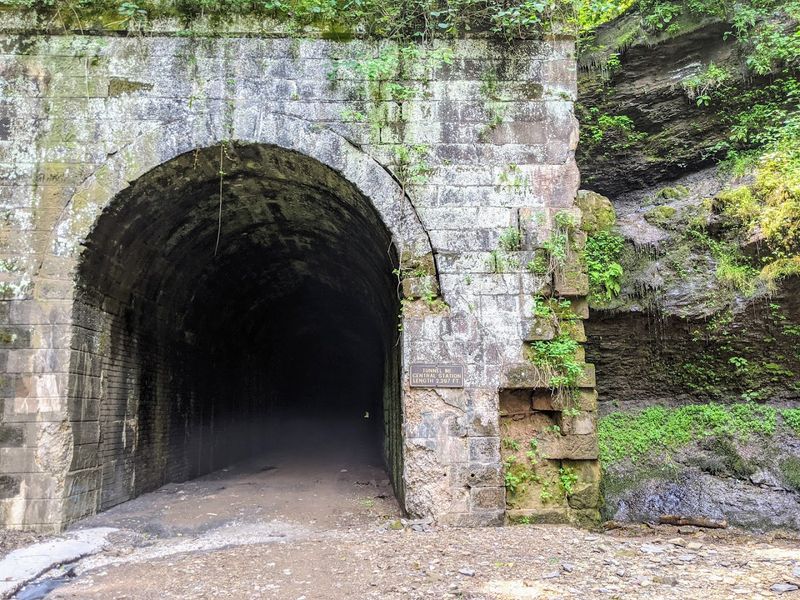
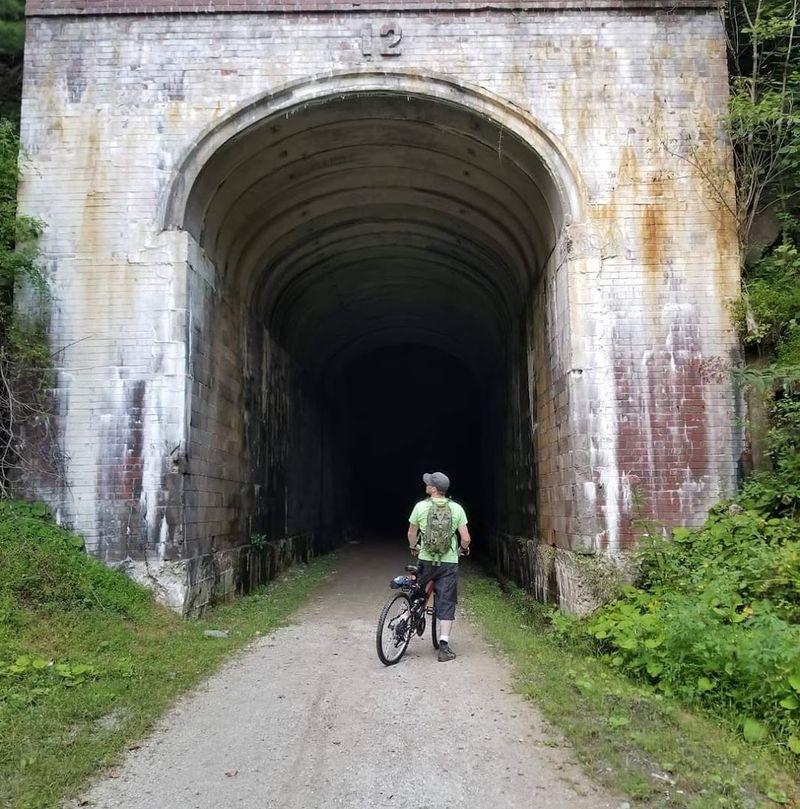
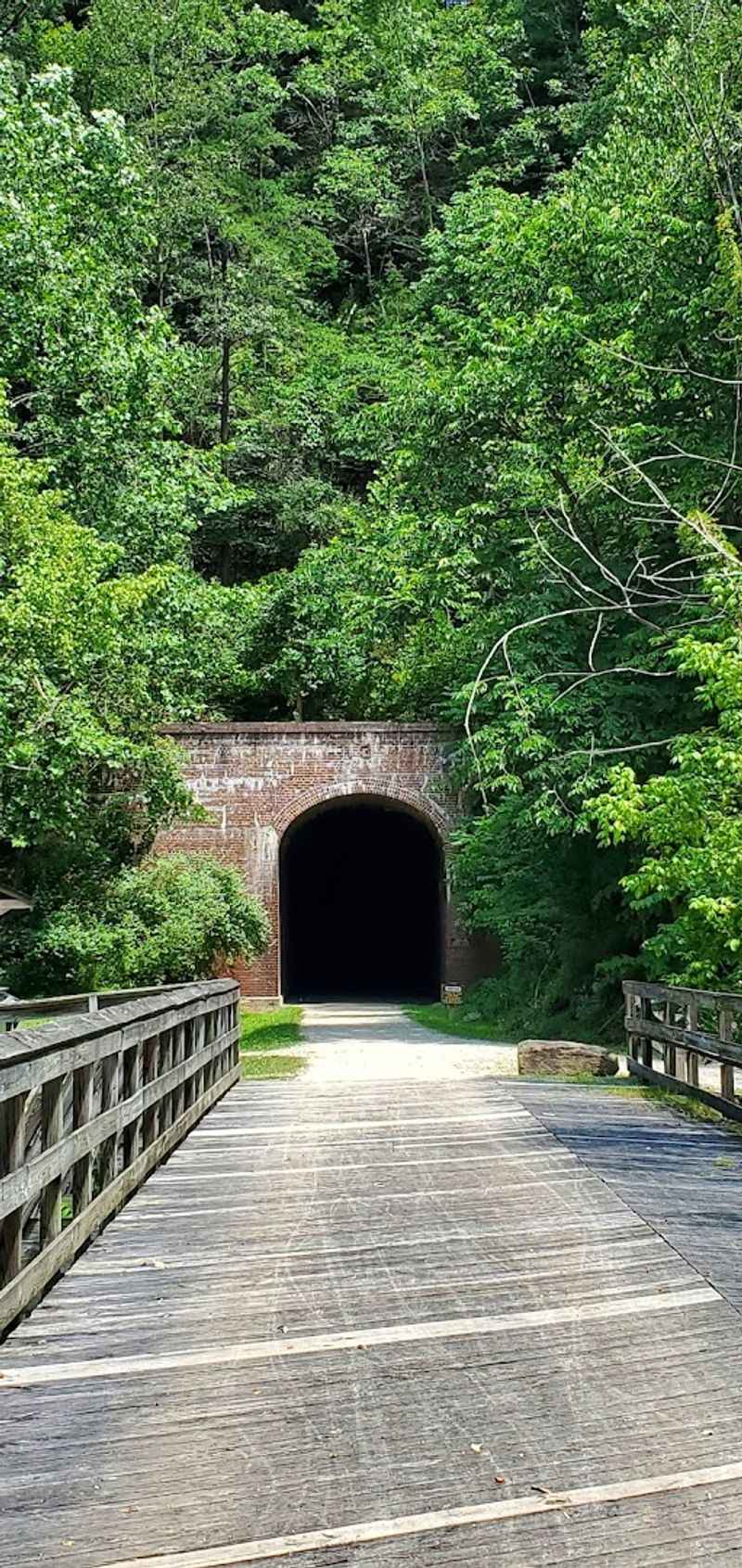
Nothing prepares you for the moment the light disappears completely. The North Bend Rail-Trail has ten passable tunnels, and several of them are long enough that you cannot see either end once you are in the middle.
A flashlight or headlamp is not optional here. It is absolutely necessary.
The longest of the bunch is the Central Station Tunnel, also known as Tunnel 6, stretching an impressive 2,297 feet, which is nearly half a mile of pure darkness.
The Eaton Tunnel comes in second at 1,840 feet, and it has its own moody atmosphere that feels straight out of a movie set.
Then there is Tunnel 10, located west of Ellenboro, which is a raw tunnel bored directly through solid rock with no lining whatsoever. The exposed stone walls and dripping water give it a completely different feel from the others.
Each tunnel has its own personality, its own temperature drop, and its own strange echo. Riding through all ten is basically a mini adventure within the larger adventure.
The Silver Run Tunnel and Its Legendary Haunted Reputation
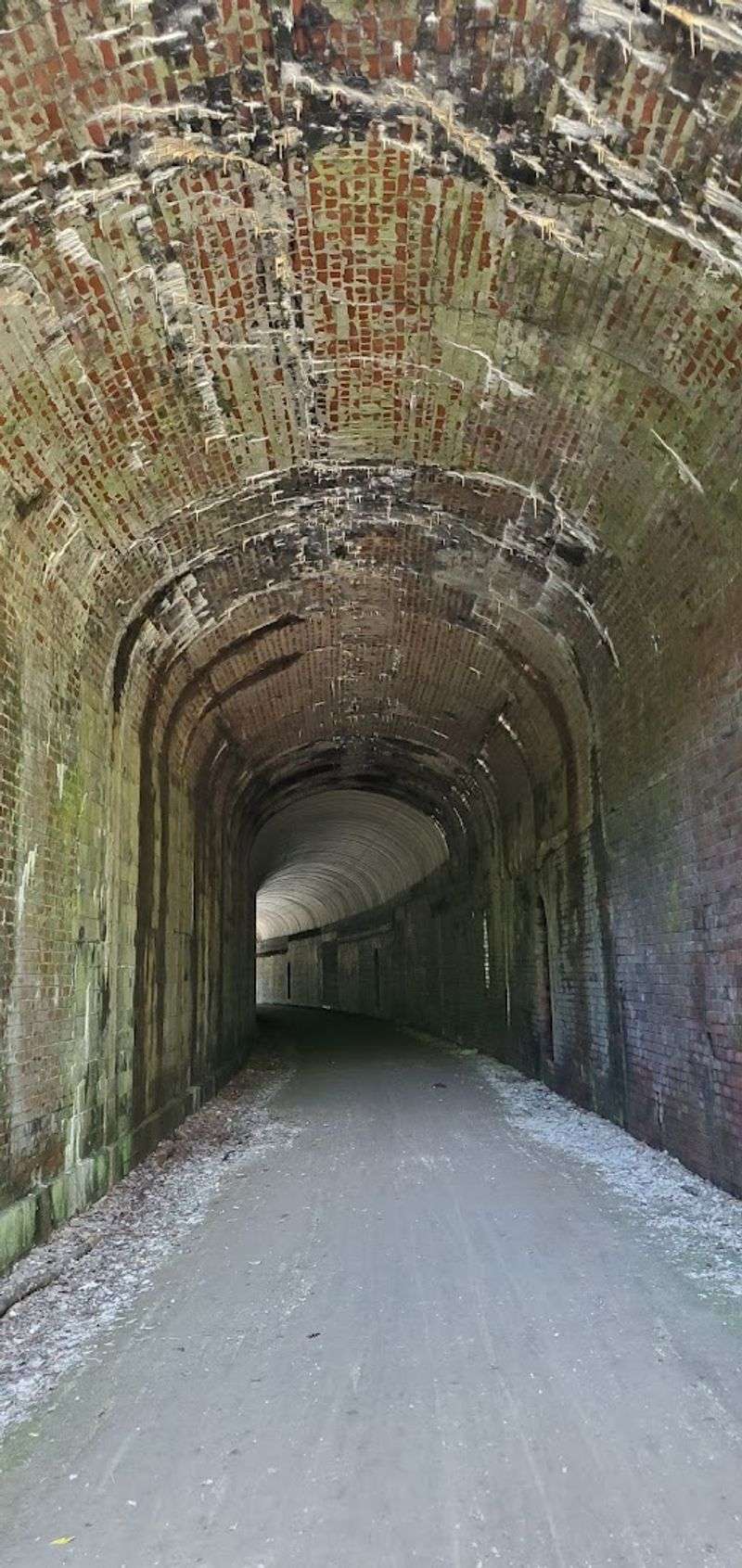
At 1,376 feet long, the Silver Run Tunnel is not the longest on the trail, but it might be the most talked about.
Local legend holds that this particular tunnel is haunted, and whether you believe in that sort of thing or not, the atmosphere inside does absolutely nothing to calm your nerves.
The combination of near-total darkness, dripping water, and the faint sound of your own footsteps amplifying off stone walls creates a genuinely eerie experience. It is the kind of place where your imagination starts working overtime before you even realize it.
Visiting around Halloween or on a foggy autumn morning adds a whole extra layer of atmosphere that is hard to describe without sounding dramatic.
The tunnel sits in a heavily wooded stretch of the trail, and the tree canopy outside makes the contrast between light and dark even sharper when you emerge from the other side.
Spooky reputation aside, it is one of the most memorable spots on the entire trail and worth every goosebump.
Thirty-Six Bridges Offering Scenic Views at Every Turn
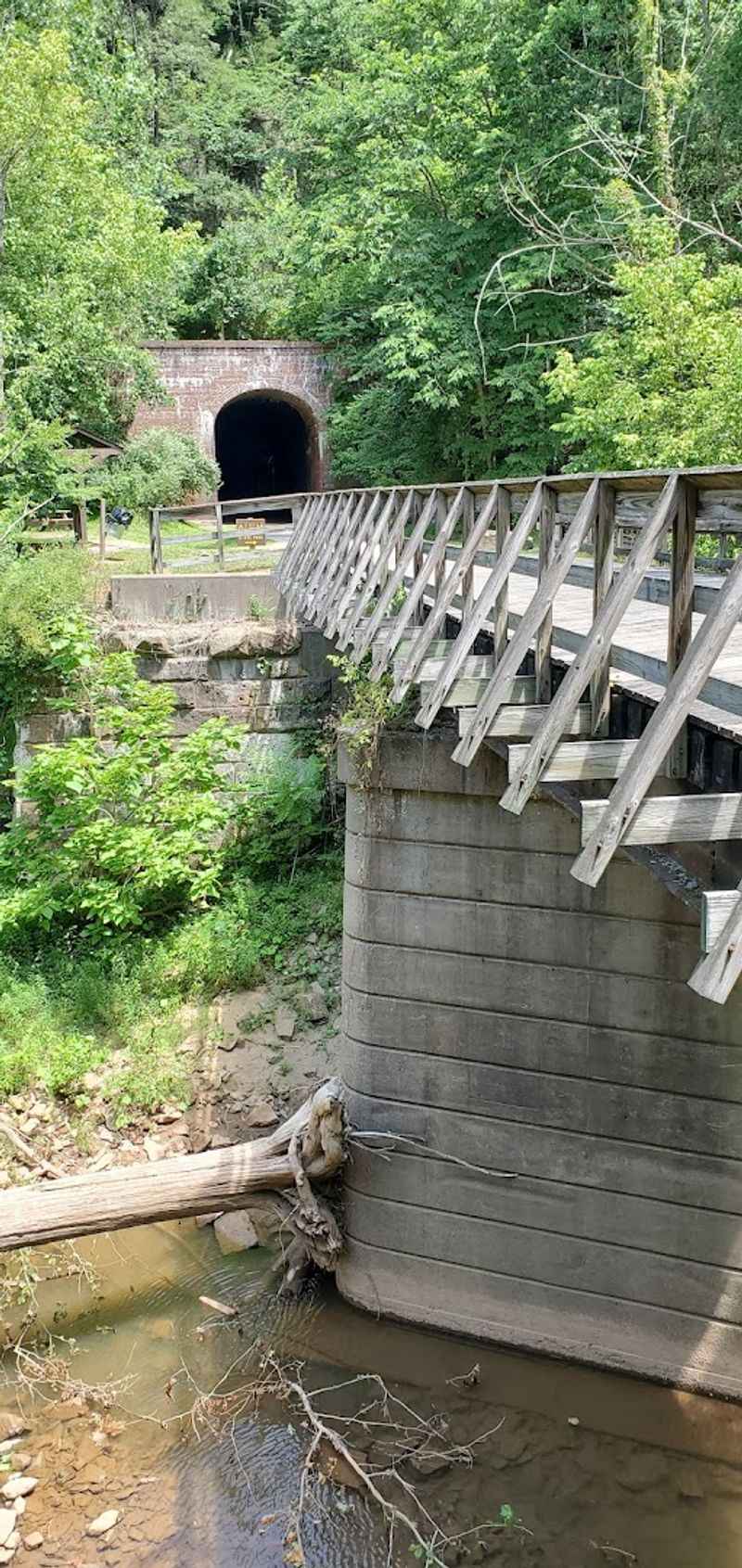
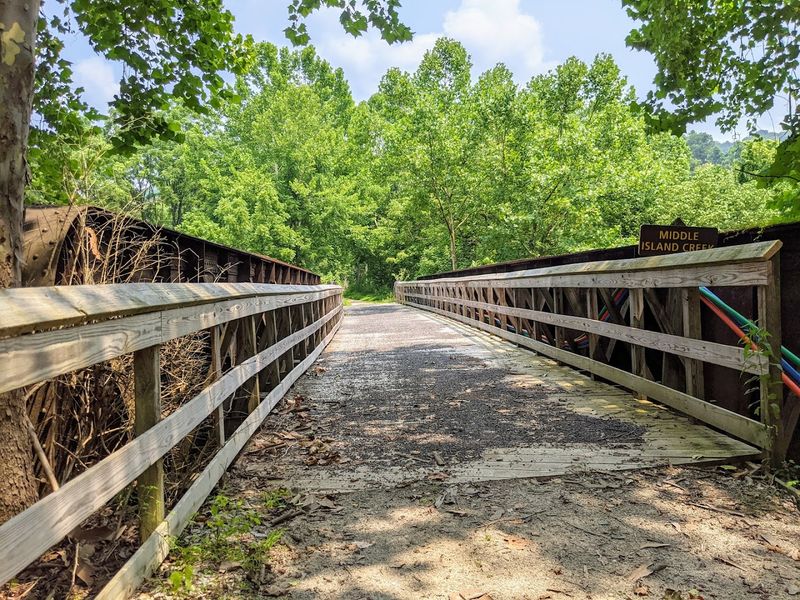
Between the tunnels, the trail crosses 36 bridges, and they range from short wooden spans over small creeks to longer steel structures with genuinely impressive views.
Bridges on a rail trail serve a practical purpose, but on this one, they also function as scenic overlooks that reward you for every mile pedaled.
Many of the bridges sit above the Hughes River and its tributaries, giving riders a bird’s-eye view of the clear water below.
Stopping mid-bridge to look down at a slow-moving creek framed by tree canopy is one of those simple trail moments that sticks with you.
The bridges also reflect the engineering heritage of the original B&O Railroad corridor.
Some have been refurbished while others retain their historic character, with weathered wood and aged steel that remind you this route once carried freight trains across Appalachian terrain.
Crossing them by bike feels like a small act of appreciation for all the work that went into preserving this corridor. Each bridge is a little different, and that variety keeps the ride feeling fresh from start to finish.
Wildlife Encounters That Make Every Ride Unpredictable
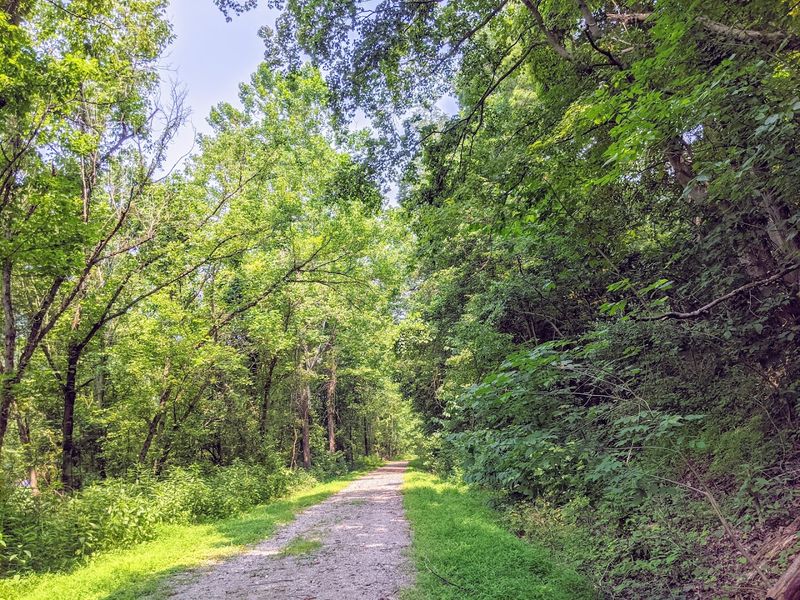
There is something genuinely exciting about rounding a bend on a quiet section of trail and coming face to face with a deer that looks just as surprised as you are.
Wildlife sightings on the North Bend Rail-Trail are common enough that they feel like a natural part of the experience rather than a lucky bonus.
Deer are the most frequent visitors, often grazing in open sections near the trail edges at dawn and dusk. Beaver activity is visible along several creek crossings, with dams and chewed stumps appearing throughout the more wooded stretches.
Black bear have been spotted in the more remote sections of the trail, particularly in the forested corridors between towns. Grouse are surprisingly easy to encounter in the brushy areas, often bursting out of the undergrowth with a startling flutter of wings.
Bringing a pair of binoculars is not a bad idea if wildlife watching is your thing. The trail moves through genuinely wild terrain, and the animals here seem comfortable enough with human presence to stick around long enough for a good look.
Charming Trail Towns That Beg You to Stop and Explore
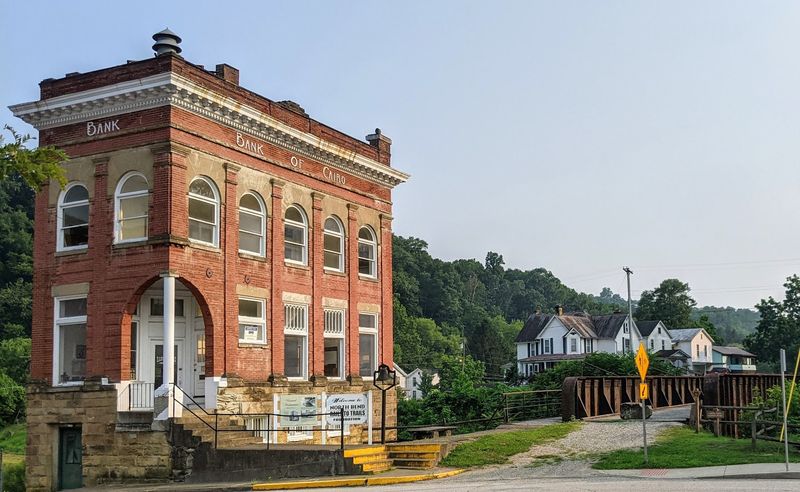
One of the best things about a trail this long is that it does not just pass through wilderness. It connects real communities with real character, and the small towns along the way are genuinely worth slowing down for.
Cairo, Pennsboro, Salem, West Union, and Ellenboro all sit along or near the trail corridor.
Each town has its own personality. Salem has a cozy small-town feel with local spots to grab a bite after a long stretch of riding.
Pennsboro features a refurbished B&O railroad depot and the former Stage Coach Inn, which adds a tangible sense of historical depth to a quick stop.
West Union, the county seat of Doddridge County, offers restrooms, food options, and a good natural break point for longer rides. Stopping in these towns is not just practical.
It is genuinely enjoyable. The locals are friendly, the pace is slow, and the sense of community feels real rather than manufactured for tourism.
These stops transform a bike ride into something closer to a road trip through living history.
North Bend State Park as a Perfect Home Base
Having a state park sitting right along the trail is one of those logistical gifts that makes a multi-day trip genuinely easy to pull off. North Bend State Park is accessible directly from the trail and serves as a natural hub for riders tackling longer sections of the route.
The park offers lodging, camping, restrooms, and additional trails that branch off from the main rail corridor. Staying here means you can ride hard during the day, clean up, eat well, and be back on the trail the next morning without any complicated logistics.
Primitive camping sites are also scattered along the trail corridor itself for riders who want a more immersive overnight experience.
The combination of developed park amenities and backcountry-style camping options makes this trail unusually flexible for different types of travelers.
Families with younger kids will appreciate the comfort of the park lodge. More adventurous riders might prefer pitching a tent trailside and waking up to birdsong instead of an alarm.
Either way, the park makes the whole experience more accessible and enjoyable.
Part of the American Discovery Trail Spanning the Entire Country
Most people show up to ride the North Bend Rail-Trail and have no idea they are standing on a piece of a 5,500-mile coast-to-coast route.
The trail is a certified segment of the American Discovery Trail, which connects the Atlantic and Pacific coasts of the United States through a network of trails, paths, and scenic roads.
That connection gives the North Bend Rail-Trail a significance that goes well beyond its 72 miles. It is a link in something genuinely massive, a route that long-distance hikers and cyclists from across the country travel in sections or sometimes all at once.
The trail also serves as the southern anchor for the proposed Industrial Heartlands Trail, a 1,400-mile loop planned to connect multiple states across the region.
Being part of these larger networks means the trail has a future as well as a past.
Investment, maintenance, and community interest tend to follow trails that carry national significance. Riding here feels like participating in something bigger than a local park, which adds a quiet sense of pride to every mile covered.
Practical Tips to Make the Most of Your Visit
A trail this long and varied rewards a little bit of planning. The most important gear item is a reliable light source.
Multiple tunnels require a headlamp or flashlight, and riding through the Central Station Tunnel without one is not something you want to experience unintentionally.
Tire width matters too. Tires at 1.5 inches or wider handle the crushed gravel surface much more comfortably than skinny road tires.
Bringing extra water is smart, especially on longer stretches between towns where refill points are limited.
Parking is available at multiple access points along the trail, so breaking the route into manageable day sections is easy to do.
The trail is open year-round, but spring and fall offer the most pleasant riding conditions, with cooler temperatures and dramatic foliage framing the route.
Summer rides are doable but come with humidity. Winter visits attract a quieter crowd and offer a completely different visual experience with bare trees opening up long sightlines through the forest.
Whatever season you choose, the trail delivers something worth the drive.
Address: North Bend Rail-Trail, West Virginia
