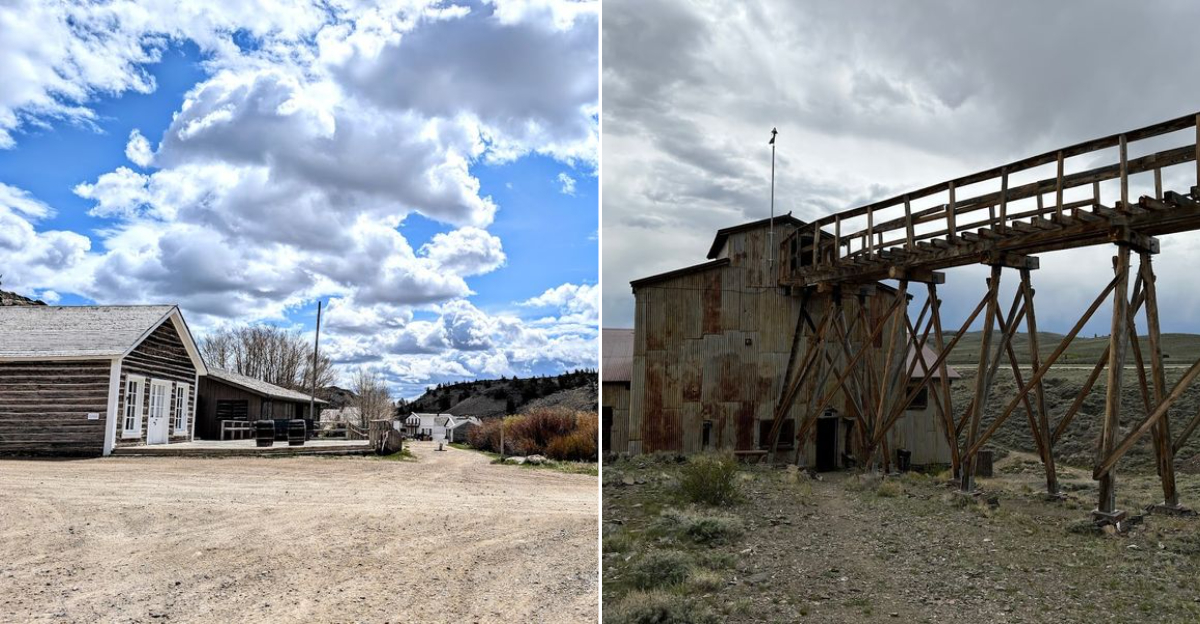
Want to walk a main street where the silence feels like it has been practicing for decades? This abandoned Wyoming boomtown lets you do exactly that, with a layout that still reads like a real town even though the rush that built it is long gone.
You step onto the road and the details start talking. Weathered facades, empty windows, and scattered structures line up like they are waiting for the next shift change that never comes.
The main street is the hook, because it is not just one lonely building and a sign. It is a whole stretch you can follow, imagining where the store was, where people gathered, and how busy it must have been when money and hope were moving fast.
Wind does most of the sound now. It slips through cracks, rattles loose boards, and makes your footsteps echo in a way that feels too loud for a place this empty.
The best part is how real it feels. Nothing is staged, nothing is polished, and that rough honesty is what makes the town hit harder than a museum display.
You leave with dusty shoes and the uneasy feeling that time did not erase this place, it just walked away.
Main Street That Still Looks Like The Gold Rush Never Ended
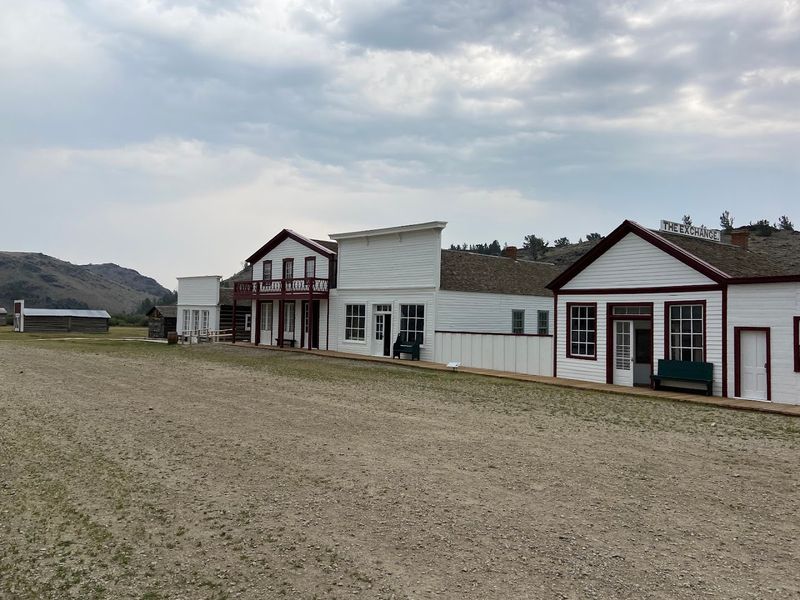
Walk this street slow and let roads and porches talk beneath your boots, because the creaks sound like memory and the gaps hold dust that has learned patience. South Pass City Historic Site sits exactly where the wind keeps its promise, and the storefronts square their shoulders like they still have work to do.
You can see every nail line on the false fronts, and every window keeps a careful kind of stare. The full address lives right here at 125 South Pass Main St, South Pass City, WY 82520, and the road in feels fittingly spare.
What gets me is how the town holds its shape without pretending to be busier than it is, which feels rare in Wyoming. The boardwalks run like simple sentences, and you follow them because wandering straight makes sense.
A hitching rail shadows the path, and the gaps in the planks make little ribs of light. Do you notice how even the breeze takes shorter steps on this stretch?
On a clear day the mountains lean in like old friends who do not interrupt, and the roofs shrug at the sky with easy confidence. A hand painted sign tilts a degree or two, asking you to look closer without begging.
Nothing crowds you, and yet every doorway suggests you missed something if you do not peek. It feels generous, not staged, and that patience is contagious.
Keep walking until the last storefront softens into sage, because the edge is where the hush gets loud. That is usually where I stop and listen for wagons I cannot see.
The road hums far off and makes a small, steady metronome. You will leave this stretch feeling steadier, like the ground decided to help.
Boomtown Backstory That Made South Pass City A Headline
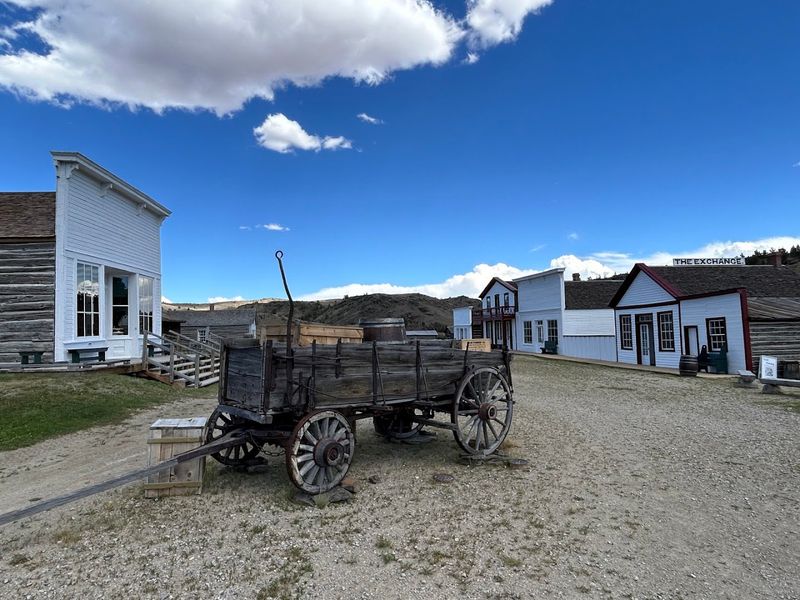
Here is the short version you can tell in the car, and it still lands with weight. Gold pulled people across rough country into these hills, and the rush moved quicker than most boots could keep up with.
Streets sprang up, names were painted, papers were printed, and everyone talked like the next pan would finally tilt right. Then the math went stubborn, the shine thinned, and quiet moved back in like a patient neighbor.
I like how South Pass City lets that arc breathe without heavy staging, which is why Wyoming history feels clearer here. You can read the panels, sure, but the buildings do the real explaining with their slow posture.
A ledger on a desk looks like someone just stepped out to argue about a claim. A safe sits square in a corner, polite and mute, and it refuses to gossip.
You will hear about the pass that guided wagons toward broader horizons, and how news traveled on dusty boots. The town swelled, then drifted, but the bones stayed, and that steadiness makes the story land.
It never slides into costume drama, because this place trusts the wind and the wood. That trust keeps the timeline honest without shouting.
So when someone asks why this little bend in the hills mattered, you can point to the street and say, listen. The answer is in the gaps between footsteps and the pauses between boards.
It is in how the doors still square their frames. It is in how silence carries the rest of the sentence.
Historic Buildings Lineup That Feels Like A Real Outdoor Museum
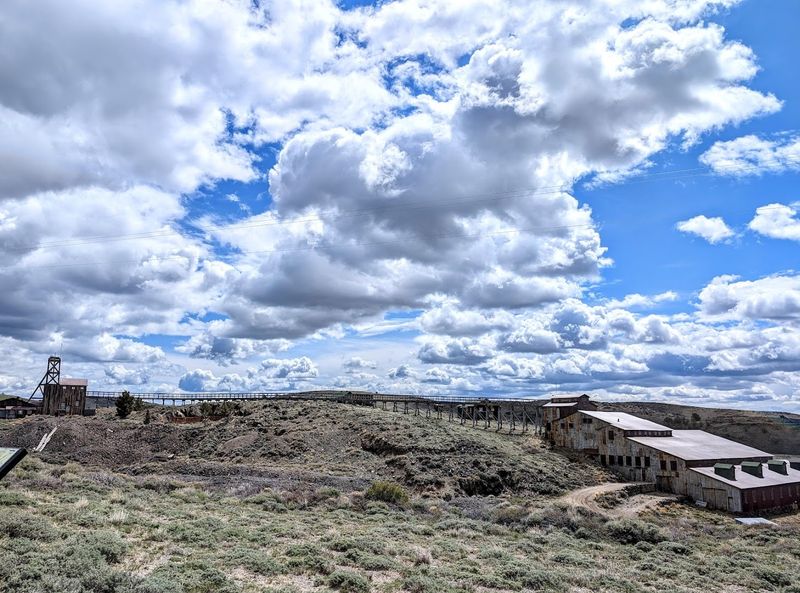
Stand mid block and look left to right, and it truly reads like a museum exhibit that forgot to go indoors. Storefront, assay office, tiny cabins, and that sturdy courthouse all settle into place without crowding your view.
The spacing feels intentional, but also accidental, like the town took a breath and held it. You can trace the workday just by the doors, which is a neat trick.
Placards give you the who and the when, but the buildings give you the why, which is the part I remember. Paint bleaches to a forgiving gray, hinges keep their slow grammar, and the windows throw back a sky that tells you exactly what season you are standing in.
Wyoming light does the curating, and it does not rush. That is the best gallery guide you could ask for, right?
If you pause at the courthouse, the steps whisper about careful arguments and boots that knew to wait. The jail keeps its square jaw, and the cells still hold an echo that runs cool.
A tiny schoolroom leans into the wind with that stubborn tilt that says we will keep trying. The town hall keeps an even voice while the grass insists on edges.
What I love is how nothing is glossy, because the grain is the point. You can spot tool marks that make sense in your hands, not just your head.
Every doorframe carries a shoulder mark that fits a size you recognize. By the time you finish the row, your walk has learned their pace.
Old Saloons And Shops That Show How Fast Fortunes Moved
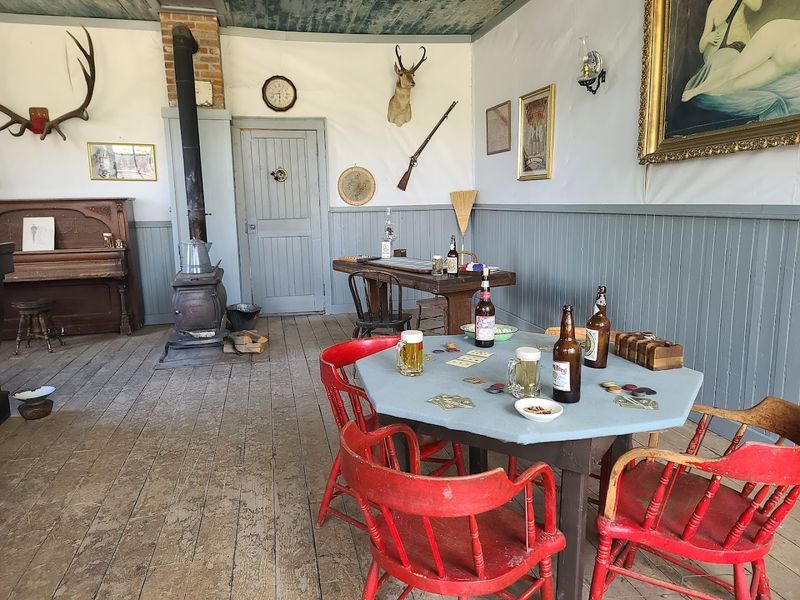
Step through a doorway and you can feel how quick the day used to flip from hope to hurry. A long counter runs the length of the room, and shelves still hold boxes and tins that look almost ready.
The register sits quiet, but the keys remember fingers that pressed hard when news was good. Light comes through the windows like a careful guest who knows when to leave.
A saloon room stands nearby with chairs waiting evenly, but the stories speak without naming drinks. The mirrors keep their distance, the bar top stays clean, and the floorboards mind their squeaks like polite dogs.
You can picture deals made with a nod, then unmade by a rumor, and you do not need a narrator. Wyoming towns learned those pivots fast, and this one kept the lesson.
In the general store, weight and measure still feel like companions, not enemies. Scales rest with a calm face, and the ledger lines hum with tidy patience.
It is easy to imagine the bell on the door ticking the town’s heartbeat, steady when the mines smiled, quicker when they sulked. You hear it even now, in the hush.
What really lands is how ordinary these rooms feel, which makes the stakes feel human. Boots, hats, tools, and cloth all sit like they planned to be used tomorrow.
Fortunes walked in and out through the same doorway, and the jamb holds both stories. You walk back outside and the street nods, like it remembers your face.
Mine And Mill Remains That Explain Where The Money Came From
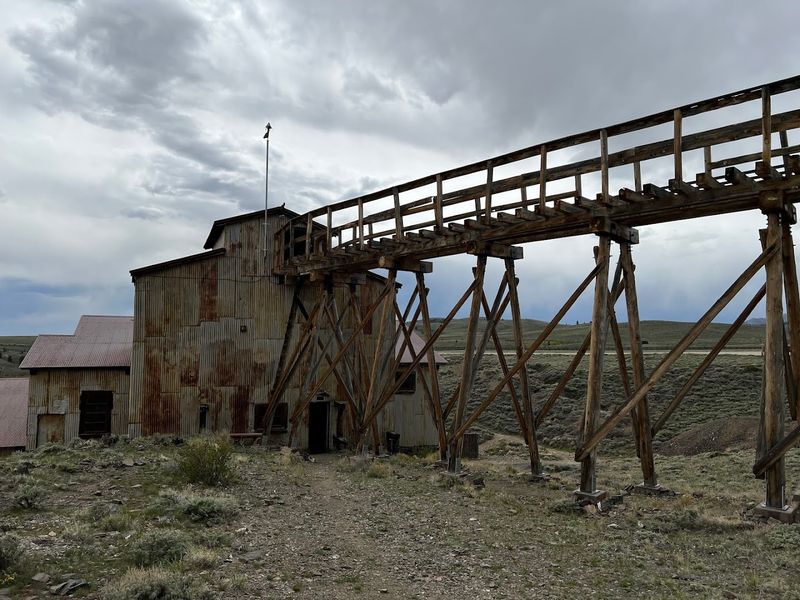
Head down toward the mine and mill, and the landscape changes its voice from front porch to engine room. Big timbers stand with a workman’s posture, and chutes angle like elbows set to lift.
You can read how ore moved by following the bones of ramps and gears. It is a diagram you can walk, which is the best kind.
The mill building leans into the slope with calm determination, and the windows frame sage and sky. Bolts keep their stoic shine, while belts and wheels rest like tired shoulders.
If you listen, you can almost catch the rhythm that used to drive through the hill. Wyoming wind threads the whole space and gives the silence a steady beat.
What I like most is how the site teaches without scolding, because the ground already did the hard math. Tailings line the hillside like a quiet ledger, and the creek keeps its even commentary.
You do not need a lecture to understand cost, because you can see what stayed behind. That honesty makes the history feel durable and kind.
Walk a little farther and the view opens wide, and the town shrinks into a line of roofs. It puts the work and the living on the same page, which helps the story click.
You get why every storefront on Main Street waited on this hillside’s mood. When you climb back up, your breath and the boards both count it.
Quiet Interiors That Make The Empty Rooms Hit Hard
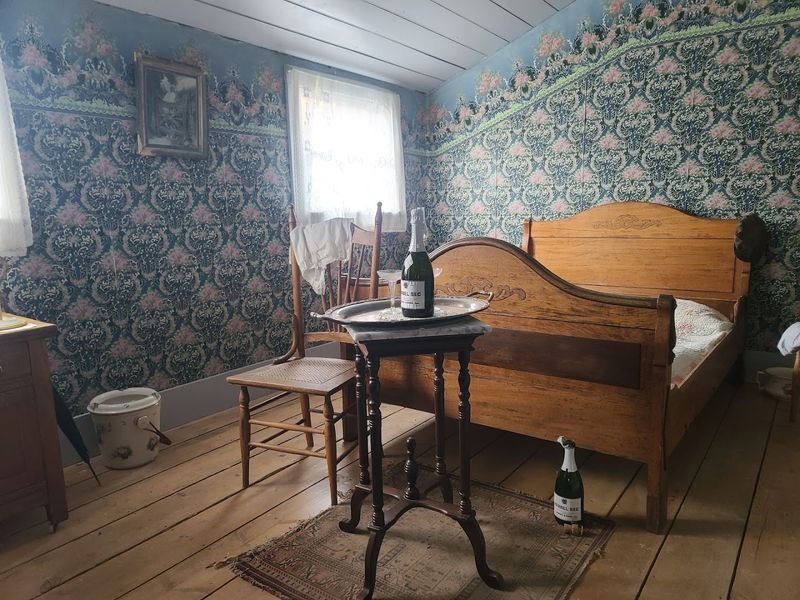
Push a door with two fingers and step into a room that knows how to hold still. A narrow bed waits with a quilt folded once, and the chair stays angled like someone stood and meant to return.
The window pulls a slow stripe of light across the floor that stops right before your toes. You breathe softer without deciding to, because loud would feel rude.
There is a dignity to these plain spaces that sneaks up on you, and it sticks. A dress form holds its shape without fuss, and a hat hangs from a peg with dependable patience.
The clock is quiet, but the corners keep time anyway. Wyoming has a way of teaching silence, and these rooms are fluent.
You can guess a day just by the objects and the way they rest. Work shirt, bucket, ledger, and lamp all sit in a gentle queue.
It is the opposite of a stage set, because nothing is trying to prove a point. The stillness does the explaining, and it is surprisingly generous.
When you step back into the hall, your footsteps sound like an apology that gets accepted. You learn to pause at thresholds and let your eyes adjust without hurrying them.
The air smells like pine and dust, and both have good manners. You close the door with your palm flat, the way you would thank a host.
Museum Stops That Fill In The People Behind The Place
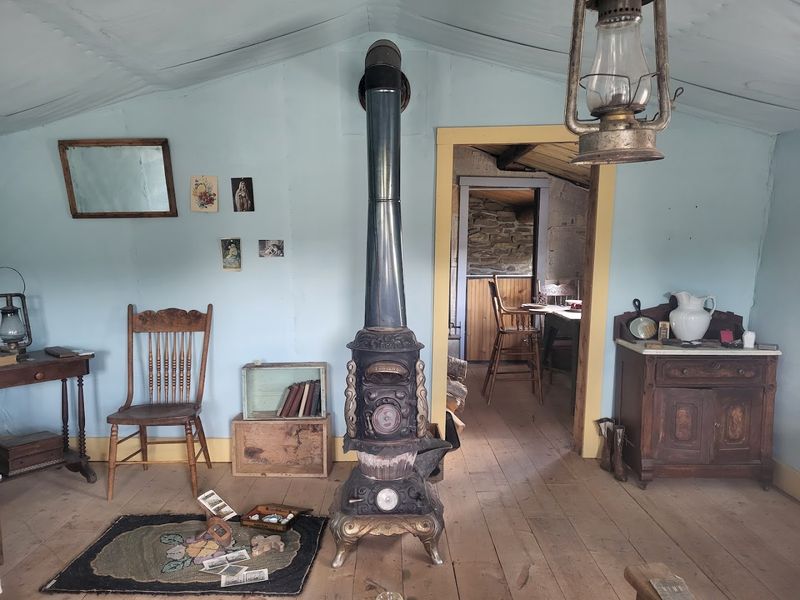
When the buildings make you curious about faces, the little museum rooms answer without turning the day into homework. Photos stare straight at you with that frontier look that mixes caution and humor.
Tools, letters, and trinkets sit under glass, but they do not feel locked away. The labels stay calm and clear, like a friend filling you in while walking.
I like spotting names that match the mailboxes and doors outside, because it ties the loop tight. A portrait of a teacher hangs near a slate that still holds a faint lesson.
A miner’s kit rests beside a child’s toy, and the pairing lands kinder than any speech. It puts regular lives back in the frame where they belong.
Wyoming history can stretch wide, and these rooms keep it scaled to a heartbeat you can follow. You step from case to case and feel the years line up under your shoes.
Nothing is flashy, and nothing needs to be, because the details behave. That restraint lets the people do the talking.
Before you leave, glance back at the wall of small photographs and try a quiet thank you. It is easy to forget how crowded a little town can be with hopes and chores.
The museum reminds you gently, then sends you back outside with better eyes. You will notice more footprints in the dust after that.
Photo Angles That Make The Town Look Frozen In Time
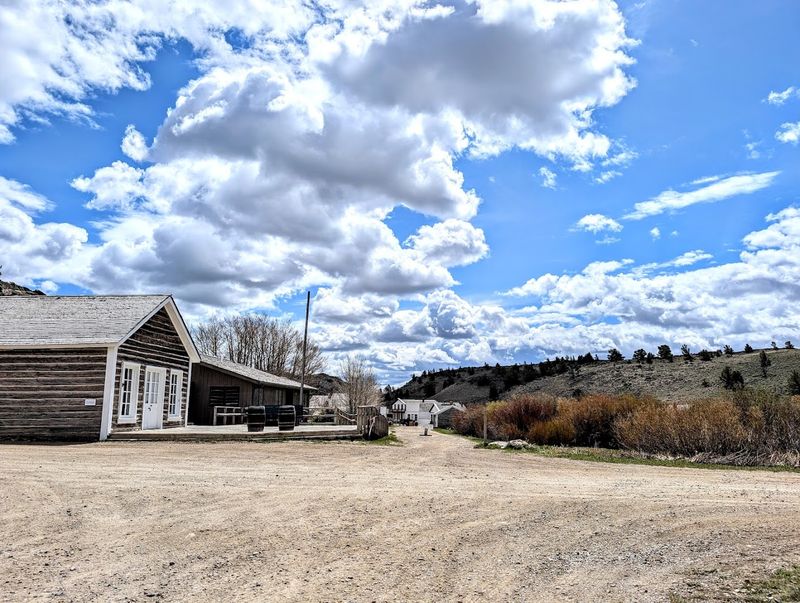
Want the shot that actually feels like being there, not just proof you went? Try kneeling low on the boardwalk so the planks pull your eye down the whole street.
The storefronts will stack like honest teeth, and the sky will sit big behind them. If the wind moves the grass, wait one breath and let the blur do its work.
Another favorite is the window reflection game, because past and present will share the same square. Stand a little off center and let the glass catch the buildings across while holding your face back.
You get layers without tricks, and the result reads calm and true. Wyoming light is blunt but kind, which helps colors stay friendly.
For textures, set your angle so side light drags across nail heads and clapboard grain. You will see every ridge and groove without needing to shout with contrast.
Doors and hinges carry good stories if you give them space in the frame. Let empty foreground breathe, and the quiet will show up.
Finally, walk to the town edge and look back with a little sky stealing the top. The roofs will make a simple line that your camera loves.
If a cloud drifts through, take it, because it softens everything just enough. You will come home with pictures that remember the silence.
Self Guided Route That Helps You See Every Corner
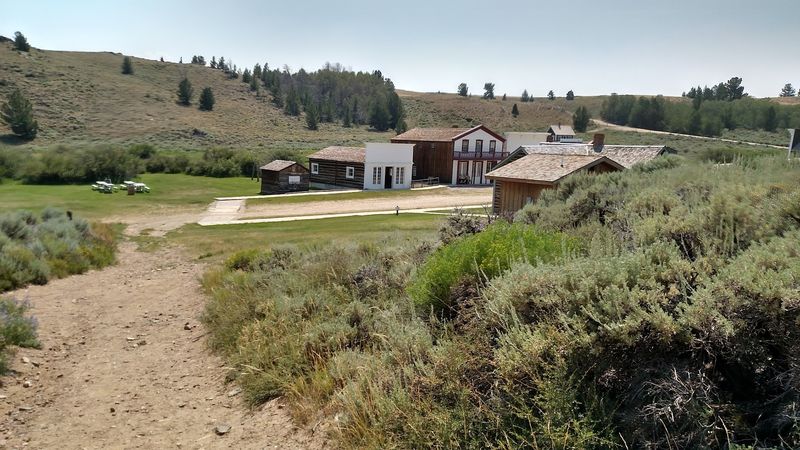
Here is how I like to loop it so nothing slips past while your brain is daydreaming. Start at the main street and stroll the length once without stopping, just to get the town’s rhythm under your shoes.
Then backtrack slow and pop into the buildings that tug at you first. Curiosity is a better guide than any sequence, and it keeps the day light.
When you reach the courthouse and jail, cross to the cabins to feel the scale shift. Those smaller rooms reset your stride and remind you how compact daily life ran.
Drift downhill toward the mill bones, give them a respectful wander, then climb back while the view grows. That uphill return puts the storefronts into a fresh frame you will actually notice.
Before you finish, follow the side path that tucks behind the general store for a quieter angle. You will meet fences and back doors that whisper about chores, which rounds out the story sweetly.
The boardwalk near the end makes a tidy exit that feels earned. Wyoming walks best when it invites you rather than pushes.
Check the small museum rooms last, because context lands stronger after your feet learn the map. A final slow pass down the street helps your brain file names and corners.
If something still pulls, give it one more look, and let that be enough. You will head out feeling like you met the town fairly.
Best Times Of Day When The Wind And Silence Feel Strongest
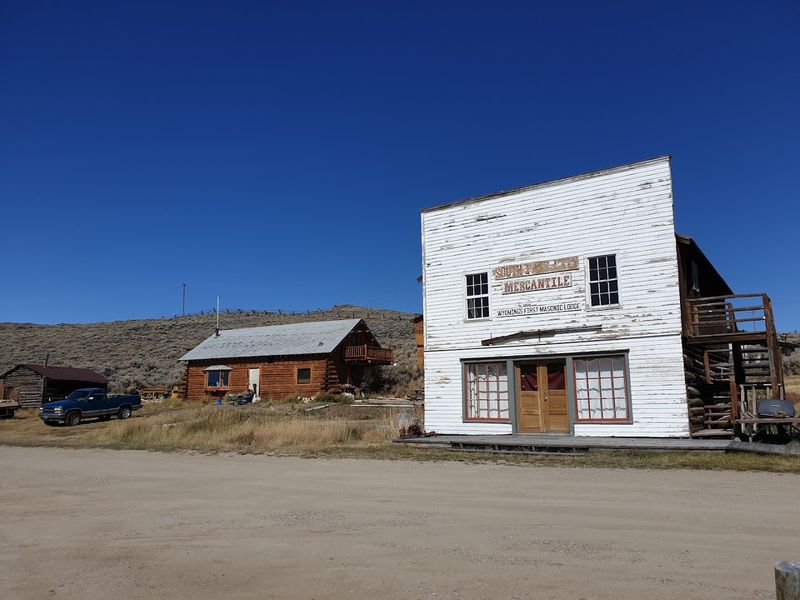
If you can swing it, slip in early when the light is friendly and the air is unhurried. The boards feel warmer underfoot, and the shadows draw tidy lines that help the street speak.
Windows turn into soft lanterns reflecting sky, not glare. Your shoulders drop without you telling them to, which is the day doing its job.
Late afternoon works a different kind of calm that is just as generous. Sunlight drapes the facades with a golden patience that forgives every scar.
Even the mill beams look less tired and more resolved. Wyoming knows how to hold an evening, and this town benefits from that steadiness.
Midday can be honest and bright if clouds lend a hand, but the angles get shy. That is when details and textures want side light, not a spotlight.
If wind picks up, lean into it and let the sound edit your thoughts. The breeze becomes part of the tour without asking permission.
Right before you go, give the street one calm look from end to end and listen. You will hear a pocket of quiet settle between boards, like a book closing softly.
It is not dramatic, just complete, which feels better anyway. Carry that silence back to the car and keep it for a while.
Dear Reader: This page may contain affiliate links which may earn a commission if you click through and make a purchase. Our independent journalism is not influenced by any advertiser or commercial initiative unless it is clearly marked as sponsored content. As travel products change, please be sure to reconfirm all details and stay up to date with current events to ensure a safe and successful trip.
