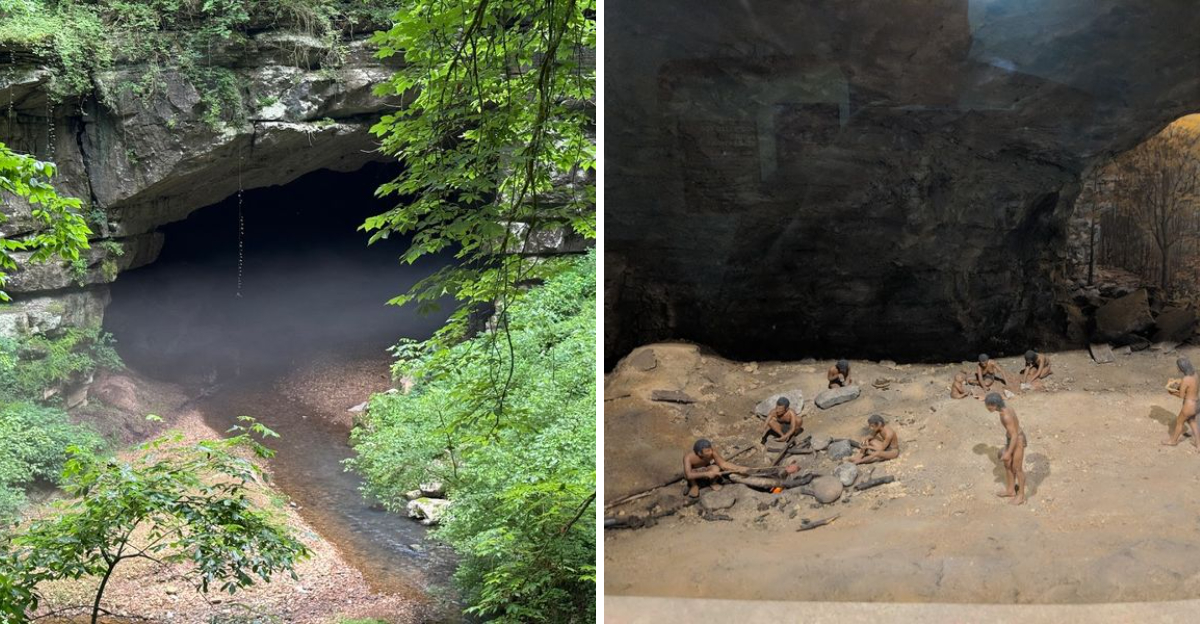
This cave in Alabama is one of those rare places where you can stand at the edge of history and actually feel it. It sheltered human beings for nearly ten thousand years, making it one of the most significant archaeological sites in the eastern United States.
Findings from the site, including ancient fire pits, tools, and other artifacts, tell the story of early communities who lived, hunted, and adapted to their environment long before written history existed.
The preserved record offers a rare, tangible connection to some of the earliest known human life in North America.
If you have ever wondered what life looked like thousands of years ago, it is the kind of place that brings that distant past into something surprisingly real and understandable.
One of the Longest Archaeological Records in Eastern America
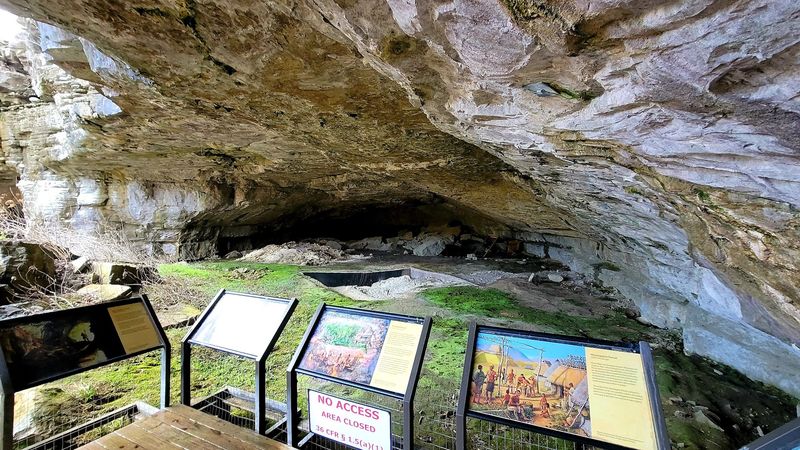
Imagine standing in a place where people built fires and sheltered from storms roughly ten thousand years ago. That is exactly what Russell Cave offers.
The site holds one of the longest and most complete archaeological records in the entire eastern United States, spanning from the Paleo-Indian period around 10,000 BCE all the way through approximately 1650 AD.
That covers thousands of years of continuous and intermittent human habitation. Researchers have identified evidence of the Archaic, Woodland, and Mississippian cultural periods all within the same cave.
Each layer of soil tells a different chapter of the story.
When excavations were carried out, teams uncovered roughly two tons of artifacts buried in the earth beneath the cave floor. Chipped flint points, pottery sherds, animal bones, and charcoal from ancient fires were all found here.
The earliest charcoal remains were dated by radiocarbon methods to somewhere between 6550 and 6145 BCE.
For history lovers, this is not just a cave. It is a layered archive of human endurance and adaptation.
You can visit the site and see the cave entrance yourself, and the museum helps connect all those buried fragments into a meaningful story. Few places in Alabama offer this kind of direct, tangible connection to the deep human past.
Free Admission Makes It Easy for Every Family
Not every worthwhile experience comes with a price tag. Russell Cave National Monument charges absolutely nothing to enter, which makes it one of the most accessible National Park Service sites in the country.
Families, students, solo travelers, and retirees can all show up without worrying about admission costs.
Free entry does not mean a thin experience either. The visitor center includes exhibits, artifact displays, and films about the prehistoric people who once called this cave home.
Rangers are on site daily and are known for being knowledgeable and genuinely enthusiastic about sharing what they know.
The monument is open every day of the week from 8 AM to 4:30 PM, giving visitors a solid window to explore without rushing. The cave is located at 3729 Co Rd 98, Bridgeport, AL 35740, and is easy to reach if you plan ahead.
Parking is available and the area is well maintained.
For families with kids, the Junior Ranger program adds a layer of engagement that keeps younger visitors curious and focused. Children can complete a booklet and mail it in to earn their Junior Ranger badge.
That kind of hands-on learning sticks with kids far longer than a textbook lesson ever could. When the cost is zero and the experience is rich, there is very little reason to skip a visit.
A Wheelchair-Accessible Boardwalk Leads Right to the Cave
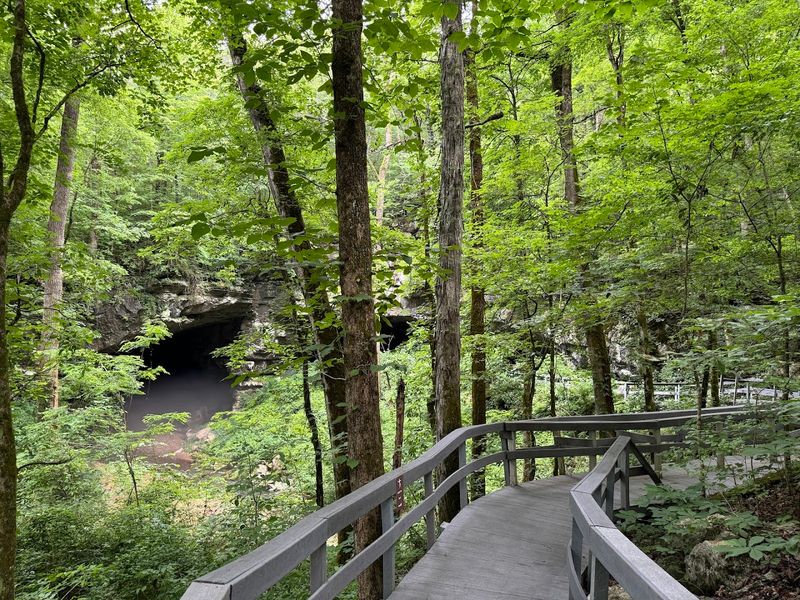
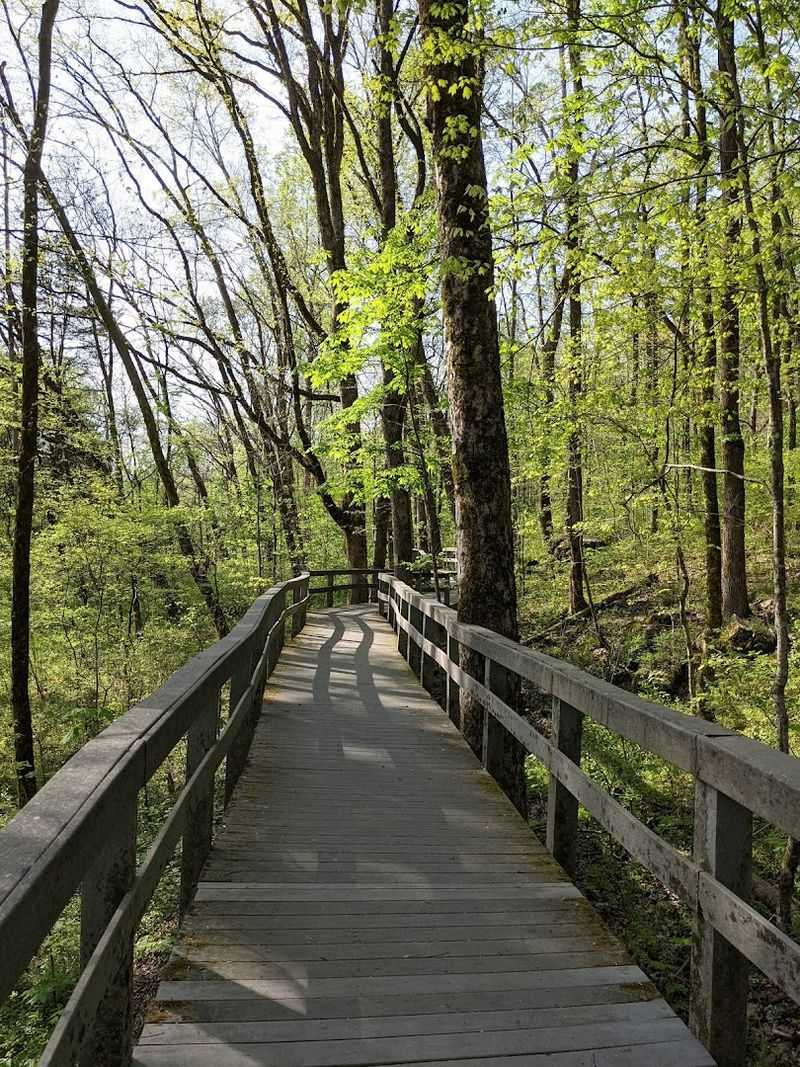
Getting close to the cave entrance is not limited to experienced hikers. A paved, wheelchair-accessible boardwalk takes visitors from the parking area directly to the mouth of the cave shelter.
The walk covers about 600 feet and is manageable for almost everyone, including those using strollers, wheelchairs, or mobility aids.
That level of accessibility is something worth celebrating. Many archaeological and natural sites are difficult to reach, requiring steep terrain or long hikes.
Russell Cave made a deliberate effort to ensure the main attraction is viewable by all kinds of visitors, regardless of physical ability.
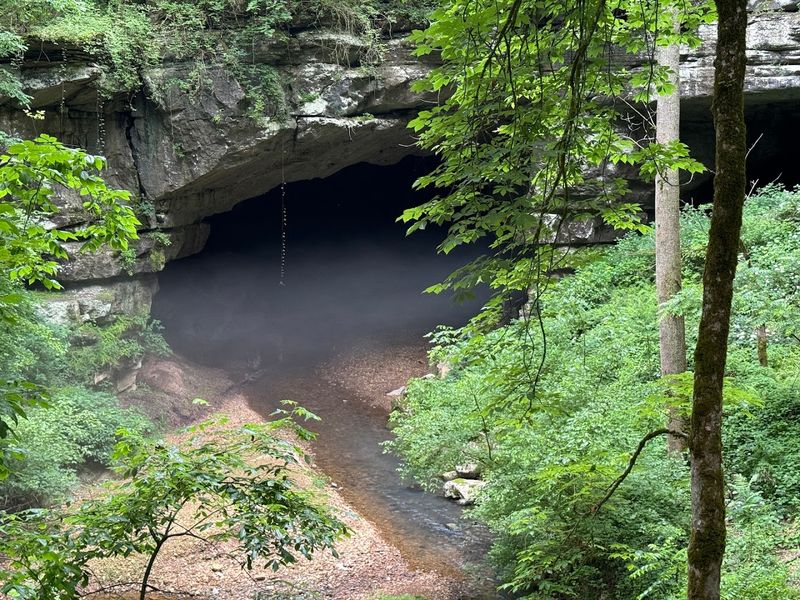
The cave entrance itself is genuinely impressive. It opens wide with a large east-facing mouth that would have made it an ideal seasonal shelter for ancient hunter-gatherer groups.
Standing at the edge of the boardwalk and looking into that enormous opening gives you a real sense of why people came back here year after year for thousands of years.
Rangers can also offer guided tours to the cave mouth upon request. While visitors are not permitted to enter deep into the cave system itself, the view from the boardwalk is striking enough to make the trip feel worthwhile.
The surrounding landscape adds to the atmosphere, with trees and natural rock formations framing the site beautifully. It is a short walk with a big payoff.
Ranger-Led Tours and Live Weapon Demonstrations
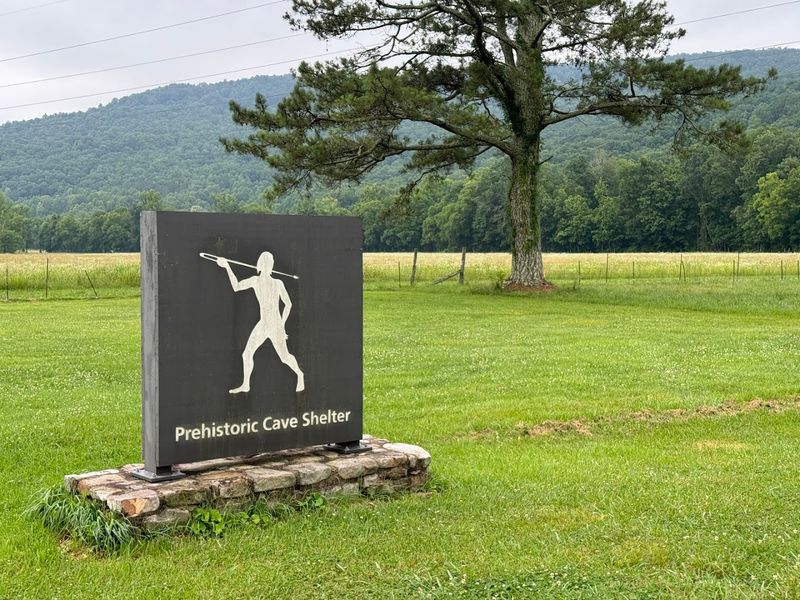
There is something genuinely exciting about watching someone hurl a spear using a tool that is thousands of years old. Rangers at Russell Cave occasionally demonstrate the atlatl, an ancient weapon used by Archaic-period hunters long before the bow and arrow became common.
Seeing it in action makes the prehistoric world feel surprisingly real.
Ranger-led tours to the cave mouth are available upon request during regular visiting hours. These tours go beyond what the exhibits alone can offer.
Rangers share context about how people lived, what they ate, how they hunted, and how they used the cave through different seasons and centuries.
The staff here have a reputation for being both knowledgeable and approachable. Visitors have noted how easy it is to ask questions and get thoughtful, detailed answers.
That kind of personal engagement adds real depth to the visit, especially for curious kids or adults who want more than a quick look around.
Demonstrations of Archaic-period tools and weapons are not offered at every National Monument. The fact that Russell Cave incorporates these hands-on educational moments sets it apart from more passive museum experiences.
Whether you are visiting with family, on a school trip, or just passing through northern Alabama, a ranger-led experience here is the kind of thing that stays with you long after you leave the site.
Nature Trails That Reward the Curious Hiker
The cave is the centerpiece, but the surrounding land has its own story to tell. Russell Cave National Monument includes a 1.2-mile nature trail that winds through the forested hills nearby.
A shorter 0.2-mile cutoff option is also available for those with limited time or energy.
Do not let the modest distance fool you. The full trail involves uphill climbs and switchbacks that can feel genuinely strenuous, especially during Alabama summers when humidity runs high.
Bringing water and wearing proper footwear makes a real difference on this path. The trail is largely shaded, which helps, but preparation still matters.
An ethnobotanical trail runs through the area as well, with interpretive signs identifying plants that ancient inhabitants would have used for food, medicine, and tools.
Reading those signs while walking through the same landscape those early people once navigated adds a quiet kind of wonder to the experience.
The monument is also a designated station on the North Alabama Birding Trail, so birdwatchers have extra reason to bring binoculars. The forested environment supports a wide variety of bird species throughout the year.
Whether you come for the archaeology, the hiking, or the wildlife, the trails at Russell Cave give you something to explore beyond the cave mouth itself. Picnic tables are also available if you want to slow down and enjoy the setting after your walk.
The Cave Itself Was Formed Over Millions of Years
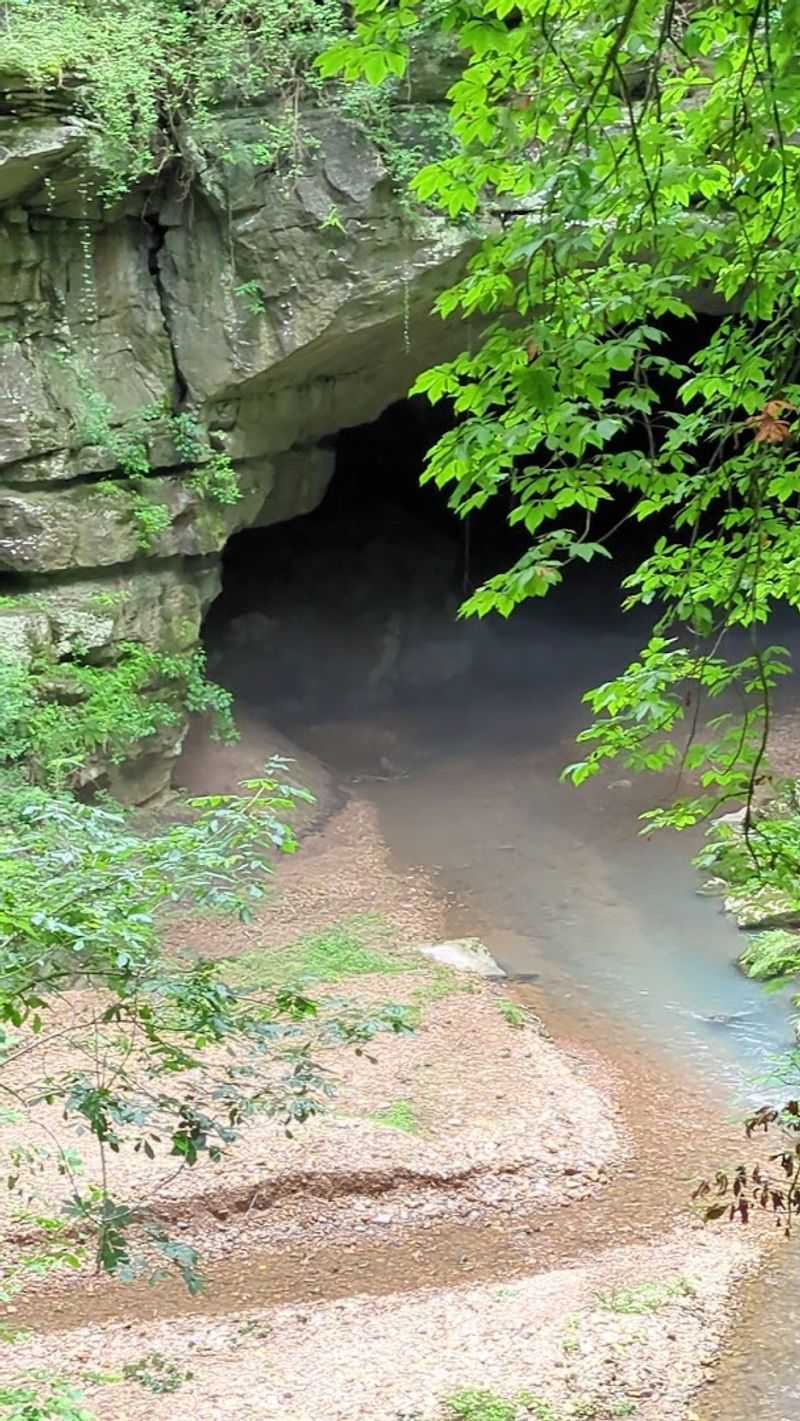
Before the first human ever stepped inside, Russell Cave had already been shaped by millions of years of geological work. Water slowly dissolved the limestone bedrock over immense spans of time, carving out a vast underground system.
A massive roof collapse somewhere between 9,000 and 12,000 years ago created the sinkhole that exposed the cavern and diverted an underground stream, making the space habitable.
That geological backstory is part of what makes the site so fascinating. The cave is not just an archaeological record but also a natural one.
It is currently recognized as the third-longest mapped cave in Alabama, with approximately 7.2 miles of passageways documented so far. Only researchers are permitted to explore the deeper sections of the system.
A stream still flows from the surrounding hillside directly into the cave, just as it did thousands of years ago. Watching that water disappear into the earth gives you a small sense of how dynamic and ancient this landscape really is.
The sinkhole is also visible and accessible from the site, adding another geological highlight to the visit.
The cave’s large east-facing entrance would have captured morning sunlight and offered protection from wind and rain. Early inhabitants understood its value immediately.
Standing there today, it is easy to see why this particular spot was chosen again and again across thousands of years of human history in the region.
A Museum That Brings Ten Thousand Years of History to Life
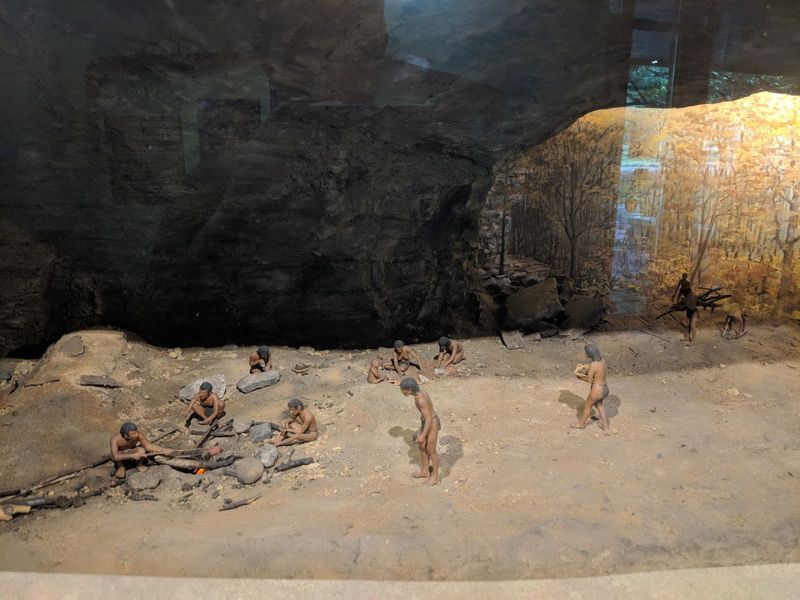
Two tons of artifacts were recovered from the earth beneath Russell Cave. That is not a small number.
Excavations uncovered chipped flint points, bone tools, pottery sherds, spear and arrow points, animal remains, and even human bones. The visitor center and museum at the monument work to present these discoveries in a way that is both educational and genuinely engaging.
Films about the prehistoric inhabitants play inside, giving visitors a visual sense of how people lived during different periods of occupation.
Exhibits explain the concept of forest efficiency, which describes how ancient groups used every available local resource including deer, turkey, fish, nuts, fruits, and cultivated plants like goosefoot.
That kind of detail helps paint a fuller picture of daily life thousands of years ago.
It is worth noting that the museum has been undergoing renovations, and exhibit availability may vary depending on when you visit. The temporary visitor center has still offered interesting displays during the renovation period.
Even in its transitional state, the museum adds real value to a visit. The combination of physical artifacts, interpretive signage, and ranger knowledge creates an experience that goes well beyond a typical roadside stop.
For anyone curious about the deep roots of human life in North America, this museum is a meaningful starting point.
