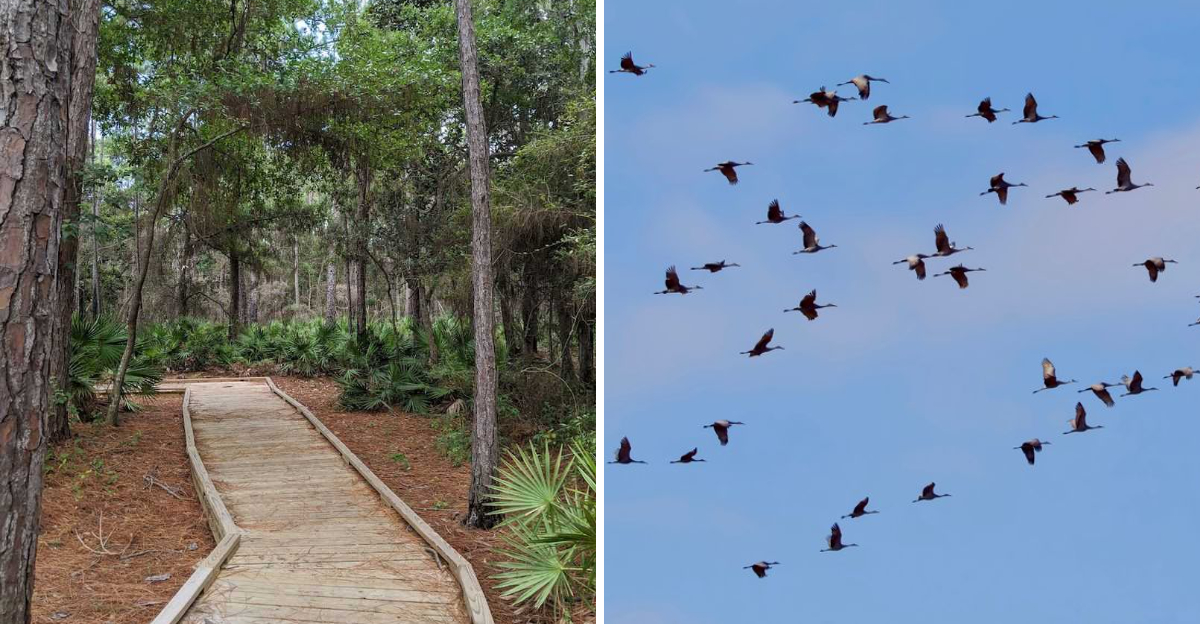
On a quiet coastal island in Alabama, one of its greatest natural treasures often goes unnoticed by visitors passing through.
A vast protected sanctuary stretches across maritime forest, swamp, freshwater lakes, dunes, and Gulf shoreline, all connected by miles of easy walking trails that are open to the public at no cost.
It is the kind of place that feels untouched, where wildlife is abundant and the scenery shifts with every step. Whether you are passionate about birdwatching or simply looking for a peaceful outdoor escape, this hidden reserve offers something rare and grounding.
It easily earns a spot on any travel list for nature lovers.
Explore Five Completely Different Habitats on One Connected Trail System
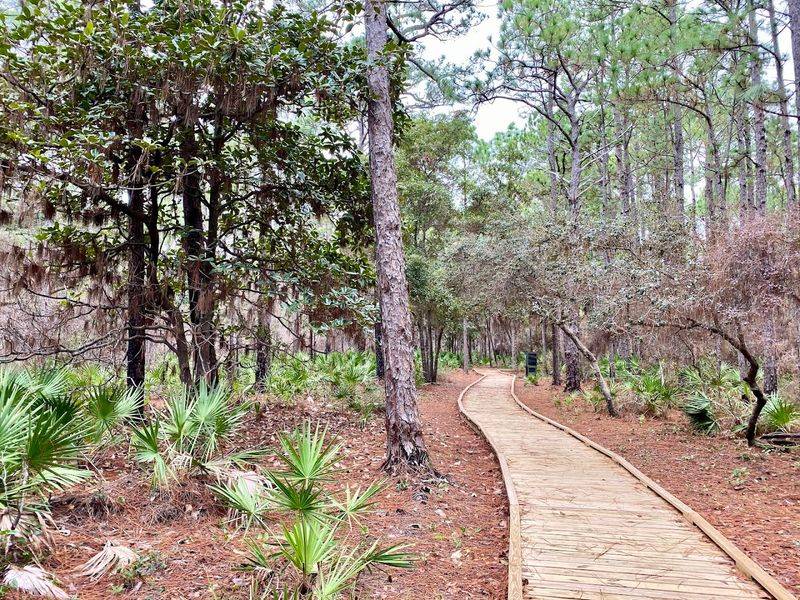
One of the most surprising things about this sanctuary is how many completely different environments you pass through without ever getting back in your car.
Within the same trail system, you move from tall pine forest to Tupelo swamp, then on to freshwater lake edges, open dune systems, and finally the Gulf beach itself.
Each zone looks and feels entirely different from the last.
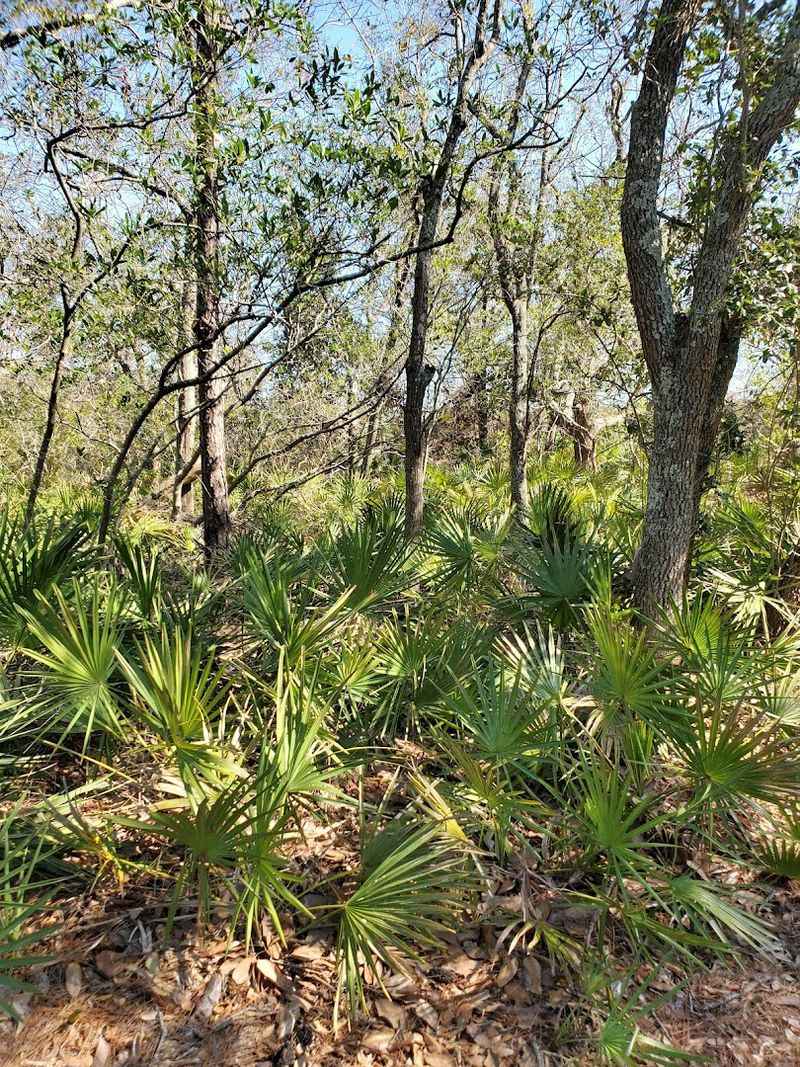
The maritime forest section has a cathedral quality to it; tall pines rise above a layer of saw palmettos, oaks, and magnolias, creating a canopy that filters the light into something almost golden on clear mornings.
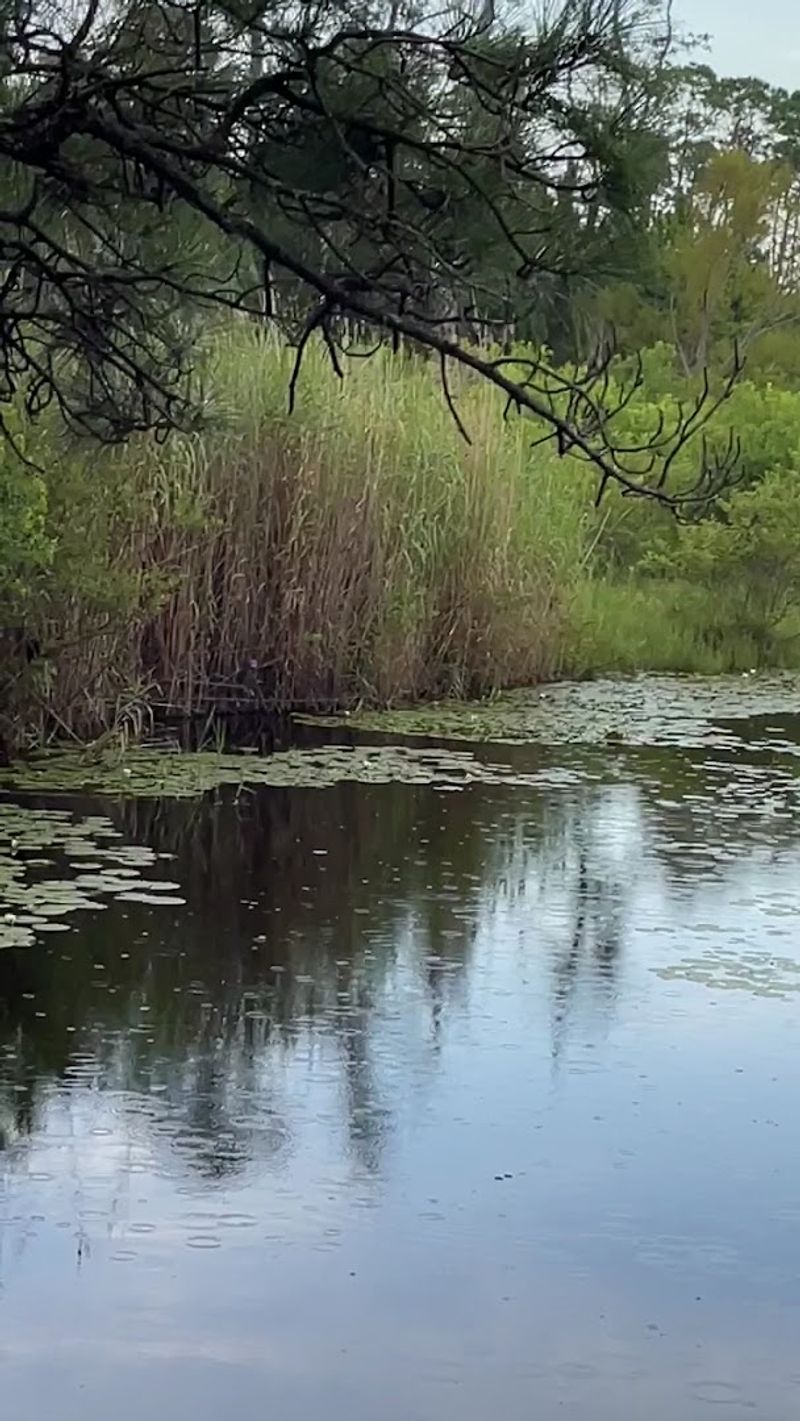
The swamp section gets moodier and denser, with standing water and cypress knees visible from the boardwalk.
Gaillard Lake offers a calmer, more open feel, with a 1,000-foot accessible boardwalk leading from the parking area to a wharf overlooking the water.
Interpretive signs are placed throughout the trails to explain what you are seeing; which plants grow here, why the swamp looks the way it does, and what wildlife depends on each habitat. Benches sit at several scenic viewpoints, giving you an excuse to slow down and actually absorb the surroundings.
For families with curious kids, those educational signs turn the walk into something genuinely interactive. Alabama does not have many places where you can experience this much ecological variety in a single afternoon outing, and that alone sets this sanctuary apart.
Watch Alligators and Turtles From the Wharf at Gaillard Lake
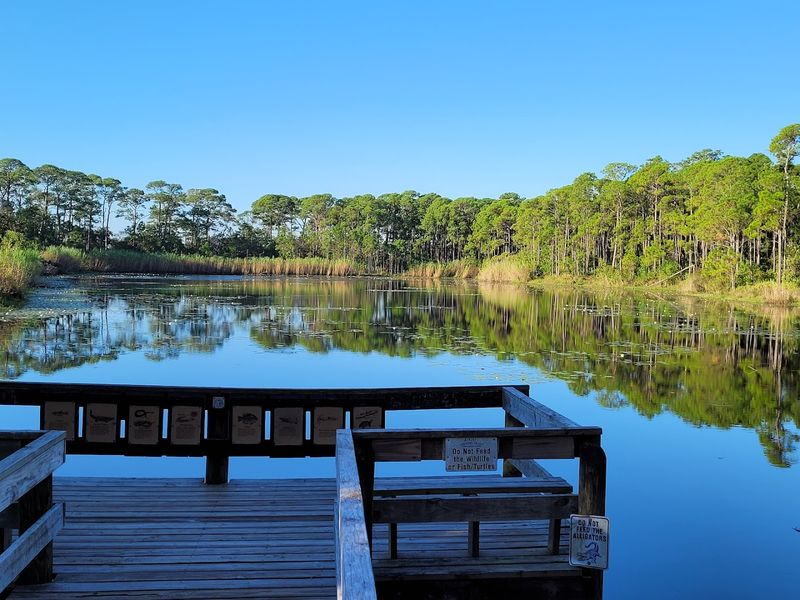
There is something quietly thrilling about standing on a wooden wharf and realizing that the dark shape near the far bank is not a log.
Gaillard Lake, located inside the Audubon Bird Sanctuary, is home to alligators, multiple turtle species, and snakes, all living in a natural freshwater environment that visitors can observe from a safe, elevated vantage point.
The turtles are often the first thing people notice. Dozens of them bask on logs and rocks throughout the day, and some have shells that stretch well over a foot wide.
Spotting an alligator requires a little more patience, but visitors do see them regularly, especially in warmer months when the reptiles are most active near the surface. That combination of unpredictability and wildness makes every visit feel a little different from the last.
The 1,000-foot accessible boardwalk that leads from the parking lot to the wharf makes this one of the most reachable wildlife-viewing spots in the entire sanctuary. You do not need to hike the full trail system to get here; it is a relatively short, flat walk that works well for visitors of all ages and mobility levels.
Morning visits tend to offer the best light for spotting wildlife on the water. Bring binoculars if you have them, and give yourself time to stand still at the wharf rather than just passing through.
The lake rewards patience in a way that feels genuinely satisfying.
Walk a Free Trail That Connects Forest, Swamp, and Gulf Beach
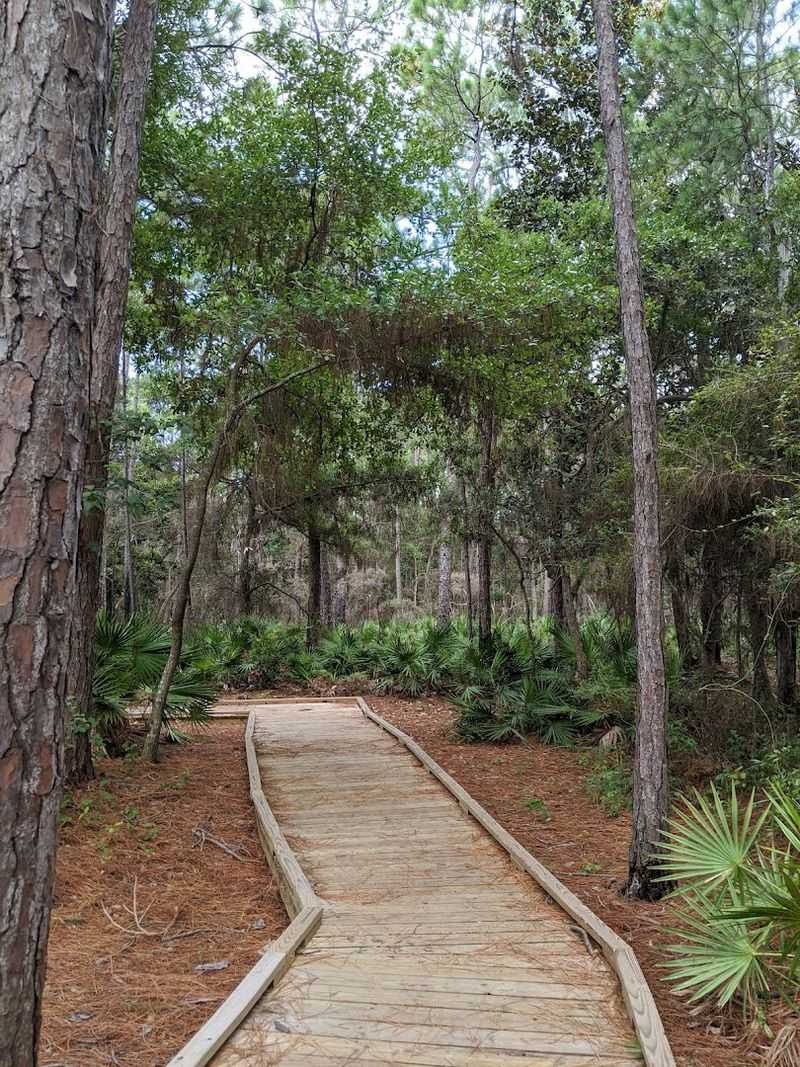
Not many places in Alabama let you walk from a shaded pine forest straight onto a quiet Gulf beach without spending a single dollar. That is exactly what the Audubon Bird Sanctuary offers at 211 Bienville Blvd, Dauphin Island, AL 36528, where admission is completely free every single day of the week.
The three-mile trail system was officially designated a National Recreation Trail in 2012, which means it meets a real federal standard for quality and accessibility.
The trails move through several distinct ecosystems; maritime forest, Tupelo swamp, dune systems, and open Gulf shoreline; all within the same continuous walk.
That kind of variety in such a compact space is genuinely hard to find.
Flat terrain and boardwalk sections make much of the route manageable for strollers and wheelchairs, though some areas do have roots and uneven ground. The sanctuary is open daily from 7 AM to 7 PM, giving you a solid window to explore at your own pace.
Bring water, wear comfortable shoes, and plan for at least two hours if you want to cover the main loops without rushing. The beach access alone makes the trip worthwhile, especially since the stretch of Gulf shoreline here stays far quieter than the more popular tourist beaches nearby.
It feels like a reward waiting at the end of the trail.
Spot Birds That Flew Across the Entire Gulf of Mexico to Land Here
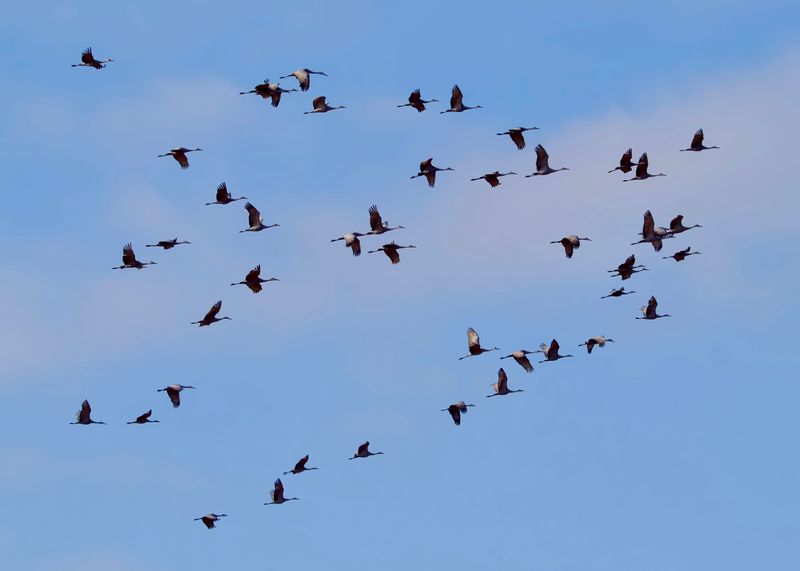
Imagine flying nonstop across the Gulf of Mexico from Central or South America with no place to land until you reach the Alabama coastline. That is exactly what hundreds of neo-tropical migratory bird species do every spring, and Dauphin Island is often their very first landfall.
The Audubon Bird Sanctuary sits right in the middle of that arrival zone, making it one of the most electrifying birding spots in the entire country.
The American Bird Conservancy and the National Audubon Society both recognize Dauphin Island as a Globally Important Bird Area. It consistently ranks among the top four locations in all of North America for observing spring bird migration.
Out of Alabama’s 445 officially documented bird species, an astonishing 420, that is 95 percent; have been recorded on this small island.
Mid-March through May is when the action peaks. During that window, exhausted warblers, tanagers, buntings, and dozens of other species descend into the sanctuary’s trees to rest and feed after their long overwater crossing.
Watching a wave of colorful migrants fill the forest canopy on a calm spring morning is the kind of experience that turns casual visitors into lifelong birders.
Even outside migration season, the sanctuary supports a rich resident bird population, and the endangered piping plover winters here, adding another layer of significance to this remarkable Alabama landscape.
Bring the Kids and the Dog Without Worrying About the Rules
Finding an outdoor destination that genuinely works for the whole family; including the dog; is harder than it sounds. The Audubon Bird Sanctuary on Dauphin Island handles this well.
Leashed dogs are welcome on the trails, and the relatively flat terrain with boardwalk sections makes the walk manageable even with a stroller or young children in tow.
The trail system is well-marked, and interpretive signs along the route give kids something to read and think about as they walk.
Spotting turtles from the wharf, watching ospreys circle overhead, or finding a lizard near the dune path all become little adventures that hold a child’s attention far better than a standard park visit.
The variety of terrain keeps things interesting without requiring any serious hiking ability.
A few practical notes worth knowing before you go: the parking area is small, with roughly 15 spots, so arriving early on busy days is smart. There are no restrooms or picnic facilities inside the sanctuary, so pack snacks and plan accordingly.
Mosquitoes can be intense around the swamp section, especially in summer, so bring repellent for everyone including little ones. The sanctuary is open daily from 7 AM to 7 PM.
Morning visits are generally cooler, less crowded, and better for wildlife sightings. Alabama has no shortage of outdoor spots, but few of them combine this level of accessibility, wildlife, and zero admission cost in one place.
Discover Why This Island Is One of North America’s Top Birding Destinations
Dauphin Island does not advertise itself loudly, but among serious birders it carries a reputation that stretches well beyond Alabama’s borders.
The island’s position at the northern edge of the Gulf of Mexico places it directly in the path of one of the most dramatic wildlife events on the continent, the spring neo-tropical bird migration.
When conditions are right and a cold front stalls the migrants mid-crossing, the sanctuary trees can fill with hundreds of exhausted birds in what birders call a “fallout.”
Witnessing a fallout is the kind of thing people plan trips around for years. Warblers, orioles, tanagers, and buntings land in such numbers that even non-birders stop and stare.
The Audubon Bird Sanctuary provides the ideal setting for this because its maritime forest gives the birds exactly what they need; shelter and food; right at the moment of arrival.
Outside of migration season, the sanctuary still delivers. Winter brings waterfowl and shorebirds, including the endangered piping plover, which uses the island as a critical seasonal habitat.
The resident osprey population is visible year-round, and herons move through the lake and swamp areas with regularity.
The American Bird Conservancy and the National Audubon Society both formally recognize Dauphin Island as a Globally Important Bird Area, a designation that carries real scientific weight.
For anyone serious about birding in Alabama, this sanctuary belongs at the very top of the list.
Spend a Morning Here Without the Crowds That Other Parks Always Have

There is a particular kind of quiet that only exists in places most people have not discovered yet. The Audubon Bird Sanctuary has that quality in abundance.
Even on weekends, the trails here feel uncrowded compared to state parks and beaches elsewhere along the Alabama Gulf Coast. The small parking area naturally limits the number of visitors at any one time, and the trail system is large enough that people spread out quickly once they start walking.
Early morning is the sweet spot. The light through the pine canopy is softer, the birds are most active, and the air is cooler before the Gulf humidity settles in.
Arriving around 7 AM when the sanctuary opens gives you the best chance of having entire trail sections to yourself. The pine needle-covered paths muffle footsteps, and the boardwalk sections over the swamp feel especially serene in the early hours when mist still hangs over the water.
That sense of solitude is not accidental; it comes from a place that has been protected since 1961 and managed with genuine care for the natural environment.
The sanctuary became part of the National Audubon Society’s wildlife sanctuary system in 1967, and that long history of conservation shows in the health of the habitat.
Alabama has plenty of beautiful outdoor spaces, but few of them offer this combination of ecological richness and everyday peacefulness in a single free destination. Come early, walk slowly, and let the morning do the rest.
