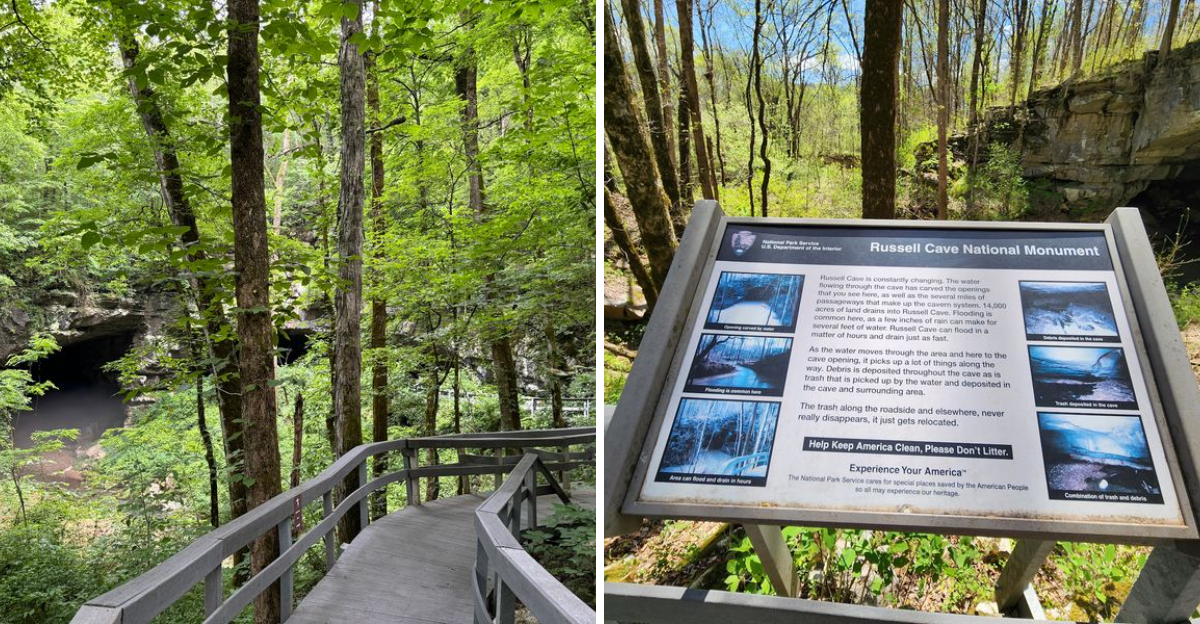
Some historic sites tell stories through old buildings. Others tell them through the very ground beneath your feet.
This Alabama cave offers a rare opportunity to explore a place connected to some of the earliest human activity in the region. Its significance comes not only from its natural surroundings, but from the evidence left behind by people who relied on this landscape thousands of years ago.
A visit here is a chance to see where history and nature meet, creating an experience that feels both educational and unforgettable. If you enjoy discovering places that reveal a hidden side of the past, this destination is worth exploring.
Uncover Millennia of Human History Right Beneath Your Feet
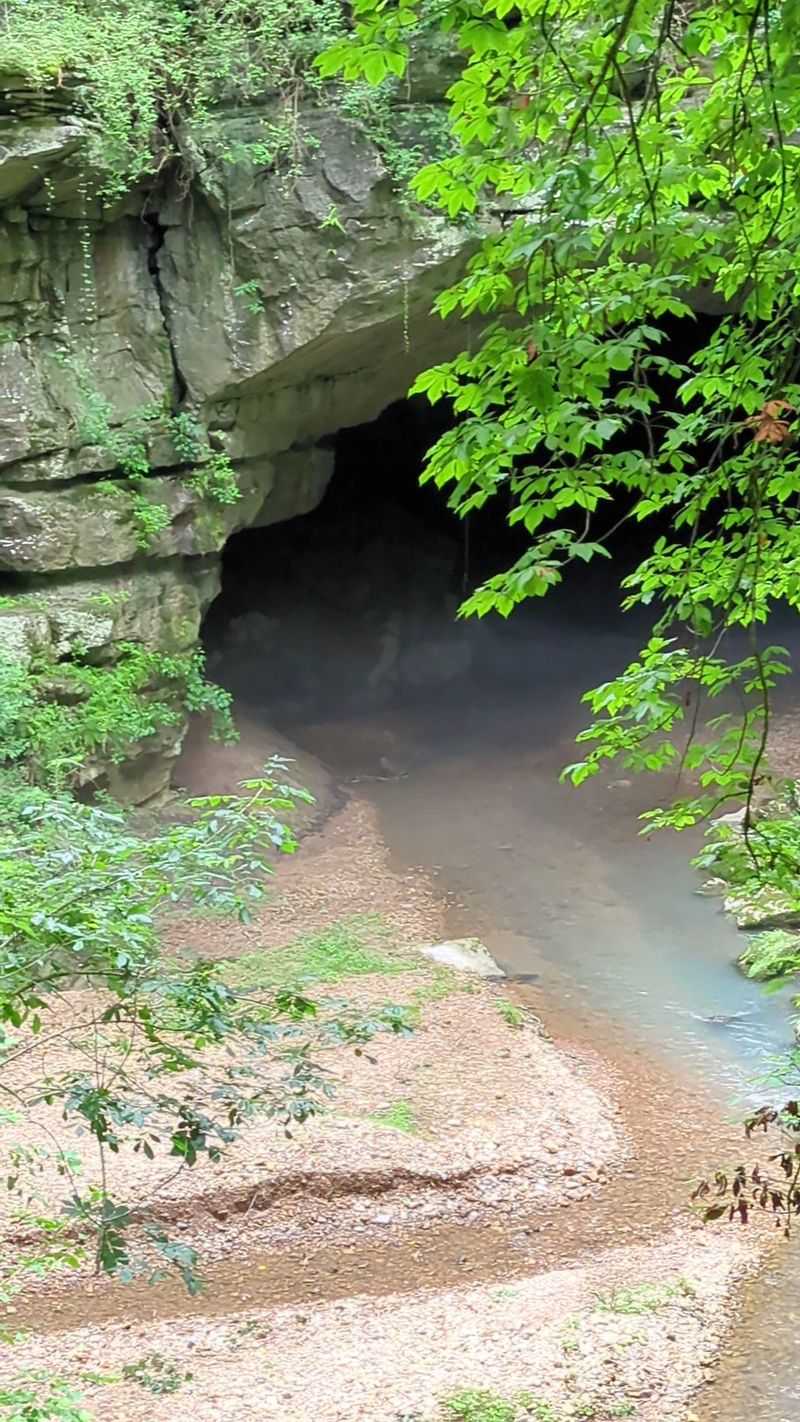
Few places in the United States can claim a record of human occupation as long and unbroken as Russell Cave. Archaeological evidence shows that prehistoric people used this cave as a seasonal winter shelter from around 6500 BCE all the way through 1650 CE.
That is a staggering span of time, and it makes this site one of the most historically significant locations in the entire Southeast.
The cave offered something genuinely rare for its era: reliable shelter, a stable temperature, and proximity to forests full of food and resources. Early inhabitants gathered wild plants, hunted game, fished nearby waterways, and collected stone for tools.
They were resourceful, adaptable, and clearly knew a good spot when they found one.
What makes visiting so powerful is that you are standing in the same space those people stood in thousands of years ago. The cave walls have not moved.
The stream still flows into the mouth of the cave just as it always has. There is something quietly humbling about that kind of continuity.
Most of us never get to stand in a place with that kind of layered human story beneath our feet. Russell Cave is one of those rare exceptions, and honestly, that alone is worth the drive to Bridgeport.
Ancient Artifacts That Tell a Story No Book Fully Can
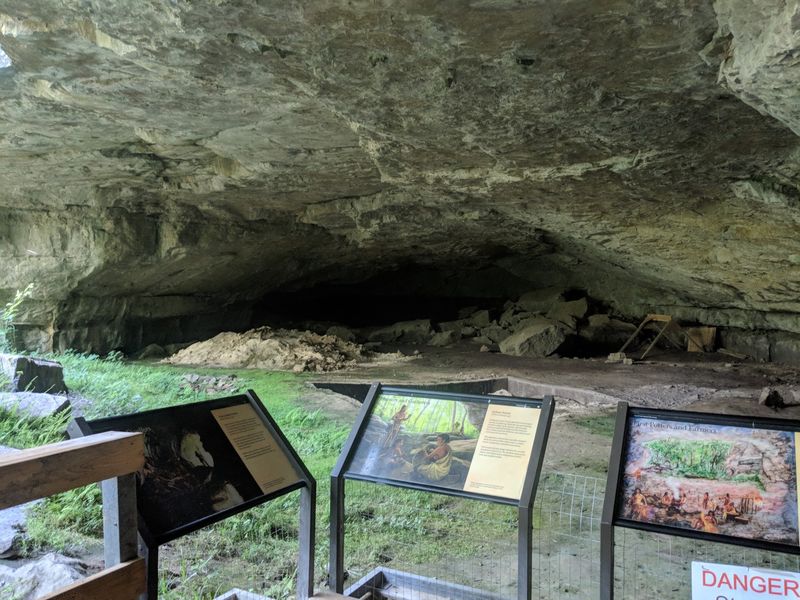
When archaeologists first began excavating Russell Cave in the 1950s, what they uncovered was extraordinary. More than two tons of artifacts have been recovered from this single site, making it one of the richest concentrations of prehistoric material culture in the American Southeast.
Chipped flint projectile points, charred animal bones, pottery fragments, and even human remains were carefully unearthed from layer after layer of earth.
Each layer tells a different chapter of the story. The deepest deposits belong to Paleo-Indian hunters, the earliest known inhabitants of the region.
Moving upward through time, the artifacts shift to reflect the Archaic, Woodland, and Mississippian cultural periods. The changes in tool design and pottery style show how dramatically life evolved across those thousands of years.
Seeing these objects up close at the visitor center puts everything into perspective. These are not replicas or reconstructions.
They are the actual belongings of real people who lived, worked, and made decisions in this very cave. A small flint point no bigger than your thumb was once someone’s most important survival tool.
That kind of connection to the past is rare, and Russell Cave delivers it in a way that feels immediate and personal rather than distant or academic.
The Cave Entrance Itself Is a Natural Wonder Worth Seeing
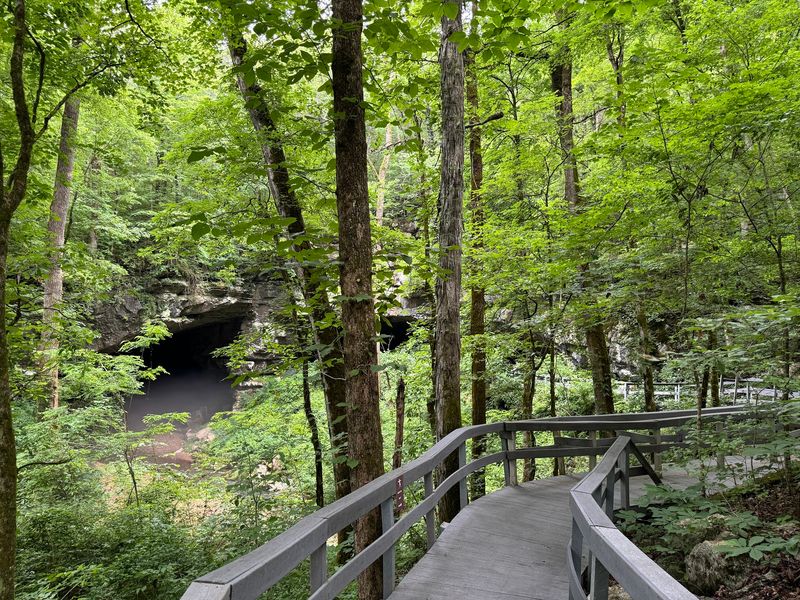
Even before you learn a single fact about the history of Russell Cave, the physical sight of the cave entrance alone is enough to make you pause. The opening is enormous, carved over thousands of years by underground water slowly dissolving the limestone bedrock beneath Montague Mountain.
A clear stream flows directly out of the cave mouth and into the light, creating a scene that feels almost otherworldly.
A well-maintained boardwalk carries you from the visitor center right to the edge of the cave shelter, and the walk is short enough for most visitors, including those with mobility considerations. Along the way, the forest thickens and the sounds of the outside world begin to fade.
By the time the cave comes into view, there is a genuine sense of arrival, like you have been led somewhere that matters.
The cool air drifting out from the interior is noticeable even in summer. Visitors who have made the short walk often describe the temperature shift as one of their favorite small surprises of the trip.
While you cannot venture deep inside the cave system, the view from the boardwalk gives you a real feel for the scale and drama of this geological formation. It is the kind of sight that photographs struggle to capture fully, which is a good reason to just go and see it for yourself.
Have You Ever Hiked Through a Forest Shaped by Prehistoric Hands
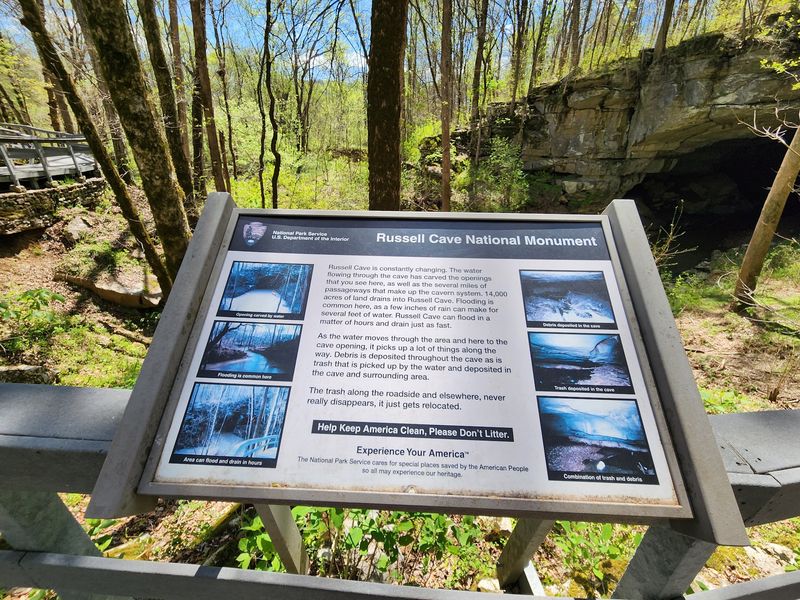
The trails at Russell Cave National Monument offer more than just exercise. They invite you to move through the same landscape that sustained prehistoric communities for generations.
The paved Nature Trail winds through a rich mix of plant and animal life, with interpretive signs pointing out species that were essential to the people who once called this cave home. It turns an ordinary walk into something closer to a conversation with the past.
For those who want a more physical challenge, the Backcountry Trail pushes upward through the forest with a significant climb and plenty of switchbacks. It is not a casual stroll, so good footwear and a full water bottle are genuinely important, especially during Alabama’s humid summer months.
The reward at the top is a sense of quiet accomplishment and views of the surrounding Cumberland Plateau that feel well-earned.
What struck me most about these trails was how alive everything felt. The forest is dense and layered, full of sounds and movement.
Birds called from the canopy above while smaller creatures rustled through the underbrush below. The plants lining the path are not just scenery.
Many of them were used by Native Americans for food, medicine, and building materials, and the trail signs make that connection clear and easy to understand. It is a walk that keeps rewarding you the more attention you pay.
Birdwatching and Wildlife That Will Genuinely Surprise You

Russell Cave National Monument holds the distinction of being Site 44 on the North Alabama Birding Trail, and that designation is well deserved. Researchers have recorded more than 115 bird species within the monument’s boundaries.
During spring and fall migration seasons, the skies and treetops fill with eastern warblers, vireos, tanagers, and cuckoos passing through or settling in for the warmer months.
The variety of habitats within the monument, including open fields, dense woodland, the cave itself, and the stream corridor, creates ideal conditions for a wide range of wildlife.
Beyond the birds, you might spot white-tailed deer moving quietly through the trees in the early morning, or catch the flash of a fox cutting across an open patch of ground.
Armadillos and raccoons are also known to wander the grounds, and the stream flowing from the cave supports fish species like the sculpin.
Brown bats and northern long-eared bats roost inside the cave, playing a quiet but important role in the local ecosystem. The rangers at the visitor center are genuinely enthusiastic about wildlife and are happy to point you toward the best spots for observation depending on the season.
Whether you arrive with binoculars and a field guide or simply with curiosity, the natural life at Russell Cave has a way of pulling your attention in directions you did not expect.
The Gilbert H. Grosvenor Visitor Center Is Where the Story Comes Alive
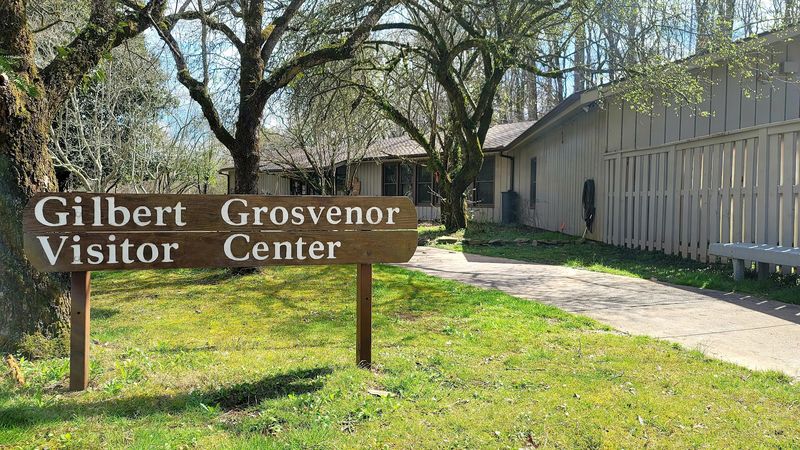
Named after the influential editor and president of the National Geographic Society, the Gilbert H. Grosvenor Visitor Center is more than just a starting point for your visit.
It is genuinely one of the most engaging small museums in northern Alabama. The exhibits inside connect you directly to the people who lived in the cave, using recovered artifacts, detailed displays, and short documentary films to bring their daily lives into focus.
The National Geographic Society played a crucial role in the early archaeological work at Russell Cave, which makes the naming of the center a fitting tribute.
Inside, you can see real excavated objects up close, read about the different cultural periods represented at the site, and learn how archaeologists pieced together such a detailed picture of prehistoric life from layers of soil and stone.
The staff here are notably knowledgeable and approachable, happy to spend time answering questions or pointing out details you might miss on your own.
Kids can work toward earning a Junior Ranger Badge, and dogs visiting with their families can participate in the B.A.R.K. Ranger program, which makes the whole experience feel welcoming for everyone.
Ranger-guided walks and demonstrations of prehistoric tools and weapons are sometimes available, depending on staffing. The visitor center sets the tone for the entire visit and makes everything you see on the trail and at the cave entrance feel richer and more meaningful.
Ready To Find a Place Where Time Actually Slows Down
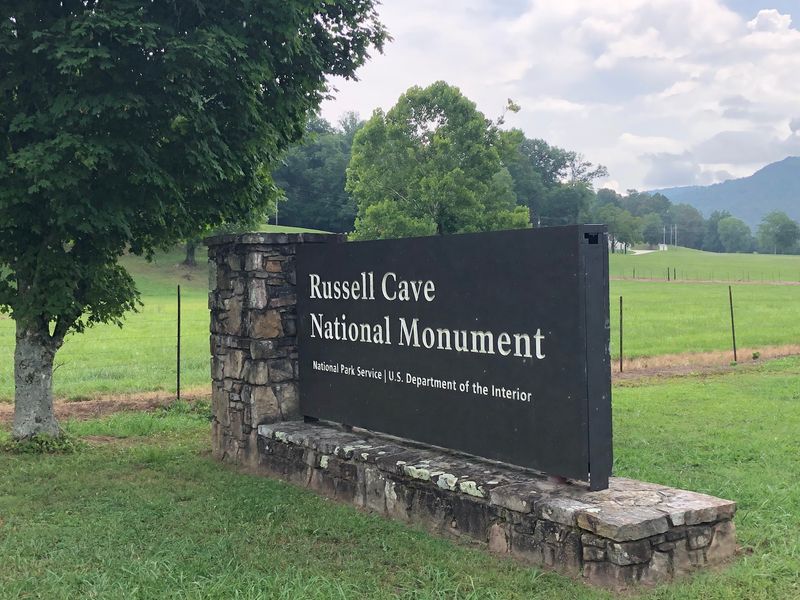
There is a particular kind of quiet that settles over Russell Cave National Monument, and it is the kind that is hard to find in most places anymore.
Nestled at the foot of Montague Mountain, part of the Cumberland Plateau just west of Bridgeport, the monument feels genuinely removed from the noise and pace of everyday life.
The air is cooler in the shade of the old trees, and the only sounds competing for your attention are birdsong and the soft rush of water.
A small picnic area gives visitors a reason to linger a little longer, and that is honestly not a bad idea. Bringing lunch and settling into the surroundings for a while lets the place sink in properly.
There is no entry fee, which makes the whole experience feel even more generous, like a gift that does not ask much in return except your attention and a bit of your time.
The monument was donated to the American people by the National Geographic Society in 1961, and it has been carefully preserved ever since. That sense of stewardship shows in everything from the clean facilities to the thoughtfully maintained trails.
Whether you come alone, with a partner, or with a family in tow, Russell Cave has a way of making the visit feel unhurried and genuinely restorative. It is the kind of place you leave already thinking about when you might come back.
Address: 3729 County Road 98, Bridgeport, AL 35740
