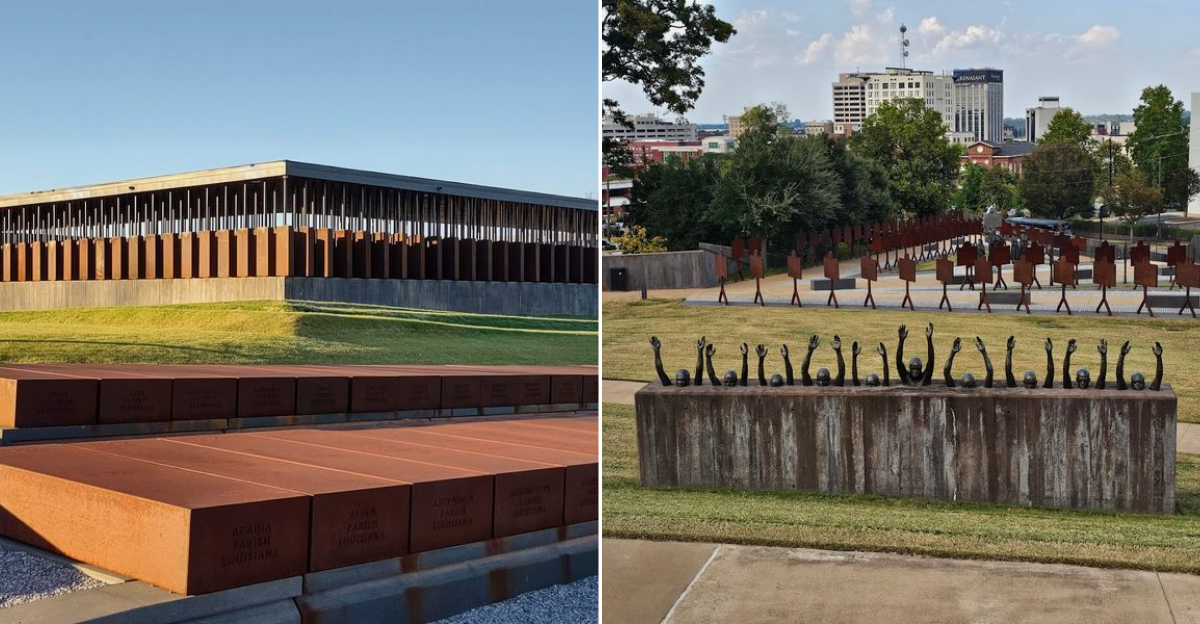
You think you understand the South’s past, and then a single visit makes you realize how much was left out. The National Memorial For Peace And Justice in Montgomery pushes visitors to rethink history in a way that feels direct, human, and impossible to brush off.
You arrive expecting a memorial experience, and you leave carrying names, places, and context that hit harder than any textbook summary. The design is powerful on purpose, guiding you through a space where silence does a lot of the talking.
It connects the legacy of racial lynchings to the broader story of slavery and segregation, and it makes the timeline feel continuous instead of neatly separated. Even people who come in confident about what they know tend to slow down here.
You start noticing how memory gets shaped, what communities were forced to carry, and how public history can be softened until it stops being honest.
This is not a quick photo stop. It is a visit that changes the tone of your whole trip, and that is exactly why it matters.
The Quiet Build-Up Before You Walk In
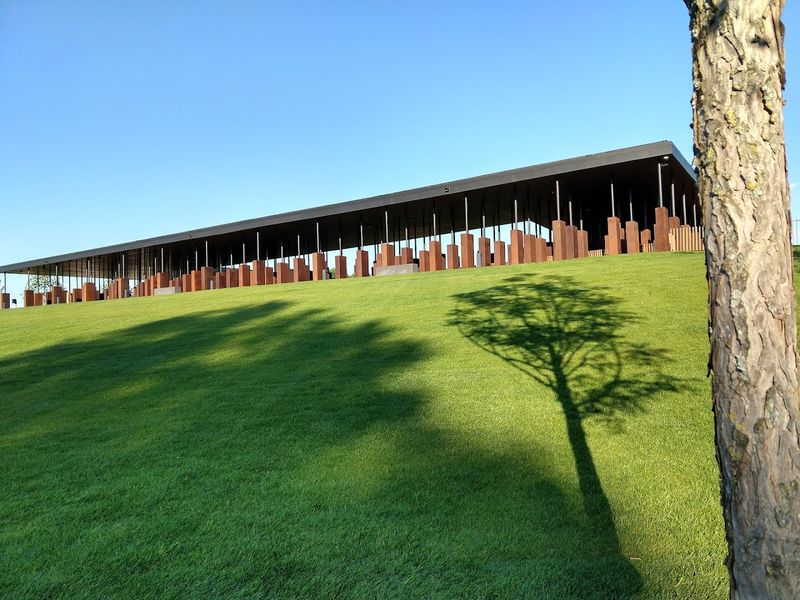
You know that feeling when a city lowers its voice just enough that you notice your own footsteps? That happens on the walk toward The National Memorial for Peace and Justice at 417 Caroline St, Montgomery, AL 36104, where the streets feel measured and the sky seems a little wider than usual.
There is nothing loud pushing you forward, just a steady pull that tells you the visit begins before the gate and you may want to match its pace.
I like arriving early because the edges of the day put a soft frame around everything, and you can actually hear the breeze moving through the trees. The quiet feels earned, like the city understands what the site holds and decides not to rush you.
You straighten up a little, read a sign, and suddenly the normal sightseeing voice in your head is gone, replaced by something slower.
Montgomery carries layers, and you can sense them in the small details, from the brick under your shoes to the way people step aside for each other without being told. This is Alabama, and the history is not hiding, but the approach gives you room to get ready for it.
By the time you reach the entrance, you have already started visiting, even if you have not realized it. That build-up is not decoration.
What This Memorial Is, And Why The Design Hits So Hard
So here is the thing that lands right away, because the design does not whisper its purpose. The memorial is a space built to confront the legacy of racial lynchings in the United States, and the architecture chooses truth over comfort.
You start at eye level with weathered steel markers and then feel them rise above you, which shifts your body’s relationship to the story, and it is not subtle.
That movement from ground to overhead is the turn that gets you, because it makes you look up while also looking back. Materials matter here, from the textured steel to the open rooflines that pull in sky, light, and weather, reminding you that memory is not sealed.
The design does not demand tears or speeches, but it gives enough space for breath, which can be its own kind of honesty.
What I appreciate most is how the site balances clarity and care. Every line and opening aims you toward understanding without staging a performance.
It is Alabama soil, Southern weather, and human names carried with weight, and the result is not a spectacle. It is a living room for grief and acknowledgment, which sounds heavy, but it actually makes you feel held.
You leave that first section knowing why the design is the message.
The Hanging Markers Section And The Moment Most Visitors Go Silent
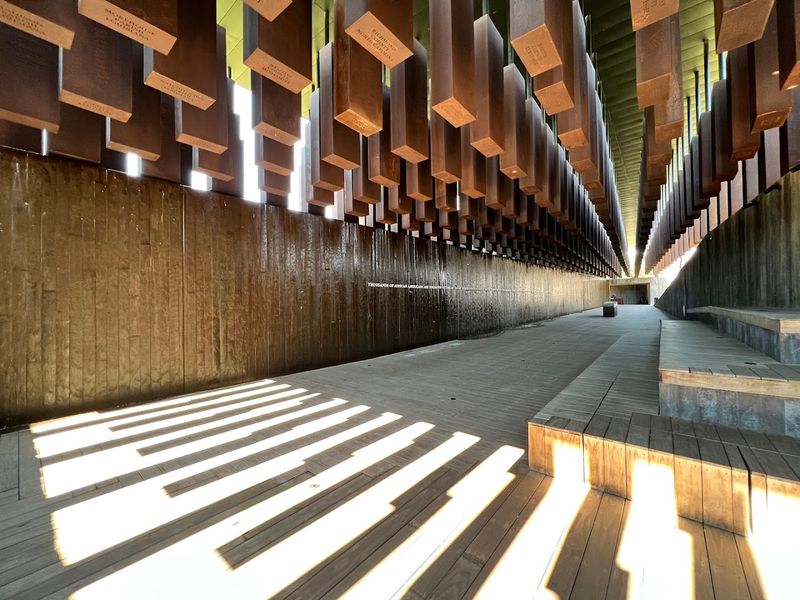
There is a specific turning point when you step into the area where the markers hang fully overhead. The floor slopes, the ceiling rises, and suddenly the names are no longer beside you, they are above you, multiplying the feeling of scale.
That is usually when the chatter drops away, not because anyone says so, but because your body reads the room and decides silence makes sense.
I remember hearing nothing but footsteps and a little drip of water after a passing shower, and it felt like the space was directing the sound. The markers are heavy, not just in weight but in presence, and the gaps between them feel like held breath.
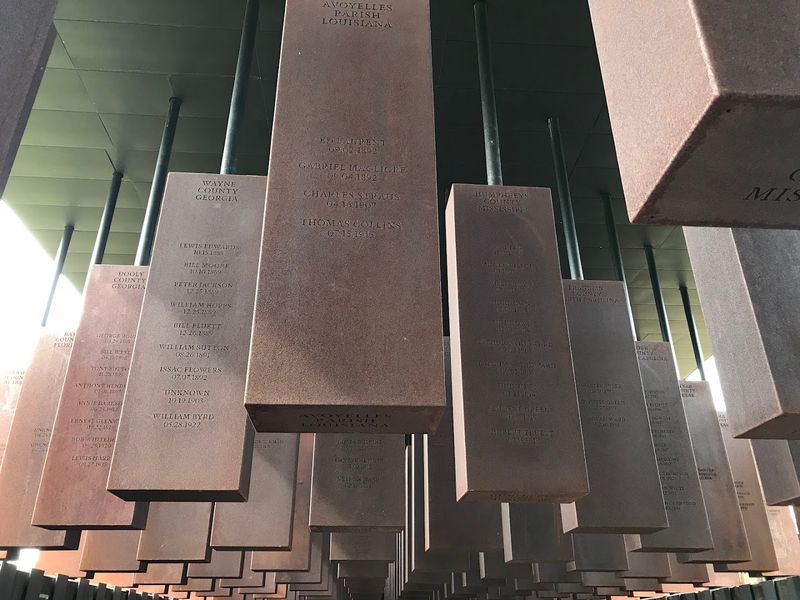
You look for a county or a name, you find one, and it anchors the whole thing to a place you can picture on a map.
What happens next is personal. Some people stand still, some move slowly, and others trace edges with their eyes, like counting is a way to understand.
Alabama is in there, of course, but so are neighbors near and far, and that web adds a different gravity. You come out of that section speaking more carefully, not from fear, but from respect.
How The County Names Change The Way You Read History
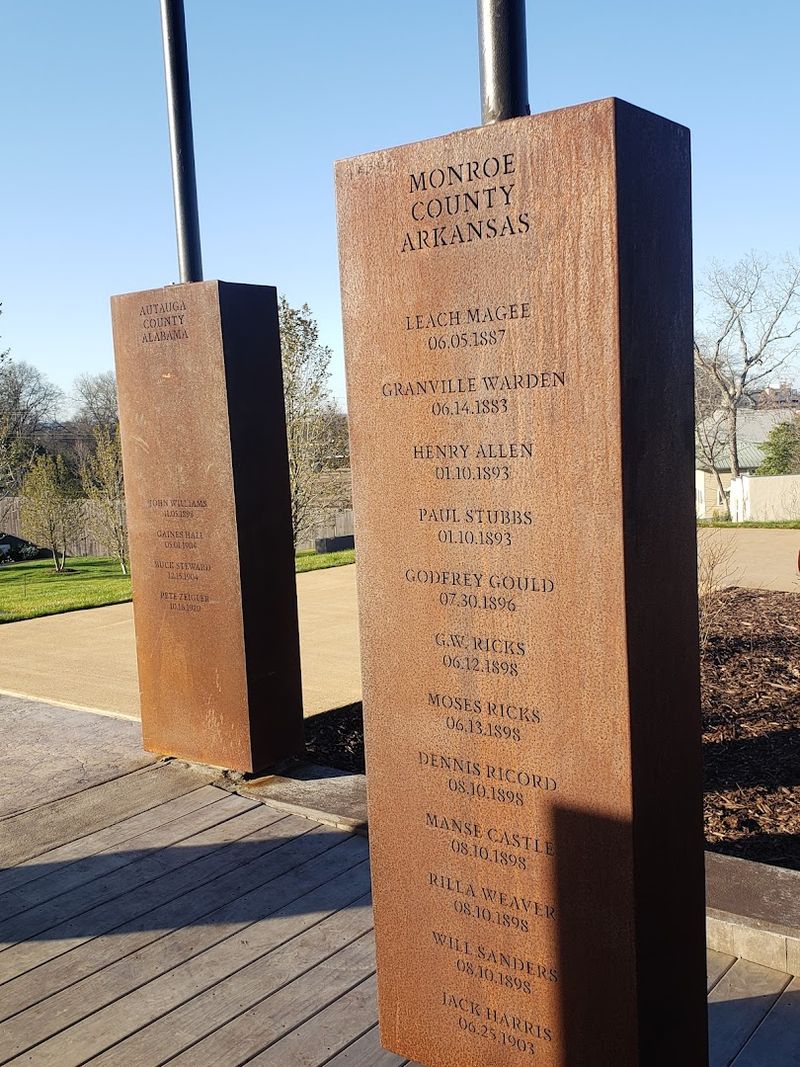
Have you ever noticed how a single county name can turn history from distant to immediate? That is the shift here, because the markers are organized by county, and the roll call of places pulls you out of abstraction.
You stop thinking in generalities and start tracing lines across a real map where families still live and work today.
It hits differently when you read a county you know, or a state you have driven across on a long road trip. Alabama shows up again and again, but you also catch names from across the region, and together they fill the air with geography you can actually picture.
The effect is less about numbers and more about place, about neighbors who never had a marker until now.
I like to move slowly along a few panels and pause for the unfamiliar ones, because learning a new county name can be its own small act of respect. You do not need a lecture to follow the thread.
The counties build a map that is invisible under your feet but clear in your head, and that map travels home with you. When history lands in a county, it lands in a living community.
Walking The Paths, Sightlines, And The Slow Shift In Perspective
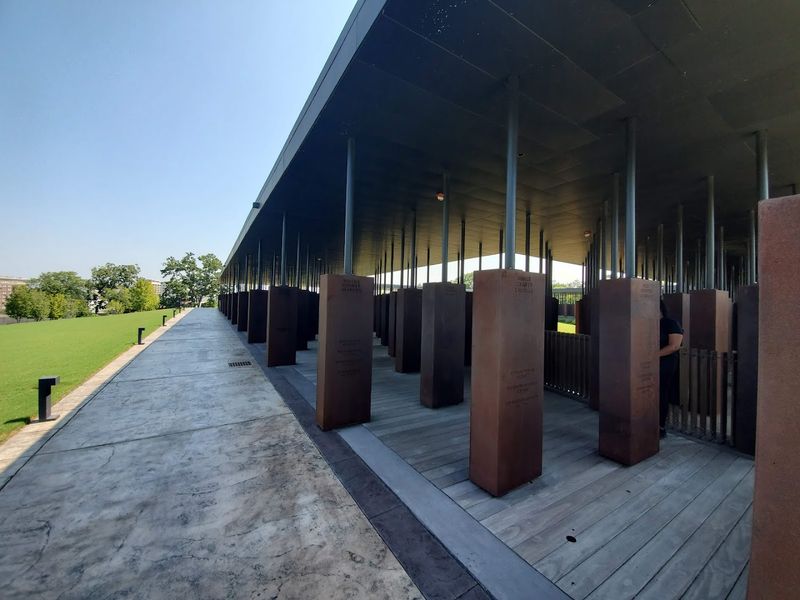
Let me tell you, the walking paths are doing more work than you think. They bend and narrow, then open to long sightlines that frame the markers from surprising angles, which means your perspective keeps changing as you move.
That movement is not decoration, it is guidance, and it gradually teaches you how to look, then how to look again.
When the grade changes, your shoulders adjust, and the horizon line rises, pulling the markers above your head. That is a physical lesson wrapped in a landscape design moment, and you feel it even if you cannot name it.
Benches show up exactly where you might want to sit without breaking the thread, and there is enough planting to soften steel without diluting the message.
I like catching a long view across the pavilion because it reveals the scale while keeping the personal intact. Alabama light plays a role too, shifting the color of the steel and throwing shadows that turn minutes into chapters.
By the time you loop back toward the exit, your eyes have done a kind of practice. You are seeing more carefully than when you arrived, and that is the quiet victory of the paths.
The Duplicate Markers And Why They Matter Outside The Main Space
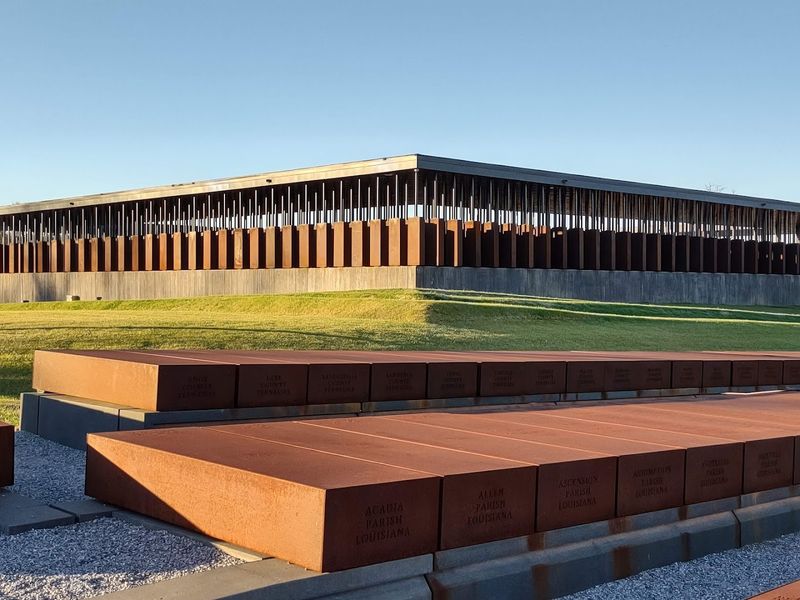
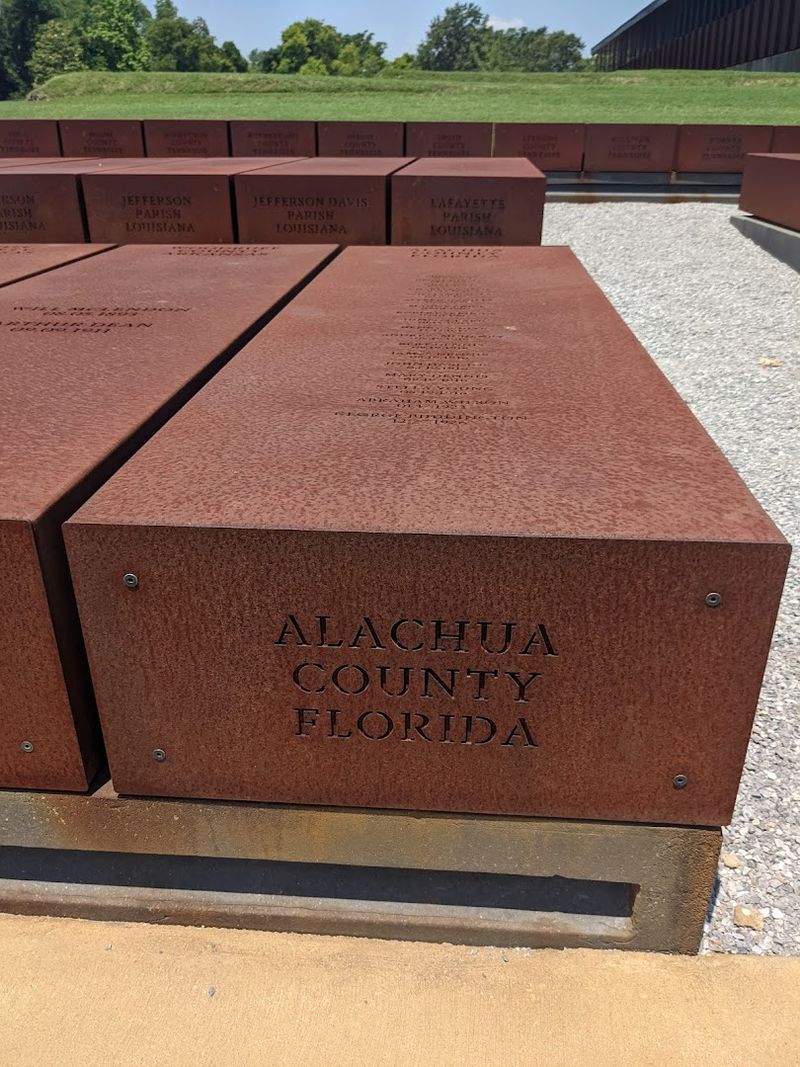
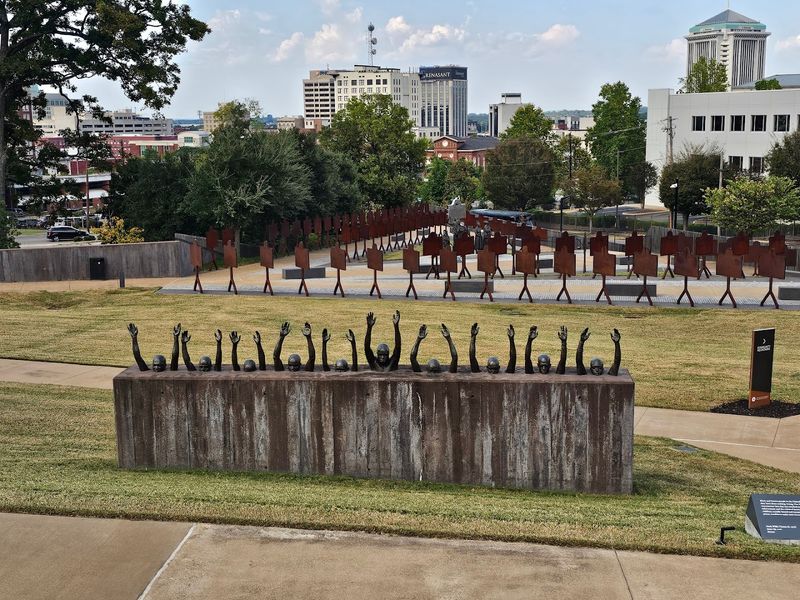
Okay, this is the part a lot of people do not expect, and it might be my favorite piece of the whole idea. Outside the main pavilion, you find duplicate markers laid out horizontally, each representing a county with the same engraved names.
They are invitations, in a way, asking communities to claim their history and install their own memorial back home.
Walking among them feels like stepping through possibilities. You see empty spaces where markers have not yet moved, and you picture them traveling to courthouses or greens where people gather.
The field becomes a map of accountability and a to do list shaped like steel, which is such a simple and clear design move.
When one of those markers leaves, it creates a gap that reads as progress rather than absence. Alabama counties are part of that ongoing story, and the spread beyond the state keeps widening the conversation.
I love that the project does not stop at the fence line. It wants to live in the places that shaped the history, which makes the memorial feel less like a destination and more like a beginning.
How To Visit With Respect, Photo Choices, Voice Levels, And Pace
Visiting with respect is simple if you let the space set the rules. Keep your voice low, move at a pace that matches the tone, and choose photos thoughtfully, focusing on architecture and atmosphere rather than treating the site like a backdrop.
If you are with friends, agree to pause and read names together, then give each other a little space to process.
Photos are fine when they help you remember the design and the lesson, but it helps to put the camera down often. You will notice more textures, more air, and more quiet when your hands are free.
The site offers places to sit without pulling you away from the story, and those breaks are part of the visit, not an interruption.
I like to enter with a small intention, something like listening for the counties I have never heard before. That small focus keeps me present without turning the visit into a task.
Alabama’s history is woven through the markers, and giving it time feels right. Leave the jokes for later, skip the phone calls, and let your steps slow down naturally.
Best Timing Tips, Weather, Crowds, And How Long To Plan For
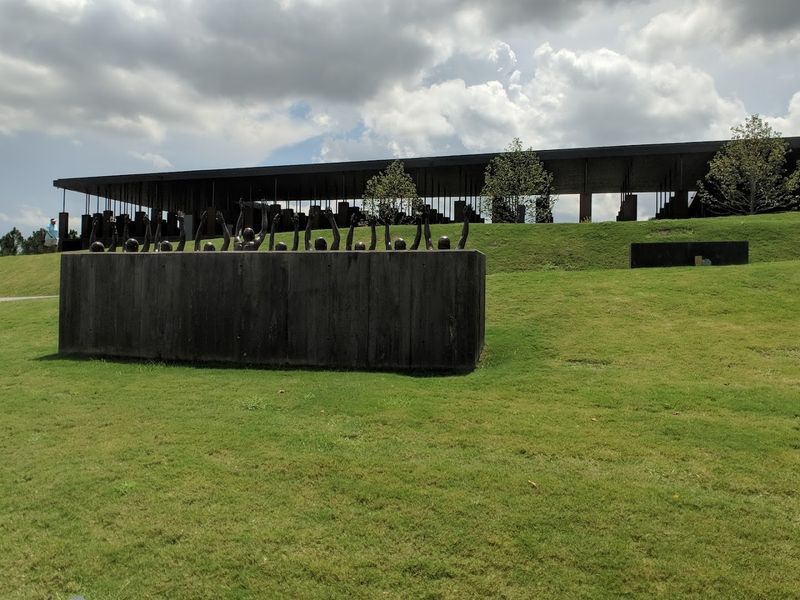
If you can swing it, go when the light is gentle and the air is not pressing, because the weather shapes the mood more than you expect. Mornings tend to feel calmer, and you get that hush before the day fully wakes up, while late afternoon brings longer shadows that make the steel read deeper.
Either way, give yourself real time so you are not rushing through big moments.
Crowds ebb and flow, but the pathways absorb people well, and a quiet loop is always possible if you linger. Rain can be surprisingly beautiful here, softening sound and pulling darker tones out of the metal, though you will want a steady step.
Wind shifts the hanging markers slightly, and that motion adds a layer that stays with you.
I plan for a slow visit with space for pauses and a few returns to sections that tug at me. Alabama weather can turn quickly, so flexible layers help you stay comfortable without breaking your focus.
If you arrive with a cushion of time, you will leave without feeling like you missed anything.
Nearby Legacy Sites That Add Context Without Feeling Like A Checklist
When you step back onto the sidewalk, it helps to widen the lens without turning the day into a sprint. The Legacy Museum nearby deepens the narrative with documents, stories, and immersive pieces that connect the memorial to systems people lived through.
It is close enough that your thoughts do not scatter, and the conversation continues naturally.
Just walking downtown adds layers, because Montgomery holds civil rights history in its streets, churches, and public buildings. You can keep it simple by choosing one or two places that speak to the questions you are already carrying.
The point is to build context, not to rack up stops, so listen for the thread that feels honest to you.
I like to end near the river or a quiet block where you can gather your thoughts before heading out. Alabama shows its history plainly, and staying present without rushing makes the day feel grounded rather than heavy.
Skip the urge to do everything, and pick the pieces that help you process what you saw at the memorial. That way the learning stays connected.
Leaving With A Different Lens, And How To Process The Visit After
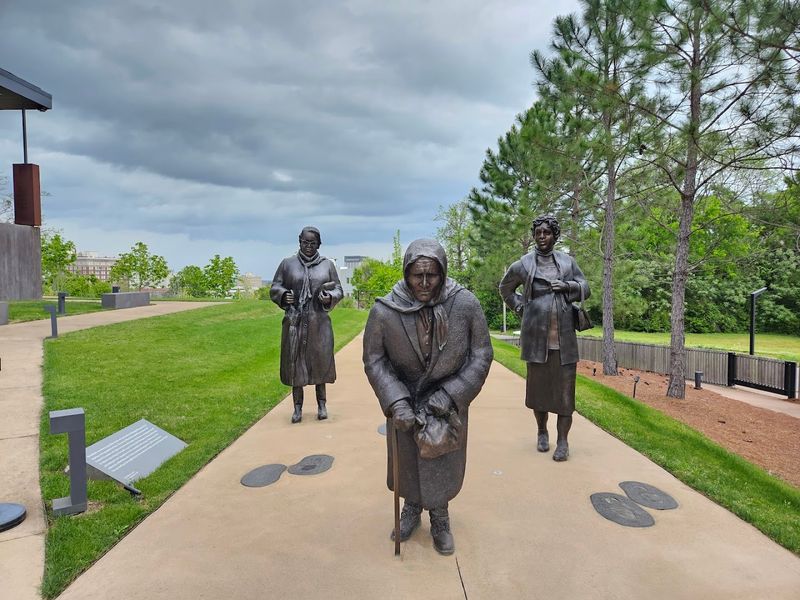
Walking out, you feel taller and quieter at the same time, which is a strange but honest mix. The names and counties linger, and everyday scenes look different on the ride home, like the city has been slightly re-tuned.
You do not need perfect words right away, and honestly, the silence after can be a good teacher.
Processing helps when you choose one concrete memory and hold it for a while, maybe a county you had never heard of or a shadow you watched slide across a marker. Share it with someone who will listen without trying to fix it.
If journaling is your thing, a few lines that start with “I saw” or “I noticed” can open the door.
The goal is not to finish the subject. It is to keep learning with a little more care and a better map in your head.
Alabama will come up again in conversations, and you will have more to offer than headlines, which is the real gift. The memorial gives you a way to see, and that lens does not leave when you do.
Dear Reader: This page may contain affiliate links which may earn a commission if you click through and make a purchase. Our independent journalism is not influenced by any advertiser or commercial initiative unless it is clearly marked as sponsored content. As travel products change, please be sure to reconfirm all details and stay up to date with current events to ensure a safe and successful trip.
