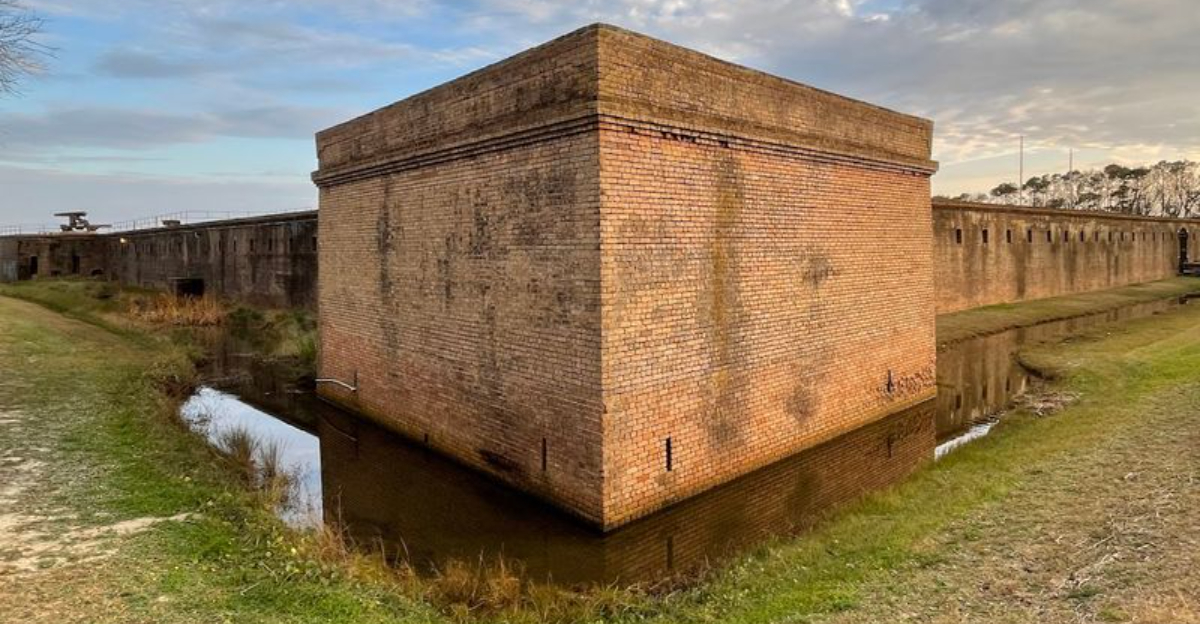
Fort Gaines on Dauphin Island, Alabama, is the kind of place that makes you feel like you have walked straight into a history textbook. Built between 1821 and 1861, this massive brick fortress guarded the entrance to Mobile Bay and played a defining role in one of the Civil War’s most dramatic naval battles.
The thick walls, original cannons, and winding tunnels give it an atmosphere unlike anything else in the state.
If you love history, coastal scenery, or just want to experience something genuinely unforgettable, this fort deserves a spot on your list.
The Battle of Mobile Bay Connection That Changed American History
Few places in the American South carry the weight of history quite like Fort Gaines. In August 1864, this fortress sat at the center of one of the most pivotal naval battles of the Civil War.
Union Admiral David G. Farragut stood aboard his flagship, the USS Hartford, and shouted the now-legendary command: “Damn the torpedoes!
Full speed ahead!”
That moment changed the course of the war. Union forces pushed through the heavily mined channel between Fort Gaines and Fort Morgan, cutting off Confederate access to Mobile Bay.
The fort held out for days under siege before surrendering on August 8, 1864.
Walking through the fort today, you can feel how real that battle was. The original walls that absorbed cannon fire still stand.
The strategic position at the eastern tip of Dauphin Island makes it easy to imagine warships moving through the channel below.
Most visitors find this history surprisingly personal once they are standing inside the actual walls. Informational markers throughout the grounds explain the siege in detail.
You do not need to be a history buff to feel the gravity of what happened here.
The fort is located at 510 Bienville Blvd, Dauphin Island, AL 36528, and is open daily from 9 AM to 5 PM. Admission is affordable, making it an easy choice for families or solo travelers who want a genuinely meaningful experience on Alabama’s Gulf Coast.
Original Cannons and Authentic Civil War Artifacts on Display
Most museums keep their artifacts behind glass. Fort Gaines does something far more impressive.
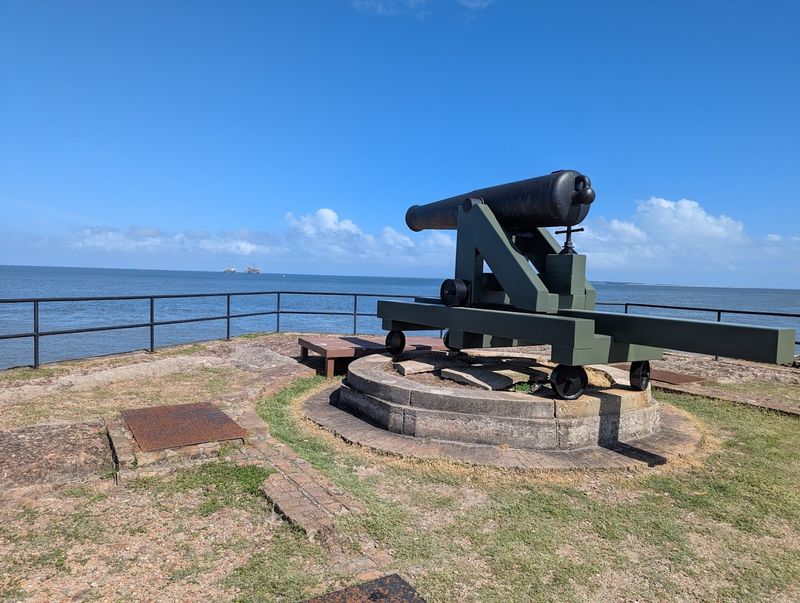
Original Civil War cannons sit right where they were positioned during the battle, mounted on iron carriages along the ramparts and inside the fortified bastions.
These are not replicas. These are the actual guns that faced Union warships in August 1864.
Standing next to one and looking out over Mobile Bay gives you a perspective that no textbook photograph can match.
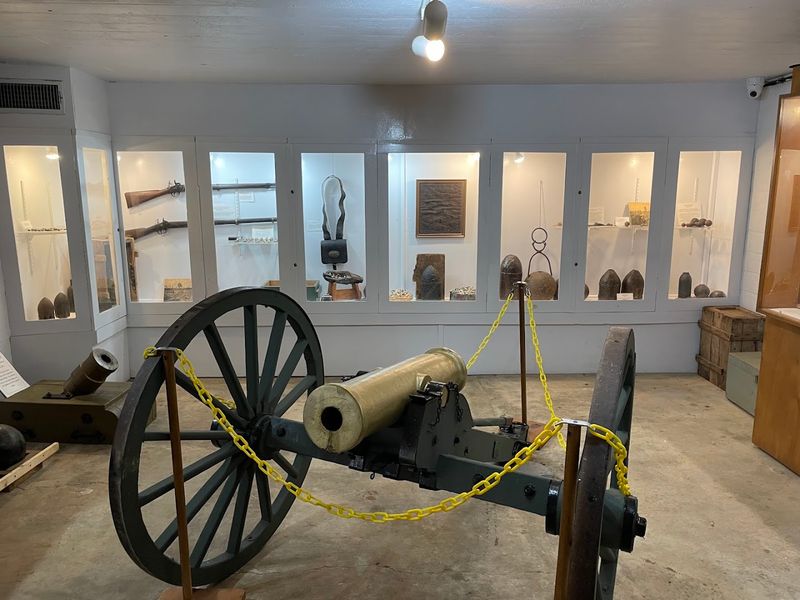
The on-site museum adds even more depth to the experience. One of its most striking pieces is the massive anchor from the USS Hartford, Admiral Farragut’s own flagship.
Seeing that anchor up close makes the battle feel immediate rather than distant.
Period-era items are displayed throughout the fort itself, not just in the museum. Wooden bunks, candle mirrors used to light the interior passageways, handwritten letters from soldiers to their families, and original officer quarters on the ground floor all tell a human story behind the military history.
Some of those letters are heartbreaking to read, because not every soldier who wrote home made it back. The fort does a thoughtful job of honoring both sides of the conflict without losing the educational focus.
If you are the kind of person who wants to truly understand what life was like inside a Civil War fortress, the artifacts here will leave a lasting impression.
Tunnels, Bastions, and Architecture That Looks Straight Out of a Film Set
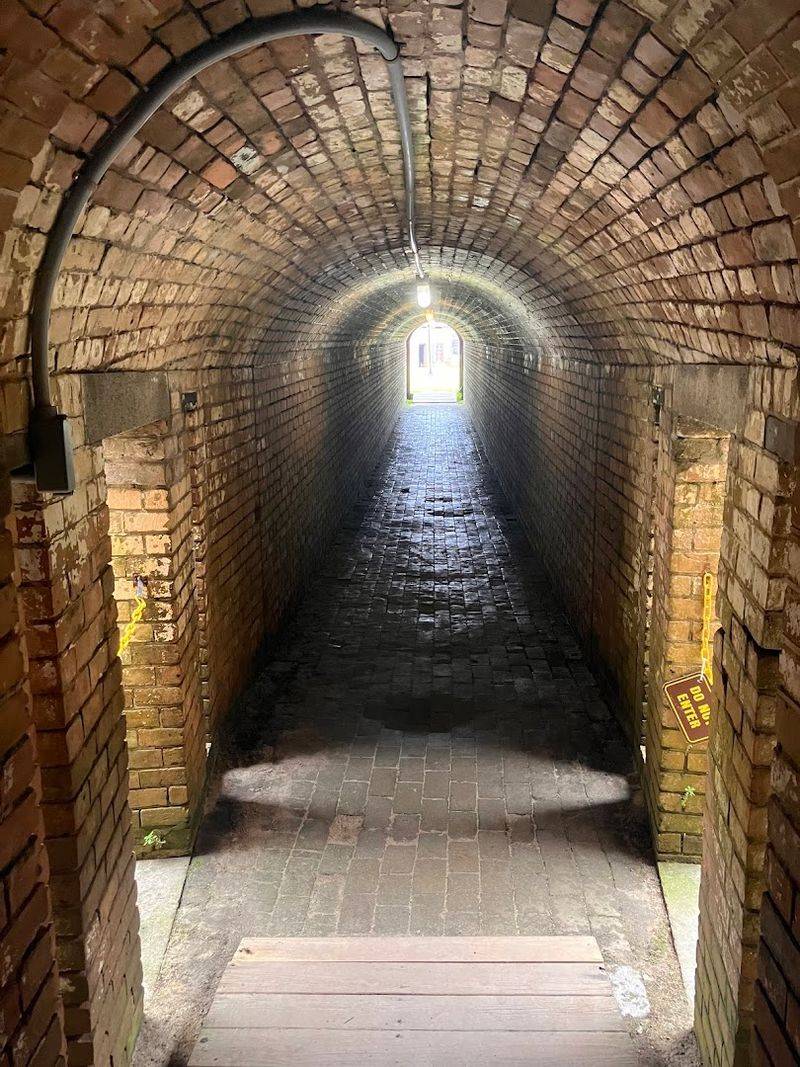
Fort Gaines genuinely looks like a movie set. The thick brick walls, arched tunnels, and massive corner bastions create a visual atmosphere that feels almost too dramatic to be real.
Yet every inch of it is authentic masonry built in the 1800s and still standing strong today.
The tunnel systems are a highlight for almost every visitor. They run beneath the fort’s main structure and connect to the fortified bastions at each corner.
Walking through them, with the cool brick walls on either side and the faint light ahead, is a genuinely memorable experience.
The bastions themselves offer some of the best views on the entire island. From the top, you can see Mobile Bay stretching out to the north and the Gulf of Mexico opening up to the south.
It is easy to understand why this location was chosen as a defensive strongpoint.
The “Third System of Fortifications” design, which Fort Gaines shares with Fort Morgan across the bay, was considered cutting-edge military engineering at the time. The two forts were built as near-identical twins, designed together to control the only deep-water channel into Mobile Bay.
Visitors are encouraged to explore most areas on a self-guided tour. Some doors are locked and certain areas are marked off for preservation, but there is still a remarkable amount of ground to cover.
Plan on at least 90 minutes to do it justice.
Panoramic Views of Mobile Bay and the Gulf of Mexico
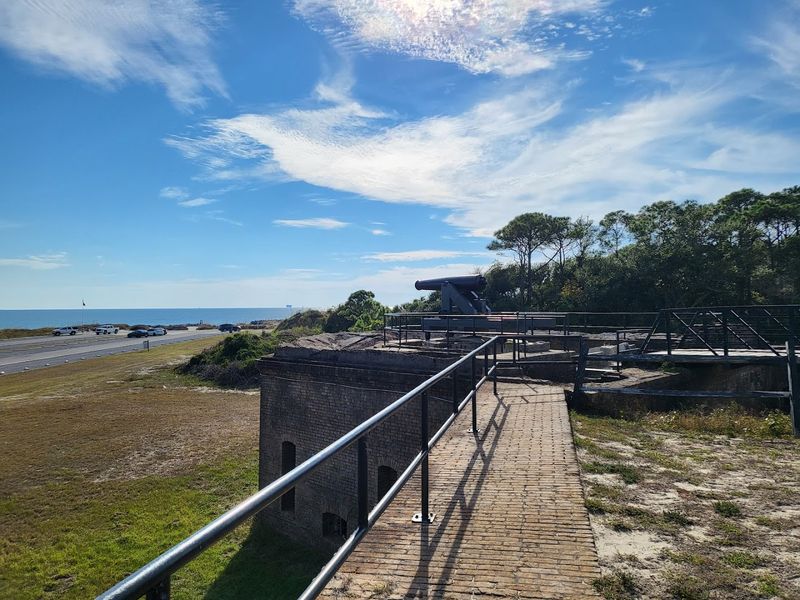
The views from Fort Gaines are genuinely spectacular. The fort sits right at the eastern tip of Dauphin Island, which means you get water on multiple sides.
From the upper ramparts and bastions, you can see Mobile Bay rolling out to the north and the open Gulf of Mexico spreading wide to the south.
On a clear day, you can spot Fort Morgan across the channel to the east. That visual connection between the two forts makes the military strategy behind them feel immediately obvious.
The channel between them is narrow enough that the combined firepower of both forts could control every ship passing through.
Even visitors who are not particularly interested in military history tend to linger up on the ramparts. The coastal light is beautiful, especially in the morning hours.
Photographers will find no shortage of compelling angles between the old brick walls and the open water beyond.
The fort was intentionally built within feet of the Gulf shoreline, which is part of what makes it so visually striking. It is also part of why ongoing erosion is a concern for preservationists.
The same dramatic coastal position that makes the views so impressive also makes the fort vulnerable to storm damage and rising water.
Bring sunscreen and wear comfortable shoes. Most of the viewing areas are outdoors, and the sun reflects strongly off the pale brick.
Early morning visits tend to be cooler and less crowded, making the experience even more enjoyable.
Living History Programs and Cannon Firing Demonstrations
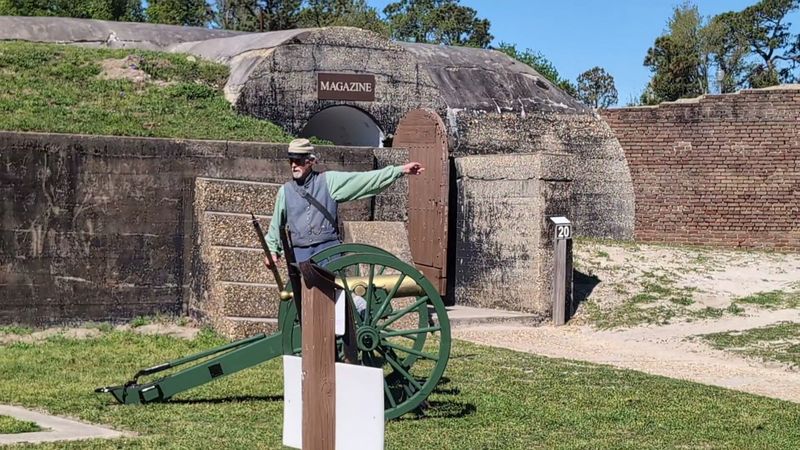
History comes alive in a completely different way when you watch a cannon actually fire. Fort Gaines hosts living history programs that include cannon firing demonstrations led by interpreters dressed in period-accurate uniforms.
The sound alone is something you will not forget quickly.
These demonstrations are not just theatrical. The interpreters explain the mechanics of loading and firing a Civil War-era cannon, the tactics used during the Battle of Mobile Bay, and the daily routines of soldiers stationed at the fort.
It transforms a self-guided tour into something far more immersive.
Blacksmithing demonstrations are another popular feature. The fort’s operational blacksmith shop gives visitors a look at the kind of metalwork that kept a 19th-century military installation running.
Watching a skilled interpreter work the forge is a surprisingly engaging experience, even for younger kids who might otherwise lose interest in historical details.
The guided tour format means you can ask questions and get real answers from people who know the site deeply. Many interpreters have spent years studying the fort’s history and can point out details that most visitors would walk right past on a self-guided tour.
Check the fort’s schedule before you visit, as demonstration days and guided tour availability can vary by season. Visiting on a demonstration day adds significant value to an already worthwhile trip.
Special Events and Reenactments That Bring the Civil War Era Back to Life
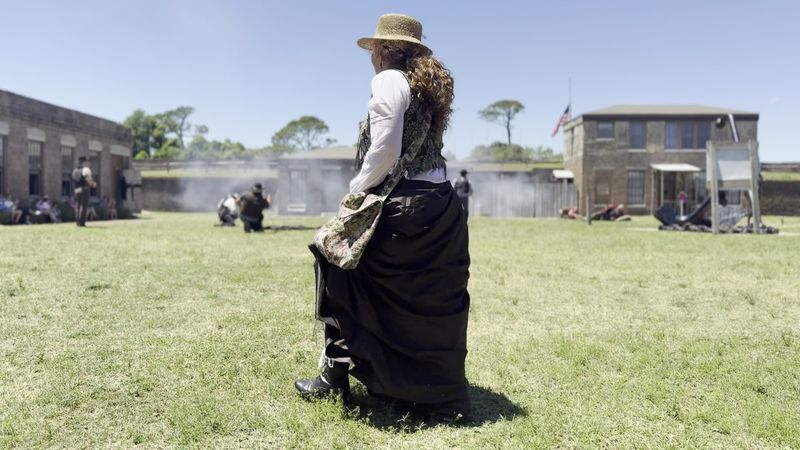
Fort Gaines is not just a place to visit once and check off a list. The fort hosts a rotating calendar of special events throughout the year that give repeat visitors a completely different experience each time they come back.
The Battle of Mobile Bay reenactment is the crown jewel of the event schedule.
Held annually, the reenactment draws participants from across the region who dress in period-accurate uniforms and recreate the siege of the fort with a level of detail that is genuinely impressive.
Watching costumed soldiers move through the same spaces where history actually happened adds a dimension that no museum exhibit can replicate.
Beyond the Civil War reenactments, the fort also hosts a Pirates Weekend every September that has developed a loyal following among families. The event blends history with fun in a way that works especially well for younger visitors who might find a straightforward historical tour a bit dry.
A Renaissance Festival has also been held at the fort, which might seem like an unusual pairing with a Civil War site. But the combination of the dramatic architecture and the open grounds makes it a surprisingly fitting venue for large outdoor events.
The staff at Fort Gaines genuinely cares about making each visit memorable. They work hard to keep events educational while ensuring visitors of all ages have a good time.
Checking the event calendar at fort-gaines.com before planning your trip is strongly recommended.
An Endangered Landmark Worth Seeing Before It Changes Forever
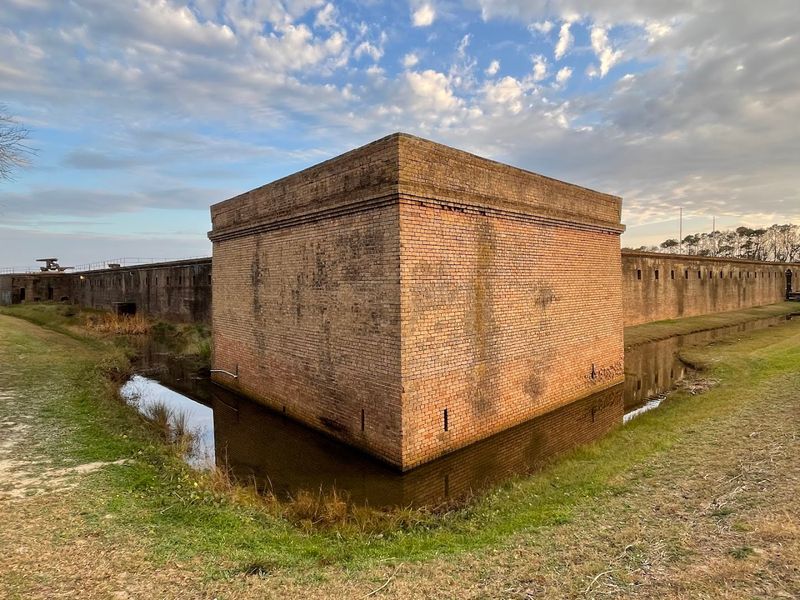
Fort Gaines has been designated as one of the eleven most endangered historic sites in America. That is not a distinction anyone wanted, but it is an honest reflection of the challenges this remarkable place faces.
Shoreline erosion and hurricane damage have taken a measurable toll on the site over the decades.
Knowing that adds a layer of urgency to any visit. This is not a place that will look exactly the same in ten or twenty years.
Ongoing preservation efforts are working to stabilize the structure, but the combination of coastal exposure and aging masonry makes the work both expensive and complicated.
That sense of fragility also makes the fort more meaningful to experience in person. Standing inside walls that have survived since the 1820s, knowing they are genuinely at risk, changes how you look at every brick and archway.
It is a reminder that history is not guaranteed to last.
The Dauphin Island area itself is worth exploring beyond the fort. The island has a quiet, unhurried character that feels different from more commercialized Gulf Coast destinations.
Local seafood spots and the Dauphin Island Sea Lab are both within easy reach for visitors who want to extend their trip.
Getting to Dauphin Island is part of the adventure. The ferry from Gulf Shores offers a scenic crossing that several visitors specifically recommend as a highlight of the overall experience.
Fort Gaines is worth the effort to reach, especially now.
