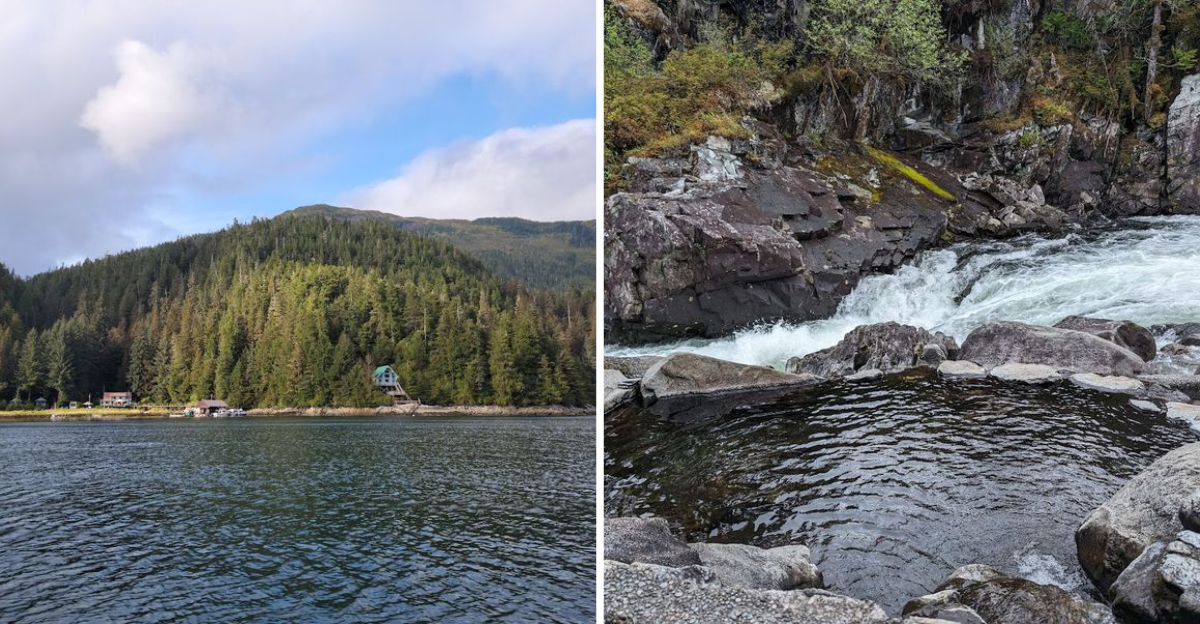
Rainforest so thick the light filters through in green streaks. Ocean wrapping around volcanic peaks.
A place where bears outnumber people in some areas and the docks never feel like a theme park. That is what you find on this Alaska island. I first heard about it from someone who described it simply as a place where the world gets quieter.
I went to see for myself. The trees are ancient, the air is damp and clean, and the people who live here know they are sitting on something special.
Some places you visit and forget. This one stays with you.
A Rainforest So Dense It Feels Like Another World
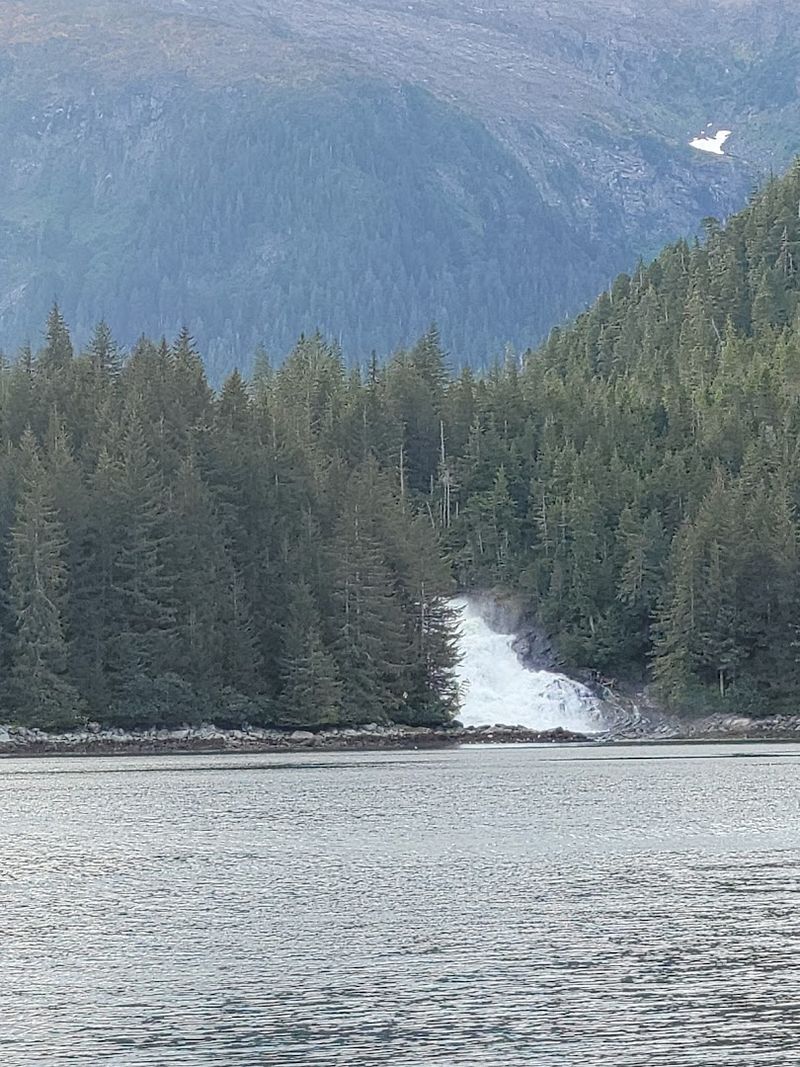
The first thing that hits you on Baranof Island is the green. Not just green, but every possible shade of it, layered from the forest floor all the way up to canopy heights that make you feel genuinely small.
The island sits inside the Tongass National Forest, the largest national forest in the entire United States, and the trees here have been growing for centuries.
Old-growth stands of Sitka spruce, western hemlock, and Alaska yellow-cedar form multilayered canopies so thick that rain barely reaches the ground in some spots. The undergrowth is equally wild, with ferns, mosses, and devil’s club filling every gap between the roots.
Baranof Island receives around 150 inches of rain per year in most areas, with some spots seeing up to 235 inches annually.
That rainfall is exactly what keeps everything so impossibly lush. Hiking through these forests feels nothing like a trail through a typical park.
The air smells clean and earthy, the light is soft and filtered, and the silence is broken only by the sound of water moving somewhere nearby. It is the kind of forest that makes you slow down without even realizing you are doing it.
Sitka: A Town with Serious History and Real Charm
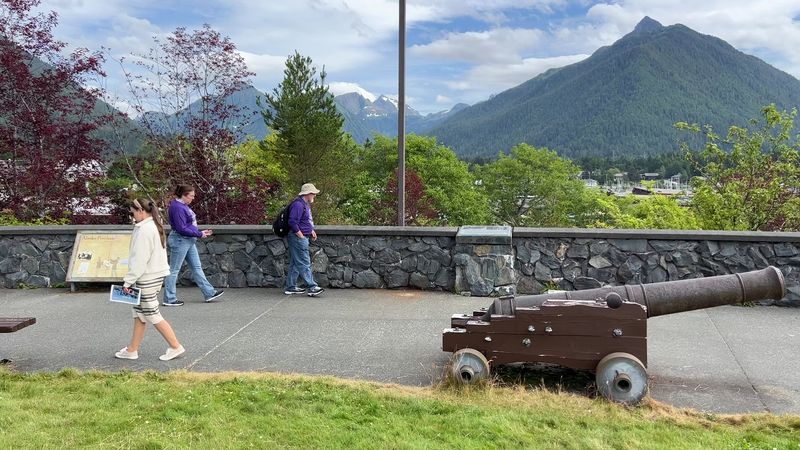
Sitka carries a history that most small towns can only dream about. It served as the capital of Russian America before the 1867 Alaska Purchase, and that Russian influence is still visible today in the onion-domed St. Michael’s Cathedral sitting right in the middle of town.
The Tlingit people, who have called this island home for thousands of years, know it as “Shee,” and their presence and culture are woven deeply into the identity of the place.
The town itself is compact and walkable, with a waterfront that feels genuinely lived-in rather than polished for tourists. Local shops, small restaurants, and community spaces line the streets, and the people you meet are friendly in a way that feels unhurried.
Sitka National Historical Park is one of the most meaningful stops here, where a trail winds through old-growth forest past totem poles carved by Tlingit and Haida artists.
Because Sitka faces the open Gulf of Alaska rather than the calmer Inside Passage, fewer large cruise ships make the journey here. That geographic quirk keeps the town refreshingly calm even during peak summer months.
It feels like a real community first, and a destination second, which is exactly what makes it worth visiting.
Brown Bears, Bald Eagles, and Wildlife That Puts on a Show
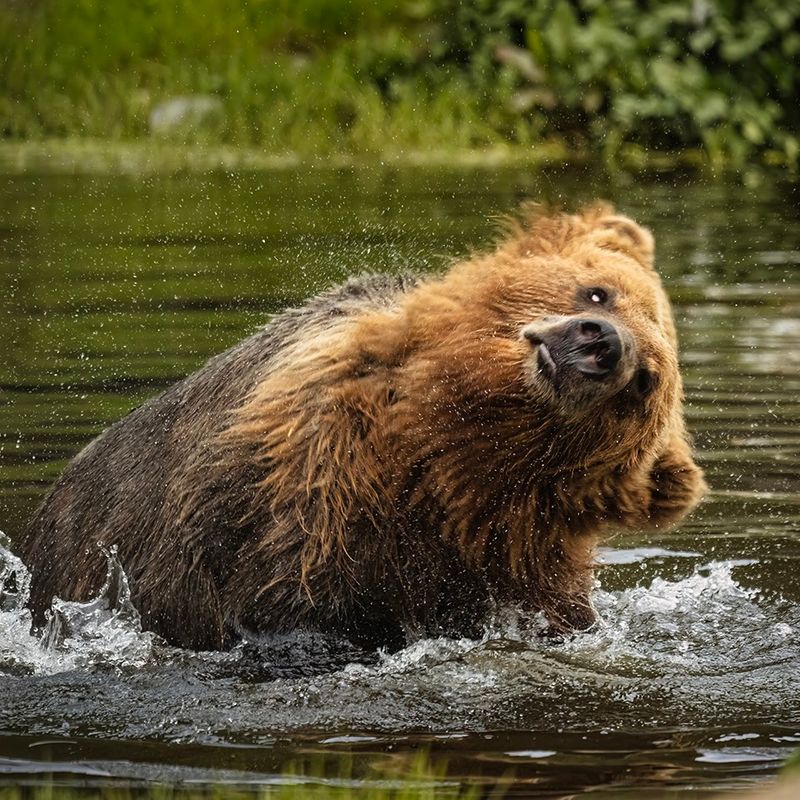
A 2025 survey estimated around 1,045 brown bears living on Baranof Island, and in some remote sections of the island, bears genuinely outnumber people. That number alone sets the tone for what kind of wildlife experience you are signing up for here.
These are not zoo animals or habituated park bears. They are wild, and the island is their home first.
Sitka black-tailed deer move through the forests in quiet groups, bald eagles perch on nearly every tall snag near the water, and the coastline brings a whole different cast of characters. Sea otters float on their backs in the protected bays, Steller sea lions haul out near the southern tip of the island, and humpback whales surface in the channels with a regularity that never stops being astonishing.
Dolphins and porpoises follow the ferry wakes, and salmon runs draw predators from every direction during summer and fall. Small boat tours are one of the best ways to reach the secluded bays and shallow islets that larger vessels simply cannot access.
The wildlife here does not feel curated or guaranteed, and that unpredictability is exactly what makes every outing feel like a genuine adventure rather than a scheduled attraction.
Baranof Warm Springs: Off the Grid and Worth Every Effort
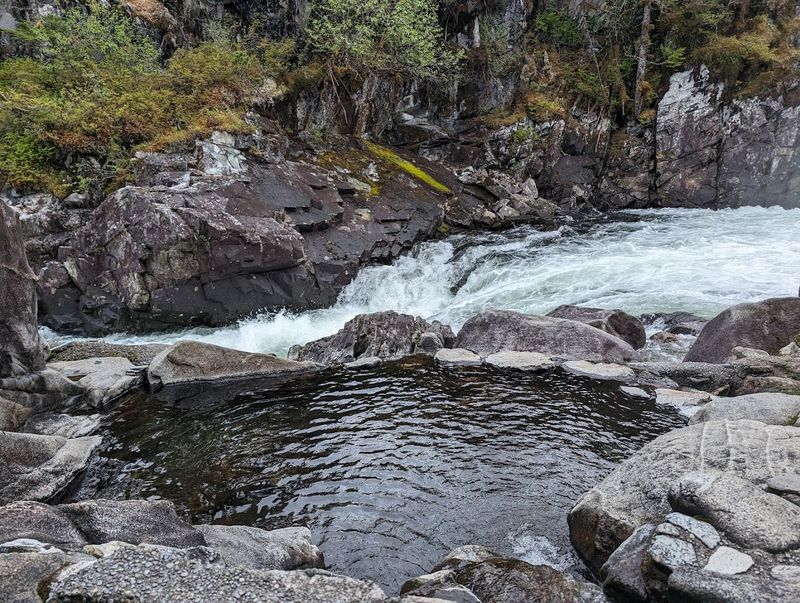
Getting to Baranof Warm Springs requires a boat or a floatplane, and there is no cell reception once you arrive. For most travelers, that combination sounds like an inconvenience.
After spending time there, it feels more like the whole point. The springs sit on the eastern shore of Baranof Island, tucked beside a waterfall that roars loud enough to fill every quiet moment.
Public bathhouses sit right at the edge of the hot springs, and the experience of soaking in geothermally heated water while surrounded by untouched wilderness is something that is genuinely hard to put into words. Nearby, Baranof Lake is glacially fed and almost impossibly clear, the kind of blue-green that looks edited even when you are standing right next to it.
A small number of cabins and floats serve visitors who want to stay overnight, and the community of people you tend to meet here, kayakers, fishermen, floatplane pilots, and hikers, adds a layer of warmth to the whole experience. The South Baranof Wilderness, which protects over 319,000 acres of the island, begins practically at the doorstep of the springs.
Few places in Alaska offer this combination of natural comfort and genuine remoteness in one spot.
Sea Kayaking Through Bays That Barely Appear on Tourist Maps
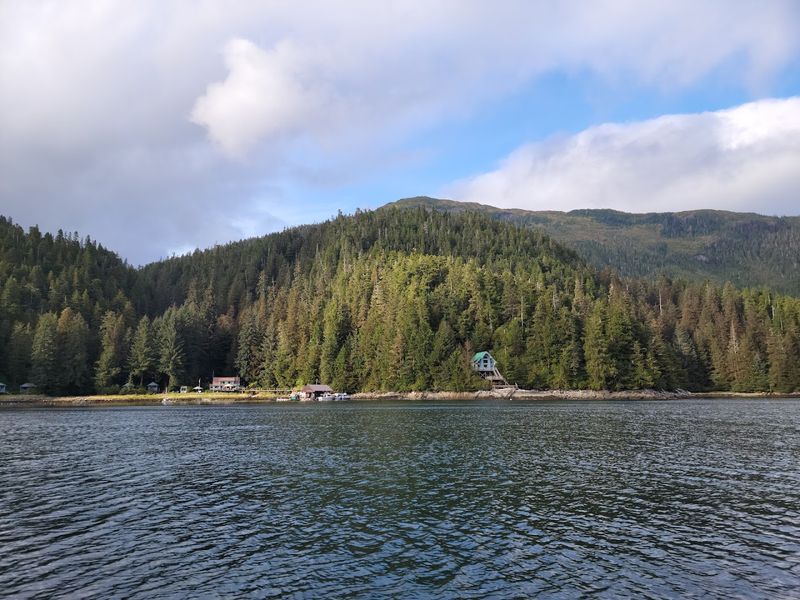
There is a particular kind of quiet that only exists on the water, early in the morning, when the bay is flat and the forest comes right down to the shoreline. Sea kayaking around Baranof Island offers access to places that simply do not exist on most tourist maps, shallow coves, hidden channels, and small islets where the only sounds are water, wind, and whatever wildlife happens to be nearby.
The island’s deeply indented coastline creates natural shelters that are ideal for paddlers of varying experience levels, though some areas demand respect for tidal currents and open-water conditions. Guided kayak tours operate out of Sitka and are genuinely worth booking, especially for first-timers who want local knowledge about where the sea otters tend to hang out or which coves offer the best views of the surrounding peaks.
Whale watching by kayak is also a real possibility here, and the experience of having a humpback surface within viewing distance while you are sitting at water level is something that does not translate well into photographs. It is one of those moments you just have to be present for.
Baranof Island rewards the kind of traveler who is willing to move slowly and pay attention to what is right in front of them.
Fishing Waters That Serious Anglers Talk About in Hushed Tones
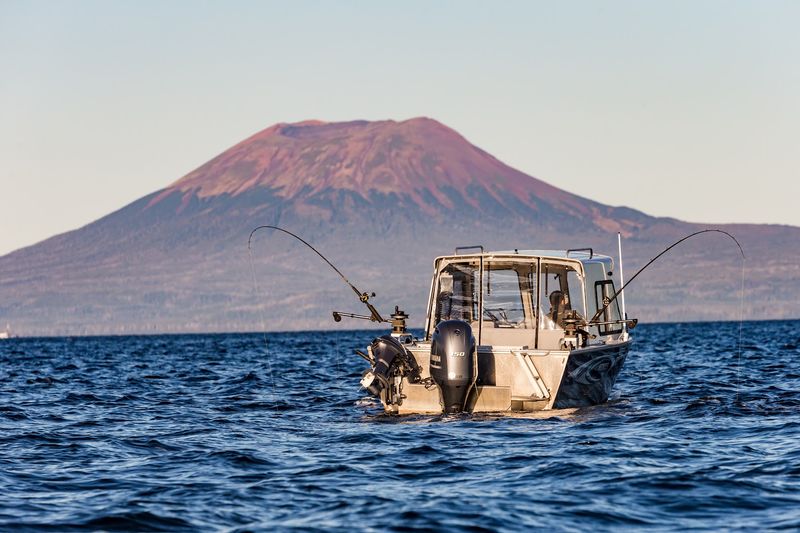
Ask any serious angler about Sitka, and watch their expression change. The waters surrounding Baranof Island are considered some of the best fishing grounds in the entire Pacific Northwest, and the variety of species available here is genuinely impressive.
King salmon, silver salmon, halibut, and rockfish are all part of the regular catch, and the season runs long enough to make a dedicated fishing trip well worth planning.
Charter boats operate out of Sitka’s harbor and range from small skiffs for a handful of guests to larger vessels set up for full-day offshore trips. The guides here tend to have decades of local knowledge, understanding tidal patterns, seasonal fish movements, and the kinds of spots that never make it onto any public map.
That expertise makes a real difference when you are trying to find fish in a body of water this large and complex.
Even if fishing is not your primary reason for visiting, watching the harbor come to life in the early morning hours is its own kind of entertainment. Boats heading out before sunrise, the smell of salt water, and the distant sound of sea lions near the docks create a scene that feels completely authentic.
Sitka’s fishing culture is not a performance. It is simply how this town has always operated, and that history runs deep.
Mount Edgecumbe and the Volcanic Drama That Frames Every View
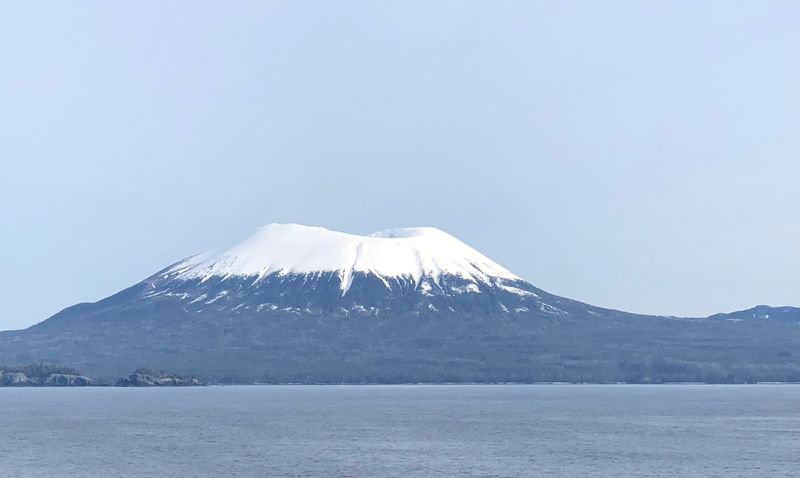
Every time you look west from Sitka, Mount Edgecumbe is there, a dormant stratovolcano rising above Sitka Sound with the kind of symmetrical profile that makes it look almost too perfect to be real. It sits on Kruzof Island just across the water, visible from most of the Sitka waterfront, and on clear days it reflects off the sound in a way that genuinely stops you mid-conversation.
The volcano last erupted roughly 4,500 years ago, but it remains a defining feature of the entire region’s identity. Tlingit oral traditions reference the mountain, and it appears in the background of nearly every photograph taken from Sitka’s shoreline.
Peak 5390, the highest point on Baranof Island itself, reaches 5,390 feet and holds the distinction of being the tallest peak in the entire Alexander Archipelago.
The combination of volcanic landforms, glacially carved fjords, and active tectonic geography gives this part of Southeast Alaska a landscape that feels dynamic rather than static. Hiking trails on the island offer views of small icefields and glacial lakes that remind you just how geologically young and active this entire region remains.
The mountains here are not just scenery. They are part of an ongoing story that the island is still telling.
