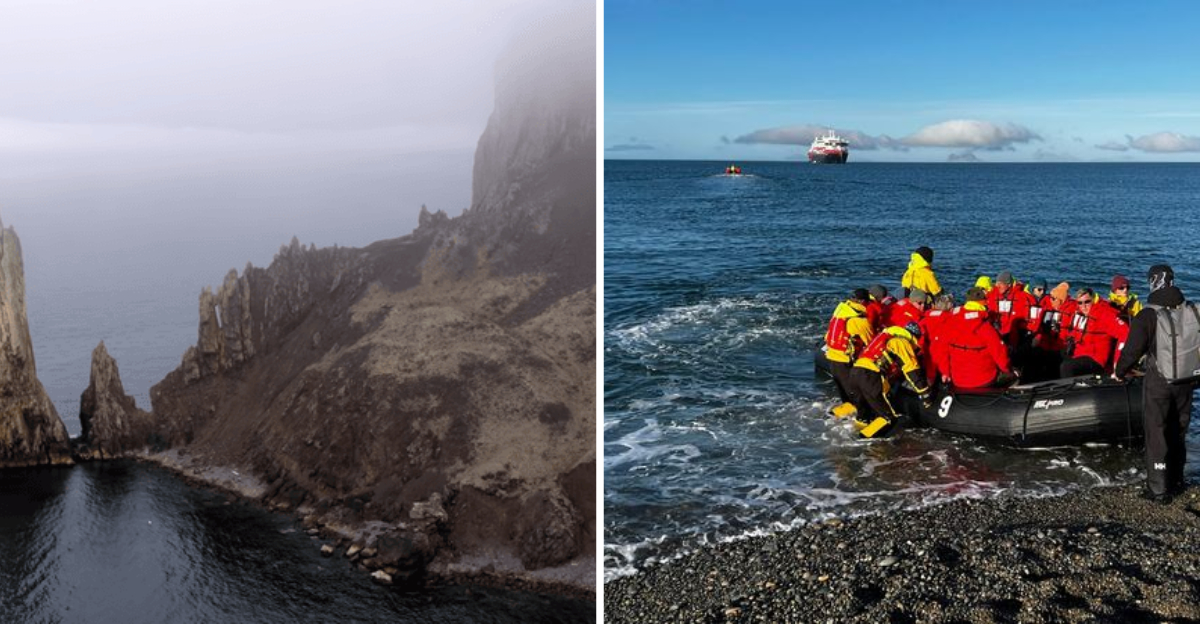
Places that sit far beyond the edge of routine travel tend to feel almost unreal, like they belong more on a map than in any real itinerary. In Alaska, that sense of isolation becomes something you can almost hear, especially when the wind is constant and the horizon refuses to break into anything familiar. I came across a stretch of land so distant that even finding it on a map feels like a small discovery on its own.
Nothing here suggests human life in any lasting form, only raw terrain, shifting weather, and wildlife that seems far more comfortable than any visitor ever could be. It is the kind of wilderness that makes everything else feel suddenly very close together.
A Place So Remote It Barely Feels Real
Most people have never heard of St. Matthew Island, and honestly, that is part of what makes it so fascinating. The island sits in the Bering Sea, about 200 miles west-northwest of Nunivak Island, placing it firmly in one of the most isolated stretches of ocean on the planet.
To reach it, you are looking at a 24-hour ship journey through notoriously rough Bering Sea waters. No ferry runs a schedule here.
No small airport is waiting to receive you. Getting to St. Matthew Island is a genuine expedition, not a casual weekend trip.
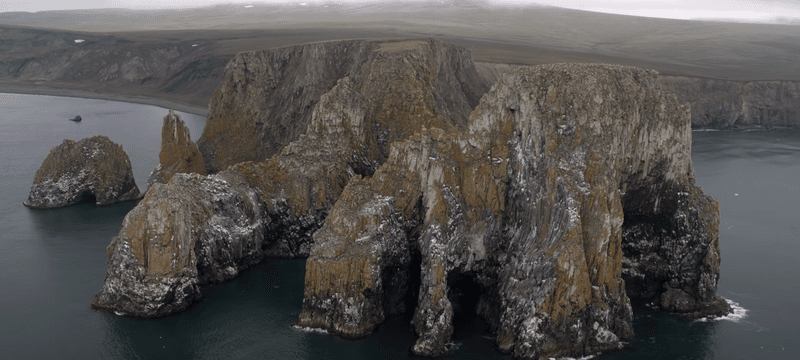
The island covers roughly 138 square miles of treeless mountains, tundra valleys, sandy beaches, and dramatic cliff faces. Its highest point rises to 1,476 feet above sea level.
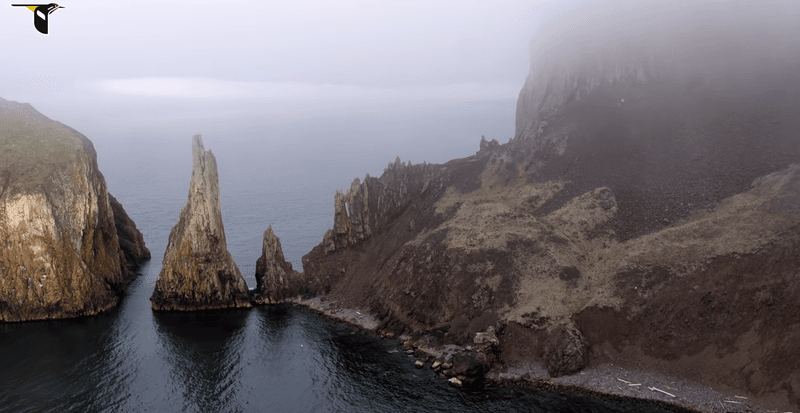
Cape Upright, at the southern tip, features cliffs that exceed 1,000 feet, dropping sharply into the cold grey sea below.
Every year, scientists estimate that more climbers summit Denali than visitors ever land on St. Matthew. That comparison hits differently when you realize Denali is not exactly a casual hike either.
The sheer inaccessibility of this island is what keeps it wild, raw, and completely intact.
The Landscape That Looks Prehistoric
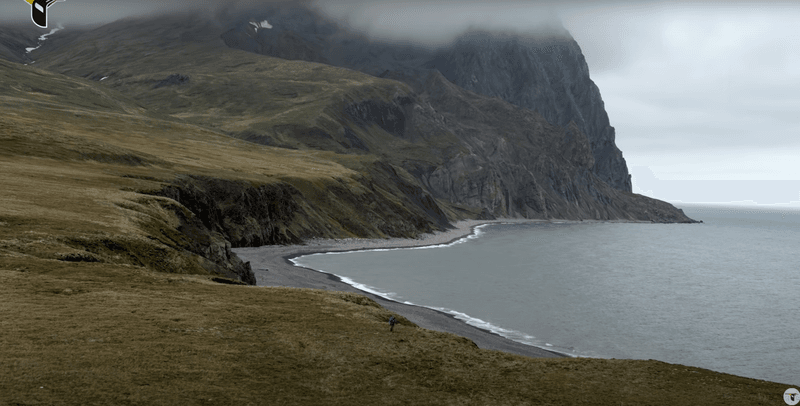
One visitor described the island from the deck of a crab boat as looking “very prehistoric,” and that description sticks. The terrain does not look like anything most Americans have ever seen in person.
Curved, rounded mountains rise without a single tree breaking their silhouette.
The tundra stretches across valleys in muted greens and browns, interrupted by freshwater lakes and winding streams. Fog rolls in constantly, softening the edges of everything until the cliffs almost disappear into the grey sky.
The maritime climate keeps temperatures cool year-round, with constant wind and high humidity shaping every surface.
From December through April, sea ice encases the island entirely. The Bering Sea transforms into a frozen expanse, and St. Matthew becomes even more unreachable than usual.
That seasonal isolation has shaped the ecology here in ways that are genuinely unlike anywhere else.
The geological bones of the island are old, built from calc-alkaline volcanic rocks dating back to the Late Cretaceous period. There is something grounding about standing on land that ancient, even if the wind is trying its best to push you sideways the entire time.
Five Million Seabirds and One Tiny Bunting
The numbers are almost hard to believe. During breeding season, over five million seabirds descend on St. Matthew Island, representing more than 140 identified species.
The noise and movement of that many birds in one place is something you have to experience to truly understand.
Thick-billed murres, horned puffins, black-legged kittiwakes, and least auklets pack the cliffs in dense, chaotic colonies. The smell alone announces their presence long before you see them.
It is loud, wild, and completely spectacular in a way that no nature documentary fully captures.
Among all these millions of birds, one species stands out as uniquely tied to this island. The McKay’s bunting, a small white songbird, breeds almost exclusively on St. Matthew and neighboring Hall Island.
That makes this remote Bering Sea rock the entire world range for the species.
As of 2024, the estimated global population of McKay’s buntings sits at around 19,500 individuals. Every single one of them traces its breeding roots back to these two islands.
Knowing that a whole species depends on this one forgotten corner of Alaska adds a quiet weight to the place that is hard to shake.
The Reindeer That Ate an Island
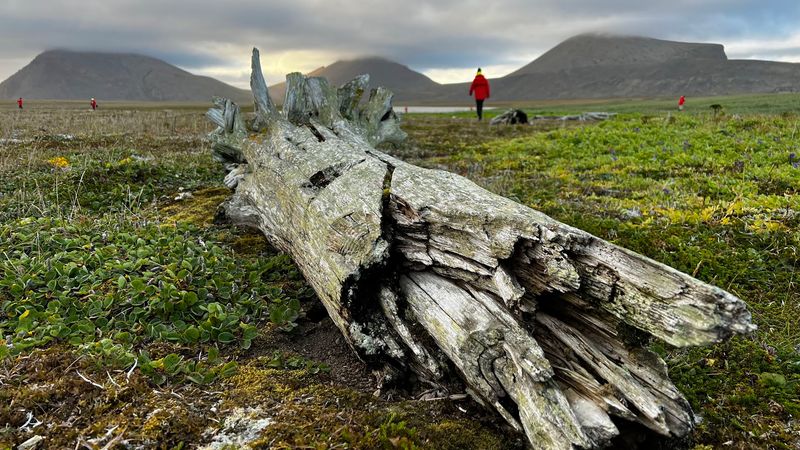
Few ecological stories from Alaska are as dramatic and sobering as what happened to the reindeer of St. Matthew Island. In 1944, the U.S.
Coast Guard introduced 29 reindeer to the island as an emergency food source for the military personnel stationed there. Nobody gave much thought to what would happen after.
With no predators and a seemingly endless supply of lichen, the herd exploded. By 1963, the population had ballooned to an almost unbelievable 6,000 animals on an island just 138 square miles in size.
The tundra was being consumed faster than it could recover.
Then the crash came. A severe winter combined with catastrophic overgrazing pushed the herd to collapse.
By 1966, only 42 reindeer remained alive. Within a few more years, they were gone entirely.
The impact did not end with the reindeer. The island’s tundra, once dominated by lichen, shifted permanently to grass and sedge.
That change reshaped the habitat for every other species living there. Scientists still study this event as one of the most striking examples of what happens when an introduced species outgrows its environment, all on a remote island most people never knew existed.
The Wartime Station Nobody Remembers
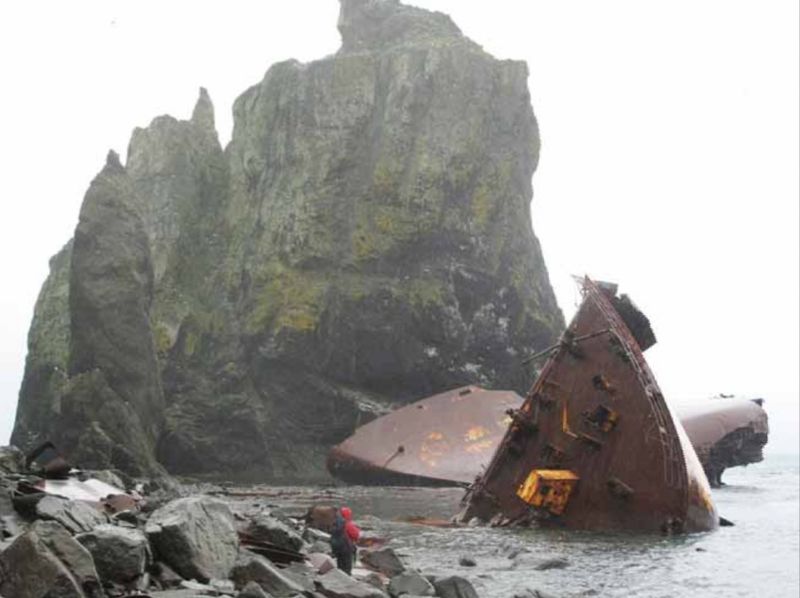
During the 1940s, St. Matthew Island was not completely empty. The U.S.
Coast Guard operated a LORAN navigational transmitter station on the island, staffed by 19 men who lived and worked there through the brutal Bering Sea winters. It is hard to imagine what those postings felt like.
LORAN, which stands for Long Range Aid to Navigation, was a system used during World War II to help ships and aircraft determine their position. St. Matthew’s location in the middle of the Bering Sea made it strategically useful, even if it was logistically miserable to maintain.
When the station was eventually abandoned, the men left and the island returned to silence. The reindeer they had introduced stayed behind, and the ecological story that followed is now far better known than the station itself.
The remnants of that brief human presence still sit somewhere on the island, slowly being reclaimed by weather and tundra.
It is a strange thing to think about, 19 men living out there with the wind and the seabirds, far from any town or road. Their stay was temporary, but the consequences of that era, specifically those reindeer, turned out to be anything but.
Arctic Foxes, Voles, and the Occasional Polar Bear
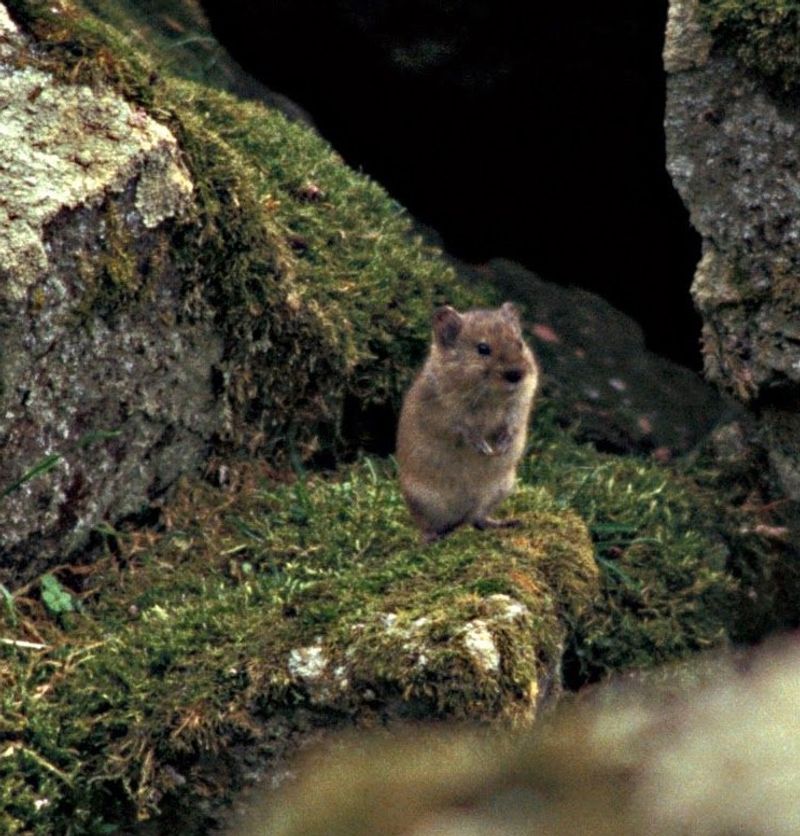
For a place with no permanent human residents, St. Matthew Island has a surprisingly active mammal community. The only year-round resident mammals are Arctic foxes and the island’s endemic insular voles, a subspecies found nowhere else on Earth.
The voles are a highlight for anyone lucky enough to visit. One traveler who camped on the island for a week described the small creatures popping out of holes in the lichen and singing to each other, curious enough to approach a backpack and investigate its contents with impressive determination.
They are charming in the way that only truly unafraid wild animals can be.
Arctic foxes patrol the tundra and cliffs, making the most of the seabird colonies during breeding season. Their presence keeps the island’s ecosystem connected in small but important ways.
Polar bears occasionally drift in on sea ice during winter, marking St. Matthew as the southernmost point of their Bering Sea range.
Historical records show that polar bears were once more common here, but hunting eliminated them by the late 1800s. Their occasional reappearance via drift ice is a reminder that this island exists at the edge of two worlds, the Arctic and the sub-Arctic, and belongs fully to neither.
Visiting the Most Isolated American Island
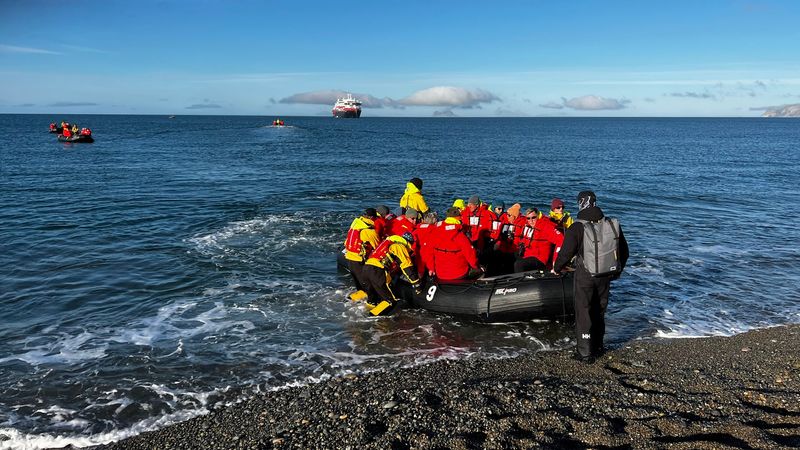
Getting to St. Matthew Island is not something you book on a travel app. Expedition cruise operators, particularly those running Bering Sea itineraries out of ports like Nome or Dutch Harbor, occasionally include the island as a stop.
Even then, weather and sea conditions have the final word on whether a landing actually happens.
Some visitors arrive by private vessel, though the surrounding waters are famously unforgiving. One crab boat crew member described watching the island from the deck and feeling certain the sea was going to win.
That kind of honesty is worth keeping in mind before you plan anything.
For those who do make it ashore, the reward is extraordinary. The seabird colonies, the voles, the sweeping tundra views, and the complete absence of any human noise create an experience that is genuinely rare in the modern world.
Several expedition groups have organized beach cleanups, with one crew reportedly collecting over 1,000 kilograms of plastic debris, mostly from the fishing industry, in a single visit.
The U.S. Fish and Wildlife Service surveys the island roughly every five years.
Outside of those visits and the occasional expedition ship, St. Matthew sits undisturbed, doing exactly what it has always done, existing magnificently on its own terms.
Address: Alaska
