California’s desert valleys hold landscapes that blur the line between earth and something far more surreal, where salt-crusted ground shimmers under an open sky and distant mountain ranges frame an almost otherworldly basin.
Wildlife gathers in surprising abundance across a vast, pale expanse that once held far more water than it does today. The contrast between silence and constant bird activity creates an unusual kind of energy, while reflections ripple faintly along shallow edges of water.
It is a setting where a salt flat lake in California desert valley reveals layers of ecology and history hidden beneath an apparently empty surface.
A Lake That Time and Los Angeles Nearly Erased
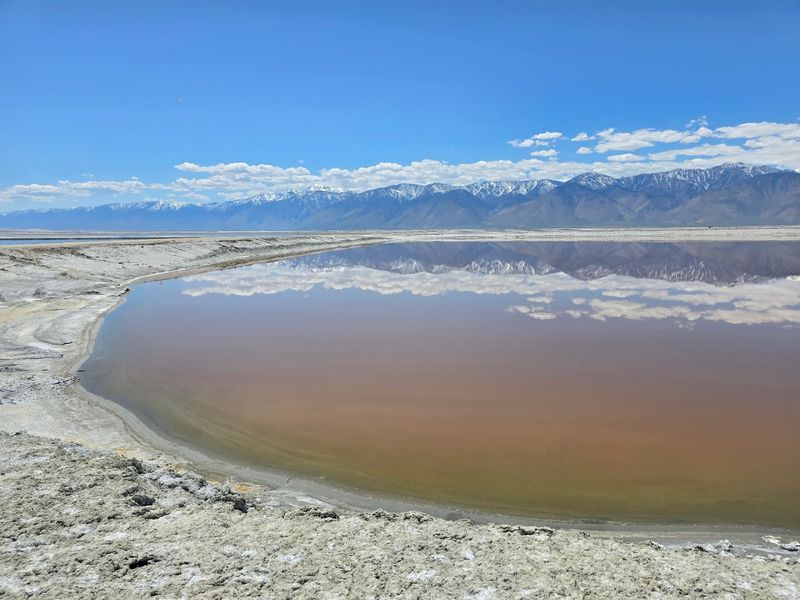
Long before Los Angeles existed as a major city, Owens Lake was a massive, thriving freshwater body stretching roughly 60 miles and plunging over 300 feet deep during the late Pleistocene era. It was the kind of lake that shaped an entire ecosystem, fed by the Owens River and snowmelt from the Sierra Nevada.
Then came 1913. The Los Angeles Aqueduct, engineered under William Mulholland, began diverting the Owens River southward to supply the growing city of Los Angeles.
By the late 1920s, the lake was largely gone. What had taken thousands of years to form was drained in about a decade.
The dry lakebed became one of the largest sources of toxic dust in the United States, sending arsenic-laced particles into the air and affecting the health of Owens Valley residents for decades. It is a story about water rights, power, and the cost of rapid urbanization.
Knowing this history changes how you see the landscape. The pale, cracked ground is not just scenery.
It is a record of one of the most significant environmental disruptions in California’s history, and it still carries the weight of that loss.
No Fish, But Plenty of Life Below the Surface
Most lakes get attention because of their fish. Owens Lake flips that expectation completely.
The water that remains is so salty and alkaline that fish and mollusks simply cannot survive here. It sounds bleak at first, but the reality is far more interesting than it seems.
Brine shrimp thrive in this hyper-saline environment, along with insect larvae and other small organisms perfectly adapted to extreme conditions. These tiny creatures are not just surviving, they are fueling an entire food web.
They are the reason thousands of birds make this lake a regular stop.
The chemistry of the water creates a unique ecosystem that you would not find in a typical freshwater lake. Minerals crystallize along the shoreline, forming pale crusts that crunch underfoot and catch the light in unexpected ways.
The shallow flooded areas shift color depending on algae concentrations, sometimes turning rust-red or deep pink, which gives the landscape a surreal quality. It is the kind of place that makes you rethink what a healthy ecosystem actually looks like.
Productivity here does not look like a trout stream. It looks like millions of microscopic organisms doing exactly what they are supposed to do.
Thousands of Birds on a Lake That Looks Empty
The first time I saw the birds at Owens Lake, I genuinely could not believe what I was looking at. The shallow water was thick with movement, thousands of shorebirds feeding, resting, and calling across the flats in a way that felt almost orchestrated.
Owens Lake sits along the Pacific Flyway, one of the most important migratory routes in North America. During peak migration periods, bird surveys have recorded over 45,000 individual birds in a single count, with an all-time high of nearly 115,000 birds observed in one day.
That number is staggering for a lake most people have never heard of.
Species like American avocets, snowy plovers, western sandpipers, least sandpipers, eared grebes, and various ducks and geese make regular appearances here. Snowy plovers actually nest at the lake, which adds another layer of ecological significance.
The site is recognized by the Western Hemisphere Shorebird Reserve Network as a location of international importance. Birders from across the country make the trip specifically for this, setting up scopes along the edge of the lakebed before sunrise.
Even if you are not a dedicated birder, watching that many birds move across the water together is an experience that stays with you.
How Dust Mitigation Accidentally Created a Wetland
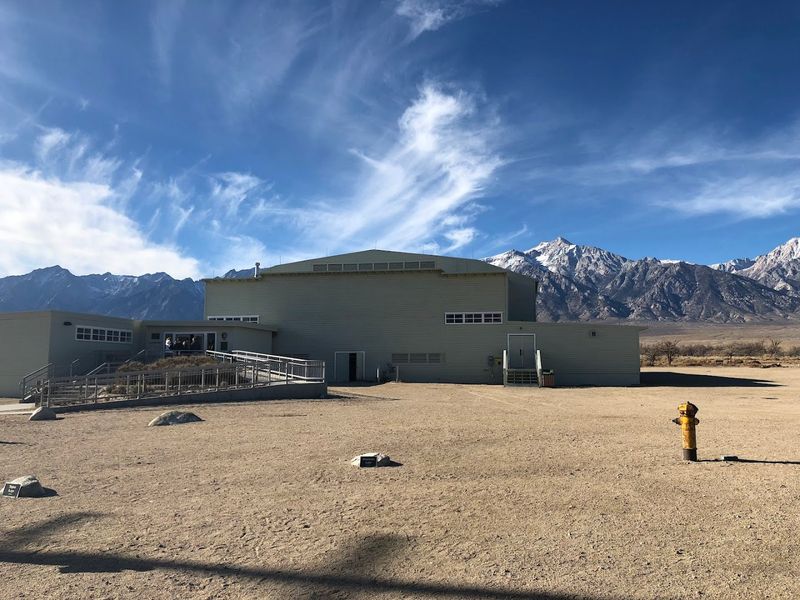
Here is a strange twist in the Owens Lake story. The effort to fix a public health crisis ended up creating something unexpectedly beautiful.
After the lakebed dried out, toxic dust storms became a serious problem for Owens Valley communities, with particulate matter reaching dangerous levels regularly.
Under a court order, the Los Angeles Department of Water and Power began a large-scale dust mitigation program in 2001. The approach involved shallow flooding of sections of the lakebed, managed vegetation, and gravel coverage to hold the dust down.
It was an environmental engineering project, not a conservation one. But the shallow water that spread across the flats transformed the habitat almost immediately.
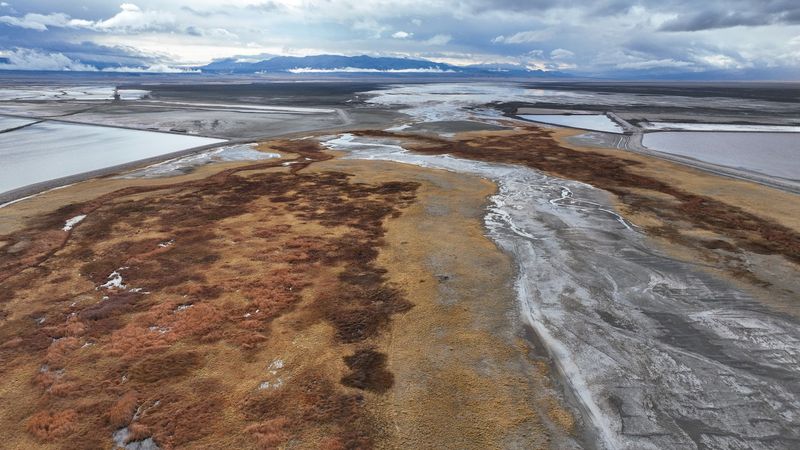
Birds arrived in numbers that surprised even the scientists monitoring the project. What started as a dust control measure became one of the most significant shorebird habitats in the western United States.
The mosaic of wet and dry areas, salt flats, and managed vegetation created exactly the kind of varied habitat that migratory birds need. It is a reminder that ecological recovery can happen in unexpected ways, and that sometimes the most pragmatic solutions produce the most meaningful results.
The lakebed today is a patchwork of habitats, each one serving a different function in a system that no one fully planned.
The Limestone Towers Connection, Mono Lake Is Nearby
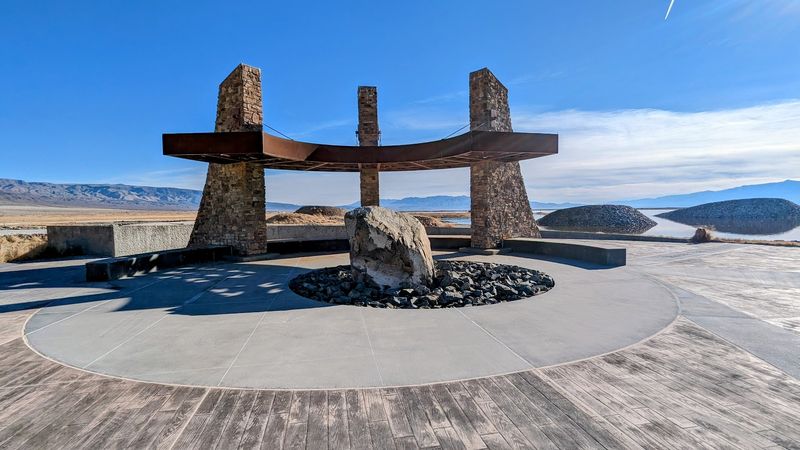
The title of this article mentions strange limestone towers, and that detail deserves an honest explanation. The iconic tufa towers often associated with this region of California are actually found at Mono Lake, located north of Owens Lake along Highway 395 in Mono County.
Tufa towers form when calcium-rich freshwater springs bubble up through the lakebed and meet the carbonate-rich saline water above. Over time, limestone deposits build up around the spring vents, eventually rising above the water surface as tall, knobby columns.
They look genuinely alien, and Mono Lake has some of the most photogenic examples anywhere in the world.
Owens Lake does have its own mineral formations along the shoreline, including salt and alkali crusts that create textures and patterns worth stopping to look at. But the dramatic vertical tufa towers are Mono Lake’s signature feature.
If you are making a road trip along Highway 395, both lakes are worth visiting. They tell complementary stories about saline lakes in the Great Basin, water diversion, and ecological resilience.
Mono Lake also has no fish and hosts massive numbers of birds, so the two places share more in common than their geography. Together, they form one of the most fascinating natural corridors in California.
Visiting Owens Lake, What to Expect on the Ground
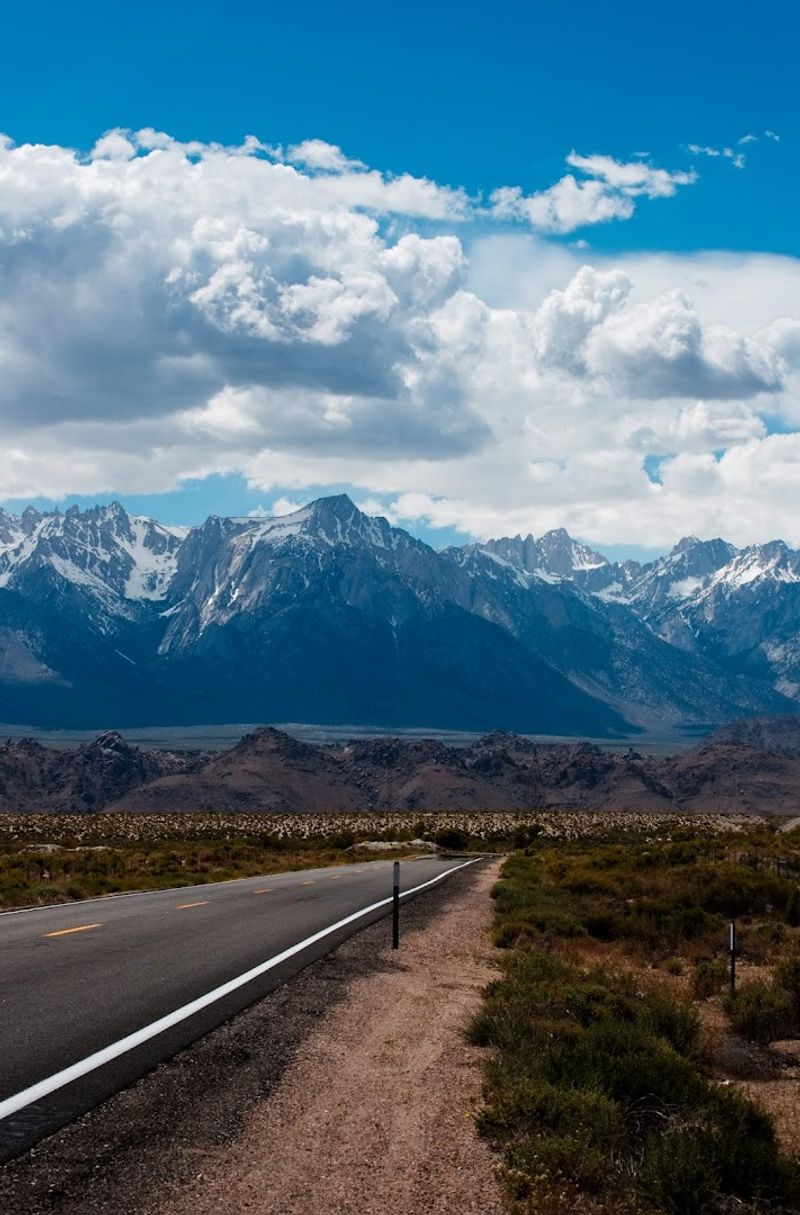
Getting to Owens Lake is straightforward if you are already traveling Highway 395, which runs directly alongside the lakebed south of Lone Pine. There are pullouts along the highway where you can stop and take in the view, and the scale of the landscape becomes much more apparent once you are standing at the edge of it.
Reaching the actual shoreline takes a bit more effort. The terrain can be uneven and soft in places, and the salt crust can be unpredictable underfoot.
Sturdy shoes are a good idea. Early morning visits are best for birdwatching, both for the light and because bird activity tends to be highest in the cooler hours.
There are no formal visitor facilities at the lake itself, so bring water, snacks, and sun protection. The Owens Valley sun is intense, especially in summer, and there is very little shade anywhere near the lakebed.
Lone Pine, just a few miles north, has restaurants, gas stations, and small shops if you need to stock up before heading out. The Alabama Hills and Mount Whitney Portal are also nearby, making Owens Lake a natural addition to a broader Eastern Sierra road trip rather than a standalone destination.
Why This Place Matters More Than It Looks
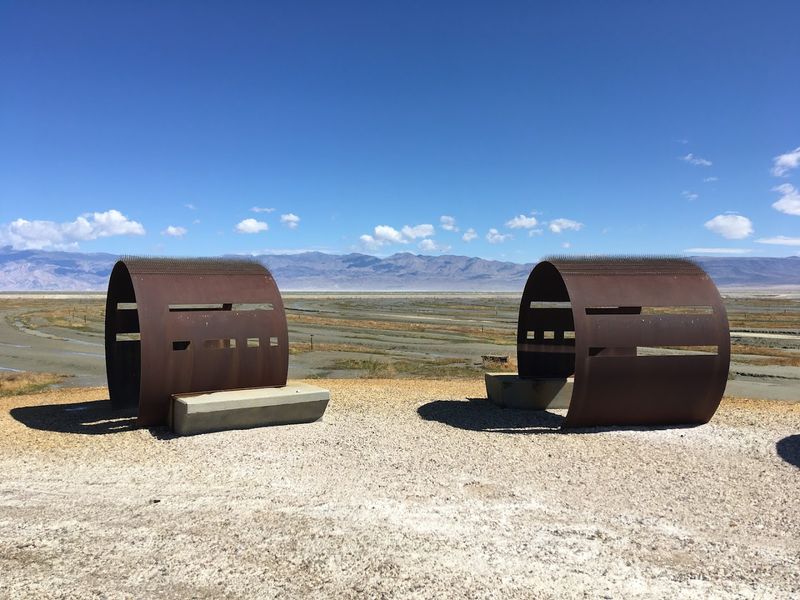
Owens Lake does not look impressive at first glance. The wide, flat expanse of pale ground, the faint shimmer of shallow water, the distant mountains framing everything in quiet grandeur.
It is easy to drive past and think you have seen it already.
But this place holds a layered story that covers geology, ecology, water politics, and human impact all at once. It is a place where a prehistoric lake left its ghost on the landscape, where a city’s thirst changed an entire valley, and where birds by the tens of thousands found a way to make use of what remained.
That combination is genuinely rare.
For travelers who care about understanding the American West beyond its postcard highlights, Owens Lake offers something deeper. It asks you to sit with complexity, to appreciate a landscape that is beautiful and damaged at the same time.
The birds do not seem to mind the history. They show up anyway, feeding in the shallow water with the same urgency they bring to every stop along their long migratory routes.
There is something quietly reassuring about that. Life finds a way here, even in the salt and the dust, and that alone makes the detour worth every mile.
Address: Owens Lake, California 93522
