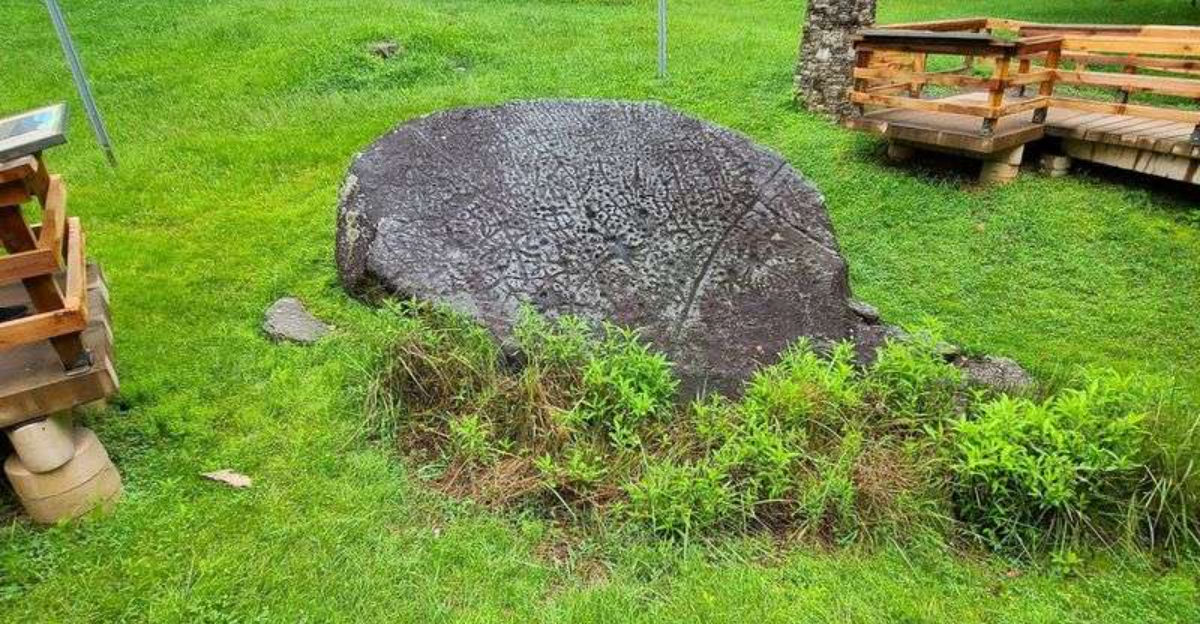
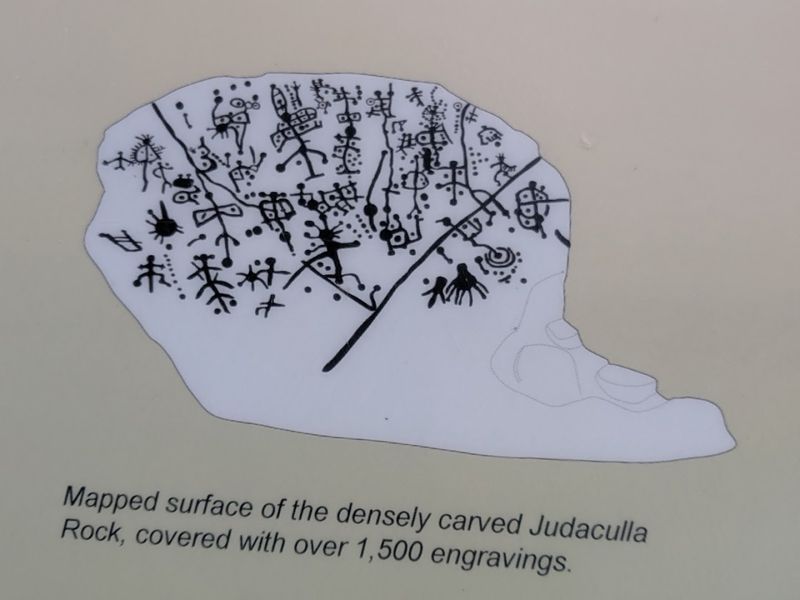
Most stones fade into the landscape, but this one holds onto its secrets. This massive soapstone boulder is etched with more than 1,500 carvings that have challenged archaeologists, historians, and visitors for generations.
Set in the mountains near the Virginia border, the site carries deep ties to Cherokee legend and a presence that feels almost electric. Standing before it, the past does not feel distant.
The markings stretch back thousands of years, each line and symbol hinting at stories that remain just out of reach.
It is not just a landmark, but a rare encounter with something
The Giant Who Leaped From The Mountains
Before you even see the rock, the legend grabs you by the collar. Tsul Kalu, the so-called Slant-Eyed Giant of Cherokee mythology, was no ordinary supernatural figure.
He commanded wind, rain, thunder, and lightning, and served as the supreme Master of all Game Animals.
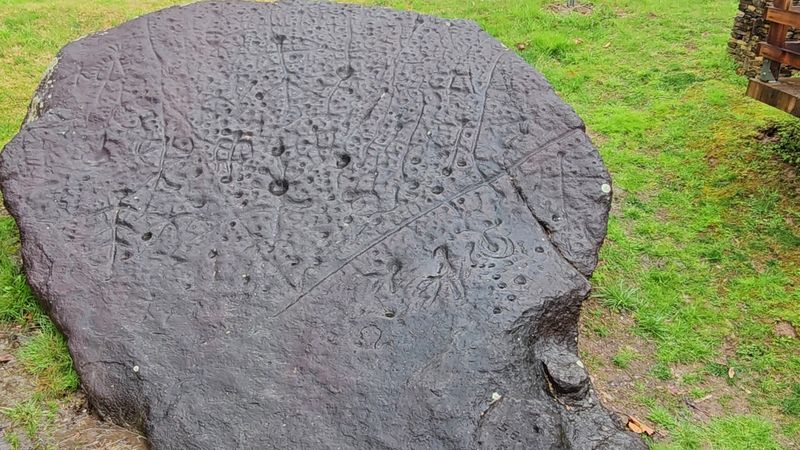
According to Cherokee oral tradition, Tsul Kalu leaped from his mountain home and landed right beside this boulder, leaving behind the imprint of his seven-fingered hand in the soapstone surface. That single detail makes the hair on your arms stand up when you are actually standing next to it.
Standing at Judaculla Rock, you feel the weight of that story pressing down on you in the best possible way. The mountain landscape surrounding the site mirrors the kind of dramatic terrain a giant would call home.
Cherokee communities have carried this legend across centuries without letting it fade, and that dedication shows. The rock is not just a curiosity for tourists.
It is a living piece of spiritual geography that connects the present to a world most of us can barely imagine.
Over 1,500 Carvings That Still Refuse To Give Up Their Secrets
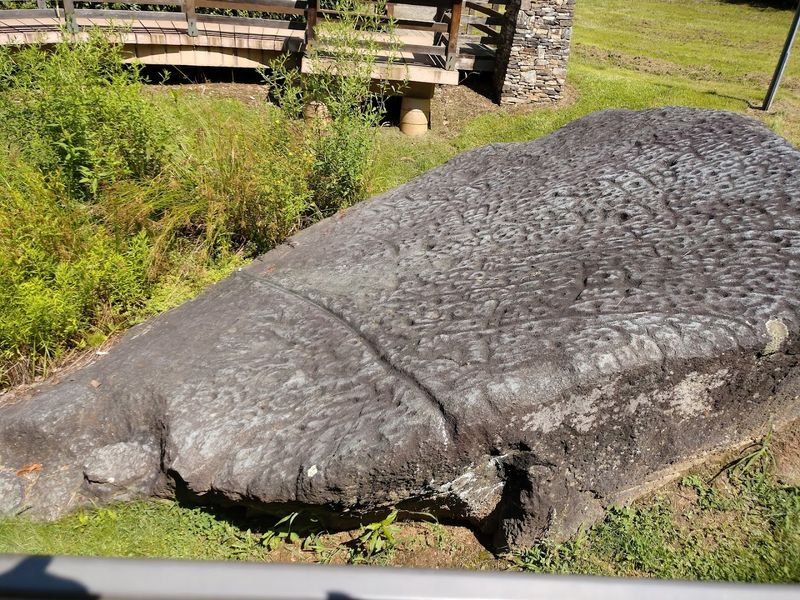
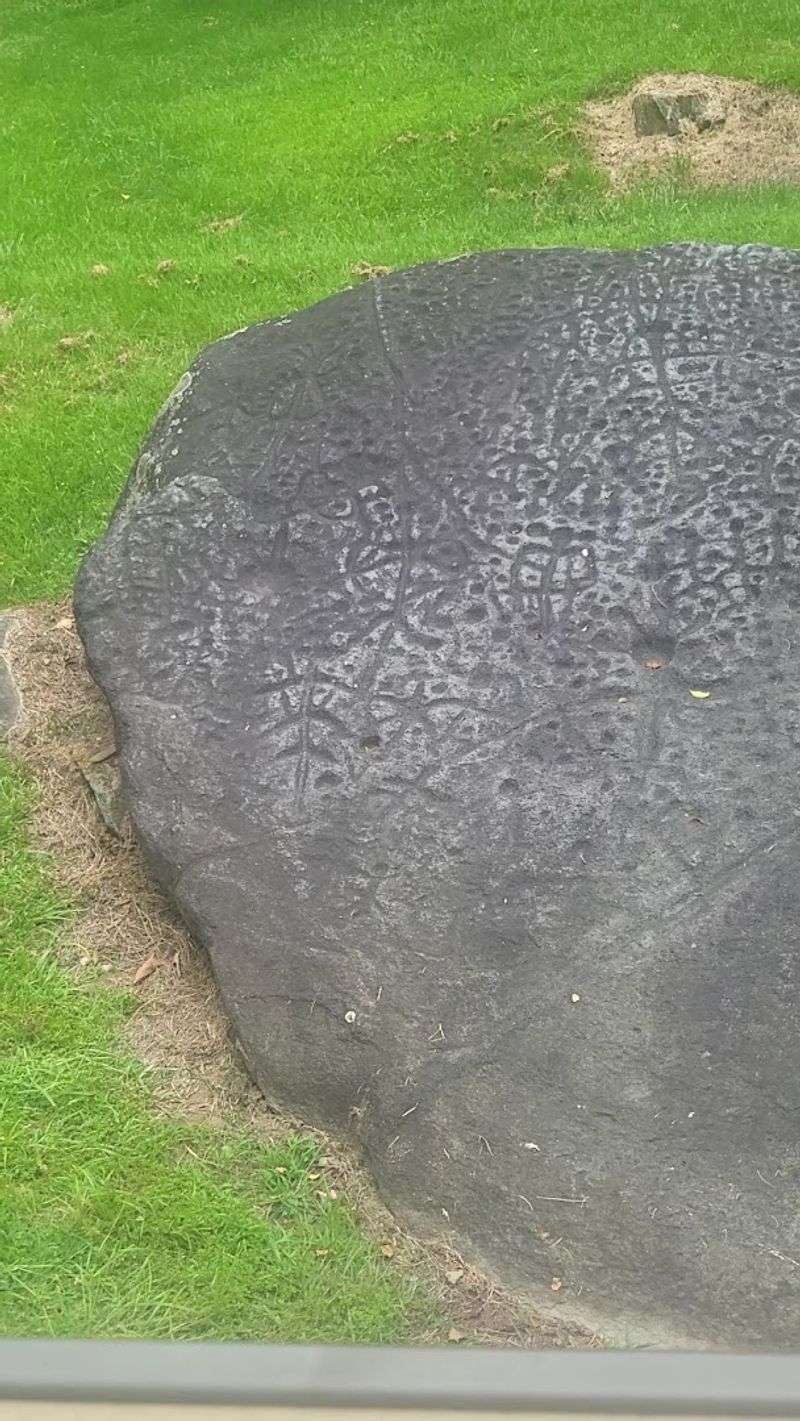
Most archaeological sites offer you a handful of carvings and call it a day. Judaculla Rock throws over 1,500 individual petroglyphs at you and dares you to make sense of them.
Cup marks, curvilinear lines, animal track impressions, and abstract geometric shapes crowd the surface in a visual language that no one has fully decoded.
What makes this even more fascinating is that the carvings were not all made at once. Researchers believe they were created across multiple centuries, possibly stretching back to the Late Archaic period.
That means generation after generation returned to this same boulder and added their own marks.
Some scholars think the carvings served ceremonial purposes. Others suggest they may have functioned as maps, territorial markers, or records of significant events.
The truth is, nobody knows for certain, and that ambiguity is part of what makes Judaculla Rock so magnetically compelling.
Every time I looked at a new section of the rock, I spotted something I had missed before. A curved line here, a cluster of dots there.
The surface rewards patience and rewards curiosity in equal measure.
A Sacred Site That Connects The Region To Cherokee Heritage
The Cherokee Nation’s relationship with this part of western North Carolina and the surrounding Virginia mountain region runs deep and ancient. Judaculla Rock sits at the heart of that connection, functioning as a spiritual landmark that tribal communities have revered for an extraordinarily long time.
Tsul Kalu was not just a monster story told to frighten children. He was a figure tied directly to the natural world, to hunting success, and to the balance between humans and the animals they depended on for survival.
His imprint on this rock symbolized a covenant of sorts between the Cherokee people and the forces of nature.
When the Eastern Band of Cherokee Indians speaks about Judaculla Rock today, the tone is one of reverence, not nostalgia. The site remains spiritually active in the community’s worldview, making it far more than a museum piece or a roadside attraction.
Visiting the area around Judaculla Rock gave me a sharper appreciation for how deeply the Cherokee presence shaped the cultural and spiritual landscape of this entire region, from the mountain gaps of Virginia all the way through the Carolina highlands.
The Boardwalk That Keeps The Magic Intact
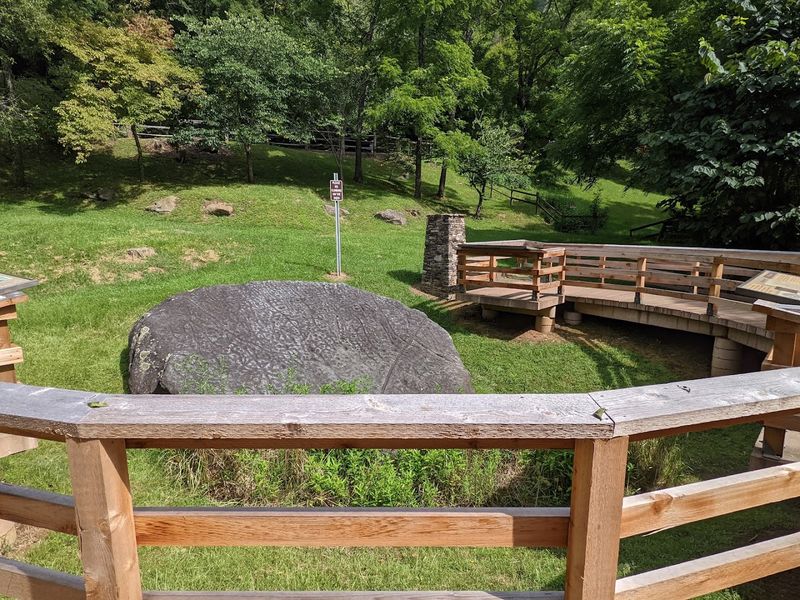
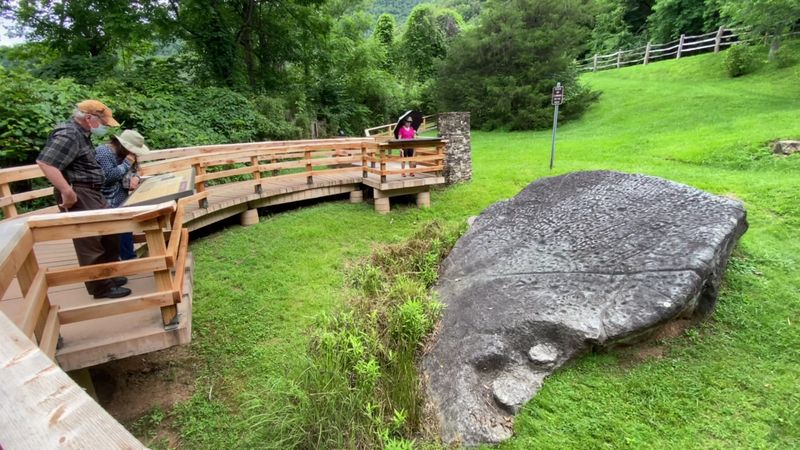
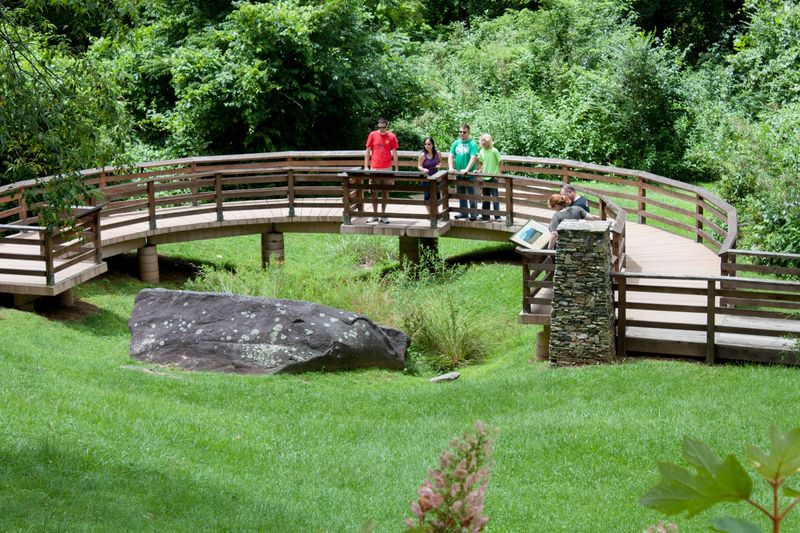
Good preservation does not have to be boring, and the setup at Judaculla Rock proves exactly that. A well-constructed accessible boardwalk guides you directly to the boulder without letting foot traffic erode the surrounding ground or damage the rock’s surface.
Smart design, genuinely appreciated.
Interpretive signage lines the approach, giving you solid context before you arrive face to face with the carvings. By the time you are actually standing next to the rock, you already understand what you are looking at, which makes the experience ten times richer.
The boardwalk keeps the site tidy and the rock protected from casual damage. Families with strollers, visitors with mobility challenges, and curious kids can all reach the boulder comfortably.
That kind of inclusive access feels right for a site that belongs to everyone.
I noticed how the Parker family, who owns the surrounding land, placed it in a trust specifically to ensure the site’s long-term protection. That level of community stewardship is genuinely rare, and it shows in how well-maintained and respectful the whole experience feels when you arrive at Judaculla Rock.
Reading The Mountain Landscape Around The Rock
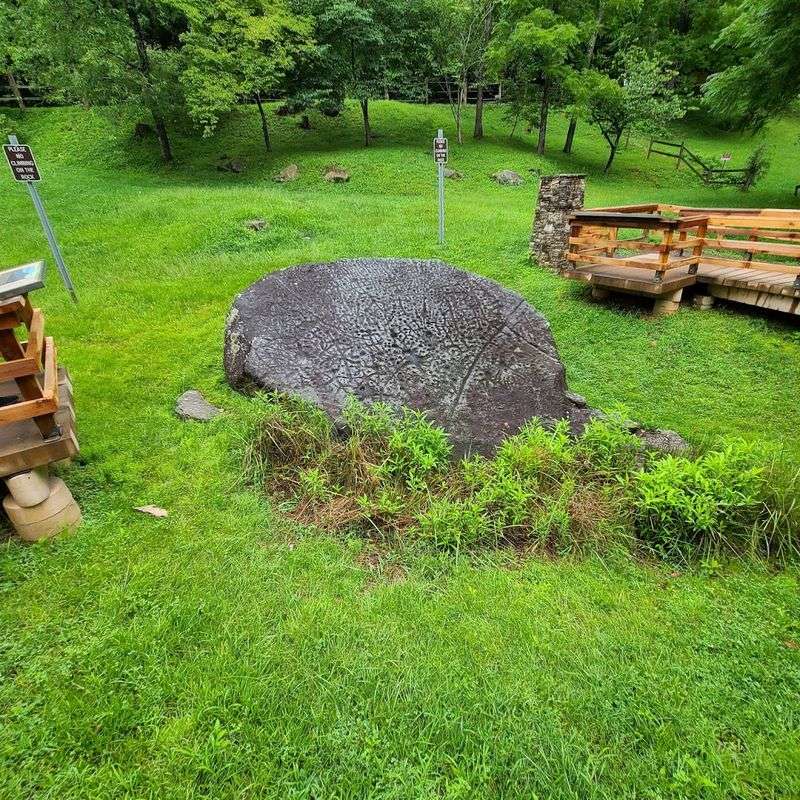
Context matters enormously when visiting ancient sites, and the landscape surrounding Judaculla Rock delivers context in abundance. A river flows through the valley floor.
Pastures spread out in soft green waves. Mountains rise on both sides, framing the scene like a painting that took ten thousand years to compose.
This is the kind of terrain that makes you understand why ancient peoples chose to mark this particular spot. The valley creates a natural corridor through the mountains, a gap that would have served as a critical travel route for Cherokee communities moving through the Appalachians.
The Virginia border lies not far to the north, and the whole region shares a geographic and cultural identity shaped by these ancient mountain passages. Standing in the valley, you can almost feel the invisible threads connecting this landscape to the broader Cherokee world that once stretched across multiple states.
Even on a cloudy day, the scenery around Judaculla Rock carries a quiet power. The combination of river, valley, and mountain ridgeline creates an atmosphere that feels ancient and alive at the same time, which is exactly what this place deserves.
Why The Soapstone Surface Tells A Deeper Story
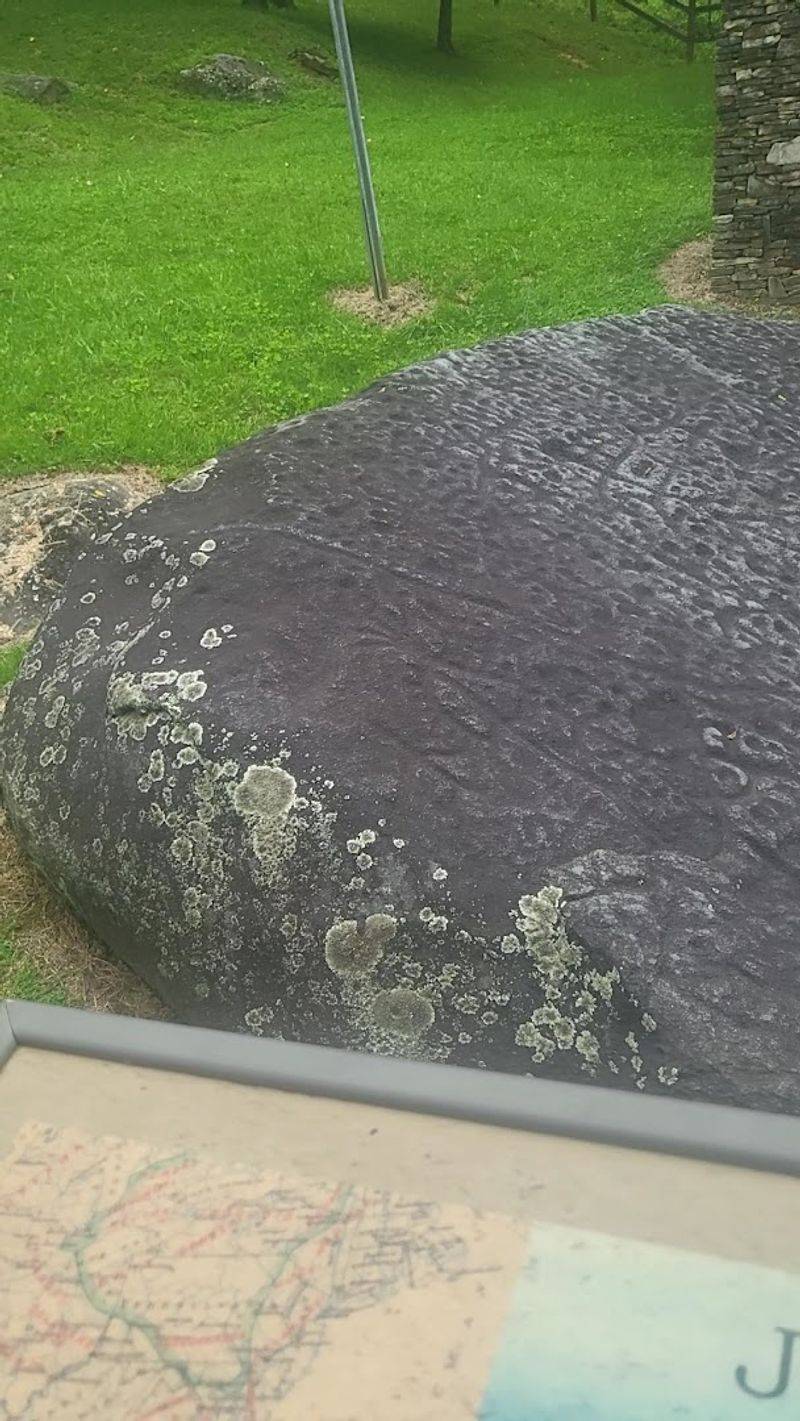
Soapstone is a soft rock, which is precisely why ancient carvers selected it. The material yields to stone tools without shattering, allowing for detailed and deliberate work.
At Judaculla Rock, the choice of this particular boulder was almost certainly intentional, not accidental.
The softness that made soapstone ideal for carving is also what makes preservation a genuine challenge today. Weathering and erosion have already softened many of the markings considerably.
Some carvings that were sharp and legible decades ago are now faint shadows of their original forms.
Researchers and preservation specialists continue to monitor the rock’s condition carefully. Photogrammetry and digital scanning have been used to document the petroglyphs in detail, creating records that will outlast the physical surface itself.
That kind of forward-thinking documentation matters enormously for future generations.
Standing close to the surface and tracing the curves with your eyes rather than your fingers, you start to appreciate the skill involved in creating these markings. Each groove represents a deliberate choice, a moment of intention by someone who lived in this valley long before the concept of Virginia or North Carolina existed as place names.
The Late Archaic Period Roots Of An Extraordinary Place
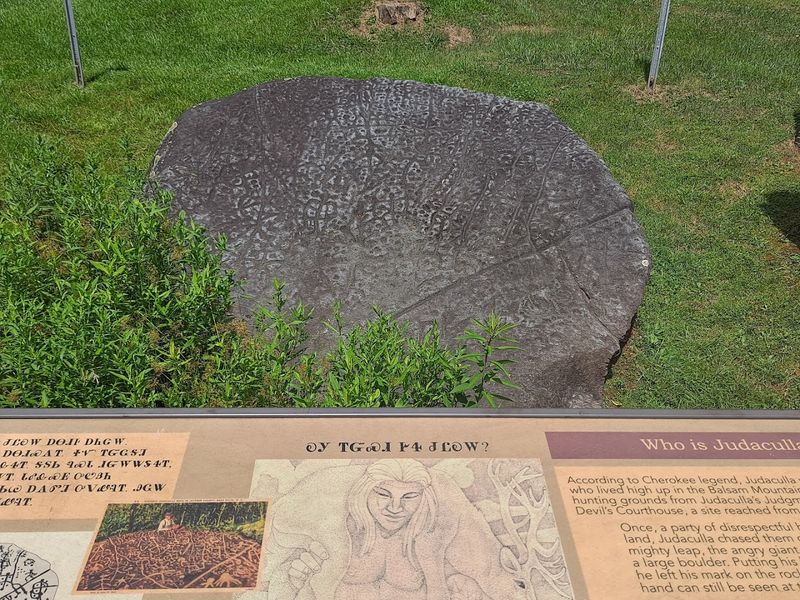
Pinning a date to ancient carvings is never a simple task, and Judaculla Rock is no exception. Archaeological analysis suggests that some of the petroglyphs may trace back to the Late Archaic period, a stretch of prehistory spanning roughly from 2000 to 1000 BCE.
That is a staggering timeline to hold in your head.
What this means practically is that people were marking this rock long before the Cherokee cultural tradition as we know it fully took shape. The carvings represent layers of meaning accumulated over an enormous span of human activity in this mountain region.
Later additions to the rock reflect more recent cultural periods, meaning Judaculla Rock functions almost like a palimpsest, a surface written on, partially erased, and written on again across millennia. That layered quality makes it one of the most complex petroglyph sites in the entire eastern United States.
For anyone who finds the deep history of Virginia and the broader Appalachian region compelling, this context transforms Judaculla Rock from an interesting curiosity into something genuinely profound. Few places in the American Southeast carry this much verifiable human time on their surfaces.
Getting To Judaculla Rock Without Losing Your Mind Or Your GPS Signal
Fair warning: your GPS may throw a small tantrum on the way to Judaculla Rock. The rural roads leading out from Highway 107 near Cullowhee are beautiful but not always cooperating with satellite signals.
Downloading an offline map before you head out is genuinely useful advice, not just cautionary filler.
The drive itself is a reward in its own right. Rolling countryside, quiet farmland, and glimpses of mountain ridgelines keep the scenery interesting all the way to the parking area.
You pull in, park on the left side, and the site is immediately accessible from the lot.
Judaculla Rock sits at 552 Judaculla Rock Road, Cullowhee, NC 28723, open every single day of the year around the clock. There are no entry fees, no gates blocking your path, and no complicated ticketing systems to navigate.
Just show up, walk the boardwalk, and let the place speak for itself.
Wearing sturdy shoes matters if you plan to explore the short trail beyond the main viewing area, especially after rain when the ground gets muddy. A quick visit takes about fifteen minutes, but you will probably want to stay much longer once you arrive.
What The National Register Listing Really Means For This Rock
Earning a spot on the National Register of Historic Places is not a participation trophy. The designation signals that a site carries genuine significance for American history, archaeology, or culture, and that federal protections apply to its preservation.
Judaculla Rock earned that recognition, and rightfully so.
The listing brings practical benefits beyond symbolic prestige. It opens doors to preservation funding, encourages coordinated management between landowners, local governments, and tribal nations, and raises the site’s profile among researchers and heritage tourism advocates across Virginia, North Carolina, and beyond.
For the Eastern Band of Cherokee Indians, the listing represents an acknowledgment by the broader American institutional framework that their ancestral sites deserve serious protection. That kind of formal recognition carries weight in conversations about land management and cultural stewardship.
What strikes me most about Judaculla Rock’s status is how it balances public access with respectful preservation. The site remains completely open and free to all, yet the National Register designation ensures that future development cannot simply bulldoze through this irreplaceable piece of human history.
That balance is harder to achieve than it looks, and Judaculla Rock models it well.
Pack Your Curiosity And Go See It For Yourself
Some places need heavy marketing to convince you they are worth the trip. Judaculla Rock is not one of them.
A massive ancient boulder covered in mysterious carvings, wrapped in Cherokee legend, set inside a gorgeous mountain valley near the Virginia state line. That description does the selling all by itself.
Go on a weekday morning if possible. The site is open around the clock every day of the week, and early visits mean you might have the entire place to yourself, just you, the boulder, and a few thousand years of unresolved questions.
Bring water, wear shoes you do not mind getting a little dirty, and leave the rock exactly as you found it. No touching the carvings.
No climbing on the surface. The petroglyphs are already fading faster than anyone would like, and every hand that presses against the soapstone accelerates that process.
My honest assessment after standing at Judaculla Rock is simple: this is one of the most quietly powerful places in the entire Appalachian region. Virginia travelers heading through the Carolina mountains owe it to themselves to stop here.
You will leave with more questions than answers, and somehow that feels exactly right.
Dear Reader: This page may contain affiliate links which may earn a commission if you click through and make a purchase. Our independent journalism is not influenced by any advertiser or commercial initiative unless it is clearly marked as sponsored content. As travel products change, please be sure to reconfirm all details and stay up to date with current events to ensure a safe and successful trip.
