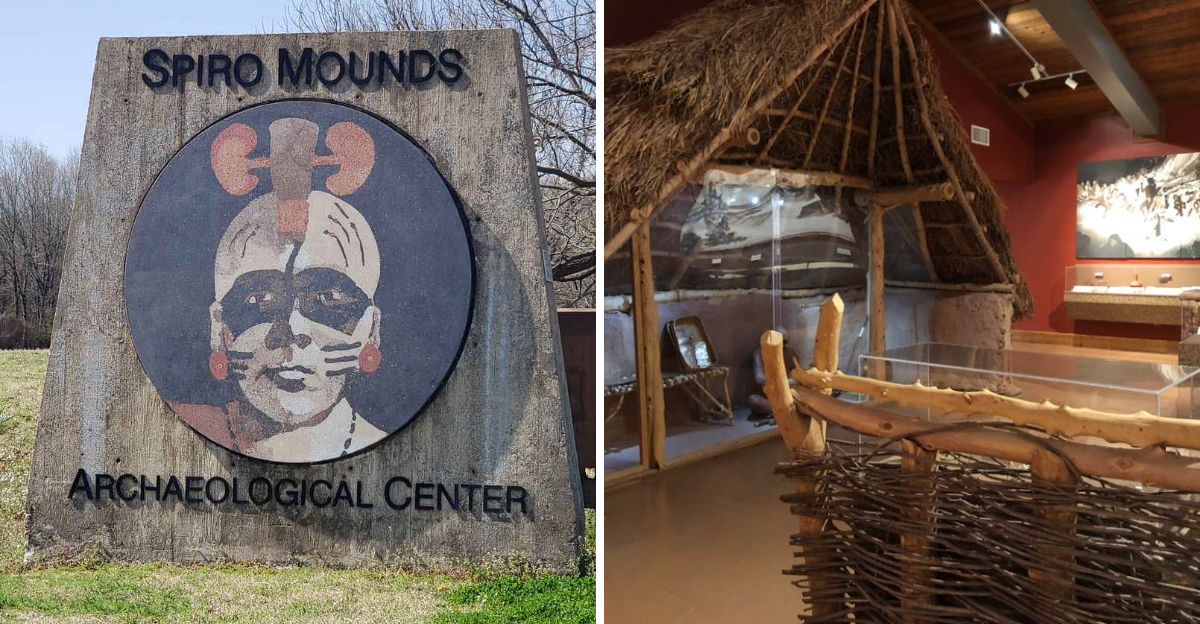
Tucked away in the rolling hills of eastern Oklahoma, near the Arkansas River valley, lies a site that has rewritten centuries of assumptions about Indigenous civilization in North America.
Spiro Mounds Archaeological Center stands as one of the most significant prehistoric Native American sites on the continent, revealing a sophisticated culture that thrived between 800 and 1450 AD.
The earthworks and artifacts discovered here tell stories of trade networks stretching from the Great Lakes to the Gulf Coast, challenging long-held beliefs about the complexity and reach of ancient societies in what is now Oklahoma.
Long before European contact, the Spiro people built ceremonial mounds, crafted intricate artworks, and established a cultural center that influenced communities across vast distances.
Walking the trails at Spiro Mounds today, visitors encounter more than simple burial grounds or primitive settlements. The site reveals evidence of astronomical knowledge, elaborate burial ceremonies, and artistic achievements that rival anything found in Mesoamerica.
Museum exhibits showcase shell engravings, copper plates, and ceremonial objects that demonstrate an understanding of symbolism and craftsmanship that has astonished archaeologists for decades.
Eastern Oklahoma’s landscape may seem quiet now, but beneath these gentle mounds lies proof of a civilization whose influence and sophistication have forced historians to reconsider everything they thought they knew about pre-Columbian America.
Craig Mound Reveals Burial Practices That Stunned Archaeologists
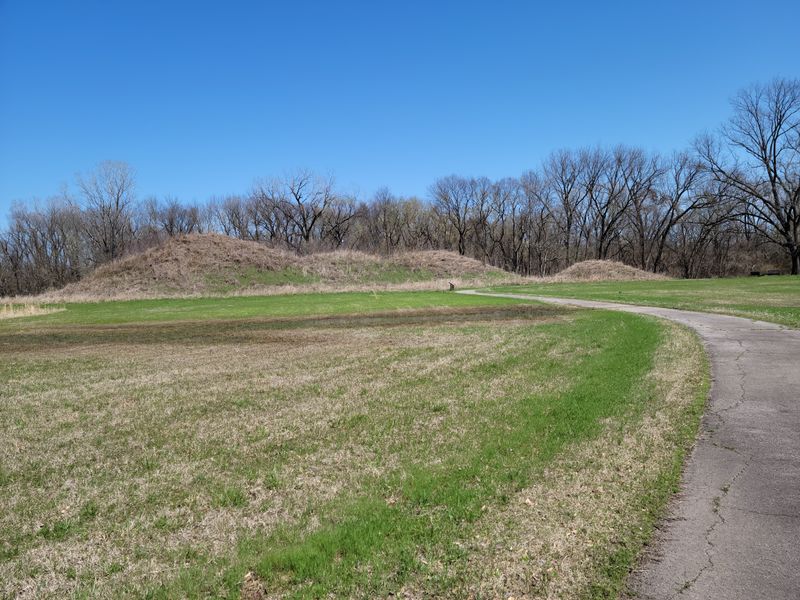
Craig Mound stands as the largest and most archaeologically significant structure at Spiro, often called the Great Mortuary because of what researchers found inside.
Between 1933 and 1935, commercial diggers tunneled into this earthwork and discovered a hollow chamber filled with thousands of artifacts, human remains, and ceremonial objects stacked from floor to ceiling.
The sheer volume and quality of materials found here forced archaeologists to completely rethink their understanding of Mississippian culture and its ceremonial practices.
What made Craig Mound particularly remarkable was not just the quantity of artifacts but their origin points. Shell carvings came from the Gulf Coast, copper from the Great Lakes, and materials from as far away as the Rocky Mountains.
This evidence proved that Spiro was not an isolated settlement but a major ceremonial and trade center with connections spanning thousands of miles.
The burial chamber contained engraved conch shells depicting intricate religious imagery, feathered capes, elaborate headdresses, and ceremonial weapons that demonstrated artistic sophistication previously unrecognized in this region.
Today, visitors can walk around the base of Craig Mound and imagine the hollow interior that once held these treasures. Though the original chamber was destroyed during excavation, interpretive signs help visitors visualize the structure and understand its significance.
The mound itself remains an imposing earthwork, testament to the labor and organizational skills required to construct such monuments.
Standing before it, you realize this was not the work of a simple society but a complex civilization with specialized roles, shared religious beliefs, and the resources to create lasting monuments.
Brown Mound Shows Evidence of Elite Residential Areas
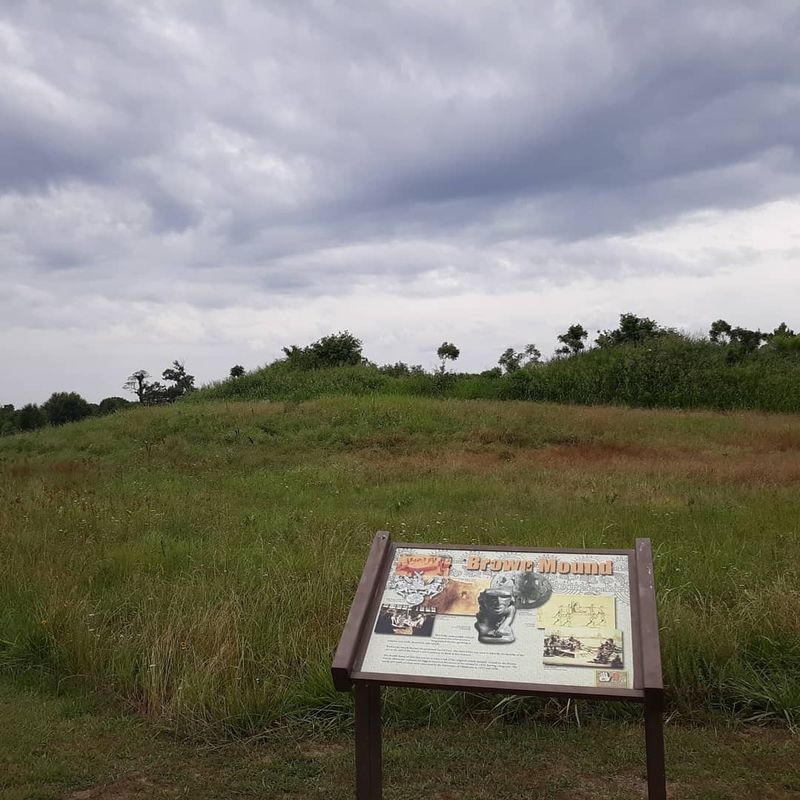
Brown Mound served a completely different purpose than Craig Mound, functioning as a temple platform where religious ceremonies took place and elite members of Spiro society lived. Archaeological evidence suggests that structures built atop this mound housed the religious and political leaders who guided the community.
The surrounding area contained additional dwellings for high-status families, creating a distinct neighborhood that separated the ruling class from common residents. This social stratification challenges the notion that ancient Oklahoma communities were simple egalitarian groups.
Excavations around Brown Mound revealed post holes indicating large wooden structures, fire pits for ceremonial purposes, and artifacts associated with ritual activities.
The placement of this temple mound in relation to other earthworks at Spiro was not random but carefully planned according to astronomical alignments and religious significance.
During winter solstice, the sun sets in direct alignment with certain mounds, suggesting the Spiro people possessed sophisticated knowledge of celestial movements and incorporated this understanding into their architecture.
Walking the trail that circles Brown Mound today, you can observe how the earthwork rises above the surrounding landscape, offering commanding views of the Arkansas River valley.
Imagine wooden temples with thatched roofs standing atop this platform, smoke rising from ceremonial fires, and community members gathering below for religious festivals.
The scale of construction required thousands of basket loads of earth carried by hand, representing a massive communal effort coordinated over generations.
This level of organization and sustained labor indicates a society with strong leadership, shared purpose, and the agricultural surplus necessary to support such monumental projects.
Address: 18154 1st St, Spiro, Oklahoma
Shell Engravings Display Artistic Achievement Unmatched in North America
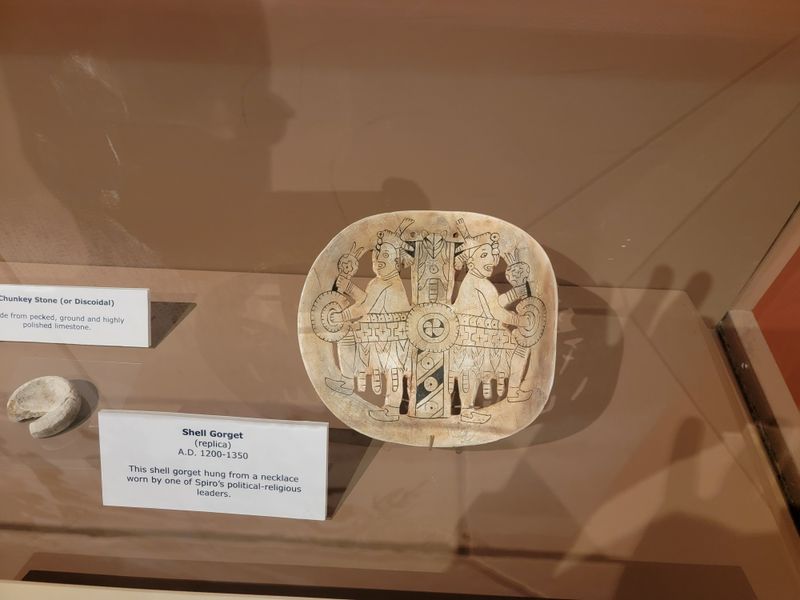
Among the most extraordinary discoveries at Spiro were engraved conch shells depicting complex religious iconography, warrior imagery, and symbolic representations that demonstrate artistic mastery.
These shells, imported from the Gulf Coast hundreds of miles away, were carved with incredible precision using tools that left no margin for error.
The imagery includes weeping eyes, forked eyes, winged serpents, and human figures in elaborate ceremonial dress. Each engraving tells stories of religious beliefs, cosmology, and cultural values that archaeologists are still working to fully understand.
The technical skill required to carve these shells cannot be overstated. Conch shell is difficult to work with, requiring steady hands and extensive practice to avoid cracking the material.
The artists at Spiro created images with fine lines, smooth curves, and detailed patterns that rival the best artwork produced anywhere in pre-Columbian North America.
Some engravings show warriors in full regalia, others depict supernatural beings from Spiro mythology, and still others represent celestial symbols connected to their understanding of the universe.
These were not simple decorative objects but sacred items used in ceremonies and buried with important individuals.
The museum at Spiro Mounds displays replicas of these shell engravings, allowing visitors to examine the intricate details up close. Detailed books and interpretive panels provide context about the symbolism and meaning behind each image.
Many original artifacts from Spiro are housed in museums across the country, but the interpretive center works hard to bring their significance back to the place where they were created.
Seeing these engravings helps visitors understand that the people of Spiro were not primitive but possessed artistic traditions, religious complexity, and technical skills that deserve recognition alongside other great ancient civilizations.
Trade Networks Connected Spiro to Distant Civilizations
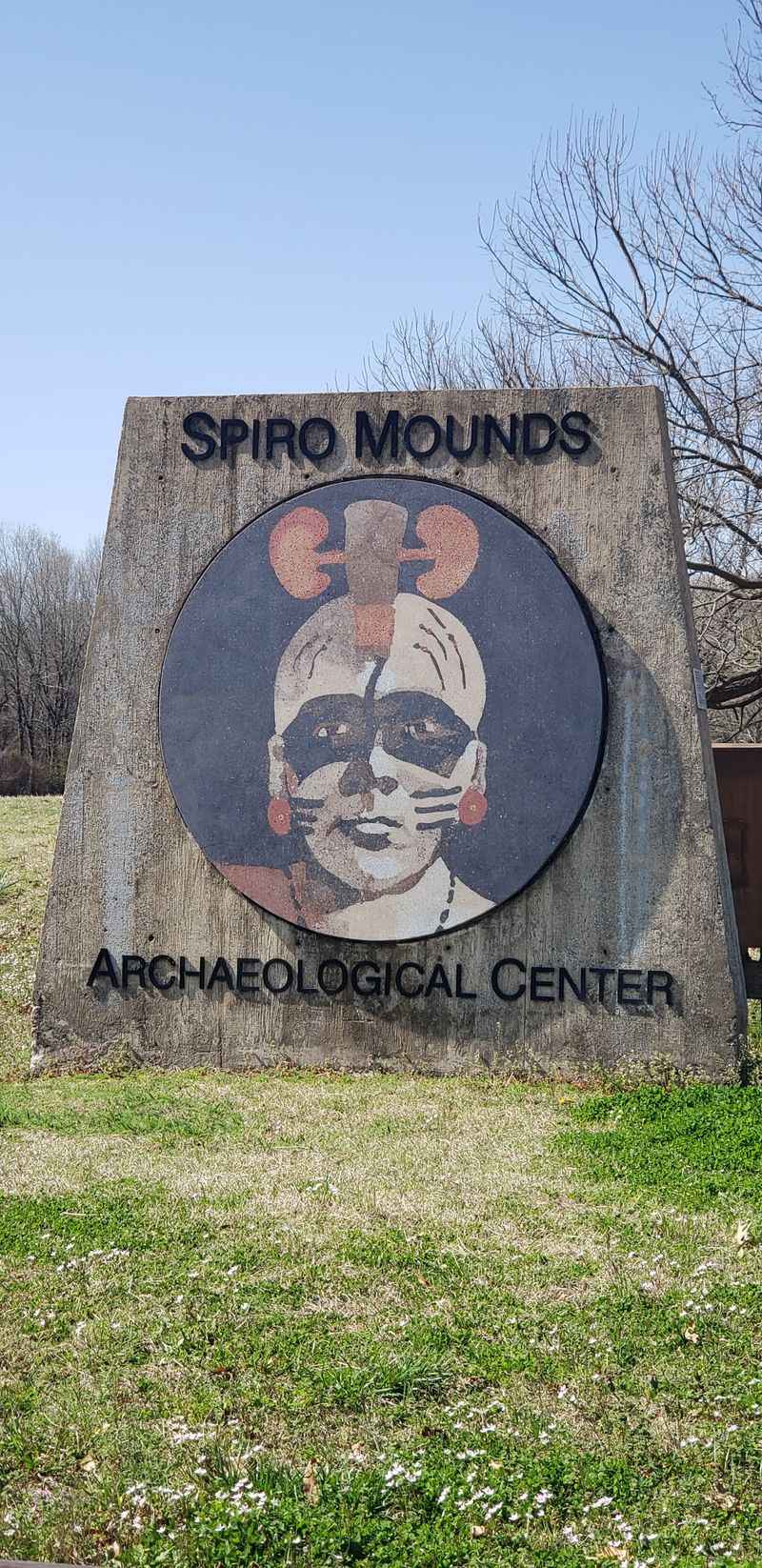
Perhaps nothing challenges traditional assumptions about ancient Oklahoma more than the evidence of vast trade networks centered at Spiro. Materials found at the site came from regions hundreds and even thousands of miles away, proving that Spiro was a major hub in a continental exchange system.
Copper from the Great Lakes, shells from the Gulf Coast, mica from the Appalachian Mountains, and obsidian from the Rocky Mountains all made their way to this location through organized trade routes. This was not occasional contact but sustained economic relationships maintained over centuries.
The presence of these materials indicates that Spiro had something valuable to trade in return, likely agricultural products, specialized crafts, or access to regional resources.
The Arkansas River valley provided fertile soil for growing corn, beans, and squash, creating the agricultural surplus necessary to support specialized craftspeople, religious leaders, and traders.
Archaeological evidence suggests that Spiro was part of what scholars call the Mississippian Interaction Sphere, a network of related cultures sharing religious beliefs, artistic styles, and economic ties across the southeastern United States and beyond.
Understanding these connections transforms how we view ancient Oklahoma. This was not an isolated backwater but a crossroads where ideas, materials, and people converged.
Traders arriving at Spiro would have encountered a bustling ceremonial center with mounds rising above the landscape, marketplaces exchanging goods, and religious ceremonies drawing participants from surrounding communities.
The cosmopolitan nature of Spiro challenges stereotypes about prehistoric Native American societies, revealing instead a dynamic, interconnected world where information and innovation traveled along well-established routes.
Eastern Oklahoma served as a gateway between the Great Plains and the Southeast, making Spiro an ideal location for this cultural and economic exchange.
Walking Trails Let Visitors Experience the Sacred Landscape
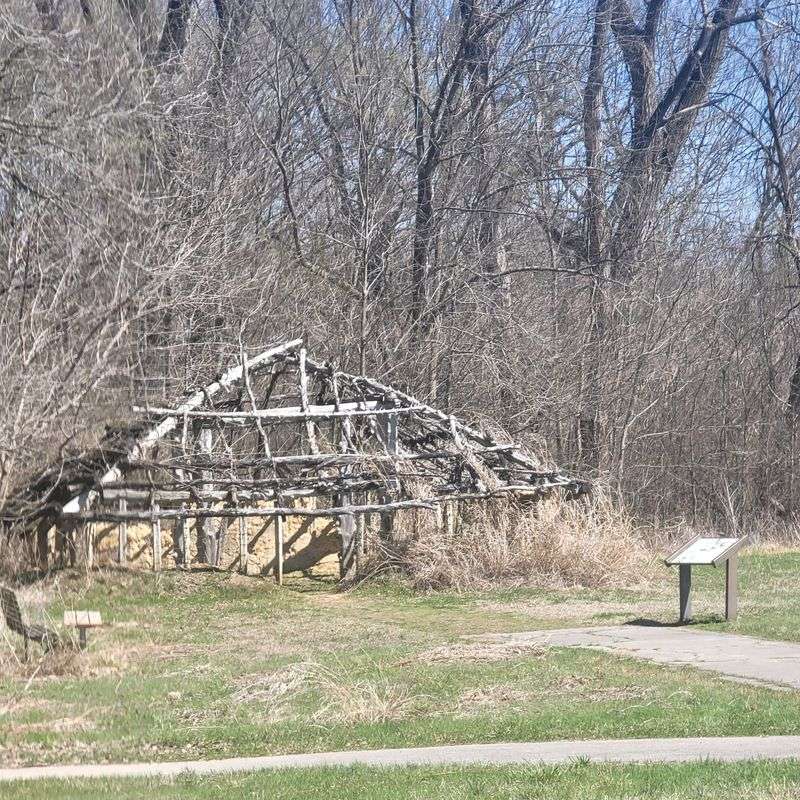
Spiro Mounds offers walking trails that wind through the archaeological site, allowing visitors to experience the landscape much as the ancient inhabitants did.
The main trail system includes both a shorter route of approximately one mile and a longer path covering about two miles, taking visitors past major mounds, smaller earthworks, and interpretive signs explaining what each structure represented.
Walking these trails provides a meditative experience, connecting visitors to the past in ways that museum displays alone cannot achieve.
The trails are relatively easy, following mostly level terrain with paved and dirt sections suitable for most fitness levels. Along the way, interpretive signs explain the function of different mounds, the daily life of Spiro residents, and the archaeological discoveries made at each location.
Recent renovations have improved trail surfaces and updated signage, though some reviews mention that older signs may still show fading. The peaceful setting encourages contemplation, with native grasses, trees, and occasional wildlife creating an atmosphere that helps visitors imagine the site as it appeared centuries ago.
One particularly moving aspect of walking these trails is recognizing the human effort represented by each earthwork. Every basket of soil was carried by hand, every structure built without metal tools or wheeled vehicles.
The mounds were not constructed quickly but built up over generations, with each layer representing a distinct time period and purpose. Some mounds served as platforms for buildings, others as burial sites, and still others as markers for astronomical observations.
Walking from mound to mound, you trace the outline of a planned community designed with both practical and sacred purposes in mind, revealing urban planning concepts that challenge assumptions about ancient American societies.
Museum Exhibits Bring Ancient Culture to Life Through Artifacts and Information
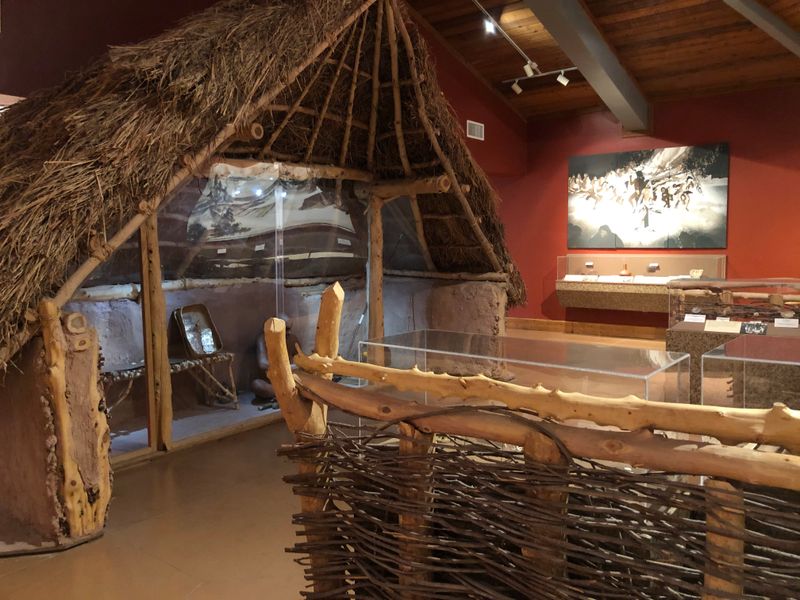
The visitor center at Spiro Mounds houses a climate-controlled museum featuring exhibits that contextualize the archaeological discoveries and explain the culture of the people who built this ceremonial center.
While many original artifacts from Spiro are displayed in museums across the country due to the unfortunate commercial excavation of the 1930s, the interpretive center provides detailed replicas, photographs, and extensive written information that helps visitors understand the significance of what was found here.
Books filled with detailed images of shell engravings allow close examination of the artistry and symbolism.
Museum exhibits cover various aspects of Spiro culture, including daily life, religious beliefs, social organization, trade networks, and architectural achievements. Interactive displays and interpretive panels present complex archaeological information in accessible language, making the site educational for visitors of all ages.
The museum director and staff are known for their knowledge and willingness to answer questions, often providing insights that go beyond what printed materials can convey.
Special events like winter solstice tours offer unique perspectives on how the Spiro people understood astronomy and incorporated celestial knowledge into their religious practices.
The facility is currently undergoing major renovations funded by significant investment aimed at improving parking, trails, exhibits, and overall visitor experience. While some improvements are still in progress, the museum remains open and continues to provide valuable educational experiences.
The center serves not just as a repository of information but as an advocate for preserving and properly interpreting this nationally significant archaeological site.
By visiting, you support ongoing efforts to protect Spiro Mounds and ensure that future generations can learn from this remarkable place that challenges conventional narratives about ancient Oklahoma and the sophisticated civilizations that thrived here long before European contact.
Astronomical Alignments Demonstrate Advanced Scientific Knowledge
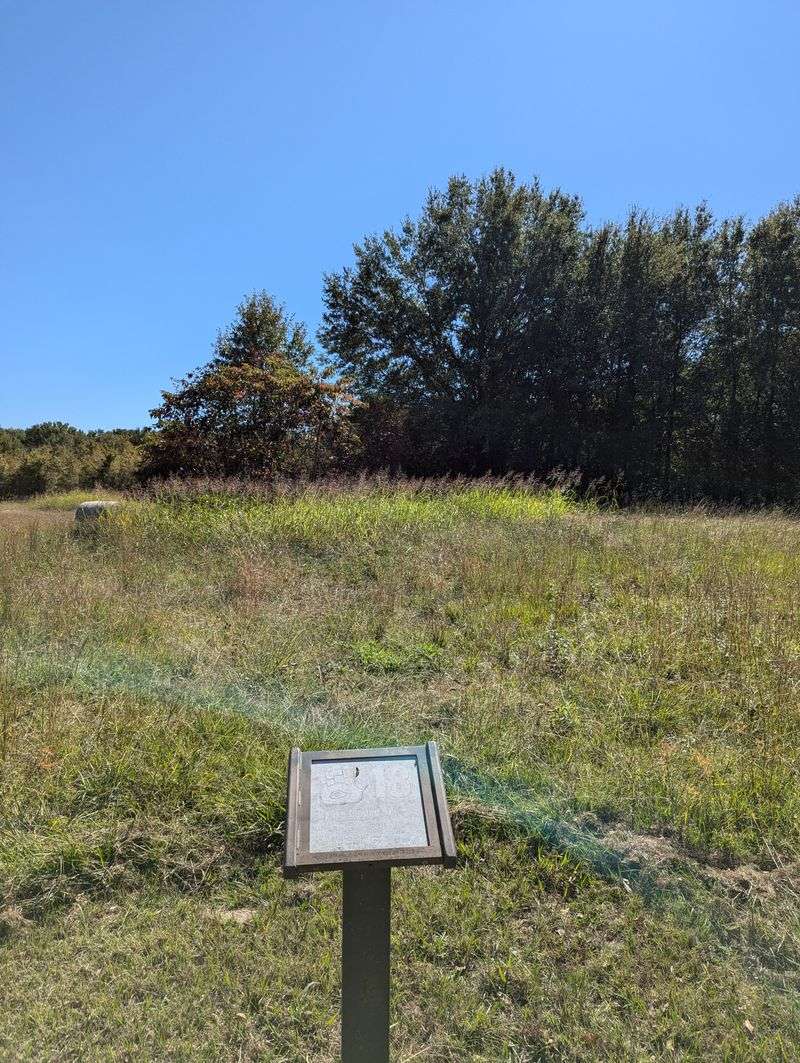
Recent research has revealed that the placement of mounds at Spiro was not random but carefully planned according to astronomical alignments, particularly solar events like solstices and equinoxes.
During winter solstice, the sun sets in direct alignment with specific mounds, creating dramatic visual effects that would have held deep religious significance for the Spiro people.
These alignments demonstrate that ancient Oklahomans possessed detailed knowledge of celestial movements and incorporated this understanding into their architecture and religious practices.
Many ancient cultures around the world built structures aligned with astronomical events, using them to mark seasons, schedule agricultural activities, and connect earthly life with cosmic patterns.
The fact that Spiro exhibits these same characteristics places it among other sophisticated ancient societies that studied the heavens and encoded that knowledge into their built environment.
The precision required to achieve these alignments indicates careful observation over many years, mathematical understanding, and the ability to plan construction projects that would maintain their astronomical function across generations.
Special tours offered at Spiro, such as winter solstice sunset events, allow visitors to witness these alignments firsthand and understand their significance.
Standing at the site during these celestial events provides a powerful connection to the past, allowing modern visitors to see what ancient residents saw and understand the importance they placed on these cosmic patterns.
The director and staff provide detailed explanations of the astronomical knowledge demonstrated at Spiro, helping visitors appreciate the scientific achievements of a culture that left no written records but encoded their understanding in earth and stone.
This aspect of Spiro challenges simplistic narratives about ancient American societies, revealing instead a people who studied nature systematically and incorporated their findings into religious and practical life.
Dear Reader: This page may contain affiliate links which may earn a commission if you click through and make a purchase. Our independent journalism is not influenced by any advertiser or commercial initiative unless it is clearly marked as sponsored content. As travel products change, please be sure to reconfirm all details and stay up to date with current events to ensure a safe and successful trip.
