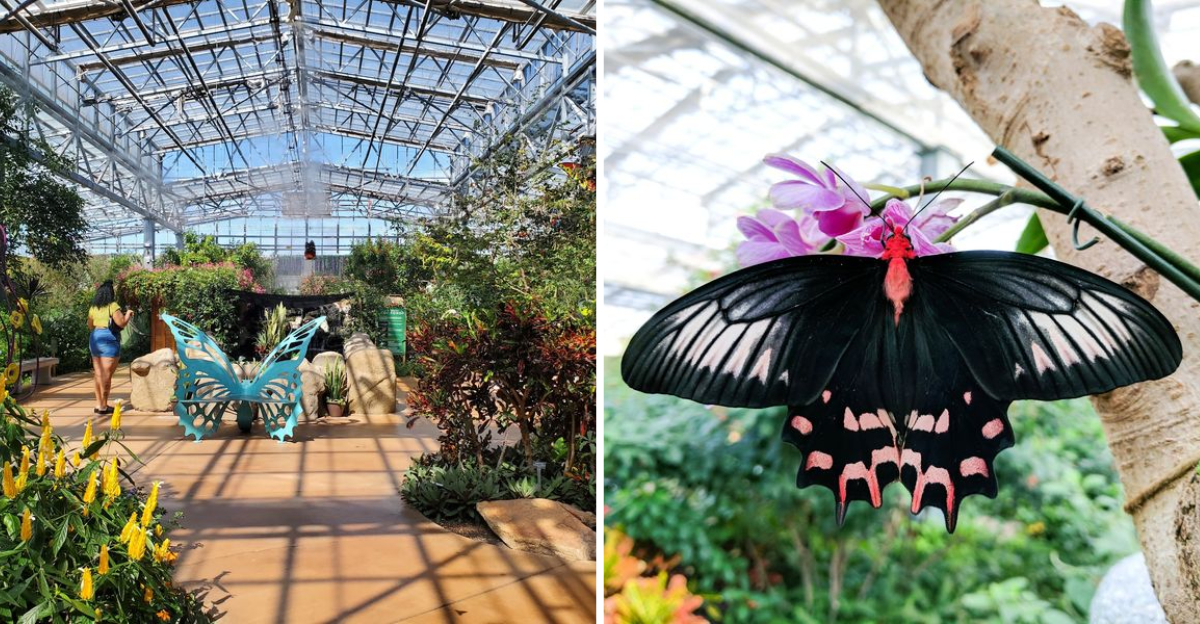
Squinting at dusty mountains and cactus silhouettes one minute, surrounded by humid air and thousands of butterflies the next. That is the kind of shift you can only find in the Arizona desert.
The conservatory calls itself the largest butterfly attraction of its kind in the country, and after spending a morning inside that glass atrium, I believe it. A blue morpho landed on my sleeve within the first ten minutes, and I stood completely still like I had won something.
The space is filled with tropical flowers, koi gliding under lily pads, a 3D theater, and a room full of chrysalises where you can watch the transformation happen in real time. There is a small zoo tucked in the back with reptiles and fish, and the whole place has a kind of slow, meditative energy that catches you off guard.
I walked out slower and calmer than I walked in, which almost never happens at a tourist attraction. The feeling of having a butterfly land on you, even for a moment, changes the rhythm of your whole afternoon.
The 3D Theater That Sets the Mood Before You See a Single Wing
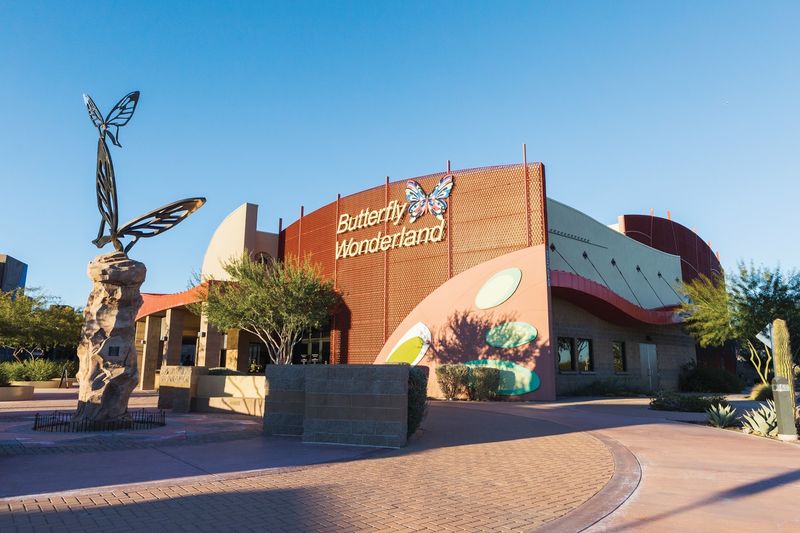
Before any butterflies appear, you are handed a pair of 3D glasses and pointed toward a small theater. I will admit I almost skipped it, thinking it was filler.
It absolutely is not.
The film follows monarch butterflies on their migration, and the 3D work is genuinely well done. Wings sweep out toward you, forests in Mexico fill the screen, and suddenly a creature the weight of a paperclip feels enormous.
What surprised me most was how quiet the room got. Kids who had been bouncing around the lobby stopped fidgeting.
Adults leaned forward.
By the time the lights came up, I understood why the staff schedules it first. You walk into the conservatory already knowing what a chrysalis is, how far these insects travel, and why the humid air matters so much to them.
Practical tip from my visit: the showings run on a rotation, so arriving shortly after the doors open at 9 AM usually means a shorter wait and a better seat. Sitting toward the middle rows gave me the cleanest 3D effect.
If you are bringing a toddler, know that some little ones refuse to wear the glasses, and that is fine. The film is short enough that nobody gets restless.
Think of it as a warm-up rather than a movie. It reframes everything you are about to see, turning pretty insects into long-distance travelers with an incredible story behind every wingbeat.
Watching Butterflies Break Free in the Emergence Gallery
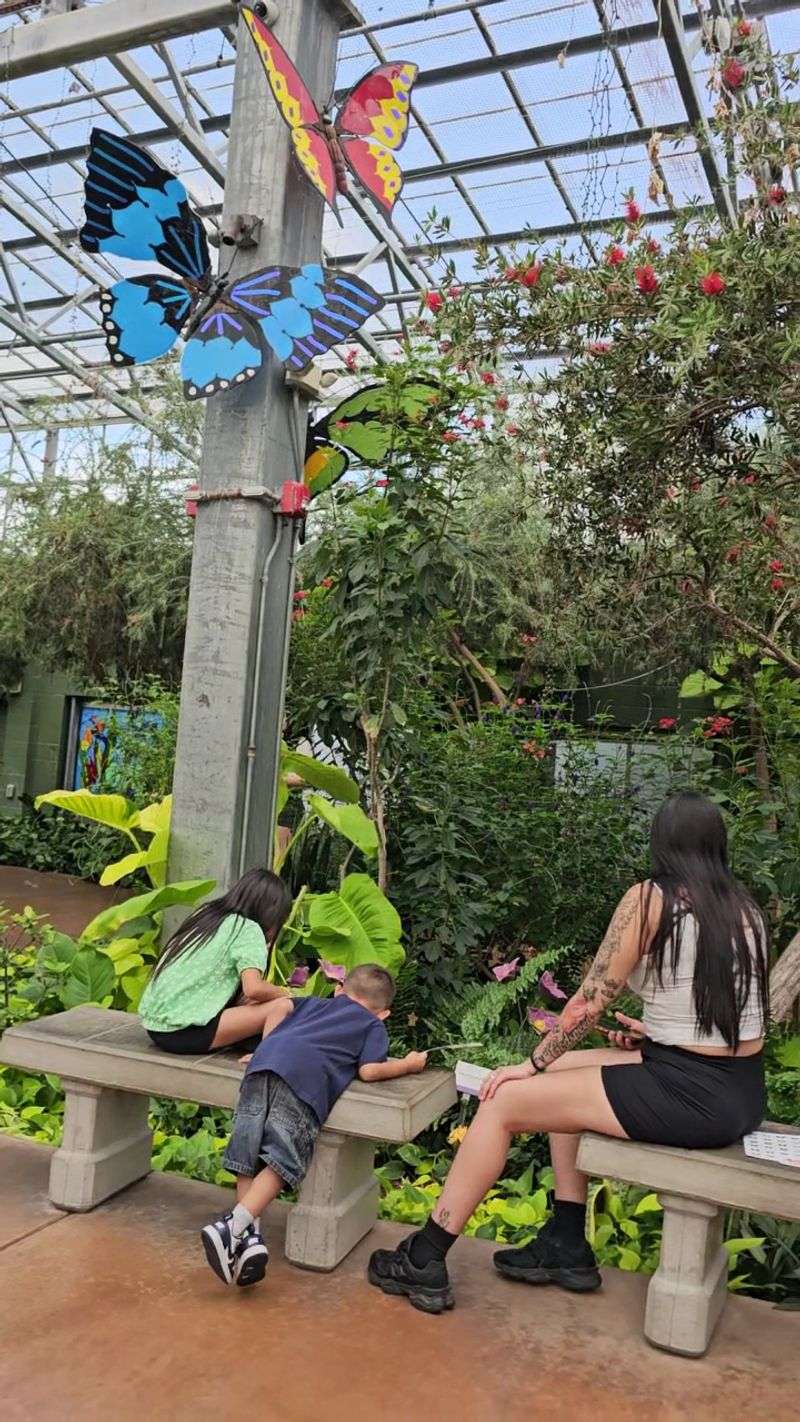
Rows and rows of chrysalises hang behind glass here, and each one looks like a tiny piece of jewelry. Some are jade green with gold dots.
Others are brown and unremarkable until something twitches.
I spent longer in this room than I planned. There is no schedule to metamorphosis, so you either get lucky or you wait, and waiting turned out to be the whole point.
A butterfly emerged while I stood there, wings crumpled and damp, legs gripping the empty shell. It hung motionless for several minutes while blood pumped into those wings and the shape slowly straightened out.
Nobody spoke much. A few people whispered.
One kid pressed his forehead to the glass and narrated the entire thing to his mom.
Staff described this gallery as the largest of its kind in the country, and looking at the sheer number of chrysalises lined up, that tracks. New butterflies from this room are released into the conservatory regularly, so the population inside is always refreshing itself.
My advice is simple: do not rush past on your way to the atrium. Give it ten quiet minutes.
Scan the rows for any chrysalis that has turned dark or transparent, because that usually means a wing pattern is showing through and something is about to happen.
It is the least flashy part of the building and somehow the most memorable. Watching a creature build itself in real time sticks with you.
Inside the Glass Atrium Where Thousands of Butterflies Rule
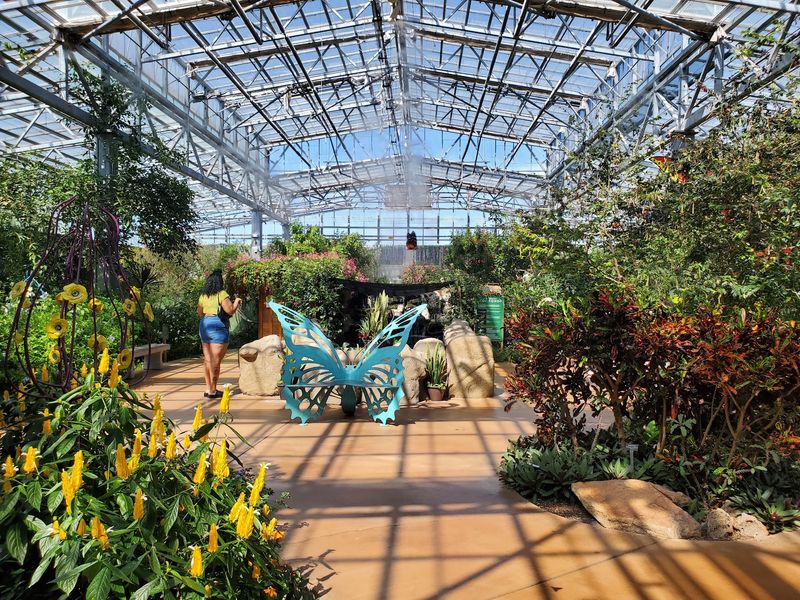
Humidity hits first. After weeks of dry Arizona air, my skin practically sighed when I stepped through the double doors into the main conservatory.
Then you notice the movement. Butterflies everywhere, at ankle height, at eye level, drifting up near the glass roof twenty feet above you.
Winding paths curl through banana leaves, hibiscus blooms, and small waterfalls, and there are benches tucked along the way. Sitting still is the single best strategy in this room.
Butterflies come to you when you stop chasing them.
A blue morpho landed on my hat and stayed. Someone nearby had three on one sleeve.
They do not seem bothered by people at all, which makes the whole space feel oddly companionable rather than like a zoo exhibit.
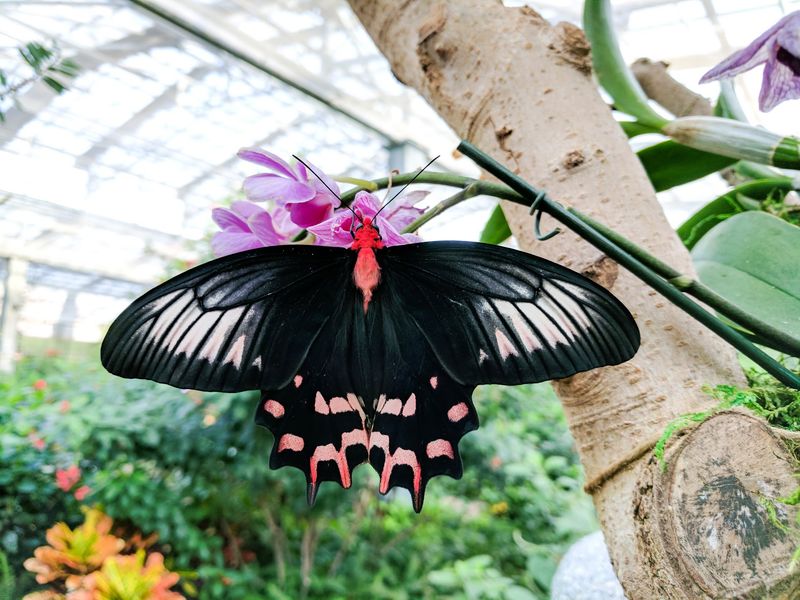
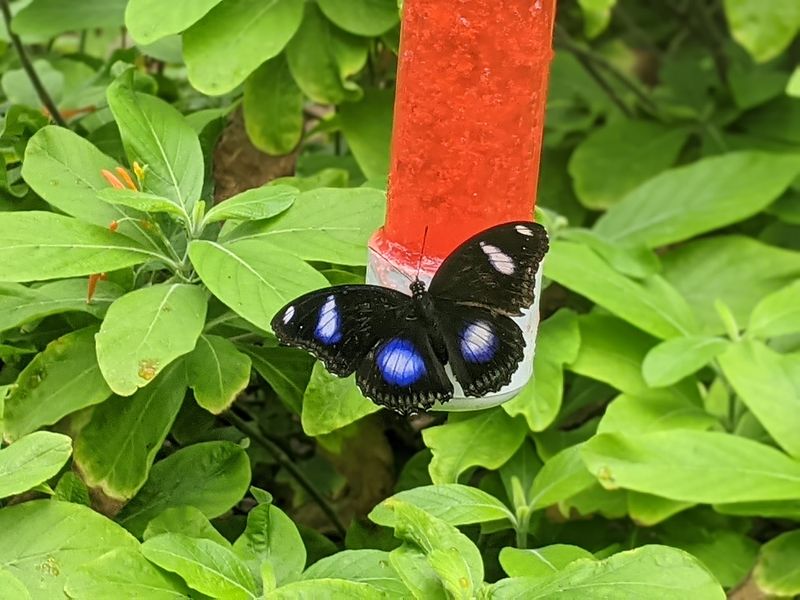
Colors run the full range: electric blue, tangerine orange, black wings with stained-glass windows in them, tiny pale ones the size of a thumbnail. I lost count of species almost immediately.
The koi pond near the center is worth a pause. Fat orange and white fish drift under the surface while butterflies skim above the water, and the two layers of movement together are strangely hypnotic.
Wear light clothing, because it is genuinely warm and moist in there. Bright colors on your shirt seem to attract more landings, though I have no science to back that up.
Even on a busy day, the space is large enough that it never felt crowded or loud.
Reptiles, Rays and the Mini Zoo Hiding Past the Exit
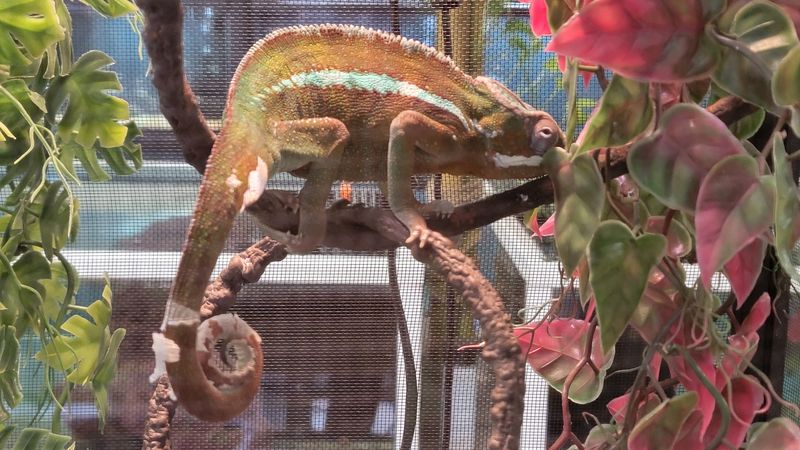
Past the atrium exit, the building keeps going, and plenty of visitors do not realize it. I nearly walked straight to the gift shop before spotting the corridor of glass tanks.
Frogs, geckos, snakes, and other small reptiles live back here in planted terrariums. Half the fun is finding them, because some of these animals are camouflage experts and you will stare at what looks like an empty branch for a full minute before it blinks.
Further along, big picture windows open onto tropical fish tanks. Clownfish tuck into anemones, tangs graze the algae, and the whole wall glows blue.
The stingray touch tank was the surprise hit for the family standing next to me. The rays swim laps and rise up under your fingers, feeling like wet velvet.
An ant colony exhibit lets you look at their tunnels from all sides, and a honey bee display shows workers moving across the comb behind glass. Neither is huge, but both are weirdly absorbing once you start watching.
Cooler air in these rooms makes them a nice break if the conservatory humidity gets to you, which is exactly why I lingered.
My honest take: treat this section as a bonus rather than the headline. Butterflies are the reason you came.
Still, giving yourself an extra twenty or thirty minutes here rounds out the visit and gives kids something hands-on before you head out.
Why This Humid Escape Feels So Calming in the Desert
Calm is not a word I usually attach to tourist attractions, yet that is what stayed with me here. Something about the combination of warm air, running water, and slow-moving wings resets your pace.
People inside the atrium talk quietly without being told to. There is a shared understanding that loud voices would break something.
On the morning I visited, soft live music drifted through the greenery, and the effect was closer to a garden than an exhibit hall. I sat on a bench near the waterfall for a while and did absolutely nothing.
The climate control is the practical reason this place works so well in Arizona. Summers outside are brutal, and stepping into a controlled tropical environment is a genuine relief for locals.
Winter visitors get the opposite benefit, escaping cool mornings into steady warmth. Either way, the conservatory stays comfortable year-round, which makes it one of the more reliable Scottsdale options when weather is uncooperative.
Accessibility is decent too. Paths are smooth and wide, and I saw strollers and wheelchairs moving through without trouble.
Guests of every age seemed equally taken with it, from grandparents to preschoolers, which is rare. Nobody looked bored.
If you need a low-key morning that does not involve hiking or heat, this is a solid pick. Bring your patience, leave the schedule loose, and let the butterflies decide how long you stay.
Planning Your Visit and What Sits Right Next Door
Timing makes a real difference here. Doors open at 9 AM every day of the week and close at 5 PM, and the first hour or two is noticeably quieter than midday.
Weekday mornings gave me space to stand still and watch without shuffling around other guests. Saturdays get busy, though the atrium is big enough to absorb a crowd better than most butterfly houses I have visited.
Plan on two hours minimum if you want to see everything without hurrying. I stretched mine closer to three because the chrysalis room and the atrium both pulled me back for second looks.
Cameras and phones work fine inside, but lenses fog up in the humidity, so give your gear a minute to adjust before shooting. Patience beats chasing when it comes to butterfly photos.
There is a gift shop stocked with stuffed animals, shirts, and butterfly-themed odds and ends, plus a penny press machine near the restrooms that kids gravitate toward. A cafe on site handles snacks.
What makes this stop even easier is the surrounding complex. OdySea Aquarium sits right there, along with restaurants and shops, so you can park once and fill a whole day without moving the car.
Questions are welcome, and the staff clearly enjoy answering them. Call ahead at 480-291-8000 if you need details before arriving.
Address: 9500 E Via De Ventura, Scottsdale, AZ 85256
