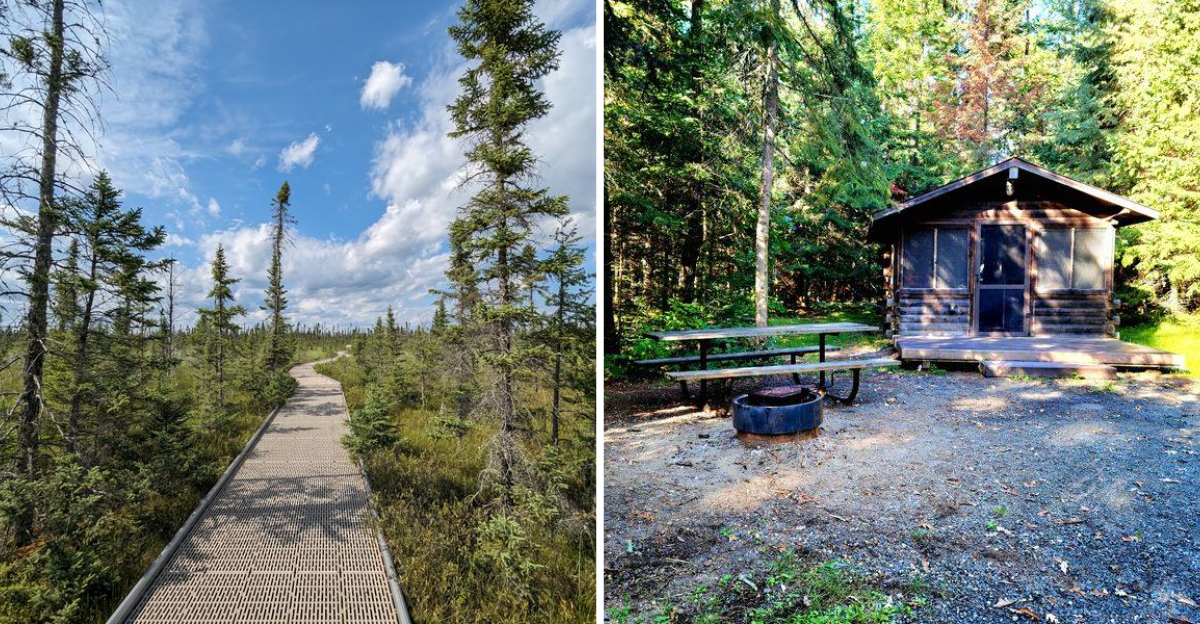
Most people drive right past this place without ever knowing it exists. Tucked away in a quiet corner of Minnesota lies a landscape that has remained virtually unchanged for millennia – a vast peatland that feels like stepping into another world entirely .
The boardwalk stretches over a mile into the heart of the bog, offering a rare glimpse into an ecosystem that few ever get to experience. Carnivorous plants, rare orchids, and the haunting calls of northern birds surround you as you walk above the spongy, ancient ground.
It’s the kind of place that makes you feel small in the best possible way, a quiet reminder of how wild this state once was.
So lace up your shoes and prepare for a walk through time. Minnesota’s most secluded natural wonder is waiting to show you something truly unforgettable.
The Mile-Long Boardwalk Floating Over Ancient Peat
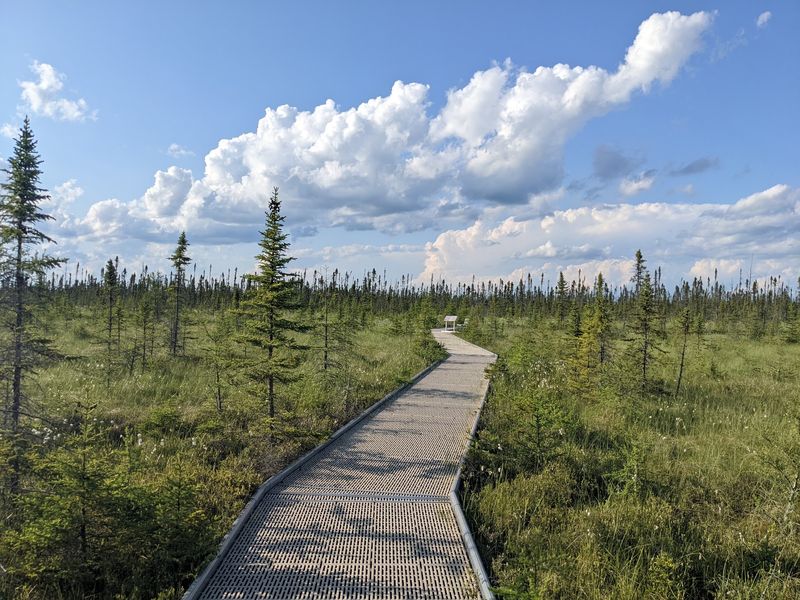
Roughly a mile out and a mile back, the boardwalk runs straight across open bog on a surface you can see through. The grate lets rain, light, and seeds pass down to the plants below, which is part of why the landscape underneath still looks untouched.
Peat here has been building for thousands of years, layer by layer, at a pace slower than almost anything else in nature. Walking above it feels oddly respectful, like being a guest.
Give yourself an hour or two rather than rushing. The scenery changes as trees thin out and the sky takes over, and the far end feels genuinely remote even though the parking lot sits behind you.
Wear comfortable shoes with decent grip, since the metal surface can be slick after rain. Bring water too, because there is no shade past the first stretch.
One tip worth remembering, the boardwalk sits in the Northern Unit, several miles up the highway from the main visitor center and campground.
Carnivorous Pitcher Plants and Tiny Sundews
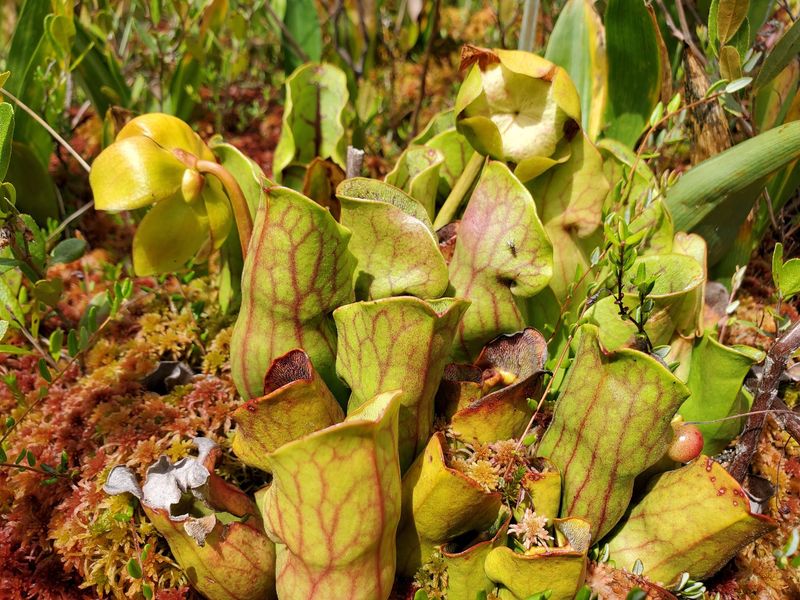
Bog soil is famously poor in nutrients, so some plants here solved the problem by eating insects. Pitcher plants trap bugs in their cupped, veined leaves, and they sit close enough to the boardwalk to study without leaning over the rail.
Sundews are the harder find. They are small, low, and easy to miss, with sticky red hairs that glitter when the light hits them right.
Getting down low helps. Crouch near the edge, scan the moss, and suddenly a whole miniature world shows up that you walked right past a minute earlier.
Late spring and early summer bring the most color, with bog laurel, cotton grass, and orchids adding pinks and whites to all that green. September has fewer blooms but the moss turns deep and rich.
Interpretive signs along the route name what you are seeing, which makes the walk feel like a slow outdoor lesson rather than a hike.
Climbing the Fire Tower for Big Red Lake Views
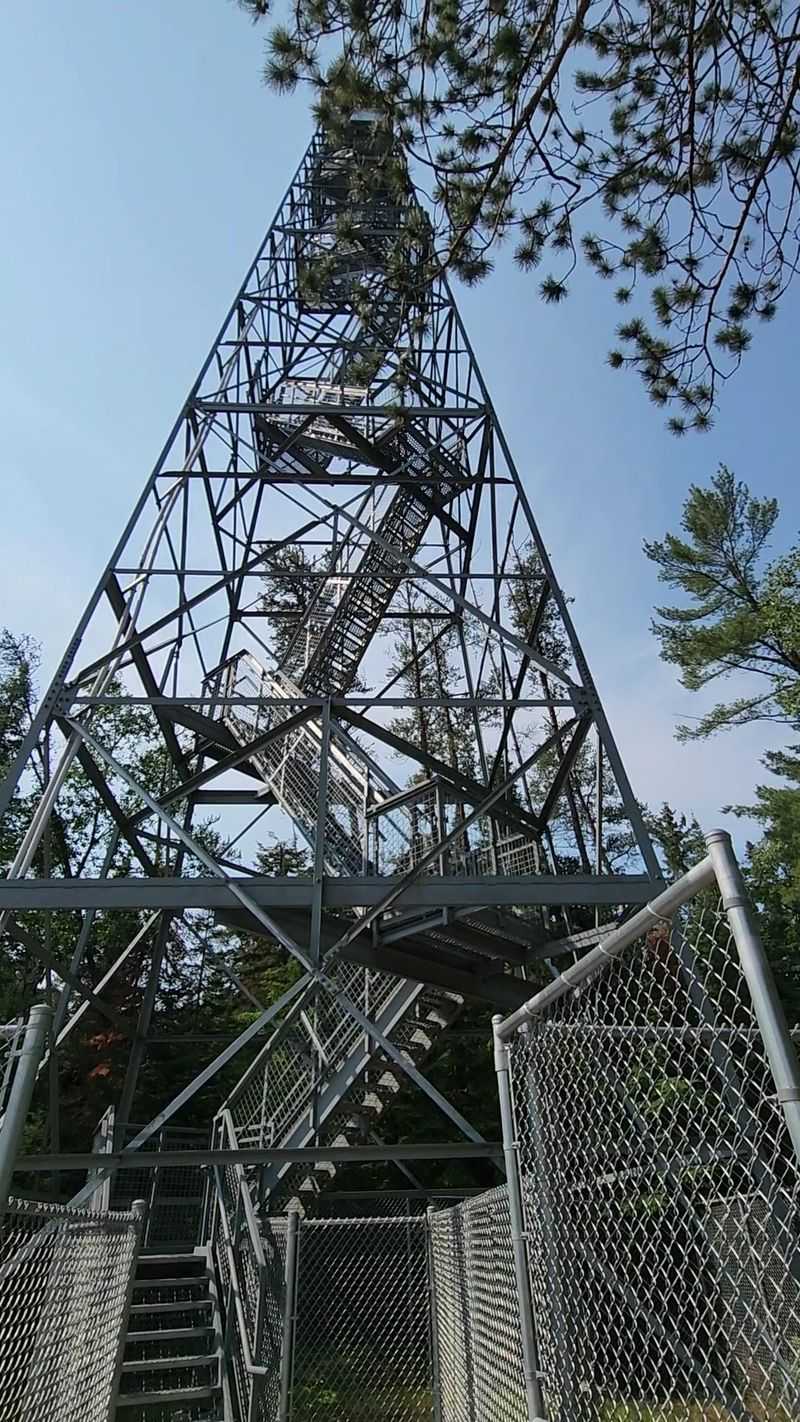
One hundred and thirty five steps sounds like nothing until about step ninety, when your legs start filing complaints. The reward at the top is a wide, flat view over Upper Red Lake and the endless green stretching north.
Structures like this once served as lookout posts for spotting smoke across huge roadless country. Standing up there, it makes complete sense why they needed the height.
Access depends on the season and staffing, so call ahead if the climb is the reason for your trip. Visitors have arrived to find the tower closed and the office locked on quiet weekdays.
Kids usually love it, though the open stairs can feel airy if heights bother you. Take breaks on the landings and enjoy the view in stages.
Sunset is the sweet spot. Light spreads flat across the water, and the lake looks less like a lake and more like a small inland sea.
Sandy Swimming Beach on Upper Red Lake
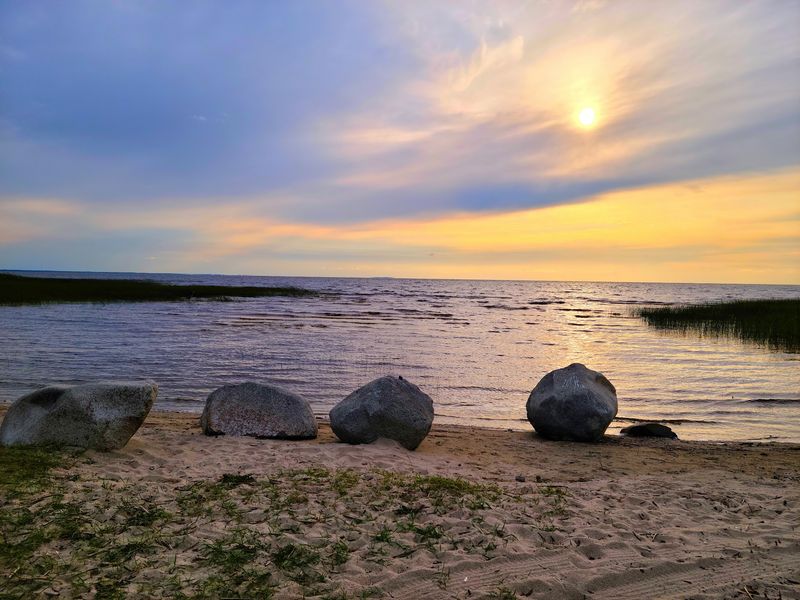
Across the road from the visitor center sits a beach that surprises almost everyone. Soft sand, shallow water, and a lake so large the far shore disappears into haze.
Upper Red Lake warms up faster than you might guess for this far north. Visitors have reported comfortable swimming by late May, though water temperature swings with the weather.
Bring low chairs and a towel and plan on an unhurried afternoon. The shoreline is open and breezy, which also helps keep bugs down compared to the woods.
Little kids can wade a long way before it gets deep, and the sand is easy on bare feet. There is no lifeguard, so keep an eye on swimmers.
Sunsets over the water are the quiet highlight. Wind usually settles in the evening, the surface goes glassy, and the whole beach turns gold for a while before dark. Pack out whatever you carry in.
The Visitor Center and What It Explains
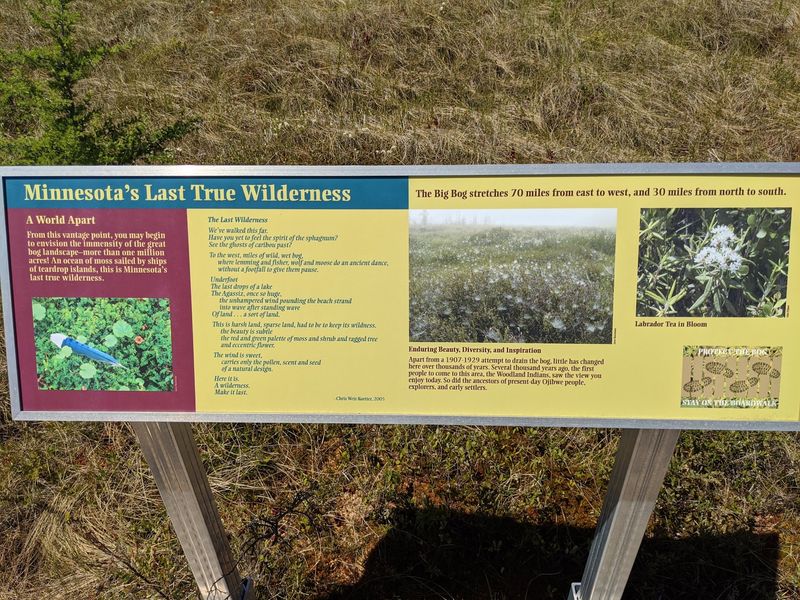
Skipping the visitor center would be a mistake, mostly because the bog makes far more sense after twenty minutes inside. Exhibits explain how peat forms, why the water is so acidic, and what survives in a place with almost no nutrients.
Staff here know the area well and can tell you current conditions on the boardwalk, insect levels, and whether the tower is open.
The building itself is comfortable and bright, with big windows and a solid stock of maps. Restrooms and drinking water are available, which matters before a long walk with no facilities.
Ask about seasonal programs and equipment rentals while you are there. Canoes and kayaks have been available for river paddling, along with paddles and life jackets.
Hours shift by season and staffing, so a quick phone call saves disappointment. The park line is 218-888-7310. Consider it the orientation stop, then head north for the main event.
Camping Along the Tamarack River
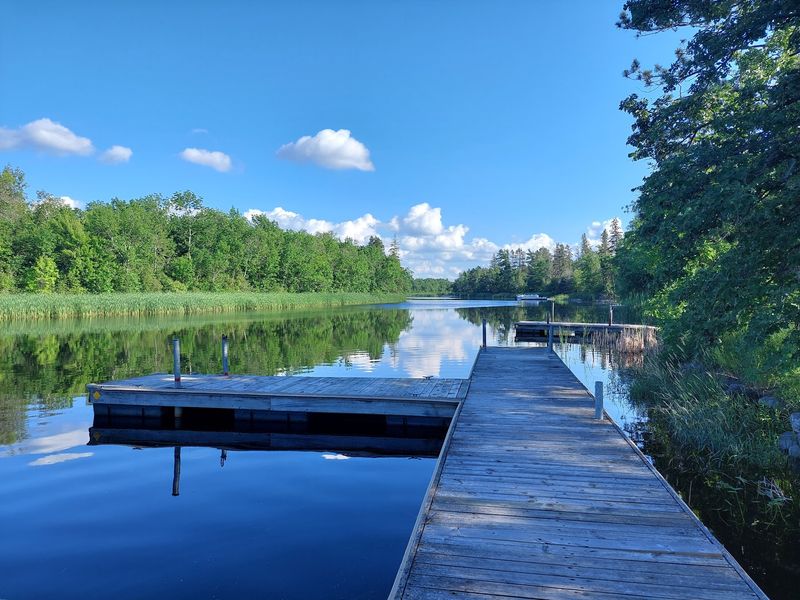
Sites here sit close to the Tamarack River, and roughly half have small docks nearby so boats can stay in the water overnight. That setup makes the campground popular with anglers heading out to Red Lake.
Expect openness rather than seclusion. The layout is fairly exposed, sites sit near each other, and the highway runs alongside, so weekends can be lively.
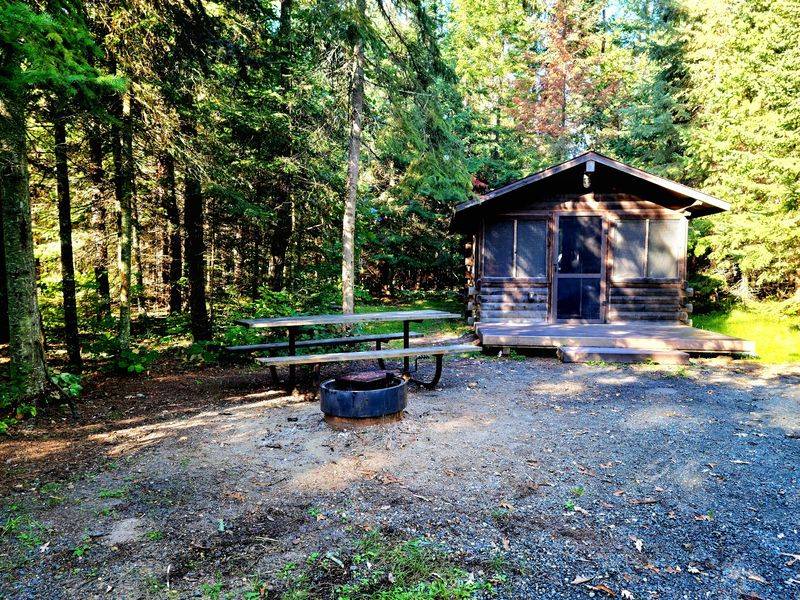
Electric sites and camper cabins are part of the mix, and the cabins have a reputation for being clean, warm, and easy to book for families. Winter stays are possible with heaters inside. Bathrooms and showers get consistent praise, and there is a fish cleaning station on site.
Midweek visits feel calmer if quiet matters to you. A doe wandering through camp is not unusual, especially under oak trees in fall. Check site details before reserving, since the first few sites require walking in rather than parking beside the tent.
Paddling the Slow Tamarack River
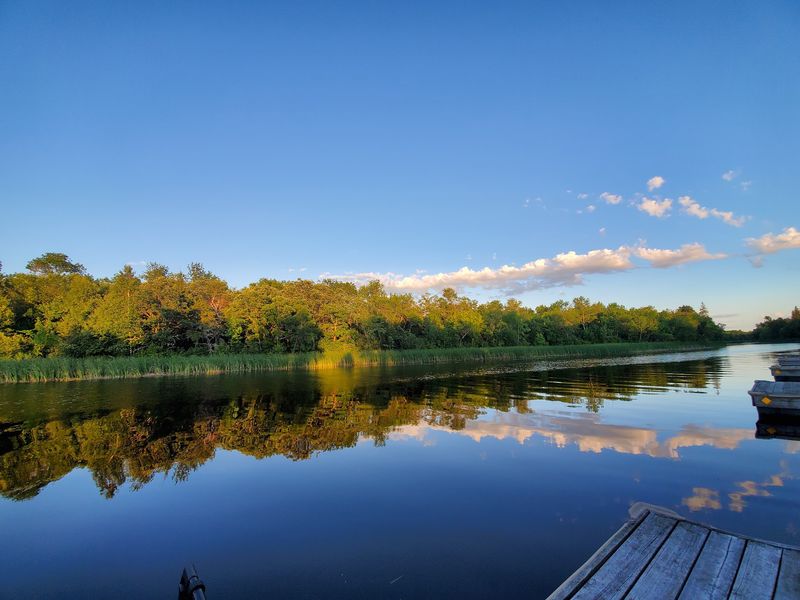
Beginners do well on this river, which is part of its charm. Current is slow, the channel is protected, and the banks are thick with cattails and tamaracks that lean toward the water.
Rentals through the park have included canoes and kayaks with paddles and life jackets, which makes a spontaneous outing simple.
Morning paddles tend to be calmest, with mist sitting over the surface and birds working the shoreline. Turtles sun themselves on logs, and the occasional splash keeps you alert.
The river connects toward Upper Red Lake, though the big water can get rough fast when wind picks up. Staying on the river is the safer, prettier choice for casual paddlers.
Sunscreen matters more than you expect out on open water. So does insect repellent near the reeds. Nobody is racing anywhere here. Drift, listen, and let the banks slide by, which honestly might be the best way to spend a warm afternoon.
Timing Your Visit Around the Bugs
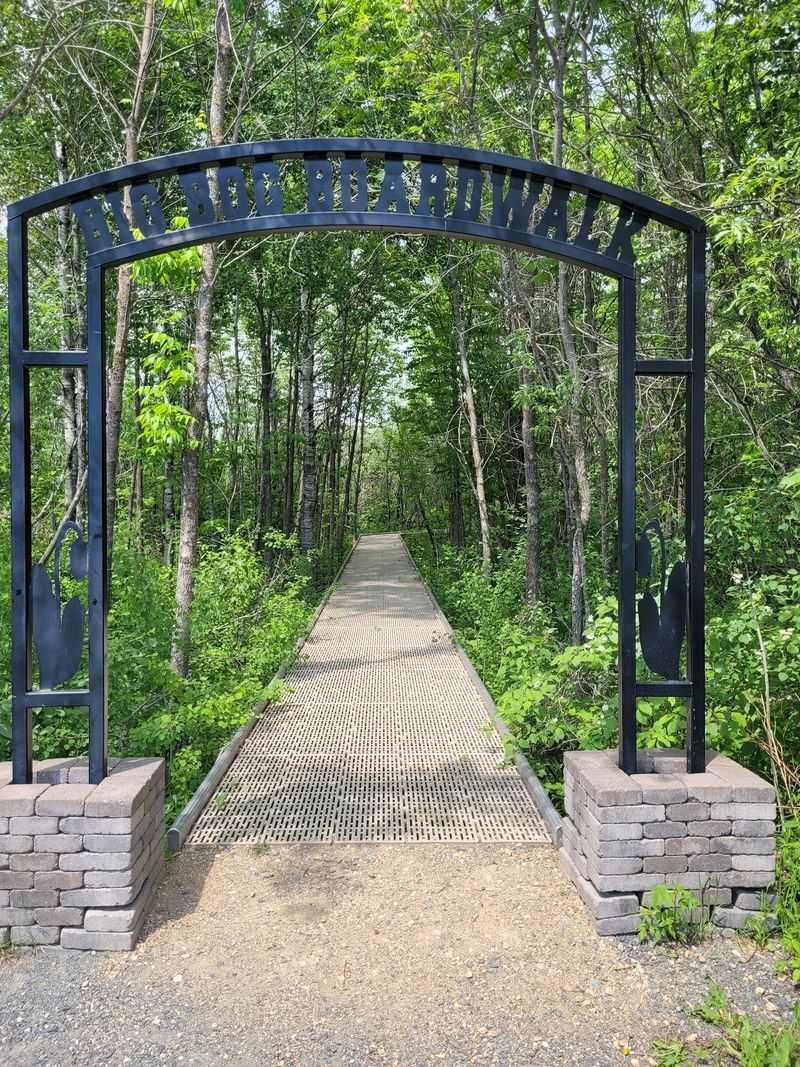
Honest talk, insects can shape your whole experience out here. Biting flies and mosquitoes get intense in early and mid summer, especially near the trees at the boardwalk entrance.
Long sleeves, long pants, and a head net turn a miserable walk into a pleasant one. Repellent helps, and so does a breezy day.
Fall is the sweet spot for bug-free walking. Cool September and October air clears most of them out, and moss and tamarack needles turn beautiful shades of rust and gold.
Spring brings wildflowers and birdsong before the worst of the insects arrive, which is why some regulars aim for May. Winter is quiet, stark, and completely different, with the boardwalk stretching across frozen white ground.
Occasional wasp or hornet activity has been reported near parking areas in late summer. If something looks aggressive, wait it out or come back another day rather than pushing through.
Wildlife, Birds and the Sound of Almost Nothing
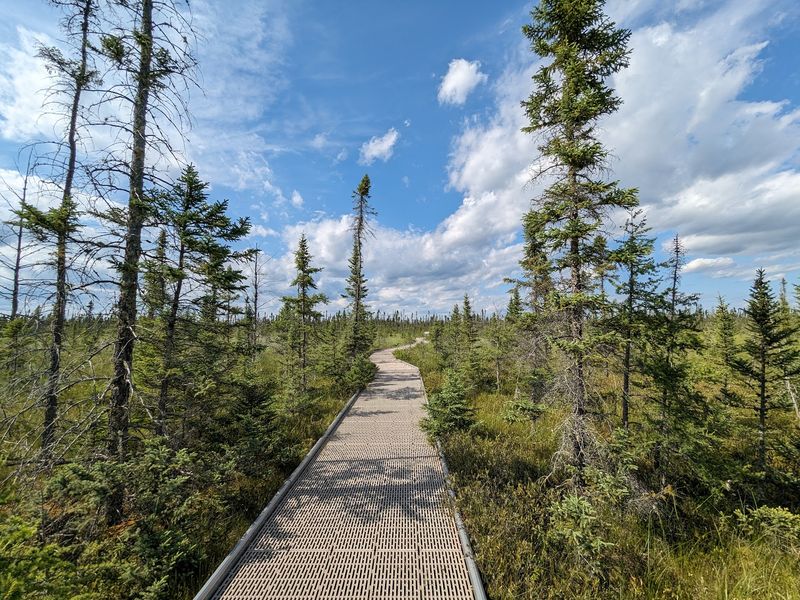
Some visitors spend hours out on the peat and never see a single mammal. That absence is part of the appeal, honestly, because the quiet becomes the main event.
Birdlife picks up in spring and early summer, when warblers, sparrows, and shorebird species move through the open bog. Listening usually works better than looking.
Frogs, dragonflies, and butterflies keep the boardwalk busy in warm weather. Mushrooms pop up after wet spells, sometimes in colors you would not expect.
Deer wander through the campground area more often than the bog itself, drawn to acorns and grassy edges. Binoculars are worth packing, along with a phone or camera for close-up plant shots.
What sticks with people most is the lack of engine noise. No cars, no planes overhead, just wind moving across low shrubs, which is rarer than it should be these days and genuinely worth the drive north.
Planning the Drive and Making a Full Day of It
Reaching this corner of Minnesota takes commitment, and that is exactly why it stays uncrowded. Highway 72 runs north along Upper Red Lake, connecting the southern campground area with the boardwalk unit several miles up the road.
Fill the gas tank before heading out, since services thin out quickly up here. Cell coverage can be spotty too.
A smart order works like this, start at the visitor center, climb the tower if it is open, drive north for the boardwalk, then finish at the beach. Pack a cooler with lunch because dining options nearby are limited. The small town of Waskish has a museum park worth a short stop.
Allow a full day rather than squeezing it between other stops. Rushing this place misses the point entirely. Leave time for the drive back at dusk, when the light over the lake turns soft and deer start moving near the shoulders.
Address: 55716 MN-72, Waskish, MN 56685
