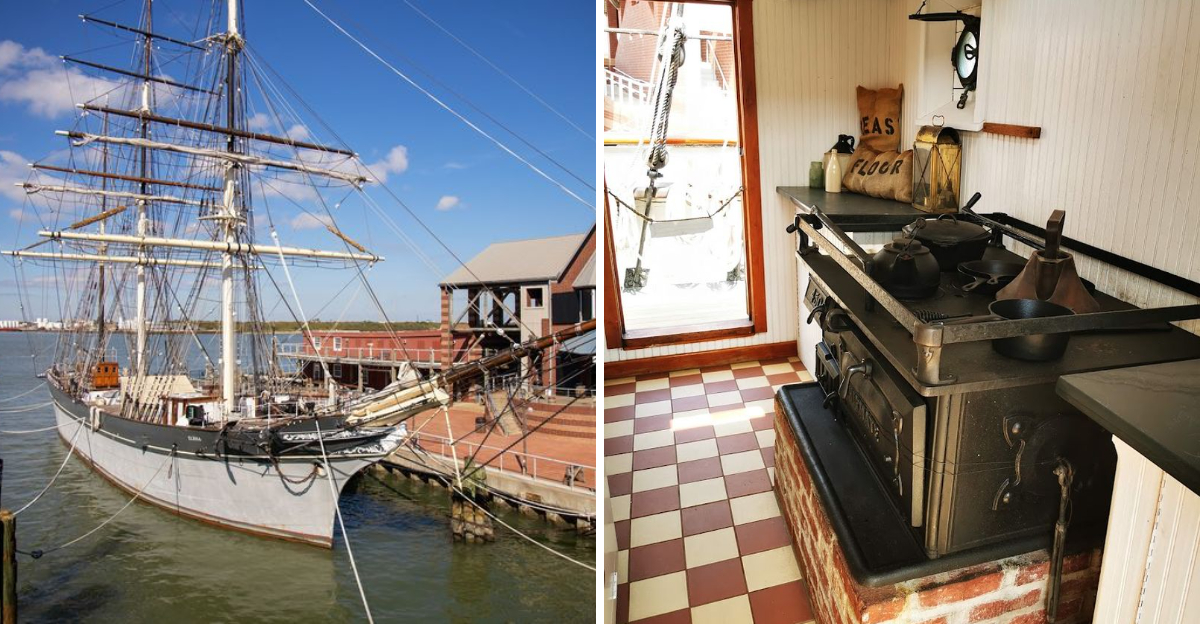
A ship from 1877 still floating on the Texas coast. That is not a museum exhibit.
That is a living piece of history. The ELISSA has survived storms, neglect, and over a century of wear, and somehow she still sits in the water, looking every bit as majestic as the day she launched.
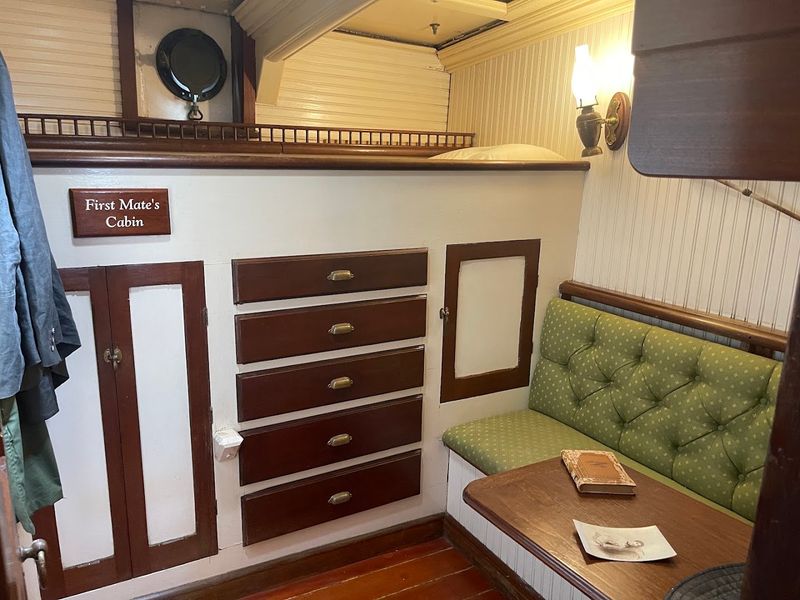
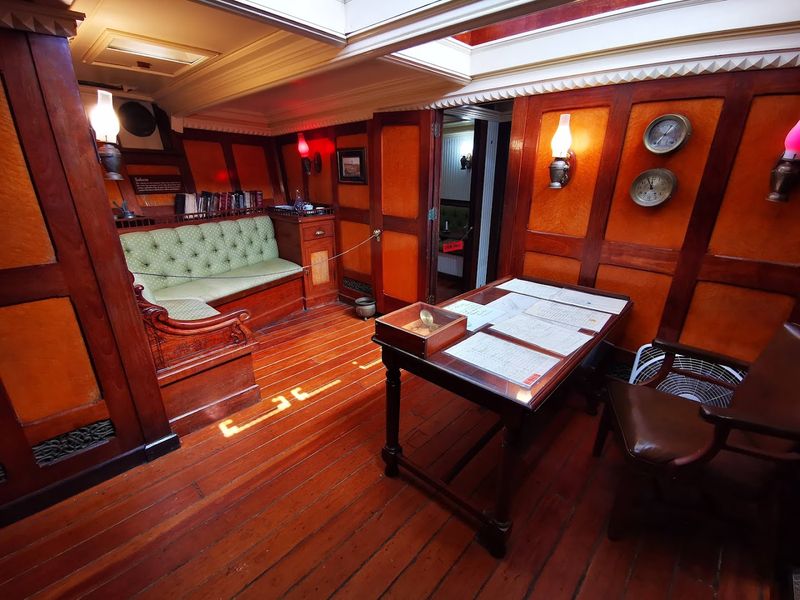
You can walk her decks, peek into the crew quarters, and imagine what life was like for the sailors who once called her home. The ship has been restored with painstaking care, making it one of the most authentic maritime experiences you will find anywhere.
It is not just a ship. It is a story, a survivor, and a reminder of Texas’s deep connection to the sea.
Step aboard and you will feel it too.
Stepping Aboard a Seafaring Ghost, The ELISSA’s Enduring Legacy
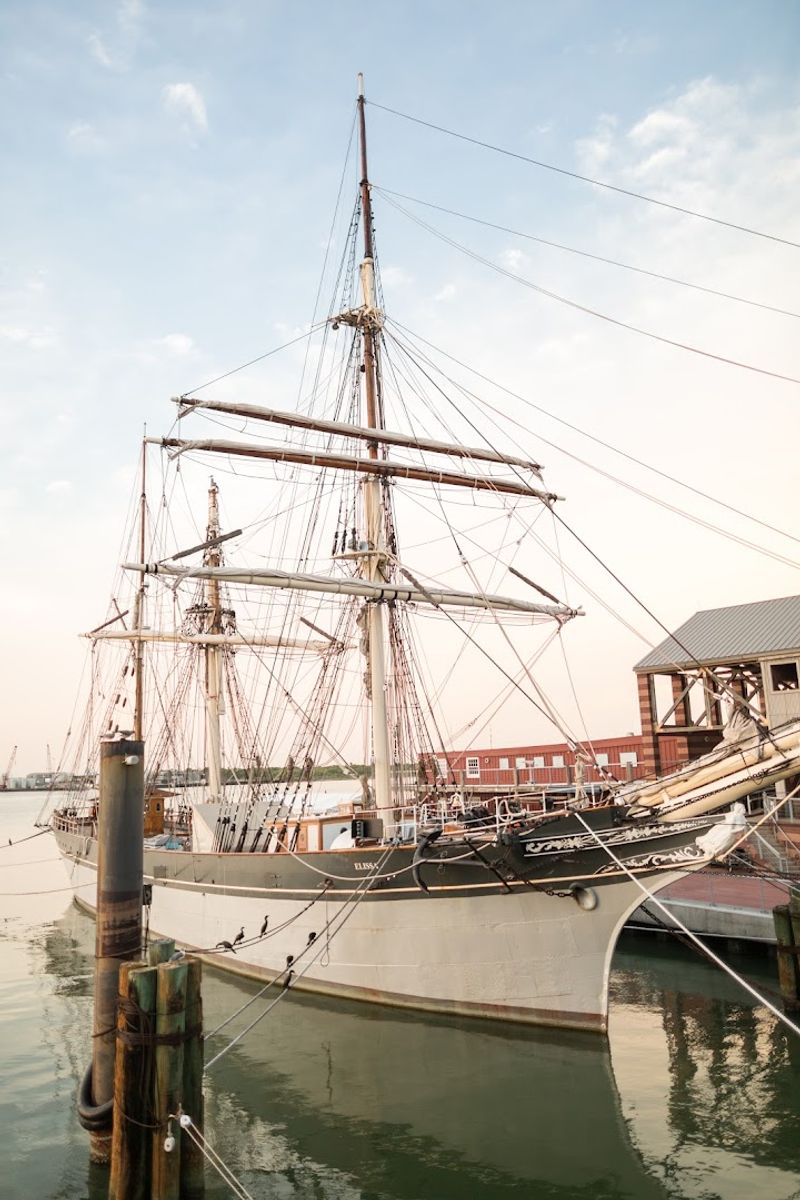
Few things in the world stop you in your tracks the way the ELISSA does when you first see her up close. Her iron hull, dark and solid, speaks of craftsmanship from a time when ships were built to endure.
The sheer scale of her rigging, ropes and spars stretching high overhead, makes you feel genuinely small in the best possible way.
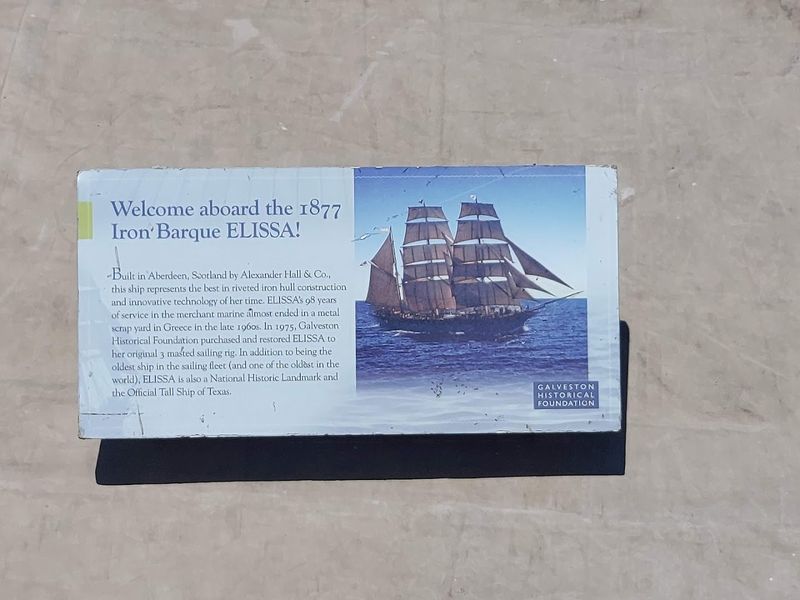
What makes this vessel extraordinary is not just her age but the story of how she survived it. The Galveston Historical Foundation rescued her from a scrapyard in Piraeus Harbor, Greece, back in 1978, when demolition seemed like her only future.
By 1982, after years of painstaking restoration work by staff and dedicated volunteers, she had been transformed into a fully operational floating museum.
She holds the title of Official Tall Ship of Texas, a designation given in 2005, and was recognized as a National Historic Landmark back in 1990. She is also one of only three ships of her type anywhere in the world that still actively sails.
That fact alone is enough to make you pause and feel genuine respect.
Public tours are generally available year-round, though it is always worth checking the schedule before you visit. Recently, the ELISSA embarked on a special voyage celebrating Galveston’s 250th anniversary, so tour availability may shift during that period.
The seaport itself remains open and welcoming regardless, often offering adjusted admission during these exciting moments in the ship’s ongoing life.
A Glimpse into the Maritime Past, From Cargo to Cotton
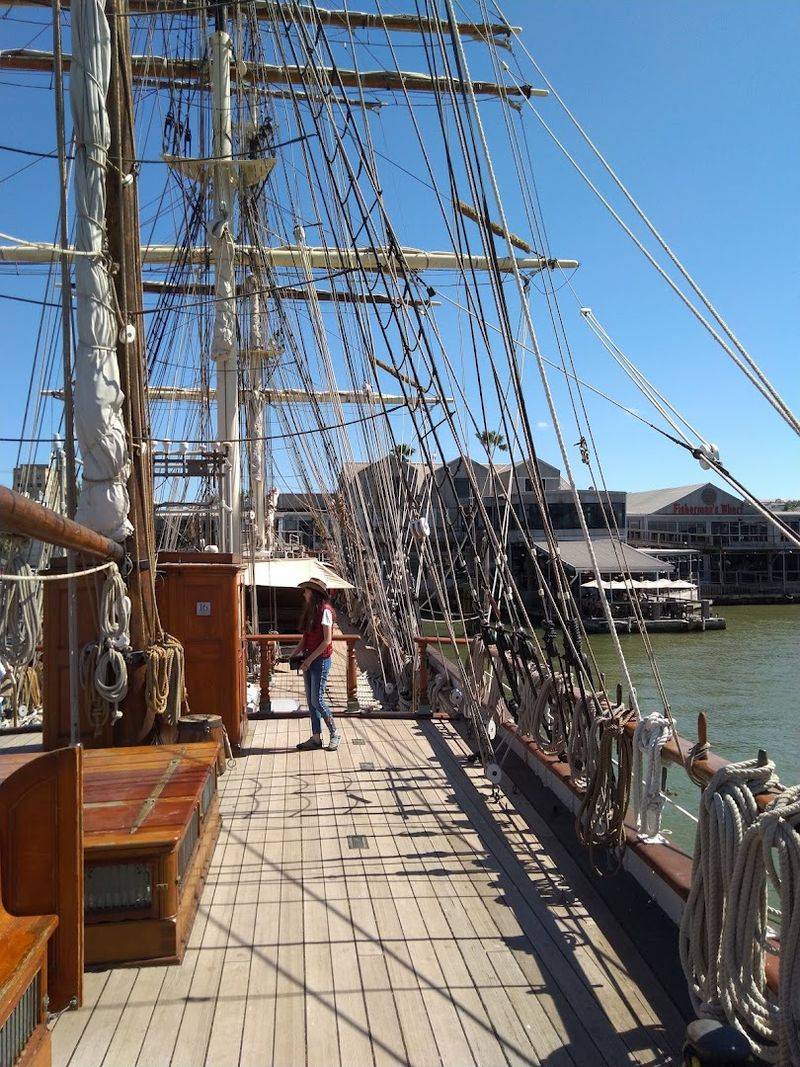
Originally built in Aberdeen, Scotland, the ELISSA started her life as a British cargo ship, a workhorse meant to haul goods across vast stretches of open ocean.
She was a three-masted barque, efficient and sturdy, designed for the kind of long-haul routes that connected continents before the age of steam fully took over.
Her voyages carried her to smaller ports throughout the Caribbean and the Gulf of Mexico.
Here is the detail that makes her story feel personally tied to Galveston: the ELISSA actually loaded cotton twice right here in this very port.
That connection is exactly what inspired the Galveston Historical Foundation to bring her back, not just as a relic, but as a symbol of the city’s own commercial and cultural history.
The restoration effort was enormous, involving new masts, fresh rigging, replacement sails, and a completely rebuilt deck. The total cost reached around 4.2 million dollars, a remarkable investment in keeping history genuinely alive.
Then in 2013, another major project replaced much of her hull at a cost of around 3 million dollars, allowing her to return to sailing by March 2014.
Picturing her loaded with cargo, cutting through choppy Gulf waters toward a crowded 19th-century port, really fires the imagination. The craftsmanship that built an iron hull capable of surviving nearly 150 years is humbling.
She is proof that things made with real care and skill have a way of outlasting almost everything else.
Galveston’s Immigration Story, The Ship to Shore Experience
Not everyone knows that Galveston was once the second busiest immigration port in the entire United States, processing thousands of people who arrived hoping for a completely new life.
Before Ellis Island became the famous gateway most people picture today, this Texas harbor was where countless families first set foot on American soil.
The “Ship To Shore” exhibit at the Galveston Historic Seaport brings that chapter of history to life in a way that genuinely moves you.
The experience is interactive in a way that feels personal rather than clinical. Using a QR code, visitors create their own immigrant character at the start, and that character’s journey unfolds throughout the exhibit, activating videos and guiding you through each stage of arrival.
It begins with the long sea crossing, its hardships and its strange wonders, then moves into the chaos and hope of arriving in Galveston during the 1880s.
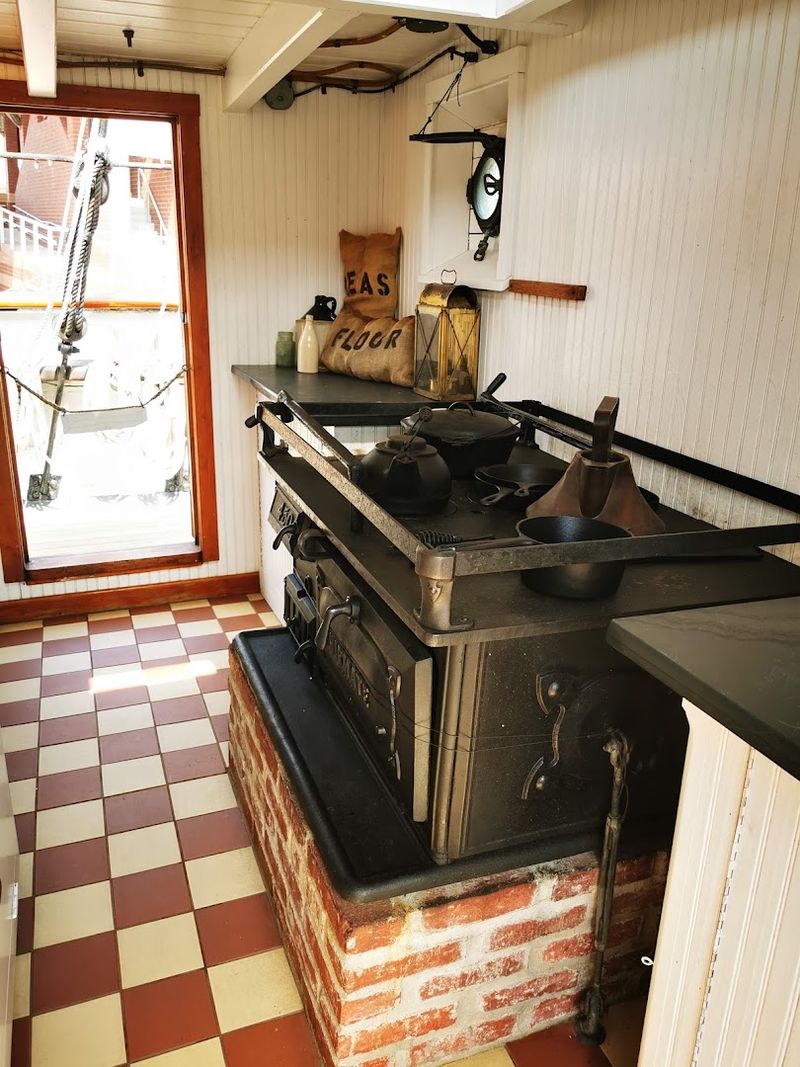
You can explore recreated sleeping quarters, the ship’s galley, and even the cramped conditions that were simply a fact of life for those travelers. The experience ends with a customs and immigration sequence, where you find out whether your character was granted entry or turned away.
That moment carries real emotional weight, even when you know it is a simulation.
First-person accounts, historical photographs, and carefully recreated spaces make it easy to imagine the courage it took to board a ship toward an unknown future. It is one of those rare exhibits that stays with you long after you have left the building.
I kept thinking about it for days afterward.
Life on a Square-Rigger, A Sailor’s Hardscrabble World
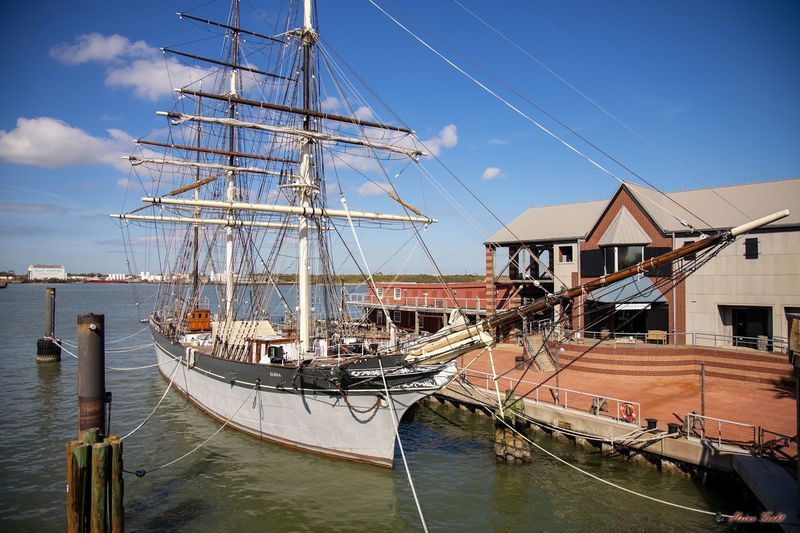
Romanticizing life at sea is easy when you are standing safely on a sun-warmed pier. The reality for sailors aboard a square-rigged ship like the ELISSA was something else entirely, a daily grind of physical labor, constant danger, and very little personal comfort.
The work never really stopped, and the sea was never really predictable.
Climbing the masts to furl or unfurl sails, sometimes in howling winds and pitching seas, required a level of physical courage that is hard to fully appreciate from the ground. One slip meant a fall that could be fatal, and there was no safety net waiting below.
Sailors developed an almost instinctive relationship with the rigging, their hands and feet finding holds by feel as much as by sight.
Steering a vessel this size was not a solo effort either. It required a quartermaster skilled in navigation, directing the crew at the helm through a constant choreography of adjustments.
Every change in wind direction meant a coordinated response from multiple people working in sync. The whole operation depended on trust and muscle memory built over countless hours at sea.
What strikes me most, thinking about those sailors now, is the sense of community that must have existed aboard these ships. You depended on the person next to you completely.
The ELISSA’s timbers hold the memory of all that effort and all those lives, and walking her decks, even quietly, you can almost feel the weight of it. It is a sobering and genuinely powerful thing.
Exploring the Texas Seaport Museum, Beyond the Ship
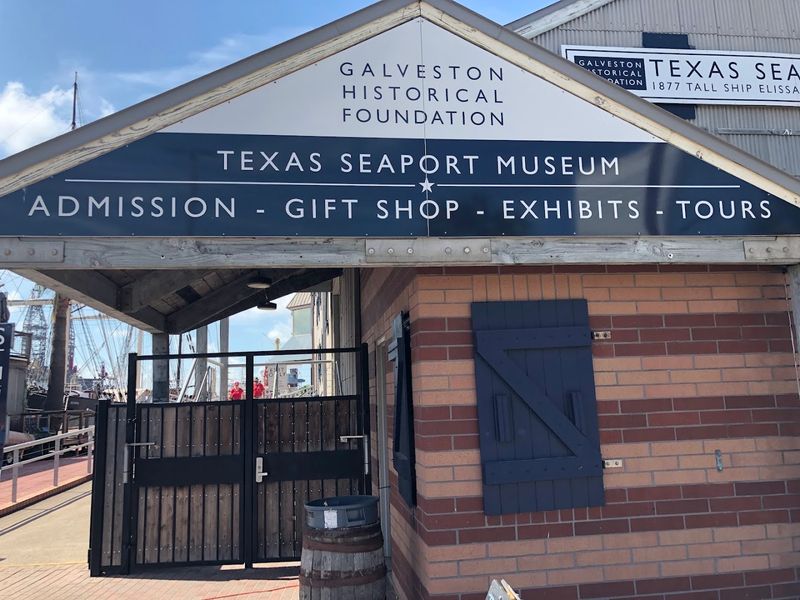
The Texas Seaport Museum, sitting right at Pier 22 alongside the ELISSA, offers far more than most visitors expect when they first walk through the door. The galleries are completely wheelchair accessible, which matters a great deal when you want history to be genuinely available to everyone.
Inside, the exhibits expand the story well beyond the ship herself, placing her in the broader sweep of maritime commerce and coastal life.
A documentary film about the ELISSA’s rescue and restoration plays regularly, and it is genuinely worth watching even if you have already toured the ship.
Seeing the before-and-after footage, the rusted hull in a Greek scrapyard versus the fully rigged vessel sailing today, makes the achievement feel almost unbelievable.
It also gives you a real sense of the passion that drove the people who refused to let her disappear.
Antique navigational tools, sextants, compasses, and charts, fill display cases and offer a tangible connection to how sailors once found their way across featureless ocean.
Historical photographs and paintings trace Galveston’s evolution as a port city, showing how dramatically it changed over the decades.
A dedicated exhibit on the catastrophic 1900 hurricane, known simply as The Great Storm, adds a sobering layer to the city’s story of resilience.
A newer exhibit exploring the history of sea shanties recently debuted onboard the ELISSA itself, celebrating the songs that helped crews keep rhythm and morale during long, grinding voyages. It is a surprisingly joyful addition to an otherwise serious collection.
The whole museum rewards slow, curious visitors who are willing to linger.
The Rhythms of the Harbor, Sunset and Sea Breezes
There is a particular kind of peace that settles over you when you are out on the water at the end of a long afternoon.
The Sunset Harbor Tours offered through the Galveston Historic Seaport tap directly into that feeling, giving visitors a chance to experience the harbor from the water itself rather than from the shore.
The shift in perspective is remarkable.
As the sun drops toward the horizon, the sky above Galveston tends to put on a genuine show, layering oranges and pinks across the water in a way that no filter could improve. The narrated tours weave in stories of the port’s history, so you are never just sightseeing passively.
Dolphins have been known to make appearances, which feels like a bonus that no tour brochure can actually guarantee but that somehow keeps happening anyway.
Even on days when a boat tour is not on the agenda, the seaport itself is a rewarding place to simply be. The sound of water against the pilings, the occasional cry of a gull, the rhythm of working boats coming and going through the channel, all of it adds up to something genuinely restorative.
I spent a good half hour just sitting on the pier watching the harbor traffic.
The seaport sits within Galveston’s historic waterfront district, close to other points of interest and local dining options, making it easy to build a full day around the area. The Gulf Coast light in the late afternoon is especially beautiful here.
It is the kind of place you find yourself reluctant to leave.
Volunteering for History, Keeping the ELISSA Alive
The ELISSA sails because people choose to make her sail. That is not a small thing.
She is crewed and maintained by qualified volunteers drawn from across the country, people who give their weekends and their energy to keeping a 147-year-old iron ship in genuinely working condition. The commitment involved is serious and the community around it is tight-knit.
Each year, the Galveston Historic Seaport runs a new volunteer orientation for its Sail Training Class. The program typically spans around 20 Saturdays, with each session building directly on the one before it.
Trainees are expected to attend a significant portion of those sessions and fulfill additional requirements before they earn a place as part of the active crew. It is not a casual commitment, and the people who see it through clearly take real pride in what they have learned.
What strikes me about this setup is how it keeps traditional square-rigged sailing skills genuinely alive rather than just documented in a museum case. These volunteers are not performing history; they are practicing it.
The knowledge of how to handle this kind of vessel, how to read the wind and work the sails and move as a coordinated crew, is passed down through direct experience.
It gives the ELISSA a living quality that separates her from any static exhibit. She is maintained by people who care deeply about her continued existence.
Knowing that changes how you look at her when you stand on her deck. She is not preserved behind glass; she is actively loved into the future by hands that show up every week to do the work.
A Timeless Icon on the Texas Coast
Leaving Galveston Historic Seaport, I felt something that good travel experiences tend to produce: a genuine shift in perspective. The ELISSA is not just a beautiful old ship.
She is a physical argument that some things are worth saving, worth the enormous effort and cost and years of careful work that preservation demands. Not everything from the past deserves to be discarded simply because it is old.
The Galveston Historical Foundation has built something rare here, a place where history is not frozen but active, where a National Historic Landmark actually takes to the water and sails.
Over 40,000 visitors come through annually, and it is easy to understand why once you have experienced it yourself.
The combination of the ship, the immigration exhibit, the museum galleries, and the harbor setting creates something that works on multiple levels at once.
Whether you are someone who grew up fascinated by tall ships or someone who just wandered in looking for something interesting to do on a coastal afternoon, this place has a way of holding your attention.
It asks you to slow down and consider what it actually took to move goods and people across oceans in an era before engines and satellites and weather forecasting apps.
The answer is humbling every time.
The ELISSA stands as proof that Galveston’s relationship with the sea runs deep and long. She is the kind of landmark that earns her place on the Texas Coast not through novelty but through sheer, weathered significance.
A visit here is one you will not forget quickly.
Address: Pier 22 Suite, 8, Galveston, TX 77550
