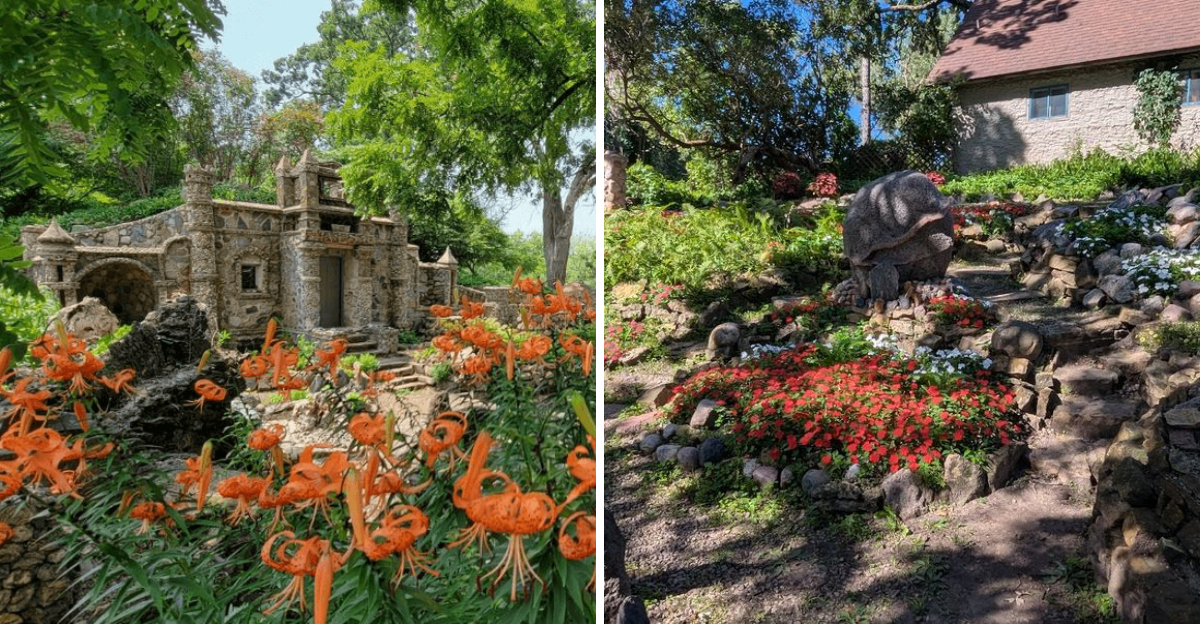
One man built this entire garden by himself. His name was Albert and he had a vision.
He collected rocks from all over the state carefully. Then he turned them into towers, castles, and tiny houses. No heavy machinery. Just his two hands and endless patience.
The result looks like a fairy tale threw up beautifully. Moss grows where it wants and nobody argues.
You will feel like you discovered a secret world today. Children love running through the miniature stone streets. Adults just stand there shaking their heads in disbelief.
A Hidden Gem Built Right in Someone’s Backyard
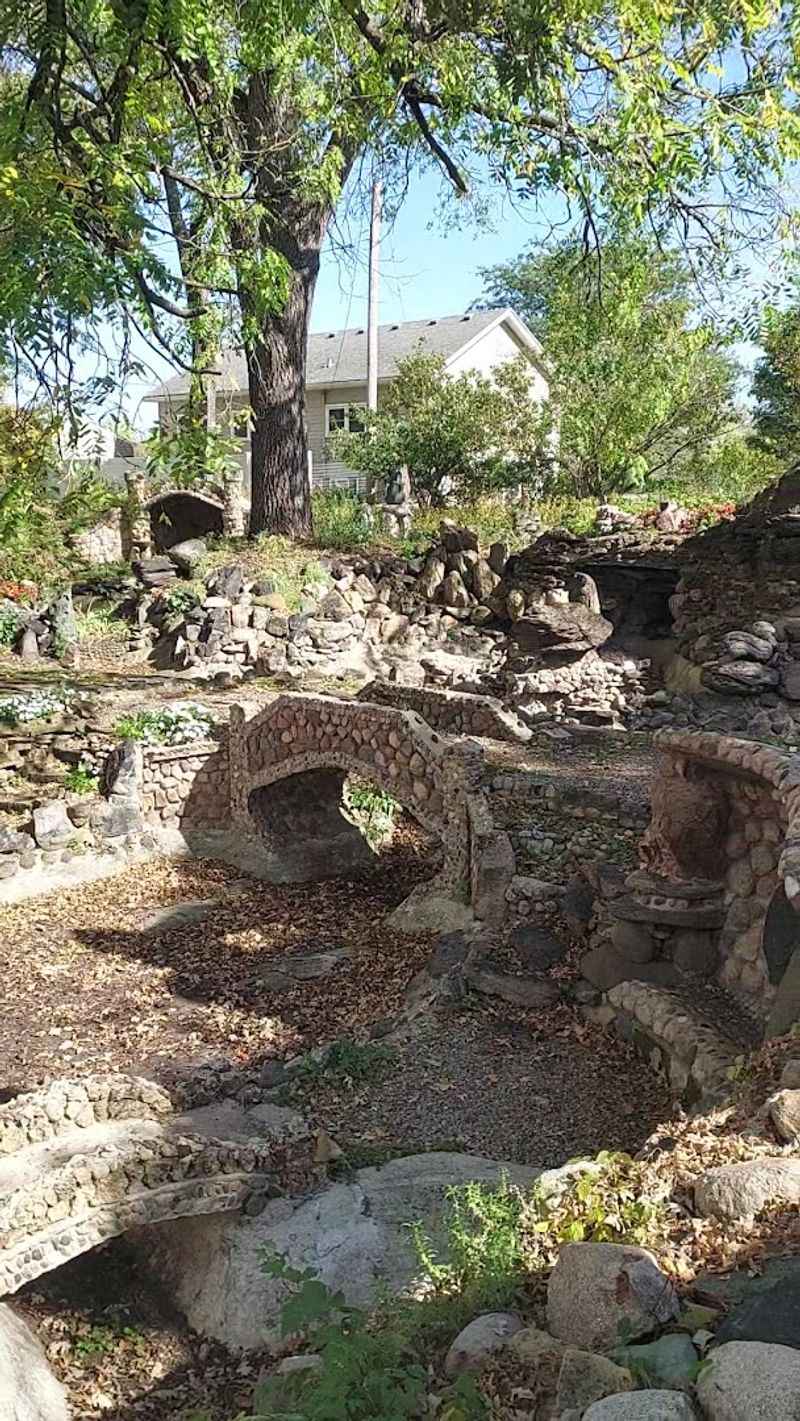
Most hidden treasures do not announce themselves. The Itasca Rock Garden sits quietly along Itasca Road, tucked beside a private home, looking almost too humble from the road.
When you first pull up, the setting feels unexpected. It really does look like a neighbor’s side yard.
That first impression fades fast, though, once you start walking around.
The garden was originally built by hand over a century ago. A single person shaped all of this stone work by hand.
That alone is worth pausing to appreciate.
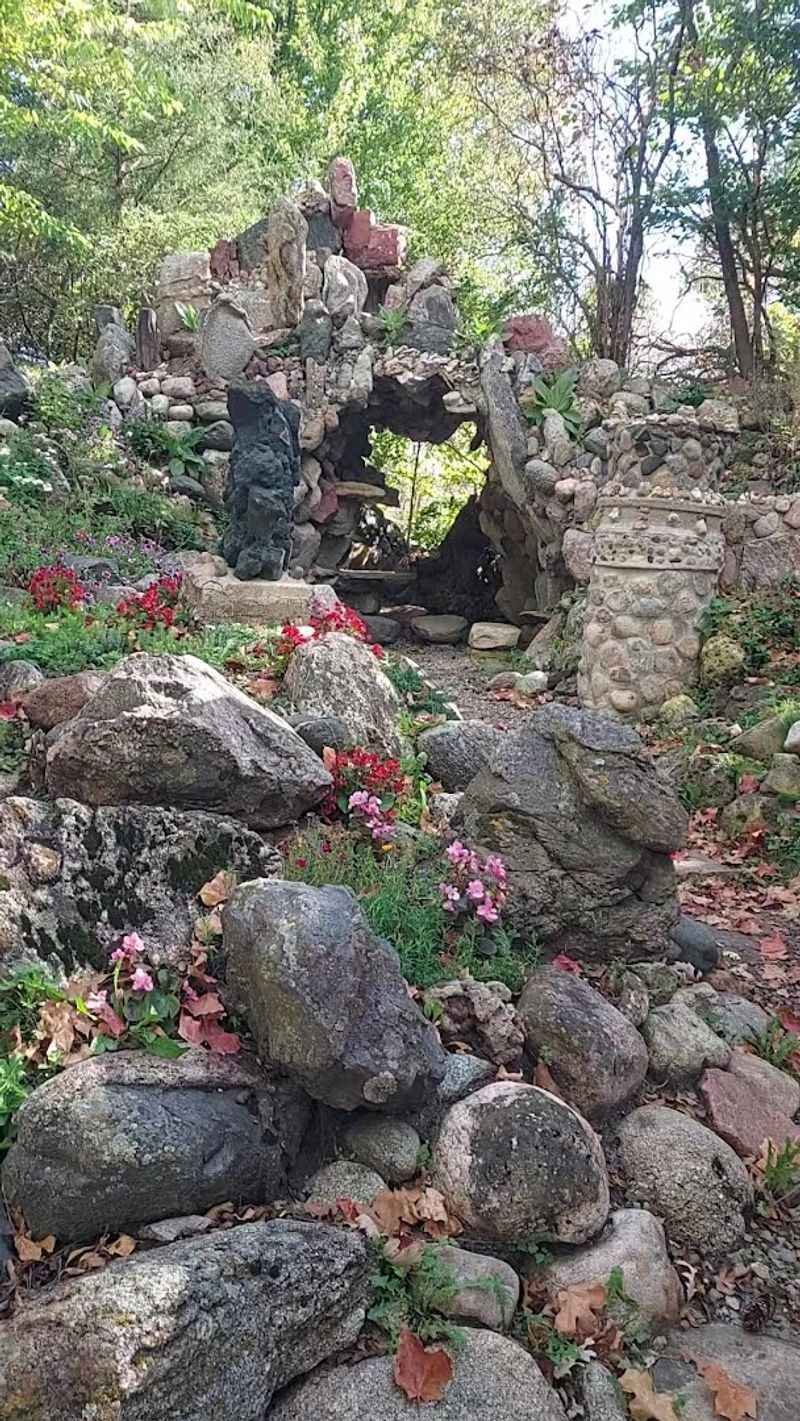
Stones are stacked, carved, and arranged into structures that feel both ancient and personal. There is real artistry hiding in every corner.
You just have to look closely to find it.
The Albert Lea Area Historical Society now oversees the site. They work hard to keep the flowers, pathways, and stonework in great shape.
Visiting feels like stepping into living history, free of ropes or barriers, just open space to explore at your own pace.
The Stunning Stonework That Took Decades to Create
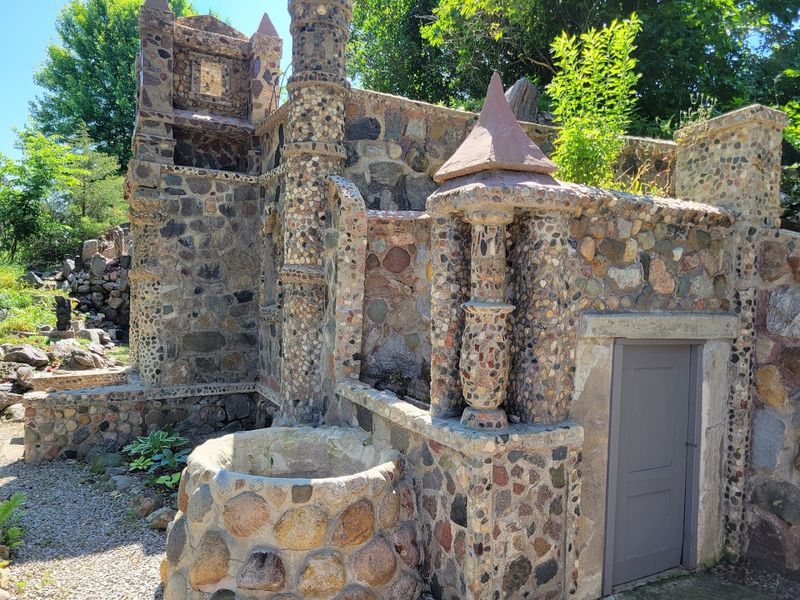
Staring at the stonework up close, you start to feel the sheer patience it must have taken. Every rock appears carefully chosen.
Every placement feels deliberate and precise.
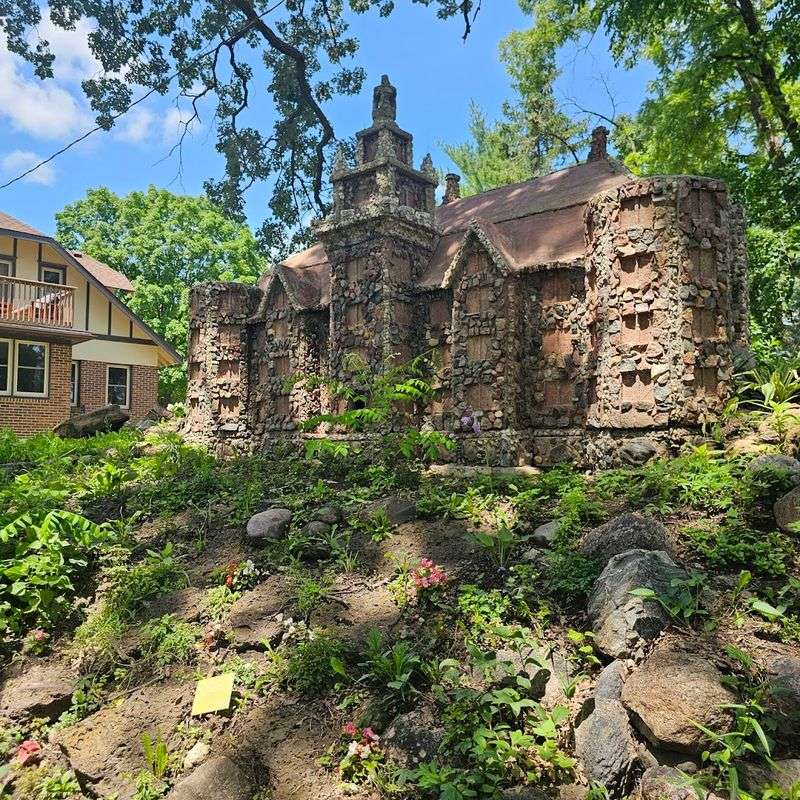
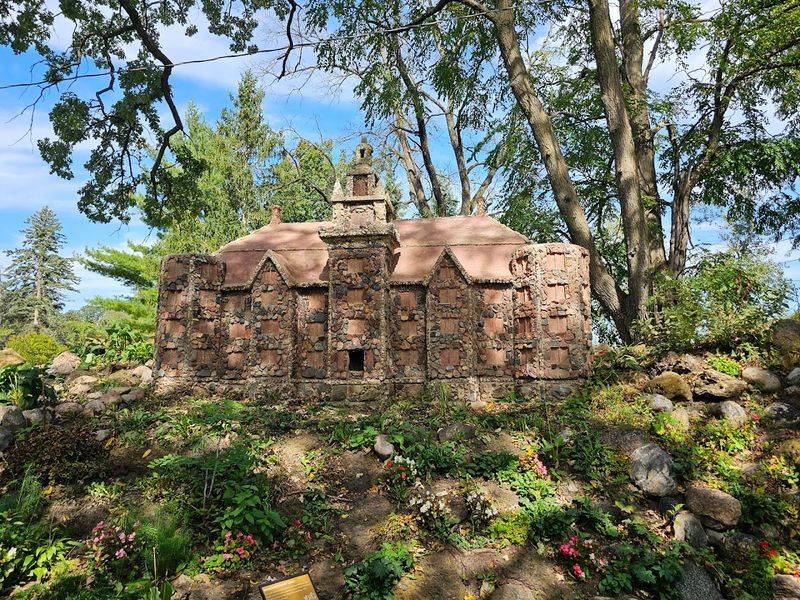
The structures include small castle-like towers, arched doorways, and carved details that catch the light just right. None of it was mass-produced.
All of it was shaped by human hands over many years of quiet, dedicated effort.
Some stones have sharp edges, so walking slowly is a good idea. Children especially should stay calm and careful on the pathways.
The uneven ground adds to the charm but does require attention.
Looking at the walls, you notice textures that shift from rough to smooth. Layers of color move from grey to amber to rust.
It is the kind of detail a photograph almost cannot capture properly.
The craftsmanship here rivals anything you might find in a formal garden or museum. The difference is that this was built out of pure personal vision, not a commission or a blueprint.
Wandering the Winding Pathways at Your Own Pace
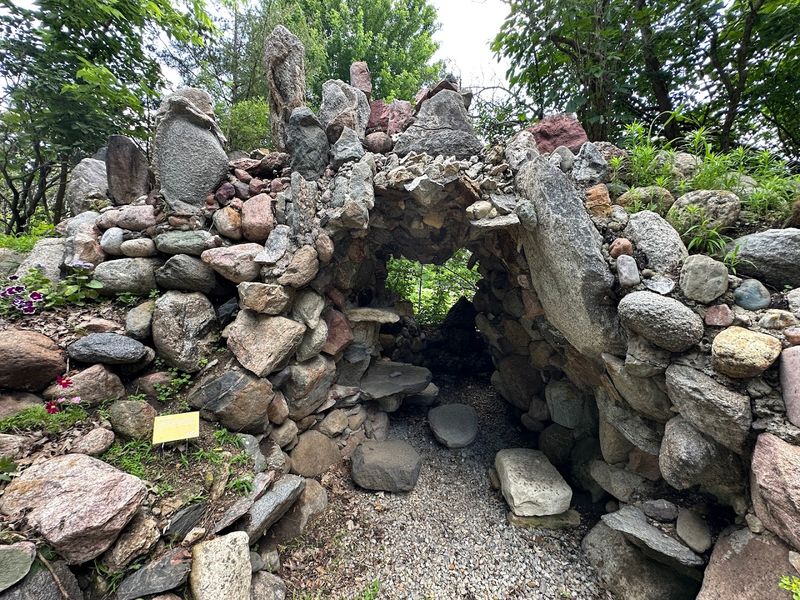
One of the best parts of visiting is that nobody rushes you. There are no guided tours, no timed tickets, and no crowds pushing you along.
You simply wander.
The pathways wind between stone formations and flower beds. Each turn reveals something new.
A carved archway here, a small sitting area there, a cluster of blooming perennials tucked against a mossy wall.
Some sections open up into wider rest spots where you can sit and take it all in. The couple who originally built the garden designed those areas intentionally.
They wanted visitors to pause and breathe.
The ground is uneven in places, so comfortable shoes are a must. Sandals or flip flops would make the walk tricky.
Sturdy sneakers let you move freely and safely through the whole space.
Plan to spend at least thirty minutes exploring. Some visitors stay much longer.
The more slowly you move through it, the more details you notice tucked into the stone and soil around every corner.
Flowers Blooming in Every Corner of the Garden
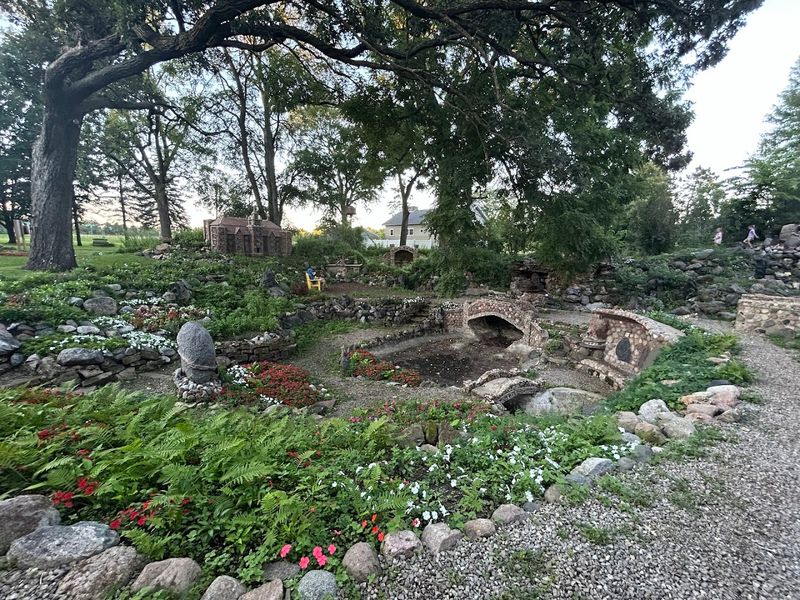
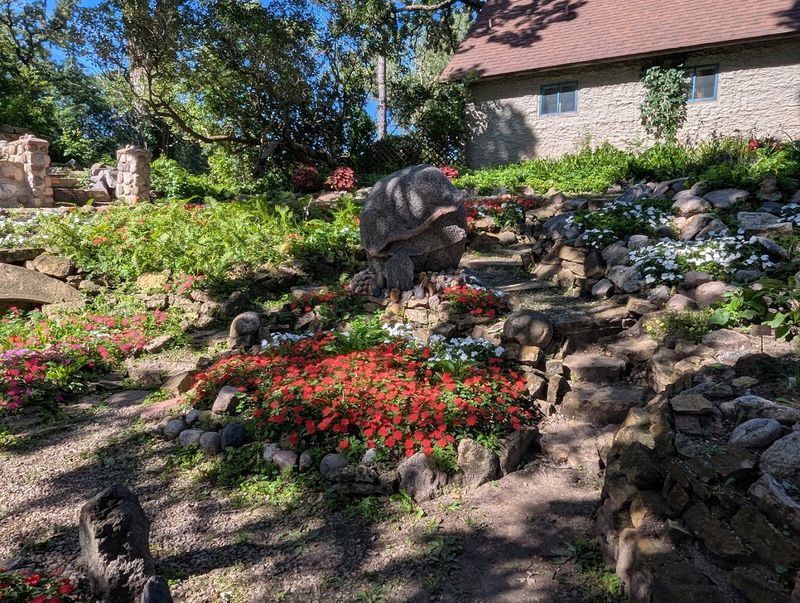
The flowers at the Itasca Rock Garden are not planted in neat rows. They spill freely between rocks, climb along pathways, and pop up in the most unexpected places.
A mix of annuals and perennials keeps the garden colorful across the growing season. Bright blooms contrast against grey stone in a way that feels almost painterly.
The whole space looks effortlessly alive.
The Albert Lea Area Historical Society manages the planting each season. Volunteers put real care into keeping the flower beds full and varied.
That effort shows in every visit, especially during peak summer bloom.
Some visitors have mentioned that the flowers make the garden feel like a life-size fairy garden. That description is honestly pretty accurate.
There is a softness to all the greenery that balances the hard edges of the stone.
Even in early fall, when some blooms have faded, the garden holds its beauty. The textures, colors, and shapes of the plants layer together with the stonework in a way that never fully loses its charm.
The Castle Structure That Sparks Everyone’s Imagination
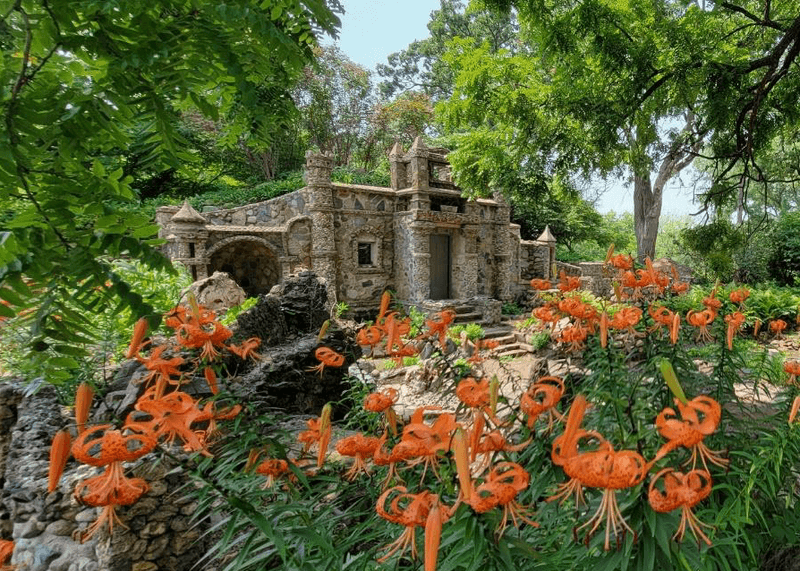
Right in the middle of the garden stands a structure that stops most visitors in their tracks. It looks like a miniature castle, complete with a tower and detailed stone walls.
It is genuinely impressive.
The craftsmanship on the castle is some of the most detailed work in the entire garden. Up close, you can see how each stone was fitted against the next with real precision.
It is hard to believe one person built this.
Some visitors have mentioned wanting to see the inside of the castle. The exterior alone is worth the trip.
The structure carries a quiet kind of grandeur that feels completely out of place in the best possible way.
Kids especially tend to light up when they see it. It hits that sweet spot between fantasy and reality.
Adults get caught up in it just as easily.
Standing beside it, you get a sense of the scale of the whole project. This was not a weekend hobby.
It was a lifelong creative pursuit, and the castle is its most dramatic centerpiece.
A Free Visit With a Donation Box at the Gate
Admission at the Itasca Rock Garden runs entirely on goodwill. There is no ticket booth, no entry fee, and no reservation required.
A donation box sits near the entrance for those who want to contribute.
That free-will model makes the place feel even more generous. The people behind it clearly want visitors to come.
They are not trying to profit from the experience, just share something they love.
Any donation you leave goes toward maintaining the site. The flowers, the pathways, and the stonework all need ongoing care.
Even a small contribution helps keep this treasure accessible for future visitors.
The relaxed entry format also means you can visit without planning ahead. Spotted it on a road trip and curious?
Just pull over and walk in. That spontaneity fits the spirit of the place perfectly.
Parking is available near the house, and signs help guide you to the right spot. The whole arrival experience is low-key and welcoming.
It sets exactly the right tone for what you are about to discover inside.
The Peaceful Sitting Areas Designed for Quiet Reflection
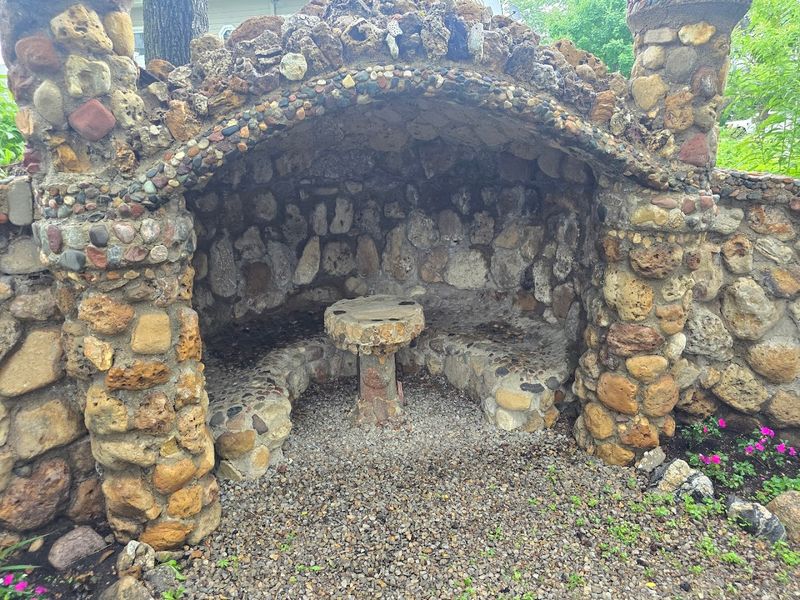
Not every garden gives you a place to stop and simply be. The Itasca Rock Garden does.
Sitting areas are built right into the layout, designed by the original creators for exactly this kind of stillness.
The spots are framed by stone walls and surrounded by plants. Sitting there feels surprisingly private, even when other visitors are nearby.
The garden has a way of absorbing sound and slowing everything down.
One couple visited on their 32nd wedding anniversary and spent time just sitting and talking in these areas. That kind of moment says a lot about the atmosphere.
It is genuinely peaceful in a way that feels earned, not staged.
The seating areas also give you a chance to look at the stonework from a different angle. Details you missed while walking suddenly become visible.
The garden rewards the patient observer.
If you visit on a warm afternoon, bring water and take your time in these spots. The shade from surrounding plants and stone walls makes them comfortable even in summer heat.
It is a good place to breathe.
What the History Behind This Garden Tells Us
The Itasca Rock Garden has been standing for roughly one hundred years. That kind of age gives a place a weight you can actually feel when you walk through it.
History lives in the stones.
It was built on private residential land, which makes the whole thing even more remarkable. This was not a city project or a funded landmark.
It was a personal creation that grew into something far larger than any single yard.
The Albert Lea Area Historical Society stepped in to preserve the garden over time. Their involvement helped protect the structures and maintain the surrounding landscape.
Without that care, a place like this could easily disappear.
Visitors often mention wanting more information posted on-site about the garden’s origins. The story of how the stones were collected, how the structures were planned, and how long everything took would add a rich layer to the experience.
Even without a full written history on display, the garden speaks for itself. Every structure is a record of someone’s vision and effort.
Walking through it is like reading a story written entirely in stone and soil.
Tips for Visiting With Kids and Families
Bringing kids to the Itasca Rock Garden can be a wonderful experience with a little preparation. The space is magical enough to capture young imaginations immediately.
It genuinely feels like stepping into a fairy tale.
That said, the ground is uneven throughout the garden. Some stones have sharp edges, and narrow paths require careful footing.
Children should walk slowly and stay close to adults at all times.
Running or rough play is not appropriate here. The structures are fragile and historically significant.
Teaching kids to move gently through the space is part of the visit.
Grandchildren, in particular, tend to love this place. The scale of everything feels just right for younger visitors.
Pack snacks and water for the family, especially in warm months. Wear closed-toe shoes with good grip for everyone in the group.
Arriving in the morning tends to mean fewer visitors and cooler temperatures, making the walk more comfortable for little ones and adults alike.
Why You Should Add This Spot to Your Minnesota Road Trip
Minnesota has no shortage of beautiful places to visit. Most of them show up on every travel list and tourist guide.
The Itasca Rock Garden is not one of those places, and that is exactly what makes it special.
It sits just off the main roads in Albert Lea, easy to miss if you are not looking. But once you know it is there, it becomes the kind of stop you plan your whole route around.
It earns that priority.
The drive into the area is pleasant and rural. Pulling up to the garden feels like discovering something that most people simply drive past.
That feeling of discovery stays with you long after you leave.
Visitors consistently rate the experience highly, with many calling it a must-see and a true hidden treasure. The combination of history, artistry, and natural beauty is genuinely hard to find in one small space.
Add it to your next road trip through southern Minnesota. You will not regret the detour.
Address: Itasca Rock Garden, 2129 Itasca Rd, Albert Lea, MN 56007
