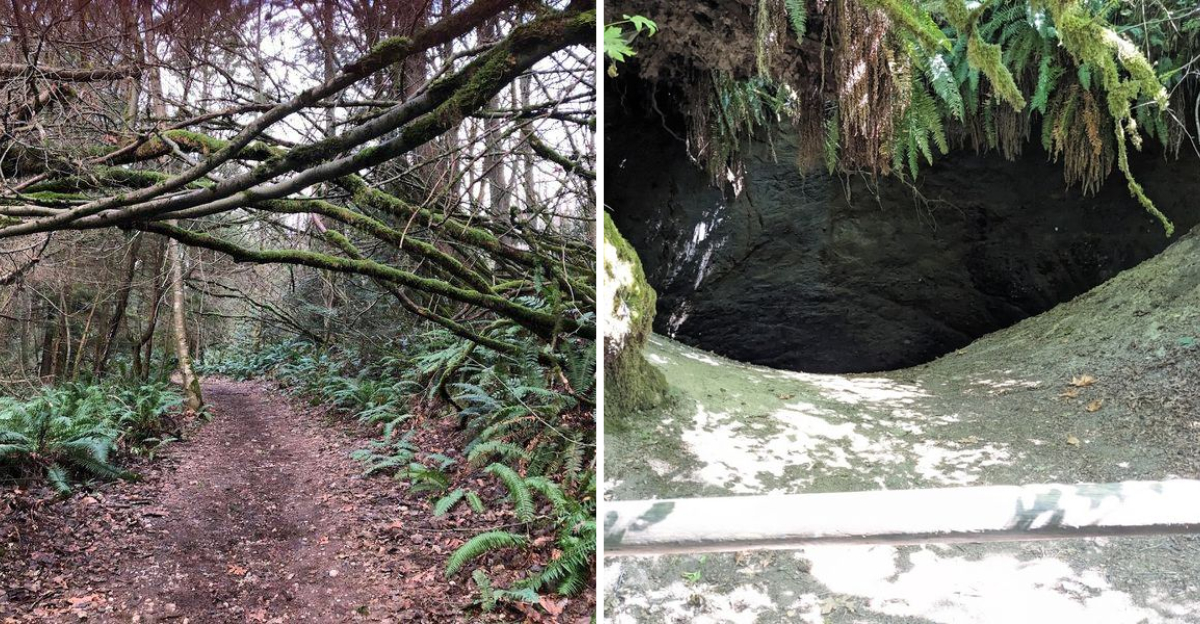
Some trails lead from one point to another, Coal Creek Natural Area in South Bellevue carries something deeper than direction. Beneath a second-growth forest, an industrial past rests quietly, layered under moss, roots, and silence. Eleven million tons of coal once moved through these hills, feeding four mining towns that once pulsed with life.
Old shafts, broken concrete, and creek crossings still trace the outlines of that forgotten era. Just fifteen minutes from downtown Bellevue, the 440-acre network of trails feels unexpectedly remote.
Every turn carries a sense of discovery, as if the forest keeps its stories close beneath the surface. The atmosphere leans toward quiet mystery, where modern suburbia fades quickly once the canopy closes overhead.
Footsteps feel softer here, as though the ground remembers more than it reveals at first glance. A hidden chapter of Washington history lingers between roots and water, waiting for curious wanderers to notice. Coal Creek doesn’t feel like a typical park experience; it feels like stepping into a layered memory that refuses to fade.
That contrast between quiet forest and buried industry gives every visit an oddly cinematic pull.
The Red Town Trailhead: Where the Journey Begins
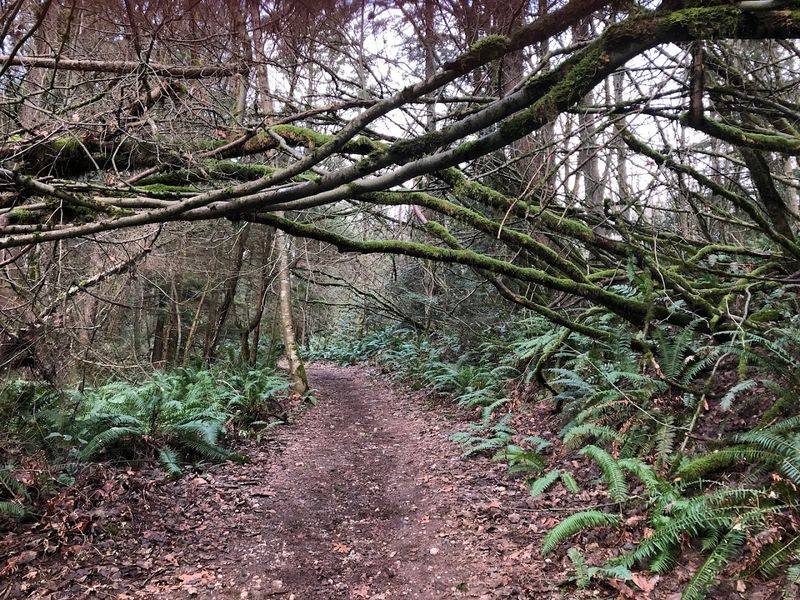
The Red Town Trailhead is the kind of place that makes you pause before you even take your first step. There is something quietly dramatic about knowing that the gravel under your boots was once a neighborhood, a real community where miners and their families lived and worked.
Red Town was one of four mining settlements that grew up along Coal Creek in the late 1800s, and today its name is the only visible reminder of what once stood here.
The parking area is modest and easy to find off Coal Creek Parkway. Signage at the trailhead does a solid job of orienting first-time visitors, with maps pointing toward the main Coal Creek Trail and the shorter Cinder Mine spur.
Arriving early on a weekday means you will likely have the trail nearly to yourself for the first hour.
Sturdy shoes are a smart call here, especially if there has been recent rain. The ground near the trailhead can get soft and slick, and the forest floor holds moisture well.
Bringing a printed map or downloading the trail offline before you go is a habit worth forming, since cell service can be spotty once you get deeper into the trees.
Coal Creek Trail: Five Miles of Forest and Forgotten Industry
At 5.1 miles out and back, the Coal Creek Trail is the backbone of this entire natural area. It is rated moderate, which feels accurate.
There are sections that slope upward with enough effort to get your heart going, and stretches that flatten out just long enough for you to catch your breath and actually look around.
What makes this trail genuinely different from a standard forest walk is what keeps appearing along the edges. Concrete foundations peek out from beneath layers of moss and vine.
Old mine shaft openings are fenced off for safety but still visible, and the remnants of railroad turntables sit half-swallowed by soil and plant growth. Each one of these features is a small history lesson delivered without a single classroom wall.
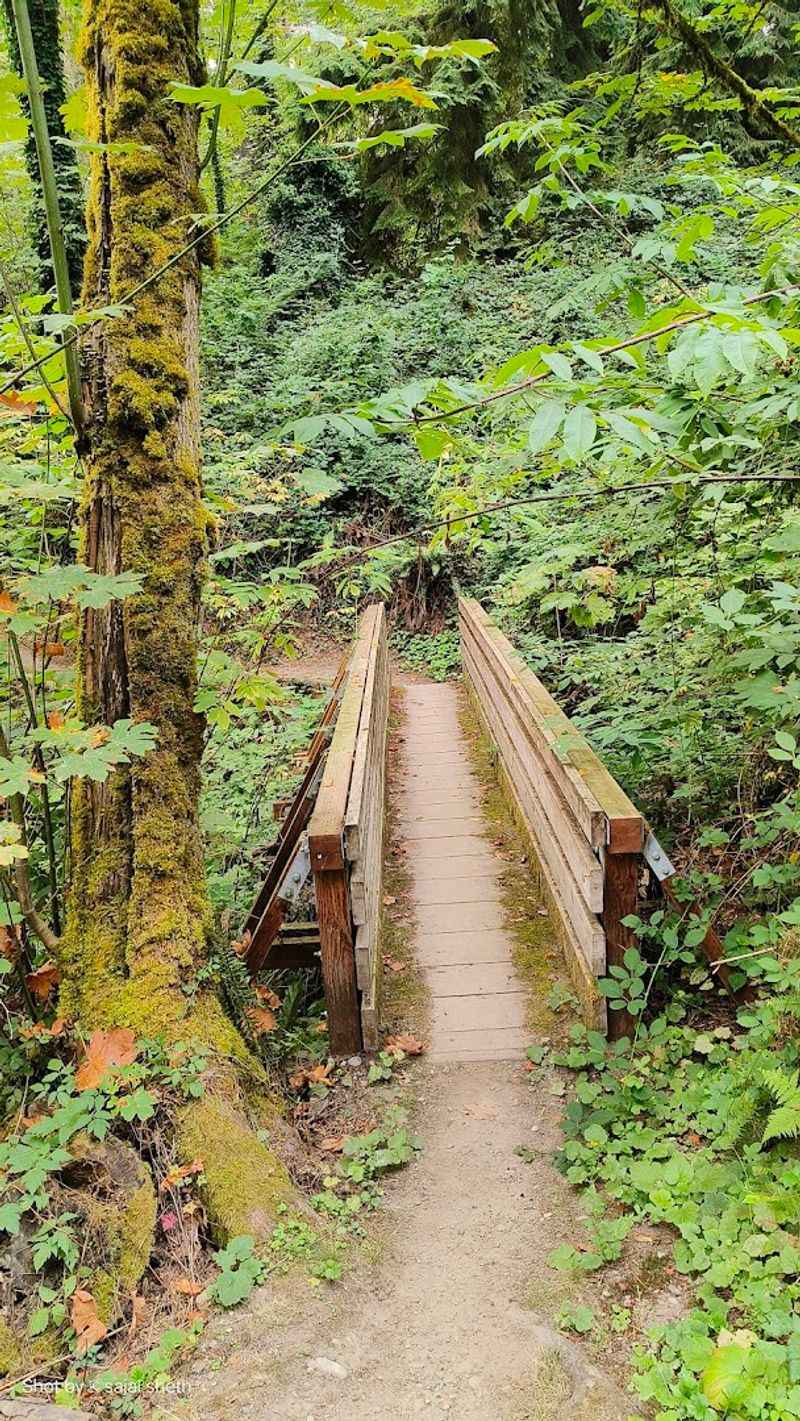
The trail crosses Coal Creek multiple times via footbridges, and those crossing points are worth slowing down for. The water runs clear and shallow in most seasons, and the sound of it moving over rocks is one of the more calming parts of the whole experience.
Kids especially seem to love these moments, and the bridges make the crossings accessible without requiring any scrambling or wet feet.
Cinder Mine Trail: A Short Walk with Big Historical Weight
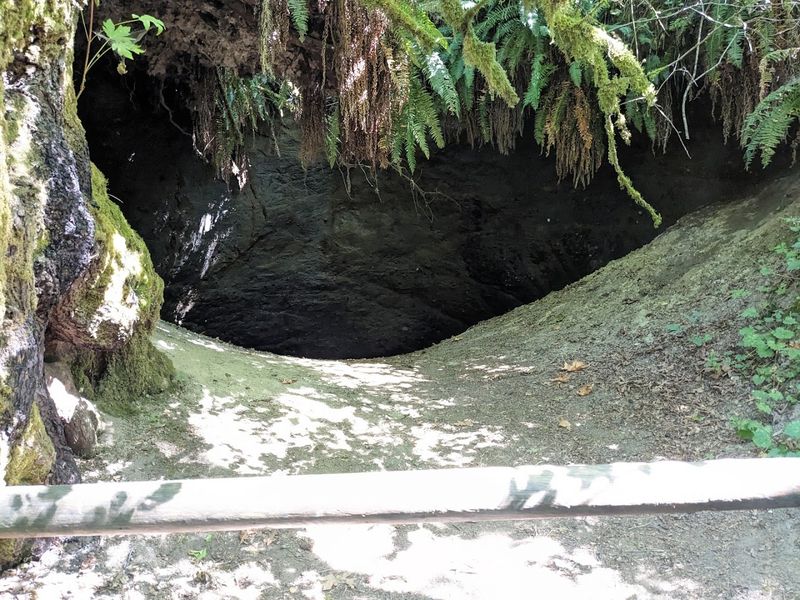
Not every powerful experience requires a long hike. At just 0.3 miles, the Cinder Mine Trail proves that point convincingly.
This short spur leads to the site of one of the area’s most significant mining operations, and the atmosphere along the way feels noticeably different from the wider Coal Creek Trail. The trees press in closer, the light shifts, and there is a certain stillness that is hard to explain but easy to feel.
The Cinder Mine itself extracted coal that was processed into cinders, a material widely used for road surfacing in the early 20th century. Standing near the old site, you get a clearer sense of just how industrialized this forest once was.
It is genuinely surprising to think that heavy machinery and rail lines once operated in a space that now feels so completely wild.
This trail is a great option for visitors who want historical context without committing to the full 5-mile route. Families with younger kids or anyone short on time will find it well worth the detour.
The path is compact and well-maintained, and the interpretive markers nearby add enough background to make the visit feel educational without being dry or overwhelming.
Primrose Trail: Quiet Creek Views and Small Waterfalls
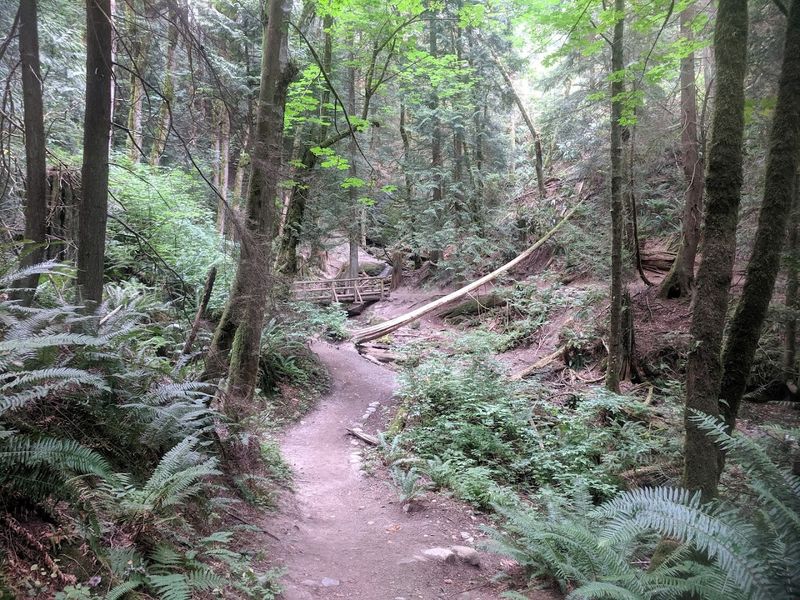
The Primrose Trail runs for 0.8 miles in a loop, staying close to the creek the whole way. It is the most relaxed option in the park, and that is exactly what makes it worth including in your visit.
The pace slows naturally here. There is less to analyze historically and more to simply absorb visually and acoustically.
Small waterfalls appear along this stretch of creek, nothing dramatic but genuinely pretty. The water tumbles over mossy rocks in a way that invites you to stop, sit on a nearby log, and just listen for a few minutes.
I found myself doing exactly that, and I was not in any rush to move on. It is the kind of spot that resets your mental state without requiring any effort on your part.
The trail surface is compact and manageable for most fitness levels. It connects well with the main Coal Creek Trail, so many hikers choose to do the Primrose loop as an add-on rather than a standalone trip.
If you have children with you, this section is particularly enjoyable because the creek is accessible and the shorter distance keeps energy levels from bottoming out before the adventure feels complete.
Mining History Hiding in Plain Sight Along the Trail
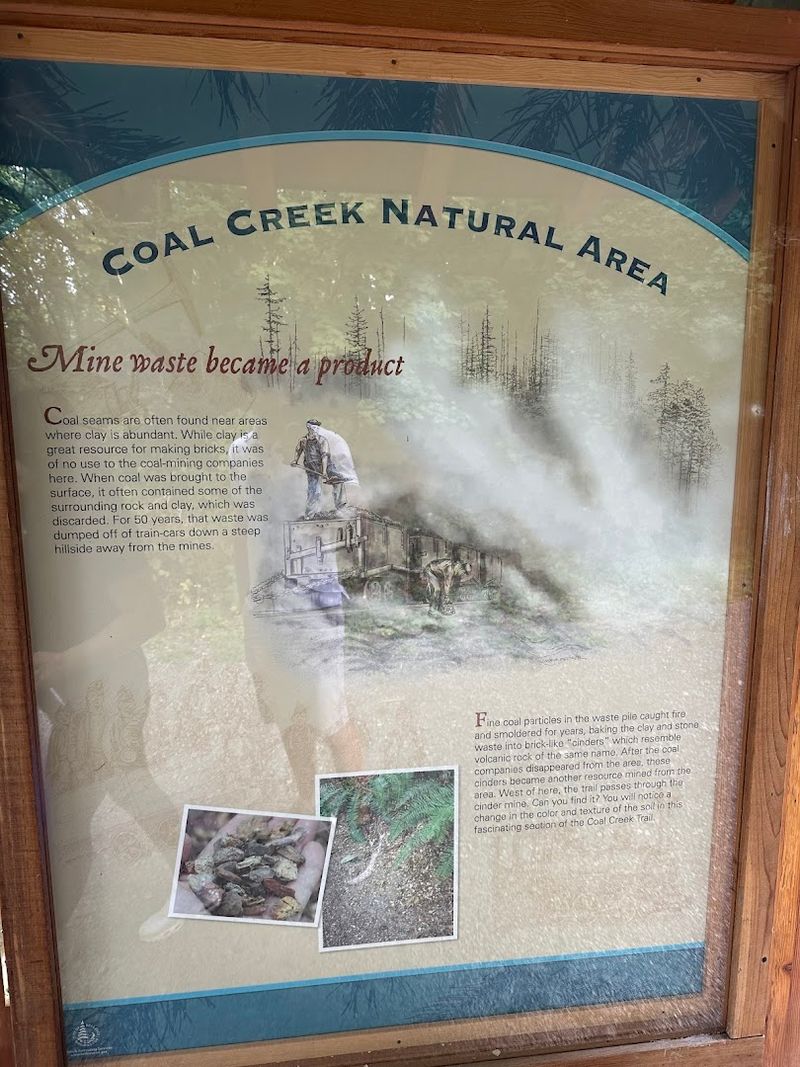
Coal was first discovered along Coal Creek in 1863, and that single moment quietly set off decades of industrial activity that most people in modern Bellevue have never thought much about. Over the following century, miners extracted eleven million tons of coal from this ground.
Four towns grew up to support the workforce: Red Town, White Town, Rainbow Town, and Finn Town. All four are gone now, reclaimed entirely by the forest.
What remains are fragments. Concrete foundations, rusted metal scraps, and faint depressions in the earth where structures once stood.
These remnants are scattered throughout the park, and spotting them feels like a small victory each time. The trail does not always point them out directly, which actually makes the discovery feel more personal and earned.
Guided hikes are available through the park and offer a much deeper layer of context for those who want it. A knowledgeable guide can point out features that an untrained eye would walk right past.
For history enthusiasts, signing up for one of these organized walks transforms the experience from a pleasant hike into something genuinely illuminating. The past here is not hidden so much as it is patient, waiting for someone to notice it.
Wildlife in the Canopy and Along the Creek
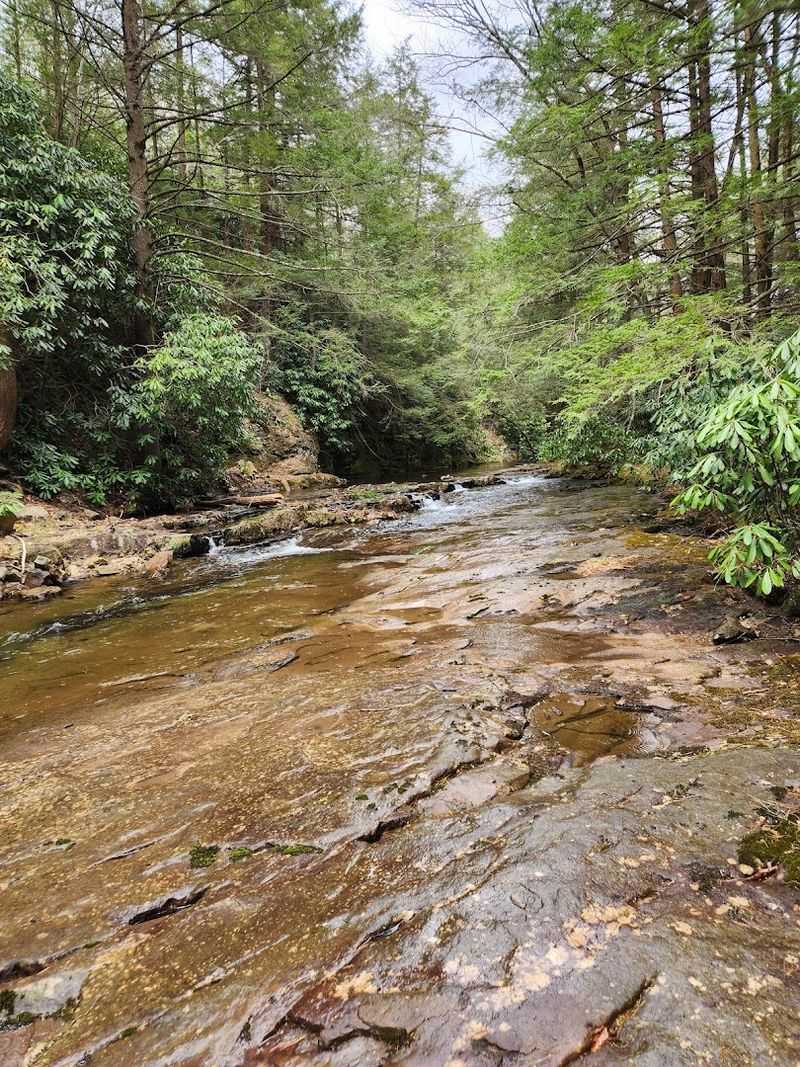
The wildlife at Coal Creek Natural Area is one of those aspects of the park that sneaks up on you. You come for the history or the trees, and then a pileated woodpecker hammers away at a trunk ten feet above your head and suddenly you are a birdwatcher.
These striking birds are common here, and their loud, rhythmic tapping is one of the signature sounds of the trail.
Owl species make their home in the deeper sections of the forest, though spotting them takes patience and a quiet approach. Red-tailed hawks and northern goshawks are also known residents of the area, and if you keep your eyes on the canopy rather than just the path ahead, you will be rewarded more often than not.
Steller’s Jays are practically impossible to miss. Their vivid blue coloring and bold personalities make them one of the most entertaining trail companions in the Pacific Northwest.
The creek itself supports its own ecosystem. Depending on the season, you might spot salmon returning to spawn in Coal Creek, which is a genuinely moving thing to witness in a park surrounded by suburban neighborhoods.
The natural area has benefited from active habitat restoration efforts, and the results are visible in the biodiversity that thrives here today.
Planning Your Visit: What to Know Before You Go
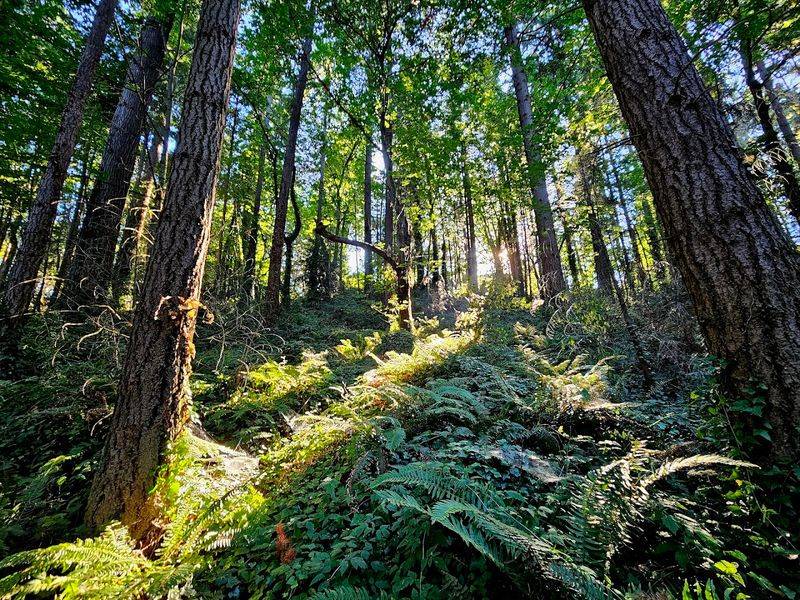
Coal Creek Natural Area sits in South Bellevue, and getting there is straightforward whether you are coming from Seattle or from other parts of the Eastside. The Red Town Trailhead, located along Coal Creek Parkway SE, is the most popular starting point and offers the best access to the full trail network.
The Cinder Mine Trailhead and the Forest Drive Trailhead are also available for those who want to approach the park from different angles.
Trail conditions vary by season. Winter and early spring bring mud, so waterproof boots make a real difference.
The paths are a mix of dirt, wood chips, and some paved sections, with footbridges and staircases added where the terrain demands it. The overall infrastructure is well-maintained, and the City of Bellevue does a commendable job keeping things accessible and safe throughout the year.
There is no entry fee, which makes this one of the better free outdoor experiences in the region. Dogs are welcome on leash, and the park is generally
