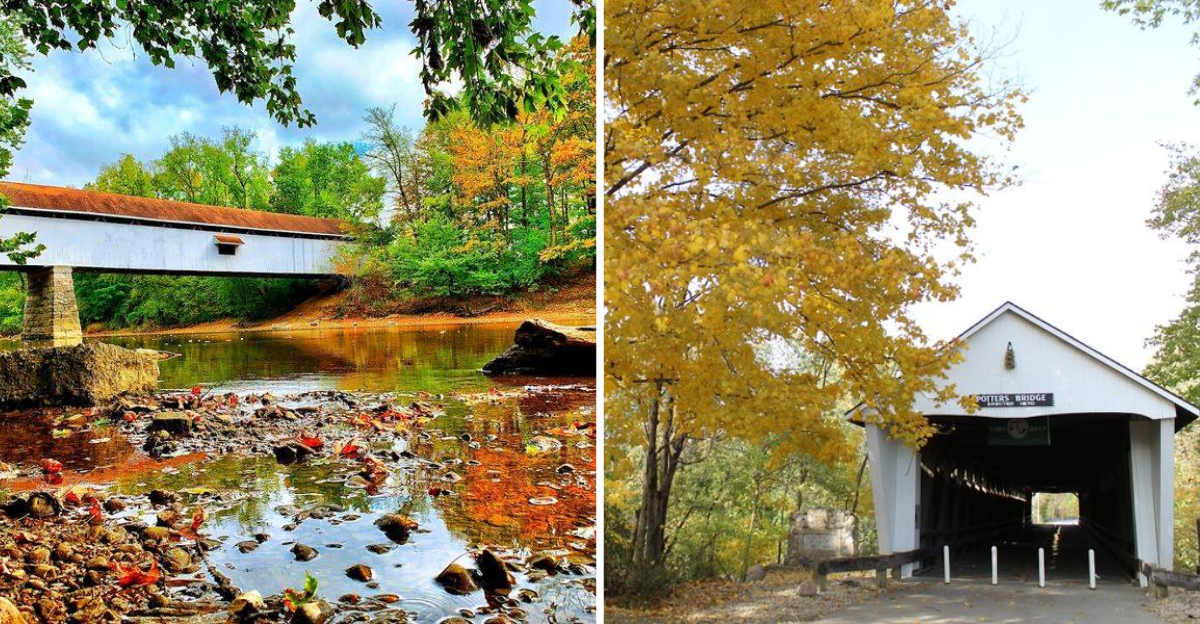
There is something a little gutting about watching a historic structure quietly slip into the background when it clearly still has stories left to tell. Indiana has plenty of places like that, and this bridge stands out in a very real way. Built in the late 1800s, it is one of the last reminders of a time when wooden crossings shaped everyday travel.
It has already survived a relocation and a close call with demolition, which makes its current condition feel even more fragile. Standing nearby, it is easy to feel the weight of everything it has already outlived, and how much closer it is getting to becoming a memory instead of a landmark.
The Last Covered Bridge Standing in Marion County
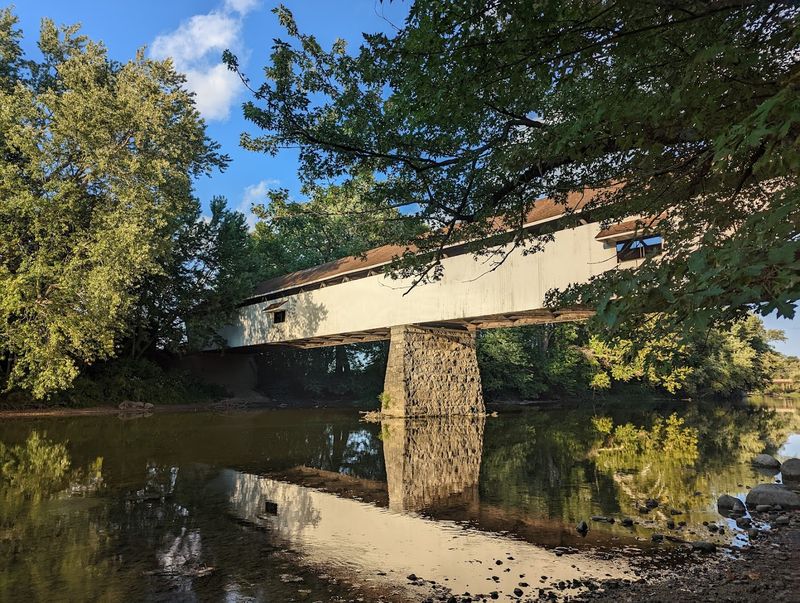
Out of what was once a county full of covered bridges, only one has managed to survive. The Traders Point Covered Bridge holds that distinction with quiet dignity, standing as the sole remaining covered bridge in all of Marion County.
That is not a small thing. Indiana once boasted over 600 covered bridges across the state during the 19th century, and today only around 90 are estimated to still exist.
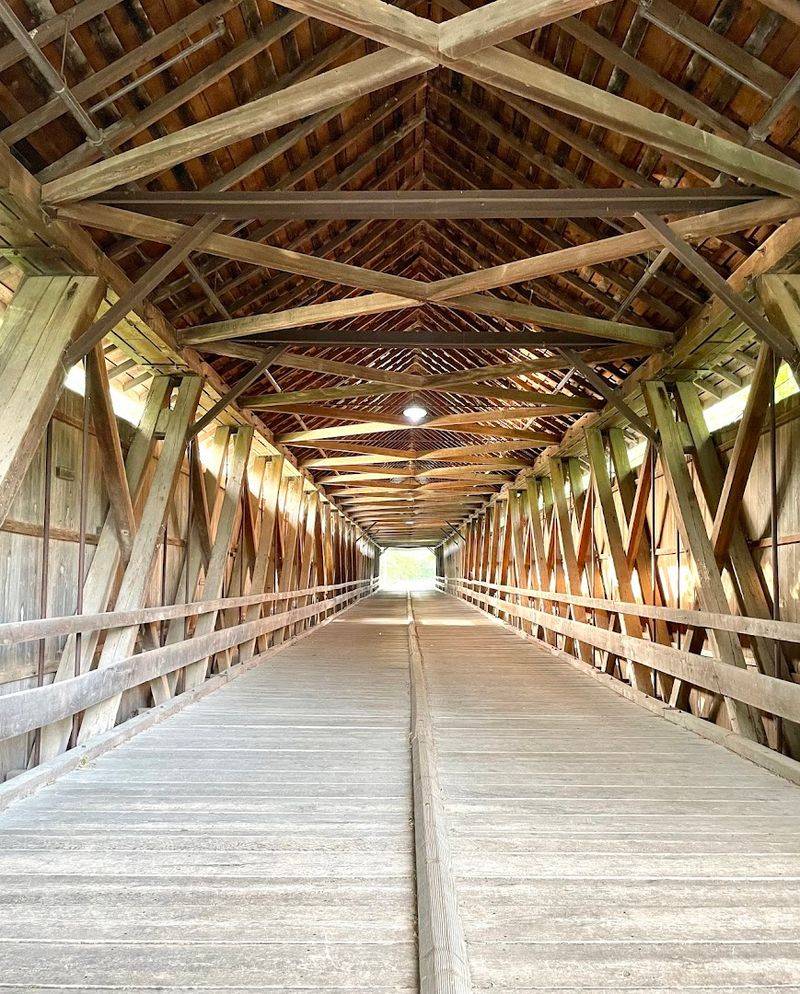
This bridge is among that rare group. It was built around 1880 by local bridge builder Josiah Durfee, a single-span Howe Truss structure measuring 88 feet long, or 108 feet if you count the 10-foot overhangs on each end.
It stands 13 feet high and 14 feet wide, proportions that feel both humble and impressive when you think about the craftsmanship that went into building it without modern tools.
The Howe Truss design was a popular engineering choice of the era, combining wooden diagonal members with iron vertical rods for added strength. Seeing one still intact today is genuinely rare.
For Marion County residents, this bridge is not just a structure. It is a direct, physical link to a way of life that has otherwise completely vanished from the landscape.
How a Farmer Saved This Bridge From Demolition
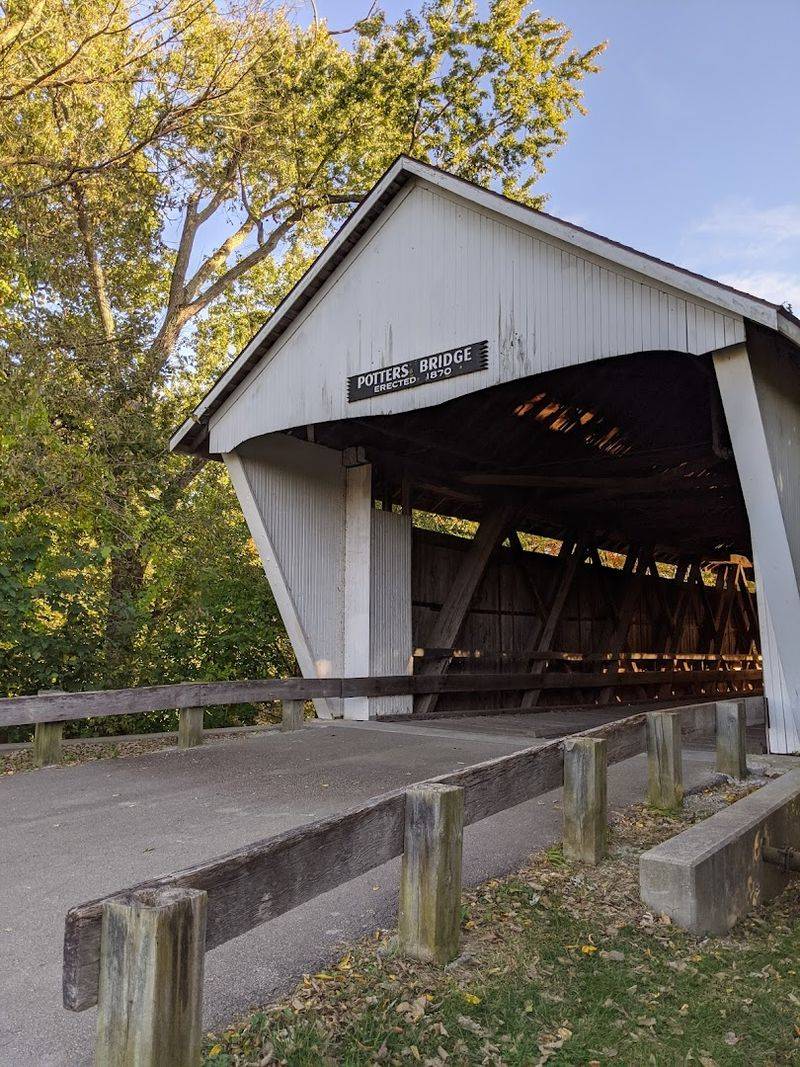
The year was 1959, and the Traders Point Covered Bridge was facing a death sentence. State highway improvements were underway, specifically the construction of Interstate 65, and the bridge that had stood over Fishback Creek in northwest Marion County was directly in the way.
Most historic structures in that position simply did not survive.
But a farmer named DeWitt V. Brown had other ideas.
He purchased the bridge and had it physically relocated to his nearby private land in 1960, moving it approximately 0.6 miles from its original site. That single act of determination is the entire reason the bridge exists today.
It is the kind of story that does not get told nearly enough.
Brown’s decision was not just practical. It was a genuine act of preservation at a time when historic conservation was not the cultural priority it is today.
He saw value in something others were ready to demolish, and he acted on it. The bridge’s original location was near what is now West 86th Street, east of Interstate 65, a busy corridor that would have erased any trace of it entirely.
Because of one farmer’s choice, that history still breathes.
Why Indiana Landmarks Put It on the Endangered List
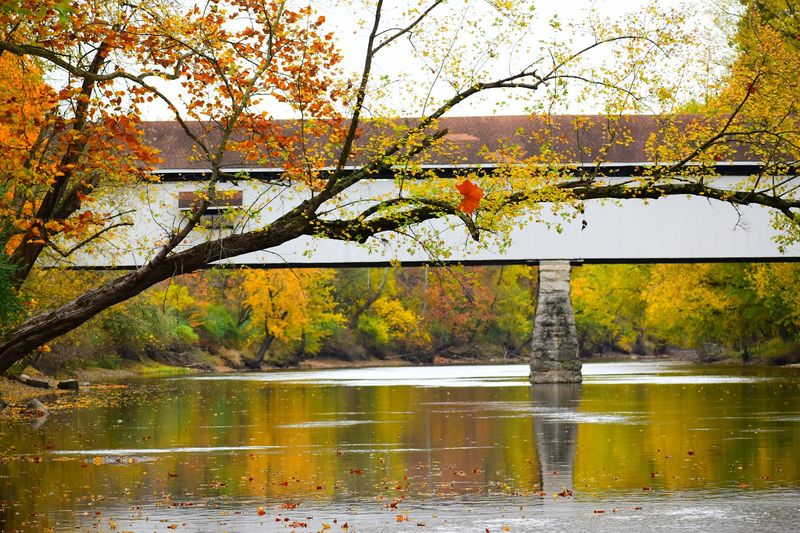
In August 2025, Indiana Landmarks added the Traders Point Covered Bridge to its annual “10 Most Endangered” list. That designation is not ceremonial.
It signals that a historic structure is at serious risk of being lost permanently without meaningful intervention. For this bridge, the threats are layered and very real.
Neglect has taken a visible toll on the structure over the decades. It sits on private property, which means it receives no regular public funding, no maintenance crews, and no steady stream of visitors to advocate for its upkeep.
Development pressures in the surrounding area add another layer of urgency. Indiana Landmarks described it as a “rare survivor” that requires immediate intervention to halt its decline.
Being on the endangered list does bring some benefits, mainly visibility and advocacy momentum. It draws attention from preservation organizations, potential donors, and community members who might not have known the bridge existed at all.
The listing essentially tells the public that this is a now-or-never moment. Without coordinated effort and financial support, the Traders Point Covered Bridge could quietly collapse or be demolished, and Marion County would lose its last tangible connection to a once-thriving covered bridge tradition.
The $2 Million Plan to Move and Restore the Bridge
Saving a historic bridge is not cheap, and nobody involved in this effort is pretending otherwise. Indiana Landmarks funded a detailed study in 2022 to assess what it would actually take to rehabilitate and relocate the Traders Point Covered Bridge.
The conclusion was a project estimated at approximately $2 million, which covers both the physical relocation and the full structural restoration.
The proposed destination is Eagle Creek Park, one of Indianapolis’s most beloved green spaces. Moving the bridge there would transform it from a hidden structure on private land into a publicly accessible landmark that residents and visitors could actually experience.
That shift from invisible to visible is enormous for long-term preservation.
Fundraising is actively underway as of early 2026. The Lilly Foundation has pledged $1 million toward the estimated cost, which is a significant and encouraging commitment.
The Eagle Creek Nature Conservancy and Preservation Inc. also received a $10,000 grant in 2022 specifically for this relocation and rehabilitation effort. The funding picture is not complete yet, but the momentum is real.
Reaching that full $2 million goal will require continued community engagement, donor support, and public awareness of just how significant this structure truly is to Indiana’s architectural heritage.
What the Bridge’s Architecture Tells Us About the 1880s
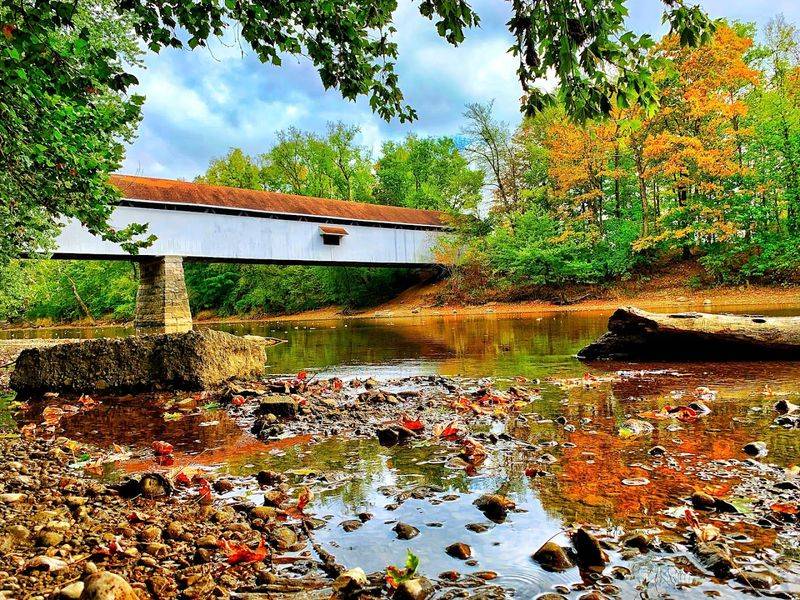
There is a reason historians and preservationists get emotional about structures like this one. The Traders Point Covered Bridge is a Howe Truss design, a method of construction that was considered an engineering advancement when it was patented in 1840 by William Howe.
The system combines wooden diagonal compression members with iron vertical tension rods, creating a strong and relatively lightweight framework for the era.
Josiah Durfee, the local builder who constructed this bridge around 1880, was working at a time when covered bridges were the backbone of rural transportation. The wooden cover itself was not decorative.
It protected the structural timbers from rain and weather, dramatically extending the bridge’s lifespan compared to open-air designs. Without that cover, the wood would have rotted within a decade or two.
At 88 feet long, 14 feet wide, and 13 feet high, the bridge’s dimensions reflect the practical needs of the time, wide enough for a horse-drawn wagon, tall enough for loaded farm equipment. Every measurement had a purpose.
Studying this bridge is like reading a blueprint of daily life in 1880s Indiana, a time when river crossings shaped where communities grew and how people connected with one another across the land.
The Private Property Problem Keeping People Away
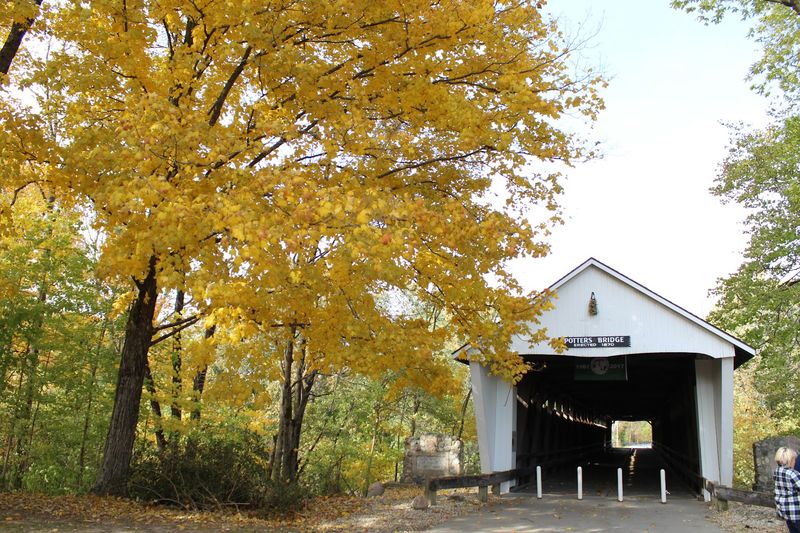
One of the most frustrating parts of this story is that the Traders Point Covered Bridge is technically still standing, yet almost no one can see it. The bridge sits on private property near 9123 West 86th Street in Indianapolis, and there is no public admittance.
For a structure this historically significant, that invisibility is part of what makes its survival so precarious.
When people cannot visit something, they struggle to care about it. Preservation efforts for historic sites almost always depend on public connection, the kind that comes from actually standing near a place, photographing it, sharing it, and feeling personally invested in its future.
The private property situation cuts all of that off completely.
That is precisely why the proposed relocation to Eagle Creek Park is so important beyond just the physical restoration. Moving the bridge to a public park would give it an audience, advocates, and a community of people who feel ownership over its story.
Right now, most Indianapolis residents have no idea this bridge even exists. Changing that requires more than fundraising.
It requires making the bridge physically reachable, visible, and part of everyday life in the city again. Accessibility is not just a convenience here.
It is a preservation strategy.
What Saving This Bridge Would Mean for Indianapolis
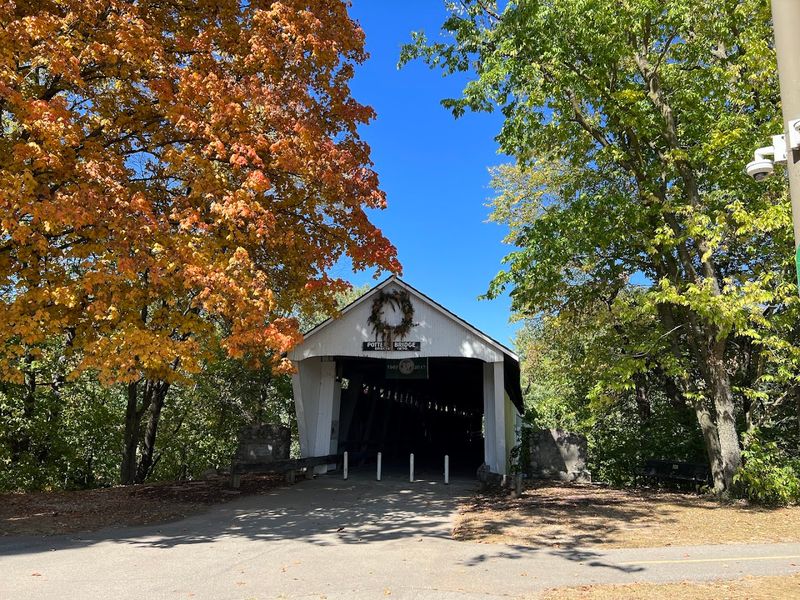
Imagine a fully restored 1880 covered bridge tucked inside Eagle Creek Park, with a creek running beneath it and families crossing it on weekend afternoons. That is the future advocates are working toward, and it is not hard to see why that vision has gained real support.
Restored covered bridges across Indiana have become genuine tourist draws, sources of local pride, and popular spots for photographers, hikers, and history lovers alike.
For Indianapolis specifically, gaining a publicly accessible covered bridge would add a meaningful layer to the city’s cultural identity. Marion County has no other surviving example of this architectural tradition.
Losing the Traders Point bridge would mean losing that thread of history permanently, with nothing left to replace it.
The economic case is also worth noting. Heritage tourism is a growing sector, and well-maintained historic sites consistently attract visitors who spend time and money in surrounding areas.
Eagle Creek Park already draws large crowds. Adding a restored covered bridge to that landscape would only deepen its appeal.
Beyond tourism, there is something harder to quantify but equally important: the feeling a community gets when it chooses to protect something fragile and old rather than letting it disappear. That choice says something about who we are and what we believe is worth keeping.
Address: 9123 West 86th Street, Indianapolis, Indiana
