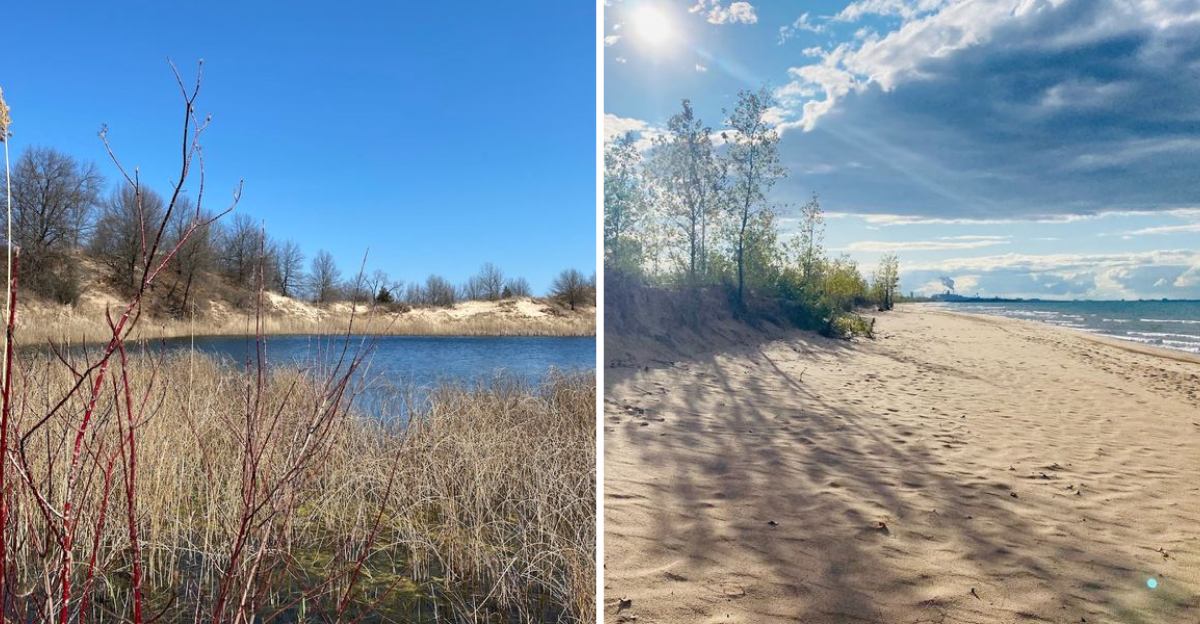
A single hike in Indiana can flip expectations fast. One minute it feels like a quiet forest walk, the next it opens into wetlands alive with sound, then shifts again toward sandy shoreline that feels miles away from anything else. The trail keeps changing in a way that makes it hard to settle into autopilot.
Oak trees give way to open water views, frogs take over the soundscape, and everything feels layered rather than linear. Even the long route never feels repetitive, just constantly in motion, like nature is showing off a little without trying too hard.
The Paul H. Douglas Trail: Your Gateway Into a Shifting Landscape
The trail hits differently than most hikes I have done near a major city. From the moment you leave the Paul H.
Douglas Center for Environmental Education at 100 North Lake Street, the landscape starts changing in ways that genuinely keep you guessing.
The Paul H. Douglas Trail covers about 3.4 miles round trip, but it never feels repetitive.
You pass through black oak savannas where the trees stretch wide and the ground is carpeted with low plants and seasonal wildflowers. Then the terrain shifts into rolling swales, those wave-like ridges and dips shaped by glacial activity thousands of years ago.
The sand underfoot is part of the experience. It is not packed gravel, so wearing sturdy shoes or even light hiking sandals makes the walk more comfortable.
The trail is well-marked throughout, so getting turned around is unlikely even on your first visit.
What makes this route special is its ability to feel like multiple hikes in one. Each section offers a genuinely different mood.
The reward at the end, a stretch of Lake Michigan shoreline, makes every sandy uphill step feel completely worth it.
Black Oak Savanna: A Rare Ecosystem You Can Actually Walk Through
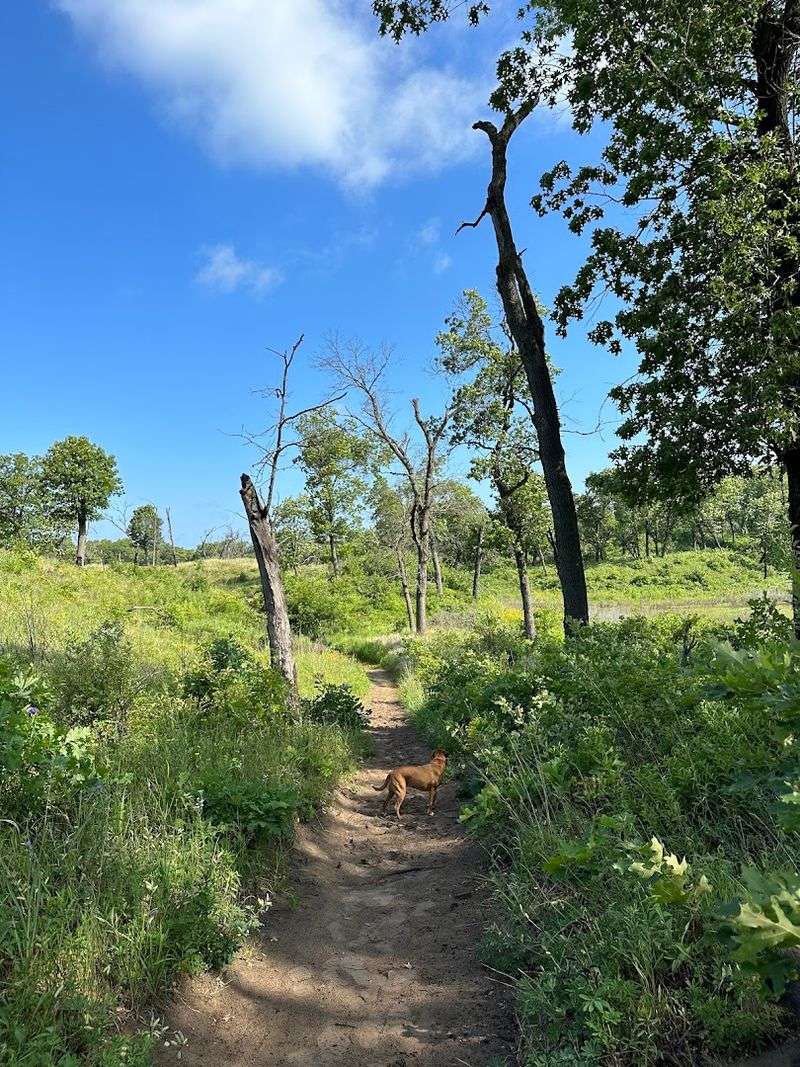
Not many people realize that black oak savannas are considered globally rare ecosystems, and Miller Woods has one of the finest remaining examples in the region. The trees here are old and wide, spreading their canopy in that unhurried way that only comes with decades of growth.
Underneath the oaks, the ground opens up in a way that feels almost park-like. It is nothing like a dense forest.
Light filters through generously, and the sandy soil supports a surprising range of plants that would struggle anywhere else.
Spring is when this place truly shows off. Blue lupine blankets the rolling hills with a soft purple haze that is genuinely hard to believe until you see it in person.
Hoary puccoon adds splashes of yellow, and spiderwort brings in deeper violet tones. The whole scene feels like something from a nature documentary.
Even outside of bloom season, the savanna holds its character. The bark patterns on the oaks, the open sight lines, and the way sound carries differently here all give it a distinct personality.
It is the kind of ecosystem that makes you slow down and actually look at what is around you.
Coastal Wetlands and Interdunal Ponds Along the Route
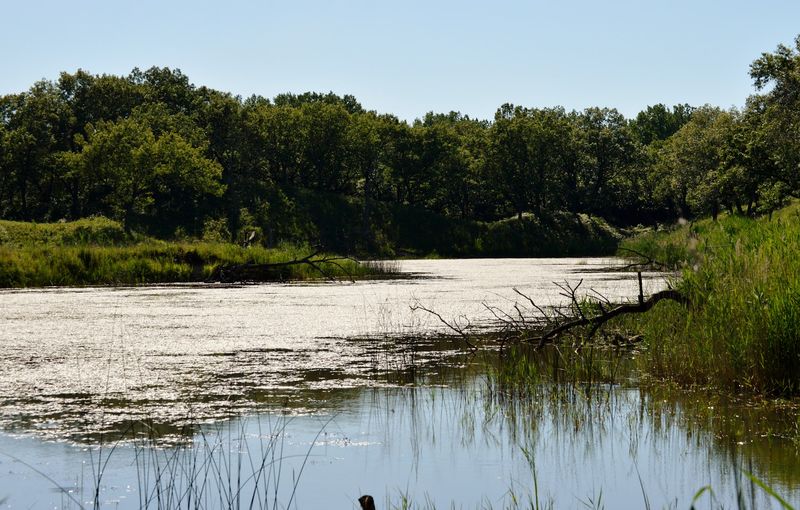
The wetlands section of Miller Woods carries a completely different energy from the savanna. The air feels heavier here, and the sounds shift to a chorus of frogs, red-winged blackbirds, and the occasional splash from something moving just out of sight.
Beavers are active in this area, and their lodges are visible from the trail near some of the larger ponds. Spotting fresh gnaw marks on tree stumps is a small thrill that makes the hike feel like genuine wildlife observation rather than just a walk through scenery.
Deer are frequently seen near the water, particularly in the early morning. Mama deer with fawns have been spotted wading in the shallower sections of the ponds, which is one of those moments that stops you mid-step.
The interdunal ponds formed naturally in the low spots between ancient dune ridges, making them a direct result of the area’s glacial geology.
The wetlands also serve as a critical stopover for migratory birds, so birders tend to get especially excited about this stretch. Herons, ducks, and cranes are common sightings depending on the season.
Bring binoculars if you have them because this section rewards patience.
The Dune and Swale Topography That Makes This Place Geologically Fascinating
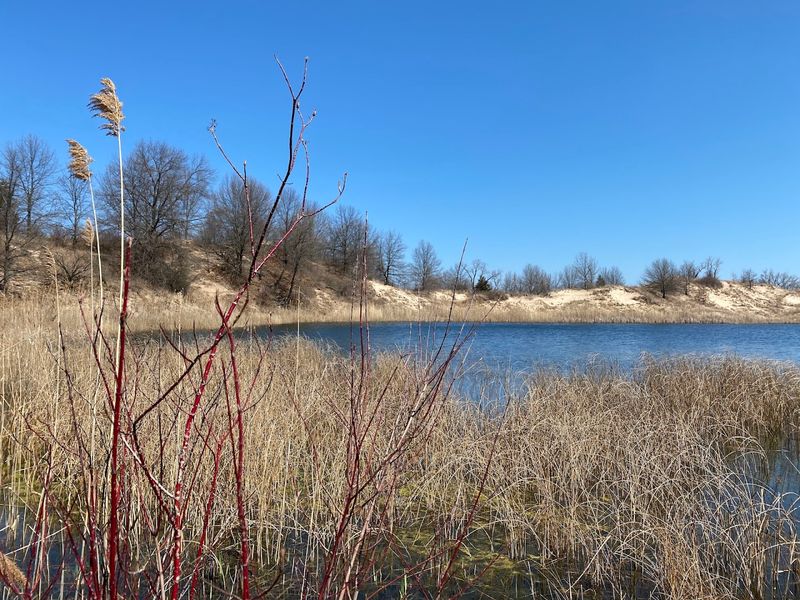
The ground beneath your feet at Miller Woods has a story that goes back thousands of years. The characteristic swells and dips you feel throughout the hike are called dune and swale topography, and this preserve is one of the best places in the world to experience it up close.
As glaciers retreated at the end of the last ice age, they left behind a series of ancient shorelines. Each ridge you climb and each low, wet hollow you pass through represents a former beach edge.
It is geology you can feel with your legs rather than just read about in a textbook.
This topography is also what creates the incredible diversity of habitats packed into such a small area. The high sandy ridges support dry-adapted plants and oaks, while the swales hold moisture and become wetlands.
The contrast happens within steps of each other, which is part of what makes this preserve so ecologically rich.
Geologists and naturalists have studied this landscape for well over a century. The fact that it survived industrial development in Gary is remarkable.
Hiking through it feels like moving through living scientific history, which adds a layer of meaning that most trails simply cannot offer.
Wildlife Watching Opportunities That Go Beyond the Obvious
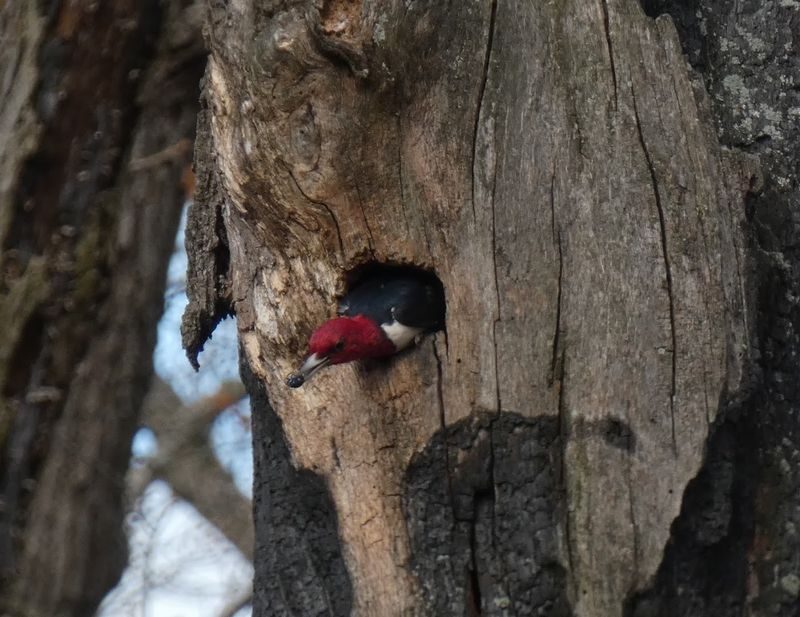
Miller Woods punches well above its weight when it comes to wildlife. For a preserve tucked between Gary’s industrial zones and the lakeshore, the variety of animals that call this place home is genuinely impressive.
Bird watching here draws dedicated enthusiasts from across the region. The mix of savanna, wetland, and dune habitats creates feeding and nesting conditions for an unusually wide range of species.
Herons, ducks, cranes, and dozens of songbird species have all been recorded along the trail. During migration season, the numbers swell considerably.
Frogs are almost impossible to miss from spring through early fall. Their calls fill the wetland sections with a kind of ambient soundtrack that makes the hike feel alive in a very specific way.
Turtles sun themselves on logs near the ponds, and if you move quietly, you might catch one before it slides into the water.
The beavers deserve a special mention because their engineering work is visible throughout the wetland areas. Fresh gnaw marks, dams, and large lodges are scattered along the route.
Seeing that level of animal activity in an urban national park setting is one of those small surprises that turns a good hike into a memorable one.
The Paul H. Douglas Center for Environmental Education
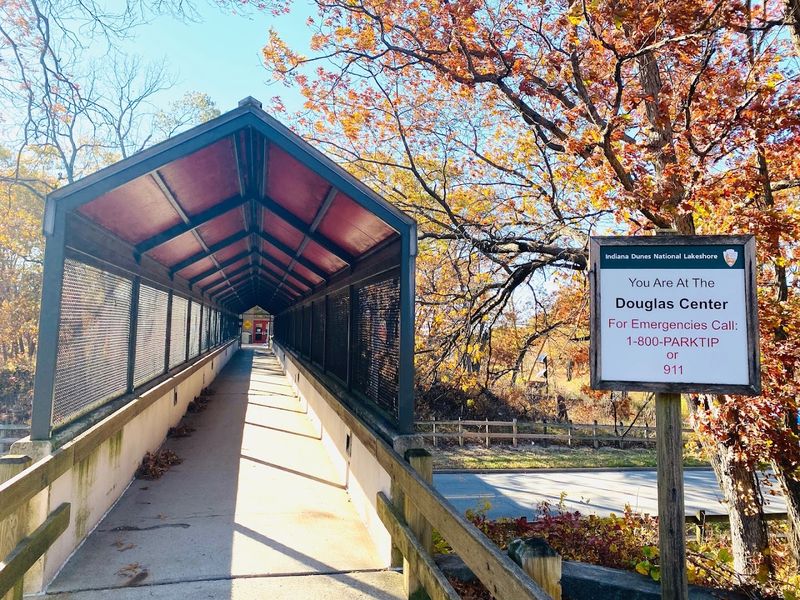
Before hitting the trail, most visitors stop at the Indiana’s Paul H. Douglas Center for Environmental Education, and it is worth taking a few minutes here rather than rushing past.
The center sits right at the trailhead on North Lake Street and serves as the main access point for Miller Woods.
Inside, exhibits cover the ecology of the dunes, the geology of the region, and the wildlife that inhabits the preserve. The staff are genuinely knowledgeable and happy to answer questions, whether you are a first-timer or a returning visitor curious about what is blooming this week.
The center also runs educational programs that are particularly well-suited for families with kids. Getting children excited about wetland ecology and black oak savannas is no small feat, but the hands-on approach here tends to work.
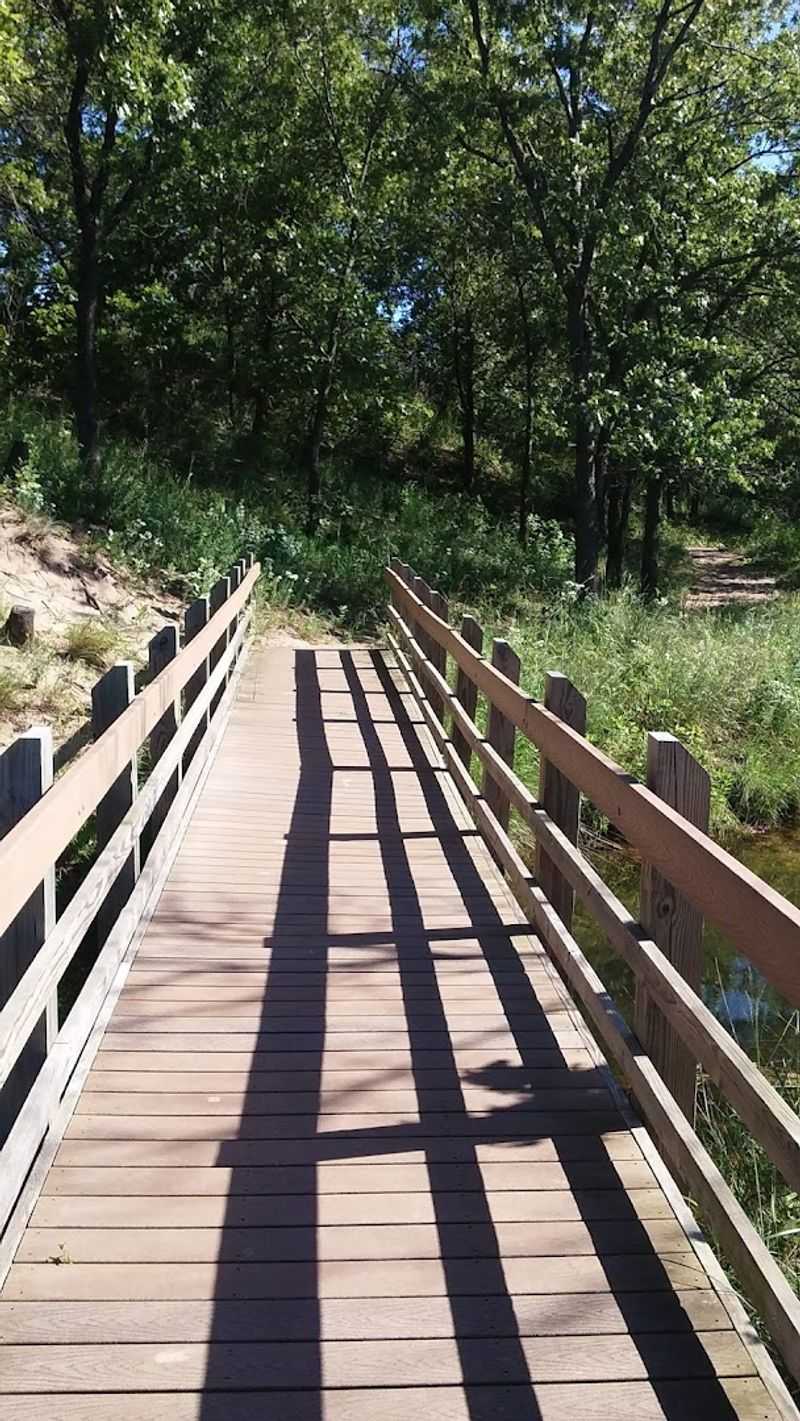
My favorite detail is the accessible path behind the building that leads out to a bridge over one of the ponds, giving visitors who cannot manage the full trail a genuine taste of the wetland environment.
Restrooms and water are available here, which is practical information worth knowing before you head out on a sandy, sun-exposed trail. The center adds real value to the overall experience and sets the tone for everything that follows on the trail.
Lake Michigan Beach: The Payoff at the End of the Trail
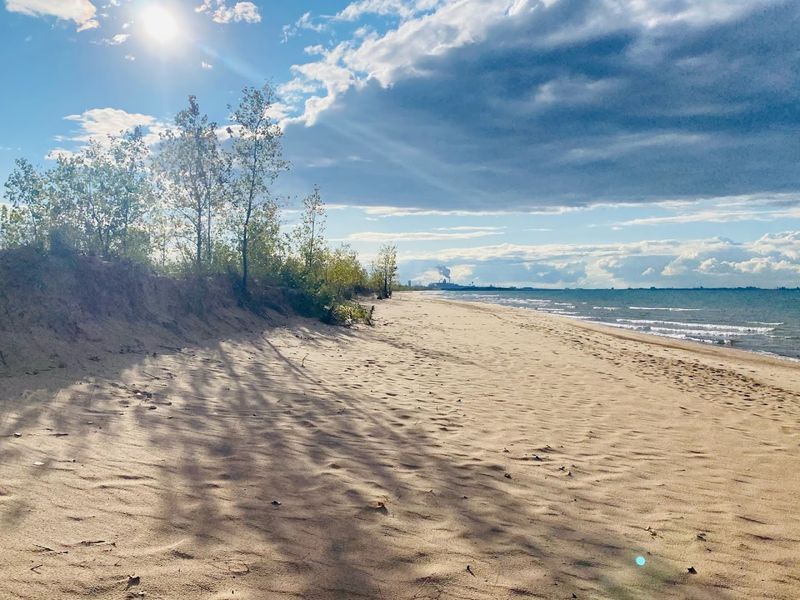
After crossing the Grand Calumet River and navigating the final stretch of sandy dune trail, the lake appears almost without warning. One moment there are trees and grass, and then suddenly there is open water stretching all the way to the horizon.
The Miller Woods Beach section of Lake Michigan is far less crowded than the more popular stretches of Indiana Dunes. That quieter atmosphere makes the arrival feel like a genuine reward rather than just another busy public beach.
On clear days, the Chicago skyline is visible to the northwest, which adds a surreal urban-meets-wilderness contrast to the whole scene.
The beach itself changes with the seasons and with lake levels. It has grown noticeably wider in recent years, giving more room to spread out and rest after the hike.
The water is cold but clean, and plenty of hikers take off their shoes and wade in after the walk out.
Heading back the same way you came gives you a chance to see the ecosystems from a different direction, and the light changes enough throughout the day to make the return trip feel fresh. Plan for two to four hours total depending on your pace, and bring water because the sandy sections in summer can get surprisingly warm underfoot.
