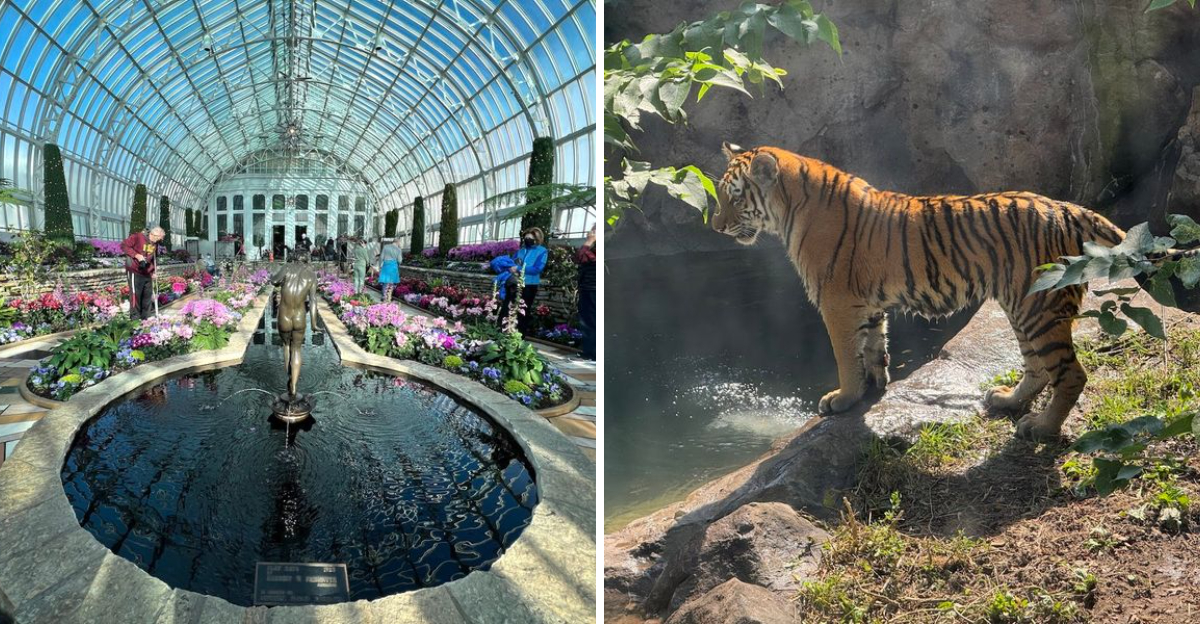
A beloved Minnesota zoo and conservatory offers something pretty rare. Free admission in a world where most attractions come with a ticket price attached.
That alone makes it feel a little more open, a little more welcoming right from the start.
Inside, it blends two worlds in a smooth flow: outdoor animal habitats and lush indoor conservatory spaces filled with plants from around the globe. You move from open-air exhibits into warm, green, tropical-style environments without ever losing that relaxed, wandering pace.
It’s the kind of place where families, locals, and casual visitors all mix without much planning involved. You can spend an hour or an entire afternoon here without ever feeling rushed or like you’re “getting your money’s worth”.
Because there’s no pressure for that at all.
And that’s really the charm. It keeps things simple, accessible, and quietly memorable without trying too hard.
Free Admission That Actually Means Something
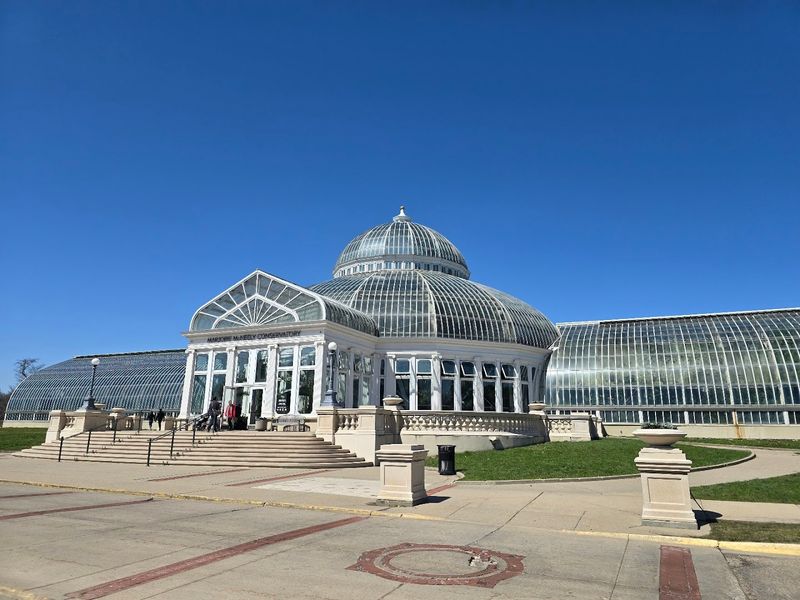
Not many places in North America can say they are completely free to enter, and actually mean it. Como Park Zoo and Conservatory has been welcoming visitors without an admission fee for generations.
It is one of the few remaining free-admission zoos on the continent.
A donation box sits near the entrance, and most visitors are happy to chip in. The generosity feels mutual.
You give what you can, and the zoo gives back something genuinely special in return.
This model works because the community believes in it. Locals return again and again, not just because it saves money, but because the place earns that loyalty.
Visitors from out of town are often stunned when they realize there is no ticket counter. It feels almost rebellious in the best possible way.
Arriving close to the 10 AM opening time helps you snag a good parking spot. Street parking and nearby lots are available around the park.
The Palm Dome Conservatory
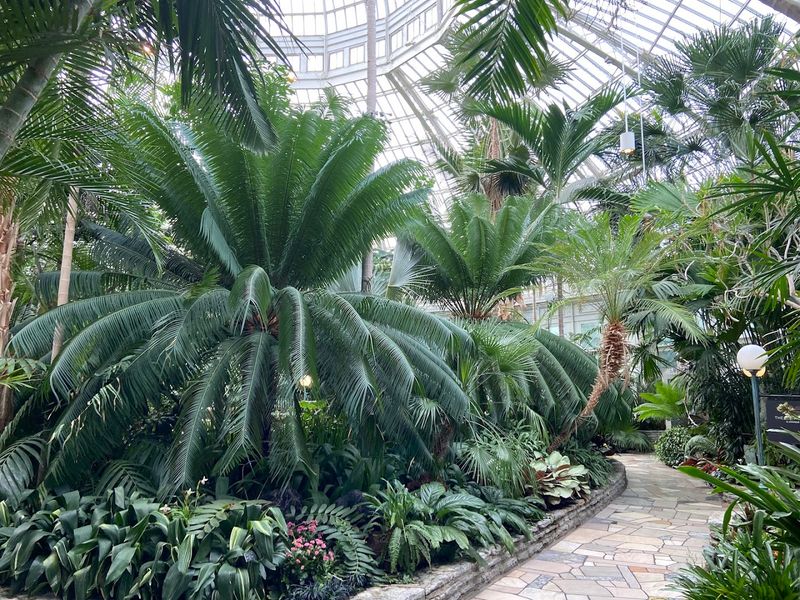
Walking into the Palm Dome feels like the weather just changed entirely. One moment you are in Minnesota.
The next, you are surrounded by towering palms and thick tropical air. The contrast is almost funny, in the best way.
The dome houses an impressive collection of tropical plants, many of them rare. Star fruit, cocoa, and banana trees grow here.
You can actually see the fruit hanging from the branches, which is something most Midwesterners rarely get to experience up close.
Volunteers roam the space and they are genuinely fun to talk to. One of them explained the history of a particular tree with the kind of enthusiasm that makes you want to learn more.
The humidity wraps around you like a warm blanket. In February, that warmth is practically medicinal.
Even if you only came for the zoo, do not skip this dome. It is easily one of the most memorable indoor spaces in all of the Twin Cities.
Tropical Encounters Exhibit
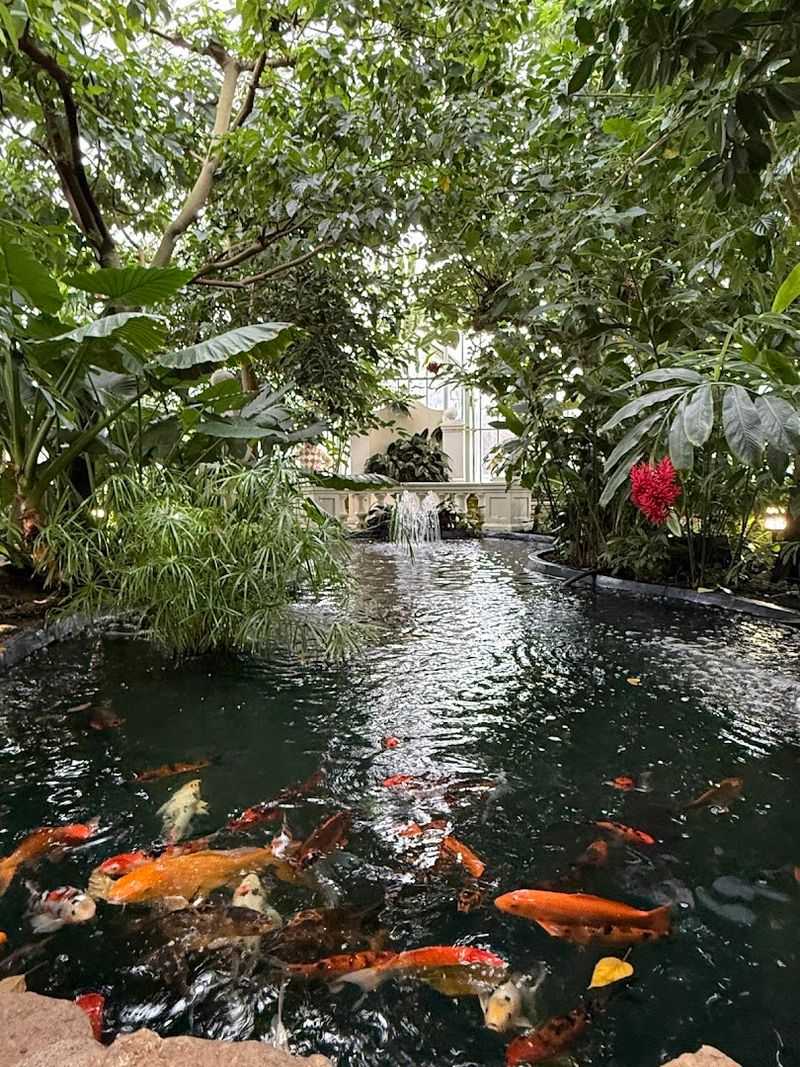
Stepping into the Tropical Encounters area during a Minnesota winter feels like a small miracle. Birds move freely overhead.
Turtles bask under warm lights. Fish glide through tanks that shimmer with quiet color.
The whole space hums with life.
This exhibit is especially popular when temperatures outside drop below freezing. Families huddle inside, kids pressing their faces against glass, pointing at creatures they have only seen in books.
The energy is unhurried and genuinely joyful.
What makes this space stand out is how layered it feels. There is always something new to notice.
A turtle shifting on a rock. A bird landing unexpectedly close.
The exhibit does not feel like a typical zoo display. It feels more like a shared moment with animals that have no interest in performing.
They just live here, and you get to watch. That quiet authenticity is hard to find.
It makes the Tropical Encounters exhibit one of the most talked-about spots at Como Zoo.
Big Cats and Primates
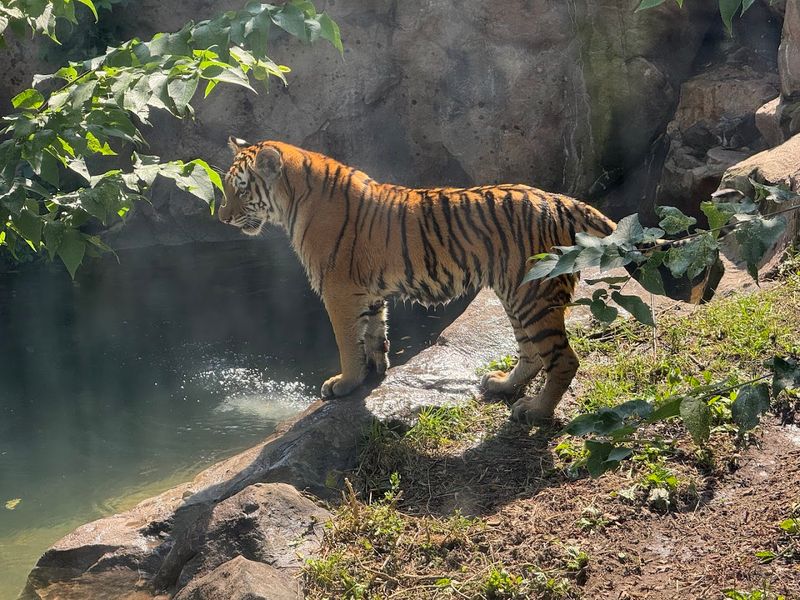
There is something quietly powerful about watching a big cat at rest. At Como Zoo, the big cat area draws a steady crowd for good reason.
Lions and other large felines move through their spaces with a calm authority that stops people mid-step.
The primate section sits nearby and offers a completely different kind of energy. Apes and monkeys are expressive, curious, and often hilarious to watch.
Kids tend to linger here longer than anywhere else. Adults do too, if they are honest about it.
Both areas reflect the zoo’s ongoing commitment to animal care. Staff members are visible and approachable.
They answer questions without making you feel rushed. Some visitors have noted that the primate spaces could be larger, and the zoo is aware of those concerns.
Improvements happen gradually here, funded largely through community donations. Knowing that context makes each visit feel more meaningful.
You are not just a tourist. You are part of something the city genuinely cares about keeping alive.
The Sea Lion Show
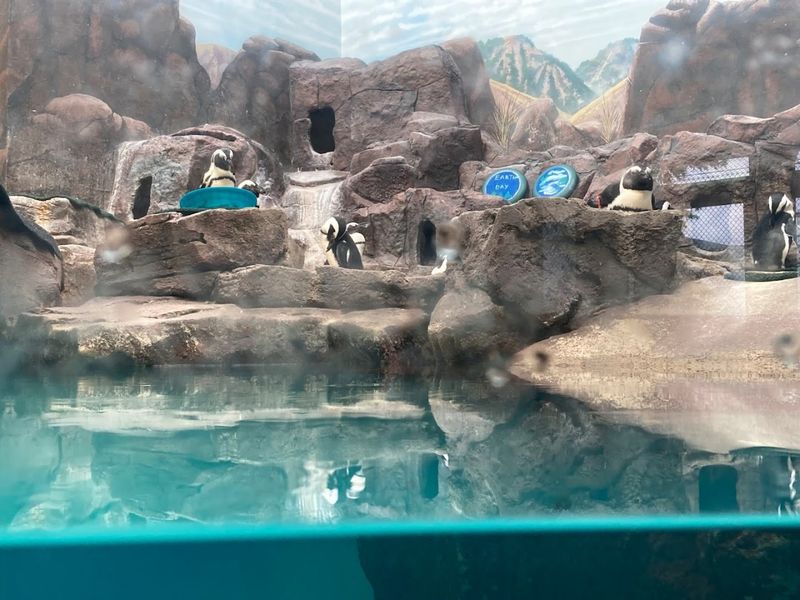
The sea lion show at Como Zoo has a reputation for being just the right length. Short enough to hold a toddler’s attention.
Engaging enough that adults find themselves clapping along. It hits a sweet spot that is genuinely hard to achieve.
The exhibit area itself is described as state of the art after recent renovations. The pool is clean and well-designed.
The sea lions move through their routines with obvious energy. Trainers interact with them in ways that feel respectful rather than performative.
Shows run on a daily schedule, so it is worth checking the zoo’s website before you visit. Arriving a few minutes early helps you grab a good viewing spot.
The crowd that gathers is always a mix of ages, which says something about how universally appealing the experience is. Watching a sea lion launch out of the water and land with a splash is the kind of moment that makes everyone around you laugh at the same time.
Those shared moments are rare. Treasure them.
The Japanese Garden
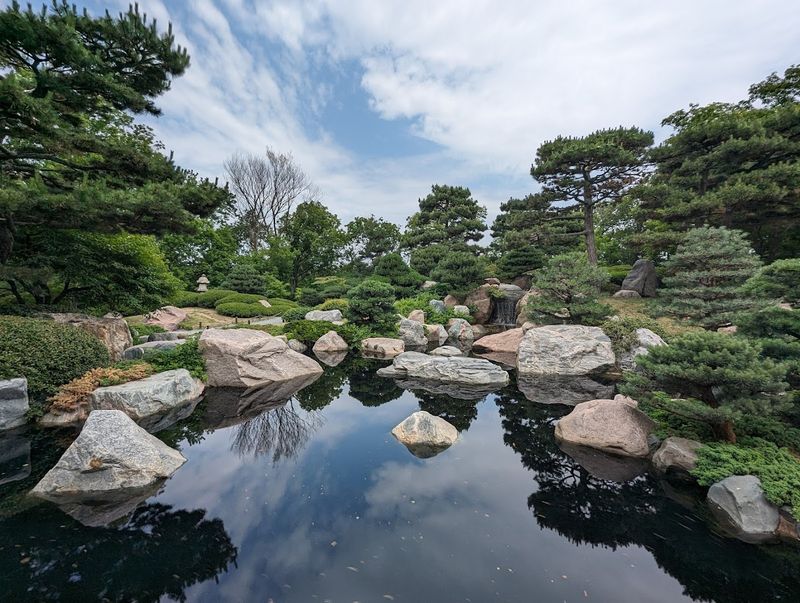
Tucked within the larger park grounds, the Japanese Garden at Como feels like a pause button for the brain. Stone paths wind through carefully arranged plants.
A pond sits at the center, calm and reflective. The whole space invites you to slow down.
Summer is when this garden truly opens up. The lily pads spread across the water.
The greenery deepens into rich layers of texture. Visitors who stumble upon it for the first time often stop and just stand there for a moment, taking it in.
The garden has a quieter personality than the zoo sections nearby. It attracts people who want a different kind of experience, something more meditative.
Couples walk through it slowly. Photographers linger near the water’s edge.
Even on busier weekend days, this corner of the park tends to feel more peaceful. If you are visiting in warmer months, set aside extra time for this space.
Giraffes and Wildlife from Around the World
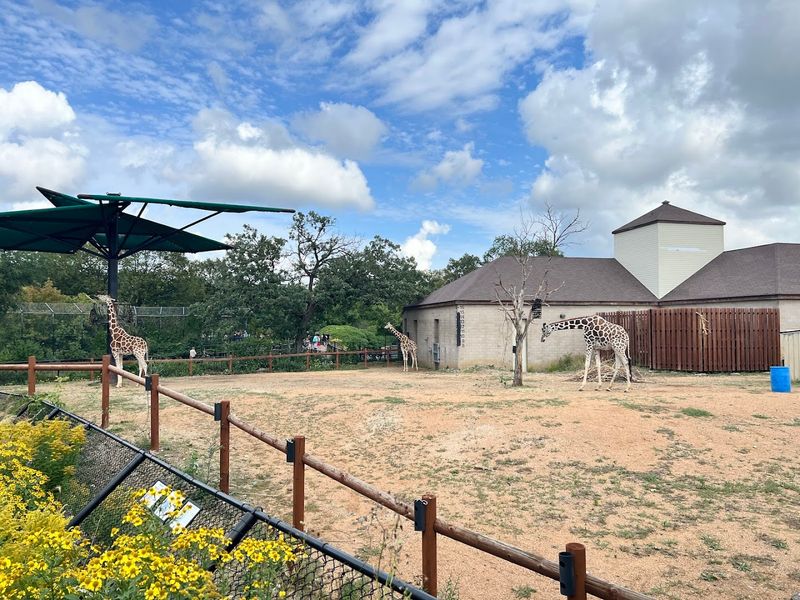
Giraffes have a way of making you reconsider scale. Standing near the giraffe habitat at Como Zoo, looking up at an animal that tall, is a genuinely humbling experience.
They move slowly and deliberately, like they know exactly how impressive they are.
The zoo also houses animals from many different corners of the world. Each exhibit tells a small story about where that animal comes from and how it lives.
Informational signs are clear and written in a way that kids can actually understand and enjoy.
Seasonal feeding opportunities for giraffes have been available at certain times of year, so checking the zoo’s schedule ahead of your visit is a smart move. The variety of wildlife on display is broader than most people expect from a free zoo.
Polar bears, big cats, primates, birds, and now giraffes all share this compact but thoughtfully designed space. Como Zoo manages to pack a lot of genuine wonder into a relatively small footprint.
That efficiency is part of what makes it so lovable.
Rare and Exotic Plants in the Conservatory
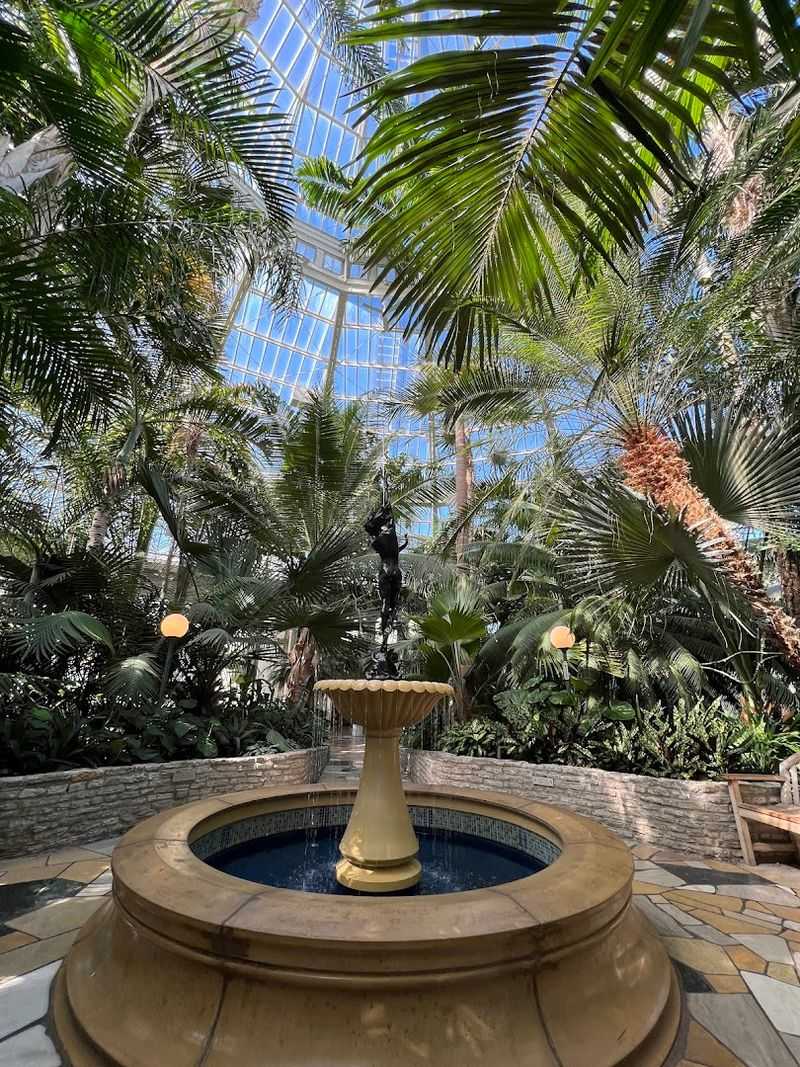
The conservatory at Como is not just a greenhouse. It is a living collection of plants that most people will never encounter anywhere else.
Some of the trees on display are extraordinarily rare, like the OSA pulchra from Costa Rica, a species with fewer than thirty growing in its native habitat.
The spice exhibit is another highlight that tends to surprise visitors. Seeing ginger, vanilla, and other familiar spices growing in their natural forms changes how you think about your kitchen pantry.
It is one of those quietly educational moments that sneaks up on you.
Tropical fruits hang from branches in the dome, and the variety shifts depending on the season. Volunteers who staff the conservatory bring extra depth to the experience.
They know the stories behind the plants and share them with genuine enthusiasm. One particularly memorable visit involved spotting the lady slipper, Minnesota’s state flower, blooming in the middle of January.
Year-Round Accessibility and Seasonal Magic
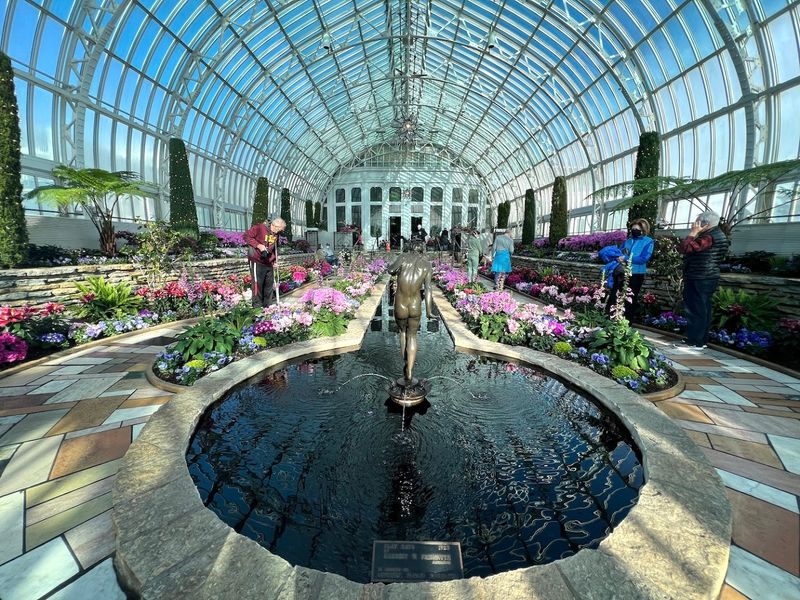
One of the quietest things Como Zoo does well is simply staying open all year. Many outdoor attractions in Minnesota shut down or scale back significantly in winter.
Como keeps going, and the experience shifts beautifully with each season.
Winter visits offer a different kind of charm. Animals move into their warm indoor habitats.
The conservatory becomes even more appealing as a warm refuge. Christmas displays have drawn visitors for years, and the holiday atmosphere adds a layer of coziness that feels genuinely festive.
Spring and summer bring their own rewards. Outdoor exhibits open up fully.
The Japanese Garden blooms. Families spread out across the grounds with snacks and strollers.
Fall colors in the surrounding park create a backdrop that feels almost painted. Each season at Como offers a reason to return, which explains why so many visitors describe it as a place they visit multiple times a year.
The zoo does not try to be something different each season.
A Community Treasure Worth Supporting
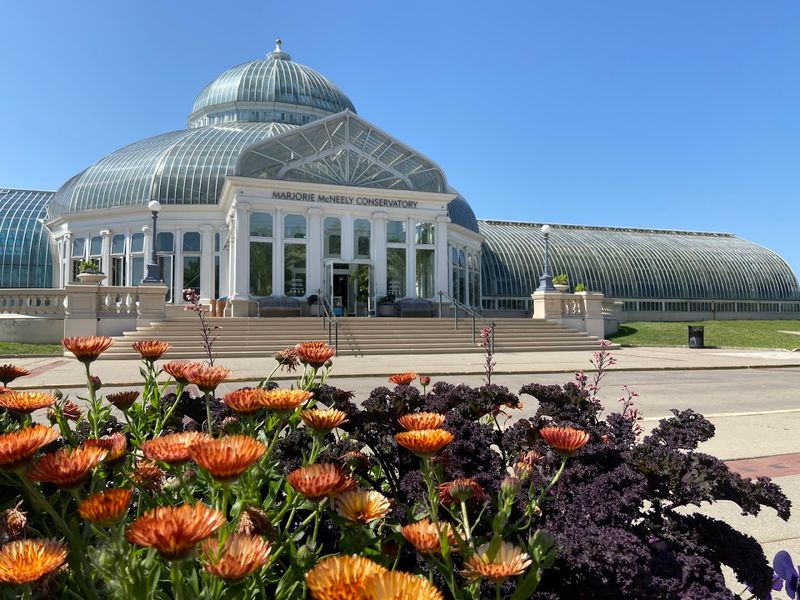
Como Park Zoo and Conservatory holds a special place in the hearts of Twin Cities residents. Many locals visited here as children and now bring their own kids.
That generational connection gives the place a warmth that is hard to manufacture and impossible to fake.
The zoo runs on community support. Donations at the entrance, purchases from the cafe, and contributions from local advocates all help keep the lights on and the animals cared for.
Staff and volunteers reflect that investment. They are knowledgeable, kind, and visibly proud of where they work.
Recent renovations have refreshed several key areas of the park, including the sea lion exhibit and various animal habitats. The improvements show a commitment to growing with the community’s expectations while honoring what has always made this place special.
Visiting Como Zoo feels less like a tourist stop and more like joining something ongoing. A living institution that belongs to everyone who walks through its gates.
Address: 1225 Estabrook Dr, St. Paul, MN 55103
