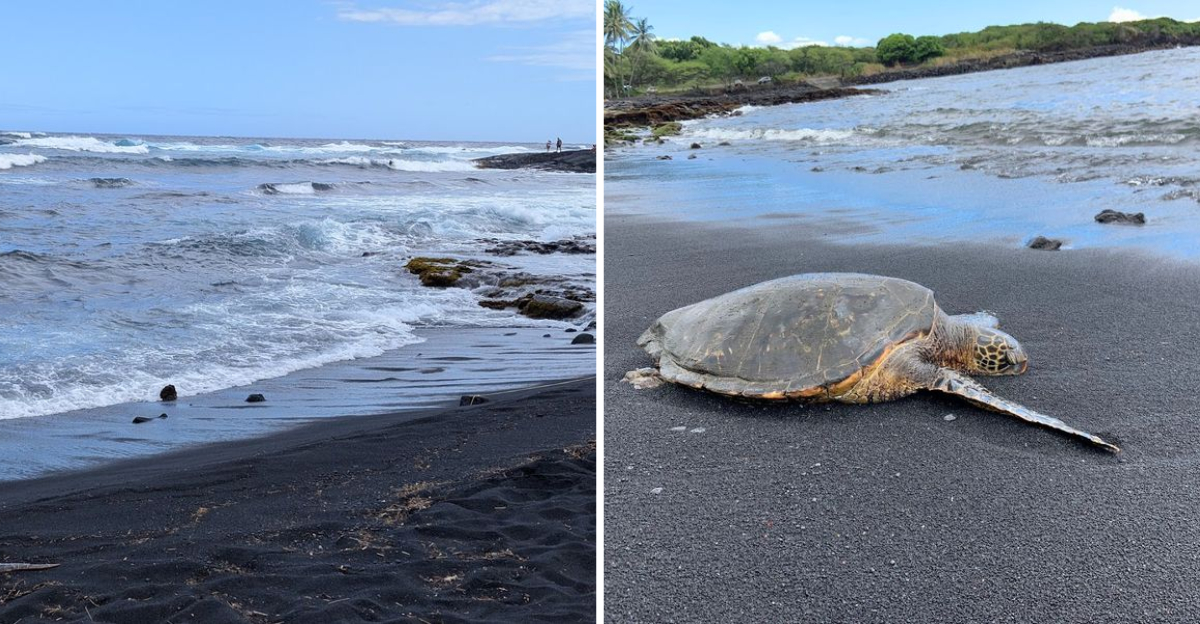
Green sea turtles sprawled across the Hawaii jet black sand, motionless in the sun, completely unbothered by the humans standing a few feet away. Volcanic sand so dark it almost looks like charcoal against the turquoise water. The turtles do not move when you approach.
They just lie there, soaking up warmth, looking like they have been doing this for a hundred years. Maybe they have.
I sat down on the sand, kept my distance, and watched. The ocean rolled in, the palms swayed, and for a while, nothing else mattered.
The Black Sand That Starts It All
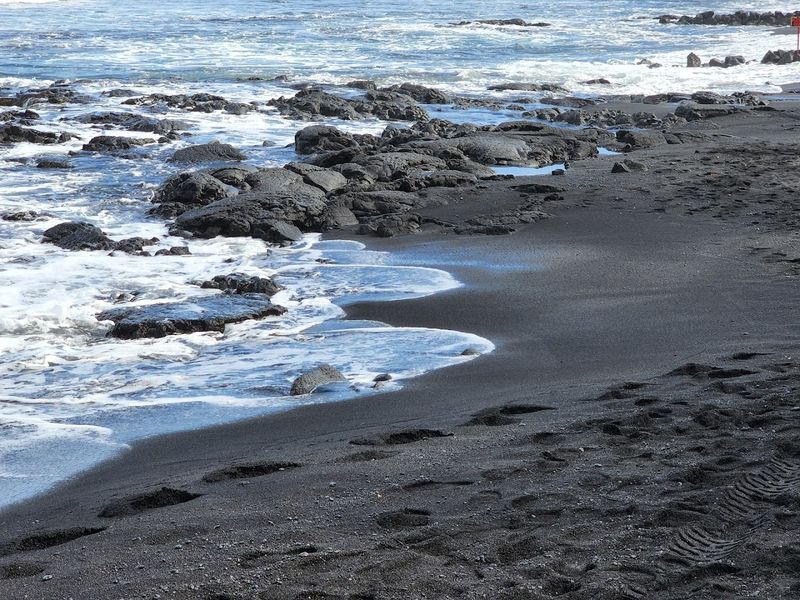
Most people expect sand to be white or golden, so the first glimpse of Punalu?u genuinely catches you off guard. The sand here is deep black, made entirely from basalt, which is volcanic rock that shattered into tiny fragments when molten lava hit the cold ocean water thousands of years ago.
Waves then ground those fragments into what you now walk on. It sounds rough, but the texture is actually a mix of fine and slightly coarse grains, and it sparkles in direct sunlight in a way that feels almost unreal.
One thing worth knowing before you visit: the black sand absorbs heat much faster than lighter-colored sand. On a sunny afternoon, it can get seriously hot underfoot.
Wearing water shoes or slippers is a smart call, especially if you plan to linger.
The contrast of the dark sand against the bright blue water and green palm fronds creates a visual that photographs will never fully capture. You really have to stand there and let your eyes adjust to believe it.
This is the kind of beach that makes you want to sit quietly and just take it all in rather than rush to the next spot.
Hawaiian Green Sea Turtles: The Real Stars of the Beach
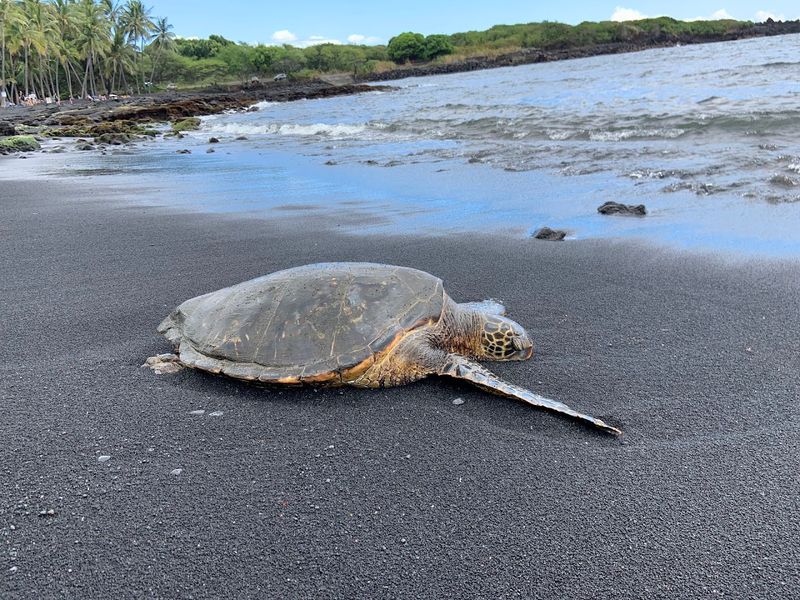
Nothing quite prepares you for the sight of a full-grown honu stretched out on black sand, eyes half-closed, soaking up the afternoon sun. Hawaiian green sea turtles visit Punalu?u regularly, and the beach has become one of their most reliable resting spots on the entire island.
As cold-blooded reptiles, they rely on external heat sources to regulate their body temperature. The warm black sand is ideal for that, helping them digest food and conserve energy between dives.
The shallow bay also offers red seaweed, which makes up a big part of their herbivorous diet. So in a sense, Punalu?u is both a restaurant and a napping spot for them.
You can often spot them grazing near the surface before they haul themselves onto shore.
Seeing four or five turtles resting at once is not unusual, especially on calm, sunny afternoons. Some of them are enormous, easily the size of a large coffee table.
The experience of watching them breathe slowly and shift slightly in the sand feels oddly peaceful, like you have stumbled into their living room uninvited but are somehow welcome to stay a while.
Why Turtles Choose This Spot Over Others
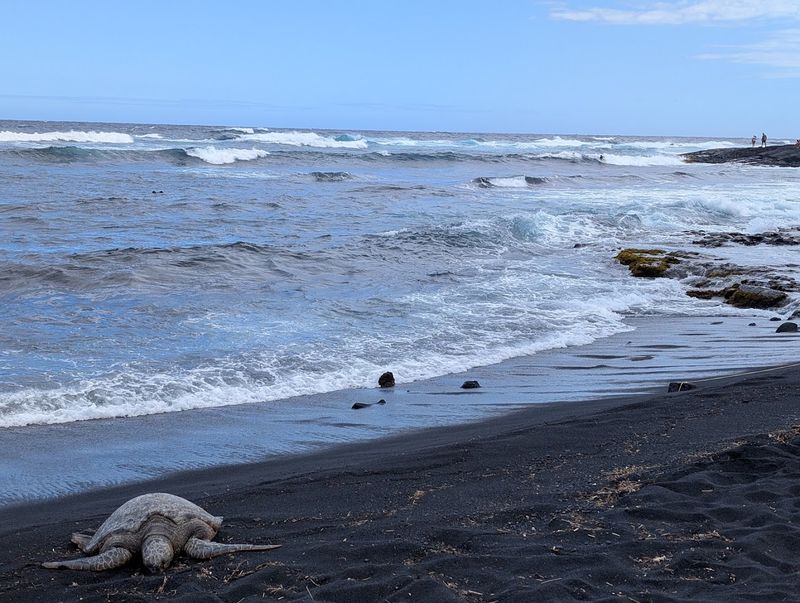
It is not random that honu keep coming back to this particular stretch of coastline. Punalu?u has a combination of features that make it uniquely attractive to sea turtles, and understanding that adds a whole new layer to the visit.
The bay is relatively shallow and sheltered, which makes it easier for turtles to swim close to shore without fighting strong surf. Freshwater springs actually bubble up from beneath the ocean floor here, creating pockets of varying water temperature throughout the bay.
Turtles seem drawn to these cooler freshwater zones, especially after warming up on the sand.
Red algae thrives in these conditions, giving the turtles a reliable food source right at their doorstep. It is essentially a full-service stop for them.
The combination of warm basking sand, calm entry points, fresh spring water, and plentiful food makes Punalu?u hard to compete with.
Hawksbill turtles, known as honuea, also visit occasionally, though they are far rarer. Fewer than 100 are estimated to live in all of Hawaii, with most of them residing on the Big Island.
Spotting one would be an extraordinary stroke of luck, the kind of story you would tell for years.
How to Watch Turtles Without Disturbing Them
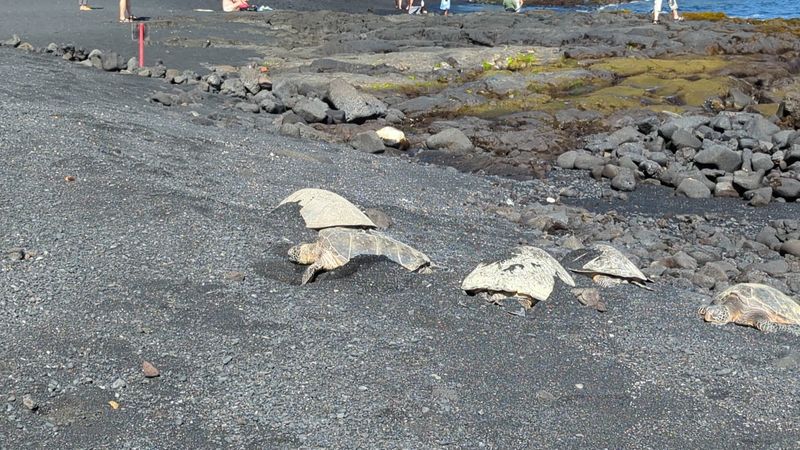
Getting close to a wild sea turtle feels like a once-in-a-lifetime moment, and the temptation to reach out and touch one is completely understandable. But both federal and state law protect these animals, and for good reason.
Human contact can actually harm them in ways that are not immediately visible.
Bacteria from human hands can compromise a turtle’s immune system. Even well-meaning touches can stress them out and disrupt their resting cycle.
The rule of thumb is to stay at least ten to fifteen feet away, and many visitors find that distance still feels remarkably close.
There is a fenced area near the beach where turtles frequently gather, which helps manage the crowd and keeps the animals from being accidentally cornered or startled. Rangers and volunteers are often present, especially during peak afternoon hours, to gently remind visitors of the guidelines.
The best approach is to move slowly, keep your voice low, and avoid blocking their path to the water. Turtles need a clear route back to the ocean whenever they are ready to go.
Watching them on their own terms, without interference, is honestly a more rewarding experience anyway. You get to see them behave naturally, and that is the whole point.
Best Times to Visit for the Quietest, Most Magical Experience
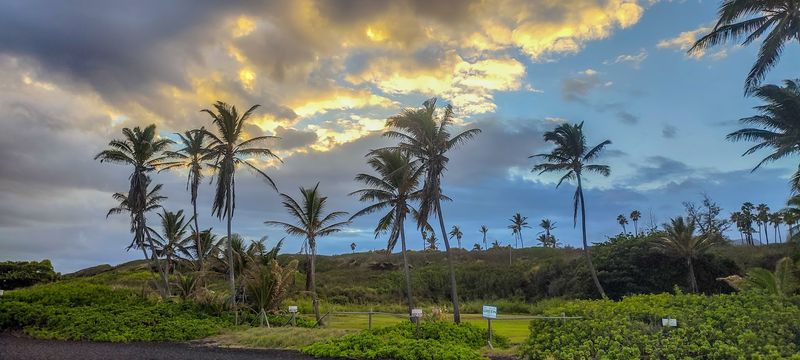
Timing your visit to Punalu?u can make a surprisingly big difference in what the experience feels like. The beach is open from 6 AM to 11 PM daily, and arriving early in the morning is genuinely worth the effort of an earlier alarm.
Around 7:30 AM, the parking lot is mostly empty and the beach has a calm, almost meditative quality. The light hits the black sand at a low angle and makes everything glow.
Turtles can sometimes be spotted in the shallows at this hour before the day heats up.
By midday, things shift noticeably. Tour buses from Hilo and Kona arrive throughout the afternoon, and the beach fills up quickly.
Turtles tend to come ashore to bask between 11 AM and 3 PM, so that window brings the biggest crowds along with the best turtle sightings.
If you want both the turtles and a bit of breathing room, aim for late morning on a weekday. The turtles are often already settled on the sand, and the crowd has not yet peaked.
Dusk is also worth considering since turtles typically return to the water around that time, and the sunset over the bay can be genuinely stunning.
Swimming, Safety, and What to Expect in the Water
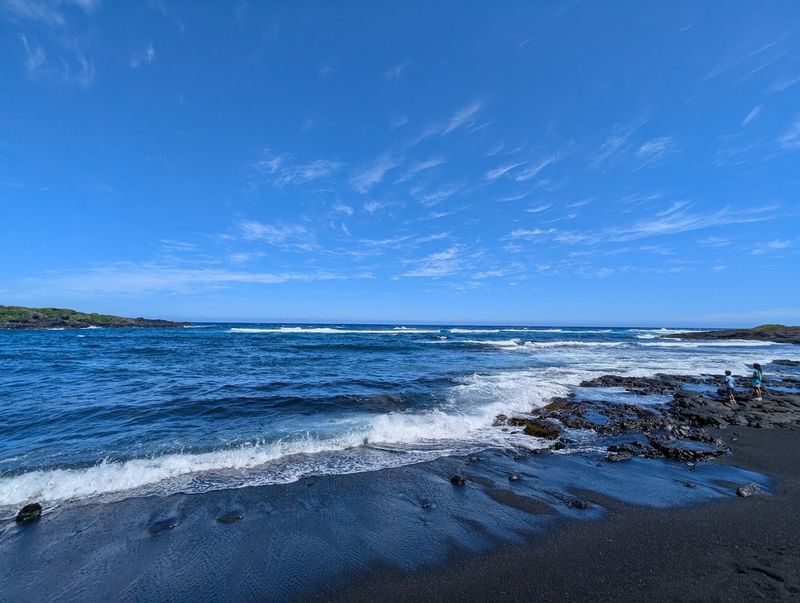
The water at Punalu?u looks inviting, and plenty of people do swim here. But it is one of those beaches that deserves a bit of respect before you wade in.
The ocean bottom is rocky in places, and currents can pick up unexpectedly, especially on windy days.
Lifeguards are on duty during regular hours, which is reassuring, but there have been rescues here from visitors who underestimated the surf. Water shoes are strongly recommended, both for the hot sand and the rocky entry points.
The freshwater springs beneath the bay also create sudden temperature shifts in the water, which can feel startling if you are not expecting it.
Snorkeling is possible in calmer sections of the bay, and some lucky swimmers have had close encounters with turtles in the water. That said, the beach is not typically recommended as a top snorkeling destination due to wave activity and visibility that varies day to day.
For families with young children, there is a small cove area near the rocks that offers a bit more shelter from the open surf. It is a good spot for wading and splashing without venturing too far out.
Always check conditions before getting in, and when the lifeguard says stay out, listen.
What Else to See, Do, and Explore Nearby
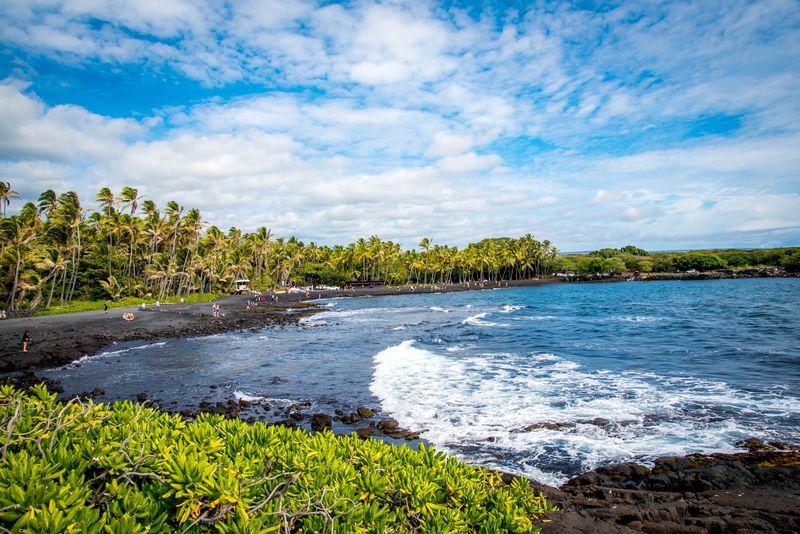
Punalu?u is worth more than a quick stop, and the surrounding area gives you plenty of reasons to extend your time on the southern coast. The beach park itself has picnic tables, restrooms, and shaded areas under the coconut palms, making it easy to spend a relaxed few hours without needing much gear.
A small shop on site sells handmade local items, and there is a food truck nearby that draws decent reviews from regulars. After the beach, many visitors make the short drive to Punalu’u Bake Shop in Naalehu, which is known for its malasadas and local pastries.
It is a low-key, satisfying stop that fits the unhurried pace of the southern coast.
South Point, also known as Ka Lae, is only about a twenty-minute drive away. It is the southernmost tip of the United States and has a dramatic, windswept character that feels completely different from Punalu?u.
The two stops pair well together for a half-day trip along the Ka’u coast.
Hawaii Volcanoes National Park is roughly forty minutes north and makes for a natural companion on any Big Island itinerary. Many visitors combine the park with Punalu?u on the same day, which gives a vivid sense of how actively this island is still being shaped by the forces that created it.
Address: Ninole Loop Rd, Pahala, HI 96777
