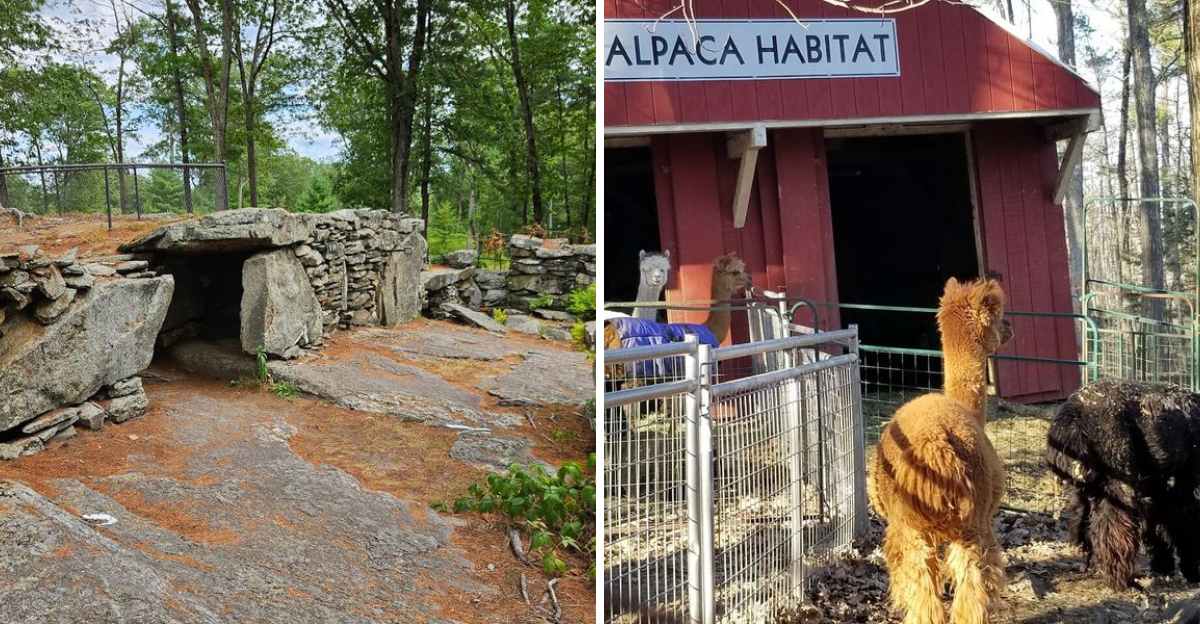
I have been to plenty of quirky attractions in New Hampshire over the years, but I have never been anywhere that made me question everything I thought I knew about history. This bizarre ancient stone structure is hidden in the woods, and it has baffled experts for decades.
No one knows exactly who built it or why. Some say it is a prehistoric calendar.
Others say it was built by early settlers. A few believe it has connections to ancient European visitors.
I walked through the maze of low walls and stone chambers, feeling like I had stumbled onto a secret that archaeologists are still fighting about. The main structure is a chamber that aligns with the sun on the solstice.
Standing inside it, I could see how the light would hit a specific spot at a specific time. That kind of precision does not happen by accident.
I left with more questions than answers. That is exactly how a place like this should make you feel.
New Hampshire has some strange corners, but this one is unforgettable.
The Mystery That Started It All
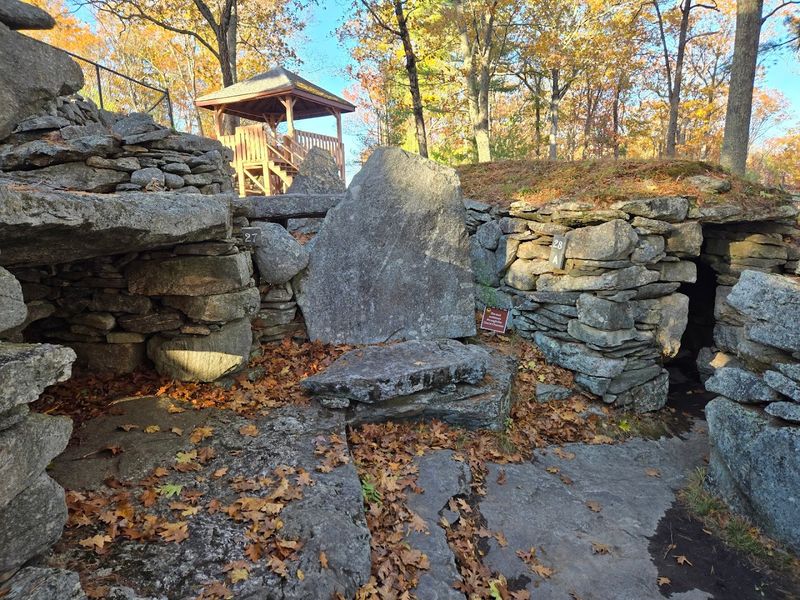
Long before the site got its bold nickname, people were stumbling across these strange stone formations in the New Hampshire woods and asking the same burning question: who on earth built this?
The site spans roughly 30 acres and features an elaborate arrangement of stone chambers, walls, and standing monoliths that simply do not fit neatly into any textbook explanation.
Radiocarbon dating of charcoal found across the property points to human activity stretching back as far as 4,000 years. That is not a typo.
Four thousand years of mystery, right here in New England.
Some researchers believe the Pawtucket people used the site as a sacred ceremonial center over thousands of years. Others argue that 18th and 19th-century farmers built the structures for more practical purposes.
A few bold theorists even suggest ancient European visitors left their mark here long before Columbus set sail. Nobody has landed on a definitive answer, and that open-ended puzzle is precisely what keeps curious minds returning to this corner of New Hampshire year after year.
Stone Chambers That Defy Easy Explanation
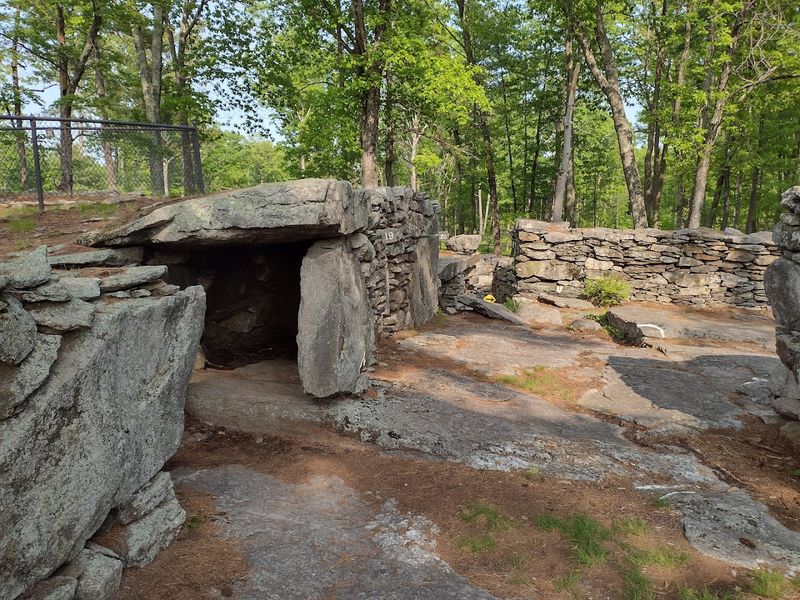
Step inside one of the underground stone chambers at this site and the temperature drops, the light fades, and a very old feeling settles over you. These are not your average root cellars.
The craftsmanship involved in fitting massive granite slabs together without mortar is genuinely impressive, and the scale of some chambers is larger than most people expect.
The Oracle Chamber is one of the most talked-about structures on the property. A speaking tube carved into the stone allows sound to travel in a way that seems almost theatrical, leading many to believe the space was used for ceremonial or ritualistic purposes rather than food storage.
Jonathan Pattee, who owned the property in the early 1800s, is often credited by skeptics as the builder of several chambers. But closer inspection of the stonework and the sheer volume of material involved has led plenty of researchers to push back hard on that theory.
Standing inside one of these chambers, surrounded by walls that predate modern tools, it becomes genuinely difficult to dismiss the sense that something truly ancient is going on here in New Hampshire.
Astronomical Alignments That Will Blow Your Mind
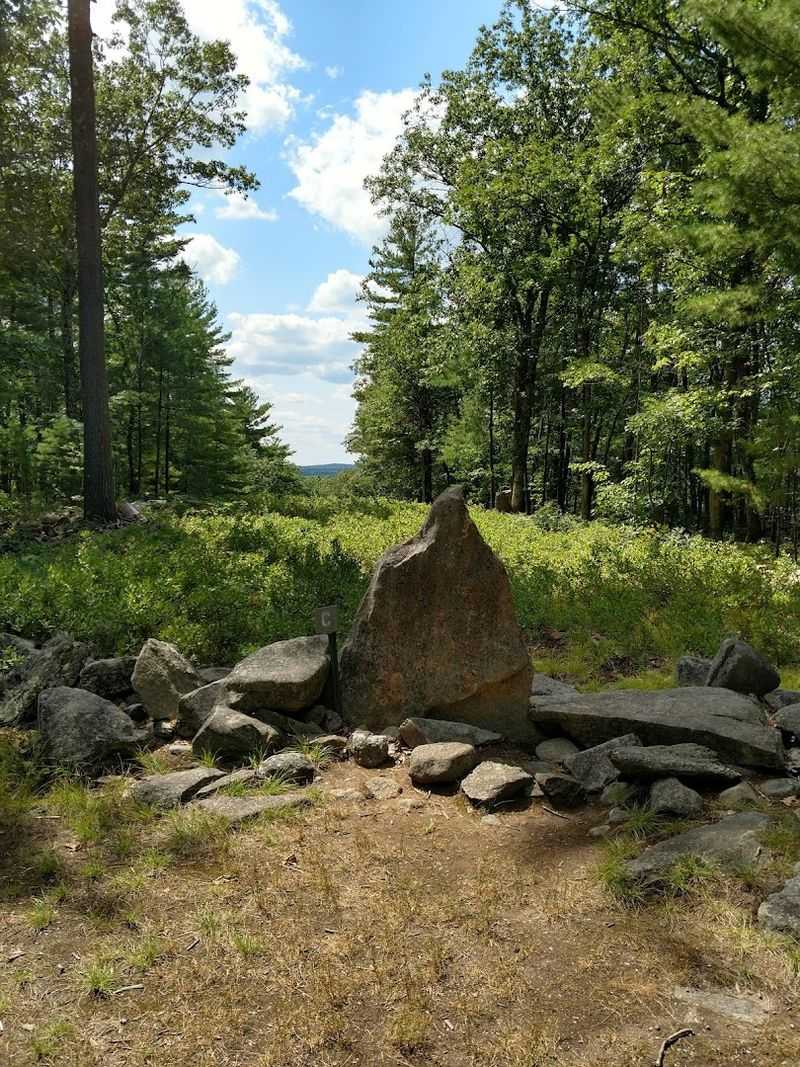
One of the most jaw-dropping features of this entire site is how precisely certain stones line up with the sun and stars. Standing stones positioned around the outer edges of the property align with the summer solstice sunrise, the winter solstice sunset, and several other key astronomical events throughout the year.
The Summer Solstice Stone is the showstopper. Not only does it align perfectly with the summer solstice sunrise, but researchers have noted that its orientation also corresponds with the alignment found at the original Stonehenge in England.
That detail alone has fueled decades of wild theories and passionate debates among archaeologists.
Visiting during a solstice or equinox is a completely different experience from a regular afternoon stroll. The light hits specific stones in ways that feel almost choreographed, and the site takes on an electric energy that is hard to describe without sounding slightly dramatic.
New Hampshire does not typically top anyone’s list of mystical destinations, but on those special astronomical dates, this hilltop in Salem earns every bit of its reputation as one of the most genuinely mysterious places in the entire country.
The Sacrificial Table Controversy
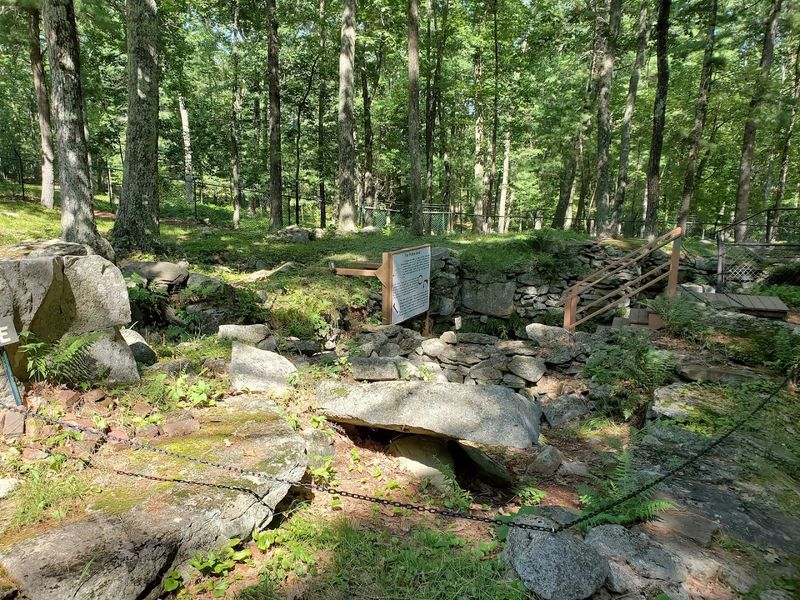
Few features at this site spark more debate than the large flat granite slab known as the sacrificial table. It sits prominently near the Oracle Chamber, measuring several feet across, with a carved groove running along its perimeter that channels liquid toward a spout.
The name alone is enough to make your imagination run wild.
Proponents of the ancient ceremonial theory point to the groove design as evidence of ritualistic use, suggesting that whatever flowed along that channel during ceremonies was very much intentional. The positioning of the table relative to surrounding structures adds to the dramatic interpretation.
Skeptics, however, are quick to offer a far more grounded explanation. Many mainstream archaeologists believe the slab is a colonial-era lye stone, used by early settlers to produce lye from wood ash for soap-making, or possibly a cider press.
The groove design is entirely consistent with both of those practical applications. Whether you find the mundane explanation satisfying or slightly disappointing probably says a lot about your personality.
Either way, standing next to this massive stone slab in the New Hampshire woods, the word “ordinary” never quite comes to mind.
Native American Roots and Sacred Ground
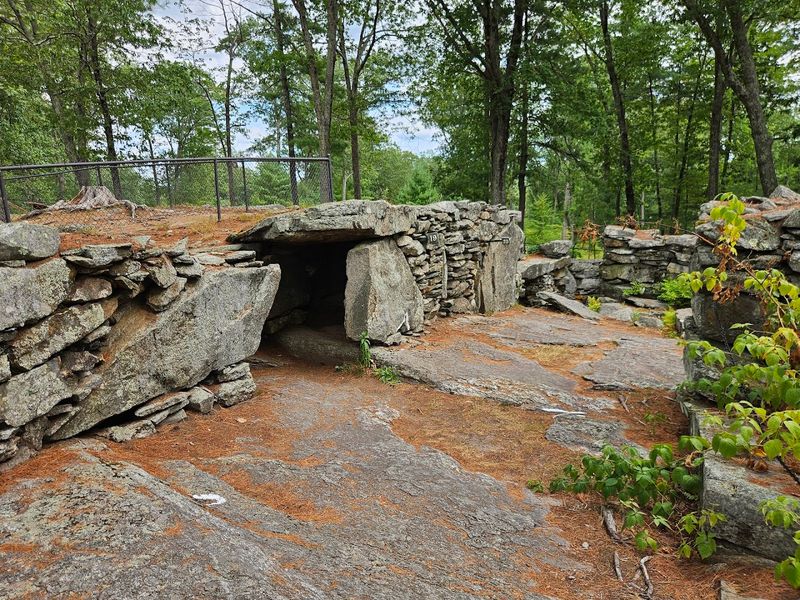
Among the competing theories about who built this remarkable site, the Native American hypothesis carries some of the most compelling physical evidence.
Artifacts are found across the property. They include tools, pottery fragments, fire pits, and petroglyphs, align closely with the material culture of the Pawtucket people, an Algonquian-speaking group who inhabited this region of New England for thousands of years.
The idea that the site served as a sacred ceremonial center over a span of roughly 2,500 years is supported by the layered archaeological record.
Different periods of activity have been identified through careful excavation, suggesting that generations of indigenous people returned to this hilltop repeatedly, adding to and modifying the structures over time.
Spending time on the property with this framework in mind shifts the entire experience. The stone walls, the chambers, and the astronomical alignments start to feel less like a puzzle and more like a living landscape shaped by a deeply knowledgeable people who understood their environment intimately.
New Hampshire holds many layers of indigenous history, and this site in Salem may represent one of its most profound and underappreciated chapters. The land itself seems to carry that weight quietly and powerfully.
William Goodwin and the Irish Monk Theory
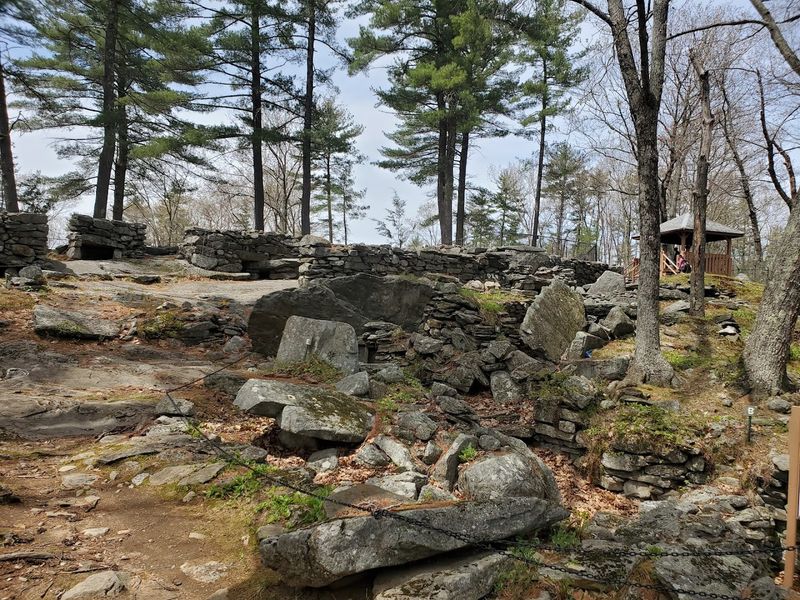
No discussion of this site is complete without mentioning William Goodwin. It was the man who purchased the property in 1937 and proceeded to reshape its story in ways that still cause headaches for archaeologists today.
Goodwin was absolutely convinced that ancient Irish monks, known as Culdees, had sailed to North America centuries before Columbus and built these stone structures as a monastic settlement.
His enthusiasm was genuine, but his methods were problematic. Goodwin physically rearranged stones across the property to better match his theory, destroying crucial stratigraphic context that could have helped researchers determine the true age and origin of the structures.
That interference has made rigorous archaeological analysis significantly more complicated ever since.
Mainstream archaeology has firmly rejected the Irish monk theory, noting the complete absence of any verifiable European artifacts from that period at the site or anywhere else in North America. No metals, no pottery, no inscriptions that hold up to serious linguistic scrutiny.
Yet the theory refuses to die entirely, partly because Goodwin told such a compelling story, and partly because the site itself still resists any single clean explanation. His legacy here is equal parts fascinating and frustrating for anyone serious about uncovering the truth.
The Self-Guided Trail Experience
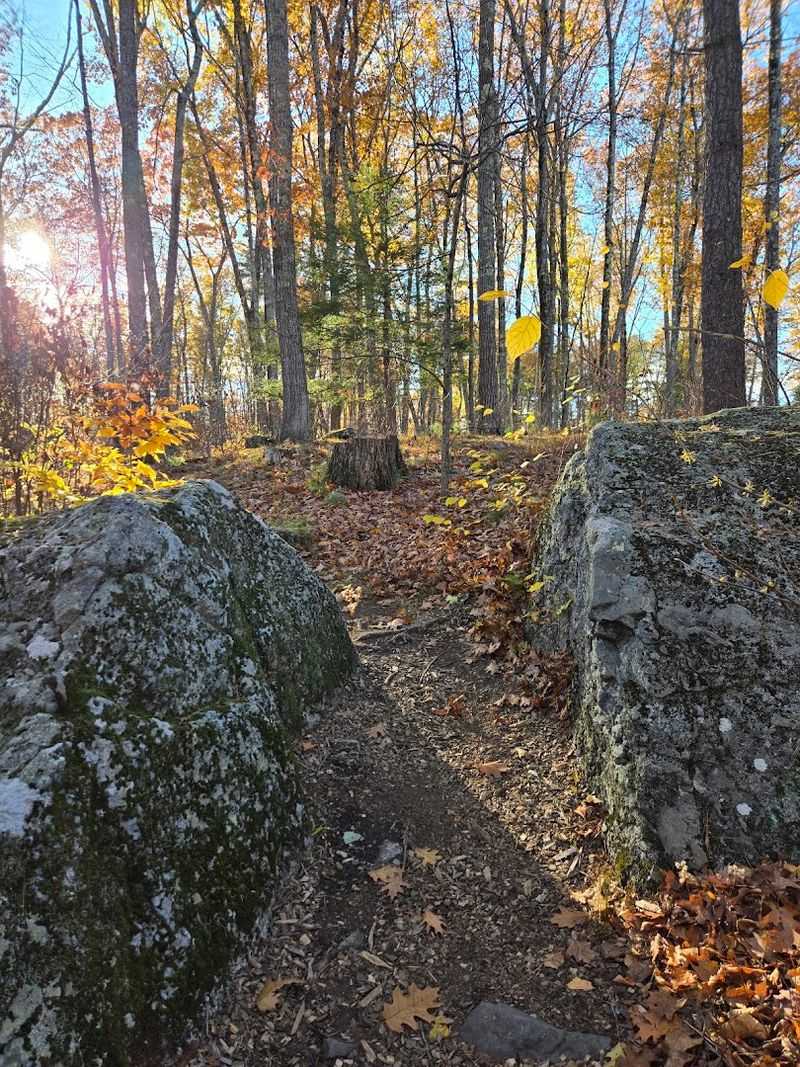
Exploring the grounds on a self-guided trail is genuinely one of the more satisfying ways to spend a few hours in New Hampshire.
The property offers a well-organized walking route that winds through the forested hillside. It’s connecting all the major stone structures with clearly numbered stops and interpretive signage that explains the significance of each feature.
A downloadable app provides audio commentary for every stop along the trail, which adds a whole new layer of depth to the experience. Listening to the explanations while standing directly in front of the structures makes the competing theories feel vivid and immediate rather than abstract.
The easy-to-moderate terrain is manageable for most ages, though a few sections of the outer wall trail are less clearly marked and require a bit of attention.
Snowshoe rentals are available during winter months, and the site stays open year-round. Visiting in fresh snow is reportedly a magical experience, with the stone chambers taking on an especially dramatic quality against a white landscape.
Autumn foliage season transforms the whole property into something almost painterly. Whenever you show up, the trail rewards slow, thoughtful walking over rushing.
This is not a place to power through. Let the stones set the pace.
The Visitor Center and Indoor Museum
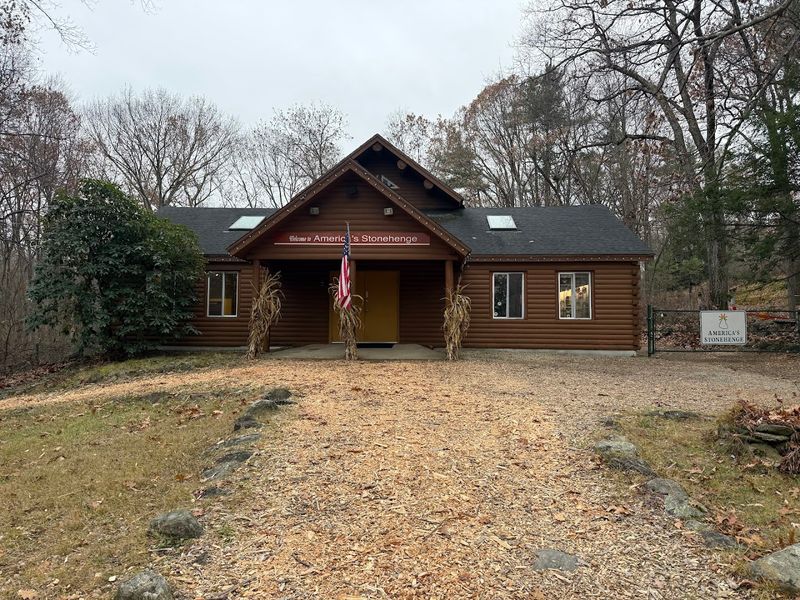
Before heading out to the stone structures, the visitor center is absolutely worth your full attention. A small but genuinely interesting indoor museum houses artifacts recovered from across the property.
It includes stone tools, pottery fragments, and other items that span thousands of years of human activity on this hilltop.
An introductory video plays in a comfortable viewing area and provides helpful context for everything you are about to see outside. Watching it before hitting the trail is one of those tips that sounds optional but actually makes a significant difference in how much you get out of the experience.
The Tour Guide Map handed out at the front desk includes a QR code linking to the full mobile app tour.
Clean restrooms, a welcoming atmosphere, and a gift shop stocked with reasonably priced souvenirs round out the arrival experience nicely. The staff tends to be knowledgeable and genuinely enthusiastic about the site, and the owner, Dr. Dennis Stone, has been known to appear and share his encyclopedic knowledge with curious visitors.
Running into him on the property is apparently one of those unexpected highlights that people talk about long after leaving Salem, New Hampshire behind.
Alpacas, Butterflies, and Wildlife on the Grounds

Not everything at this site is wrapped in ancient mystery and archaeological debate. Near the visitor center, a small group of alpacas lives on the property, and they have become a surprisingly beloved part of the overall experience.
Spotting them at the end of a trail loop is one of those delightful surprises that catches most first-time visitors completely off guard.
The grounds also feature a pollinator garden bursting with native plants, a bluebird habitat area, and a butterfly garden that adds a lively, colorful dimension to the wooded property.
Wildlife sightings along the trails are common, and the overall ecological health of the 30-acre site gives it a peaceful, living quality that balances the heavier historical atmosphere nicely.
Families with younger children who might find the archaeological details a bit abstract will appreciate having these natural attractions woven into the visit. The alpacas in particular have a way of making everyone smile regardless of age.
It is a genuinely charming touch on a property that could easily have leaned entirely into its mysterious, serious side. New Hampshire nature has a way of softening even the most puzzling ancient riddles, and the grounds here are no exception to that rule.
Plan Your Visit to America’s Stonehenge
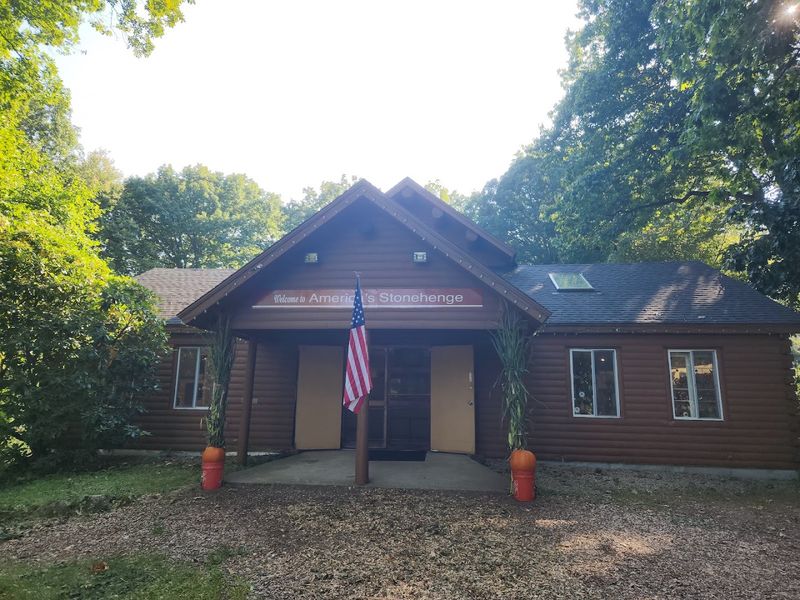
Planning a trip to America’s Stonehenge is straightforward, and the site rewards a little preparation. The property is open daily throughout the week, welcoming visitors from morning until late afternoon.
Buying tickets online in advance is a smart move, especially during peak season when foot traffic picks up considerably on weekends.
The site sits at 105 Haverhill Rd, Salem, NH 03079, making it easily accessible from both Boston and other parts of New England. It is a perfect half-day excursion that pairs beautifully with other attractions in the region.
Bringing comfortable walking shoes and layering up for cooler weather will serve you well regardless of the season you choose to visit.
Downloading the site’s mobile app before arrival means you will not be fumbling with connectivity once you are deep in the wooded trail. The app tour is genuinely well-produced and adds real substance to each stop.
Special events tied to solstices and equinoxes draw enthusiastic crowds, so checking the site’s calendar at stonehengeusa.com before booking is always a good idea. America’s Stonehenge is one of those rare places that manages to be educational, atmospheric, and just a little bit unsettling all at the same time.
Go find out why nobody can stop talking about it.
