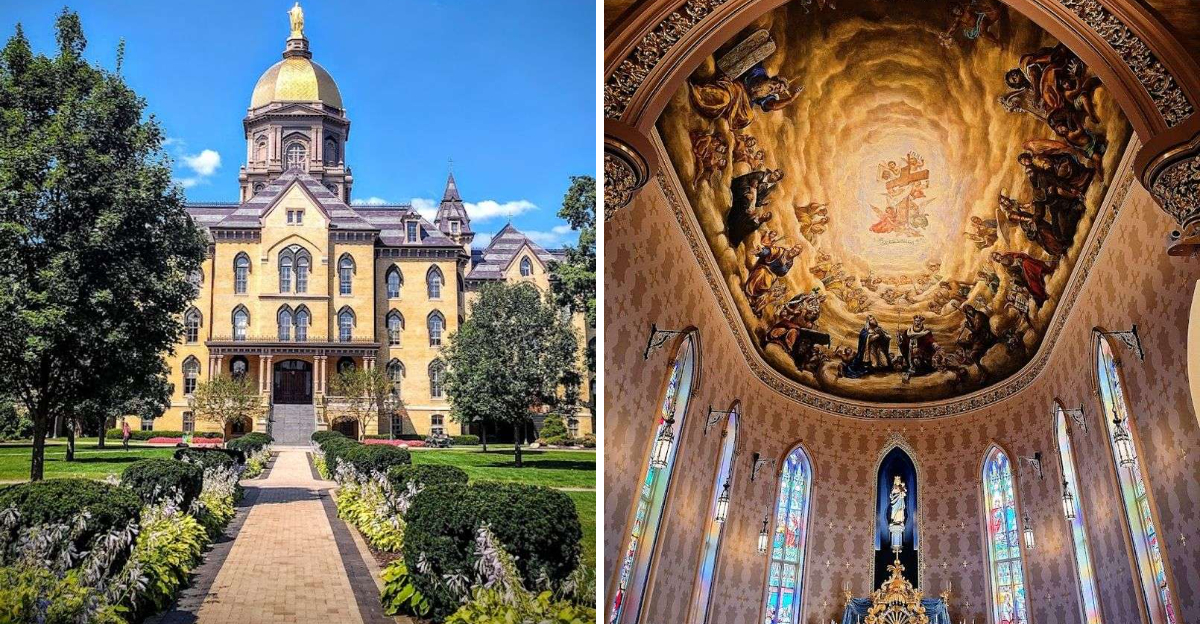
Some places quietly carry centuries of history, art, and faith within their walls, and this landmark at the University of Notre Dame in Indiana is absolutely one of them. What appears to be a grand Neo-Gothic church from the outside reveals something far richer once you step inside.
The interior is layered with sacred artwork, intricate architectural detail, and an extraordinary collection of stained glass that surprises even visitors familiar with historic churches. Every corner reflects tradition, craftsmanship, and a deep sense of purpose.
For anyone interested in art, history, architecture, or spirituality, it offers the rare feeling of stepping into a space that functions both as an active place of worship and a living museum.
Neo-Gothic Architecture That Rivals the Great Churches of Europe
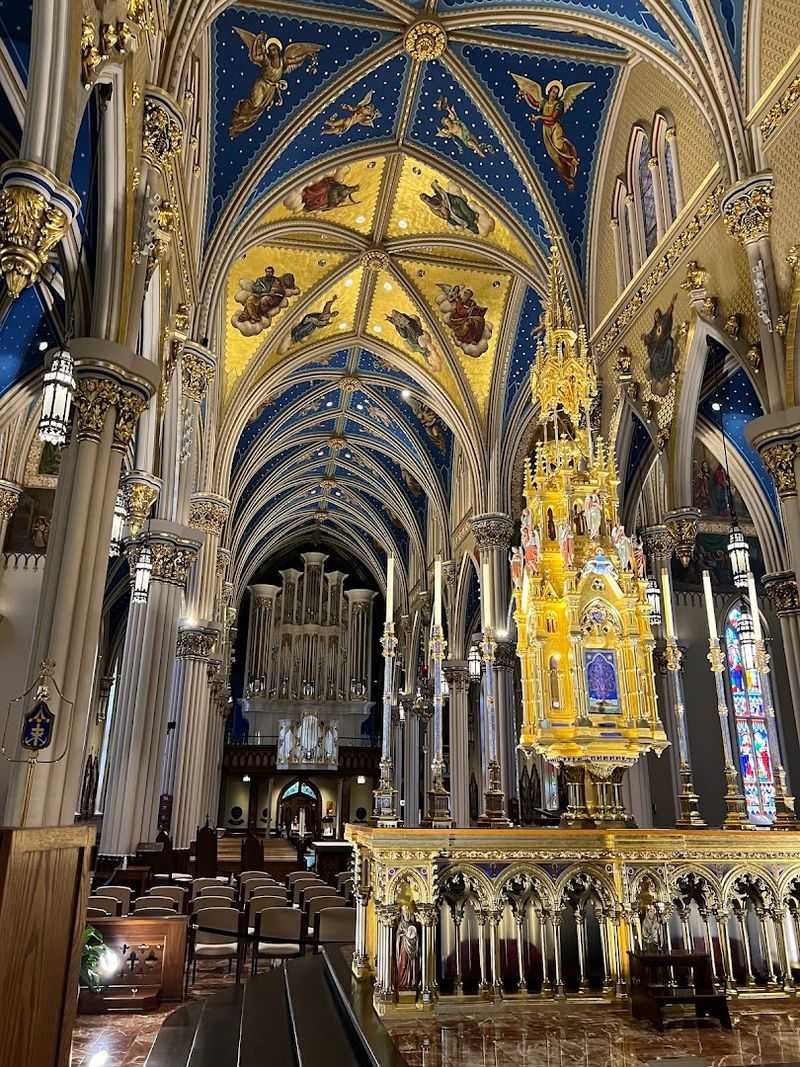
Few buildings in the American Midwest command the kind of reverence that the Basilica of the Sacred Heart does the moment you see its towering silhouette against the Notre Dame skyline. Founded by Father Edward Sorin, whose French roots deeply influenced the design, the church reflects a love for Gothic architecture that was common in 19th-century European religious construction.
The result is a structure that feels genuinely old-world, not imitation.
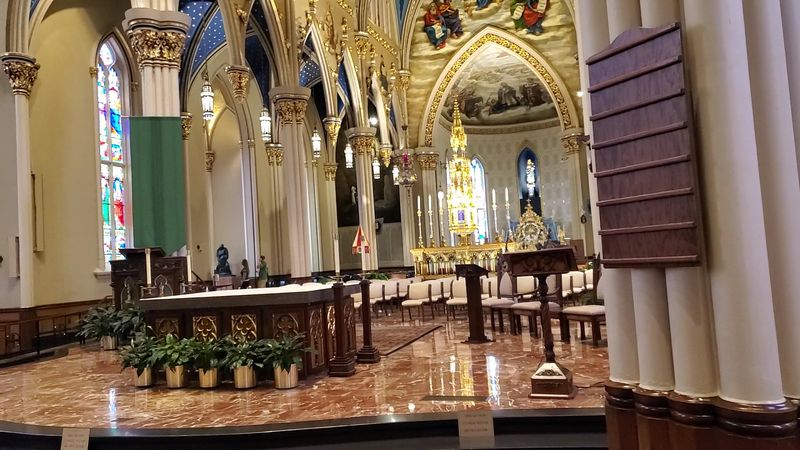
Inside, the vaulted ceilings stretch high above the nave, painted in rich gold and blue tones that draw your eyes upward before you even realize it. The proportions feel grand but not cold.
Every arch, column, and carved detail seems to have been placed with both spiritual intention and artistic care.
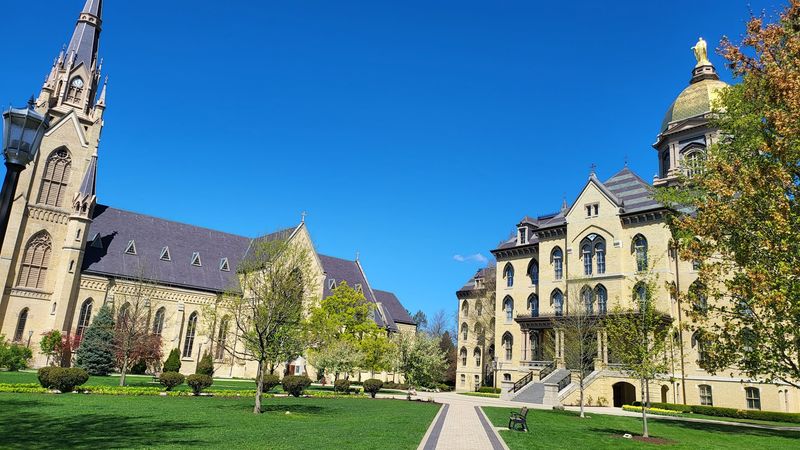
The exterior stonework is equally detailed, with a bell tower that rises 230 feet into the air, making it the tallest university chapel in the United States. That height is not just for show.
It was meant to signal importance, permanence, and faith from miles around. Visiting the campus of Notre Dame without walking up to this building would be like visiting Paris and skipping the cathedral entirely.
The Basilica sits at 101 Basilica Dr, Notre Dame, IN 46556, and is open daily from 9 AM to 9 PM, making it accessible for nearly any travel schedule throughout the week.
Murals and Frescoes Painted by a Real Vatican Artist
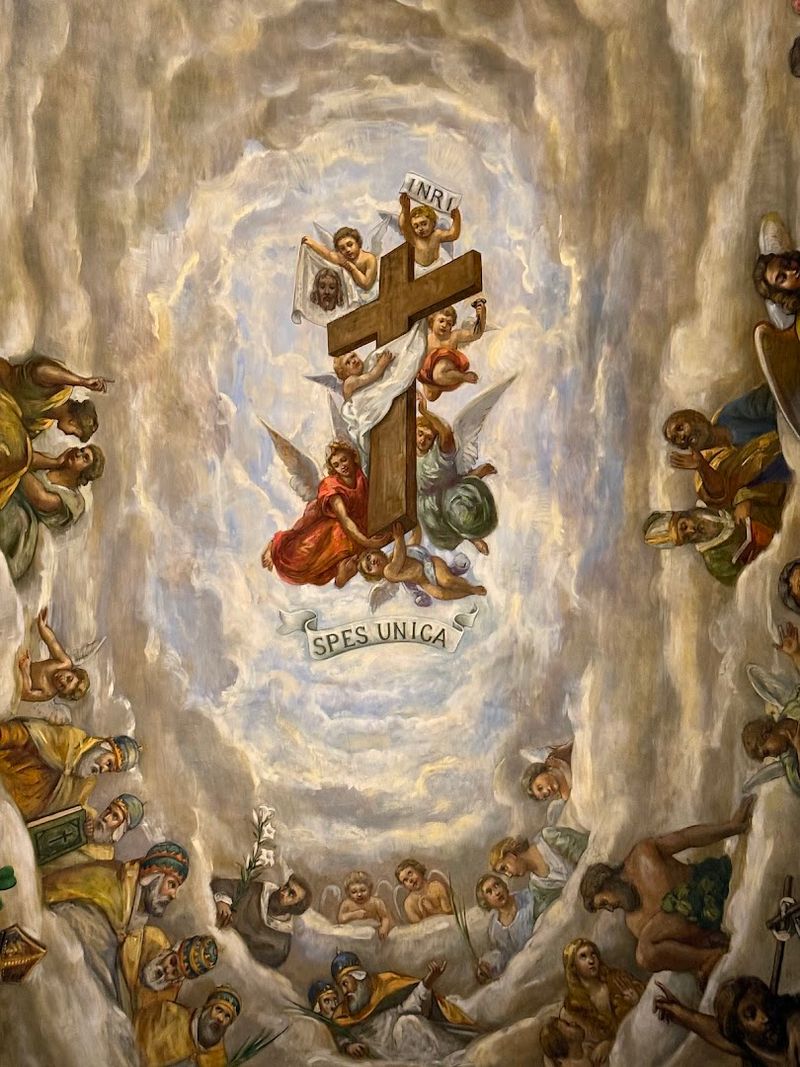
Luigi Gregori was not just any painter. He worked for the Vatican before coming to Notre Dame, and his fingerprints are all over the interior of the Basilica of the Sacred Heart.
Over the course of 17 years, Gregori completed 56 murals and the full set of Stations of the Cross inside the church, creating a visual narrative that covers walls and ceilings with astonishing detail and devotion.
His style carries the confidence of someone trained at the highest levels of European religious art. The figures are full-bodied and emotive.
The compositions feel balanced and purposeful. And the sheer scale of the work, spread across an entire church interior over nearly two decades, speaks to a commitment that goes beyond commission.
Gregori clearly cared deeply about what he was making.
What makes this even more compelling is the Vatican connection. When you look up at those ceilings and walls, you are seeing the work of an artist who also painted for popes.
That is not a small thing. The Basilica museum, located behind the sacristy, even displays personal belongings of Gregori, giving visitors a rare glimpse into the man behind the masterpiece.
For anyone interested in religious art, Italian Renaissance influence, or simply the story of one dedicated artist’s life work, the murals alone are worth the trip to Notre Dame.
A Papal Tiara That Exists Almost Nowhere Else Outside the Vatican
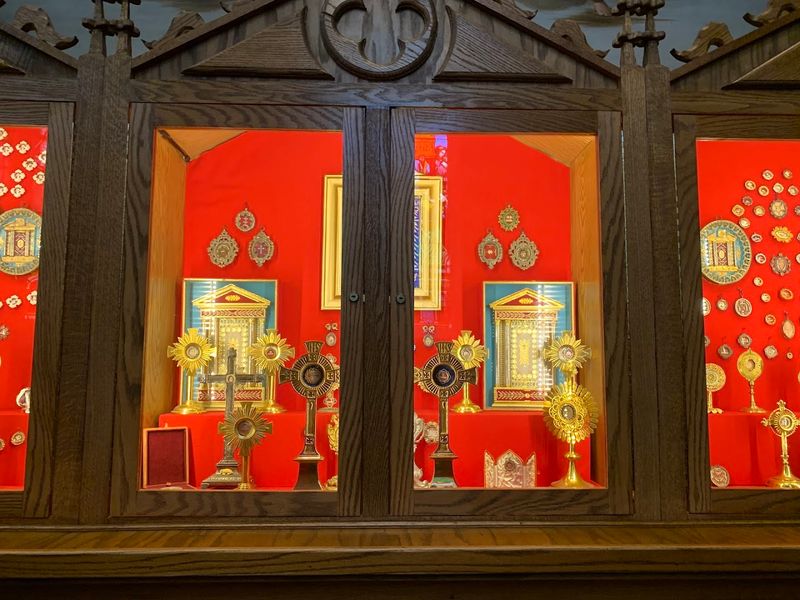
Somewhere behind the sacristy of the Basilica of the Sacred Heart, inside the church’s small but powerful museum, sits an object that almost no one outside the Vatican owns. A papal tiara, gifted directly to Father Edward Sorin by Pope Pius IX, rests in this collection as one of only two such tiaras known to exist outside the Vatican itself.
That is a genuinely rare thing to be able to say about any artifact in any collection anywhere.
Father Sorin had a remarkable relationship with the Catholic Church and with Rome specifically, and this gift reflects that standing. Papal tiaras are not handed out casually.
They represent a direct connection to the papacy at one of its most historically significant periods. Holding that context in mind while standing in front of the display case makes the object feel almost impossibly weighty for its size.
The museum also holds other historical items connected to the university and the Congregation of Holy Cross, including artifacts that trace the early years of Notre Dame as an institution. It is a compact but deeply informative space.
Visitors who rush through the main church without checking the museum often leave without knowing this treasure exists. Taking the extra few minutes to explore the museum collection adds a layer of historical depth to the visit that changes the way you understand everything else you have already seen inside the Basilica.
The Largest Collection of 19th-Century French Stained Glass in the World
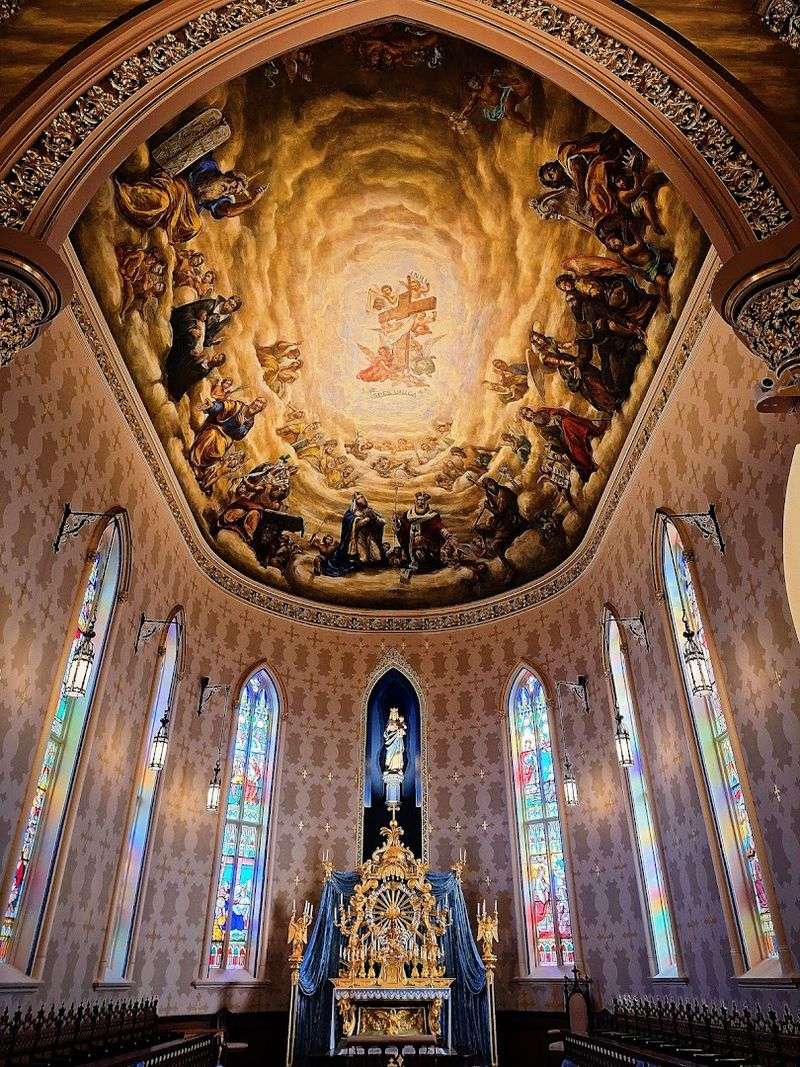
Glass can tell a story better than most textbooks, and the Basilica of the Sacred Heart proves that with 116 windows and more than 1,200 individual panels of French stained glass. These were created by Carmelite nuns in Le Mans, France, during the 19th century, depicting saints, apostles, theologians, and scenes from the Bible.
What makes this collection even more remarkable is that comparable European stained glass was destroyed during World Wars I and II.
That means what survives inside this Indiana church is among the most historically complete collections of its kind anywhere on earth. The colors are deeply saturated, the figures are expressive, and the light that filters through on a clear afternoon transforms the interior into something that feels almost otherworldly.
You are not just looking at pretty glass. You are looking at a record of craftsmanship that no longer exists in its original European context.
Visitors who take time to walk slowly through the nave and study each window individually often find themselves spending far longer than they planned. Each panel rewards attention.
The nuns who created these windows worked with extraordinary precision, and their skill is evident in every carefully leaded seam. Whether you have a background in art history or simply appreciate beautiful things, this collection is genuinely difficult to walk away from without feeling moved and grateful that it was preserved here in Indiana.
A Sculpture With an Exact Twin Housed in the Vatican Museum
Inside the St. Joseph Chapel, which is part of the Basilica complex, there is a Pieta carved by Croatian sculptor Ivan Mestrovic from a single block of Carrara marble in 1942. The piece is stunning on its own terms, with a quiet grief and physical tenderness that makes it difficult to look away.
But what elevates it from beautiful to historically significant is a detail that many visitors never hear about.
An exact bronze replica of this very sculpture is housed in the Vatican Museum. That means when you stand in front of the Mestrovic Pieta at Notre Dame, you are looking at the original version of a work that the Vatican itself chose to replicate and display.
That is not a casual honor. The Vatican does not commission replicas of just anything.
The fact that this piece earned that recognition says something profound about its artistic and spiritual power.
Mestrovic was one of the most celebrated sculptors of the 20th century, and his connection to Notre Dame runs deep. The university holds one of the largest collections of his work in the world.
Seeing the Pieta in person, in the quiet intimacy of the St. Joseph Chapel, is a different experience from seeing any photograph of it. The scale, the texture of the marble, and the stillness of the space all work together to create something genuinely moving for visitors of any background or belief.
World-Class Sacred Music and the Oldest Carillon in North America
Sound matters in a sacred space, and the Basilica of the Sacred Heart takes that seriously in a way that few churches in the country can match. The Murdy Family Organ, installed in 2016, contains more than 5,000 pipes and produces a tonal range that fills the entire interior with a richness that is almost physical.
Attending a Mass or a concert here is not just a visual experience. It is an auditory one that stays with you.
Beyond the organ, the Basilica also houses the oldest carillon in North America, made up of 23 bells. The largest of those bells weighs an extraordinary 15,400 pounds.
When the bells ring across the Notre Dame campus, especially in the evening, the sound carries a kind of historical weight that is hard to put into words. It connects you to generations of students, faculty, and visitors who have heard those same bells over more than a century.
The combination of the organ and the carillon makes the Basilica an experience that changes depending on when you visit. A quiet Tuesday morning feels different from a Sunday after a football game when the bells are ringing and the choir is singing.
Both versions are worth experiencing. If you can plan your visit around a scheduled Mass or a music event, the added layer of live sacred music transforms the visit into something that goes well beyond sightseeing.
Minor Basilica Status and What That Designation Actually Means for Visitors
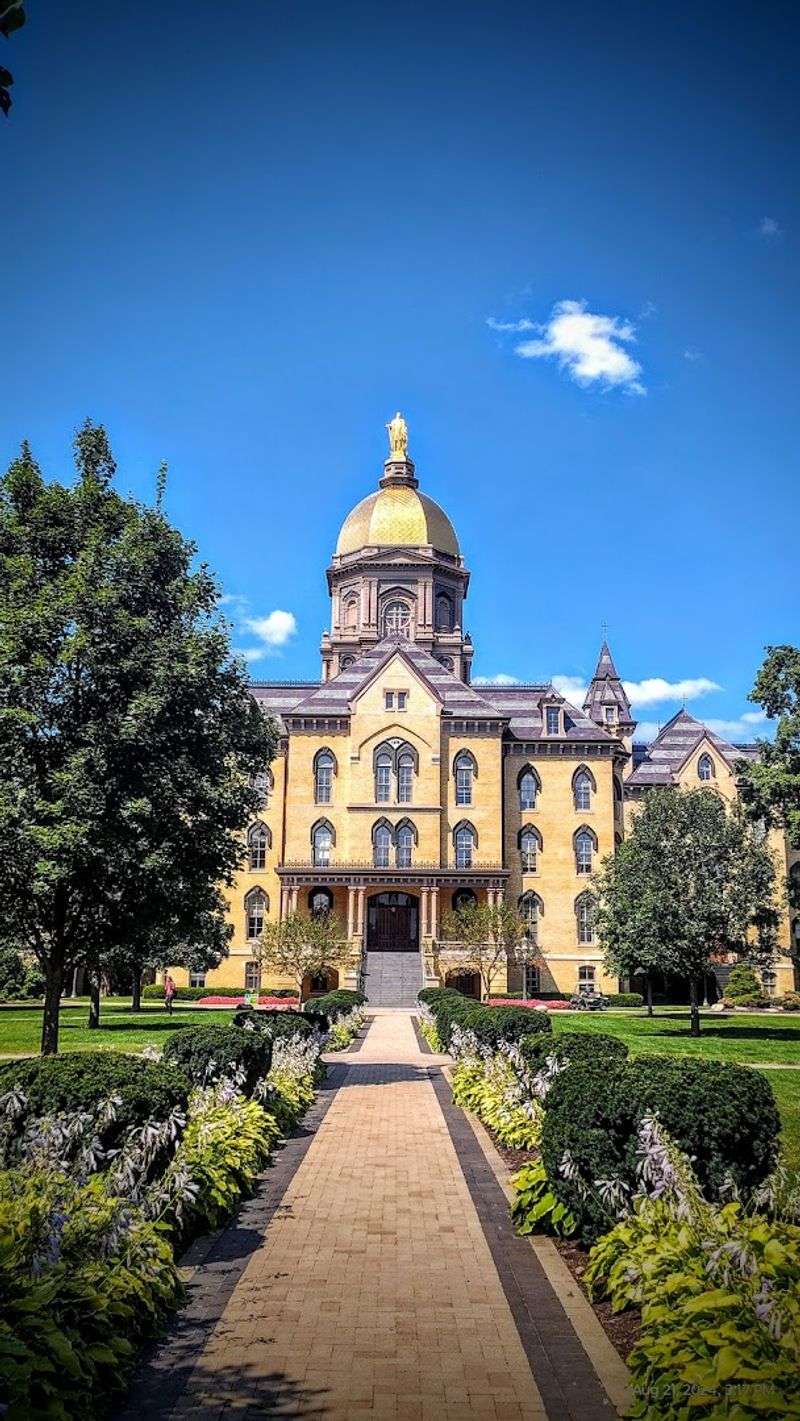
In 1992, Pope John Paul II elevated the Church of the Sacred Heart at Notre Dame to the status of a Minor Basilica. That title is not given out freely.
It requires that the church demonstrate antiquity, dignity, and historical importance at a level that the Vatican itself recognizes as exceptional. Very few American churches carry this designation, and earning it placed the Basilica in a category that spans some of the most important Catholic churches in the world.
For visitors, that status means something practical as well as symbolic. A Minor Basilica carries certain privileges and spiritual significance that draw pilgrims and travelers from around the globe.
The church is also a contributing building to Notre Dame’s historic district on the National Register of Historic Places, which adds a layer of civic and cultural recognition to its already considerable religious standing.
Knowing that background changes how you experience the building. You are not just walking through a pretty church on a university campus.
You are visiting a site that two separate institutions, the Catholic Church and the United States government, have formally recognized as historically significant. Nearby, the Grotto of Our Lady of Lourdes on campus offers a quiet, reflective outdoor space that many visitors pair with their Basilica visit for a fuller sense of the Notre Dame spiritual landscape.
