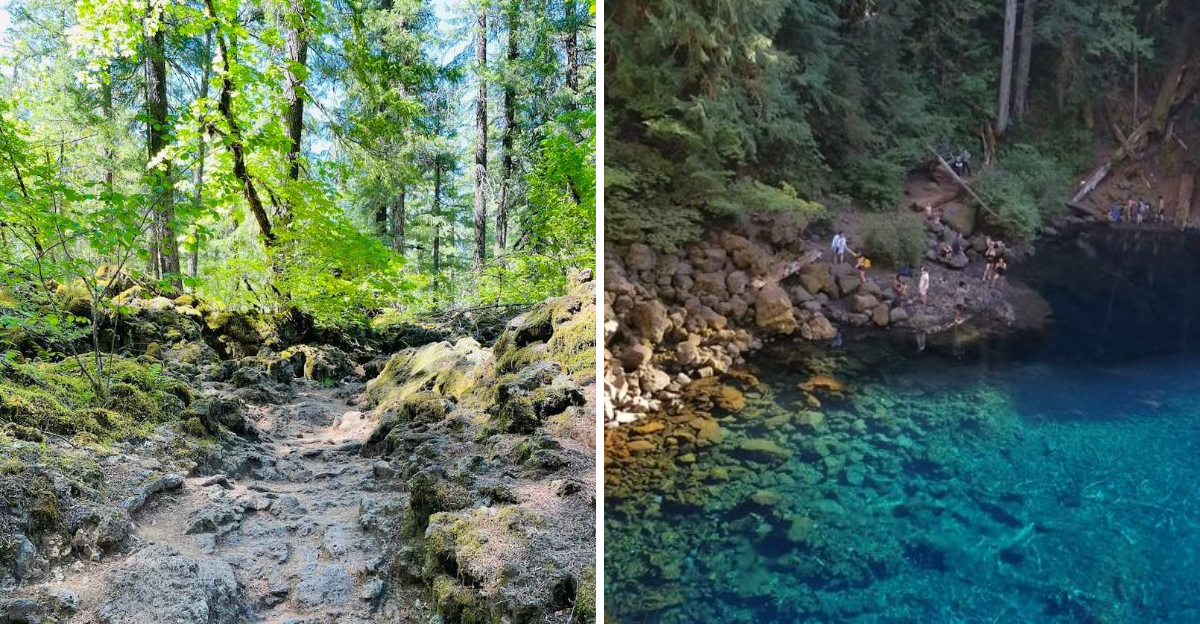
Walking this Oregon trail, I immediately felt there was something different about it. The air seems charged, and every step somehow feels heavier and lighter at the same time.
Sunlight filtering through the trees creates patterns that make the forest feel alive. Birds, rustling leaves, and distant streams add to the sense that this place is quietly watching you.
I couldn’t help pausing over and over, just taking it all in, wondering if others feel the same pull. There’s a strange, almost magical energy here that makes you feel connected to something bigger.
By the time I reached the end, it wasn’t just a hike – it was an experience that stays with you long after you leave.
The Trail Itself: A Walk Through Living Forest
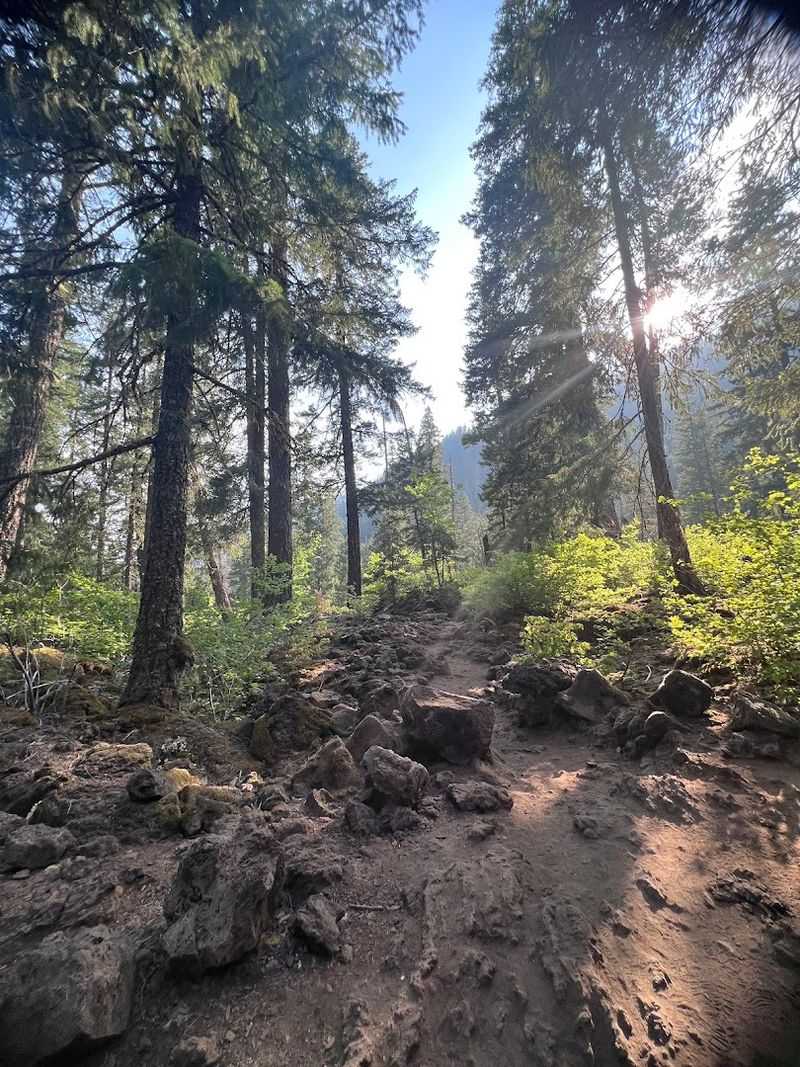
The moment your boots hit the trail, the forest wraps around you like a slow exhale. Old-growth Douglas firs tower overhead.
Moss blankets nearly every surface, from rocks to fallen logs.
The path stretches roughly 4.5 miles round trip. It follows the McKenzie River for much of the way.
Two wooden bridges cross the river at different points, and each one offers its own quiet, postcard-worthy view.
The terrain is mostly flat and easy to follow. Some sections cross over volcanic rock, which requires a bit more attention underfoot.
Roots and uneven ground pop up occasionally, so sturdy shoes make a real difference out here.
Even on a cloudy day, the trail has a glow to it. Light filters through the canopy in soft, shifting patches.
There is a constant sound of water nearby, which keeps the whole walk feeling alive and unhurried.
First-time hikers often say the trail feels shorter than expected. The scenery keeps your mind busy the whole way.
Tamolitch Falls: A Waterfall With No Water (Sometimes)
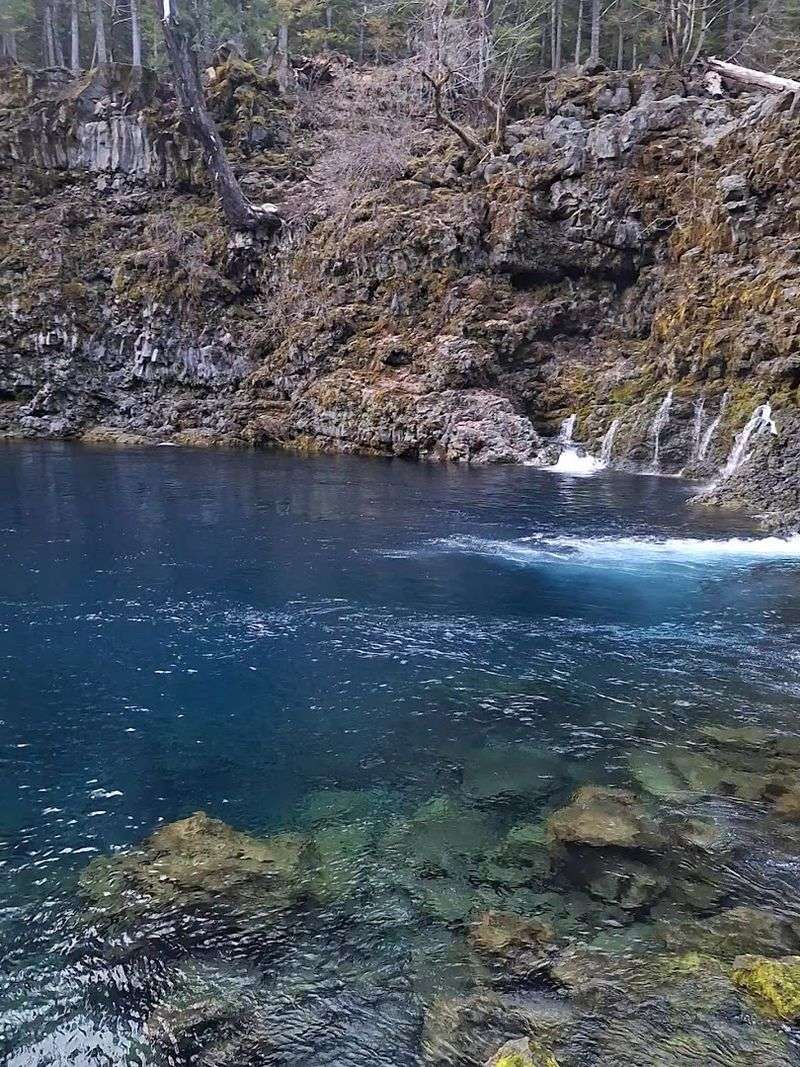
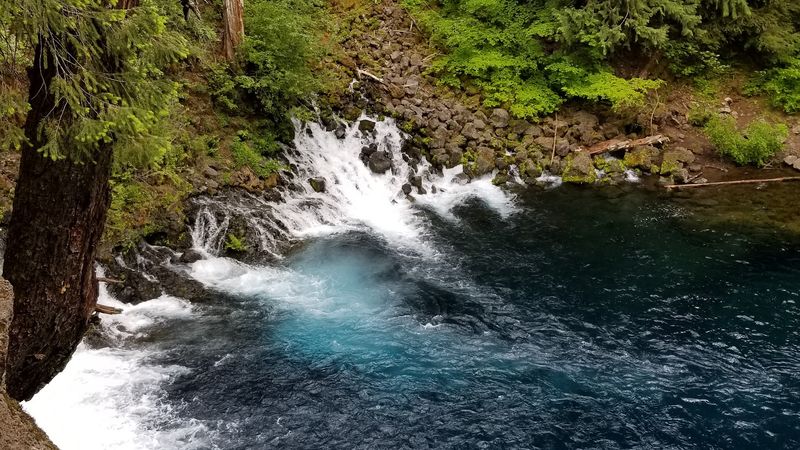
Tamolitch Falls is one of the more unusual natural features in the Pacific Northwest. Most of the year, no water actually flows over the cliff face.
The waterfall is dry, yet a stunning pool sits at the base.
This happens because the McKenzie River disappears underground about three miles upstream. It flows through porous lava rock before resurfacing here at the pool.
The result is a cliff that looks like a waterfall but behaves more like a secret door.
During heavy snowmelt or high-water seasons, a trickle or even a full cascade can appear. Seeing that version is considered a rare treat.
Most visitors encounter the silent, dramatic dry cliff and find it just as striking.
The scale of the basalt walls surrounding the falls is genuinely impressive. Standing at the base, you feel very small.
The moss clinging to every crack in the rock adds a deep, saturated green that makes the whole scene feel almost theatrical.
The Blue Pool: Water That Looks Painted
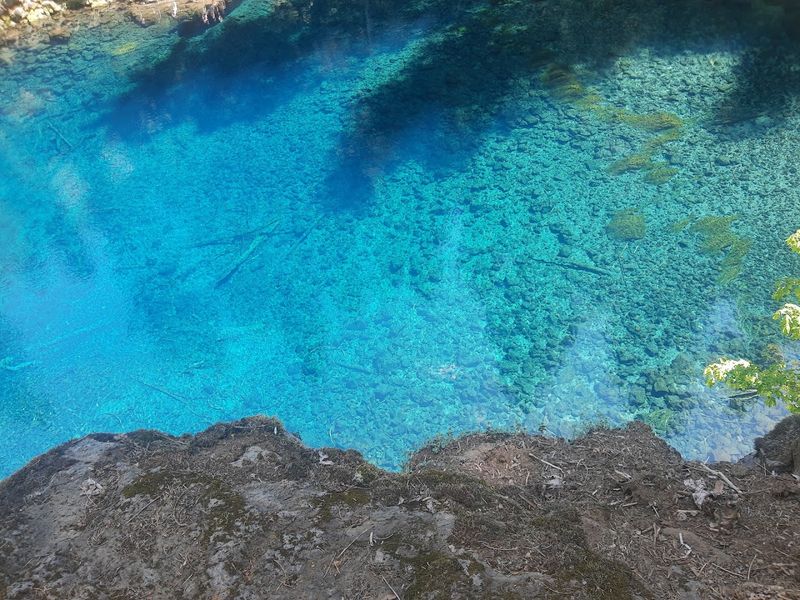
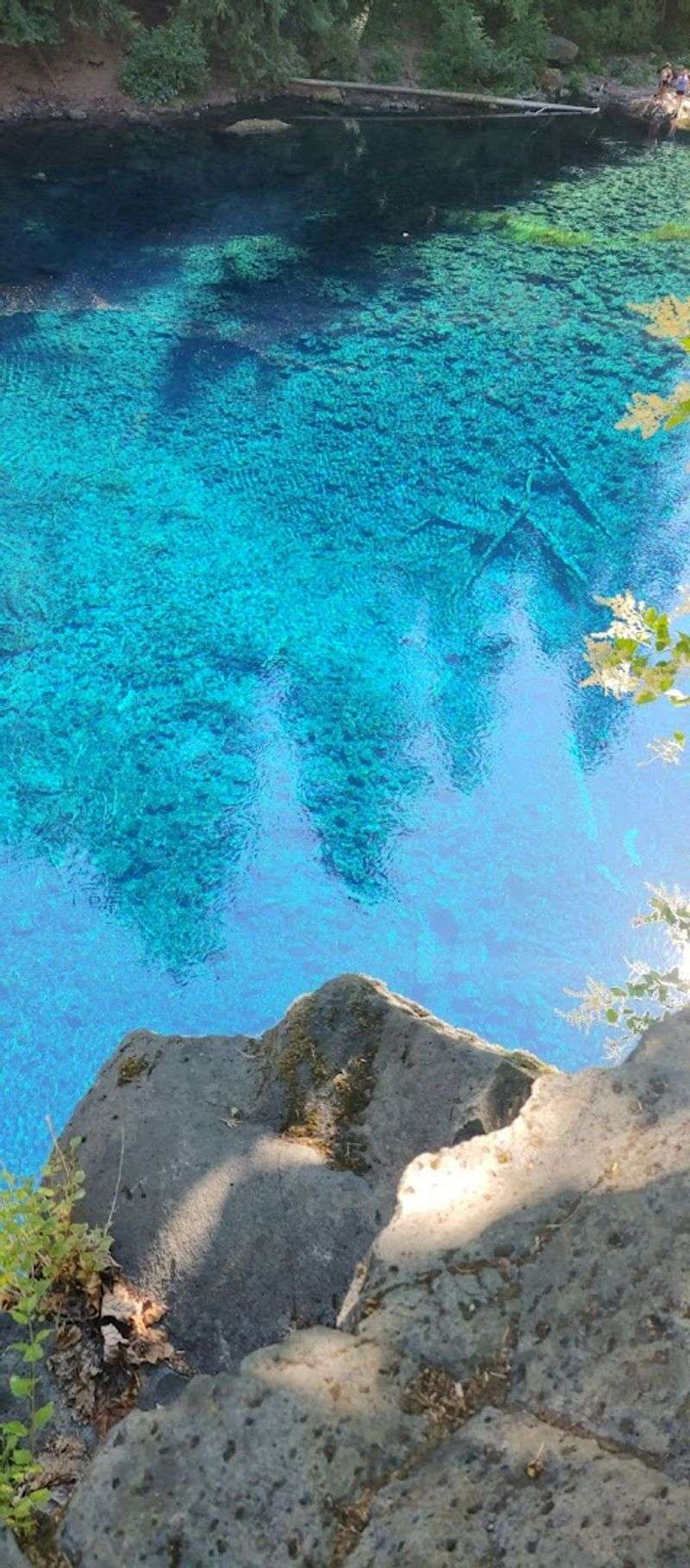
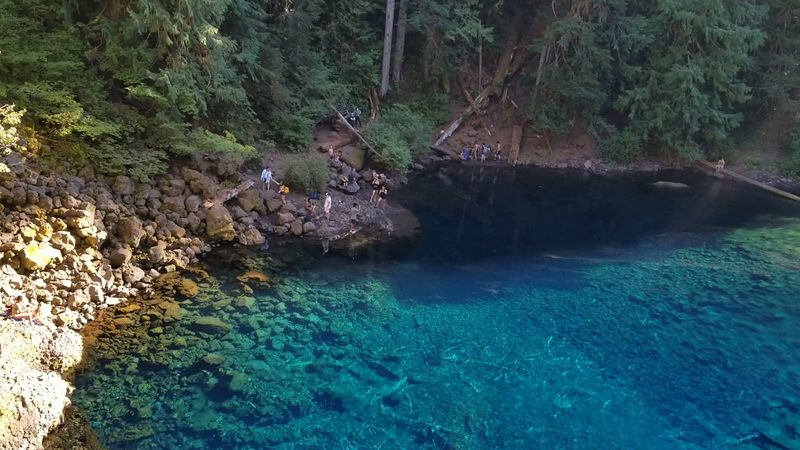
Nothing quite prepares you for the first glimpse of the Blue Pool. The color is not subtle.
It hits you like a visual shock, a deep, electric blue that seems almost artificial against the dark rock.
The science behind it is fascinating. The water is exceptionally pure and stays around 37 to 38 degrees Fahrenheit year-round.
That cold, clear water absorbs red and green light wavelengths, leaving blue to reflect back to your eyes.
The result is a pool that looks like it was colored by someone with a very bold paint set. No algae grows here.
No sediment clouds the view. The water is startlingly transparent right to the bottom.
Midday sun is the best time to see the pool at its most vivid. The light hits the surface directly and amplifies the color.
Arriving around noon makes a noticeable difference in the experience compared to late afternoon visits.
People often just sit quietly at the edge for a while. The pool has a calming, almost hypnotic effect on visitors.
The Underground River: A Geological Story Worth Knowing
About 1,600 years ago, a lava flow from Belknap Crater buried a stretch of the McKenzie River. The river did not disappear.
It adapted, seeping down through the porous volcanic rock and continuing underground.
That subterranean journey covers roughly three miles. The water filters slowly through ancient lava, losing impurities along the way.
By the time it resurfaces at the Blue Pool, it is among the clearest, coldest water you will ever encounter.
This geological backstory adds a layer of meaning to every step on the trail. You are walking over a hidden river.
The forest above has no idea it is growing on top of something that dramatic.
Lava rock formations are visible throughout the hike. Chunks of dark basalt covered in lichen and moss line the path.
These are remnants of that same ancient flow, slowly being reclaimed by the forest over hundreds of years.
Understanding what happened here changes how the landscape feels. It stops being just a pretty hike and becomes a living record of something enormous.
Trail Difficulty: Honest Notes Before You Go
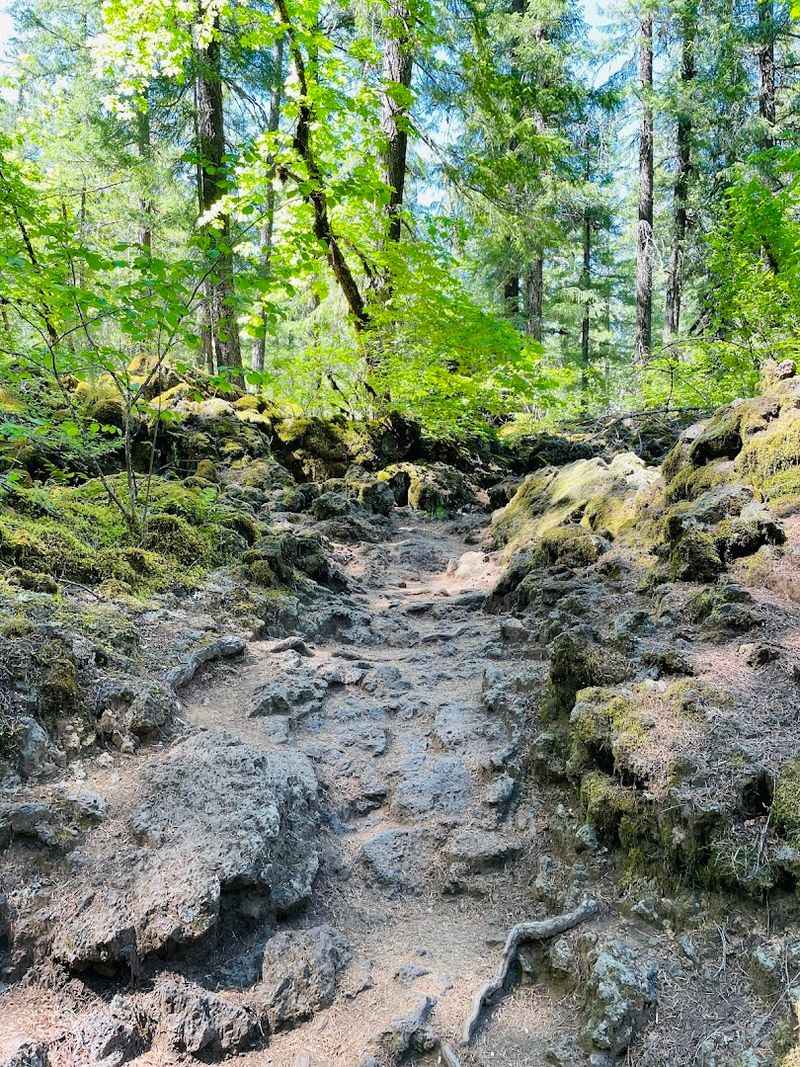
The trail is often described as easy to moderate, and that is mostly accurate. The first stretch along the river is smooth and well-maintained.
Most people find it relaxing and completely manageable.
The challenge comes in two spots. Volcanic rock sections require careful footing.
Loose stones and uneven surfaces can catch you off guard, especially if you are moving quickly or wearing casual sneakers.
The descent to the pool itself is the trickiest part. There is no paved path down to the water.
The route involves scrambling over rocks and navigating some steep sections that demand full attention.
People with knee issues or limited mobility should know about that final descent before committing to it. The viewpoint above the pool is still spectacular and very much worth reaching.
Going all the way to the water is optional.
Good hiking shoes are the single most important piece of gear for this trail. Bring water, a snack, and a little extra time.
The hike takes most people between one and two hours each way.
Best Time to Visit for the Most Vivid Blue Color
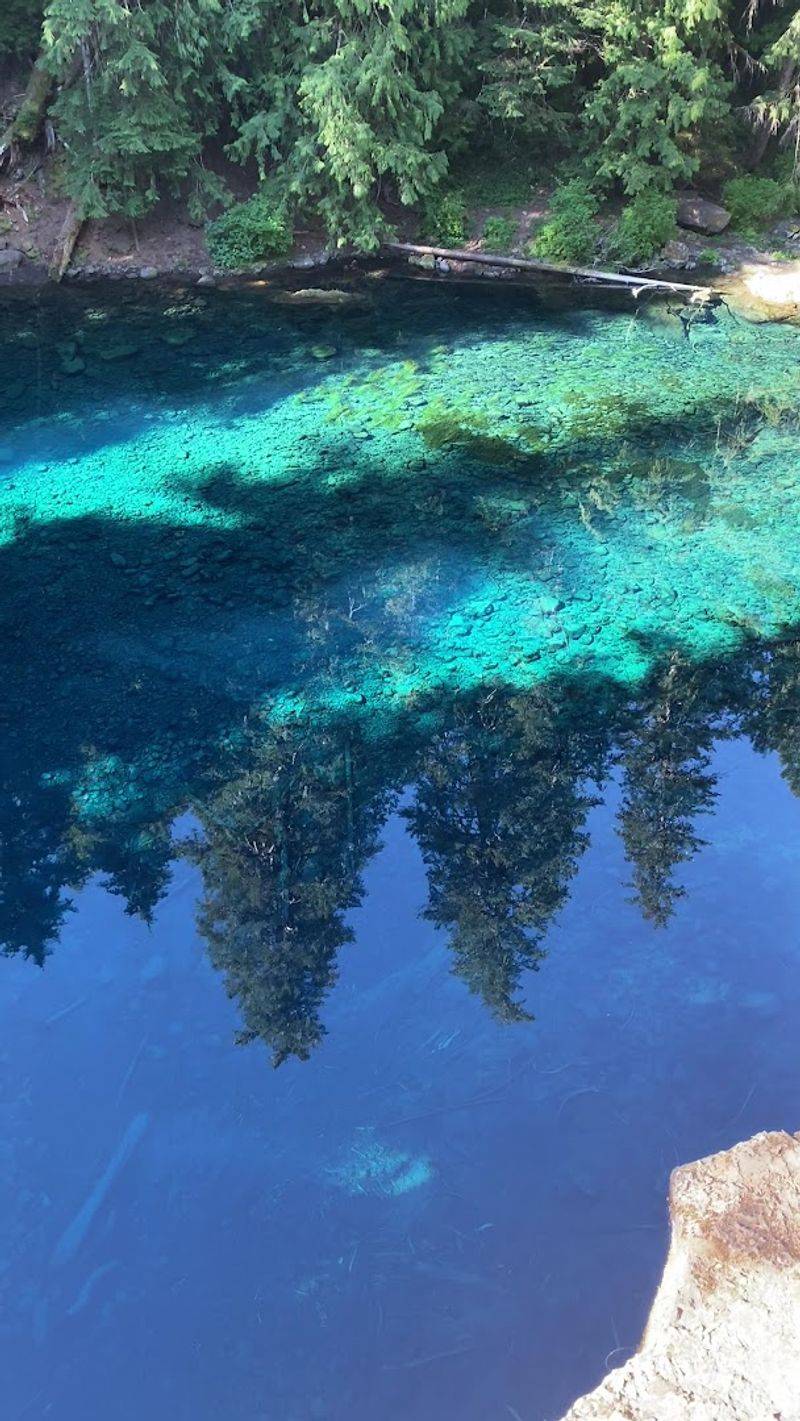
Timing your visit can genuinely change what you see at the pool. The water color is most vivid when the sun is directly overhead, lighting the pool from above rather than from an angle.
Arriving around noon gives you the best chance of catching that full glow.
Late afternoon visits still offer a beautiful scene, but the sun dips behind the tree line and the pool loses some of its electric quality. The difference is noticeable in photos and in person.
Summer is the most popular season, and for good reason. Longer daylight hours give you more flexibility.
The air stays surprisingly cool on the trail even in July, thanks to the dense forest canopy and the cold air rising off the water.
Winter and early spring visits have their own appeal. Snow on the trail adds a quiet, almost surreal atmosphere.
The pool color remains striking year-round because the temperature and purity of the water do not change with the seasons.
Weekday mornings tend to be calmer. Parking fills quickly on summer weekends.
Swimming in the Blue Pool: Cold, Shocking, and Unforgettable
The pool temperature hovers around 37 degrees Fahrenheit all year. That is not a typo.
It is genuinely ice-bath cold, and most swimmers last only seconds to a few minutes before the chill sends them back to the rocks.
That said, people do it. Many people do it, and they come out laughing and gasping and absolutely buzzing.
There is something about that cold shock that feels weirdly triumphant. Your whole body wakes up at once.
Getting to the water requires navigating the rocky descent carefully. The scramble down is steep in places.
Wearing water shoes or sandals you can move in makes the whole process smoother.
Swimming is not required to enjoy the pool. Plenty of visitors sit on the rocks above, dangle their feet, eat a snack, and simply absorb the view.
The energy of the place does not require you to get wet to feel it.
If you do decide to swim, check conditions beforehand. High water periods can change access to the pool edge significantly.
Wildlife and Nature Along the McKenzie River Corridor
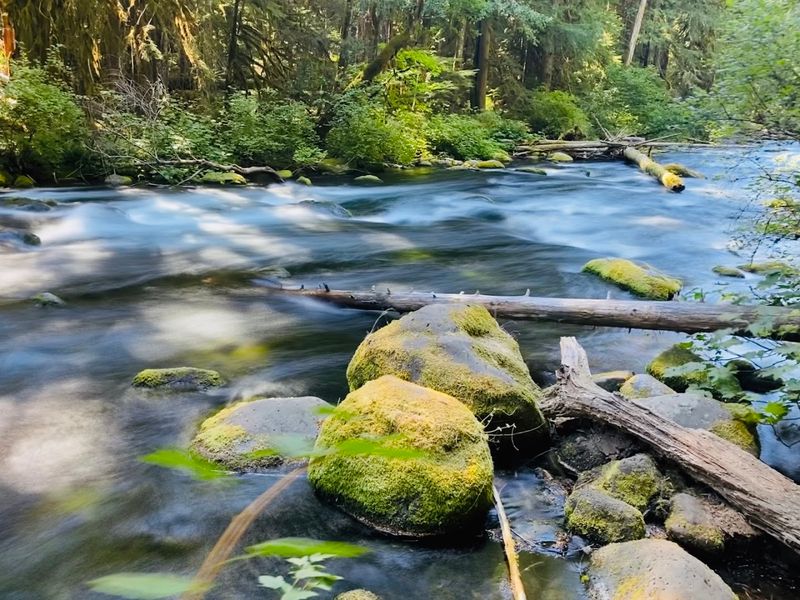
The McKenzie River corridor is alive in a way that sneaks up on you. You start noticing small things as you walk.
A flash of movement in the ferns. The sound of something rustling in the understory just off the trail.
Birds are a constant presence. Dippers, those small gray birds that actually walk underwater to find food, are sometimes spotted along the river.
Stellar’s jays call loudly from the branches overhead. The whole forest has a layered soundtrack.
Mosses and lichens cover practically every surface. The variety is remarkable up close.
Some patches look like tiny forests of their own, growing over lava rock in slow, patient layers that took decades to build.
Old-growth trees along the trail are genuinely massive. Some have been standing for hundreds of years.
Walking past them gives the hike a sense of scale that is hard to put into words.
The river itself shifts in character as you move along the trail. Some stretches are fast and loud.
Others are glassy and still, reflecting the trees perfectly.
Practical Tips for First-Time Visitors
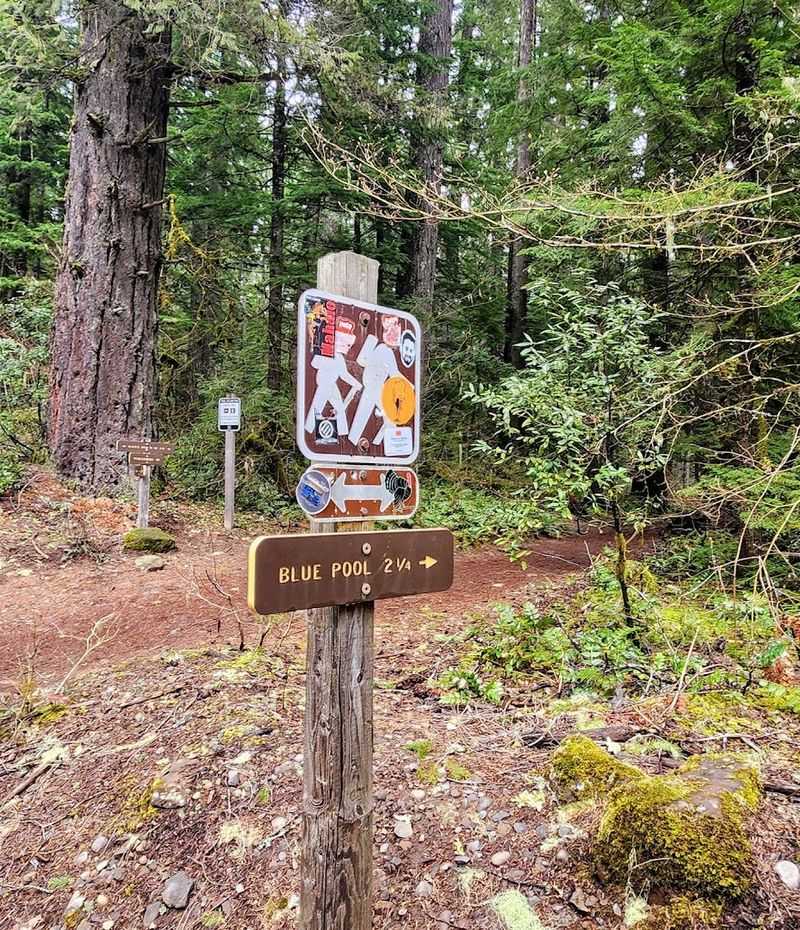
Cell service is limited or nonexistent on much of this trail. Download an offline map before you leave.
A GPS app with the route saved will serve you much better than hoping for a signal in the forest.
The parking area along National Forest Road fills quickly on weekends and summer mornings. Arriving early, ideally before 9 a.m., gives you a much better shot at a spot.
Overflow parking means a longer walk before you even start the trail.
Pit toilets are available near the trailhead. There are no facilities further along the route.
Plan accordingly before you head out, especially if you are bringing kids.
The trail is dog-friendly, which many visitors appreciate. Keep dogs on a leash and be mindful of other hikers on the narrower rocky sections.
Most people on this trail are genuinely friendly and happy to share the space.
Pack more water than you think you need. The cold air can mask how much you are exerting.
A light snack for the turnaround point makes the experience even better.
Why This Trail Feels Like More Than Just a Hike
Some trails are just trails. You walk, you see some trees, you turn around.
Blue Pool Trail operates on a different frequency. There is a quality to the place that is hard to name but impossible to miss.
Part of it is the silence. Even when other people are around, the forest absorbs sound in a way that creates pockets of genuine quiet.
The only constant is the soft sound of water moving somewhere nearby.
Part of it is the age of everything around you. The lava rock.
The old-growth trees. The underground river that has been flowing for over a thousand years.
You are standing inside a very long story.
People consistently describe feeling calmer after visiting. The walk out feels different from the walk in.
Something settles in you while you are there, even if you cannot quite explain what it was.
That quality, that sense of stepping into something larger than your daily life, is exactly why visitors return again and again. The trail earns every bit of its reputation.
Dear Reader: This page may contain affiliate links which may earn a commission if you click through and make a purchase. Our independent journalism is not influenced by any advertiser or commercial initiative unless it is clearly marked as sponsored content. As travel products change, please be sure to reconfirm all details and stay up to date with current events to ensure a safe and successful trip.
