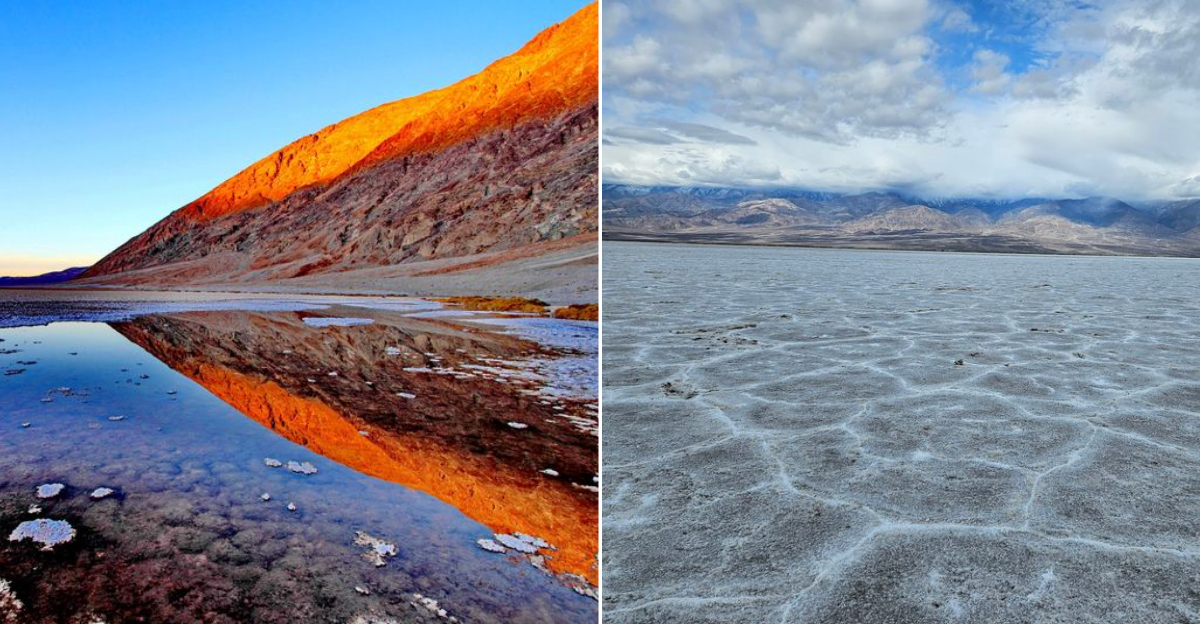
How often does a place famous for rare water end up looking even more dramatic when that water pulls back and leaves the ground exposed again? This California basin has that kind of strange pull, because the same extreme landscape that recently saw the rare return of shallow water is now showing wide flats where it once stood.
Badwater Basin sits 282 feet below sea level, the lowest point in North America, and its surface is never really still in the long term, with salt crusts constantly reshaped by groundwater and evaporation. That is what makes the view here feel so eerie and fascinating at the same time.
After rare storms brought back a shallow version of Lake Manly, park officials said wind and evaporation lowered the water and left broad mudflats behind, shifting the scene once again. If you think this is just another dry basin, the strange cycle of water, salt, and vanishing reflections says otherwise fast.
The Vast Flats That Make This Place Feel Unreal
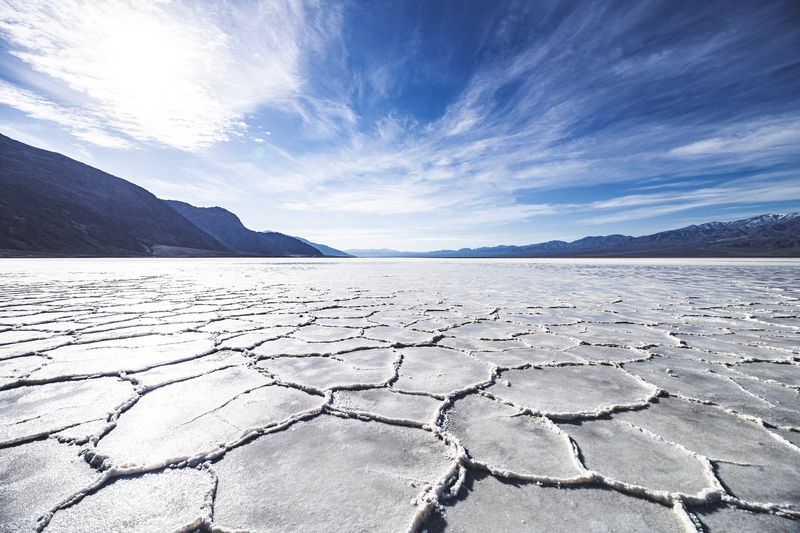
You step out, and the scale scrambles your sense of distance, like the ground is tilting gently away in every direction. The flats in California stretch pale and bright, and every step makes a crisp crunch that you feel more than hear.
Horizon lines turn slippery, and the air seems to lift the land, so you keep blinking to measure what is actually in front of you.
It is not slick like ice, but it has that quiet, rink-like openness that makes you slow down and listen for your own rhythm. When rare water drains away, the surface tightens into panels, then opens into roomy spaces that feel staged and empty at once.
You notice how shadows never settle very long out here, and even your footprints feel temporary, like they are asking permission to stay.
The whole thing is shaped by patience and sun, not by anything dramatic you would expect from a desert famous for extremes. You look across and feel a little lightheaded, because the flats radiate a steady brightness that keeps your eyes working.
Nothing about it feels fake, yet it still feels unreal, like stage lighting caught on land that refuses to perform.
Why Rare Water Never Lasts Long Here
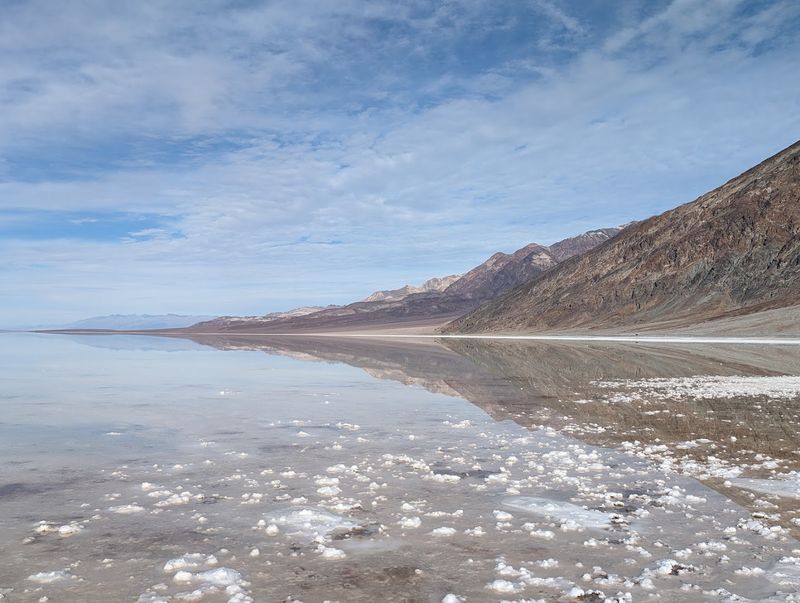
Want to know why the water checks in and then vanishes like it had second thoughts? It is simple desert math, but it plays out with quiet drama in California.
Shallow water spreads thin over a salty floor, and the sun and air team up, pulling moisture upward faster than any trickle can replace it.
Even when clouds throw shade, the ground still remembers the heat, and that stored warmth keeps the evaporation going. The surface is flat enough that water becomes a film instead of a pool, so wind can nudge it around, stretching it until it is almost not there.
You watch ripples slide, slow to nothing, and the wet sheen turns to a matte crust like a stage reset between scenes.
Staying hydrated is what lakes need, but here the supply line is stingy and unpredictable, so the water bows out early. The salt does not help either, because briny water resists freezing and favors evaporation, leaving behind bright residue as a calling card.
When the last glitter dries, you realize the real star is the light, because it keeps stealing moisture until the flats look newly polished again.
The Salt Basin Left Behind By Old Lake Cycles
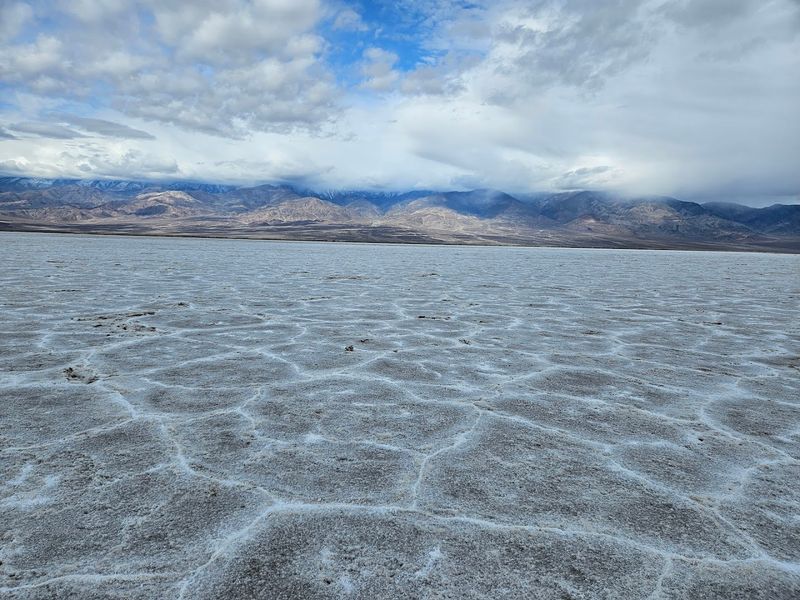
If you peel back time in your mind, this floor remembers cycles of filling and shrinking, like a breath the valley kept taking. Ancient water gathered, settled, and then retreated, leaving salts concentrated enough to harden into the crust we are standing on.
California holds a lot of layered stories, and this one is written in crystals instead of ink.
Every time water came back, it picked up minerals from surrounding rock, dissolved them, and carried the mix into this low bowl. When the water left, the minerals stayed, building a white ledger that thickened with each visit.
You can still read that record in the textures, where thin plates meet at gentle seams and break into patterns that feel almost floral.
The basin is a patient archivist, and the salt is its filing system, neat and unapologetically honest. There is no drama here, only repetition and pressure and sunlight doing the slow work.
Stand quietly, and it is easy to imagine the vanished shoreline curving across the valley, marking chapters you can trace with your feet.
What Visitors Notice First At Badwater
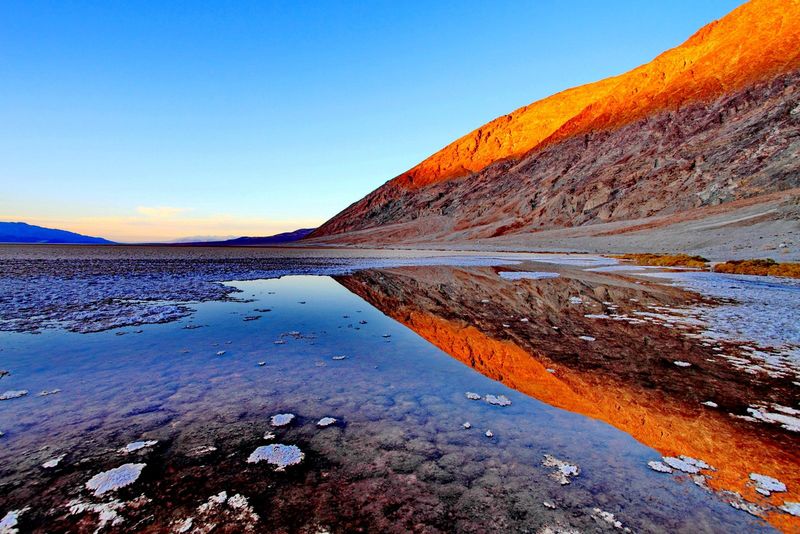
The first thing that hits you is the brightness, like the ground is reflecting a quiet lamp turned way up. Then it is the texture, those tidy polygons underfoot that look delicate until you press a boot edge and feel their strength.
California sunlight does not just light the place, it rearranges what you think the color white can do.
People stop and point without speaking, which is funny because there is nothing complicated in front of us. The flats are bare, the mountains are steady, and the whole scene looks assembled from just a few pieces.
That simplicity makes details pop hard, especially the way crystals stack into lacy ridges that catch tiny shadows.
Listen long enough, and you hear the small sounds: a grainy crunch, a little wind moving over open ground, a camera shutter pretending it is not proud. You notice how your stride slows to match the scene, like your body wants to respect the tempo.
The place teaches you to look longer, and that might be the first honest surprise.
How Evaporation Keeps Reshaping The Surface
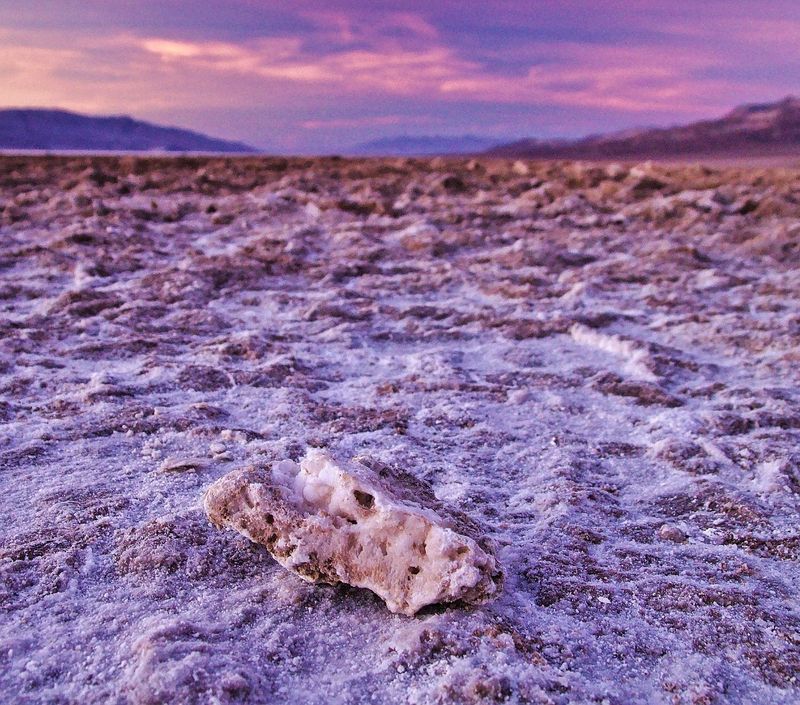
Give it a sunny stretch, and this surface rearranges itself without asking permission. Water sneaks in as a film, then thins, then lifts, leaving crystals to lock arms and redraw the edges.
You walk the same path on another visit, and the lines have shifted just enough to feel like the ground learned a new accent.
The shapes form from stress as the salty crust dries and contracts, cracking into tidy cells that keep repairing themselves. Fresh brine rises from below in slim strands, wicking upward and painting new borders that look careful but are made by chance.
California does change loudly sometimes, but here the drama is patient, and the results are clean, nearly architectural.
If you crouch and run a finger along a ridge, it flakes a little, then holds, like a pastry edge that forgot to be sweet. Each flake gathers back into the pattern when moisture returns, and the whole sheet breathes wider or tighter.
The constant editing is the show, and you realize the flats are not still at all.
The Below-Sea-Level Setting That Defines It
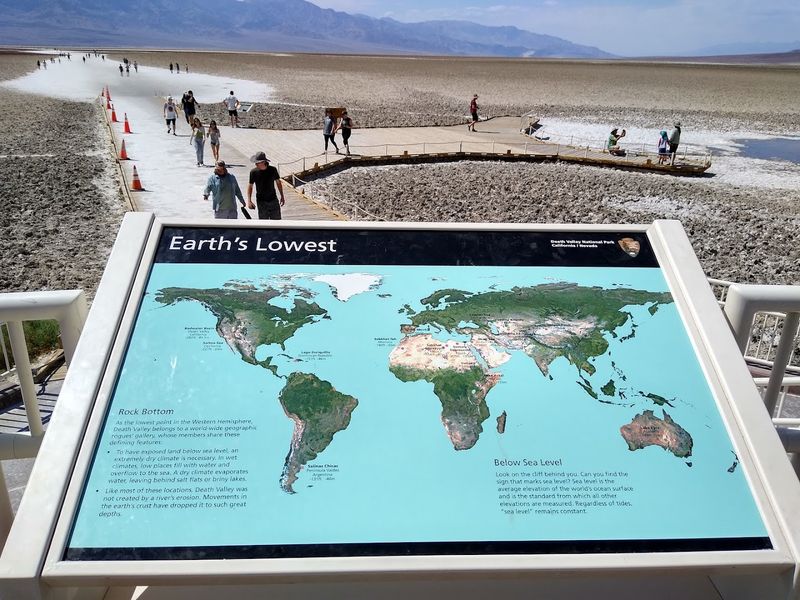
The low setting is the quiet trick that gathers everything here, the reason water rolls downhill and never quite rolls out with dignity. This bowl in California collects what nearby slopes release, and gravity is relentless about finishing the task.
Once moisture arrives, the heat and dry air jump in and close the loop so nothing lingers long.
That extra depth means air can pool like water, warm and settled, which boosts evaporation without making a fuss. You feel it on your skin, a stillness that is not calm so much as concentrated.
Stand for a minute, and you understand why any puddle must hustle to survive.
The sign tells a simple story, but the view tells it better, because the ground stretches farther than your instinct expects at this elevation. Mountains look taller against a floor pressed this low, which turns the whole valley into a slow theater.
The setting is not just trivia, it is the lever that moves the landscape.
Why The Basin Looks So Wide And Bare
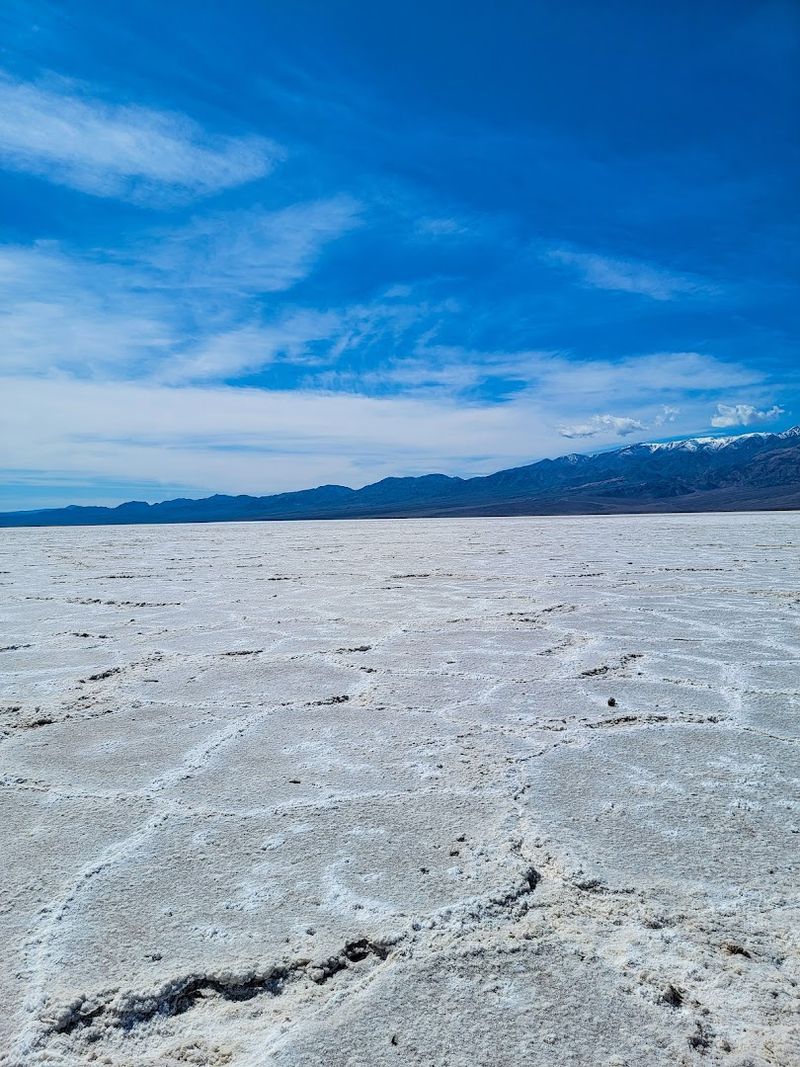
It seems endless because your eyes lose anchors out here, and the ground has almost no vertical clues. The surface is level for a long way, so distance turns slippery and the space feels freshly erased after every gust.
In California you get flamboyant coastlines and crowded forests, and then there is this, a calm white stage.
Vegetation keeps its distance because the soil is salty and the water unreliable, which makes the openness even bolder. When you do spot a plant, it looks deliberate, like a punctuation mark in a long, quiet sentence.
The emptiness is not absence, it is the landscape choosing few ingredients and using them with confidence.
Cloud shadows can cross without snagging on anything, which makes the whole basin feel wider by the minute. Even your voice sounds different, moving out and not bouncing back with much feedback.
That spare, bare quality sharpens your focus, and you start noticing tiny variations you would miss anywhere else.
How Water Turns Into Salt Flats Here
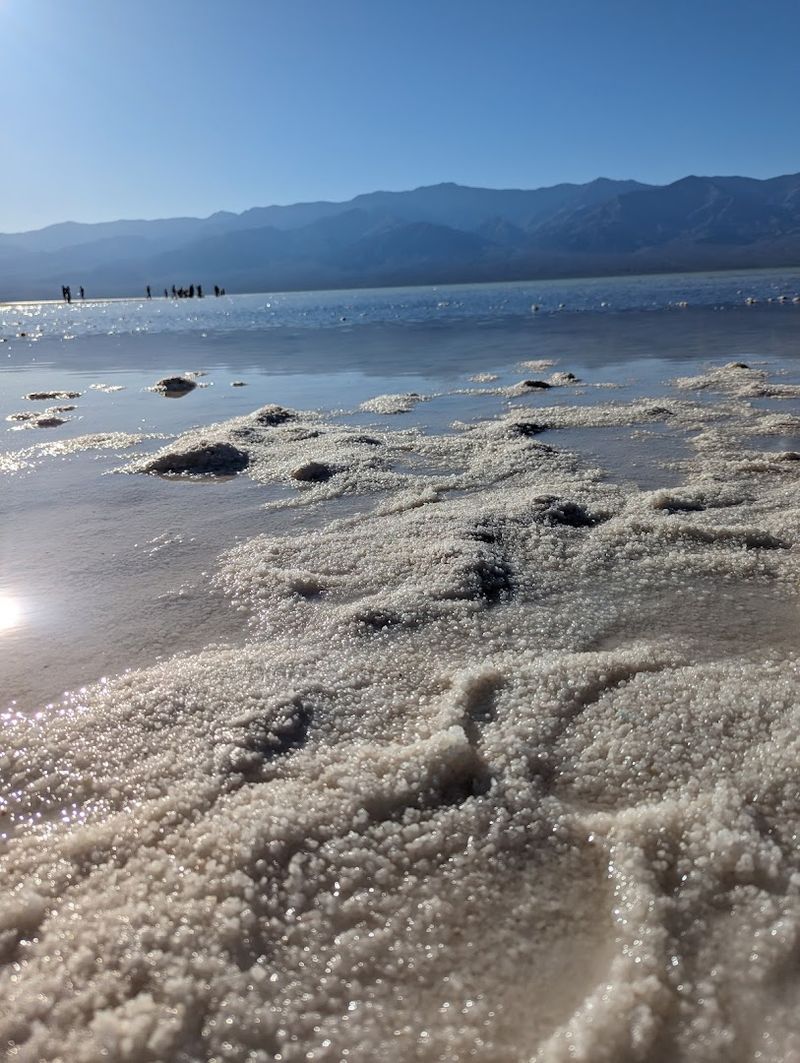
Picture it starting as a thin sheet of briny water, spread so wide it forgets how to gather. Sunlight and dry wind take their cut first, lifting water into the air and leaving minerals to linger.
As the film shrinks, crystals begin to grow along faint lines, sketching a map that was hiding in the mud.
Those lines deepen as the crust tightens and fractures, and each break invites more brine to climb and paint new borders. Before long, the floor wears a patchwork of plates that rise at the edges, a quiet fencework built grain by grain.
California turns the page, and the lake moment becomes a salt chapter without needing to announce the switch.
Return after another brief wet spell, and the process restarts, tidying what was messy and cracking what was smooth. You see little scallops where water once pooled, then stepped back, and the light makes them glow.
The change is measured, steady, and somehow satisfying, like watching careful handwriting appear.
A California Landscape That Feels Almost Impossible
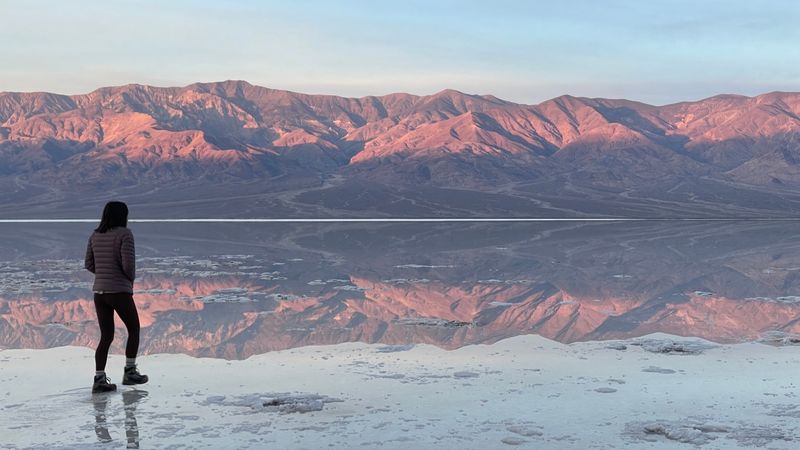
Some places make you say wait, really, and this is one of them. The idea that a bright, crisp flatscape sits in a bowl in California, remade by brief water and patient light, feels like a trick the desert plays with a straight face.
You stand there, and the quiet pulls you in without asking for any performance.
What sells it is how ordinary the ingredients are: heat, wind, rock, a little water, time, and space. Nothing exotic does the lifting, yet the result feels nearly otherworldly, like the planet tried on a minimalist mood.
The emptiness is not lonely, it is generous, because it invites your thoughts to stretch out and breathe.
Walk a little, look back, and see your path stitched across the pale like a thread that will soon evaporate. The mountains lean in just enough to frame the stage without crowding it.
If impossible means unexpected but true, then this basin wears the word comfortably and lets you test it with your own steps.
Dear Reader: This page may contain affiliate links which may earn a commission if you click through and make a purchase. Our independent journalism is not influenced by any advertiser or commercial initiative unless it is clearly marked as sponsored content. As travel products change, please be sure to reconfirm all details and stay up to date with current events to ensure a safe and successful trip.
