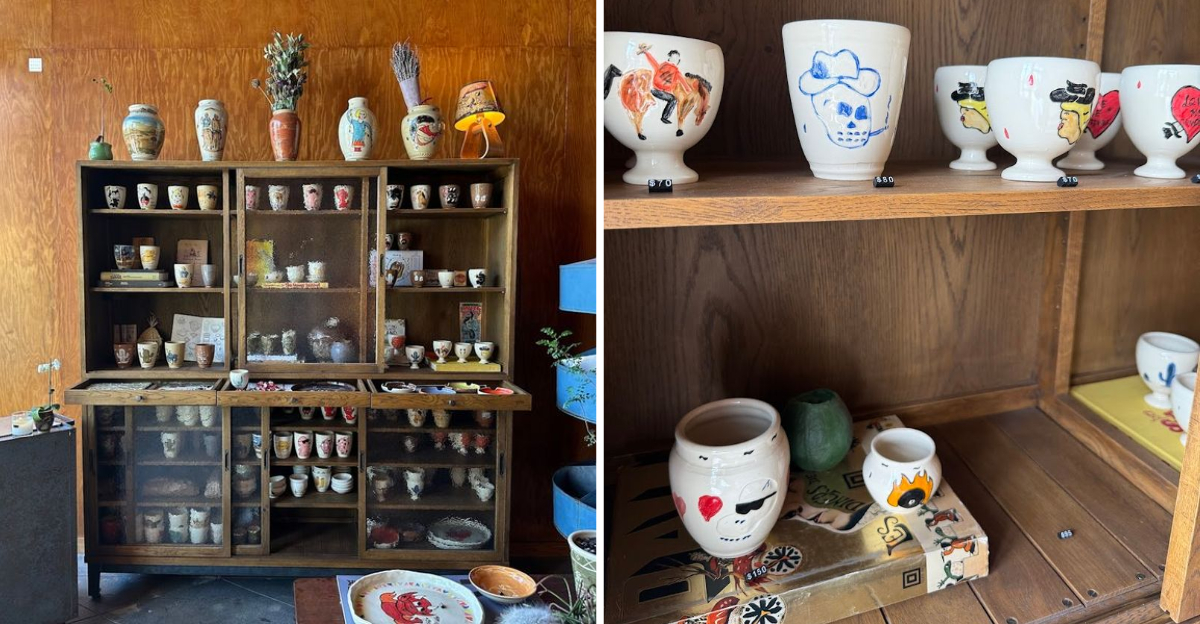
I have done those paint your own pottery places before. Choose a color.
Slap it on. Walk away feeling like an artist.
This is not that. You start with a plain clay mug.
Then you carve into it. Lines, dots, patterns inspired by traditional tattoo flash.
Daggers. Roses.
Swallows. Sacred hearts.
The studio provides the tools and the guidance, but the design is all you. I spent two hours hunched over my mug, carving a tiny panther head that looked slightly more like a blob. But I loved it.
Something satisfying about digging into soft clay instead of just painting on top. California has plenty of crafty spots.
This one feels different.
The Tattoo-Carving Technique That Makes Everything Different
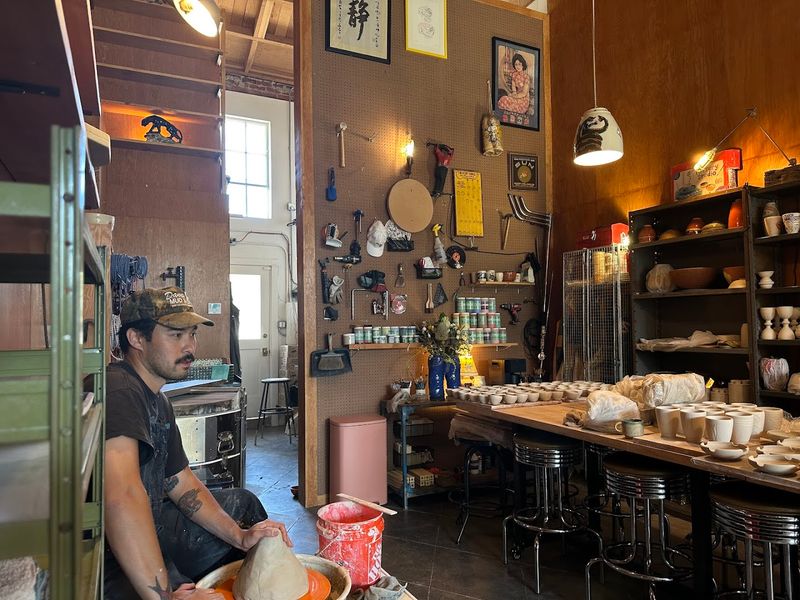
Danny D’s approach to ceramics borrows directly from tattoo culture, which makes total sense once you see it in action. Instead of painting or stamping designs onto the surface, you’re actually carving into the clay while it’s still leather-hard, creating raised or recessed patterns that become permanent parts of the piece.
The technique requires a steady hand and some patience, but the instructors walk you through every step.
What really surprised me was how forgiving the process actually is. If you mess up a line or don’t like how something looks, you can smooth it over and start fresh before the clay hardens completely.
The carving tools feel similar to the needles tattoo artists use, just without the permanence on your actual skin.
Popular designs include traditional tattoo motifs like roses, skulls, daggers, and banners with custom text. Some people go for minimalist line work while others create elaborate sleeves around their entire mug.
The studio provides reference books filled with classic tattoo flash, but you’re also encouraged to bring your own ideas or work with the staff to develop custom concepts that match your personal style perfectly.
How the Studio Space Feels Like an Artist’s Playground
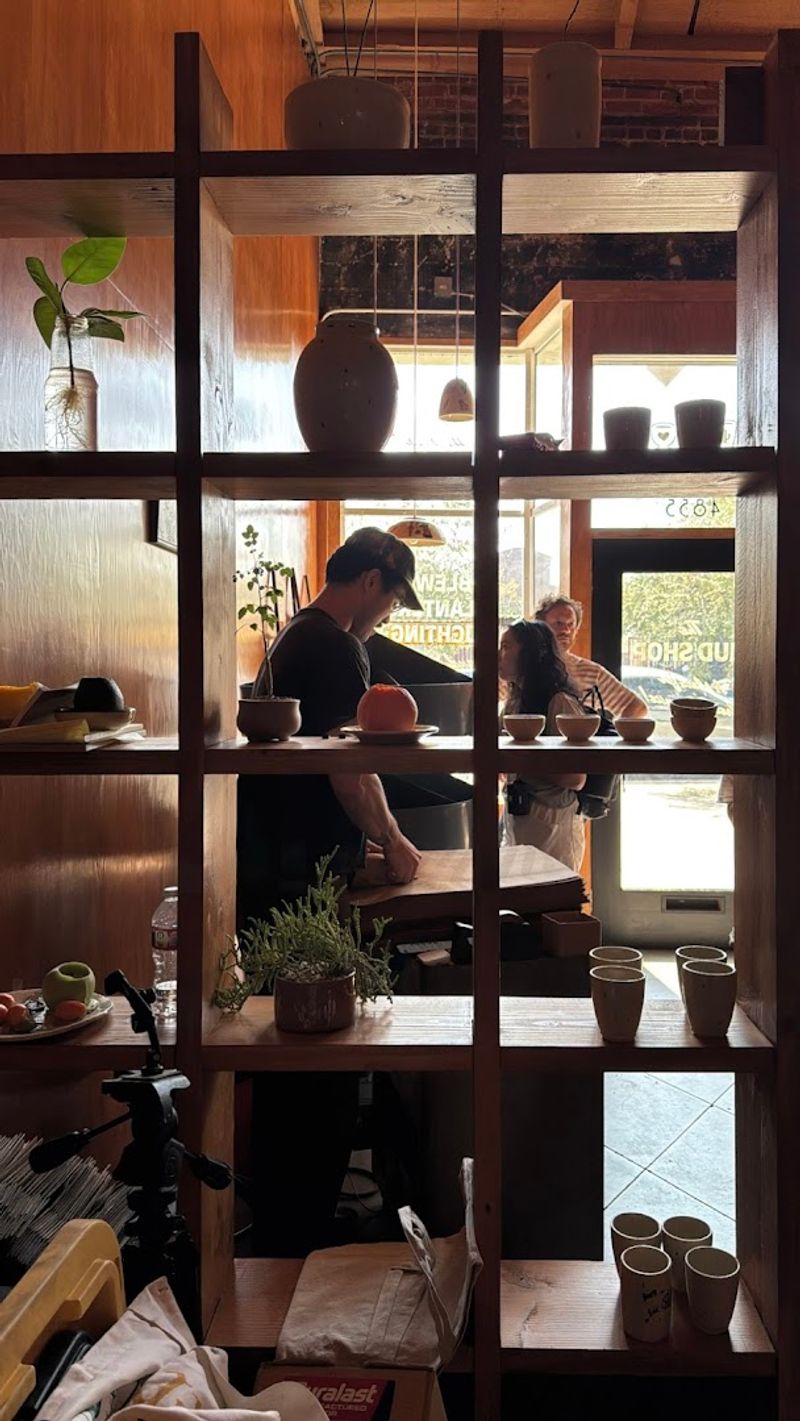
The studio itself sits in a converted space that still has that raw, industrial Los Angeles charm. Exposed brick walls hold shelves packed with finished pieces in various stages of completion, from bone-dry greenware waiting for their first firing to glossy glazed mugs ready for pickup.
Natural light pours in through oversized windows, which makes a huge difference when you’re trying to see the fine details of your carving work.
Workbenches are arranged in a way that feels communal without being cramped. You’ve got enough room to spread out your tools and references, but you’re close enough to your neighbors to ask questions or admire what they’re working on.
The smell of wet clay hangs in the air, mixed with the earthy scent of dried pottery dust.
Music usually plays softly in the background, nothing too distracting but enough to create a relaxed atmosphere. Tools are organized in rolling carts that move between stations, stocked with everything from loop tools and needle tools to sponges and wire cutters.
The kiln room sits off to the side, where you can peek through the viewing port and watch pieces transform under intense heat.
Starting Your Mug from a Blank Canvas
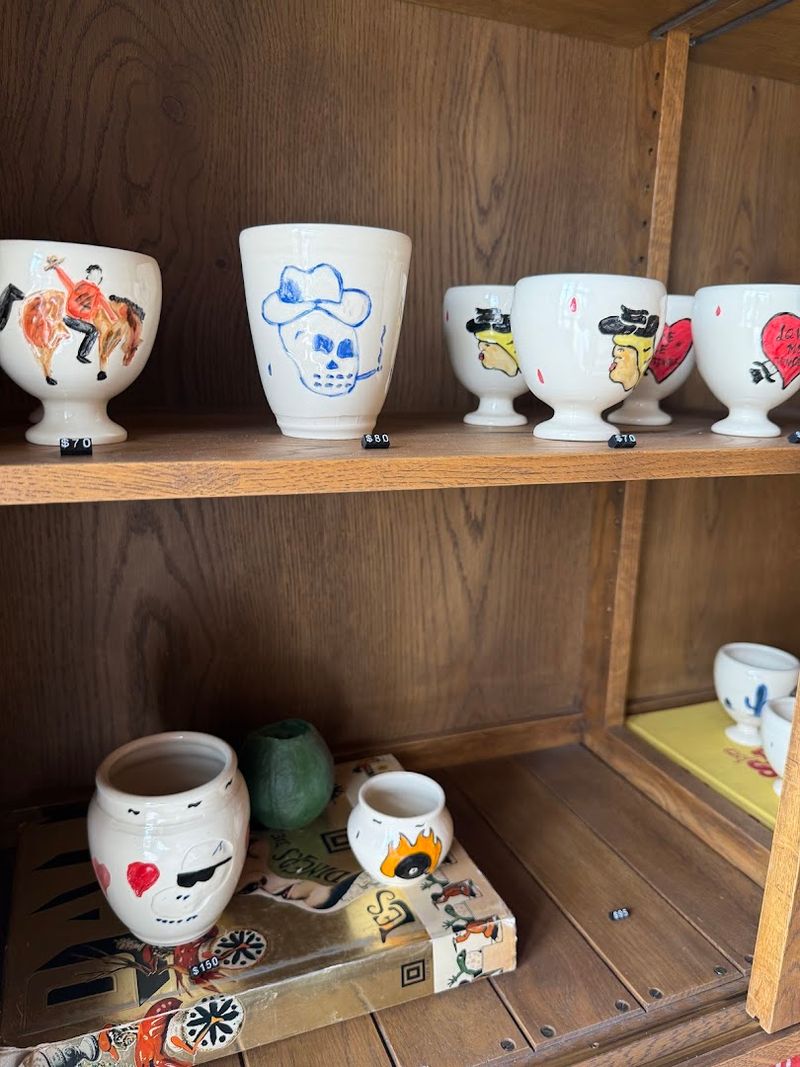
You don’t need any prior pottery experience to join a session here, which honestly took some pressure off when I signed up. The class starts with a pre-formed mug or vessel that’s already been thrown and dried to the perfect consistency for carving.
This means you can skip the intimidating wheel-throwing process and jump straight to the artistic part.
Before touching any tools, you’ll spend time sketching your design on paper. The instructors encourage you to think about how your pattern will wrap around the curved surface of the mug.
Flat designs that work on paper sometimes need adjustment when translated to a three-dimensional form. I learned this the hard way when my geometric pattern didn’t line up properly at first.
Once you’re happy with your sketch, you transfer the design onto the mug using either transfer paper or by drawing directly with a pencil. The pencil marks disappear during firing, so you can be loose with your planning lines.
Then comes the actual carving, starting with light scratches to establish your main shapes before committing to deeper cuts that remove more clay and create dramatic shadows and dimension.
Understanding the Glazing and Firing Magic
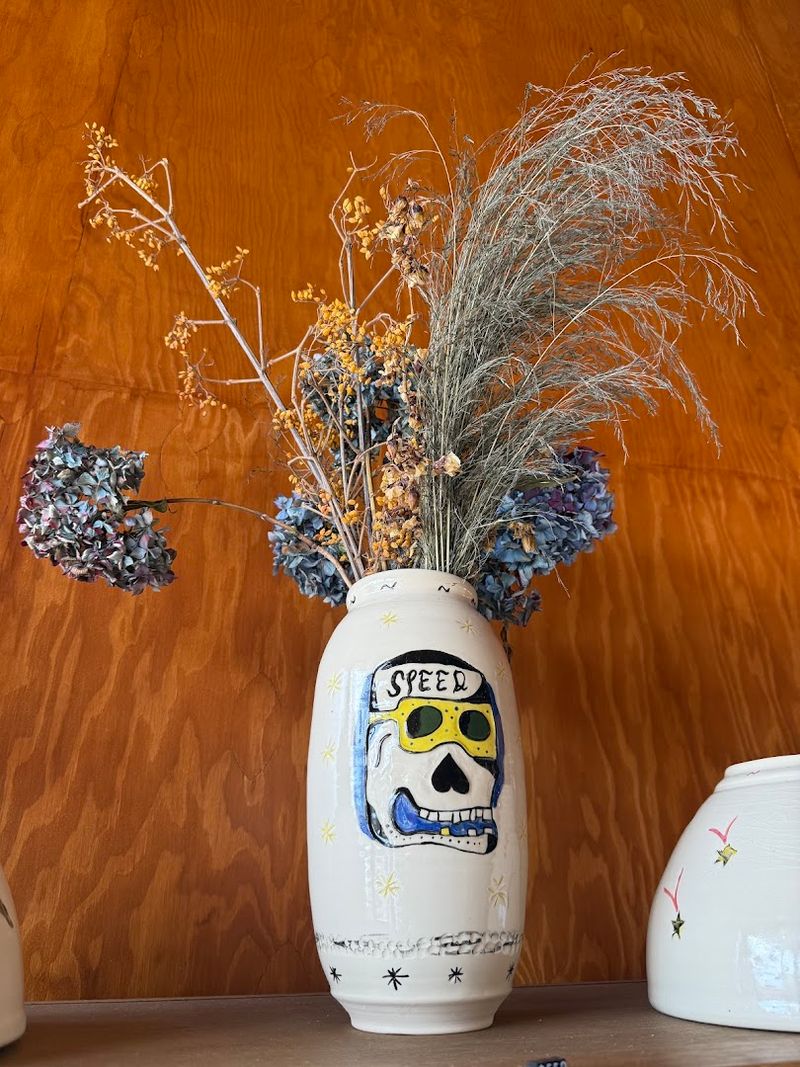
After you finish carving your design, the piece goes through its first firing in the kiln, called the bisque fire. This transforms the fragile clay into a harder ceramic material that can handle glaze application.
The wait feels long, usually about a week, but it’s necessary for the chemical changes that make pottery permanent.
Then comes the fun part where you choose your glaze colors. The studio offers an impressive range, from classic whites and blacks to vibrant blues, greens, and even metallic finishes.
Here’s where your carved design really comes to life, because glaze pools differently in the recessed areas versus the raised surfaces. This creates natural shading that emphasizes your pattern without any additional work.
Some people choose a single glaze color to keep things clean and simple. Others experiment with multiple colors, layering different glazes or using contrasting colors for the carved areas versus the background.
The instructors can show you samples of how different glaze combinations turn out after the final firing. That second firing is where everything comes together, and the colors transform from dusty matte to their final glossy or satin finishes.
Workshop Options That Fit Your Schedule
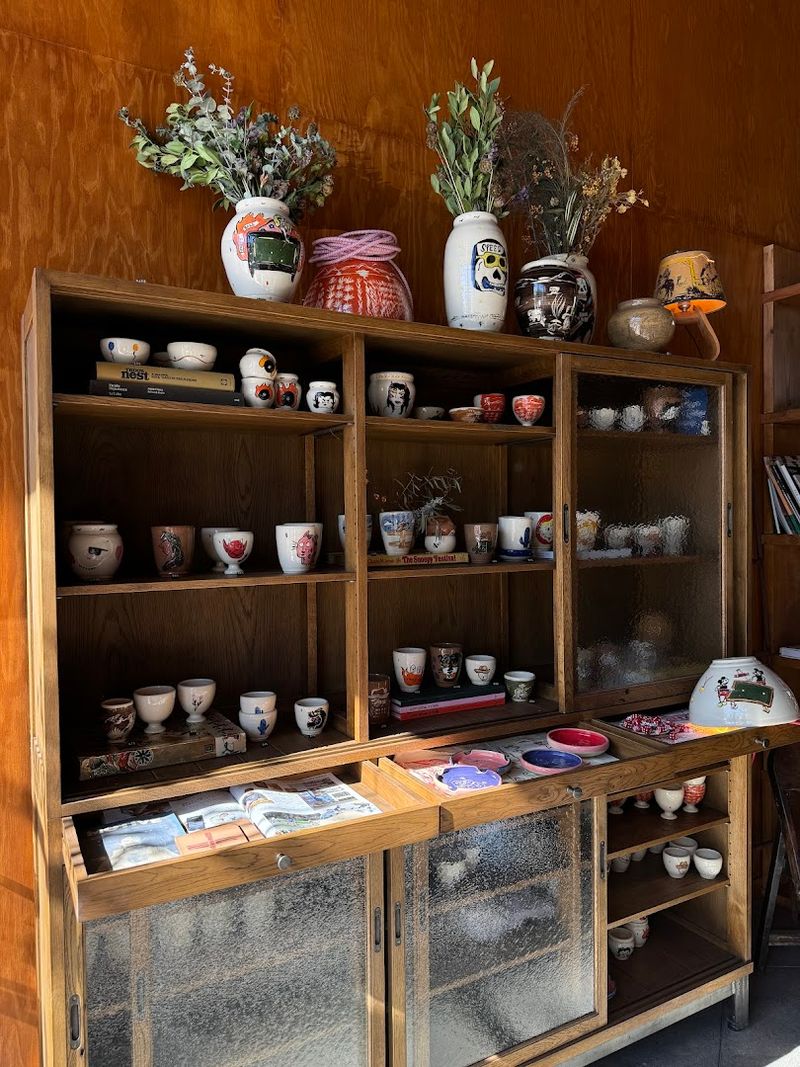
Danny D’s offers several different workshop formats depending on how deep you want to go. Single-session classes run about three hours and cover everything you need to complete one carved mug.
These are perfect if you’re visiting Los Angeles and want to try something creative without a long commitment. I started with one of these and immediately wanted to sign up for more.
For people who want to develop their skills further, there are multi-week courses that meet once a week. These longer programs let you work on multiple pieces and experiment with more complex carving techniques.
You’ll learn how to create different textures, combine various tools for different effects, and plan more ambitious designs that cover entire vessels.
Private sessions are also available for small groups who want personalized instruction or want to host a unique creative event. These work great for birthday celebrations, team-building activities, or just getting together with friends for something more interesting than the usual dinner plans.
The studio can accommodate different skill levels within the same session, so nobody feels left behind or bored while others catch up with the instruction.
The Moment You Finally Take Your Creation Home
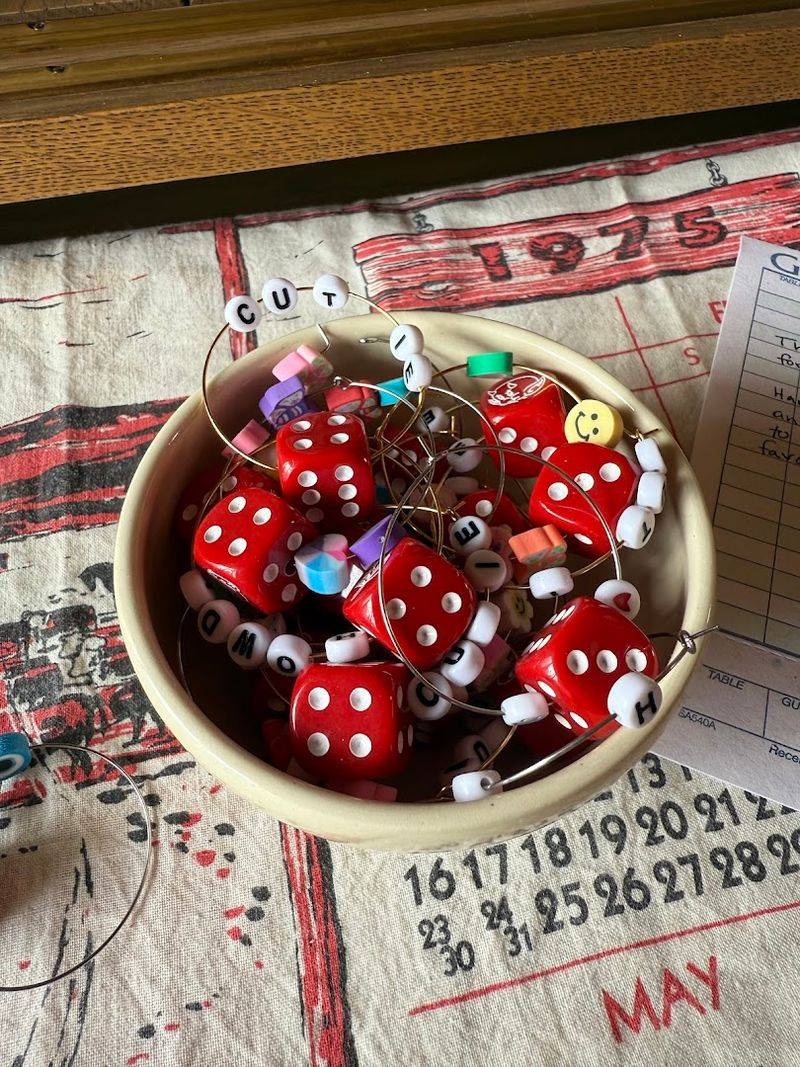
Picking up your finished mug feels surprisingly emotional. You’ve waited through two separate firings over several weeks, wondering if your design will turn out the way you imagined.
The studio sends an email when pieces are ready, and there’s always a little nervous excitement walking in to see the final result.
Most people are amazed at how professional their work looks after firing. The glazes bring out details you couldn’t fully appreciate in the raw clay, and the carved lines have this beautiful depth that catches light from different angles.
Even small imperfections in your carving technique often add character rather than detracting from the overall piece.
Your mug is food-safe and fully functional, not just a decorative object that sits on a shelf. I use mine for coffee every morning, which makes the whole experience feel even more worthwhile.
There’s something satisfying about drinking from something you made with your own hands, especially when friends notice the intricate design and ask where you got it. The studio provides care instructions to help your piece last for years.
Joining a Community of Clay Enthusiasts
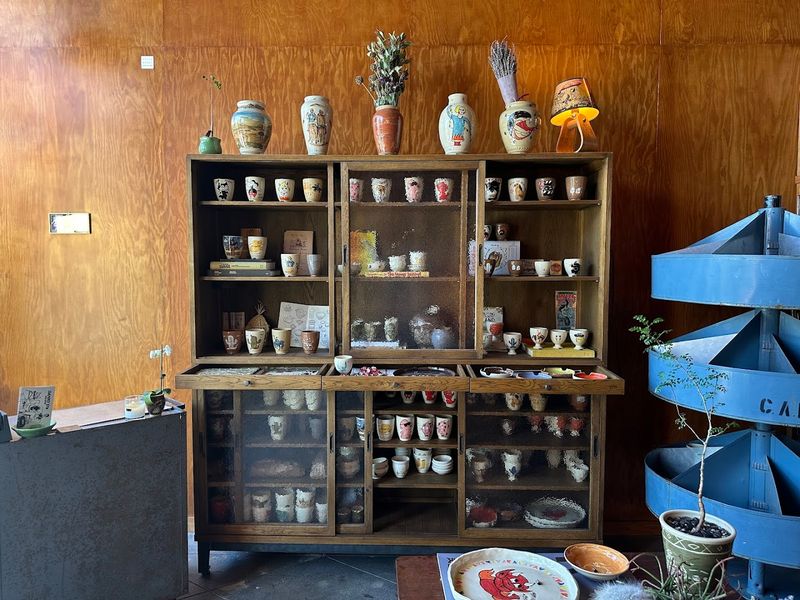
Beyond the technical skills and finished products, what really makes Danny D’s special is the community that forms around the shared tables. People come from all walks of life, from complete beginners to experienced artists looking to try a new medium.
During my sessions, I met graphic designers, teachers, baristas, and even a surgeon who said carving clay was surprisingly similar to his day job.
The instructors foster this collaborative atmosphere by encouraging people to share ideas and help each other troubleshoot tricky design elements. It’s common to see students wandering over to admire someone else’s work or offer suggestions on tool techniques.
Nobody’s competitive about it because everyone understands that creativity flourishes when you’re surrounded by supportive people rather than trying to prove something.
Many students become regulars, coming back for multiple sessions to build their skills and work on increasingly ambitious projects. The studio hosts occasional showcase events where past students can display their favorite pieces and connect with others who share their newfound passion for carved ceramics.
It creates this ongoing creative family that extends beyond individual class sessions.
Location: 4855 Fountain Ave, Los Angeles, CA 90029
