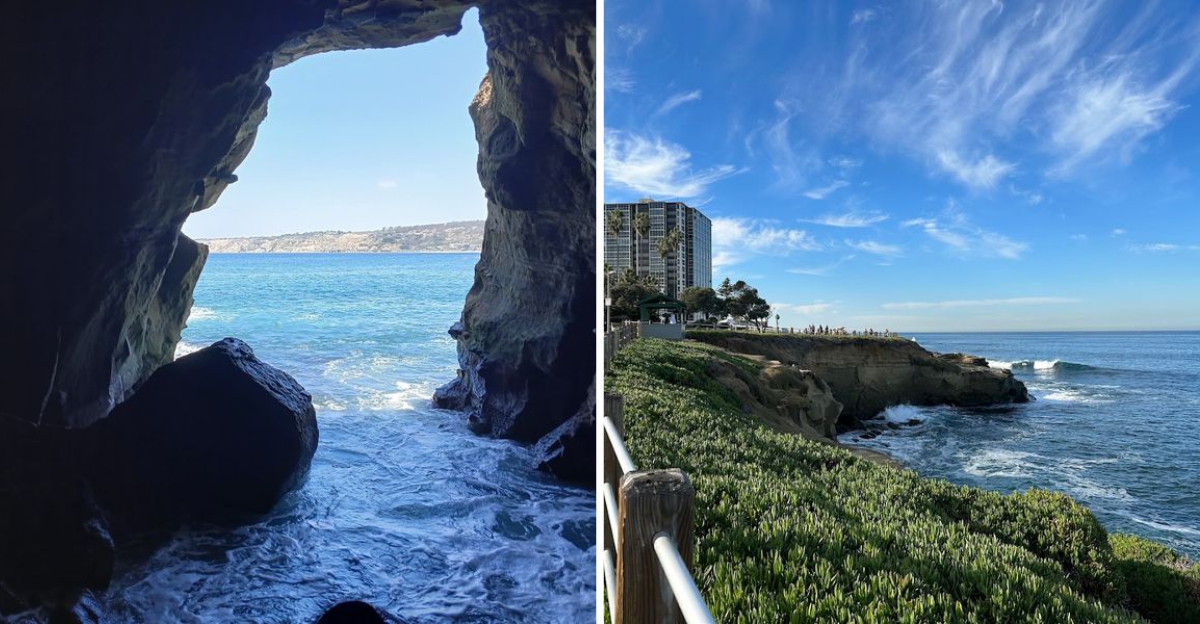
Turquoise water cradled between dramatic California cliffs, sea lions barking from the rocks below, and the sound of waves echoing off sandstone. I stood at the edge and watched the water shift through shades of clear blue, kelp swaying beneath the surface.
Those sea lions lounged just a few feet from where people stood, completely unbothered by the attention.
The whole scene felt almost staged, like something you would see in a nature documentary, except I was standing right there in the middle of it.
I pulled out my phone without thinking, not because I was told to, but because I genuinely could not believe what I was looking at.
The air smelled like salt and sun-warmed rock, and the rhythm of the waves made me want to stay until the light started to fade.
Wildlife, snorkeling, scenery, or just the salt air, that spot delivers something that stays with you long after you leave.
Where the Wild Things Sunbathe: Encounters with La Jolla’s Famous Sea Lions
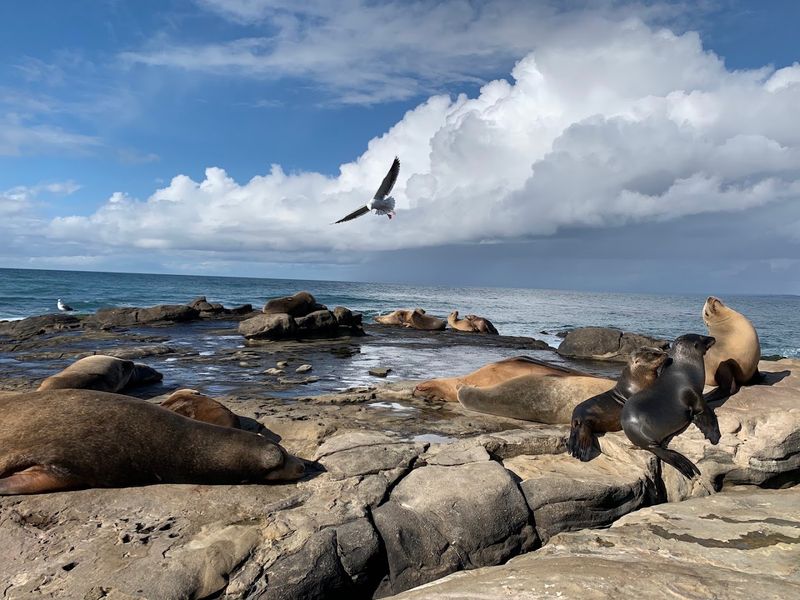
The sounds reach you first. Before you even see them, you hear the barks, low and insistent, bouncing off the cliffs like a natural amphitheater built just for them.
California sea lions are the undisputed stars of La Jolla Cove, and they have absolutely no intention of sharing that title.
You will find them sprawled across rocky ledges, piled on top of each other in contented heaps, occasionally flopping toward the water with a kind of lazy authority. Their social behavior is genuinely entertaining to watch.
Some are playful and energetic, slipping into the water and surfacing nearby, while others seem utterly committed to doing absolutely nothing for as long as possible.
The area falls within the Matlahuayl State Marine Reserve, which gives these animals real protection. Rangers and volunteers are present to remind visitors of the rules, and those rules matter.
Getting too close is not just dangerous for you, it stresses the animals and disrupts a community that has called this coastline home for generations.
Occasionally, a sea lion will glide through the cove water surprisingly close to snorkelers, which is both thrilling and humbling. You might also spot harbor seals if you walk a short distance south toward Children’s Pool.
The difference between the two is worth knowing: sea lions have visible ear flaps and can rotate their hind flippers forward to walk, while seals tend to be quieter and more reserved.
Both are remarkable, and seeing either one in the wild, completely unconfined, is an experience that no aquarium can replicate.
Beneath the Surface: Snorkeling in La Jolla Cove’s Underwater Reserve
Slipping below the surface at La Jolla Cove feels like entering a completely different world. The water clarity here is genuinely remarkable, with visibility often reaching beyond 30 feet on a good day.
That kind of transparency makes even a simple snorkel feel like a guided tour through a living museum.
The cove sits within the San Diego-La Jolla Underwater Park Ecological Reserve, a protected area covering roughly 6,000 acres of ocean habitat. That protection means the marine life here is abundant and relatively undisturbed.
The first thing most snorkelers notice is the Garibaldi, California’s official state marine fish, a vivid, almost electric orange that pops against the dark green of the kelp forests below.
Beyond the Garibaldi, the rocky reef and seagrass beds shelter a surprising variety of creatures. Lobsters tuck into crevices.
Eels peer out from gaps in the rock. Horn sharks rest motionlessly on the sandy bottom, easy to miss if you are not paying close attention.
Rays sometimes glide across the shallower sandy areas, moving with an effortless grace that is hard not to admire.
No surfboards or flotation devices are permitted within the reserve, which keeps the water calm and safe for swimmers and marine life alike. Gear rentals are available nearby if you did not bring your own equipment.
The best snorkeling conditions typically occur during summer months when water visibility peaks and the sea is at its most serene. First-timers and experienced snorkelers alike tend to come out of the water grinning.
Sculpted Over Centuries: The Sandstone Cliffs and Sea Caves of La Jolla
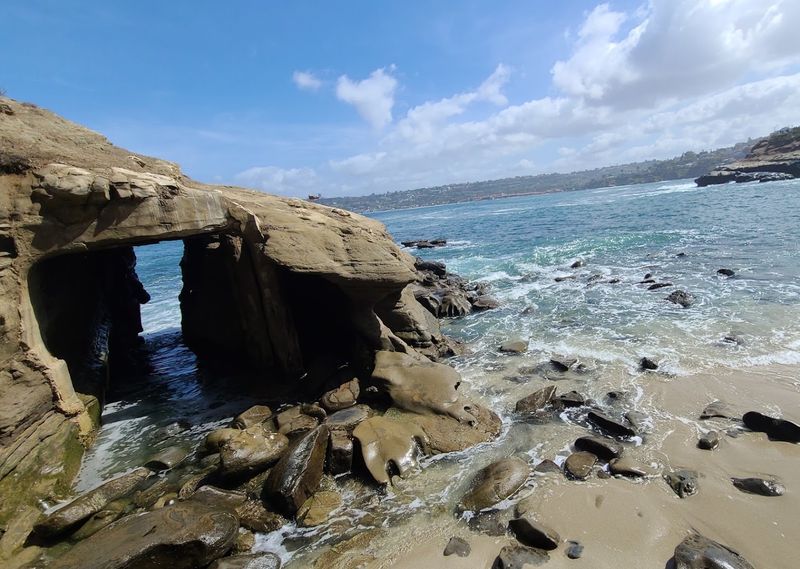
Geology moves slowly, but the results at La Jolla Cove are nothing short of spectacular. The sandstone cliffs that frame the cove have been shaped by thousands of years of wave action, wind, and salt, carved into forms that feel almost sculptural.
Their warm amber and rust tones glow especially beautifully in the late afternoon light, when the sun catches every ridge and hollow.
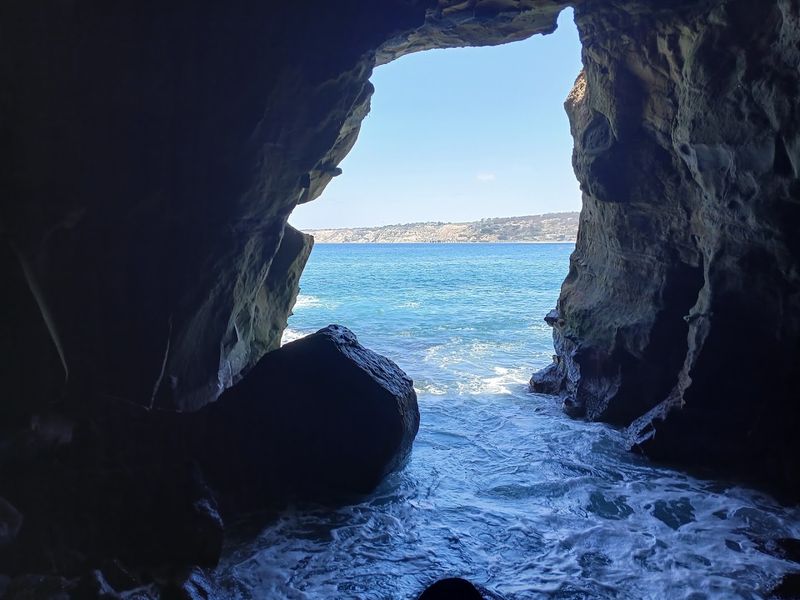
Just north of the main cove, the cliffs give way to a series of sea caves, some of the most visited on the Southern California coast. Kayaking along the base of these cliffs is one of the best ways to truly appreciate their scale.
From water level, looking up at the towering rock faces, the sheer drama of the landscape becomes undeniable.
Guided kayak tours operate regularly and allow paddlers to explore caves like Clam Cave, where the interior opens into cool, echoing chambers that feel genuinely ancient. The guides share geological context that adds real depth to the experience.
Ocean conditions vary, so not every cave is accessible every day, but even paddling along the cliff face without entering a cave is worth every minute.
Above the cliffs, native coastal plants cling to the bluff edges, adding soft texture to an otherwise rugged landscape. The combination of dramatic rock formations, crashing water below, and open sky above creates a setting that photographers return to again and again.
There is a permanence to these cliffs that puts everything else in quiet perspective, a reminder that this coastline existed long before anyone thought to name it.
A Sheltered Sanctuary: Why the Calm Waters Make This Cove So Special
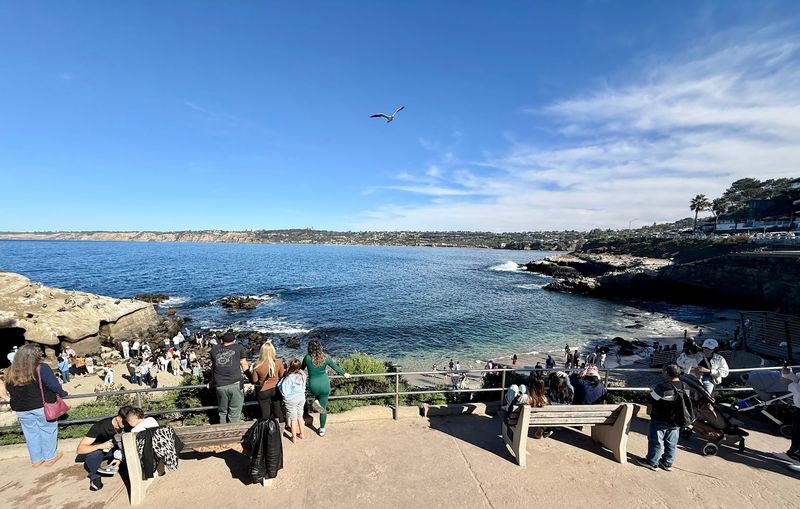
Not every beach in Southern California offers water this forgiving. The geographic layout of La Jolla Cove, enclosed on multiple sides by rocky points and rising cliffs, naturally buffers the incoming ocean swell.
The result is a pocket of water that stays noticeably calmer than the open coast, especially from late spring through early fall.
That calmness draws a specific kind of crowd. Open-water swimmers train here regularly, sometimes completing long-distance routes toward Scripps Pier, which stretches out from the nearby La Jolla Shores.
Watching a solo swimmer cut through the clear water with the cliffs in the background is oddly inspiring, a reminder that the ocean can be a place of discipline as much as leisure.
For casual visitors, the calmer conditions simply mean a more enjoyable time in the water. You do not have to fight through heavy surf to get in, and once you are in, the gentler movement makes it easier to observe what is happening around and below you.
The protected status of the ecological reserve also means no motorized watercraft operate within the swimming area, keeping the environment peaceful and the water free of fuel contamination.
Lifeguards are stationed at the cove during operating hours, adding an extra layer of safety that makes it a reasonable choice even for families with younger swimmers.
Showers and changing facilities are available nearby, which is a practical detail that matters more than you might expect after a long swim.
The whole setup feels genuinely thoughtful, as though the cove was designed with the swimmer in mind, though of course, nature did most of the work.
Views from Above: Ellen Browning Scripps Park and the Clifftop Perspective
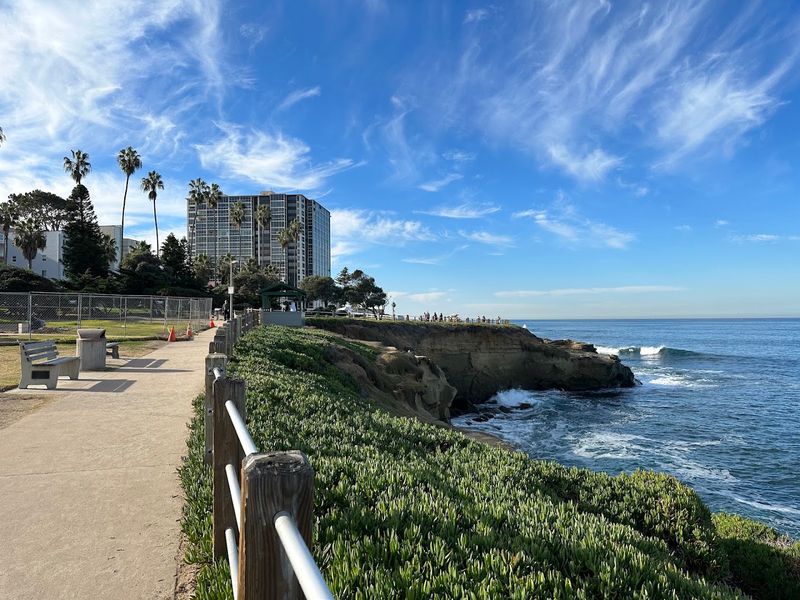
There is a particular kind of satisfaction in finding a bench with a perfect view and having nowhere else to be. Ellen Browning Scripps Park, which sits directly atop the cliffs above La Jolla Cove, offers exactly that opportunity.
The grassy blufftop park is well maintained, shaded in spots, and lined with walkways that deliver sweeping views of the Pacific in nearly every direction.
From up here, the cove takes on a completely different character. You can see the sea lions as small, sun-warmed shapes on the rocks below, their barks drifting up on the breeze.
Pelicans glide past at eye level, which never stops being impressive no matter how many times you see it. Cormorants line the cliff edges with their wings spread wide, drying off after a dive, looking prehistoric and oddly dignified at the same time.
Sunset from Scripps Park is the kind of thing people plan their entire afternoon around. The sky shifts from pale gold to deep orange to a bruised purple, and the ocean catches every shade of it.
Photographers set up early to claim good angles, but honestly, even a casual phone snapshot from up here tends to turn out beautifully.
The park itself is free to visit and open to the public, making it one of the more accessible panoramic viewpoints in all of San Diego.
Families spread out on the grass, couples sit on benches facing the water, and solo visitors lean against the railing and just look.
Sometimes that is genuinely enough. The view does not ask anything of you except your attention.
Beyond the Beach: Exploring La Jolla Village After a Day at the Cove
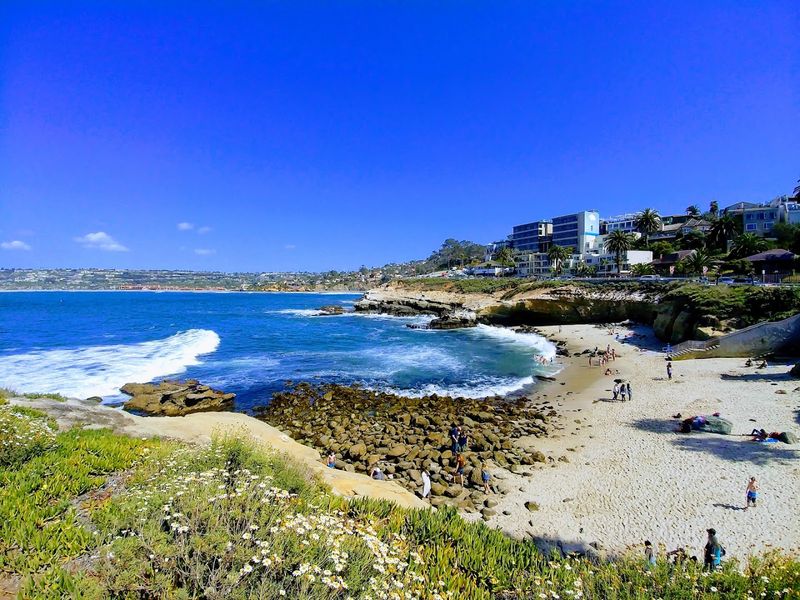
One of the quietly underrated things about La Jolla Cove is its location. The beach itself is remarkable, but step back from the water and you are immediately in the heart of La Jolla Village, one of the more enjoyable coastal neighborhoods in all of Southern California.
The transition from wild coastline to charming street happens in about thirty seconds.
Prospect Street and Girard Avenue are the main arteries of the village, lined with art galleries, independent boutiques, and a solid range of casual eateries and sit-down restaurants.
After a morning of snorkeling or cliff-watching, the appeal of finding a good meal within easy walking distance is very real.
The area caters to a mix of tourists and locals, which tends to keep the quality of shops and food reasonably high.
Art has deep roots in La Jolla, and the village reflects that. Several galleries showcase both established and emerging artists, and the overall aesthetic of the neighborhood leans toward the tasteful and eclectic rather than the generic.
Browsing here feels genuinely pleasant rather than obligatory.
Parking can be a genuine challenge, particularly on weekends and during summer. The most practical approach is to arrive early, claim a spot, and plan to spend most of the day in the area rather than making multiple trips.
The village is compact enough to explore entirely on foot once you are parked. Everything about the experience, the wildlife, the water, the food, the scenery, adds up to a day that is hard to top anywhere else on the California coast.
Address: 1100 Coast Blvd., La Jolla, CA 92037
