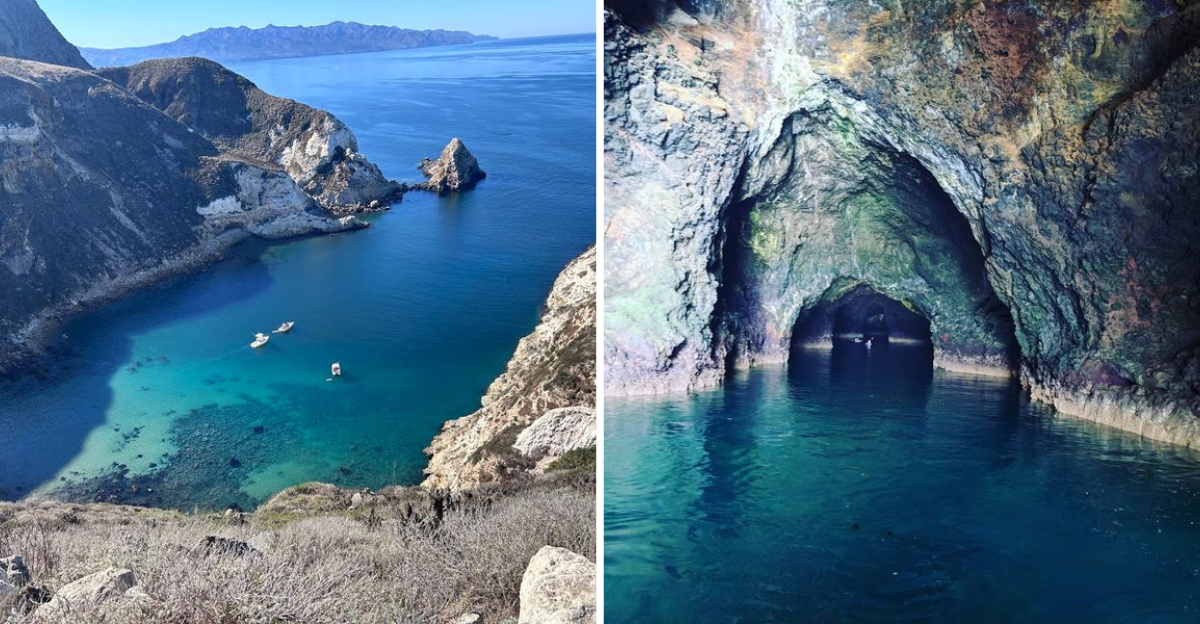
California has a national park that sits just a short boat ride from the mainland, yet feels like another world entirely. Five rugged islands stretch across the ocean, with no roads, no restaurants, no hotels, and no crowds.
Just raw coastline, ancient sea caves, rare wildlife, and a quiet so deep it almost feels unreal. I spent a day hiking along the bluffs, the Pacific stretching out in every direction, and did not pass another soul for hours.
The air smelled like salt and wildflowers, and the only sounds were waves and birds. Only a fraction of what most national parks see in a busy weekend make the trip out there, which means the islands stay wild and unhurried.
If you have ever wanted to feel like a true explorer with a whole island to yourself, this is the place.
Getting There Is Half the Adventure
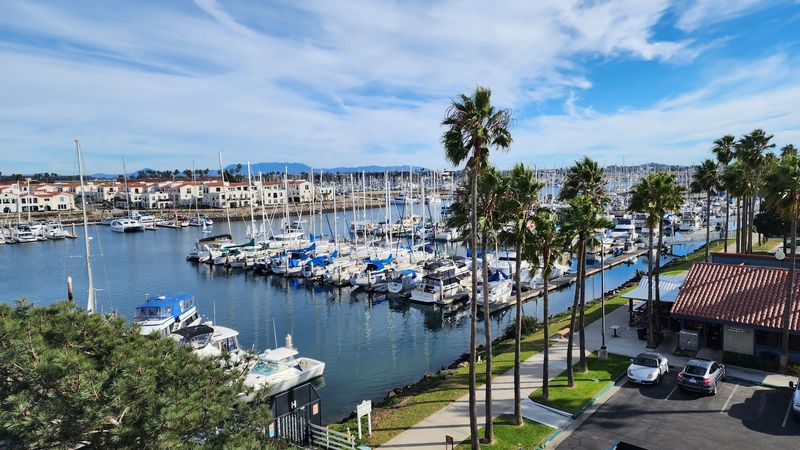
Most national parks let you drive right up and walk in, but California’s Channel Islands does not work that way. There are no bridges, no roads connecting the islands to the mainland, and no shortcuts.
The only way to reach the islands is by boat or small plane, and that journey itself sets the tone for everything that follows.
Island Packers, the official park concessionaire, runs ferry service year-round to Anacapa and Santa Cruz Islands, with seasonal trips to the more remote Santa Rosa, San Miguel, and Santa Barbara Islands.
Ferries depart mainly from Ventura Harbor, and the crossing can take anywhere from one to three hours depending on which island you are heading to.
The boat ride is not just a commute. On the way out, it is common to spot bottlenose dolphins racing alongside the hull, pelicans gliding low over the swells, and sometimes even humpback whales breaching in the distance.
One visitor described seeing a megapod of dolphins and a whale during a single crossing, and that kind of sighting is not rare here.
For those who prefer to fly, Channel Islands Aviation offers air service to Santa Rosa and Santa Cruz Islands from Camarillo Airport. Before heading out, a stop at the mainland visitor center is genuinely worth it.
Rangers there can walk you through conditions, trail options, and what to pack. The visitor center is located at 1901 Spinnaker Drive in Ventura, and it is a great place to get oriented before your trip begins.
Visitor Numbers That Make Solitude Feel Real
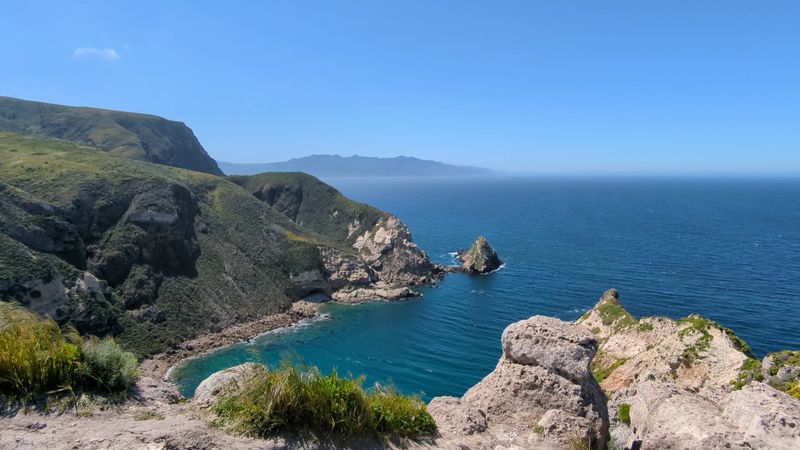
Fewer than 263,000 people visited Channel Islands National Park in 2024. To put that in perspective, Yosemite regularly sees more than four million visitors per year.
The math alone explains why hiking a trail here can feel like you rented the entire island for yourself.
The limited access is the main reason for those low numbers. You cannot just hop in a car and pull up to the trailhead.
Every visitor has to plan ahead, book a ferry or flight, pack their own food and water, and commit to the journey. That planning filters out casual crowds and leaves behind people who genuinely want to be there.
On a weekday visit to Santa Cruz Island, it is entirely possible to hike several miles and encounter only a handful of other people. The trails feel personal, the views feel private, and the silence feels earned.
One hiker noted that during a trip to Potato Harbor, so few people made the crossing that the island felt completely their own.
That sense of solitude is not just a nice bonus. It changes the entire experience.
Wildlife behaves differently when humans are scarce. The island foxes, small and curious, will trot right across the trail in front of you without flinching.
The birds do not startle. The tide pools stay undisturbed.
Visiting Channel Islands is not just about seeing nature, it is about experiencing it without a crowd standing between you and the moment.
A Living Laboratory Unlike Anywhere Else on Earth
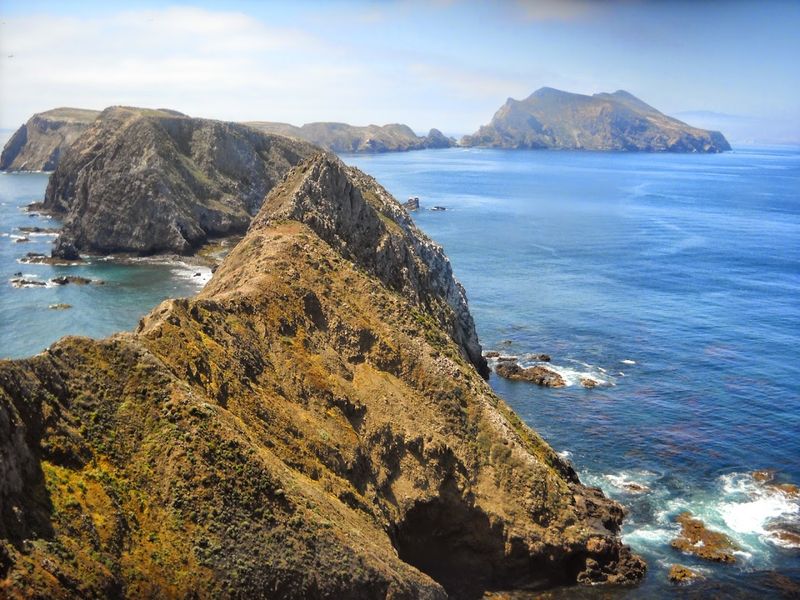
Channel Islands National Park is nicknamed the Galapagos of North America, and that comparison holds up. The islands’ long isolation from the mainland allowed plants and animals to evolve in their own direction, producing species found absolutely nowhere else on the planet.
Over 145 endemic species call this island chain home.
The Channel Islands fox is probably the most beloved of these. Smaller than a house cat, it wanders trails and campsites with a relaxed confidence that surprises most first-time visitors.
It evolved separately on each island, producing six distinct subspecies. Spotting one up close, just a few feet away, is one of those moments that stays with you long after the ferry ride home.
The island scrub jay is another endemic species, found only on Santa Cruz Island. It is noticeably larger and more boldly colored than its mainland cousins.
Birdwatchers travel specifically to see it, and even casual visitors tend to stop and stare when one lands nearby.
The surrounding marine sanctuary adds another layer of biological richness. Kelp forests thick with life blanket the seafloor, sheltering garibaldi fish, sea otters, and countless invertebrates.
Blue whales, the largest animals ever to exist on Earth, pass through these waters during migration.
Point Bennett on San Miguel Island hosts one of the largest gatherings of seals and sea lions in the world, and the park is also home to the only nesting colony of northern fur seals found outside of Alaska.
The ecological density here is genuinely staggering.
Five Islands, Five Completely Different Experiences
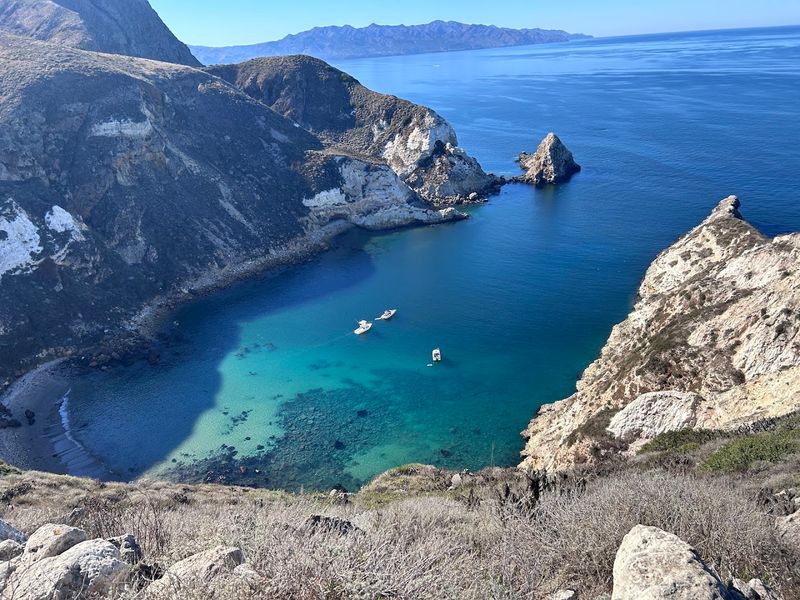
Anacapa is the closest island to the mainland and one of the most dramatic. Its towering cliffs and iconic Arch Rock make it a favorite for day-trippers who want big scenery without a long crossing.
The island is also a major nesting site for western gulls, and during nesting season the noise and activity are almost overwhelming in the best way possible.
Santa Cruz is the largest island and the most visited, which still means it is wonderfully uncrowded. Scorpion Anchorage is the main landing spot, and from there trails fan out toward Potato Harbor, the overlook at Scorpion Rock, and the hidden cove at Smugglers Beach.
The Painted Cave, one of the largest sea caves in the world, is accessible by kayak tour and is the kind of experience people talk about for years.
Santa Rosa is quieter and wilder, home to groves of Torrey pines, the rarest pine species in the United States. The landscape there feels ancient and windswept.
San Miguel sits at the far western end of the chain and requires more effort to reach, but the reward is Point Bennett and its massive seal and sea lion gathering.
Santa Barbara is the smallest island and the least visited of all. Getting there takes real planning, but those who make the trip often describe it as the most peaceful place they have ever stood.
Each island has its own personality, its own terrain, and its own reasons to visit more than once.
Activities That Connect You Directly to the Wild
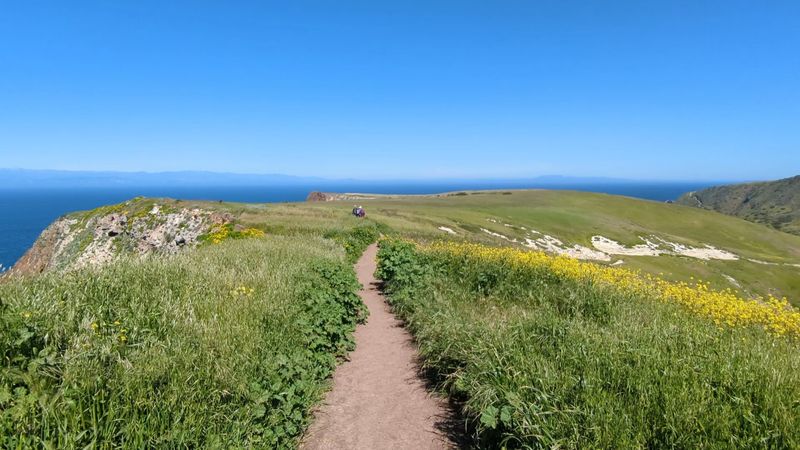
There is no shortage of things to do on the Channel Islands, but every activity here feels rooted in something real. Hiking is the most accessible option, with trails ranging from quick one-mile walks to demanding full-day routes with thousands of feet of elevation gain.
The views from the ridgelines are the kind that make you stop mid-step and just stand there for a minute.
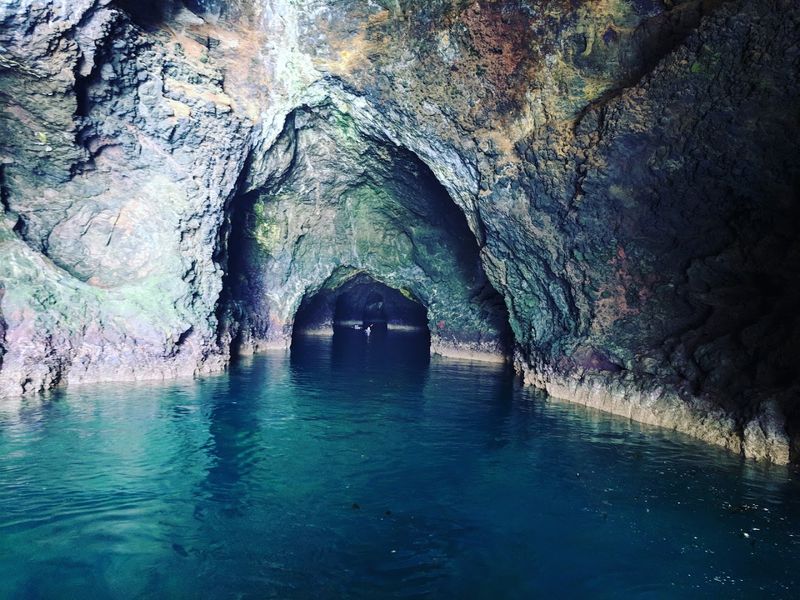
Sea kayaking around the islands is another experience that is hard to match anywhere else. Paddling into the Painted Cave on Santa Cruz Island, one of the world’s largest sea caves, feels genuinely surreal.
The cave stretches deep into the cliff face, and the light shifts from bright Pacific blue to a moody, echoing dark as you paddle further in. Booking that tour well in advance is a smart move since spots fill up fast.
Snorkeling in the kelp forests is surprisingly accessible even for beginners. The water is cold, so a wetsuit helps, but the visibility is often excellent and the marine life is dense.
Rental gear is available through Island Packers before departure. Camping is available year-round on all five islands, and spending a night under the stars with zero light pollution and no city noise is a genuinely transformative experience.
Whale watching happens almost as a side effect of simply being here. Humpback and blue whales pass through regularly, and the ferry crossing alone often delivers sightings that rival any dedicated whale watching tour on the mainland.
Birdwatchers, photographers, and naturalists all find exactly what they came for.
What to Know Before You Go
Planning a trip to Channel Islands takes a bit more thought than most national parks, but the effort is absolutely worth it. Since there are no stores, restaurants, or lodgings on any of the islands, everything you need for the day or overnight must come with you.
Food, water, sunscreen, and layers are non-negotiable. The weather can shift quickly, and even on warm days the wind off the ocean can cut right through a light jacket.
Sun exposure is something a lot of visitors underestimate. The islands have very little shade beyond the campgrounds, and the combination of direct sun and ocean reflection can add up fast.
A wide-brim hat, good sunscreen, and UV-protective clothing make a real difference over the course of a full day outdoors.
Pack-out rules are strictly enforced. There are no trash cans on the islands, which means everything you bring in leaves with you.
Ravens and island foxes are notoriously clever about getting into food and bags, so keeping your pack secured and using the food storage boxes at campsites is essential. Rangers will cite visitors for feeding wildlife, and it genuinely disrupts the animals’ natural behavior.
Shoes with good grip matter more than most people expect. The rocky beaches and uneven trails can be slippery, especially near the water.
Waterproof footwear is a bonus on wetter trails. For the full park experience, plan at least two days if camping is an option.
One night gives you a sunset, a starfield, and a sunrise that most people on the mainland will never see. The mainland visitor center is located at 1901 Spinnaker Drive, Ventura, California 93001.
