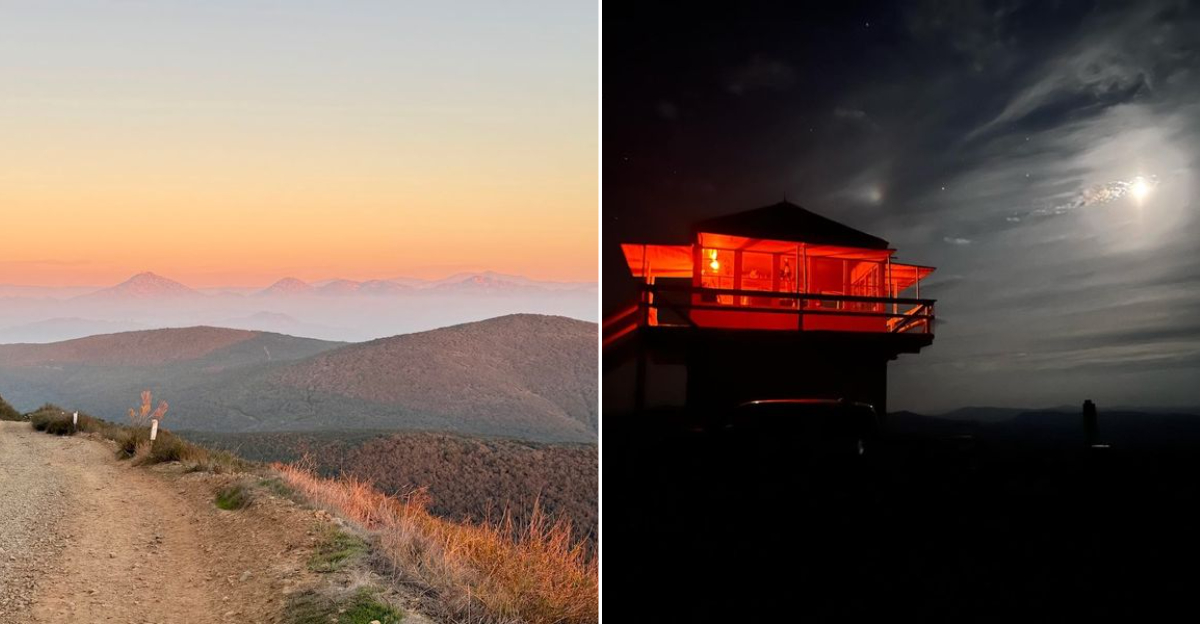
What if you could spend the night in a fire lookout perched above the treetops, watching the sun set over Nevada’s Great Basin from a cozy cabin built in 1934? This California gem offers exactly that, a rare chance to sleep where firefighters once scanned the horizon for smoke.
The structure was constructed by the Civilian Conservation Corps, a classic “C-3” model measuring just fourteen feet by fourteen feet, with a catwalk wrapping around the outside. It sits on a ten foot tower at over seven thousand feet elevation, giving you panoramic forest views in every direction.
Thanks to dedicated volunteers, the lookout now has electricity, a heater, a stove, and a refrigerator, so you can cook dinner and stay warm while feeling a million miles from anything. Up to four people can sleep inside, with tent space for four more outside.
So which California fire lookout doubles as the coziest overnight rental you have never heard of? You will find it in the Plumas National Forest, where the only thing better than the view is the feeling of having it all to yourself.
The Dirt Road Ten Miles From Highway 395
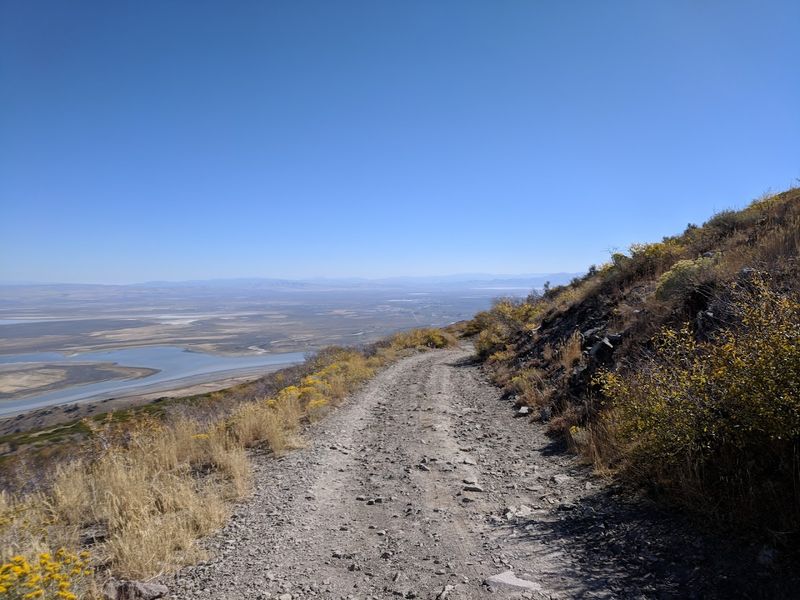
You pull off Highway 395, and the pavement fades behind you like a last polite handshake before the real visit begins. The road is a gentle rattle of gravel and clay, curving between tall pines that lean in like curious neighbors.
Windows cracked, the truck smells like warm dust and sap, and your mind starts to downshift into that slower California rhythm that only kicks in once cell service blinks away.
Out here, the forest feels both familiar and slightly mysterious, the way a friend looks different in a candid photo. Every bend suggests the lookout might appear at the next rise, then does not, which somehow makes the approach feel more like a story you are stepping into.
The Diamond Mountains lift and settle to your left, while Honey Lake hides and reveals itself through clearings that flash silver.
There is something about a dirt road that resets expectations, right? You notice the details again, like sunlight catching young fir tips or a hawk tilting a lazy circle.
When the track narrows and the slope begins to climb, you know you are closing in, because the pines thin and the sky opens wider, and the air trades roadside noise for breeze and the faint click of cooling brakes.
A Steel Ladder Leading To A Small Glass Cabin
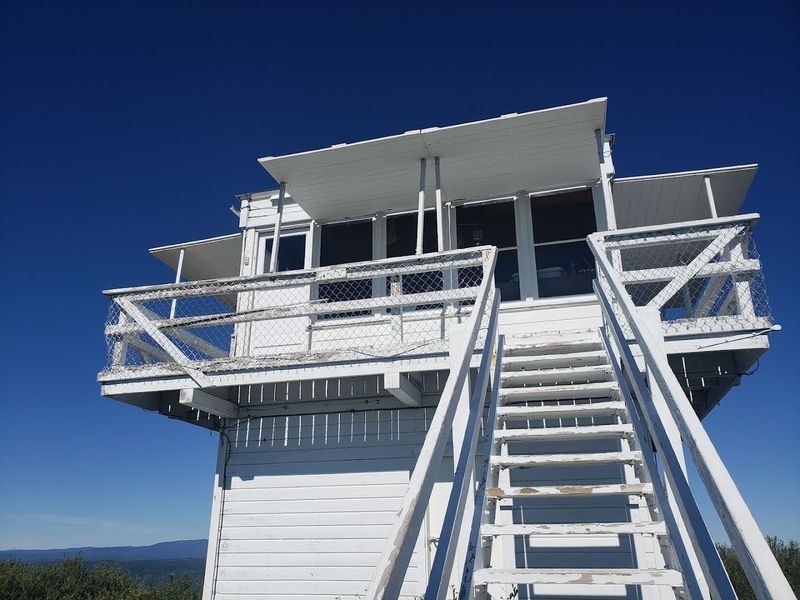
When the tower finally comes into view, the ladder looks taller than it felt in your imagination, all clean rungs and sensible angles. You stand at the base for a breath, reading the breeze like a quick forecast, then you start climbing with that mix of focus and excitement that makes every step feel earned.
Halfway up, the world turns into treetops, and the ground becomes just another layer of the view.
At the top platform, the cabin sits like a lantern, glass on every side, corners neatly braced. You knock even though nobody lives here, then swing the door and step inside, grateful for the sturdy threshold.
For directions and reservations, the spot is listed as Black Mountain Lookout, Plumas National Forest, near Milford, CA 96121, USA, which is exactly the kind of practical line you type and forget until you are here.
Up this high, small sounds feel bigger, like the soft thud of your bag on the floor and the faint hum of wind across the guy wires. The ladder becomes your front walk and your stairwell, which adds a tiny spark of ceremony every time you head out.
Honestly, it is a simple climb, but it flips a switch in your brain, turning arrival into a moment you will remember in the muscle memory of your hands.
The 360 Degree View Stretching Across The Diamond Mountains
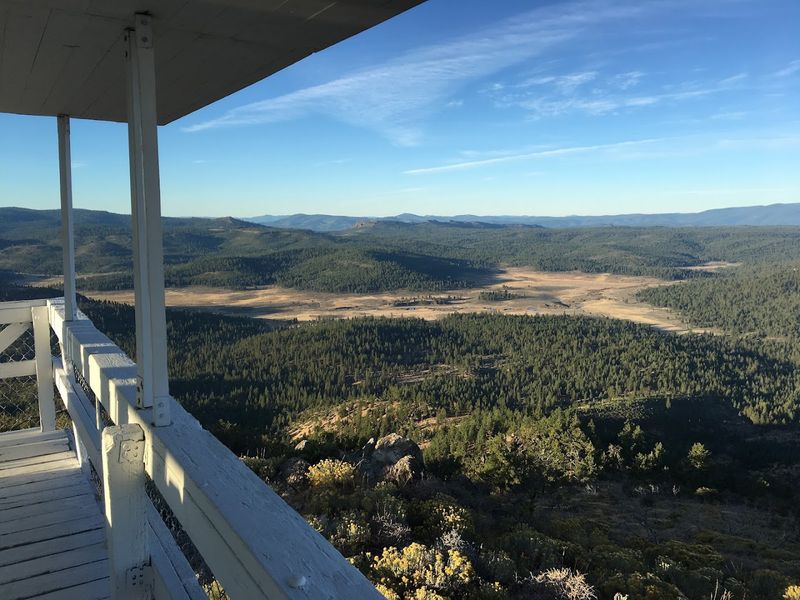
Spin slowly, and the whole horizon follows you like a friendly carousel. The Diamond Mountains step across the distance in long, confident lines, and Honey Lake flashes a muted sheen that slides with the sun.
You feel the cabin breathe with the wind, a tiny flex that makes the view feel alive rather than framed.
This is the kind of panorama that steals small talk and replaces it with pointing and quiet laughter. You catch distant ridges stacking like pages, each shade of blue settling into the next, and you swear you can sense the earth turning.
California stretches in every direction here, a patchwork of forest, rock, and whispered water, and the longer you look, the more edges blur into something gentle.
The glass does not separate you from anything important. It simply edits the gusts and welcomes the light, the way a good porch invites company without taking credit for the conversation.
You will pick a favorite direction, then change your mind three times before dinner, because every scrap of sky seems to invent a new mood and hand it to you like a gift you did not know you wanted.
Stepping Inside The One Room Fourteen By Fourteen Cab
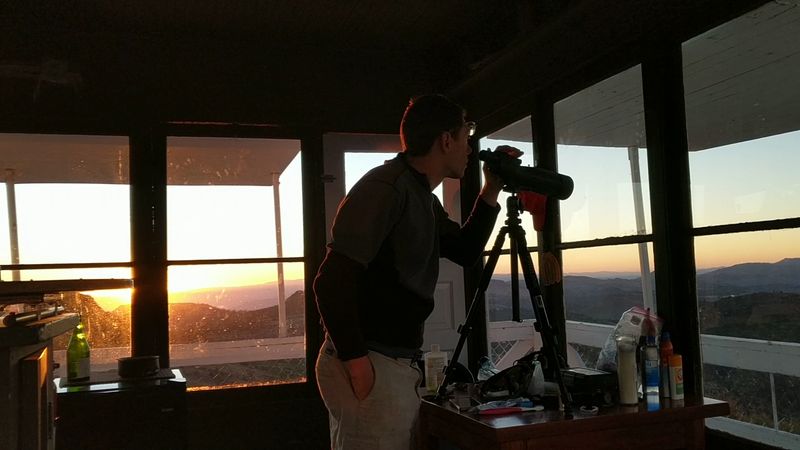
Push open the door, and the room greets you with that honest, campy quiet that only simple spaces carry. One room, all purpose, with windows writing light across the floor in long rectangles.
You can set a bag in any corner and immediately understand how the place works, which is to say, you are living inside the view.
There is a little table for maps and a chair that invites a slow spin, plus shelves that have seen a lot of borrowed sunblock and folded jackets. The floorboards speak in gentle creaks, friendly, never fussy.
If you feel your shoulders drop an inch, that is the cabin working, reminding you that most of what you need is already here, and the rest can wait until morning.
Even small chores feel better when the windows are this wide. Unroll a sleeping bag, check the lantern, flip through an old trail pamphlet, and you will realize the room has tuned your plans to a quieter channel.
It is not fancy, and that is the whole point, because the style here is utility with a side of affection, and it makes you a little sentimental in the nicest possible way.
The Original Fire Finder Still Mounted At The Center
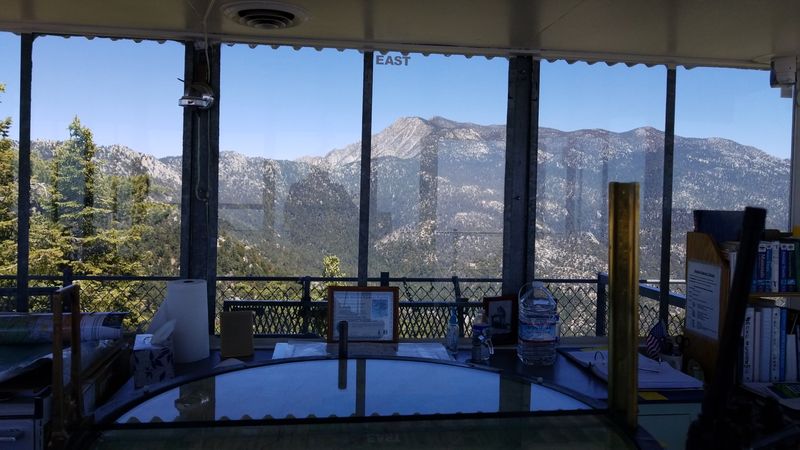
Right in the middle of the room sits the old fire finder, steady as a compass on a ship. You cannot help circling it, fingertips hovering just above the hardware like you are greeting a veteran.
The thing radiates purpose, even retired from long shifts, as if it still expects someone to call out a bearing and make a neat pencil mark.
It is more than a relic. It is the room’s heartbeat, a reminder that this glass box used to be a working set of eyes for the whole forest.
You picture a watcher tracking smoke on the far side of the ridge, radio at the ready, while the mountains play their slow game of light and shadow.
Take a moment with it. Line up a ridge, breathe, and imagine announcing a distant wisp to a crew below, calm and certain.
The instrument invites that quiet seriousness without stealing the joy, and it anchors the cabin in a story bigger than a single night, which makes your own small visit feel warmly connected to everyone who ever stood here squinting into the bright, bright distance.
A Historic Ccc Tower Built To Scan For Wildfire Smoke
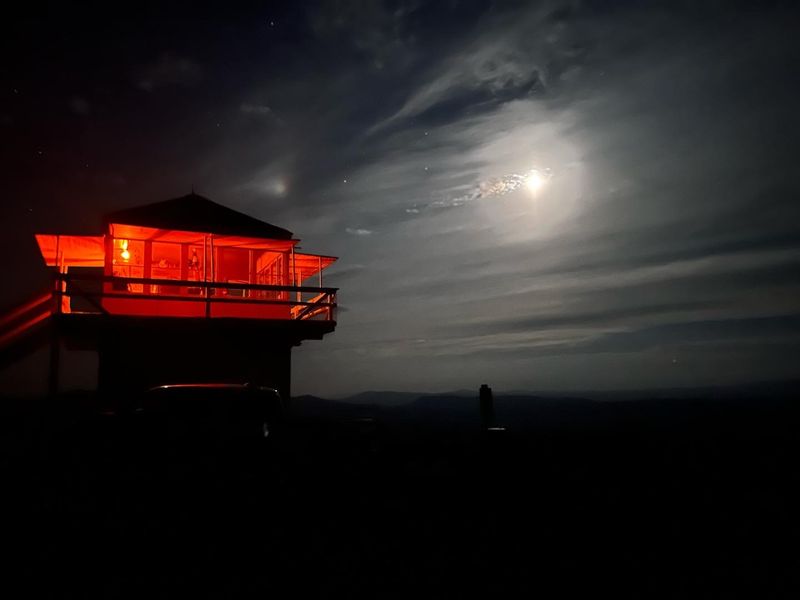
The bones of this place tell a straight story. It is a tower built for work, with bracing and bolts that speak plainly about the job it was meant to do.
You can feel the Civilian Conservation Corps spirit in the practical lines and the sturdy climb, a kind of quiet pride baked into every connection.
This was a sentinel for the forest, scanning horizons for the first whisper of smoke. Even when you are here as a guest, the purpose hums along, turning every slow turn of your head into a small echo of that watchfulness.
California has a long relationship with fire, and standing in a lookout like this one makes the history feel close, useful, and human.
Read the landscape the way a lookout would. Notice how the ridges stair-step, how the valleys gather wind, and how a tiny smear of haze can look different depending on the angle of the sun.
The tower still does its job by training your eyes, and the lesson sneaks up kindly, leaving you a little more attentive than when you arrived.
Sunrises That Unfold Above Honey Lake And Last Chance Creek
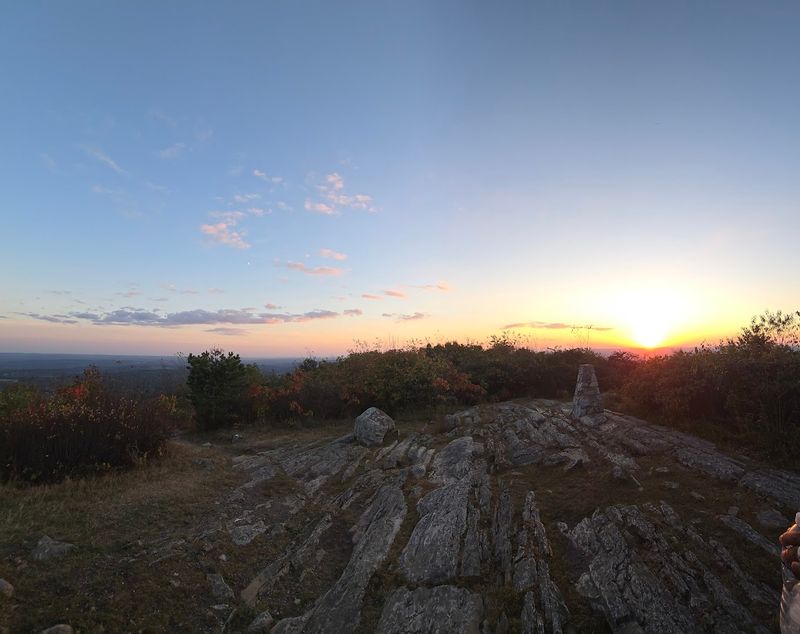
Mornings come on like a slow drumroll. First there is a thin promise of color, then a soft swell that nudges the sky from pewter to peach.
Honey Lake stretches a pale ribbon, and the valley that carries Last Chance Creek gathers pockets of mist that lift like stage curtains.
This is when the cabin feels most like a floating room. The windows drink up every change, and you track it without moving more than your eyes.
California wakes gently out here, and the quiet is so companionable that you might whisper without meaning to, as if the light could hear you and appreciate the hush.
Give yourself time. Let the show run long, and notice how the glare never quite bites because the horizon is so generous.
Somewhere a bird throws a first line into the air, and the morning steadies into a calm that settles in your chest, a peaceful certainty that today is going to be simple and good.
The Quiet Hours Spent Stargazing Through Panoramic Windows
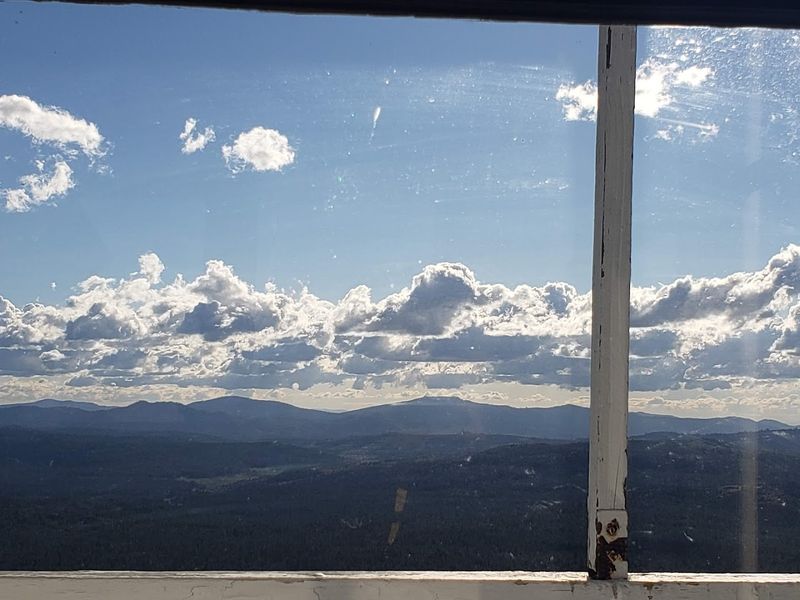
Nights here turn the cabin into a tiny observatory with very comfortable seating. You kill the lights, let your eyes adjust, and then the sky arrives in waves, bright enough to feel like the ceiling has been peeled back.
The Milky Way slides over the windows, and you realize the glass is helping you hold the whole scene in a gentle frame.
There is no big production, which is the best part. You breathe, you watch, you listen for small breezes brushing the tower, and your thoughts line up like campers waiting for a story.
California night air carries a clean chill that sharpens the stars without turning them harsh, and it feels like the forest is standing guard while you simply look up.
Give it time, and constellations you barely remember start snapping into place. You might whisper their names, or make new ones just for tonight, because nobody is keeping score.
When a meteor slips across the glass, it is almost too quiet for a wish, so you keep it simple and just say thank you.
One Last Sunrise Before Descending The Narrow Ladder
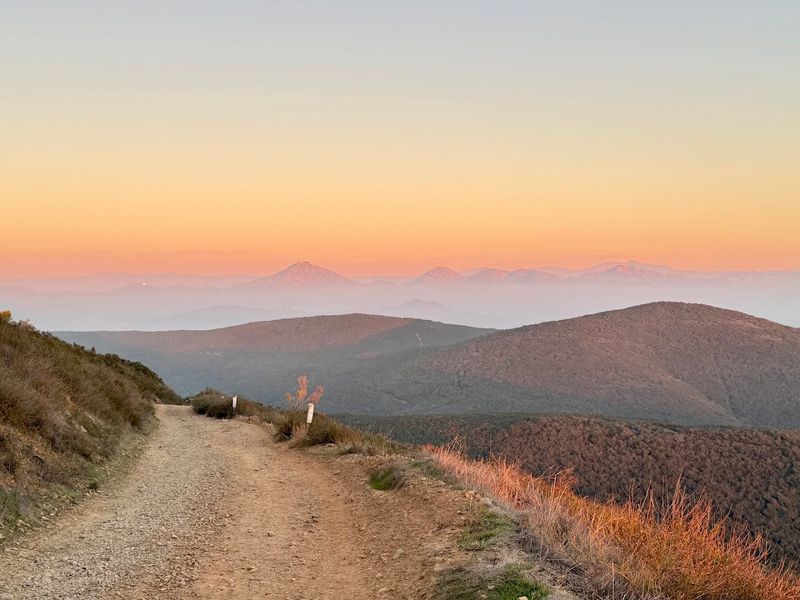
Before packing, take one more lap around the windows and give the horizon a proper goodbye. The light feels friendlier when you know you are leaving, like the place is nudging you to pocket a final snapshot for later.
You move slowly, folding layers, zipping the bag, and memorizing the way the cabin’s quiet refuses to rush.
At the door, the ladder waits with that polite insistence. You ease onto the first rungs, and the tower translates you back into treetops, then trunks, then ground, like the credits after a really good movie.
Touching dirt again feels both familiar and slightly strange, because your head is still up in the sky where you just slept.
Turn back once, because you will want to see the glass catching morning like a lantern. California mornings do understated grace so well, and this is a prime example.
Then you fire up the engine, roll out, and let the forest slip past in long green sentences, already planning how to tell someone you care about exactly why this place worked its way under your skin.
