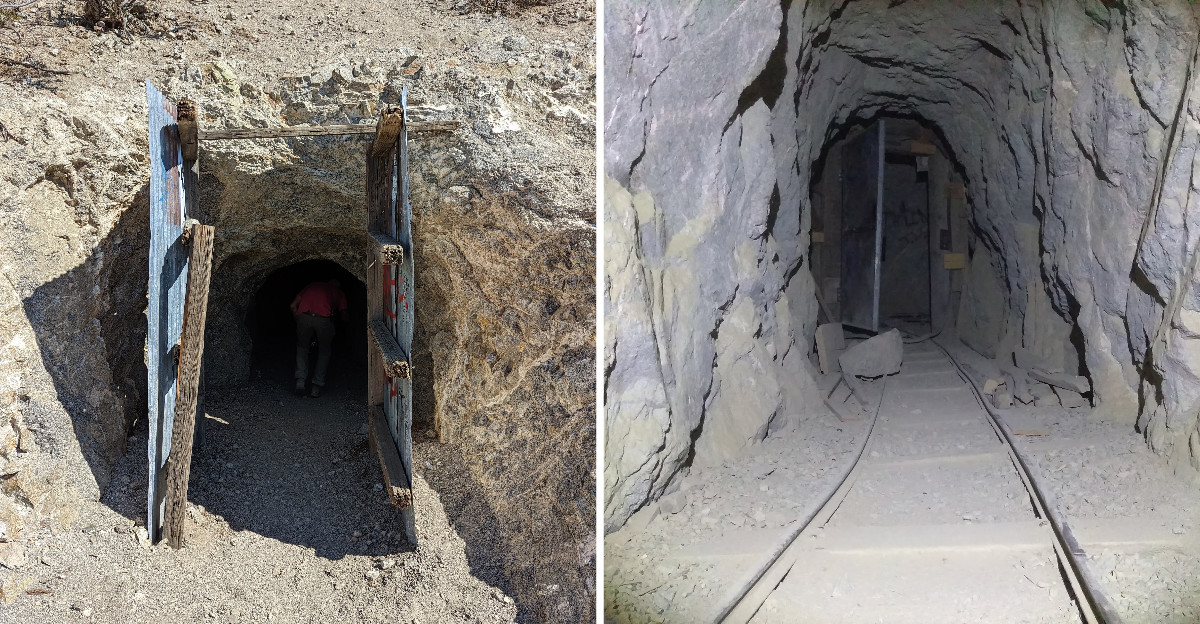
Hand-dug tunnels through solid granite sound like tall tales, but this one is real. I had heard about a man who spent nearly four decades chipping away at a mountain, and I assumed the story had grown in the telling.
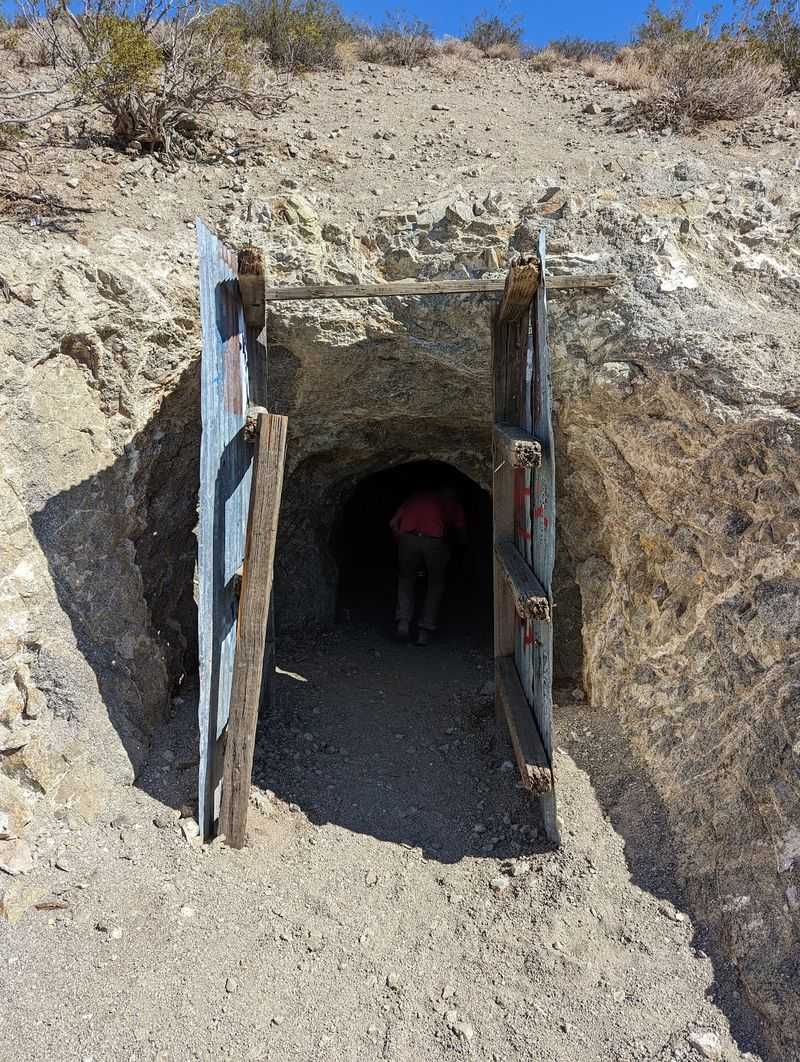
Then I drove a washboard dirt road into the California desert and found the dark opening for myself. One man started swinging his pick in 1900 and did not break through until 1938.
It is longer than most people stay in one job. The scale of that effort becomes harder to comprehend once you see the rock up close.
There were no massive machines doing the difficult work for him, just years of persistence and a goal that must have seemed ridiculous to almost everyone else. Even standing at the entrance, I kept wondering what could make someone return to the same mountain year after year.
Inside, the walls still carry the marks of his tools, and the air turns cool and quiet the moment you step past the entrance. Halfway through, the light behind you shrinks to a coin while the light ahead has not appeared yet.
Desert oddities are scattered across this state, but none has stuck in my head quite like this one.
Meeting the Man Behind the Pick
William H. Schmidt was born in 1871 in Rhode Island, and his story starts with heartbreak rather than gold.
Six of his siblings passed of tuberculosis, and doctors told him dry desert air might save his own lungs.
So he headed west and landed in the El Paso Mountains of Kern County, where he staked mining claims and started scratching out a living.
He kept two burros to haul ore, which is exactly how he earned the nickname that stuck to him for the rest of his life. People called him Burro Schmidt, and the name outlived the man, who passed away in 1954.
What strikes me most is how ordinary his beginning sounds. A sick young man looking for clean air, a few mining claims, a couple of stubborn pack animals.
Nothing about that suggests someone would spend 38 years underground with a hammer. Yet standing near the tunnel mouth, you get a sense of the sheer stubbornness involved.
He was not famous or wealthy. He simply decided a mountain was in his way, and he chose to go through it instead of around.
Why a Mountain Suddenly Needed a Hole
The reasoning behind the whole project was surprisingly practical at first. Schmidt needed to move ore from his claims down to a smelter near California’s Mojave, and the only route crossed a steep, treacherous ridge.
Loaded burros on a crumbling slope is a bad combination, and he knew it.
His solution was to cut straight through the granite and pop out on the other side, where a safer downhill route waited. On paper it almost makes sense, at least for the first few months.
Then reality set in, because granite does not care about your schedule.
I walked a short stretch of the ridge above the tunnel and understood his complaint immediately. The rock is sharp, the footing shifts, and the drop-offs are real.
Hauling heavy sacks of ore across that terrain would wear down any animal or person fast.
What began as a shortcut turned into the longest detour imaginable. Schmidt traded a dangerous few hours of travel for nearly four decades of digging, and somewhere in that trade the project stopped being about ore at all.
Hand Tools Against Solid Granite
Picture a four-pound hammer, a pick, a shovel, and a mountain made of solid granite bedrock. That was the entire toolkit for most of this project, with dynamite used only occasionally when Schmidt could manage it.
No machinery, no crew, no electricity.
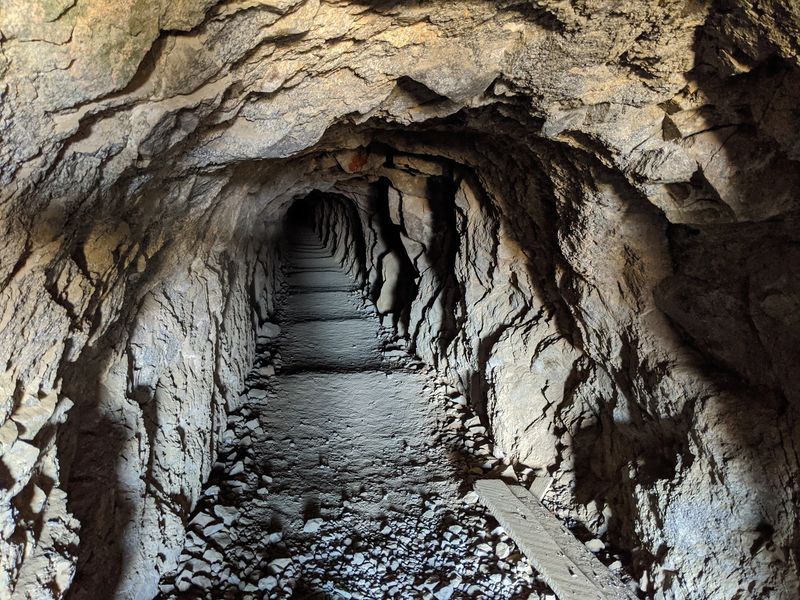
The finished passage runs roughly six feet tall and about ten feet wide in places, which sounds modest until you remember every inch was removed by one pair of arms. Total length comes in around half a mile, with figures often cited near 2,087 feet.
Running my hand along the wall inside, I could feel the ripples left by hand tools rather than the smooth bore of a machine.
Getting the broken rock out was its own ordeal. Early on he carried debris out in canvas bags slung across his back, which had to be brutal work in summer heat.
Later he upgraded to a wheelbarrow, then finally laid rails and used a mining cart.
Those small improvements spread across decades tell you everything about his patience. He was not racing anyone.
He was simply refusing to stop.
The Road That Made It All Pointless
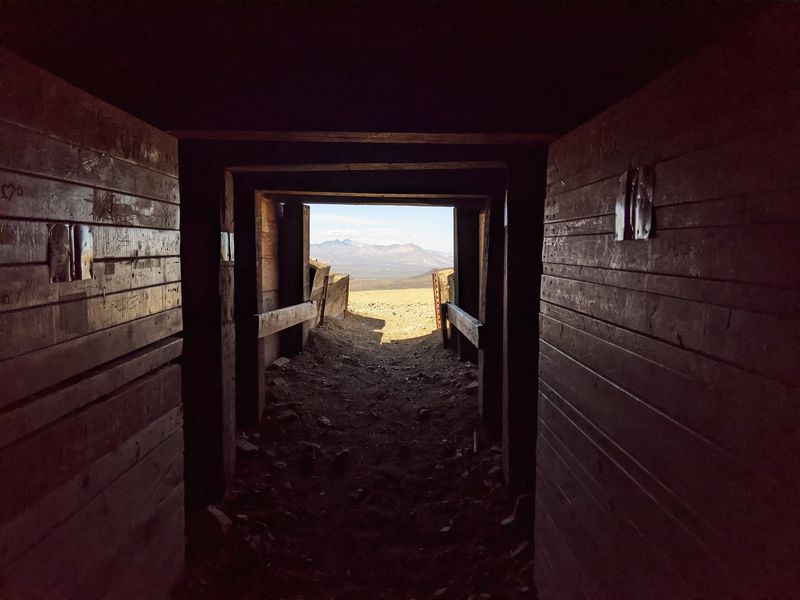
Here is the twist that makes the story unforgettable. In 1920, a road was built that solved the exact problem Schmidt had been digging to fix, making the tunnel completely unnecessary.
Most people would have shrugged, put down the hammer, and used the new road like everyone else.
Schmidt kept digging for another 18 years.
I have turned that detail over in my head more times than I can count. Twenty years of work already sunk into the rock, and then someone hands you an easier option, and you choose to keep swinging anyway.
It stops being engineering at that point and becomes something closer to a personal vow.
Some accounts describe it as pure obsession, others as pride, and honestly both feel believable when you are standing at the entrance. The desert has a way of shrinking everything except whatever you brought with you.
He finally broke through the far side in 1938, a full 38 years after the first strike.
Then came the strangest part of all. He never hauled a single load of ore through it.
Walking Through the Dark Yourself
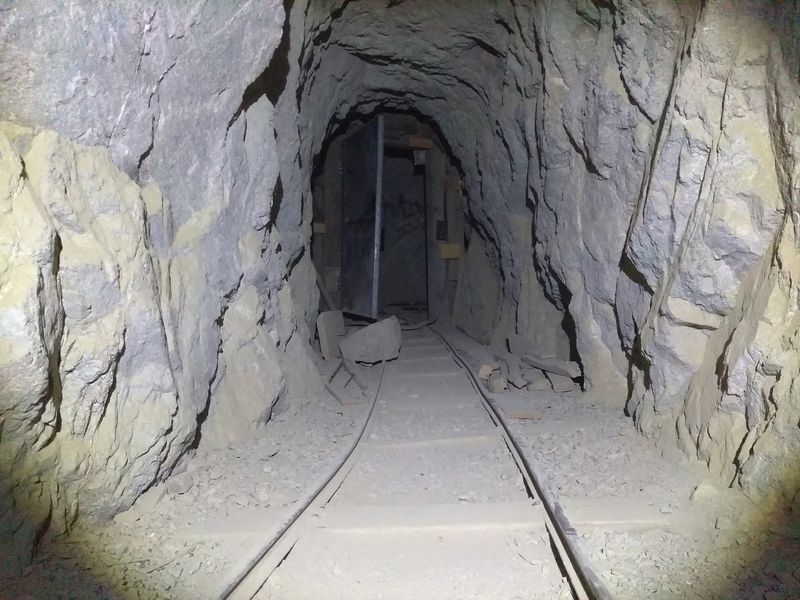
Bring a flashlight. I cannot stress that enough, because the middle of the tunnel is genuinely dark in a way phone screens do not handle well.
The floor is uneven, with loose rock and old rail remnants in spots, so shoes with grip beat sandals every time.
Temperature drops fast once you are inside, which feels wonderful after the desert sun. Sound changes too, and your own footsteps start bouncing back at you from walls that are barely an arm’s reach away.
Somewhere near the center, both openings vanish and you are walking through complete blackness with only your beam for company.
The walk takes maybe fifteen or twenty minutes each way at a relaxed pace, longer if you stop to study the tool marks and the timber supports.
Coming out the far side is the payoff, because the view opens onto a wide desert valley that most visitors never see from that angle.
Go with a friend rather than alone, and let someone know your plans. Cell service out there is unreliable, and the mountain has no interest in your itinerary.
Rusted Relics Scattered Around the Site
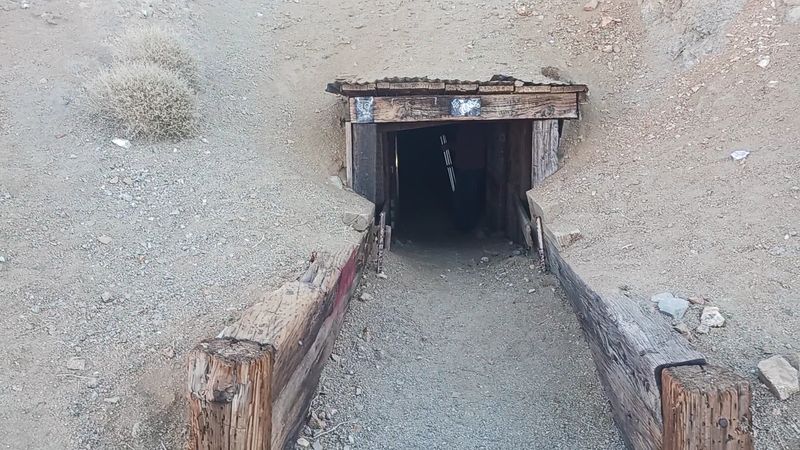
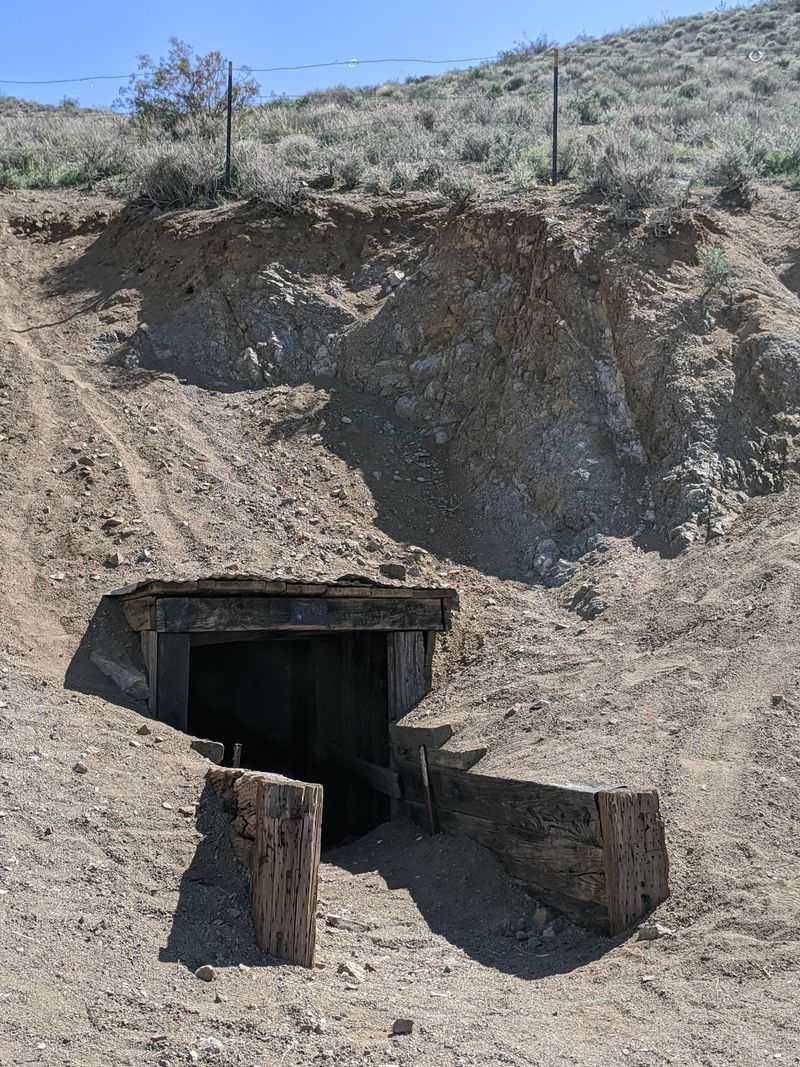
Outside the tunnel mouth sits a small collection of desert leftovers that tell their own quiet story. Weathered wooden structures, rusted mining hardware, and scraps of old rail line lean into the hillside, bleached pale by a century of sun.
Nothing is polished or roped off like a museum exhibit.
I spent nearly as long poking around the surface as I did inside the passage. Every piece of bent metal hints at a chore someone once did by hand, over and over, in heat that would flatten most of us.
Please look without taking. These artifacts survive only because visitors have mostly left them alone, and a single souvenir grab erases something irreplaceable.
Photographers will find good material here, especially in the soft light of early morning or late afternoon when the wood grain and rust glow warm.
The surrounding slopes are dotted with other old claim sites too, remnants of a mining era that once filled these canyons with activity.
Wander a bit, watch your step, and let the emptiness do the talking.
Getting There Without Getting Stuck
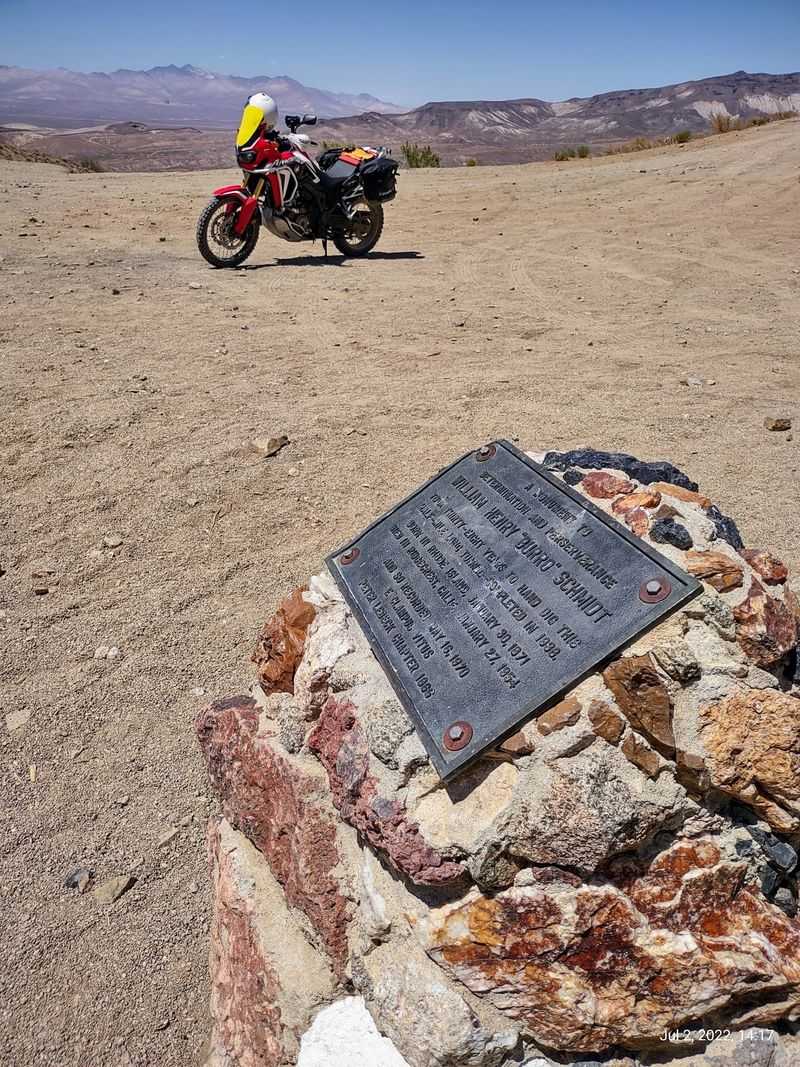
Reaching the tunnel is half the adventure, and a little planning saves a lot of grief. From Mojave, head roughly 20 miles northeast on State Highway 14, then turn right onto Redrock Randsburg Road.
Continue about 11 miles northeast until you reach Mesquite Canyon Road, which turns to dirt.
From there, turn left onto dirt road EP15 and follow it about 2.7 miles to the spur road that climbs toward the tunnel. A high-clearance vehicle is strongly recommended, and four-wheel drive helps on the rougher final stretch.
Ridgecrest is the nearest sizable town, and I would top off fuel and water before leaving pavement.
Cooler months make the trip far more pleasant, since summer temperatures in this part of the Mojave get punishing quickly. Carry more water than you think you need, plus a spare tire you actually know how to change.
Download offline maps ahead of time, because navigation apps get unreliable out here.
Approximate coordinates are 35.4104051, -117.8760374, and there is no street number to plug in.
Address: Burro Schmidt Tunnel Rd, Kern County, California, USA
