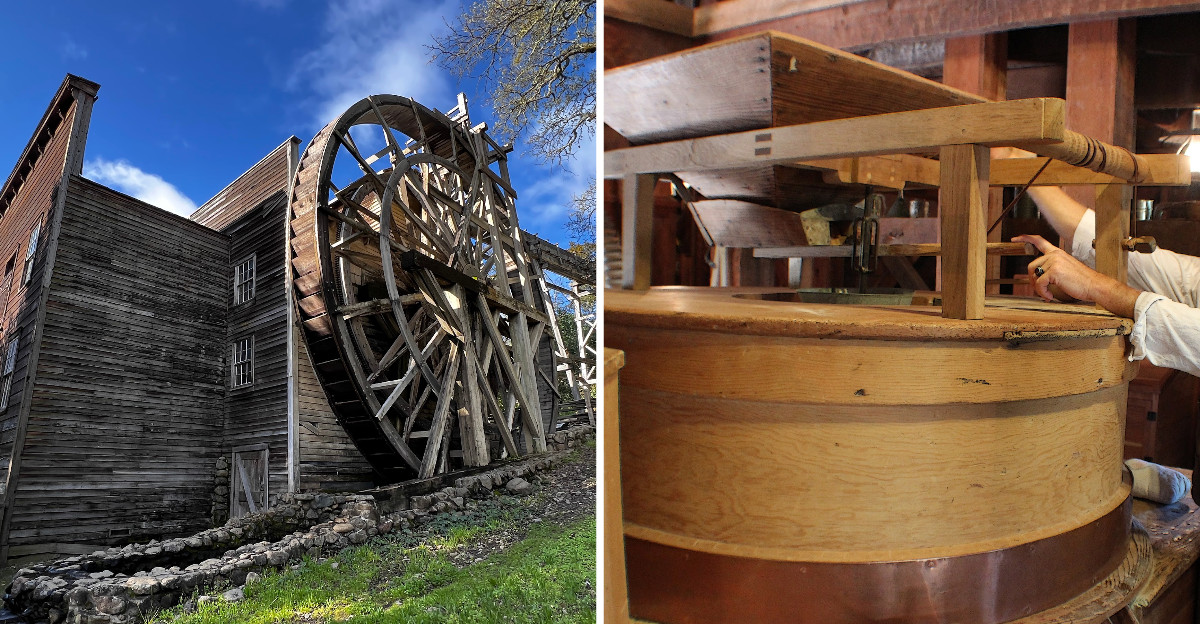
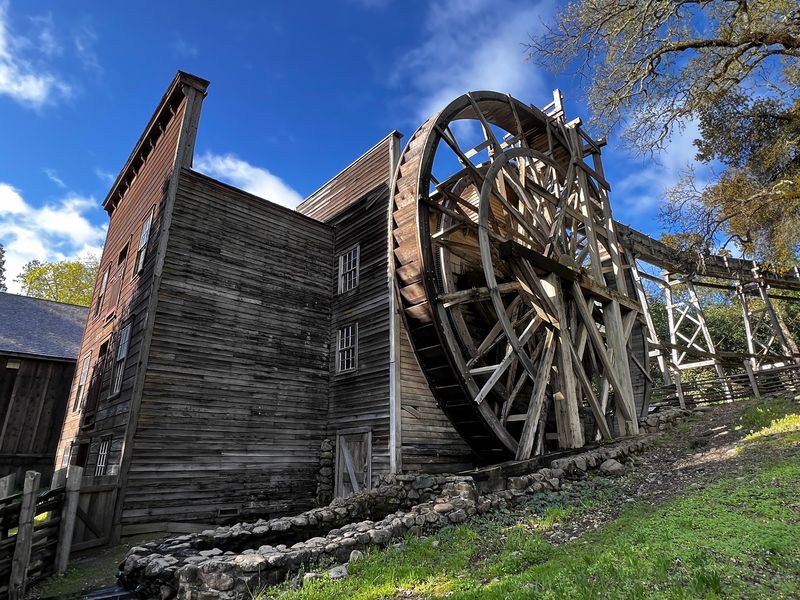
Water, not machinery, was the first thing I heard. It came down a wooden flume above me, spilling into buckets on a waterwheel so tall I had to tip my head back to see the top.
Driving a winding highway in California, expecting a quiet roadside stop, led instead to a working piece of 1846 still doing its job. Inside the mill, corn went in dry and came out as warm polenta within seconds.
I laughed out loud. Grain, gravity, and creek water working together felt more impressive than anything with a plug.
The wheel turns, the flume drips, and the whole building seems to breathe with the creek. I have thought about that sound almost every week since.
The miller explained how the stones grind and the belts hum, but the water did most of the talking. History here is not behind glass; it is still grinding grain.
The polenta was warm, the laughter genuine, and the memory lasting.
The 36-Foot Waterwheel That Still Does the Work
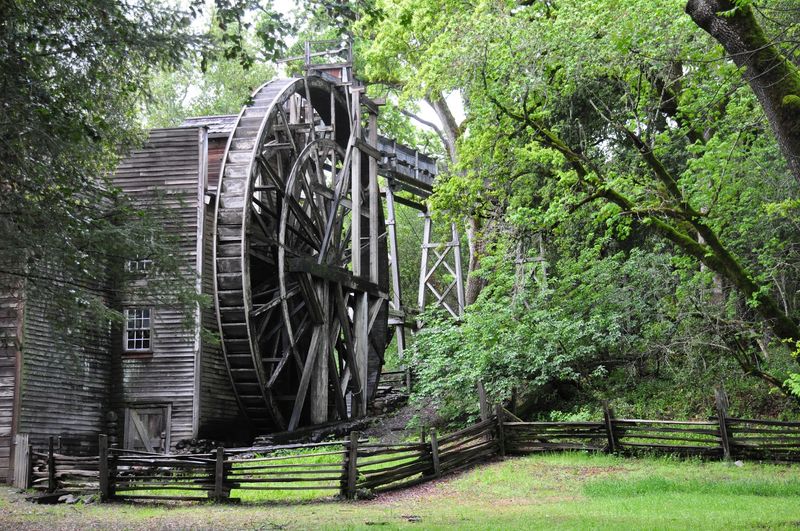
Nothing quite prepares you for the scale of it. The wheel measures 36 feet across, which makes it one of the largest ever built in the United States, and it looms over the side of the mill like a piece of furniture meant for giants.
Water arrives from Mill Creek, travels along a ditch to a millpond, then rides a wooden flume to the very top of the wheel. Gravity does the rest.
What surprised me most was how quiet the whole process is. There is no engine noise, just splashing and a deep wooden groan as the buckets fill and tip.
The original wheel was smaller and struggled through dry Napa summers, so Maria Bale had a much larger one installed after her husband passed away. Bigger wheel, more power, longer working season.
Restoration has kept it turning. Several arms were replaced in 2014, and more work wrapped up by January 2020, with new arms fabricated right on site and the original galvanized metal tires reinstalled.
Millwright Rob Grassi received the 2020 Preservationist of the Year Award of Merit for that effort, which tells you how carefully it was handled.
Stand near the base when it starts and you feel a faint vibration through the ground. That part alone is worth the drive.
Where the Story Began in 1846
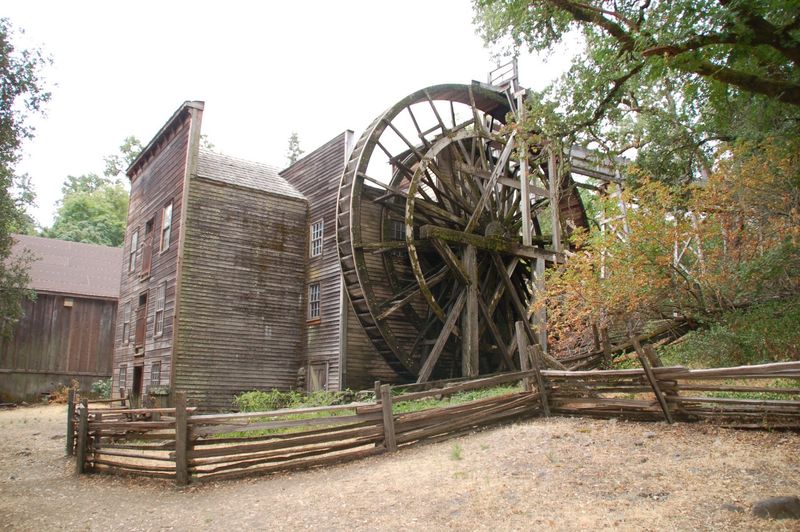
Long before this valley was known for anything else, it was farm country that needed flour. Dr. Edward Turner Bale and his wife, Maria Sobranes Vallejo Bale, built the water-powered grist mill here in 1846 on land Edward had received as a grant from the Mexican government.
Settlers hauled corn and wheat in from all over the area. Waiting your turn meant talking, trading news and catching up, so the mill became a social center as much as a workplace.
I like that detail a lot. It reframes the building from machine shed to gathering spot.
The mill kept grinding into the early 1900s, which is a remarkable run for wooden equipment powered by a creek. Today it holds State Historic Landmark status and a place on the National Register of Historic Places.
Only a handful of mills like it still operate anywhere in the country, and just two water-driven mills remain west of the Mississippi River. Knowing that changed how I looked at every beam.
Reading the small museum exhibit before the tour helped me follow the story better. The panels cover the land grant, the family and the valley’s early farming days in plain, readable language.
Go in with that background and the machinery suddenly makes sense.
Inside the Mill, Where Wood Does Everything
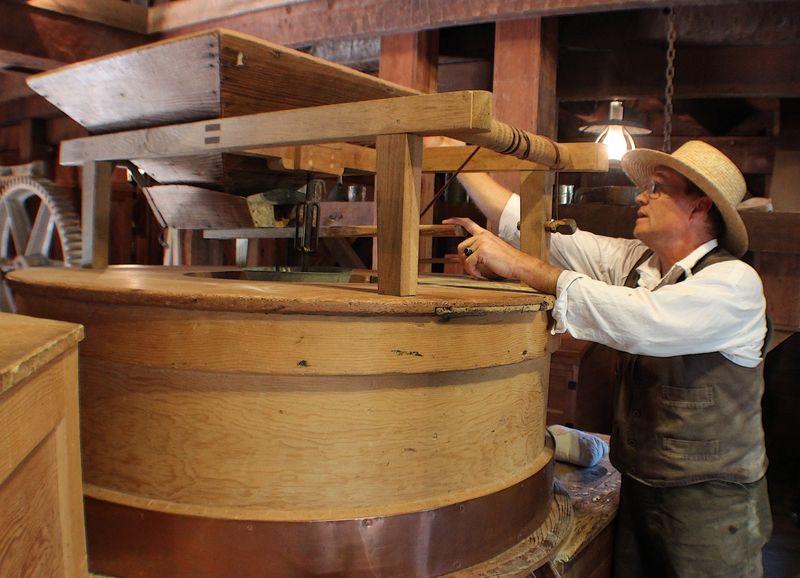
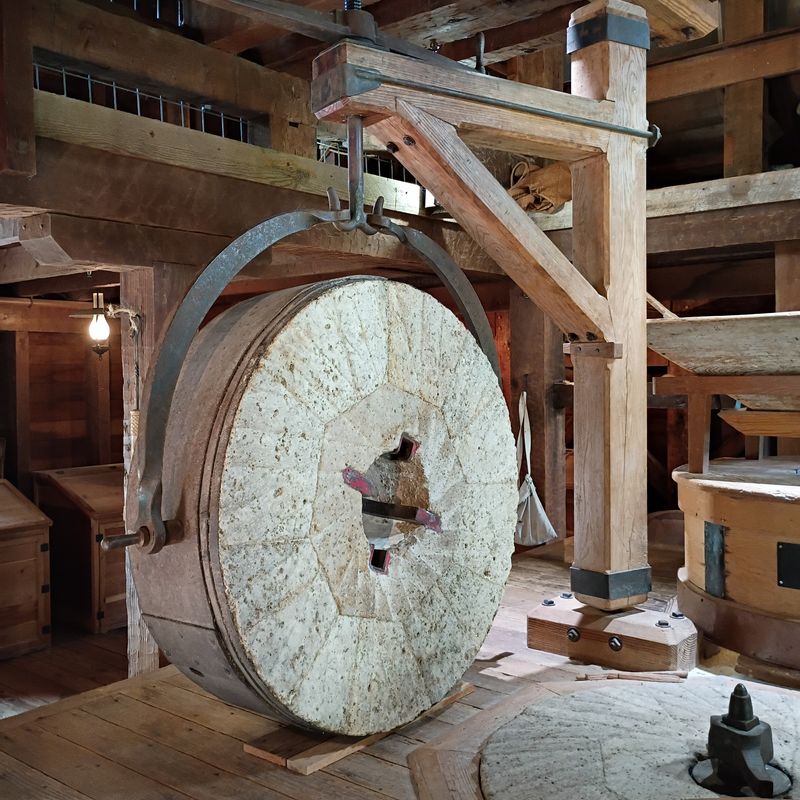
The inside smells faintly of warm grain and old timber, and every surface has a light dusting of flour. What struck me is how much of the machinery is wood: shafts, gears, chutes and elevator buckets, all shaped by hand.
Power travels from the waterwheel through a main shaft, then branches out to the rest of the building. Grain elevators carry the harvest up to the higher floors so it can work its way back down.
Before anything reaches the stones, it passes through a system of tumbling filters and screens called a Bolter. That is where dirt, chaff and stray bits get separated out.
Then the grain drops between the original French Buhr millstones, which turn slowly and steadily. The slow speed keeps the meal from overheating, and that gives the flour a flavor and texture you rarely find in a supermarket bag.
Our guide started and stopped the wheel during the demonstration, and corn became polenta almost instantly. It is one of those moments where old technology looks a little bit like magic.
Tours run roughly 45 to 60 minutes, sometimes longer if questions keep flowing. Wear shoes you do not mind getting floury, and take a minute to just listen to the gears.
Weekend Milling Demonstrations Are the Main Event
Timing matters here more than at most parks. The mill opens Saturdays and Sundays from 10:00 AM to 4:00 PM, with the last tour starting at 3:00 PM, and it closes for Thanksgiving, Christmas and New Year’s Day.
Show up on a weekday and you will find a locked building with a very large wheel sitting still. I would plan the whole visit around the weekend schedule.
Guided tours are where the place comes alive. Docents explain the mechanics, the history and the grain itself, and they happily answer questions about how the stones are adjusted.
Kids seem to love the hands-on parts, especially touching the grain and the fresh flour. Watching the wheel start up gets a reaction from adults too.
Educational activities are offered as well, which makes the park a solid pick for families who want something more engaging than a plaque and a fence.
Arrive early in the day if you can. Morning light on the wheel is lovely, and you will have more flexibility if the first tour fills up.
Call ahead at +1 707-963-2236 to confirm milling days before making the drive. Schedules can shift with weather and water levels, and it saves disappointment.
Stone-Ground Flour You Can Actually Take Home
Souvenir shopping usually leaves me cold, but this gift shop is different because the product was made about twenty feet away. It sits inside the historic granary, and the shelves hold organic, stone-ground flours and meals milled on site.
The lineup covers cornmeal, polenta, spelt, buckwheat, rye, oat and barley, plus whole-wheat flour. There is also traditional Sonora wheat flour, an heirloom variety that bakers tend to get excited about.
I picked up cornmeal and polenta, mostly because I had just watched them come off the stones. Fresh flour has a nutty smell that store-bought versions lose over months on a shelf.
If you bake at all, this is the most useful thing you will carry out of any Napa Valley stop. Cornbread made with mill cornmeal tastes noticeably sweeter and more textured.
Staff in the shop know the products well and can explain how each flour behaves in the oven. Ask about which ones need refrigeration, since stone-ground flours keep their natural oils and spoil faster than commercial ones.
Bring a tote bag. Several small sacks are easy to justify once you start reading labels, and they travel better than fragile souvenirs.
My only regret was not buying more rye.
The History Trail to Bothe-Napa Valley State Park
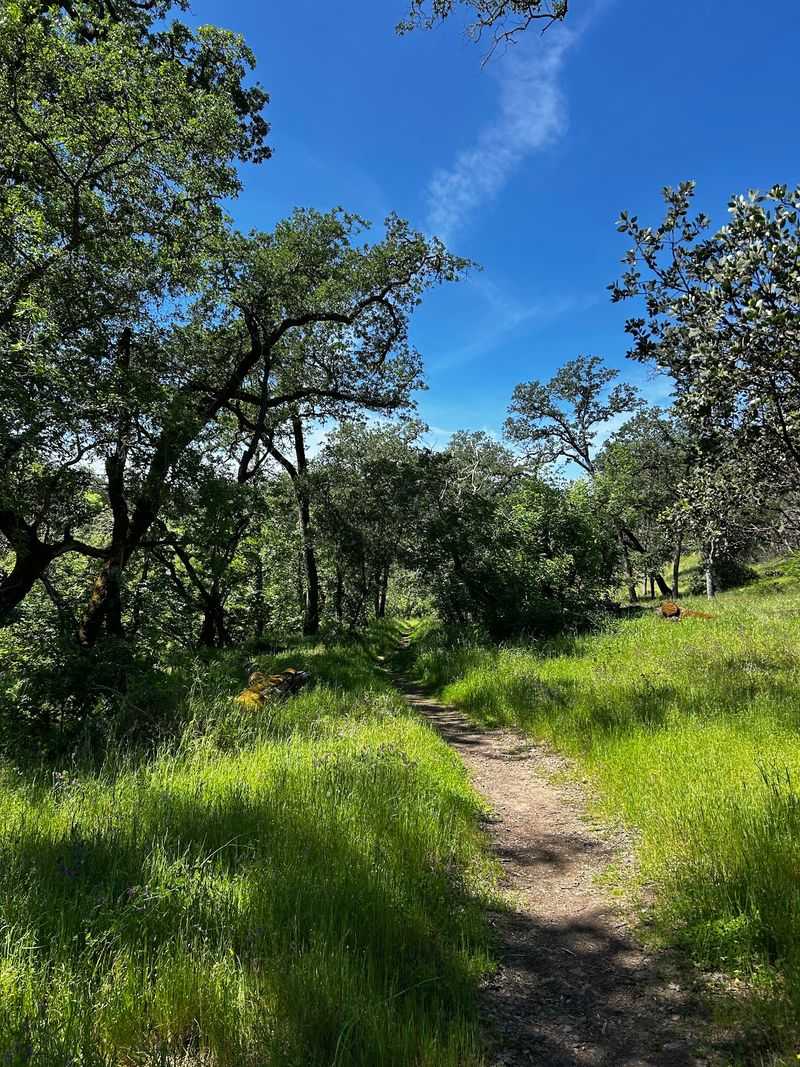
After the tour I wanted to stretch my legs, and the trail behind the mill turned out to be the best surprise of the day. Known as the History Trail, it links the mill with Bothe-Napa Valley State Park in a round trip of about two miles.
The path passes the old mill pond site and the Pioneer Cemetery, so you get more history without reading a single sign. Shorter walks are available if two miles feels like too much.
Shade comes from firs and oaks, and the quiet is real. I spotted quail scratching in the leaf litter and heard woodpeckers overhead.
Fair warning about difficulty. Coming from the Bothe-Napa side, the trail climbs steeply for a good stretch, with roots, rocks and a creek crossing that can hold water in spring.
Starting from the mill is gentler, and there is also a level paved path behind a wall along the highway if you want the easy option. Choosing your direction wisely makes a big difference.
Bring water even on a short walk, since Napa afternoons get warm fast. Sturdy shoes beat sandals on the rooty sections.
Give yourself an extra hour beyond the tour for this part.
Quiet Corners, Picnics and Practical Details
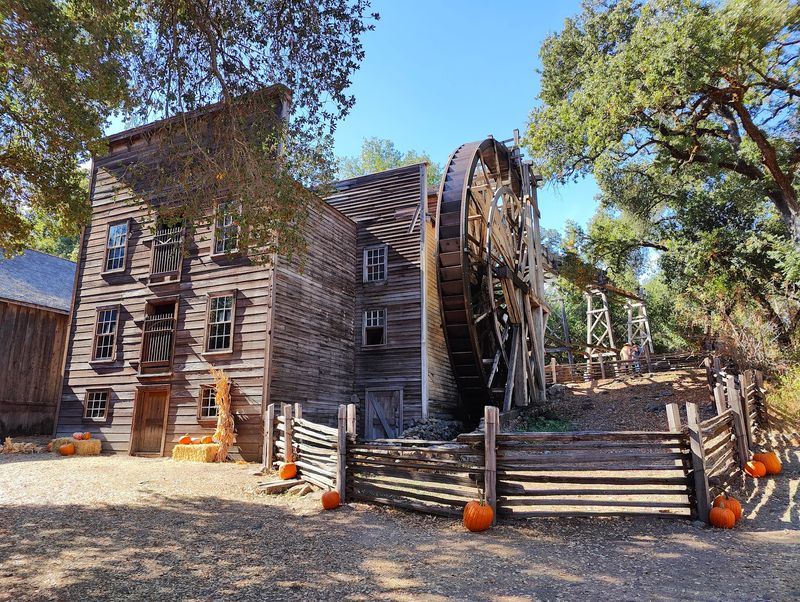
Some parks feel rushed. This one rewards lingering, especially if you pack lunch and claim a shaded picnic table near the granary.
Facilities cover the basics well: parking inside the park, restrooms, drinking water, picnic areas and the gift shop. Park inside rather than along the roadside, since the lot is easy to miss on first approach.
Two more historic spots sit within the grounds. The site of the first church in California’s Napa Valley is here, along with the Pioneer Cemetery, both worth a slow walk and a moment of quiet.
Accessibility is better than I expected for a building from 1846. The mill itself is ADA accessible, and some trails and features are accessible too.
Dogs are welcome outdoors on a leash, though they cannot come inside any of the buildings. Plan a shady spot and water if you bring one along.
The whole visit fits nicely into a half day, and it pairs well with anything else you have planned between St. Helena and Calistoga. I would budget ninety minutes minimum, longer if you hike.
Of everything I saw in the valley, the mill is what I describe first when people ask.
Address: 3369 St Helena Hwy, St Helena, California 94574
