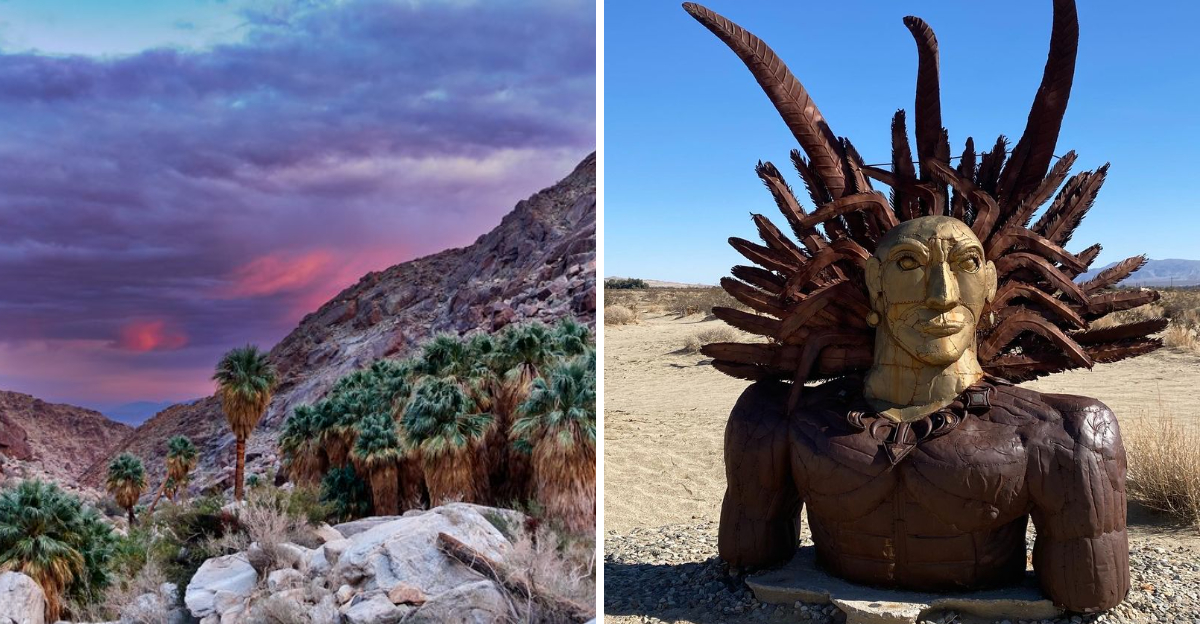
Anza-Borrego Desert State Park in California stretches across vast desert landscapes filled with rugged beauty.
Cactus gardens and wildflowers surprise visitors with bursts of color against the arid backdrop.
Slot canyons twist like natural mazes, inviting hikers to wander through their sunlit walls.
Sweeping vistas reveal mountains, badlands, and endless skies that feel larger than life.
It’s a desert adventure where every trail showcases the park’s dramatic and expansive character.
Visitor Center essentials and smart first stops
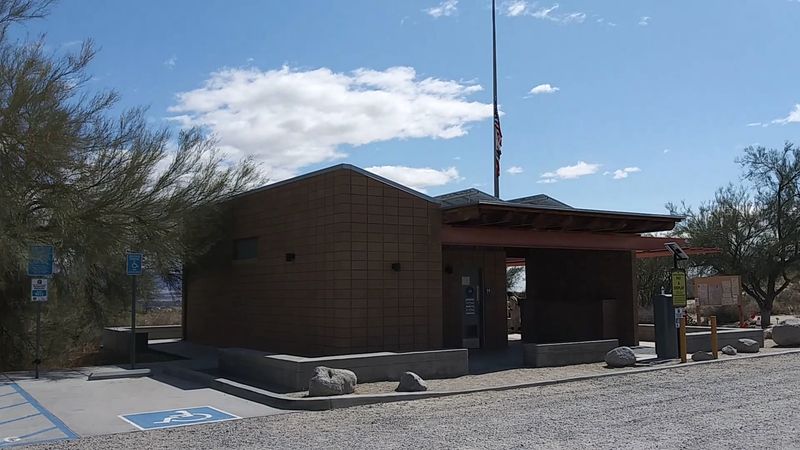
Start at the Anza Borrego Desert State Park Visitor Center to ground your day with maps, current trail conditions, and water refills that make every plan safer.
You will find rangers ready with friendly advice about bloom forecasts, wildlife sightings, and road closures that change with weather.
The low profile building blends into the desert with native plantings and shaded benches that welcome a brief pause.
Inside, exhibits explain how Colorado Desert geology shaped the park’s badlands and why ocotillo leaves pop after rain.
You can touch rock samples, read about Borrego bighorn habitat, and learn how to tread lightly on cryptobiotic soils.
The bookstore carries detailed topo maps that help with navigating unmarked washes and long sandy tracks.
Arrive early to avoid heat and to secure a parking spot before busy weekends in spring.
Ask about the current status of dirt roads like Fish Creek and Grapevine because accessibility shifts after storms.
Confirm gate hours for nearby areas and double check tire pressures if you plan to drive gravel approaches.
Cell service is spotty across much of the park so download offline maps and trail layers before leaving town.
The staff can show you how to plot a loop that matches your time and daylight.
Grab the paper wildflower chart that lists species by elevation for quick bloom hunting.
There is no full service café inside so bring snacks and more water than you think you need.
Shade structures offer a comfortable place to adjust packs and sunscreen before hiking.
Step outside to the interpretive garden to practice identifying cholla, creosote, and ocotillo.
Use this stop to set expectations because distances stretch under open sky more than they appear.
With a plan and fresh information you can roam confidently into California desert quiet.
The calm start pays off all day.
Borrego Palm Canyon trail and bighorn chances
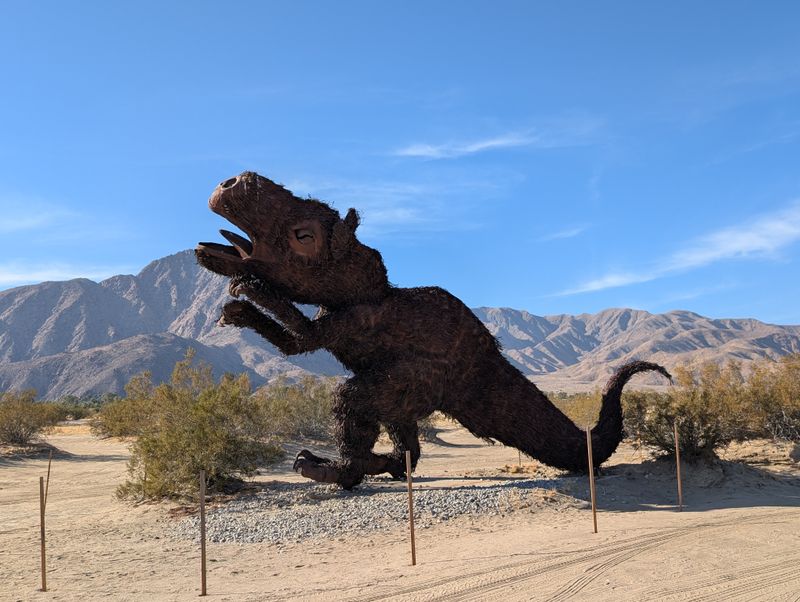
Borrego Palm Canyon offers a classic introduction to oasis ecology with a well marked path that follows a wash toward tall fan palms.
Seasonal water attracts birds, lizards, and sometimes the namesake Borrego bighorn that move along high slopes.
Start at first light to catch shadows and quiet moments near the pools.
The main trail forms an out and back that most hikers complete in two to three hours at a relaxed pace.
Rock steps and sandy sections require steady footing though the route remains approachable for many visitors.
Bring sun protection because open stretches feel hot even in winter sunshine.
You can extend the experience by exploring signed alternate routes that traverse boulder gardens with blooming brittlebush in spring.
Stay on durable surfaces to avoid damaging fragile soils that take years to recover.
Pack a small trash bag and leave the canyon cleaner than you found it.
If you hope to see bighorn, scan ridgelines with binoculars rather than approaching any animal directly.
Give wildlife generous distance and let your camera do the zooming.
Rangers sometimes post recent sighting notes at the trailhead kiosk for reference.
Palm fronds rustle with wind and provide a cool microclimate that contrasts with the surrounding desert.
The oasis survived historic floods and fires with careful stewardship, and restoration work continues.
Respect closures that protect nests and sensitive plant recovery areas.
Water levels change by season so do not rely on streams for resupply.
Carry enough water for the round trip and a buffer for heat.
This canyon rewards patience with shade, bird songs, and a refreshing sense of discovery in California’s largest state park.
The Slot and narrow canyon etiquette
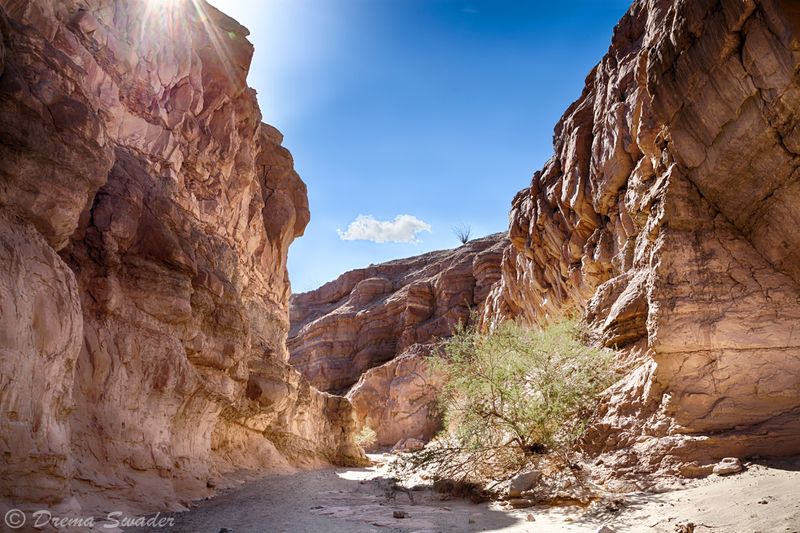
The Slot is a sculpted corridor where water and wind carved smooth walls into a twisting maze.
Light pours down in ribbons that shift by the minute as the sun arcs across the open desert.
The narrowest points require shoulder turns and steady steps over sand and small ledges.
Reach the trailhead via a graded dirt road that can develop ruts after storms so check conditions before committing a low clearance car.
Parking is limited which makes early arrivals helpful for a quiet experience.
Carry a headlamp if you plan to linger near sunset when shadows deepen quickly.
Move single file in tight bends and let uphill hikers pass in safe pullouts.
Keep voices soft so echoes do not overwhelm the canyon’s peaceful feel for everyone.
Watch for overhead chokestones and avoid climbing on unstable features that could break.
Flash flood risk is real in slot canyons so never enter if storms threaten the watershed even far away.
Check weather forecasts and ask rangers about recent runoff patterns.
Turn around at the first sign of rising water or muddy flows.
Photography rewards patience because reflected light glows warm against pale stone.
Use a small tripod only where space allows without blocking movement through the corridor.
Dust a lens cloth frequently since fine sand floats in the still air.
Packs snag less if you streamline gear and stow loose straps before entering narrow sections.
Closed toe shoes with grippy soles offer confidence on loose sand and polished rock.
The Slot delivers drama in a compact hike that showcases the quiet power of California desert erosion.
Badlands sunrise at Font’s Point
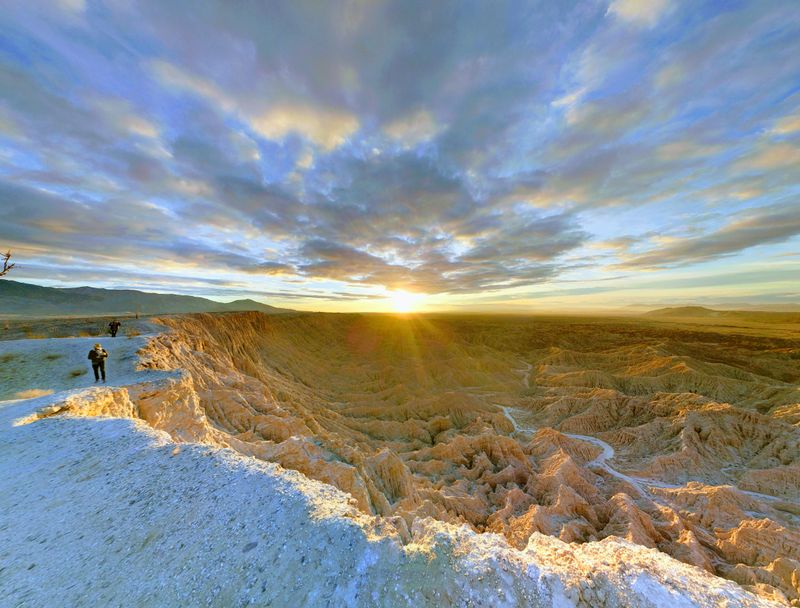
Font’s Point overlooks a labyrinth of badlands that ripple toward the Salton Sink with soft morning color.
Sunrise paints ridges gold and carves shadows into every fold for a layered view.
The panorama helps you grasp the scale of this California desert in a single sweep.
The access road is sandy and often requires high clearance so verify conditions before driving.
Air down only if experienced and carry recovery gear because tow service is expensive and slow.
Many travelers choose to park safely short of deep sand and walk the final stretch.
Arrive at least thirty minutes before first light to find a safe spot well back from the eroding edge.
Winds can be strong on the rim so secure hats and tripods.
Give photographers space and step carefully to protect delicate crusts near the viewpoint.
Clouds elevate sunrise color, yet clear mornings still deliver elegant contrast across the gullies.
Bring a warm layer because pre dawn temperatures run cool even after hot days.
A thermos of tea or water feels great while you watch colors shift.
Interpretive signs are minimal so preview a map to identify Coyote Mountain and the Salton Sea haze line.
Rangers can explain the geology behind the uplift and erosion patterns.
Offline star charts help plan night visits with dark skies when the road is passable.
Leave no trace by packing out every wrapper and keeping group sizes small in tight areas.
Avoid stepping on small shrubs that anchor the rim and reduce future erosion.
Font’s Point remains a signature viewpoint that rewards preparation and patience.
Desert wildflower strategy for bloom season
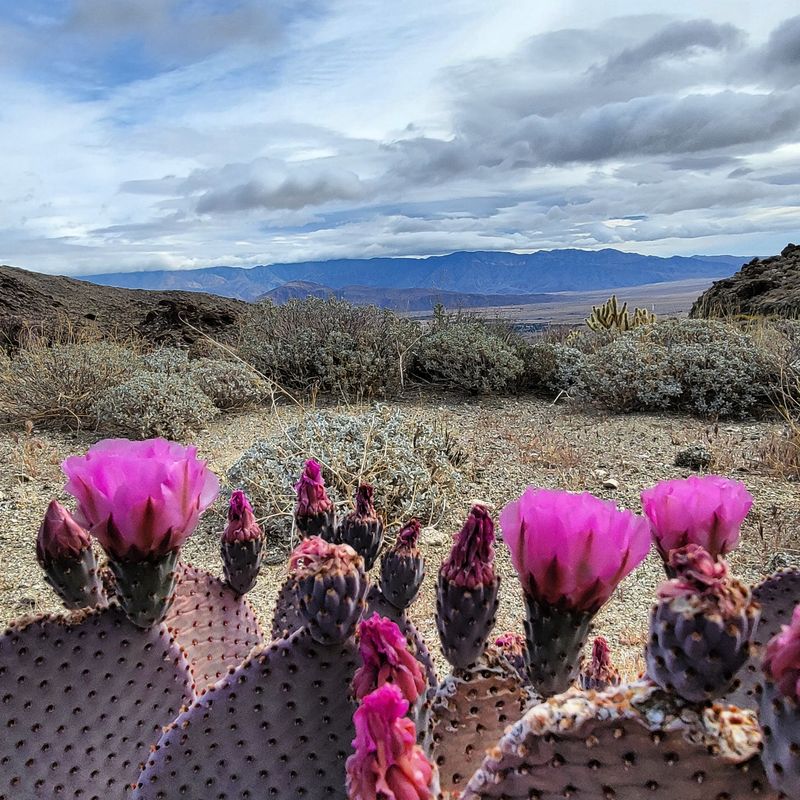
Wildflower seasons vary each year so flexibility and a good plan make all the difference.
Rain timing and temperature swings determine whether displays center on valley floors or higher bajadas.
Tracking reports from rangers and trusted field botanists helps you focus your search.
Carry a species list and match colors to common blooms like sand verbena, desert sunflower, and lupine.
Ocotillo can leaf out after a single storm which changes the feel of large areas.
A small kneeling pad protects plants when crouching for low angle photos without crushing stems.
Early morning light keeps colors rich and reduces heat for longer strolls among flowers.
Stay on designated paths or firm sand to protect seedlings and fragile crusts.
Macro photographers should avoid stepping backward without checking for plants.
Windy afternoons challenge photos so use a faster shutter or shield blooms with your body carefully.
Respect any temporary closures that allow recovery after heavy foot traffic.
Bring extra water because excitement often extends outings far beyond the plan.
Maps that note elevation bands help decide whether to aim for Borrego Valley flats or foothill washes.
When lower elevations fade, head higher for late season surprises among cacti and shrubs.
Ask the Visitor Center for current hotspots and road advice before you go.
Never pick flowers and keep pets from wandering into dense patches.
Teach kids to admire with eyes and cameras so future visitors enjoy the same color.
Bloom years come and go but thoughtful choices keep California’s desert landscapes thriving.
Off pavement driving and dirt road etiquette
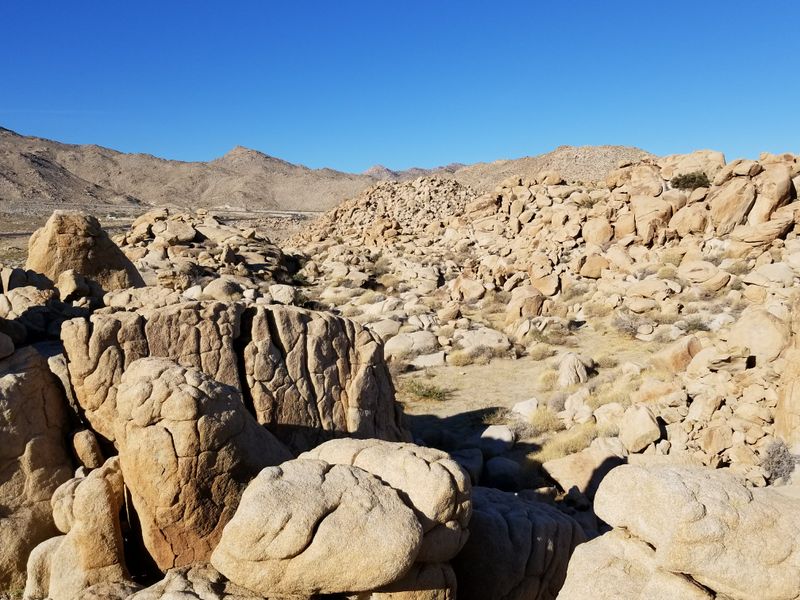
Many highlights sit at the end of sandy or rocky roads where preparation matters more than speed.
Check the latest conditions and carry a full size spare, jack, and a basic recovery kit.
Lowering tire pressure can improve traction on deep sand but reinflate before pavement to protect sidewalls.
Travel with at least one other vehicle if you plan remote segments beyond common pullouts.
Share your itinerary with someone and set a turnaround time that respects daylight.
Carry extra water for all passengers and a simple first aid kit within easy reach.
Drive slowly to reduce washboard vibration and to spot wildlife that may cross at dusk.
Yield to uphill drivers on narrow grades and offer wide clearance to hikers and cyclists.
Use existing pullouts rather than making new tracks that scar the desert for years.
After rains, avoid saturated clay sections that stick to tires and crumble under weight.
If you leave ruts, you damage routes and increase maintenance needs across the park.
Postpone your trip a day and enjoy paved hikes while surfaces dry out.
Navigating washes requires reading the terrain and avoiding soft sand pockets that collect near bends.
Momentum matters but controlled steering matters more in loose material.
Stop before you bog down instead of digging deep holes that trap axles.
Pack out every scrap and store trash securely so wind does not scatter litter.
Keep noise low near camp zones and scenic stops for everyone’s peace.
Responsible driving keeps access open and protects California desert habitat.
Night skies and responsible stargazing
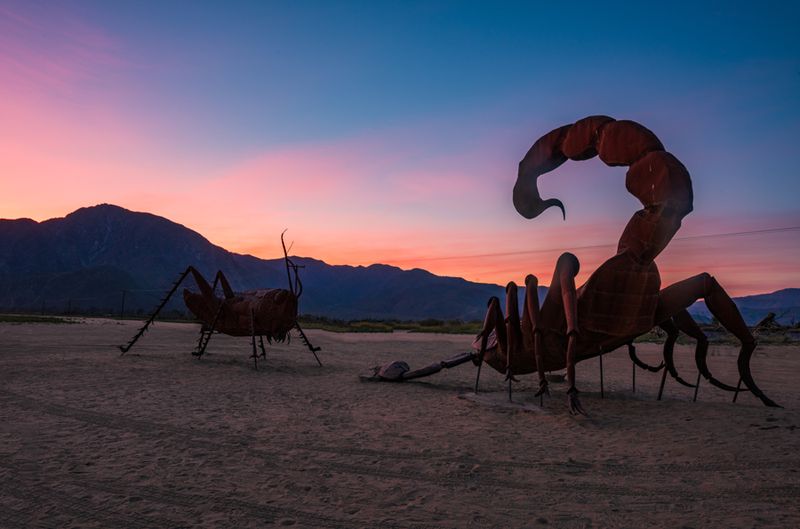
Anza Borrego’s dark skies make stargazing a highlight once twilight fades behind the mountains.
The Milky Way arcs bright in summer while winter brings crisp constellations and long observing windows.
Choose moonless nights for the deepest views and bring layers for cold air after sunset.
Use red lights to preserve night vision and reduce glare that can bother nearby campers.
Keep car headlights off or pointed away from horizons that photographers are framing.
If you run a telescope, position it downwind so dust does not drift across optics.
Plan targets with an app that works offline because cell coverage drops across much of the park.
A simple reclining chair transforms comfort while scanning meteor showers and satellite passes.
Pack a thermos and a light blanket to extend your session smoothly.
Astrophotographers should scout compositions before dark and mark safe walkbacks to the car.
Long exposures require solid tripods and patience with gentle breezes that sway legs.
Shield displays and timers with dim red film to keep sites discreet.
Respect quiet hours at campgrounds and avoid trespassing into closed restoration areas.
Keep music off and conversations low so the night remains calm for wildlife and people.
Point out constellations softly and share the sky without taking over the space.
Pack out every item and check for micro trash with a quick headlamp sweep.
Leave rocks and plants exactly as you found them to protect sensitive habitats.
Stargazing here adds a peaceful chapter to any California desert itinerary.
Seasonal safety, heat, and water planning
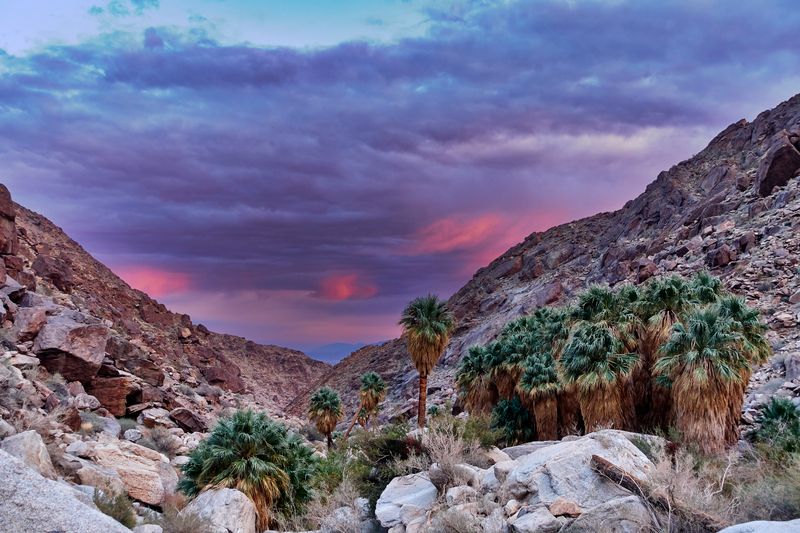
Desert trips reward the prepared which starts with generous water and realistic distance goals.
Heat rises quickly even in spring and can overwhelm hikers who underestimate exposure.
Aim for early starts and wrap hikes by early afternoon on warm days.
Carry at least one gallon of water per person for day hikes and more for strenuous routes.
Electrolyte powders help when sweat rates climb during climbs and soft sand trudges.
Light long sleeves and a wide brim hat reduce sun fatigue better than short sleeves.
Footing varies across gravel, bedrock, and deep sand so choose shoes with breathable uppers and firm tread.
Gaiters keep pebbles out and save time on stops during longer loops.
Trekking poles give extra balance on dry waterfalls and loose descents.
Monsoon season can bring fast building storms that trigger flash floods in washes.
Check radar before committing to narrow canyons and keep plans flexible.
If thunder grows, move to higher ground and away from gullies.
Winter brings cold nights that demand insulated layers even after warm afternoons.
Pack a headlamp with fresh batteries since sunset arrives early between ridgelines.
A compact emergency blanket adds security during unforeseen delays.
Tell a friend your route and expected return time so help can be called if needed.
Paper maps back up electronics that fail in heat or dust.
Thoughtful planning keeps California adventures comfortable and memorable for everyone.
Camping choices from drive in to walk in
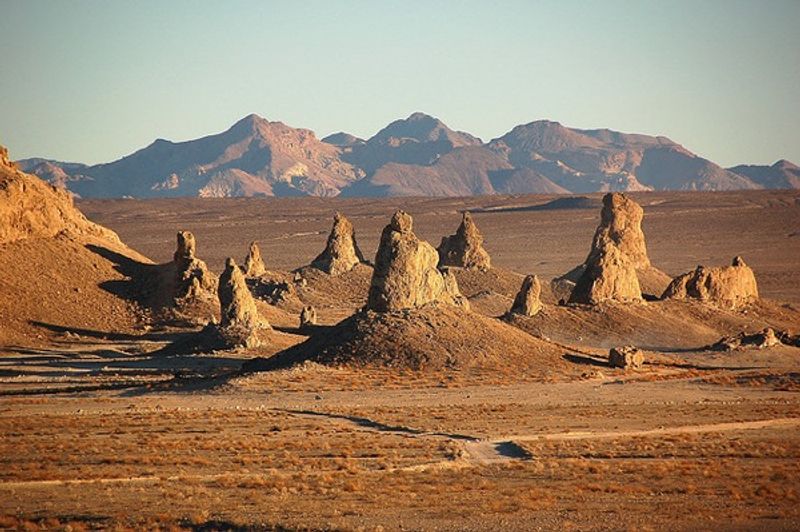
Campgrounds range from developed sites with amenities to primitive areas that emphasize solitude.
Reservations at busy seasons help secure locations that match your comfort level.
Always check current fire regulations because restrictions shift with weather and risk.
Borrego Palm Canyon Campground offers restrooms and shaded ramadas with convenient access to the oasis trail.
Sites book quickly during wildflower peaks so plan months ahead for spring.
Quiet hours keep nights peaceful for stargazing and early morning starts.
Dispersed camping is allowed in designated backcountry areas where vehicles must stay on existing roads.
Choose durable surfaces and avoid washes that can flood during storms.
Pack a portable toilet system if needed to protect fragile soils and keep areas clean.
Store food securely to deter inquisitive ravens and coyotes that learn from careless habits.
Keep camps compact so vegetation remains intact around parking areas and tent pads.
A small brush helps sweep fine sand from zippers and buckles before packing.
Respect neighboring campers by managing light spill and generator noise during evening hours.
Share views by positioning tents to preserve sightlines across open desert.
If you bring chairs, pick low profile models that stay steady in wind.
Morning coffee tastes better with a sunrise over ocotillo and distant ridges.
Leave the site spotless with a final walk to snag micro trash and tent stake holes.
Camping here ties days together with the quiet rhythm of the California desert.
Historic and cultural context on the landscape
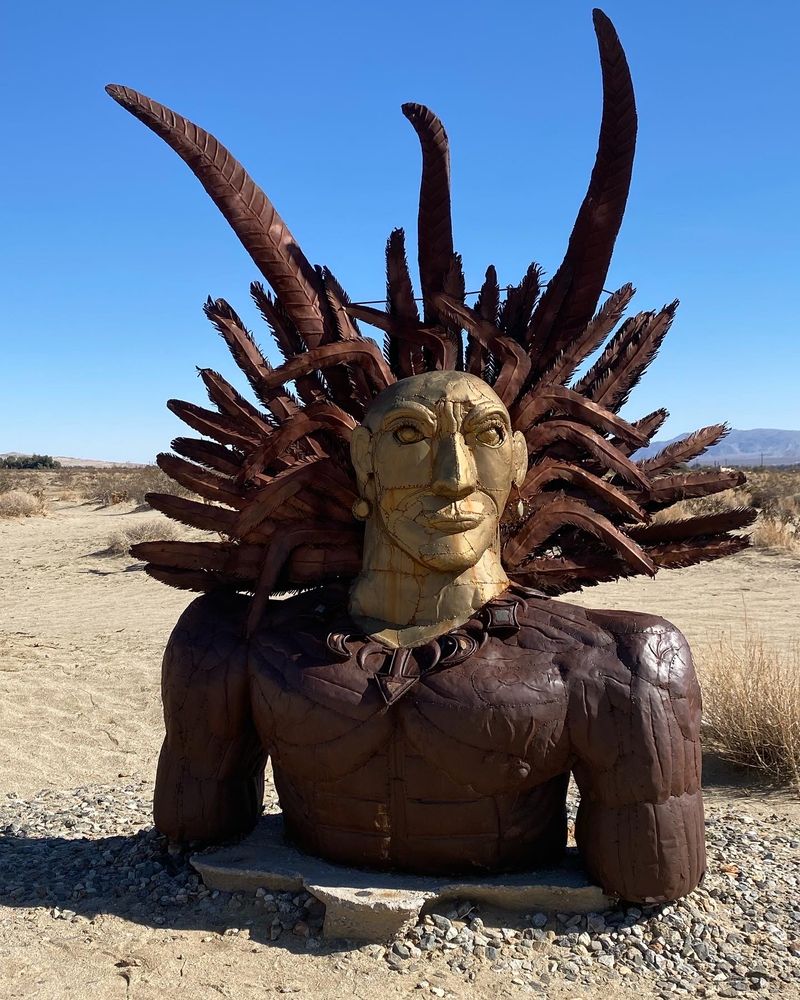
The desert carries stories that stretch long before paved roads and guidebooks shaped itineraries.
Indigenous peoples traveled these corridors with seasonal knowledge of water, plants, and shelter.
Modern visitors benefit from that wisdom by moving carefully and noticing small details.
Interpretive panels across the park describe geology, ecology, and cultural histories that connect place and time.
Some locations hold sensitive resources that remain unpublicized to protect them from harm.
Respect closures and do not share precise coordinates for fragile sites you may learn about.
Old stage routes and ranching traces appear as faint lines that cross washes and slopes.
You will see remnants like weathered posts and troughs that speak to travel challenges.
Photograph from a distance rather than handling anything that could degrade with contact.
Local lore mentions hidden mines and lost caches which belong firmly to the realm of legend.
Treat such stories as fun conversation starters rather than navigational advice.
If you stumble on hazards, note the location and alert rangers without entering unstable ground.
Museums in nearby communities provide deeper context with curated exhibits and guided talks.
Combine a morning hike with an afternoon learning session to round out your understanding.
Reading a field guide on native plants enriches every mile you walk.
Leave what you find and share the ethos with friends so respect grows visitor by visitor.
The landscape rewards this approach by keeping secrets intact for future generations.
Carry the spirit of care across California’s parks and public lands.
Dear Reader: This page may contain affiliate links which may earn a commission if you click through and make a purchase. Our independent journalism is not influenced by any advertiser or commercial initiative unless it is clearly marked as sponsored content. As travel products change, please be sure to reconfirm all details and stay up to date with current events to ensure a safe and successful trip.
