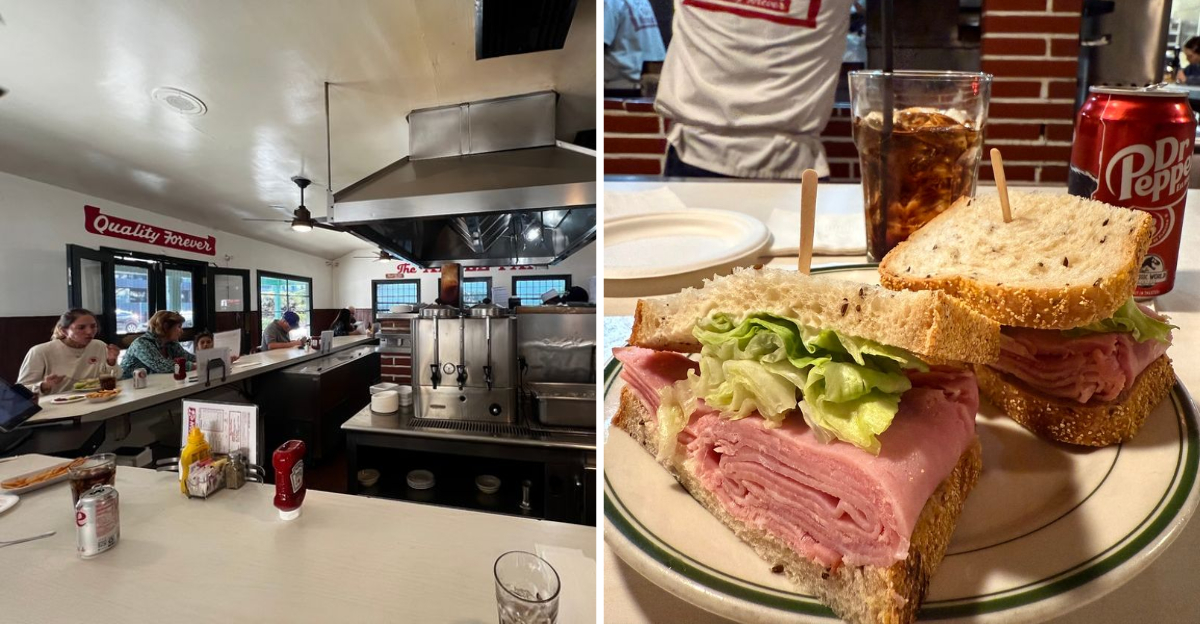
That little white cottage with green shutters on a busy California street did not look like a famous burger joint. I almost drove right past it, but then I saw the sign promising Quality Forever, and I understood that this tiny building has been quietly outlasting trends since the late 1940s.
Inside, there are no tables, just a U-shaped counter with red stools wrapped around a working grill, and the smell hits you before you even sit down. The grill sizzles with patties that have been cooked the same way for decades, and the counter stools have held elbows from generations of Angelenos.
My burger arrived in paper, my fries came on a paper plate, and ketchup was squirted out for me without my asking. I sat there watching the cook work the flat top with the kind of rhythm that only comes from doing something thousands of times.
Somewhere between the first bite and the slice of pie I ordered afterward, I realized this place is less a restaurant and more a piece of California that refuses to change. A story worth hearing is exactly what this spot delivers.
A Little White Cottage That Hides a Whole Lot of History
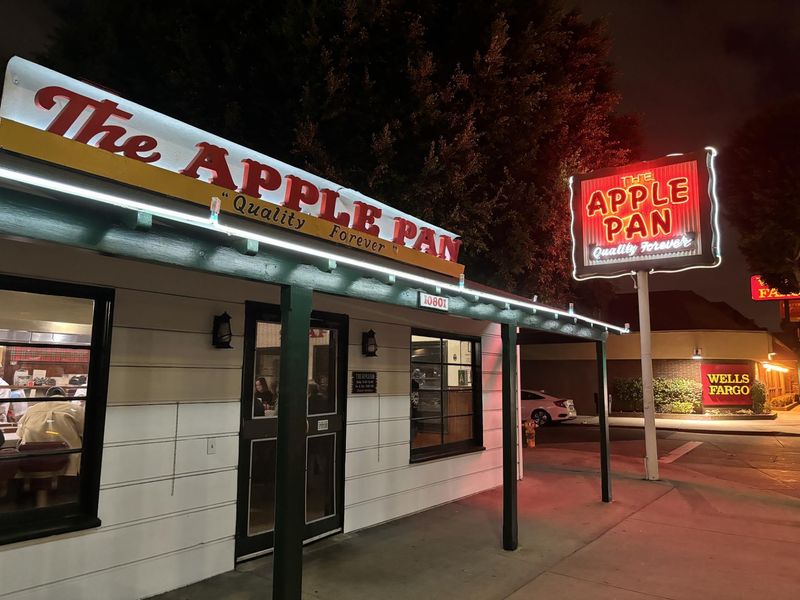
My first impression was that someone had dropped a country cottage in the middle of West Los Angeles and forgotten about it. The building is small, white, trimmed in green shutters, and it looks nothing like the burger temples that fill the city.
That modest exterior is a big part of the charm. Cars rush by on Pico Boulevard all day long, and plenty of drivers never realize what is tucked behind those shutters.
The Apple Pan opened here in 1947, started by Ellen and Alan Baker, and it is widely counted among the oldest continuously running restaurants in Los Angeles. Three generations of the same family ran it before the business changed hands in 2019, when longtime regulars Irving and Shelli Azoff took over with a promise to keep everything just as it was.
Fans of nineties television might feel a strange flicker of recognition when they pull up. The outside of the building was used for establishing shots of the Peach Pit on Beverly Hills, 90210.
Street parking is the main option, so give yourself a few extra minutes and read the signs carefully before you walk in.
Twenty-Six Red Stools and Not a Single Table
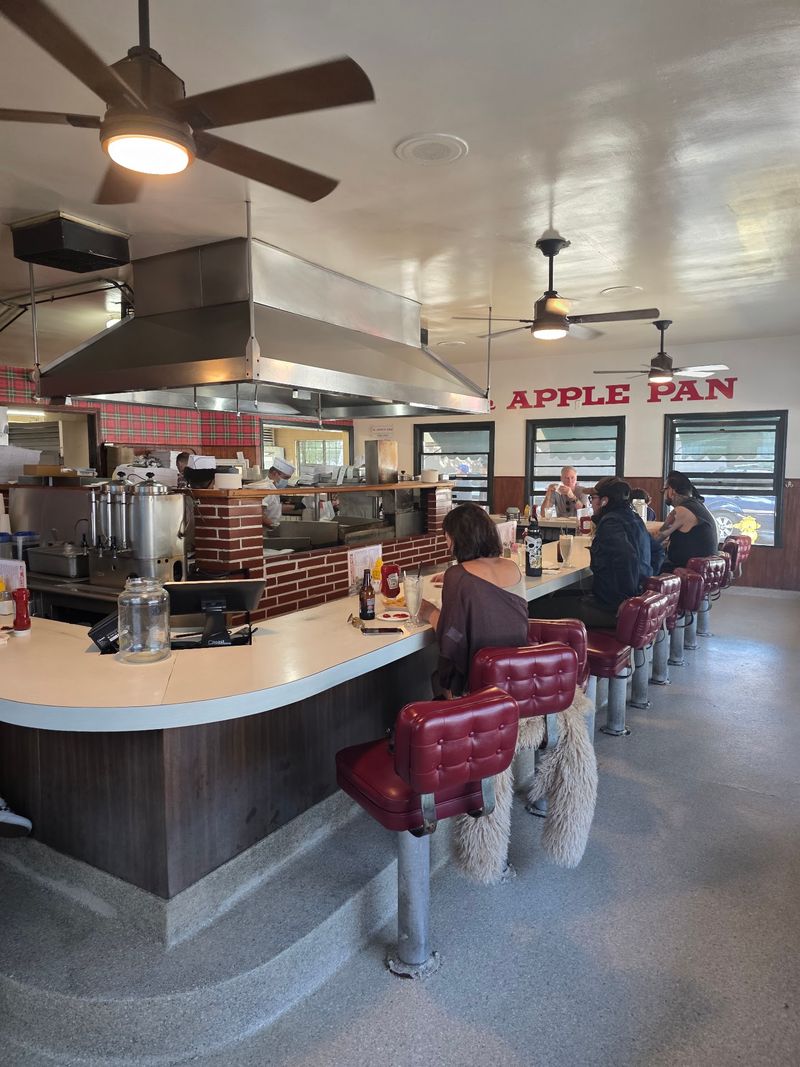
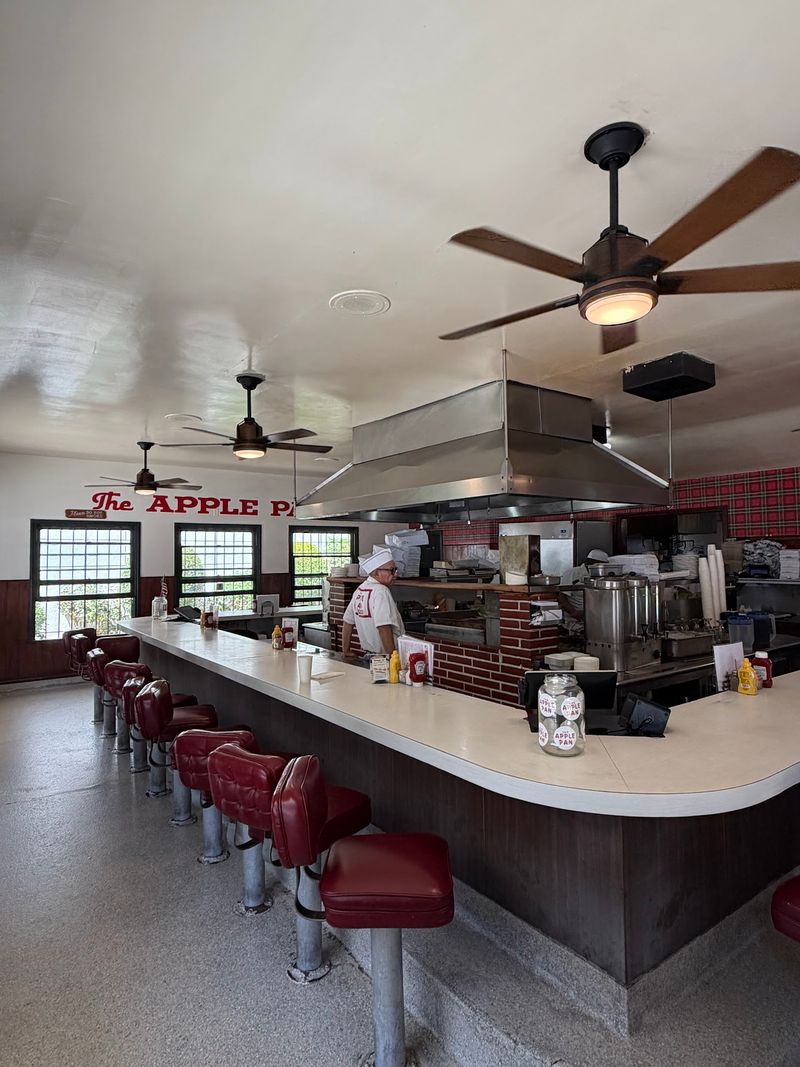
Nobody hands you a table here, because there are none. The entire dining room is a U-shaped counter ringed with twenty-six red leather stools, and everyone sits shoulder to shoulder facing the middle.
Inside that U is the red brick grill area where the cooking happens right in front of you. Watching burgers hit the griddle while you wait is easily half the entertainment.
Wood paneled walls, a checkered tile floor, and a red plaid back wall complete the picture, and none of it feels staged. The fixtures are original, right down to the old cash register sitting near the register area like a museum piece that still shows up for work.
Seating is first come, first served, and the stools turn over surprisingly fast. Arriving before the lunch rush or after the dinner peak usually means a short wait or none at all.
One unexpected bonus of counter seating is conversation. Sitting elbow to elbow with strangers, you end up chatting about pie choices and burger orders in a way that almost never happens in a normal restaurant.
The Hickoryburger Deserves Every Bit of Its Reputation
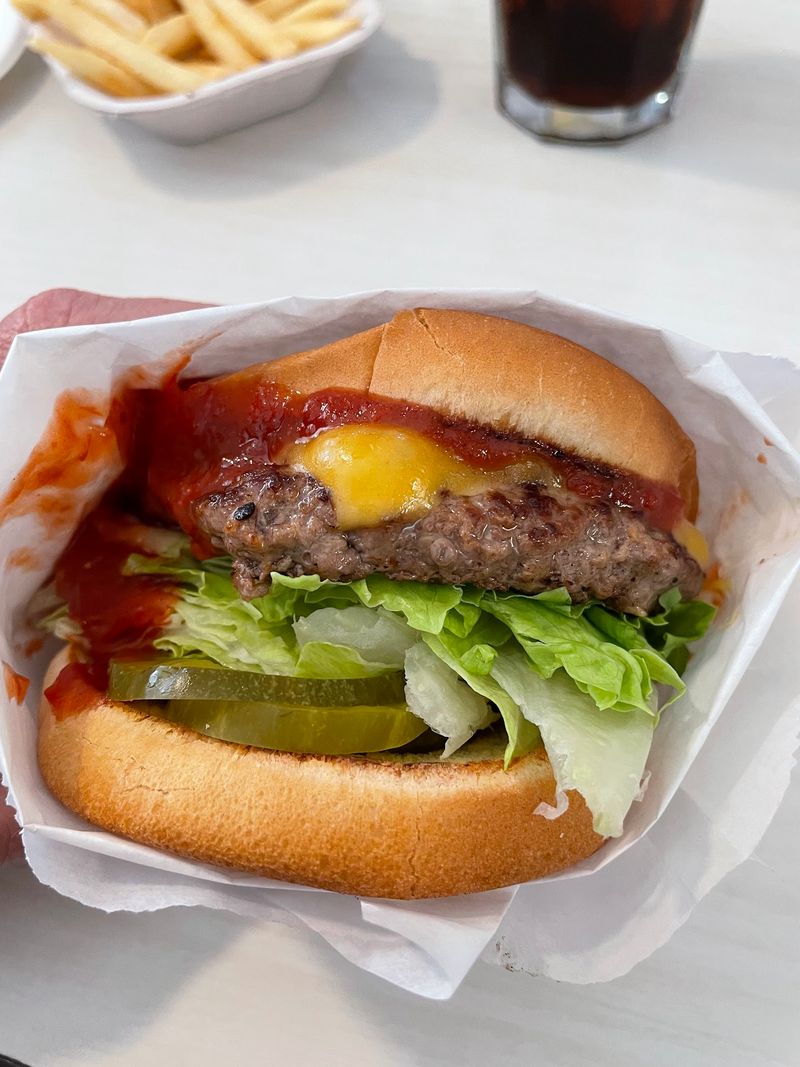
Ask ten regulars what to order and nine of them will say the Hickoryburger without pausing. It has been on the menu since 1947, and the recipe has barely moved since.
A quarter-pound patty gets cooked to order on the griddle, topped with melting cheddar, crisp iceberg lettuce, pickles, and a tangy-sweet hickory barbecue sauce that gives the whole thing its smoky signature. The bun is toasted right there on the same griddle.
The other classic is the Steakburger, which actually predates the restaurant itself. Alan Baker served it back in 1927 at his earlier spot, King’s Kitchen, and it comes with its own special sauce, mayonnaise, pickles, and lettuce.
One quirk catches newcomers off guard. There are no tomatoes, and there never have been, because that is how Baker designed the recipes.
You can ask for an onion slice, or even grilled onions when the grill is not slammed. Burgers arrive wrapped in paper, which sounds simple until you unwrap one and understand exactly why people keep driving across the city for this.
Service That Still Runs on Handwritten Tickets
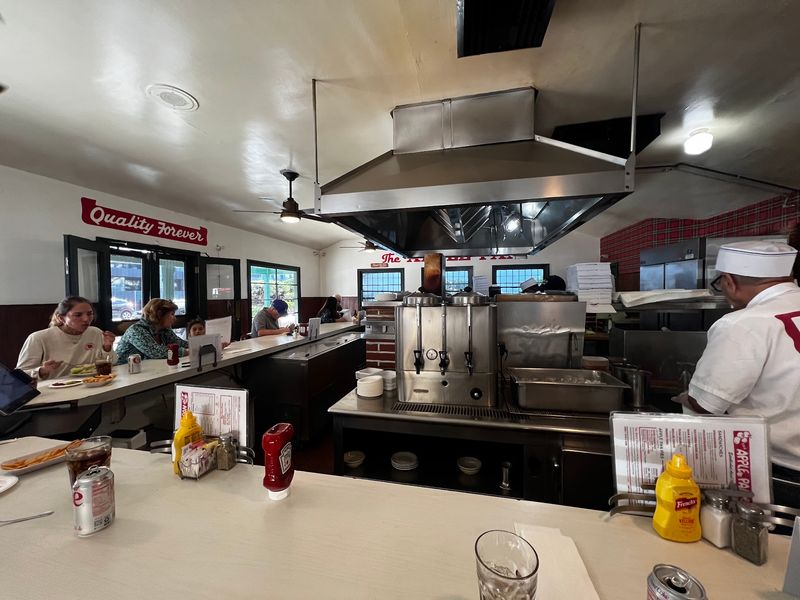
The rhythm behind the counter is something you feel more than see. Orders get written by hand on paper tickets, plates move down the line, and everything somehow lands in front of the right person.
Servers wear neat white service caps that look straight out of an old soda fountain. Many of the staff have been here for years, and that experience shows in how smoothly the whole operation runs.
Little rituals make the visit memorable. Fries arrive on a paper plate, and a small mini plate of ketchup gets squirted out for each customer without anyone having to ask, sometimes with a smiley face.
For decades the place took cash only, which tripped up more than a few first-timers. That changed in 2019 when cards were finally accepted, and delivery service was added in 2020.
Water once came in paper cones held in stainless steel holders, though glasses are more common now. Regulars have their own shorthand too, like asking for fries done crispy or a sandwich lightly toasted, and the staff handles those requests without blinking.
Pies Baked Fresh Daily, and They Do Sell Out
Save room. That is the single best piece of advice I can give anyone heading here for the first time.
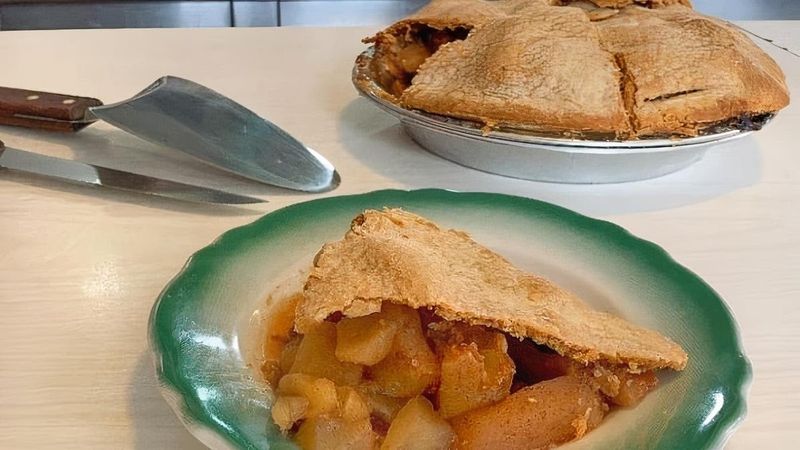
The apple pie comes from a family recipe attributed to Mama Baker, and it has a crackly sugar crust that shatters slightly under the fork. Ordered a la mode with vanilla ice cream, it is the reason plenty of people show up in the first place.
Banana cream pie is the other heavy favorite, built with real bananas and clouds of whipped cream that taste like the real thing because they are. Beyond those two, the rotation includes pecan, chocolate cream, coconut cream, cherry cream, strawberry cream, peach cream, and a seasonal boysenberry made with berries from Anaheim.
Pies are baked fresh every day, which means the selection shrinks as the hours pass. Late arrivals sometimes find just one or two varieties left.
My suggestion is to decide on your slice when you order your burger. That way nobody talks you out of dessert, and nothing sells out while you are busy eating.
Grabbing a Seat Without the Long Wait
Timing matters more here than almost anywhere else I have eaten in California. With only twenty-six seats, the counter fills and empties in waves throughout the day.
The good news is that stools turn over quickly because people come to eat, not to linger for hours. A ten minute wait is common even when the place looks packed.
Doors open at 11 AM every day, with closing at 11 PM most nights and midnight on Fridays and Saturdays. Showing up right at opening or around mid-afternoon usually gets you a seat immediately.
If the counter is full and you would rather not hover, there is an outdoor patio with picnic tables behind the building. Orders can also be placed at a walk-up window on the side, which is handy for takeout or for feeding a group.
Parking is street parking, so budget a few minutes for circling the block. Bring a card, plan for a short wait, and the whole visit becomes effortless instead of stressful.
Why This Tiny Counter Shaped So Many Others
Here is a fun bit of trivia that sticks with you. Ronn Teitelbaum, the founder of Johnny Rockets, reportedly modeled his 1950s-themed chain on this very spot, borrowing the short menu, the counter seating, the open grill, and even the presentation.
So a national chain grew out of a cottage that never wanted to grow at all. The Baker family turned down chances to expand and modernize, choosing instead to keep doing a handful of things extremely well.
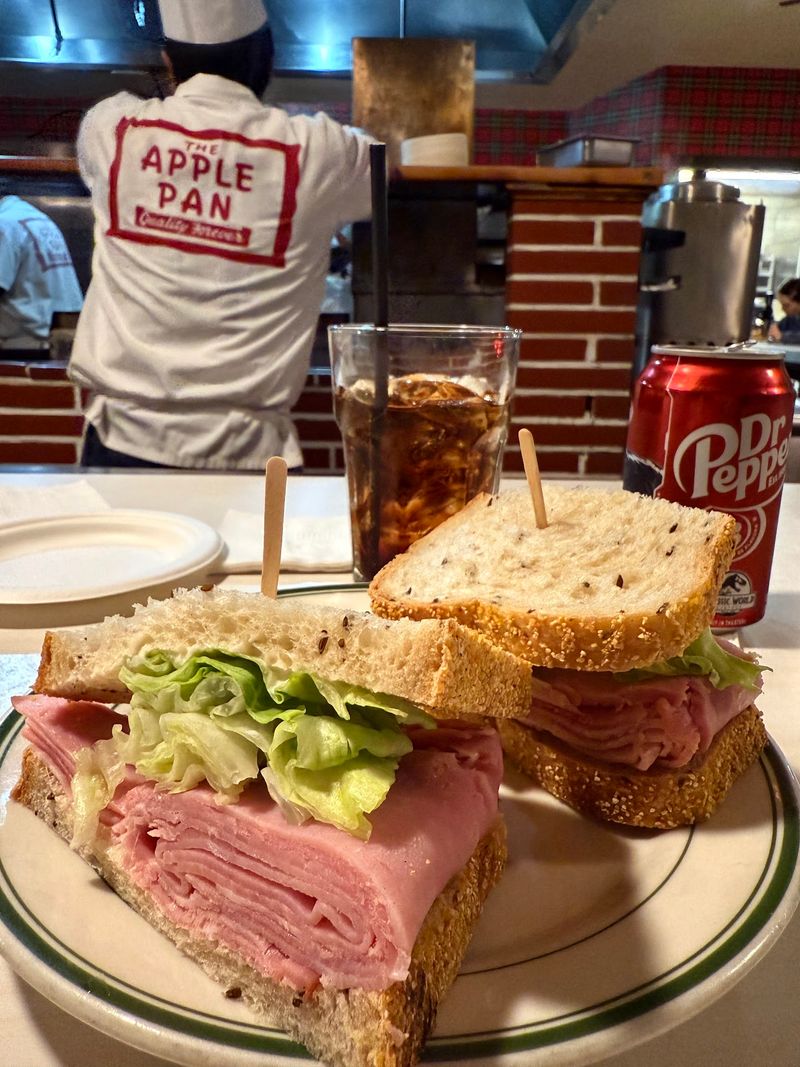
The menu stays small on purpose. Alongside the burgers you will find tuna melts, tuna salad, egg salad, Southern baked ham, ham and cheese, grilled cheese, grilled ham and cheese, and patty melts, plus those thick-cut golden fries.
Some of the family recipes reportedly trace back as far as 1881, brought west by relatives from the Midwest. That kind of continuity is rare anywhere, let alone in a city that rebuilds itself constantly.
Generations of Angelenos have made memories on these stools and brought their own kids back later. Go once and you will understand the pull.
Address: 10801 W Pico Blvd, Los Angeles, California
