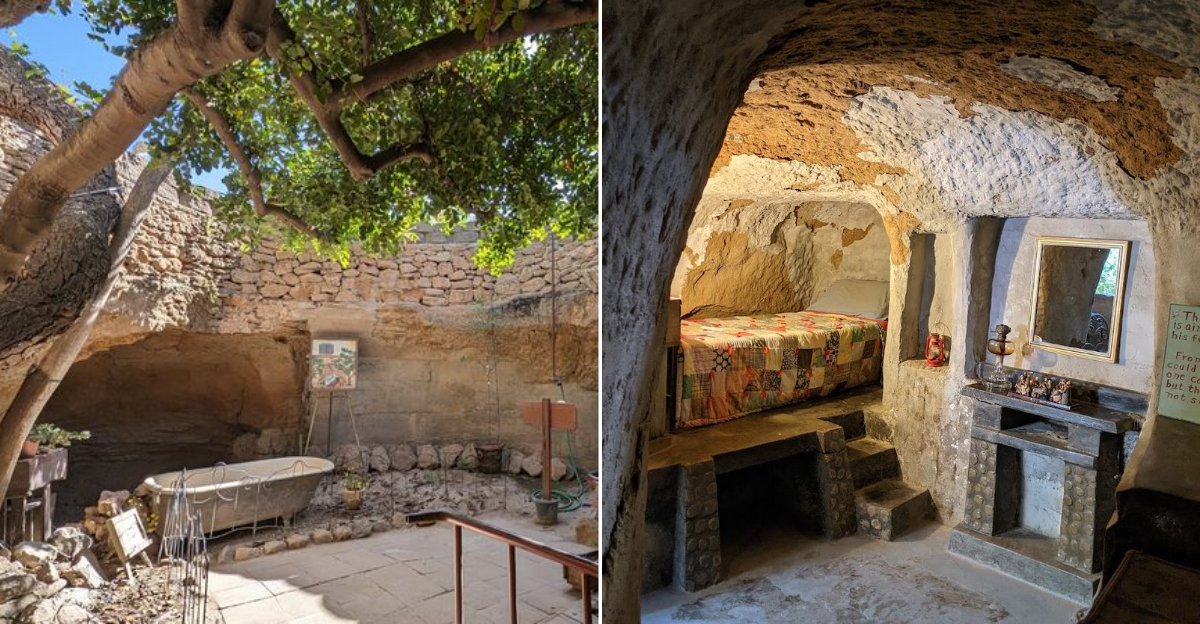
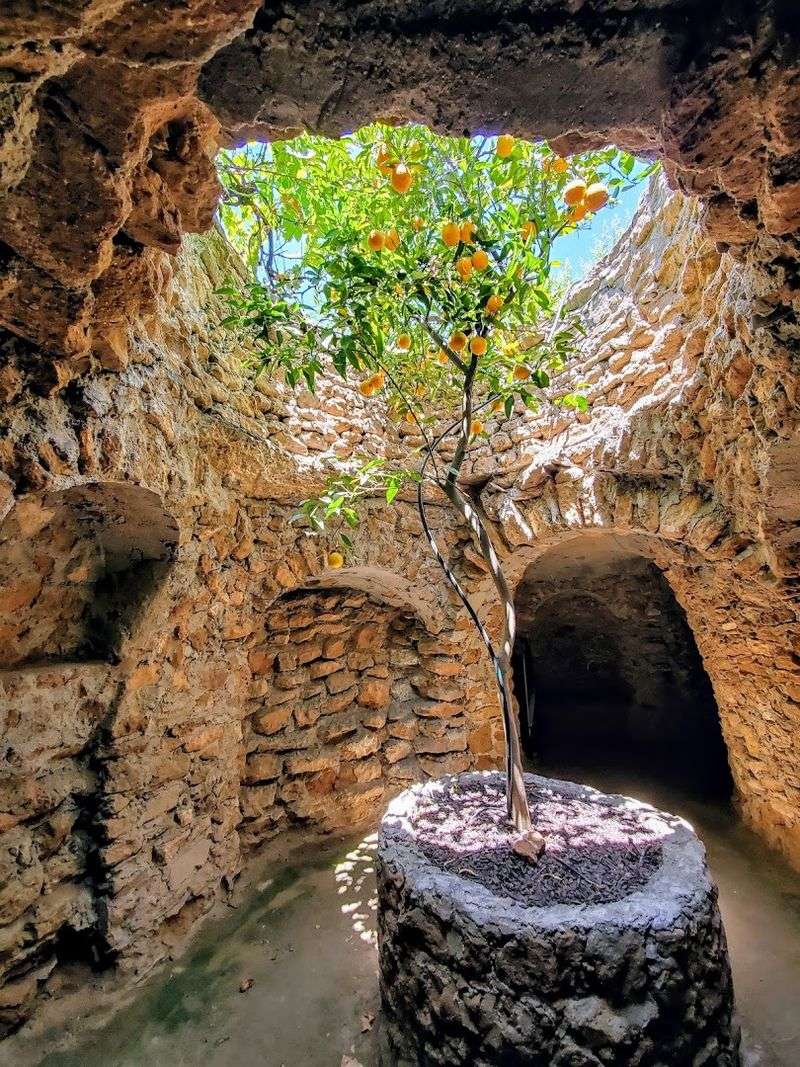
I once stood on a patch of ordinary California ground, reached down, and plucked a ripe lemon from a tree growing completely underground. That moment of disbelief is exactly what awaits you at a place where one man spent forty years hand-digging a subterranean world of fruit-bearing trees, vines, and living spaces beneath the surface.
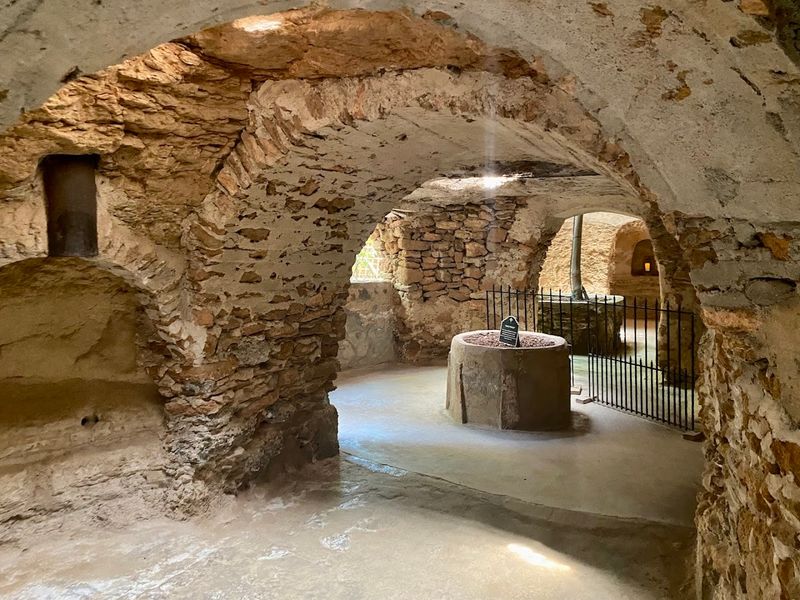
You descend a narrow staircase into a cool, quiet network of stone archways and open-air courtyards that feel more like ancient Roman catacombs than anything you would expect to find in the middle of Fresno.
Skylights puncture the earth above, allowing just enough sun to reach the citrus, figs, and grapes that still produce fruit more than ninety years after they were planted.
The air stays a constant, comfortable temperature, and the silence is broken only by the drip of water and the soft crunch of gravel underfoot. This is not a garden you stroll through.
It is a hidden world you step into, a testament to one man’s stubborn vision and the strange, wonderful surprises that California still keeps tucked beneath its surface.
The First Step Underground
You know that moment when a place immediately resets your expectations, and you can feel your brain trying to catch up with what your eyes are seeing? That is exactly how this starts, because from the outside you are in Fresno, and then suddenly you are stepping into a cooler, quieter world tucked under the California ground.
It feels less like entering a tourist attraction and more like being let in on somebody’s long, strange, brilliant idea.
What gets me first is the atmosphere, because the air changes, the light changes, and even sound seems to soften around the passageways. The carved stone, open courtyards, and little shafts of sunlight make everything feel practical and dreamy at the same time, which is not a combination you run into often.
You can tell right away that this was built for living, not just for show.
Before you even hear the full story, the space already tells you plenty about the person behind it. Someone stood in harsh Central Valley heat, looked at hardpan soil, and decided the answer was to go down instead of giving up.
That choice alone makes the whole visit feel personal in a way most historic places never quite manage.
Where You Actually Find It
Let me make this easy, because this is one of those places that sounds almost too unusual to be real until you are standing there yourself. The Forestiere Underground Gardens are at 5021 W Shaw Avenue, Fresno, CA 93722, and once you arrive, the whole idea of an underground orchard starts feeling wonderfully, completely believable.
You are still in the middle of everyday California life, which somehow makes the discovery even better.
Part of the charm is that the setting does not overannounce itself with drama, and I honestly like that. There is something satisfying about reaching a place that keeps its biggest surprise tucked beneath the surface, almost like it knows it does not need to perform for you.
The contrast between the busy world above and the calm spaces below makes the entrance feel like a threshold instead of just a doorway.
If you are planning a Fresno day, this spot changes the rhythm of it in the best way. You show up expecting a tour, and what you really get is a walk through one person’s imagination made solid, useful, and strangely beautiful.
By the time you head inside, curiosity has fully taken over, and it does not let up.
One Person Did All This
Here is the part that really gets under your skin, because this whole place was not dreamed up by a big crew with fancy equipment and a branding team. It was dug out by Baldassare Forestiere with hand tools, grit, and an almost unbelievable amount of patience, and once that really lands, every wall starts to feel more intimate.
You are not just seeing architecture here, but persistence made visible.
As you move through the chambers, you start imagining the daily rhythm behind it all, and that thought makes the spaces feel even more alive. Pick, shovel, wheelbarrow, hard ground, heat overhead, and then somehow this cool underground network slowly taking shape year after year.
There is something deeply moving about seeing what steady work can become when somebody refuses to let difficult conditions decide the final outcome.
I think that is why the gardens feel different from places that are impressive in a more polished way. The beauty here is inseparable from effort, and you can sense that in the rough textures, the practical layouts, and the surprising softness of the courtyards.
California has plenty of famous sights, but very few of them feel this handmade, stubborn, and human.
The Light Does Something Strange
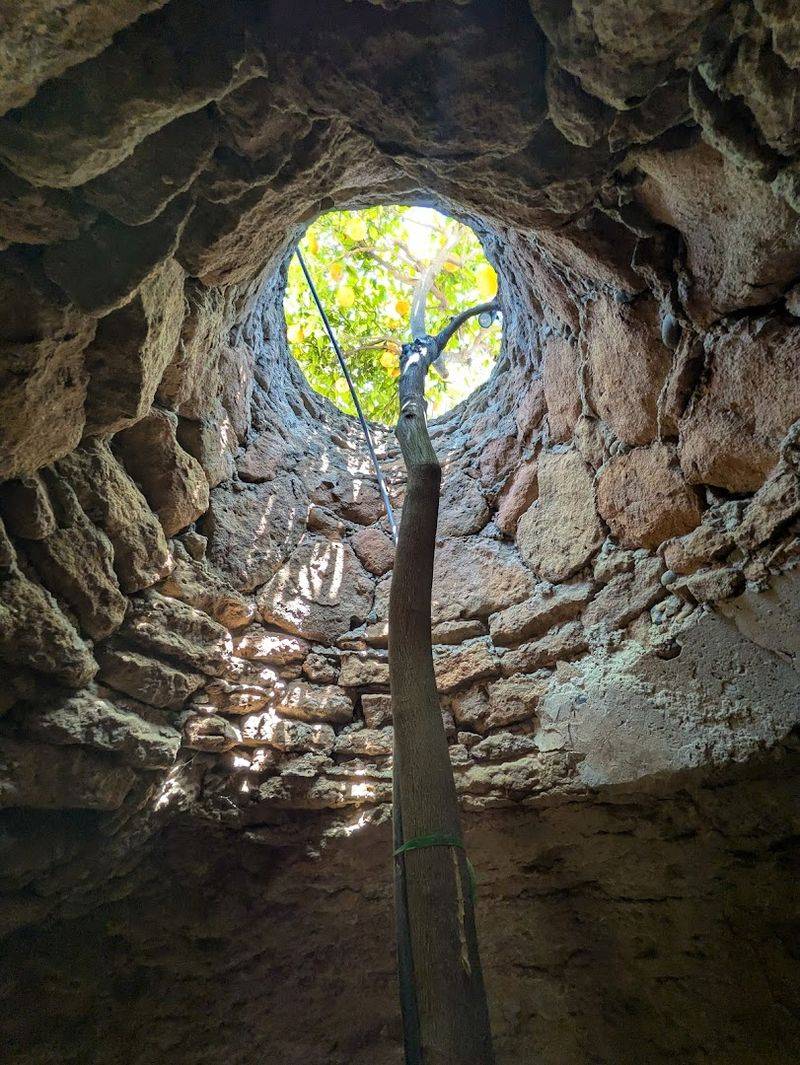
What surprised me most was not just that trees were growing below ground, but how natural the light felt once I settled into it. The skylight openings bring in these soft columns of sun that land on leaves, stone, and walkways in a way that makes the whole place seem quietly theatrical.
You keep looking up, then around, then back up again, because your brain wants to understand how this is working.
Instead of feeling closed in, the spaces breathe, and that is what makes them so memorable. Courtyards open unexpectedly, shafts of brightness reach down where you least expect them, and every turn gives you another little lesson in how carefully this place was thought through.
It feels inventive without ever becoming flashy, which honestly makes it more impressive.
That balance between shade and sunlight also changes your mood as you walk, and I noticed myself slowing down without really meaning to. You stop paying attention to whatever was on your mind before you got there, because the environment keeps pulling you into the present.
In a state like California, where bright light usually means heat, seeing light used this way feels especially clever and strangely calming.
Fruit Trees In The Earth
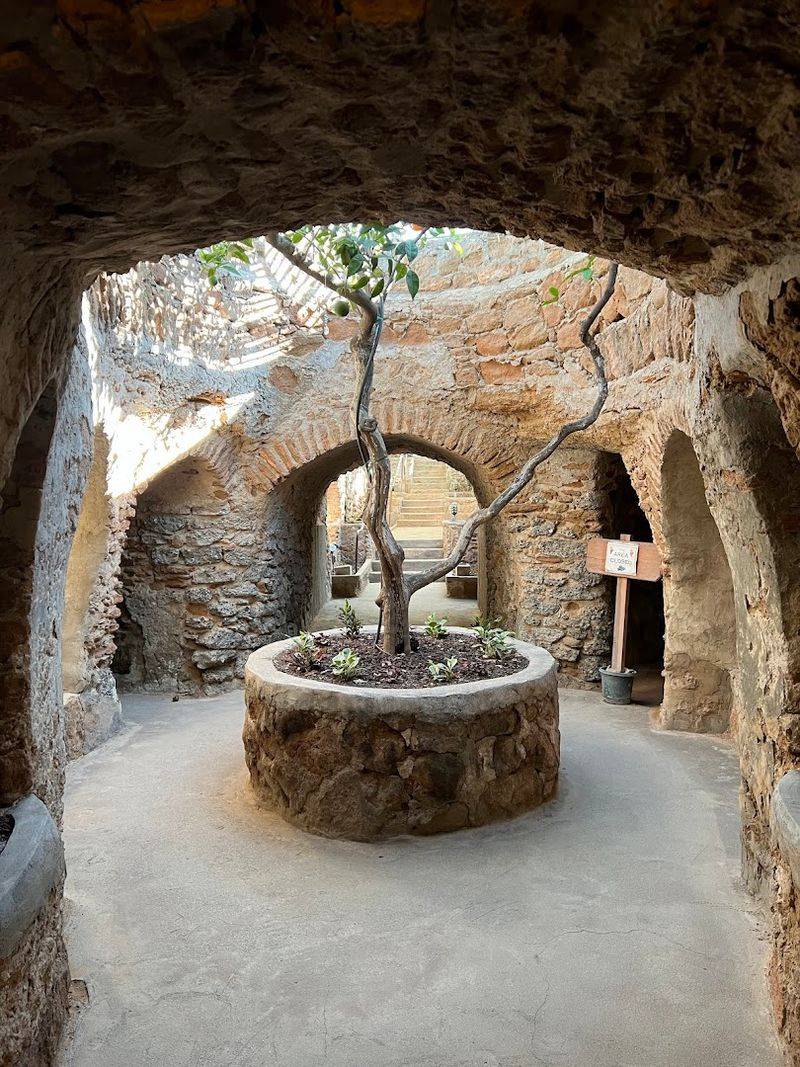
Honestly, if someone casually told you there were citrus trees thriving underground, you would probably give them a look and ask them to repeat themselves. Then you get here and see oranges, lemons, grapevines, and other fruiting plants reaching toward openings above, and suddenly the impossible starts looking completely sensible.
That is one of the weird joys of this place, because it keeps turning disbelief into admiration.
The garden was shaped around the reality of Central Valley heat and stubborn soil, and the solution was not to fight nature head-on in the usual way. Instead, the design works with depth, shade, airflow, and carefully placed light, creating pockets where fruit can keep growing in conditions that feel gentler than the surface.
You can sense that every planting choice was part experiment, part necessity, and part personal vision.
I love that the trees are not just decorative symbols of the story, but living proof that the idea still works. They give the gardens an ongoing pulse, as if the place is still quietly demonstrating its own logic long after its creator is gone.
You leave with the strange, happy feeling that California still has room for landscapes that defy your assumptions.
Rooms Made For Real Living
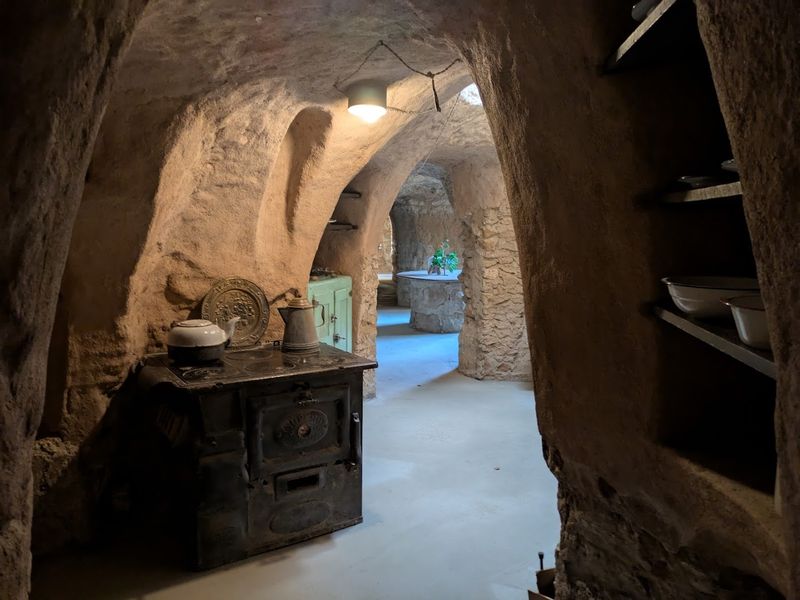
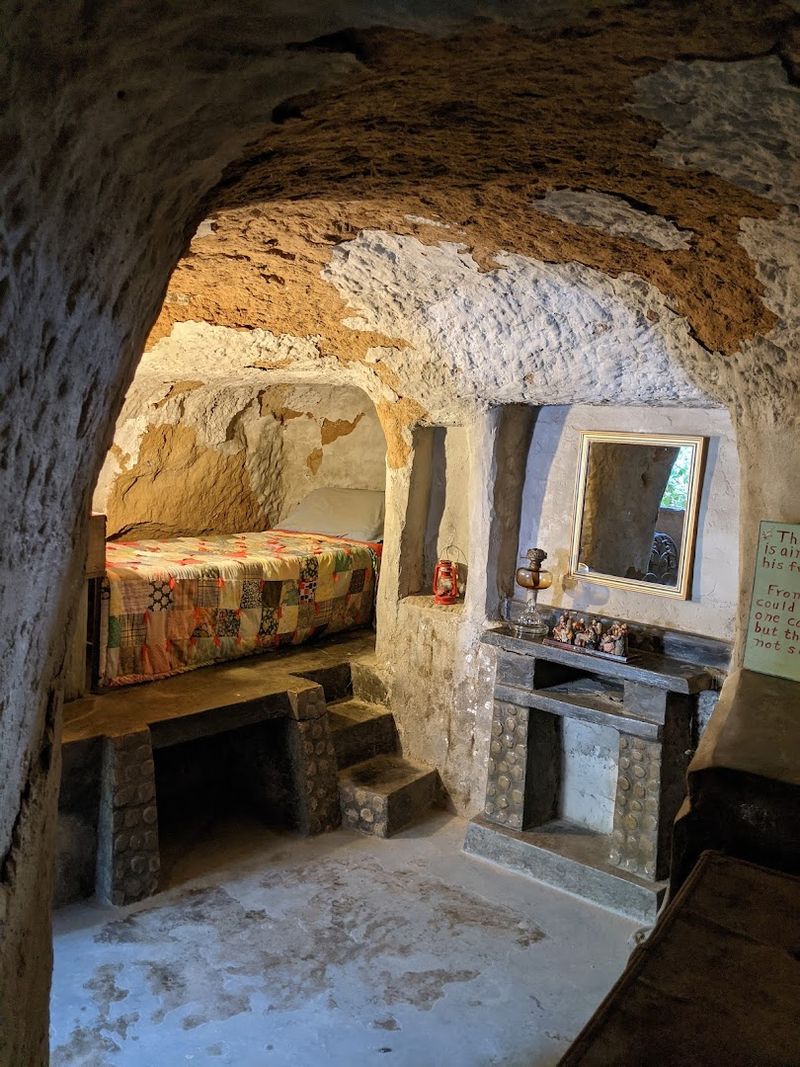
One reason this place sticks with you is that it was not built as a novelty, and you can feel that almost immediately. These chambers were arranged for real daily life, with living spaces tucked into the underground plan in a way that makes the whole property feel practical, personal, and surprisingly intimate.
You are not wandering through an abstract idea, but through somebody’s answer to weather, work, and home.
As the spaces unfold, you start noticing how thoughtfully they were laid out to support ordinary routines. The rooms are modest, the transitions feel purposeful, and nothing about the design seems careless or random, even when it looks whimsical from the outside.
That combination of usefulness and imagination gives the gardens their emotional pull, because it feels like creativity rooted in necessity rather than decoration.
I think that is why the site avoids the museum stiffness that can flatten historic places. There is evidence everywhere that this underground world was meant to be inhabited, adjusted, and cared for, not just admired from a distance.
In Fresno, where the summer heat can shape how people move through the day, seeing a home built downward feels less eccentric and more quietly wise.
Cool Air Without The Fuss
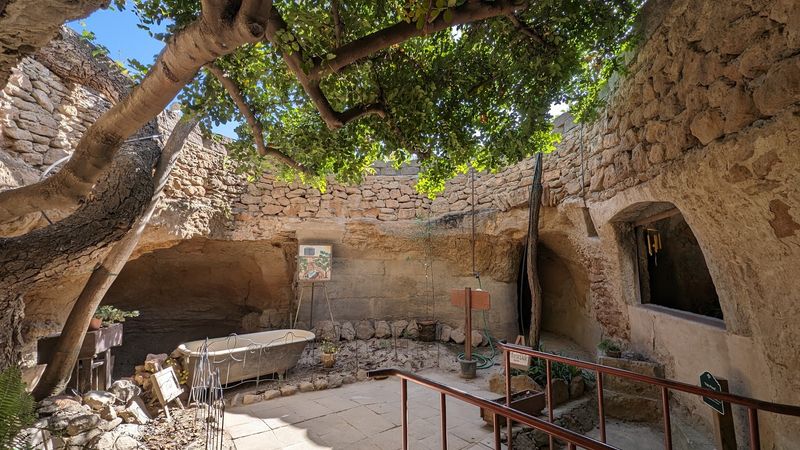
Maybe the smartest thing about the gardens is how comfortable they feel without relying on any flashy trick to impress you. The deeper you go, the more obvious it becomes that this place was shaped around airflow, shelter, and the basic human need to escape punishing heat in a sensible way.
You can almost feel the thought process in the walls, like the architecture is quietly explaining itself as you walk.
That natural cooling effect changes the entire experience, because your body relaxes before your mind has fully caught up. Spaces stay calm, breezes move gently, and the underground setting makes the California sun feel close enough to understand but far enough away to stop dominating everything.
There is something deeply satisfying about comfort created through design instead of excess.
What I appreciate most is that none of this feels showy or overexplained when you are there in person. It just works, and that simple fact makes the creativity behind it feel even stronger.
A lot of historic places ask you to imagine how life once functioned, but here you can still sense it directly, almost physically, which makes the story less distant and much more real.
Take Your Time With It
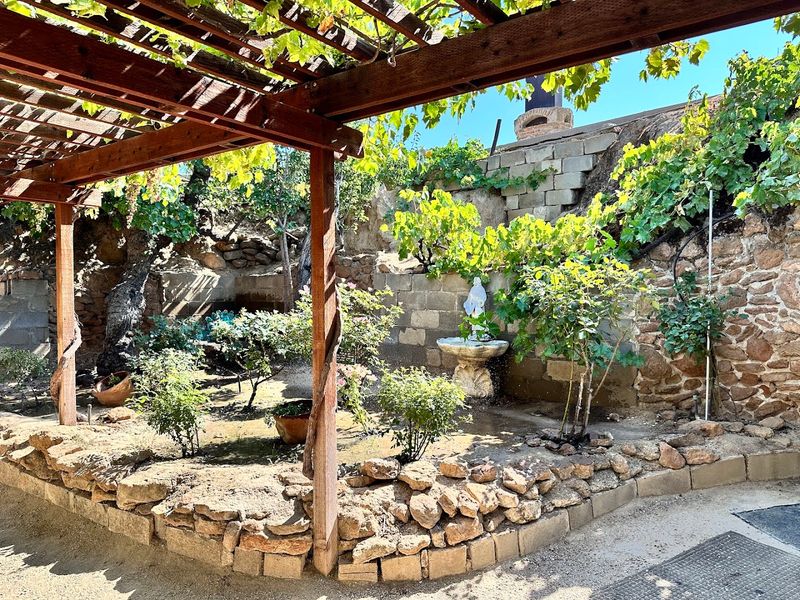
If I could give you one piece of advice, it would be not to rush through this place like you are checking off a list. The gardens reward a slower pace, because the more attention you give them, the more they stop seeming unusual and start feeling deeply logical, even intimate.
That shift is where the real magic is, and it happens gradually.
Let yourself notice the temperature change, the way sunlight lands on stone, and how the planted areas soften the underground structure. Listen to how sound moves differently, and pay attention to the emotional mood of the spaces, because they feel calmer than you expect and more thoughtful than photos usually convey.
This is one of those visits where atmosphere carries as much meaning as the facts.
By the end, you are not just impressed that someone dug this by hand and made fruit grow below the surface. You are also oddly comforted by the reminder that creativity does not always look flashy, and that practical imagination can leave behind something beautiful.
In a state full of attention-grabbing destinations, this California place earns your memory in a quieter, steadier, and more human way.
