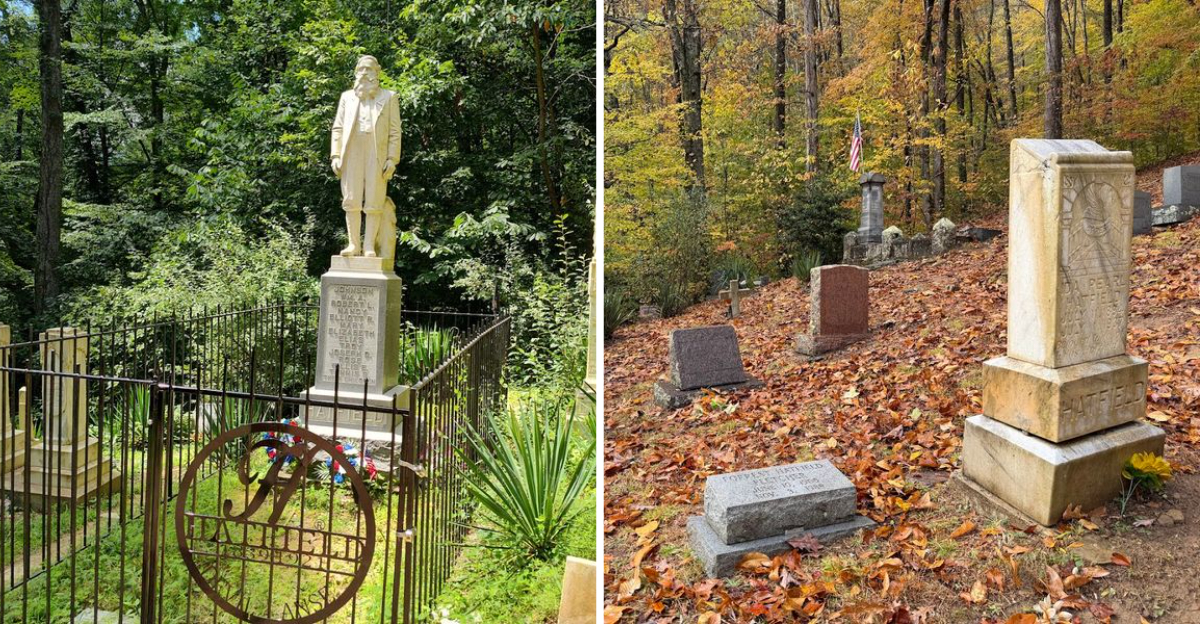
Some places tell stories without saying a single word. This quiet hillside is one of them.
Set in the Appalachian shade, it holds the final chapters of a feud that once captivated the entire nation.
You have heard the names, probably. The arguments. The legends that grew taller with every retelling.
Here, the ground feels different. Respectful.
Heavy with memory but not sadness.
Simple stones mark where history rests, surrounded by trees that have watched over it for generations.
It is peaceful now, almost surprisingly so. No shouting.
No conflict. Just birdsong and wind through the leaves.
You can walk slowly and let your imagination fill in the blanks. West Virginia preserves this piece of American storytelling with quiet dignity.
No drama required.
Just presence. Just remembrance. Just truth.
Understanding the Hatfield-McCoy Feud
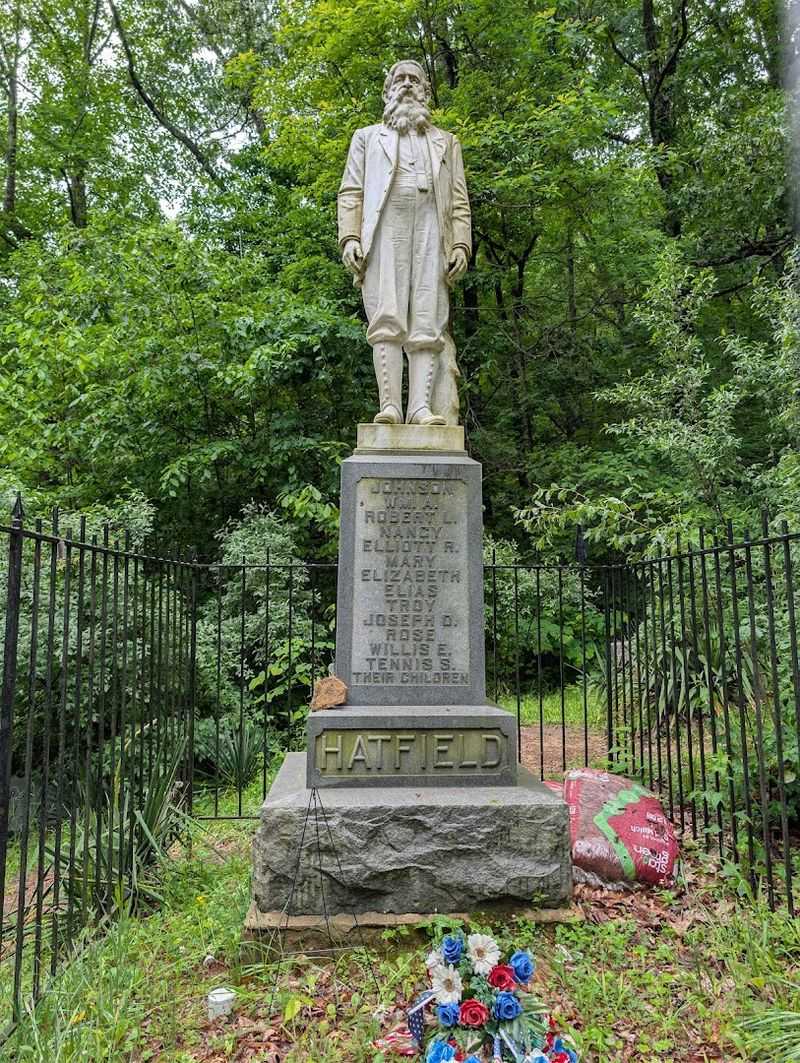
Few conflicts in American history have captured the national imagination quite like the Hatfield-McCoy feud.
Running roughly from 1863 to 1891, this bitter rivalry between two mountain families straddled the border of West Virginia and Kentucky, fueled by Civil War loyalties, land disputes, and timber rights.
The feud escalated through a series of dramatic confrontations, including accusations of hog theft and the murder of Ellison Hatfield.
These events transformed two ordinary Appalachian families into legendary figures studied in history classes across the country.
Visiting Hatfield Cemetery puts you right at the heart of that story. Standing among the headstones, you start to feel the weight of those generations, the choices made, the lives lost, and the pride that defined an entire era of mountain life.
It is one thing to read about history in a textbook and something else entirely to stand on the same soil where it unfolded. This cemetery makes the feud feel personal, immediate, and surprisingly moving.
William Anderson ‘Devil Anse’ Hatfield
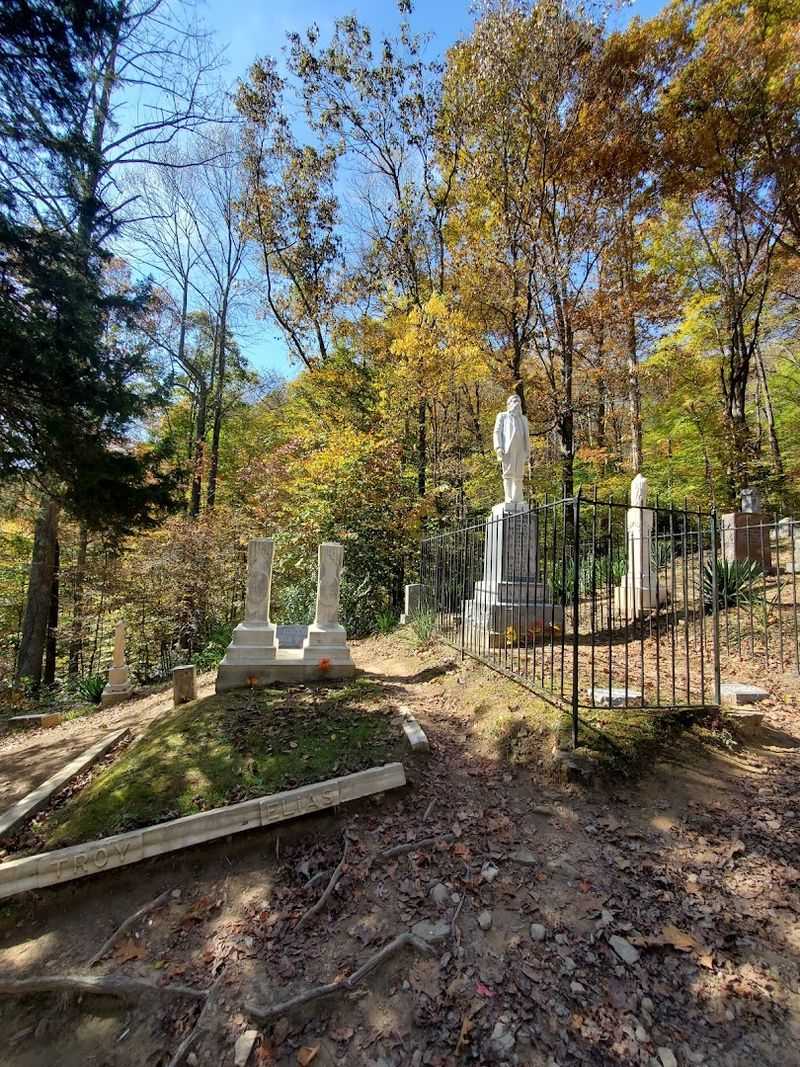
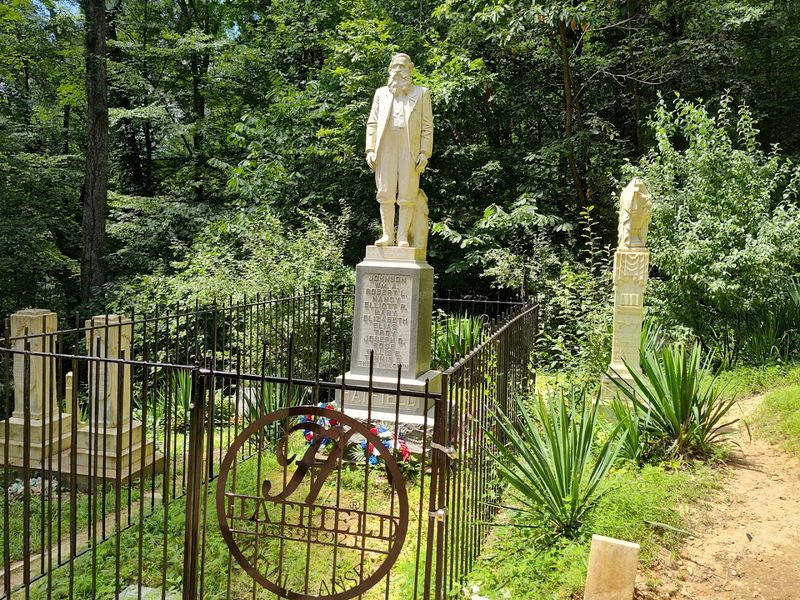
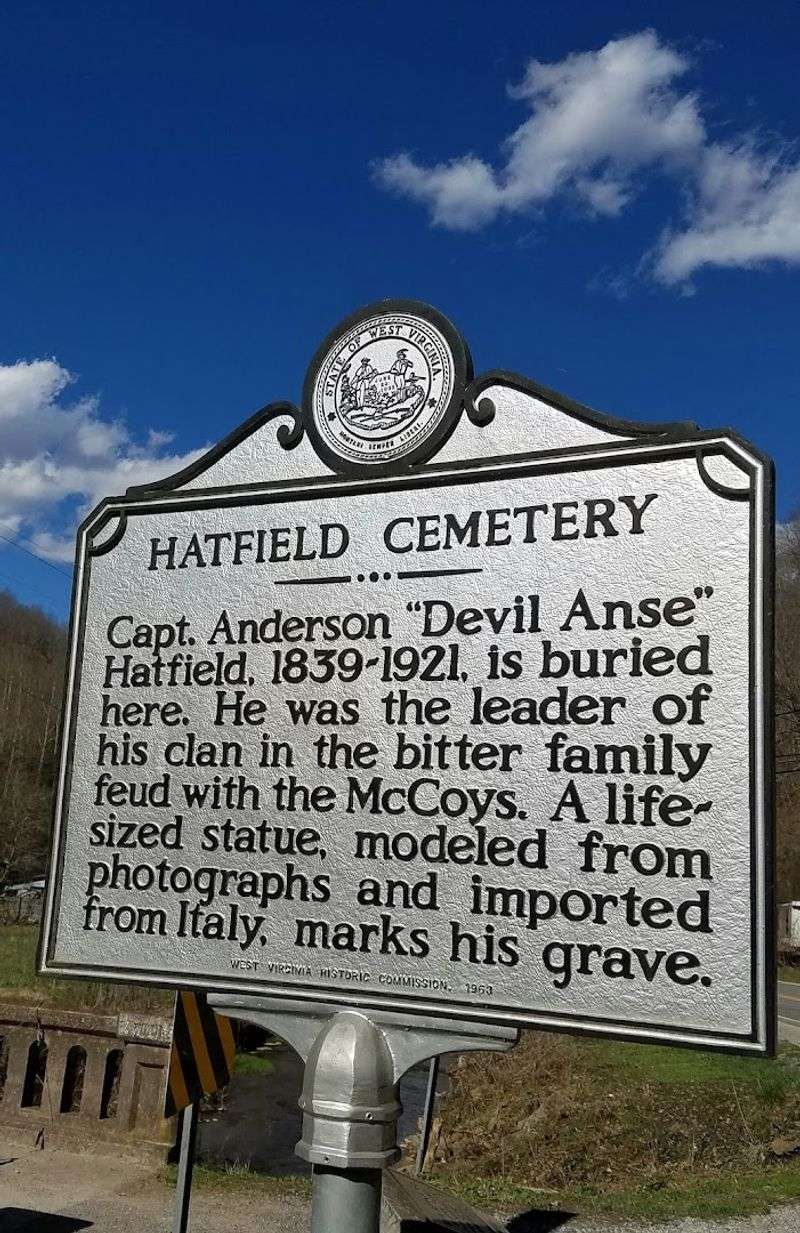
If there is one reason people make the trek up this mountain, it is to stand face to face with the life-size marble statue of William Anderson “Devil Anse” Hatfield.
Sculpted from Italian Carrara marble and erected in 1926, this striking monument was commissioned by his children at a rumored cost of $3,500, which translates to nearly $60,000 today.
Devil Anse, born in 1839 and passing in 1921, served as a Confederate captain during the Civil War before becoming a successful timber merchant. He was the undisputed patriarch and leader of the Hatfield clan throughout the years of the feud.
The statue captures him in a confident, full-length pose that feels almost alive against the backdrop of the West Virginia hills.
He was also buried in a solid steel coffin he had purchased himself, which adds another layer of fascinating detail to his already outsized personality.
Seeing this monument in person delivers a genuine jolt of historical electricity that no photograph fully prepares you for.
Navigating the Roads Less Traveled to Barnabus, WV
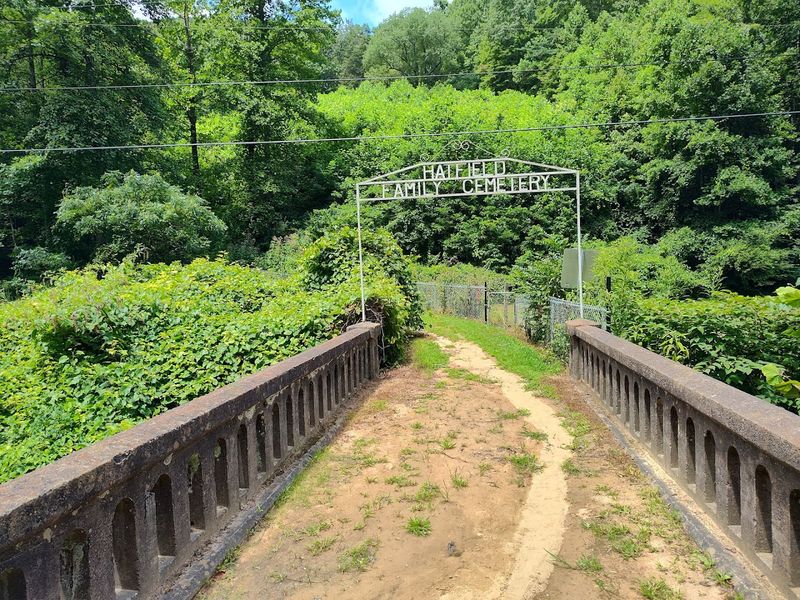
Getting to Hatfield Cemetery is part of the adventure, and that is not just a polite way of saying the roads are confusing.
Cell service in this part of Logan County is famously unreliable, so downloading an offline map or bringing a printed one is genuinely smart planning before you leave home.
The cemetery sits off Jerry W Highway on Hatfield Family Cemetery Access Road near Barnabus, West Virginia.
The surrounding landscape of winding two-lane mountain roads through dense Appalachian forest creates a dramatic sense of arrival that feels perfectly suited to the destination.
A newer paved parking area now makes the starting point much more accessible than it used to be.
The drive itself winds through some of the most beautiful and rugged scenery southern West Virginia has to offer, so leaving a little extra time to soak it in is a genuinely good idea.
Treat the journey as part of the experience rather than just a logistical hurdle, and you will arrive in exactly the right mindset to appreciate what waits at the top.
What to Expect on the Path to the Cemetery
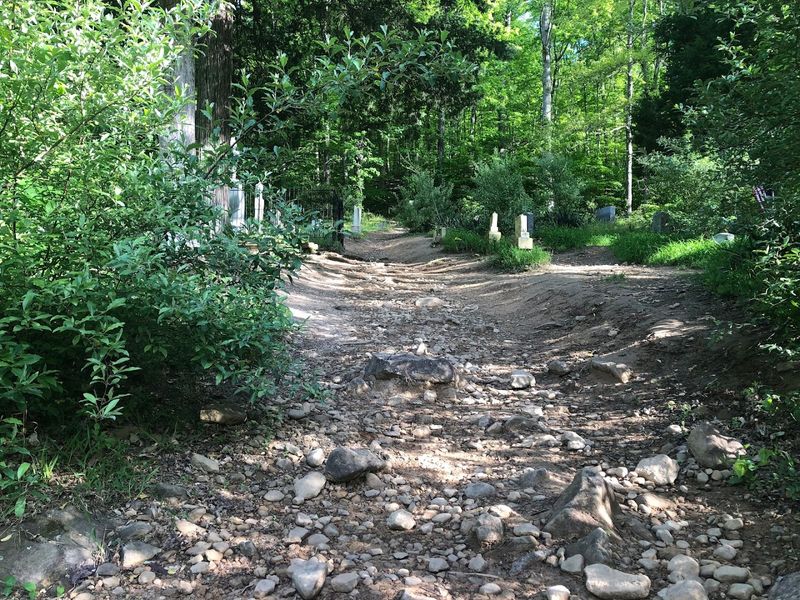
The path to Hatfield Cemetery has earned a reputation, and it absolutely lives up to it. A new footbridge and graded gravel path now lead from the paved parking area, making the start of the trail much friendlier than it once was.
That said, there is still a climb of roughly 80 feet over a 200-foot stretch that will get your heart pumping.
Sturdy footwear is a must, especially if there has been any recent rain. The rocky sections can be slippery when wet, and the trail becomes genuinely challenging in damp conditions.
Tennis shoes with good grip are the minimum recommendation, and hiking boots are even better.
Along the way, informative plaques are posted at intervals, giving historical context that makes the hike feel educational rather than just physically demanding.
Warm-weather visitors should also keep an eye out for wildlife, as the surrounding woods are very much alive.
The hike is short enough that most visitors in reasonable health can manage it, though taking your time is always the wisest approach on a trail this steep.
A Hillside Full of History
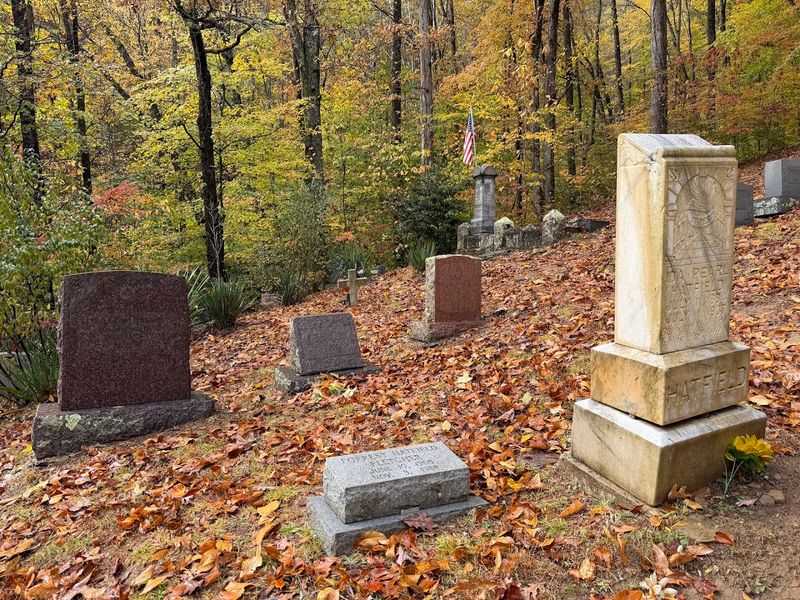
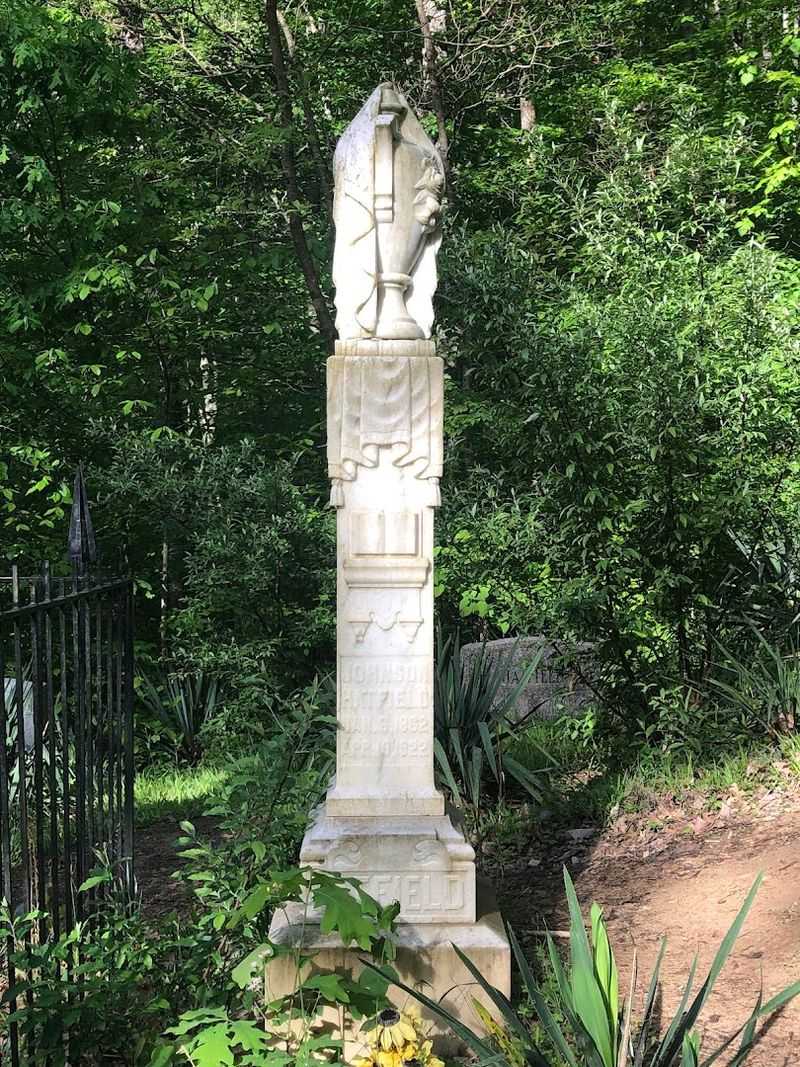
Beyond the famous marble statue, the cemetery holds the graves of many Hatfield family members, each headstone adding another thread to the family’s complex story.
Levicy Chafin Hatfield, wife of Devil Anse, who lived from 1842 to 1929, rests here alongside several of their children.
Johnson “Johnse” Hatfield, born 1862 and passing in 1922, is buried here, as are Dr. Elliot R. Hatfield, Detroit “Troy” Hatfield, and Elias M.
Hatfield. Troy and Elias both died in 1911 under circumstances tied to a gunfight, adding a somber chapter to the family timeline.
Wandering among the headstones, you start to piece together the generations, the births and deaths, the dates that line up with the feud’s most intense years.
For anyone who loves old graveyards and the quiet stories they tell, this cemetery delivers something genuinely rare.
Each stone feels like a sentence in a long and complicated family biography written directly into the West Virginia hillside.
Listed on the National Register
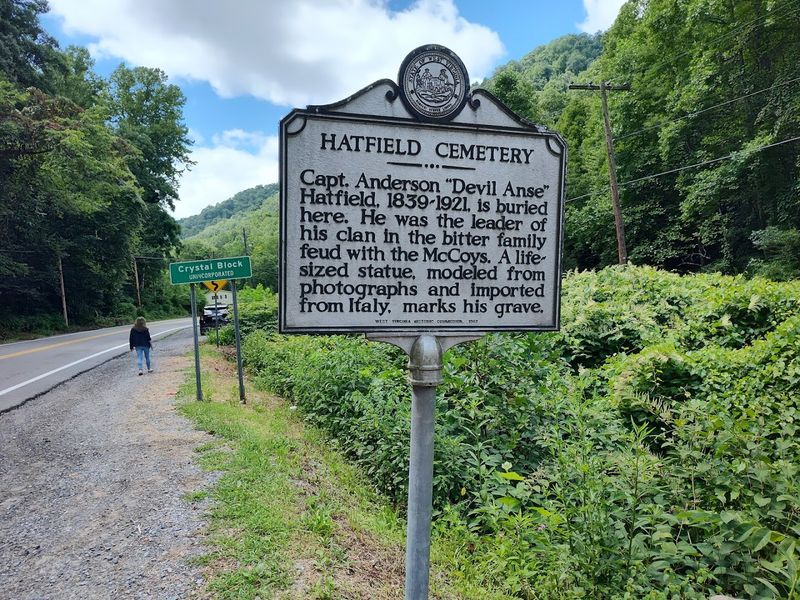
On November 28, 1980, Hatfield Cemetery was officially listed on the National Register of Historic Places, a recognition that cemented its importance not just to West Virginia but to American cultural history as a whole.
That designation reflects the cemetery’s role as a primary physical record of one of the country’s most storied family conflicts.
Being on the National Register means the site carries a level of protection and recognition that helps ensure it will be preserved for future generations.
It also signals to visitors that this is not just a local curiosity but a place of genuine national significance.
The listing acknowledges the Hatfields as early settlers who shaped the development of the region through their involvement in the Civil War, the timber industry, and events that captured the attention of the entire nation.
Knowing that official historians and preservationists have recognized the cemetery’s value makes standing there feel even more meaningful.
History has a way of feeling more real when someone has formally agreed it matters.
What It Actually Feels Like to Visit
There is a particular kind of quiet that settles over Hatfield Cemetery that is hard to describe until you experience it firsthand. The trees close in around the path as you climb, and the sounds of the outside world fade away surprisingly fast.
By the time the marble statue comes into view, the atmosphere feels genuinely set apart from ordinary life.
On a clear day, light filters through the canopy in long slanted beams that fall across the old headstones in a way that feels almost cinematic.
The air smells like deep forest and damp earth, and somewhere in the background there is always the sound of birds moving through the branches above.
Spending time here feels unhurried in the best possible way. Most visitors find themselves lingering longer than they planned, reading every plaque, circling the statue more than once, and simply absorbing the atmosphere.
The cemetery has a peaceful, contemplative energy that contrasts powerfully with the turbulent history it holds. That contrast is part of what makes the visit so unexpectedly affecting.
Why Hatfield Cemetery Deserves a Spot on Your American History Road Trip
Some places earn their reputation honestly, and Hatfield Cemetery is absolutely one of them.
The combination of dramatic history, a genuinely striking monument, and a beautiful natural setting creates a visit that sticks with you long after you have driven back down the mountain road.
Few American historic sites manage to feel this personal and this powerful at the same time.
For anyone building an American history road trip through the South or the Appalachian region, this cemetery belongs on the list without question.
It is the kind of stop that turns a regular vacation into something more meaningful, a reminder that history is not just in books or museums but carved into marble on a West Virginia hillside, waiting for you to come find it.
Practical Tips for Making the Most of Your Visit
Planning ahead makes a real difference at Hatfield Cemetery, and a few simple preparations go a long way. The cemetery is open daily from 9 AM to 8 PM, giving visitors a solid window of time to make the trip without rushing.
Arriving earlier in the day tends to mean better light for photographs and fewer other visitors on the trail.
Wearing sturdy, closed-toe shoes is non-negotiable, and checking the weather before you go is equally important. Wet conditions turn the rocky sections of the trail into a genuine challenge, and the experience is considerably more enjoyable on a dry day.
Bringing water is always a good call, especially in warmer months.
Cell service in the area is spotty at best, so downloading offline maps before leaving is a practical step that saves a lot of frustration.
A small snack and some patience go a long way too, especially if you plan to spend real time reading the historical plaques along the path.
The visit rewards those who come prepared and take their time rather than rushing through it.
Address: Hatfield Family Cemetery Access Rd, Barnabus, WV 25638
