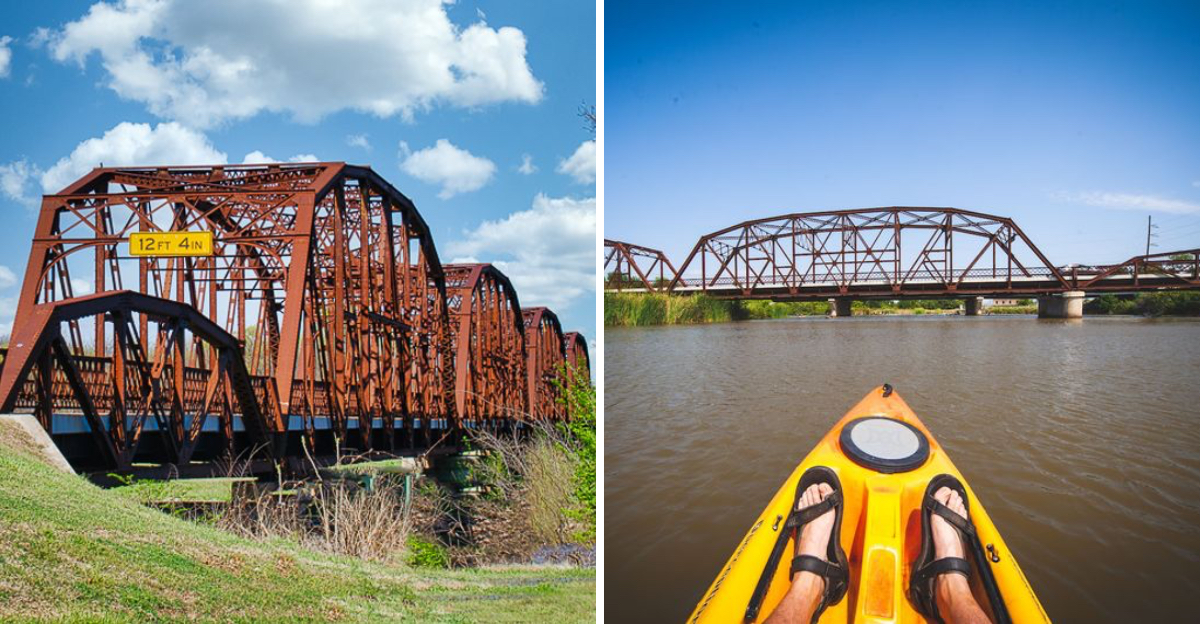
Every once in a while you come across a place that makes you pause without even meaning to. That is exactly what happens when you see an old iron bridge stretching across calm water, the open sky above and the sound of birds echoing around it.
Built in 1924 and still standing strong today, this Route 66 landmark near Oklahoma City carries a quiet kind of presence. It feels like a piece of history that somehow slipped through the cracks of time and stayed exactly where it belongs.
If you enjoy places where history and the outdoors meet, this spot delivers. Stop nearby, take in the view of the bridge and river, and you will understand why it is worth setting aside an afternoon to experience.
A Bridge Built in 1924 Still Earns Its Spotlight
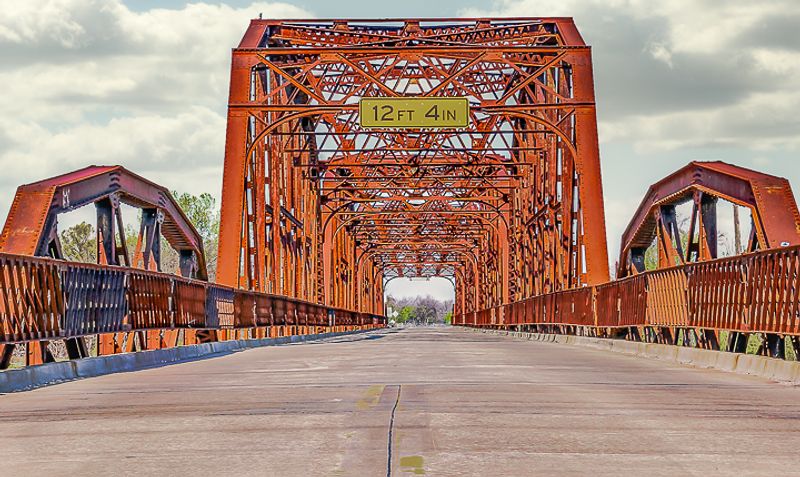
One hundred years is a long time for anything to survive, let alone a steel bridge carrying foot traffic and cyclists across a river. Yet here it stands, solid and proud, a piece of engineering from an era when builders took their sweet time getting things right.
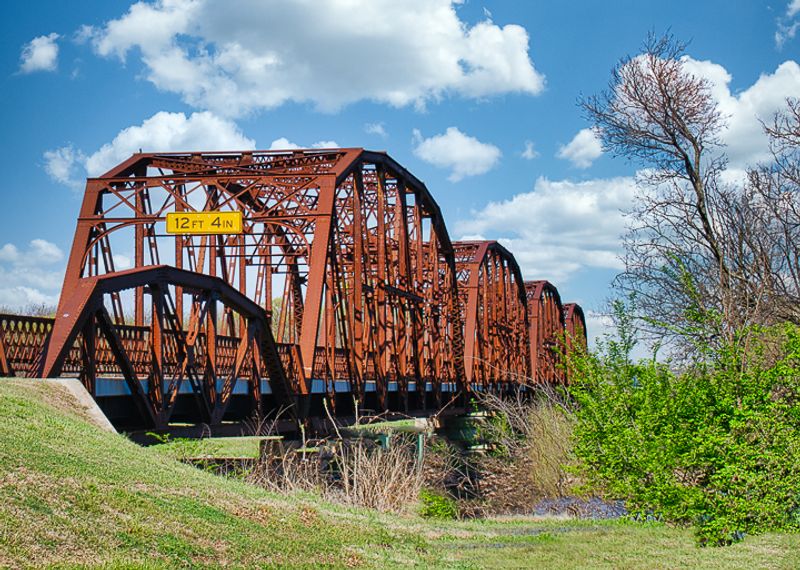
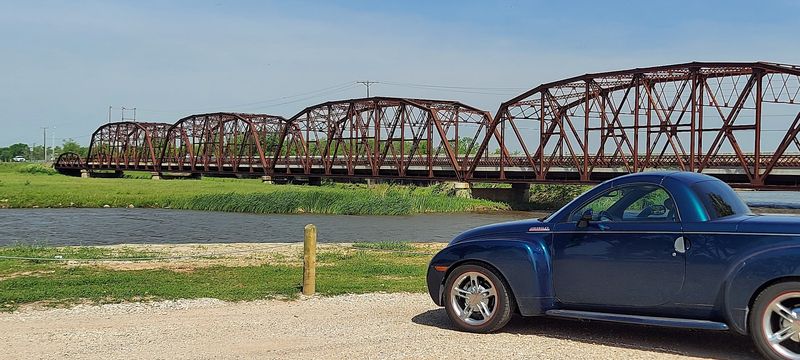
The Lake Overholser Iron Bridge was constructed in 1924, and its design is not your average crossing. It features four Parker through-truss spans with camelback Warren pony trusses at each end, which gives it a layered, almost sculptural silhouette against the Oklahoma sky.
Early 20th-century bridge engineering does not get much more elegant than this.
Walking across it, you can feel the history beneath your feet. The metal framework overhead casts dramatic shadows in the afternoon sun.
It is the kind of structure that makes you slow down and pay attention, even if you only planned a quick visit. Engineers back then were clearly showing off a little, and honestly, good for them.
This bridge is proof that infrastructure can age like fine art. The rust-colored iron has a character all its own, and it wears every year of its century-long life with something close to dignity.
For anyone who appreciates craftsmanship, this is a genuinely moving sight.
Route 66 Runs Right Through This Spot
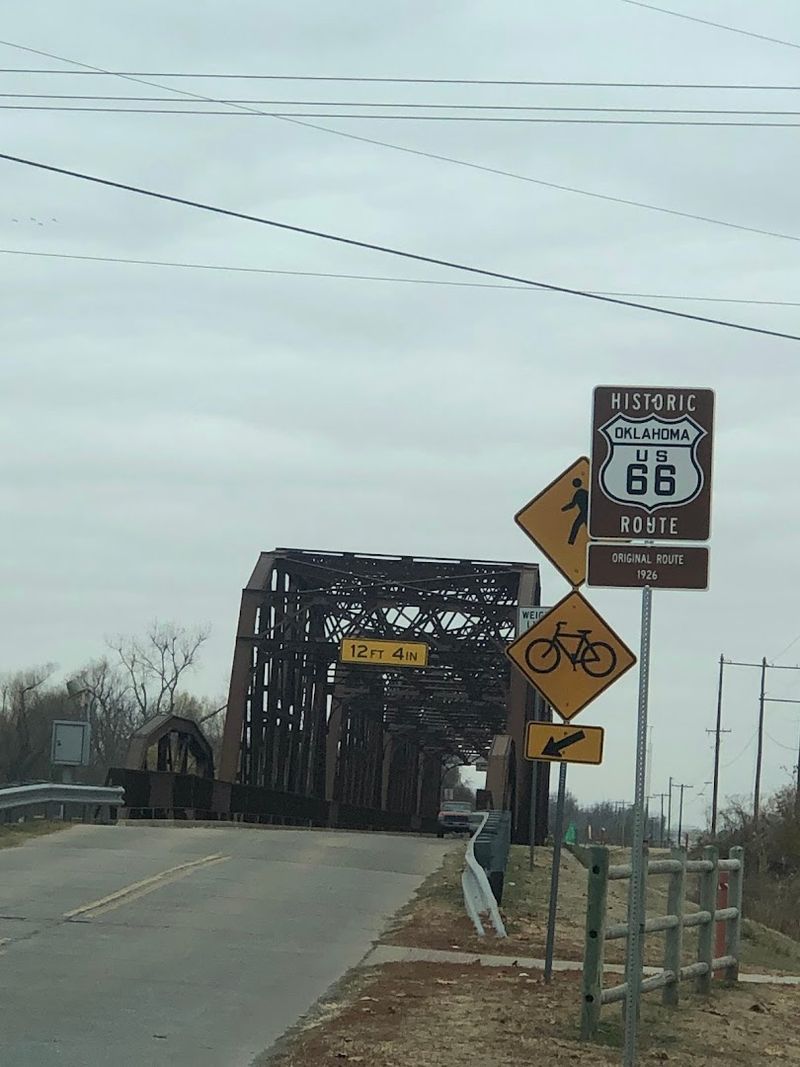
Most people race past Route 66 without stopping to feel what it actually meant. This bridge is one of the rare places where the Mother Road slows you down and asks you to look around.
The Lake Overholser Iron Bridge sits along the historic Route 66 corridor, and crossing it feels like stepping into a black-and-white photograph that somehow got colorized. Back when this road was the main artery connecting Chicago to Los Angeles, travelers crossed this very bridge.
Families loaded into cars, truckers hauling goods, adventurers chasing something they could not quite name.
Standing on the bridge today, that history does not feel distant. The narrow two-lane structure still carries the feel of an era when roads demanded respect and drivers paid attention.
At night, the bridge goes genuinely dark, the way the Mother Road must have felt before highway lighting became standard. It is a little eerie and completely wonderful at the same time.
Route 66 enthusiasts often make a point to drive across it both ways, just to soak in the experience from each direction. For anyone building a Route 66 road trip itinerary, skipping this stop would be a real mistake.
It is a short detour off I-40 that delivers a whole lot of atmosphere.
Golden Hour at the Bridge Is Something Else Entirely
Okay, let me be honest with you. I have seen a lot of sunsets from a lot of bridges.
Most of them are fine. This one made me stop mid-sentence and forget what I was saying.
The way the light moves across the iron framework at golden hour is something a photograph can almost capture but never fully communicate. The warm orange and pink tones bounce off the calm water below, and the truss structure above you turns into a series of geometric shadows that shift as the sun drops.
It is the kind of light that makes even a mediocre camera look talented.
Photographers and drone enthusiasts have clearly caught on to this. The bridge is a popular spot for capturing the Oklahoma sky in all its dramatic glory.
Sunrise works beautifully too, especially if you time it so the sun rises directly through the superstructure. The effect is striking, almost cinematic.
If photography is your thing, bring your gear and plan to stay a while. If photography is not your thing, just show up and look.
No equipment needed to enjoy a sky that seems to have been designed specifically for this bridge. The surrounding water and open landscape mean nothing blocks the view in any direction.
Kayaking Below the Bridge Is Its Own Adventure
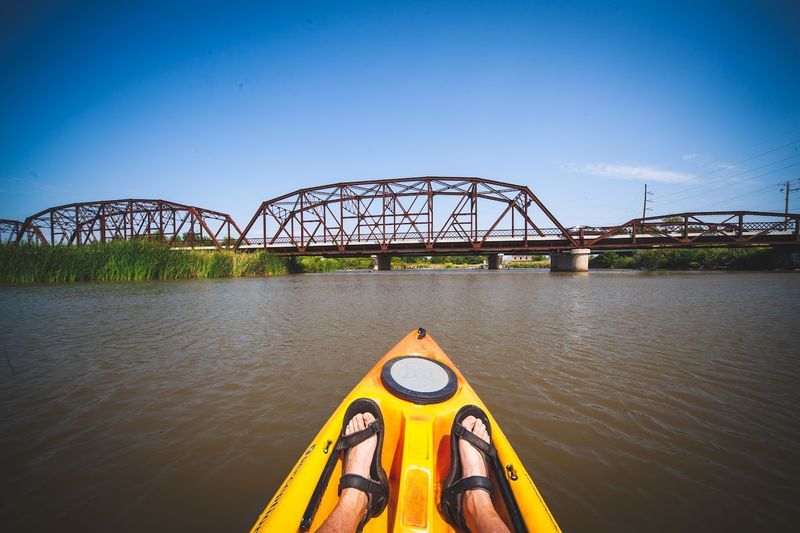
The bridge gets all the attention, but what is happening underneath it deserves equal billing. The North Canadian River below is genuinely worth getting on.
Kayaking here means gliding under iron spans and weaving through channels lined with ten-foot native grasses on both sides. The grasses create natural corridors that feel almost maze-like in the best possible way.
Large white water birds such as pelicans, egrets, and herons are sometimes seen in the area. Ducks dive in and out of the reeds like they are performing for an audience.
The wildlife density here is surprisingly high for a spot this close to a major city.
The launch area is easy to access, with parking right near the shore and the boat ramp just twenty feet away. Kayaks and other watercraft on city waters require a City of OKC boating permit; daily and annual permits are available.
The river trail created by the grasses makes each trip feel slightly different depending on water levels and season. Early morning kayaking is especially peaceful before weekend crowds arrive.
Fishing is also popular here, though the lake side is generally recommended over the riverside due to submerged tree debris that can snag lines.
Wildlife Around the Bridge Will Catch You Off Guard
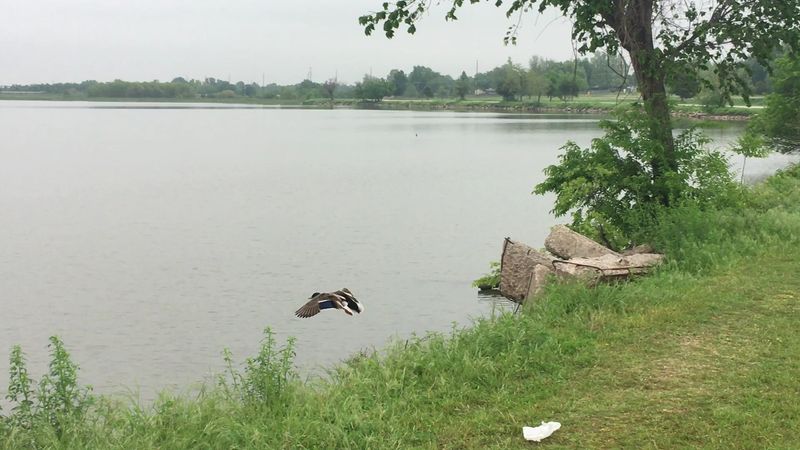
Nobody mentioned the birds. That is the part that surprised me most about this place.
You show up expecting a bridge and leave having watched a wildlife show.
The area around the Lake Overholser Iron Bridge sits adjacent to a wildlife refuge, and the bird activity is constant and impressive. Herons move through the reeds with that slow, deliberate energy they have.
Ducks cluster near the water’s edge. White storks have been spotted flying low over the river surface in a way that feels almost prehistoric.
The sound alone is worth the visit, especially in the morning when everything is chirping at once.
The native grasses lining the riverbanks create natural habitat corridors that support a wide range of local species. Even on a short visit, you are likely to spot something worth pausing for.
This is not a manicured nature preserve with interpretive signs everywhere. It is a working piece of landscape doing what landscapes do, and the wildlife moves through it freely.
Bringing binoculars is a solid idea if bird watching is your thing. Even if it is not, something about watching a stork drop down toward the water from a century-old iron bridge has a way of converting you into a bird person pretty quickly.
The experience is quiet and surprisingly moving.
The Engineering of This Bridge Is Worth a Closer Look
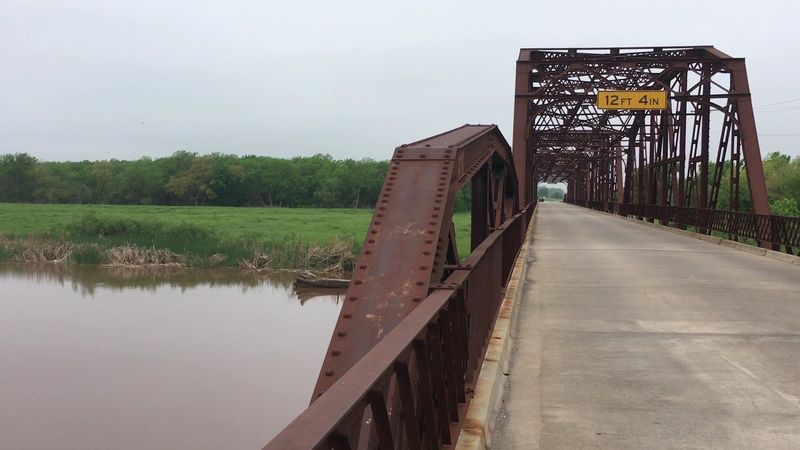
Most people cross a bridge without ever looking at how it actually works. Spend five minutes examining this one and you will start to see something remarkable.
The combination of Parker through trusses and pony trusses used in the Lake Overholser Iron Bridge represents a specific moment in American infrastructure history.
Parker trusses were a common and efficient design choice in the early 20th century, and seeing one preserved in functional condition is increasingly rare.
The pony trusses used on the lower sections add a visual rhythm to the structure that is both practical and oddly beautiful.
The iron has taken on a deep rust color over the decades, and rather than making it look neglected, it gives the bridge a warm, aged patina that modern steel construction simply cannot replicate.
Up close, the bolted connections and riveted joints tell the story of how things were built before computers and precision machinery took over.
Every piece was planned, measured, and assembled by hand. The bridge has been maintained and refurbished over the years rather than demolished, a decision that speaks well of the community that chose to keep it standing.
For anyone with even a passing interest in engineering or architecture, this bridge is a hands-on history lesson that costs nothing and takes about twenty minutes to properly appreciate.
Picnicking Near the Bridge Feels Like a Forgotten Pleasure
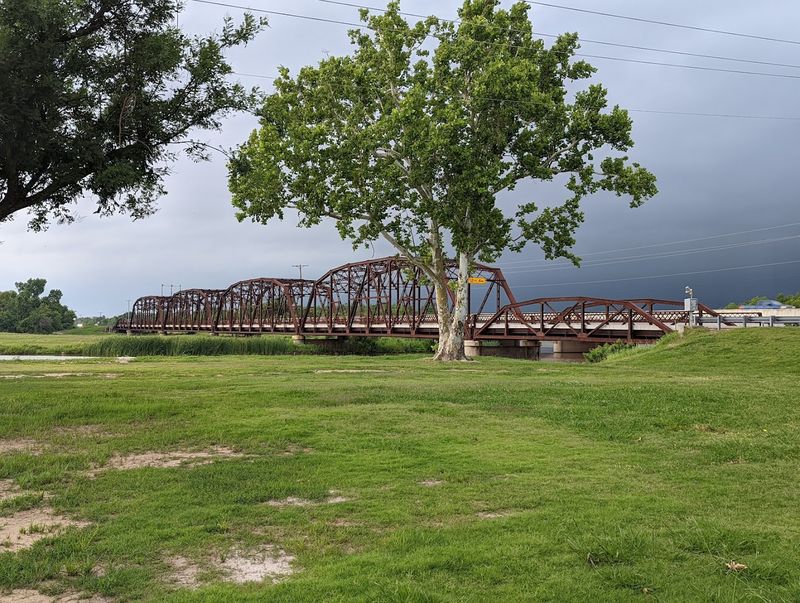
There is a small park near the bridge that most visitors walk right past on their way to the crossing. That is a shame, because it is a genuinely pleasant place to sit and do absolutely nothing for a while.
The area around the Lake Overholser Iron Bridge includes a small picnic space where you can spread out, eat something good, and watch the river move. The setting is calm and unpretentious.
No elaborate facilities, no busy parking structures, just grass, shade, and the kind of quiet that reminds you why outdoor spaces matter.
Dogs are welcome, which makes it popular with local pet owners who use the area for regular walks. Families come with kids and let them run around while the adults decompress.
It is a free and accessible space, the kind of public amenity that a city should be proud of. The combination of the historic bridge, the river view, and the open green space makes for a surprisingly complete afternoon without spending anything.
If you pack a lunch and bring something to sit on, you could easily spend a couple of hours here without running out of things to enjoy. The atmosphere is relaxed and welcoming, and the crowd, when there is one, tends to be friendly and low-key.
It is a neighborhood spot that visitors are lucky to stumble upon.
Visiting at Night Changes Everything About the Experience
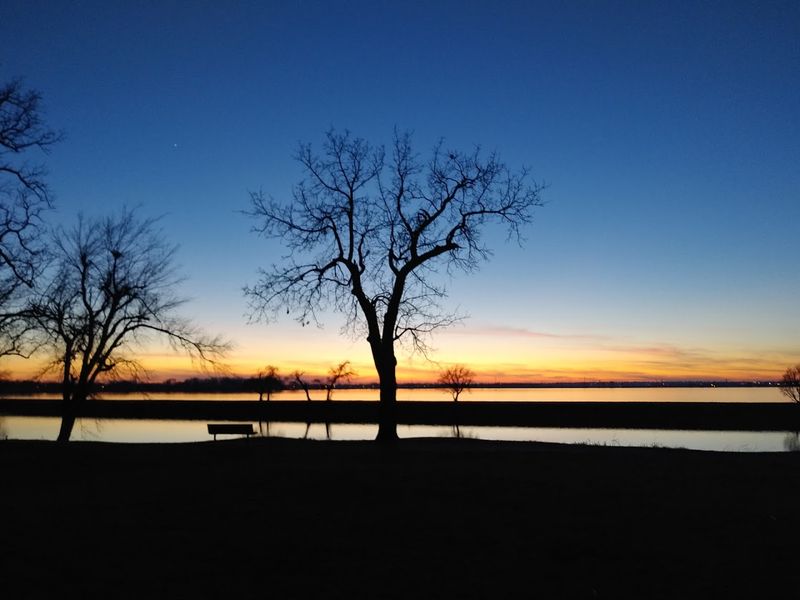
Daytime visits are lovely. Nighttime visits are something else entirely, and honestly, a little haunting in the best possible way.
After dark, the Lake Overholser Iron Bridge becomes a different place. The area has minimal lighting, which means the bridge goes genuinely dark the way old Route 66 roads used to before the modern highway system lit everything up.
Standing on it at night, you get a real sense of what it felt like to cross this bridge decades ago, when the road was quieter and the sky was bigger.
The darkness is part of the appeal, not a drawback. Stars are visible overhead when the sky is clear.
The water below reflects whatever light exists, creating a soft, shifting mirror effect that is hard to describe and easy to love. The iron framework disappears into shadow, and the whole structure feels more massive and more mysterious than it does in daylight.
It is the kind of experience that makes you understand why people say a place has atmosphere. Safety is worth keeping in mind for a nighttime visit, so bringing a flashlight and going with a companion makes sense.
But if conditions are right, a night crossing of this bridge is one of those small, unexpected experiences that stays with you long after you drive home.
Getting There and Making the Most of Your Visit
Planning a visit here is refreshingly simple. No tickets, no reservations, no crowds to fight.
The bridge is open twenty-four hours a day, seven days a week, which means you can show up whenever the mood strikes.
The Lake Overholser Iron Bridge is located at 8703-8709 Overholser Drive in Bethany, Oklahoma, just outside Oklahoma City. It sits along the North Canadian River near Lake Overholser, and getting there from central OKC takes about twenty minutes by car.
The surrounding area includes the Hefner-Overholser Trail, so cyclists can combine the bridge with a longer ride through the corridor for a more complete outdoor experience.
Parking is available near the bridge and close to the boat launch area, making it easy to arrive and get moving quickly. The best times to visit depend on what you are after.
Early mornings offer quiet and soft light. Weekday afternoons are peaceful.
Weekend mornings bring more activity but still feel manageable. Winters are surprisingly enjoyable here too, with fewer visitors and a stark beauty to the iron and water combination.
Bethany, Oklahoma sits in the Oklahoma City metro area, in central Oklahoma, United States, and this bridge is one of its most quietly compelling landmarks.
Dear Reader: This page may contain affiliate links which may earn a commission if you click through and make a purchase. Our independent journalism is not influenced by any advertiser or commercial initiative unless it is clearly marked as sponsored content. As travel products change, please be sure to reconfirm all details and stay up to date with current events to ensure a safe and successful trip.
