Ever thought your grocery-store cart workout could prepare you for a mountain climb?
I did, and let me tell you, Mt. Tammany’s Red Dot Trail in Hardwick Township laughed at me the whole way up.
This 1,300-foot elevation gain is no joke, with rocky scrambles and steep inclines that test every ounce of endurance.
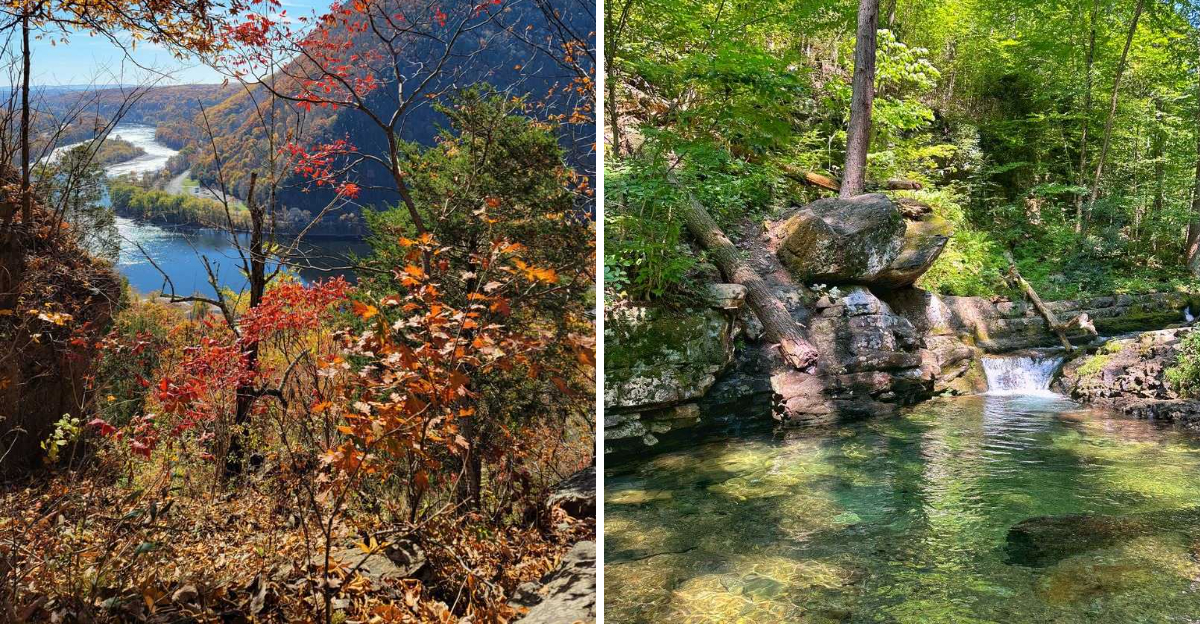
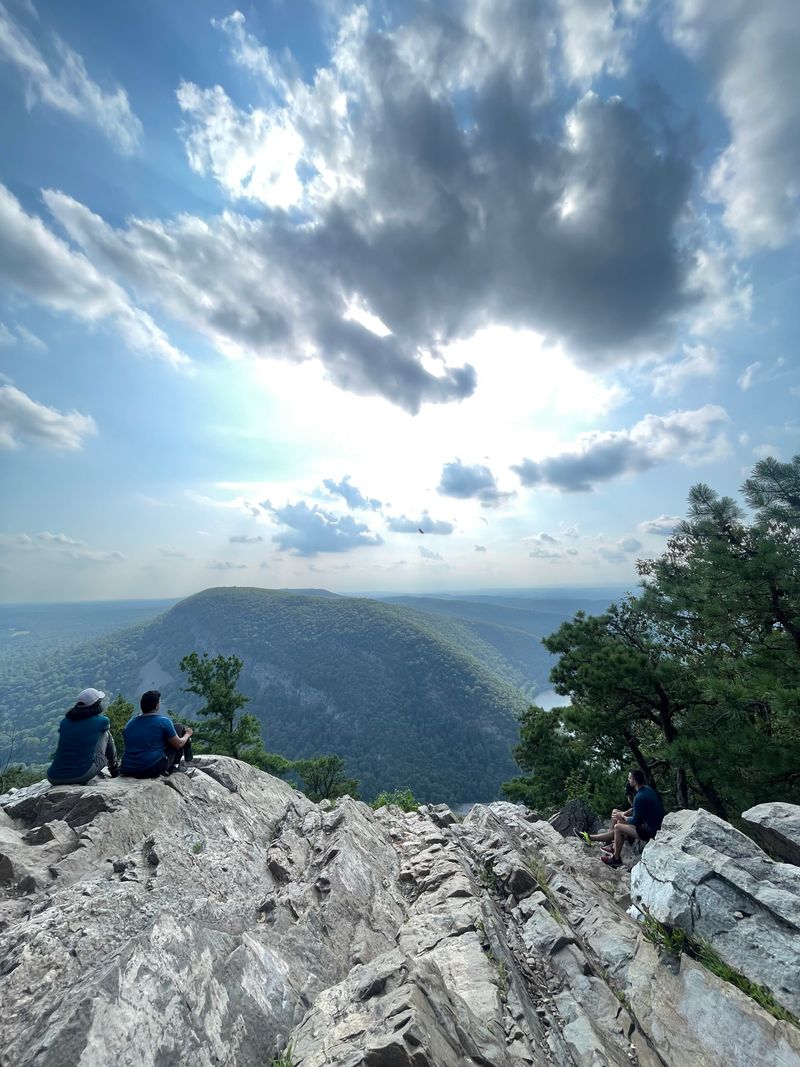
But here’s the thing: every bead of sweat feels worth it the second you hit that summit overlooking the Delaware Water Gap.
The views are outrageous – panoramic stretches of river valleys and ridges that look like they’re brushing the sky.
And it’s not just hardcore hikers chasing that payoff. Year-round, people of all fitness levels tackle this trail, drawn by the promise of scenery that makes your phone camera feel like it’s finally earning its keep.
Whether you’re a seasoned trail veteran or someone whose cardio usually involves racing for the last parking spot at Target, Mt. Tammany has a way of turning you into a believer.
I went in thinking “How bad could it be?” and came out obsessed, scrolling through summit selfies like they were trophies.
Want to know why hikers give this New Jersey gem 4.8 stars across thousands of reviews?
Lace up those boots, because Mt. Tammany isn’t just a hike, it’s the kind of adventure that turns casual walkers into mountain junkies who can’t wait to go back.
Rocky Terrain That Demands Respect And Proper Footwear
Anyone who has conquered Mt Tammany will tell you the same thing: this trail is basically a rock garden on steroids. Massive boulders dominate the Red Dot Trail, forcing hikers to scramble, climb, and carefully place each step with intention.
Reviews consistently mention that trail shoes or casual sneakers simply won’t cut it here, as the uneven surfaces and sharp edges can quickly turn an exciting adventure into a painful ordeal.
Hiking boots with solid ankle support become your best friends on this climb. The rocky sections require constant attention, especially when navigating the steeper portions where one misplaced foot could mean a twisted ankle or worse.
Multiple reviewers emphasize that sturdy footwear isn’t just recommended but absolutely essential for safely completing this challenging ascent.
The rocks aren’t just obstacles but defining features of what makes this trail uniquely demanding. Exposed roots weave between stone surfaces, creating additional tripping hazards that keep you focused throughout the journey.
Experienced hikers suggest that knee support can also prove valuable, particularly during the descent when your joints absorb significant impact from stepping down across uneven boulder fields.
Weather conditions further complicate the rocky terrain, with fallen leaves covering stones in autumn and creating slippery surfaces that demand extra caution. The trail’s reputation for being technically challenging stems directly from these relentless rock formations that test both physical stamina and mental concentration.
Preparation means acknowledging that this isn’t a casual woodland stroll but a genuine mountain scramble where proper gear directly impacts your safety and enjoyment throughout the entire 4.5-mile loop adventure.
The Steep Red Dot Ascent That Tests Your Cardio
Climbing the Red Dot Trail means committing to approximately one hour of nearly continuous upward movement that will have your heart pounding and lungs working overtime. This isn’t gradual elevation gain spread comfortably across miles but rather a concentrated vertical assault that packs 1,300 feet of climbing into a relatively short distance.
Reviewers consistently describe the ascent as the most physically demanding portion of the entire loop, with some comparing it to an intense full-body workout that rivals any gym session.
Fitness level dramatically affects how you’ll experience this climb. Runners and regular hikers might power through with strategic breaks, while those whose exercise routine consists mainly of daily activities will find themselves stopping frequently to catch their breath.
The beauty of Mt Tammany lies in its accessibility despite the difficulty – people of varying athletic abilities successfully reach the summit by pacing themselves and listening to their bodies.
Trail etiquette shines on these narrow, steep sections where faster hikers politely step aside to let others pass. The shared struggle creates an unexpected camaraderie among strangers, with encouraging words exchanged during brief rest stops.
Asthma sufferers should seriously consider whether this elevation and exertion level matches their capabilities, as emergency services cannot easily access these remote mountain areas.
Taking regular breaks isn’t admitting defeat but demonstrating wisdom. Seasoned hikers recommend the “climb high, rest often” approach that prevents exhaustion while maintaining forward progress.
The steep grade means your cardiovascular system gets tested thoroughly, making this trail an excellent training ground for more ambitious mountain adventures across New Jersey and beyond the state’s borders.
Summit Views That Justify Every Difficult Step
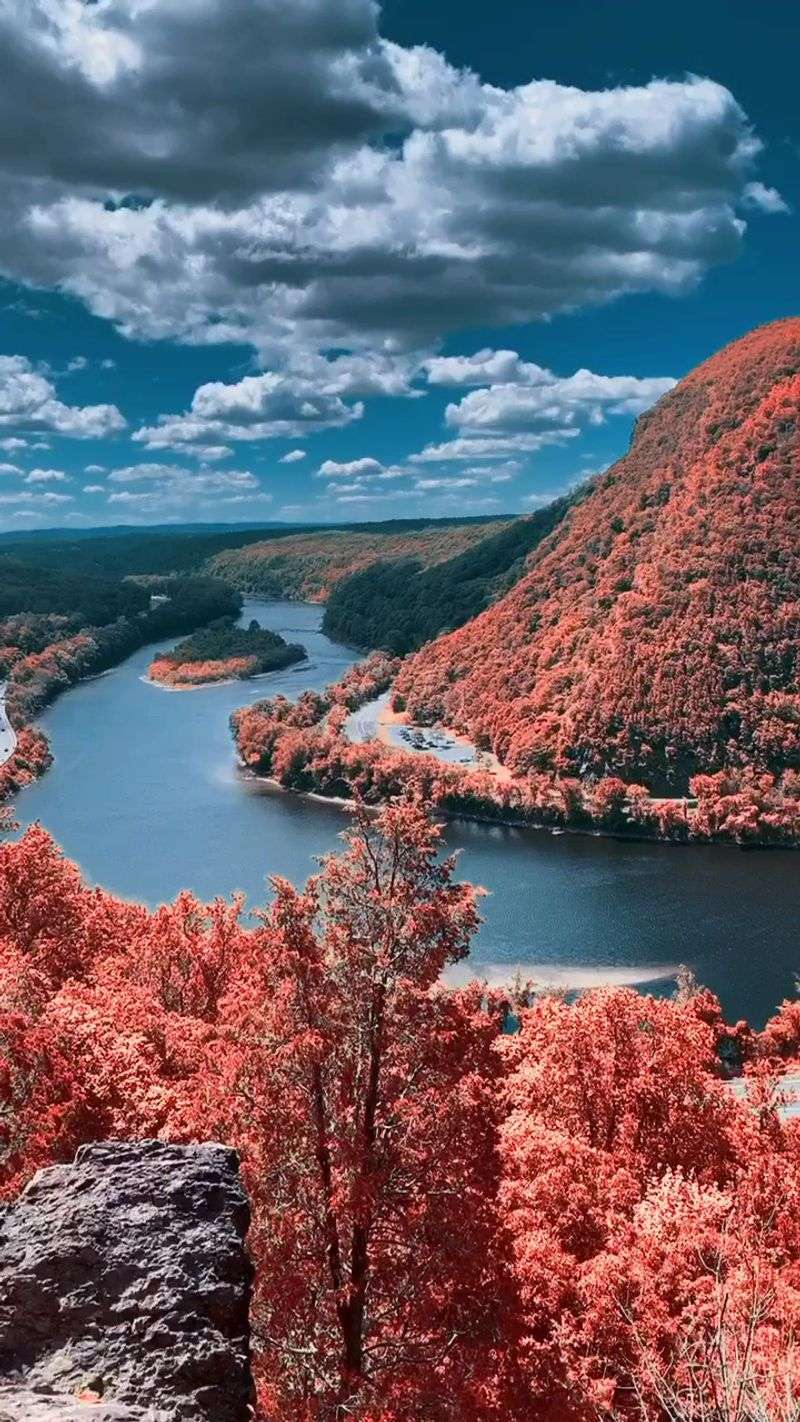
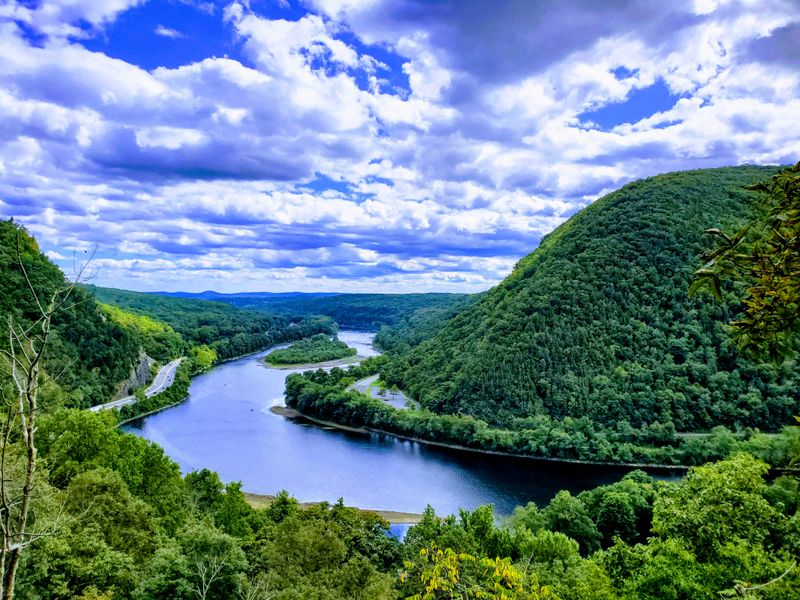
Reaching the Mt Tammany summit delivers a visual payoff that instantly erases muscle fatigue and transforms complaining hikers into awestruck nature enthusiasts. The Delaware River snakes through the valley below, reflecting sunlight like a silver ribbon threading between Pennsylvania and New Jersey mountainsides.
Sweeping panoramic views stretch in every direction, offering perspectives that simply cannot be captured adequately through camera lenses or described fully in words.
Reviewers universally agree that these summit vistas rank among the most spectacular in northern New Jersey. The open rocky outcrop provides ample space for hikers to spread out, find comfortable perches, and soak in the scenery while refueling with snacks and water.
On clear days, the visibility extends for miles, revealing layer upon layer of forested ridges that fade into blue-hazed horizons.
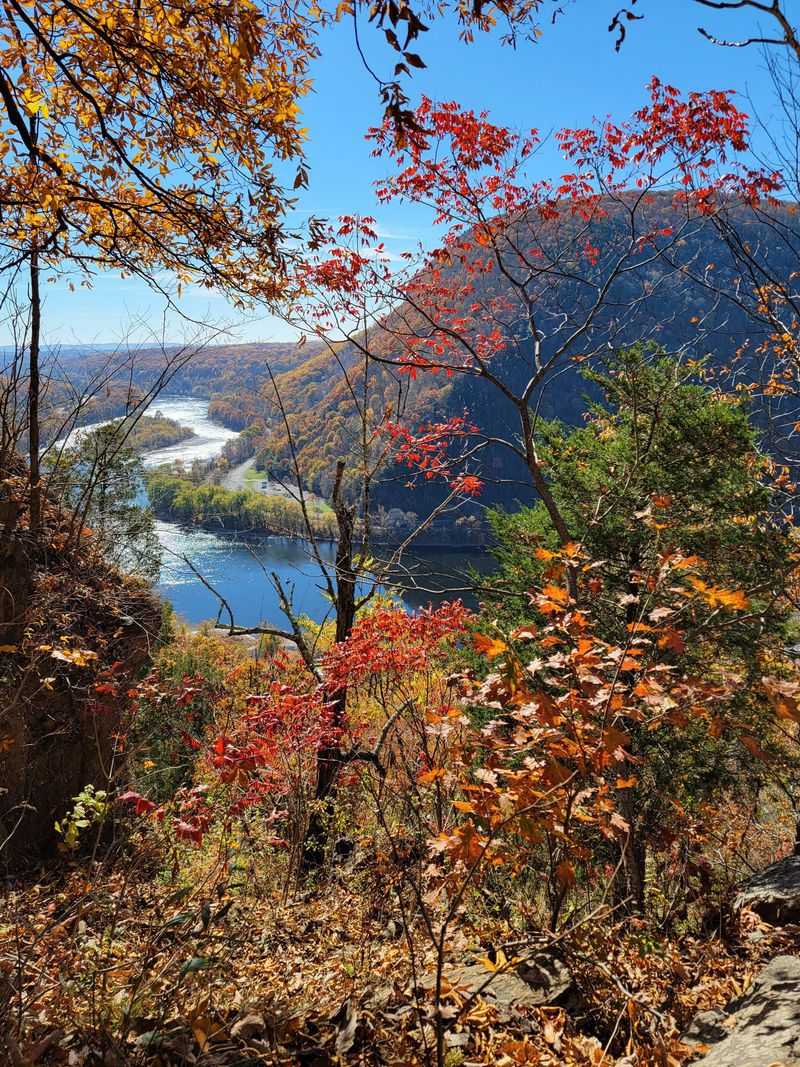
Seasonal variations add different dimensions to the viewing experience. Fall transforms the landscape into a blazing tapestry of reds, oranges, and golds that cascade down mountainsides.
Summer brings lush green canopies that contrast beautifully with the blue river waters. Even winter hikes reward brave souls with stark, dramatic beauty when snow dusts the surrounding peaks.
The summit becomes more than just a destination but a moment of connection with the natural world that reminds us why we push our bodies through challenging climbs. Photographers jockey for prime positions during golden hour, while contemplative souls find quiet corners for meditation.
Many hikers report spending 30 to 40 minutes at the top, reluctant to leave this elevated sanctuary where the stresses of daily life feel wonderfully distant and insignificant beneath such grand natural architecture.
The Gentler Blue Dot Descent With Hidden Water Features
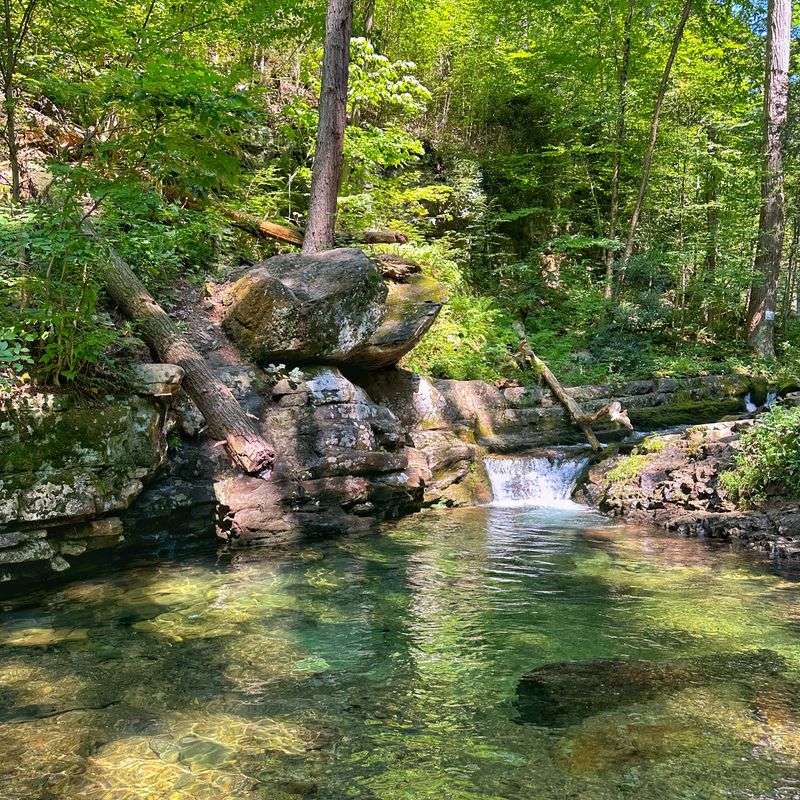
After conquering the demanding Red Dot ascent, most experienced hikers strongly recommend descending via the Blue Dot Trail, which offers a completely different personality. This longer but gentler route winds through peaceful forest sections where the grade eases considerably, giving stressed knees and tired legs much-needed relief.
The descent stretches the return journey but rewards patient hikers with serene woodland beauty and refreshing water features that provide perfect rest stops.
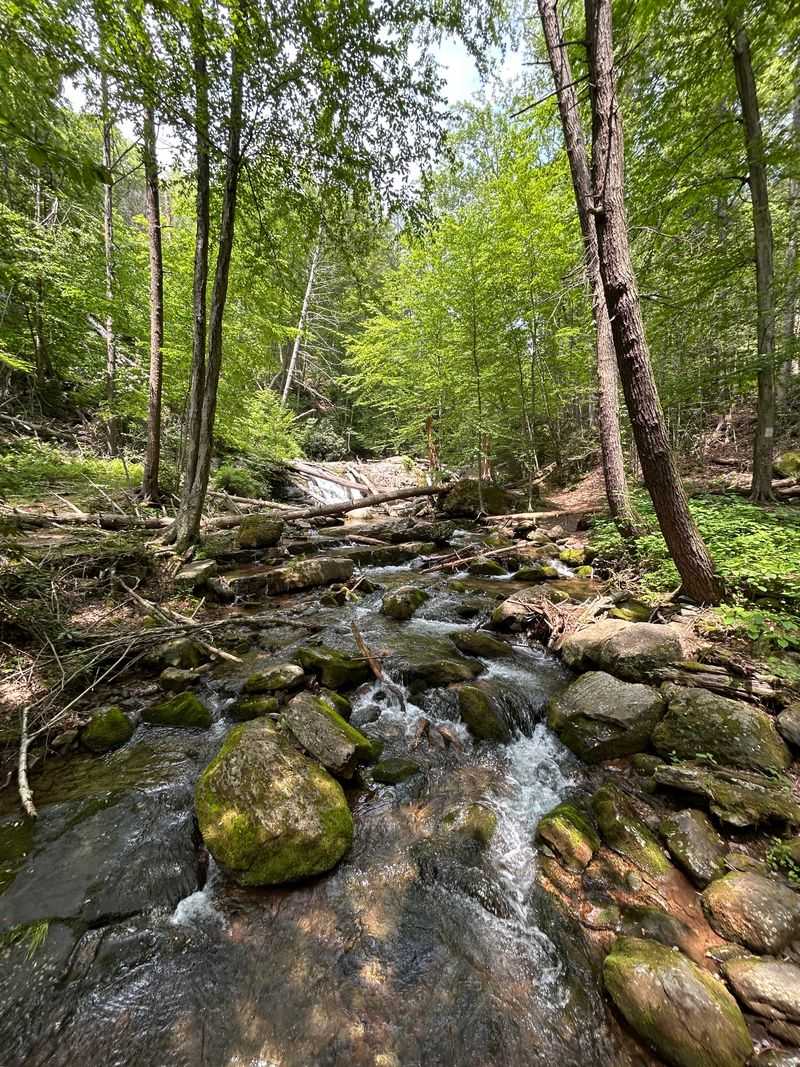
Cascading waterfalls appear along the Blue Dot Trail, creating photogenic spots where hikers pause to cool off and enjoy the soothing sounds of flowing water. A small stream parallels portions of the trail, and during warmer months, you’ll encounter fellow adventurers wading in shallow pools or simply dangling tired feet in the cool current.
One reviewer noted bringing extra clothes specifically for water play, transforming the hike into a more leisurely outdoor experience.
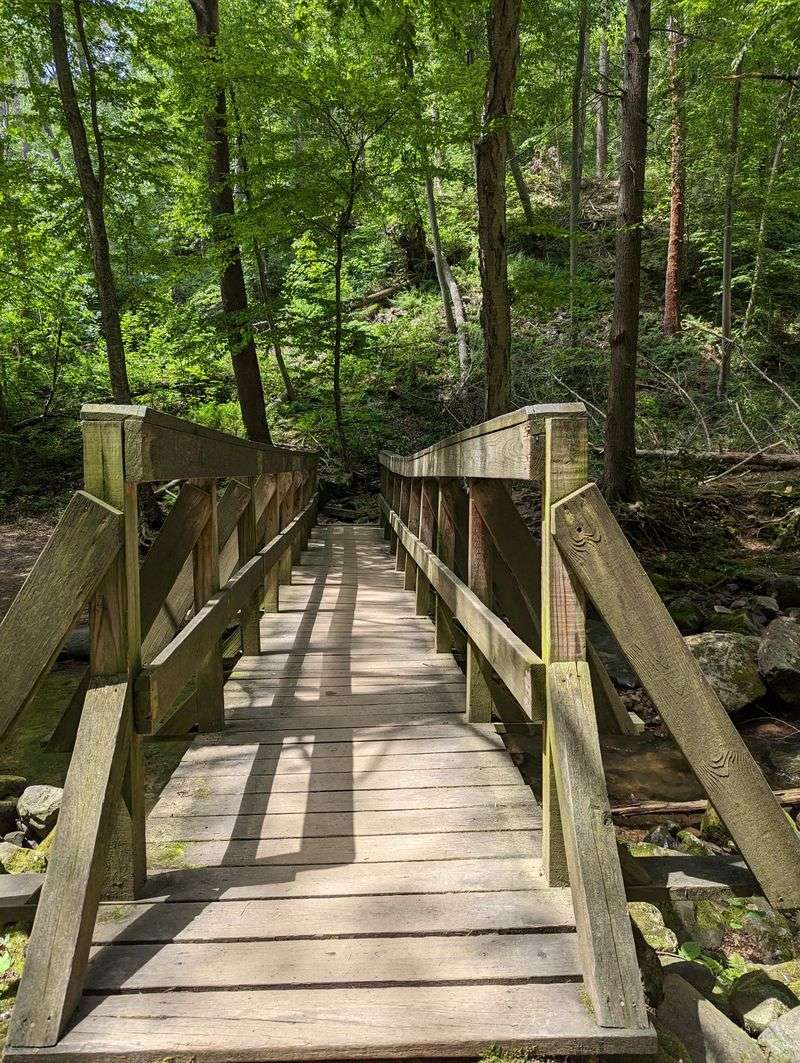
The wooden footbridge crossing the stream offers a charming touch of trail infrastructure that makes the descent feel like a storybook forest adventure. Shaded canopy coverage along much of the Blue Dot route provides welcome relief on hot summer days when the exposed summit can feel overwhelmingly sunny.
However, not every hiker prefers this descent option. Some reviews mention that the Blue Dot Trail still contains rocky sections and can feel quite long after an exhausting climb.
Trail conditions vary, with some hikers disappointed by litter near the waterfall areas where people congregate. Trekking poles prove especially valuable during the descent, helping maintain balance and reducing impact stress on joints as you navigate the extended downward path back toward the parking area at Kittatinnies Region, Hardwick Township, NJ 07825.
Parking Challenges That Require Strategic Timing
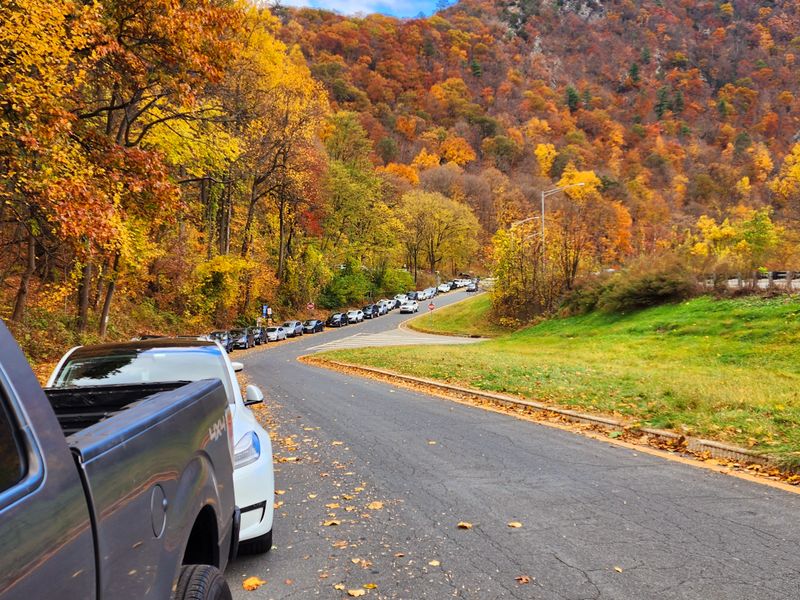
Arriving at Mt Tammany involves more than just showing up and lacing your boots – parking strategy can make or break your hiking experience before you even hit the trail. The primary parking area off Route 80 West fills rapidly, especially on weekends and during peak fall foliage season when leaf-peepers flock to witness New Jersey’s autumn glory.
Reviewers consistently emphasize that early arrival, ideally before 8 or 9 AM, dramatically increases your chances of snagging a convenient spot.
Two main parking lots serve the trailhead, with Parking Lot 1 appearing first after exiting the highway but offering limited capacity. Parking Lot 2 sits just ahead and provides additional spaces, with a connecting road between them that eliminates the need to re-enter the highway if your first choice proves full.
Park police actively monitor the area and direct overflow traffic to alternative parking on the opposite side of Route 80.
Clear “No Parking” signs line certain road sections, and ignoring these warnings guarantees an expensive ticket that will sour your hiking mood faster than any steep incline. The parking situation reflects Mt Tammany’s immense popularity – its 4.8-star rating across 2,348 reviews means thousands of people have discovered this trail gem, and many return repeatedly throughout different seasons.
Weekday visits offer significantly better parking prospects, with one reviewer noting a quiet October weekday hike contrasted sharply against warnings about summer weekend madness. Planning your visit around parking logistics might seem tedious, but spending 20 minutes circling for spaces or hiking extended distances from remote overflow areas wastes energy better saved for the actual mountain climb that awaits at this spectacular New Jersey hiking destination.
Trekking Poles That Transform Your Hiking Experience
Veteran Mt Tammany hikers speak about trekking poles with an almost religious fervor, and first-timers who ignored this advice often wish they’d listened. These simple tools transform how your body handles both the grueling ascent and the joint-punishing descent, distributing effort across four points of contact instead of just two tired legs.
The rocky, uneven terrain that defines this trail becomes significantly more manageable when poles provide additional stability and balance support.
During the climb, poles help maintain rhythm and reduce strain on leg muscles by engaging your upper body in the work. Each pole plant provides a small boost upward, and over hundreds of steps, these incremental assists add up to meaningful energy conservation.
The psychological benefit shouldn’t be underestimated either – poles create a steady cadence that helps maintain focus during challenging sections.
Descending proves where poles truly earn their value. The steep, rocky sections that made the Red Dot climb so demanding become potential ankle-twisters on the way down as gravity pulls you forward faster than your legs might prefer.
Poles act as brakes and stabilizers, allowing controlled descent speeds that protect knees from excessive impact. Multiple reviewers specifically mentioned poles being “highly recommended” or “helpful” for the downward journey.
Adjustable poles work best, allowing customization for uphill versus downhill configurations. Even hikers who’ve completed numerous trails without poles often convert to pole enthusiasts after experiencing Mt Tammany’s particular challenges.
The modest investment in quality trekking poles pays dividends in safety, comfort, and confidence throughout this demanding New Jersey mountain adventure. Walking sticks grabbed from the forest can work in a pinch, though purpose-built poles with proper grips and tips provide superior performance across varied terrain conditions.
Pet-Friendly Trail With Important Canine Considerations
Dog owners frequently ask whether Mt Tammany welcomes four-legged hiking companions, and the answer comes with significant caveats. The trail officially allows pets, and you’ll encounter numerous dogs throughout your hike, from energetic puppies to seasoned trail hounds who’ve logged more mountain miles than most humans.
However, several reviewers strongly caution that this challenging terrain isn’t suitable for all dogs, particularly smaller breeds or those without hiking experience.
The rocky scrambles that test human hikers prove even more challenging for dogs whose shorter legs struggle with boulder heights that require climbing rather than walking. One reviewer specifically mentioned being “prepared to carry your pup on some turns,” acknowledging that certain trail sections simply exceed canine capabilities.
Larger, athletic dogs with trail experience handle the terrain better, though even fit dogs may struggle during hot weather when exposed rocks radiate heat.
Responsible pet ownership on Mt Tammany means honestly assessing your dog’s fitness level, age, and heat tolerance. Bringing adequate water for your furry companion becomes essential, as does monitoring for signs of exhaustion or paw pad injuries from sharp rocks.
Some trail sections offer no shade, meaning dogs can overheat quickly during summer months.
The steep descent presents additional challenges, as dogs naturally want to bound downward but risk injury on unstable rocky surfaces. Keeping dogs leashed protects both your pet and other hikers navigating narrow trail sections.
Multiple reviewers noted seeing dogs on the trail, confirming that many owners successfully complete the hike with their pets. However, the consensus suggests carefully considering whether this particular adventure matches your dog’s abilities, or if a gentler New Jersey trail might provide a more enjoyable experience for everyone involved in your hiking party.
Trail Markings And Navigation That Keep You On Track
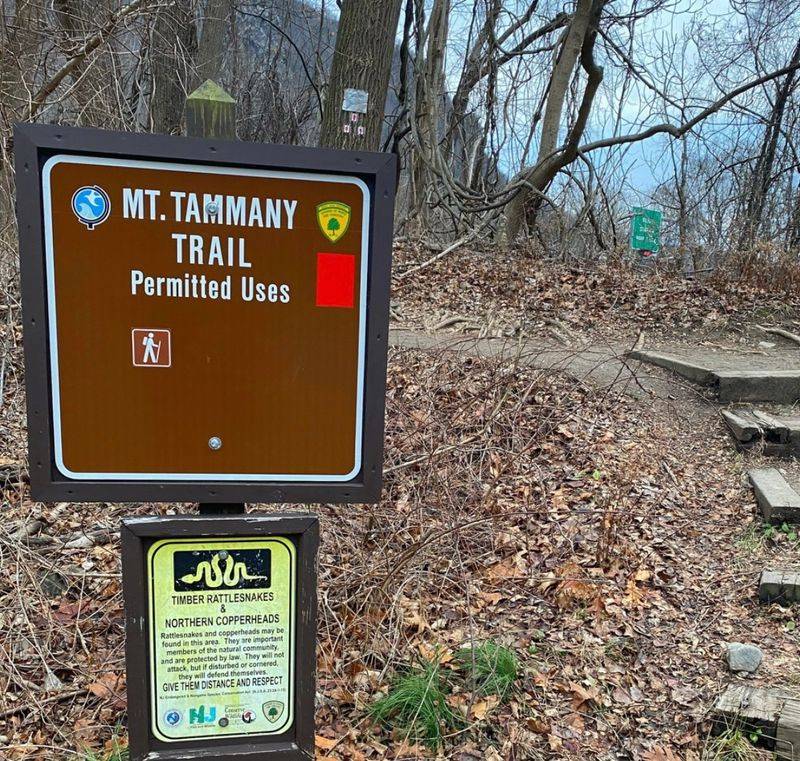
Getting lost on Mt Tammany would require genuine effort thanks to the trail’s excellent marking system that guides hikers reliably from trailhead to summit and back again. The Red Dot Trail earns its name from the bright red blazes painted on trees at regular intervals, providing clear visual confirmation that you’re following the correct path.
Blue blazes similarly mark the descent route, creating a color-coded navigation system simple enough that even directionally challenged hikers can follow with confidence.
Multiple reviewers specifically praised the “very well marked trails,” noting that the clear blazes eliminate most navigation anxiety. This reliable marking system proves especially valuable during fall when leaves blanket the trail, potentially obscuring the actual path beneath layers of colorful foliage.
The blazes remain visible year-round, guiding hikers through various seasonal conditions.
Despite excellent markings, carrying a map or GPS device provides valuable backup, particularly at trail junctions where multiple paths intersect. The Red Dot and Blue Dot trails form a loop, but additional trails branch through the Delaware Water Gap area, and knowing your exact location helps ensure you’re following your intended route.
Smartphone apps with offline map capabilities work well, though cell service can prove spotty in mountainous terrain.
Trail etiquette includes staying on marked paths rather than creating shortcuts that damage fragile ecosystems. Mt Tammany sits within a sensitive ecological zone where vegetation recovery from trampling can take years.
The well-maintained trail system reflects countless volunteer hours and park management efforts to provide safe, sustainable access to these spectacular New Jersey mountain views. Respecting the marked routes protects both the environment and future hikers who deserve the same quality experience that current adventurers enjoy along this beloved Kittatinnies Region trail.
Seasonal Variations That Change The Hiking Experience
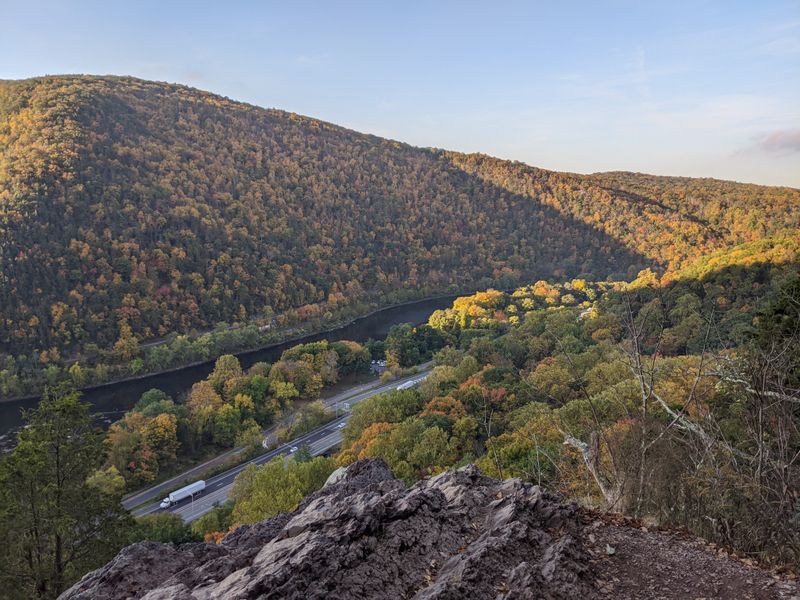
Mt Tammany reveals dramatically different personalities across the seasons, with each time of year offering unique advantages and challenges that influence your hiking experience. Fall reigns as the most popular season, when the surrounding forests explode into spectacular displays of autumn color that rival any New England foliage destination.
The summit views during October transform into painterly landscapes where every mountainside glows with reds, oranges, and golds that photographers dream about capturing.
However, fall’s beauty comes with trade-offs. Fallen leaves carpet the trail, hiding rocks and roots that create tripping hazards for inattentive hikers.
The stunning foliage also attracts massive crowds, making parking nearly impossible on weekend afternoons and turning the normally peaceful trail into a busy thoroughfare. Arriving early becomes even more critical during peak leaf-peeping weeks.
Summer hiking offers lush green canopies and longer daylight hours, though heat and humidity can make the exposed summit sections uncomfortably hot. Bringing extra water becomes non-negotiable during warm months, and starting your hike early helps avoid the worst afternoon heat.
The waterfall and stream areas along the Blue Dot Trail provide refreshing relief where heat-exhausted hikers cool off before completing their descent.
Winter transforms Mt Tammany into a stark, dramatic landscape where snow-dusted rocks and bare trees create austere beauty. Fewer crowds mean peaceful solitude, though icy conditions demand microspikes or crampons for safe navigation.
Spring brings moderate temperatures and wildflower blooms, though muddy trail sections and unpredictable weather require flexible planning. Each season offers valid reasons to visit, and dedicated hikers return multiple times throughout the year to experience how New Jersey’s mountain character shifts with the changing calendar at this spectacular trail destination.
Safety Considerations And Trail Etiquette Essentials
Completing Mt Tammany safely requires more than just physical fitness; it demands proper preparation, smart decision-making, and respect for both the environment and fellow hikers. Carrying adequate water ranks as the single most important safety measure, with experienced hikers recommending at least two liters per person for the full loop.
Dehydration on this exposed, demanding trail can quickly escalate from uncomfortable to dangerous, especially during warmer months when the sun beats down relentlessly.
Packing a basic first aid kit addresses common trail injuries like blisters, scrapes, and minor cuts from rocky scrambles. Bug spray proves valuable during summer months when insects thrive in the forested sections.
Snacks or energy bars provide essential fuel for maintaining energy levels throughout the challenging climb and long descent. Multiple reviewers mentioned bringing food to enjoy at the summit while soaking in those hard-earned views.
Emergency preparedness means acknowledging that help cannot arrive quickly in these remote mountain areas. Cell service remains spotty at best, making self-sufficiency critical.
Hikers with medical conditions like asthma should carefully evaluate whether this trail’s elevation and exertion level matches their capabilities, as one reviewer specifically cautioned against asthma patients attempting this demanding climb.
Trail etiquette creates positive experiences for everyone sharing the path. Faster hikers stepping aside for slower climbers, picking up litter encountered along the way, and keeping noise levels respectful all contribute to the mountain community atmosphere.
Unfortunately, some reviewers noted garbage problems near popular spots, particularly the waterfall area. Practicing “leave no trace” principles means packing out everything you bring in, staying on marked trails to protect sensitive ecosystems, and treating this natural treasure with the respect it deserves so future generations can enjoy Mt Tammany’s spectacular beauty throughout New Jersey’s magnificent Kittatinnies Region.
Dear Reader: This page may contain affiliate links which may earn a commission if you click through and make a purchase. Our independent journalism is not influenced by any advertiser or commercial initiative unless it is clearly marked as sponsored content. As travel products change, please be sure to reconfirm all details and stay up to date with current events to ensure a safe and successful trip.
