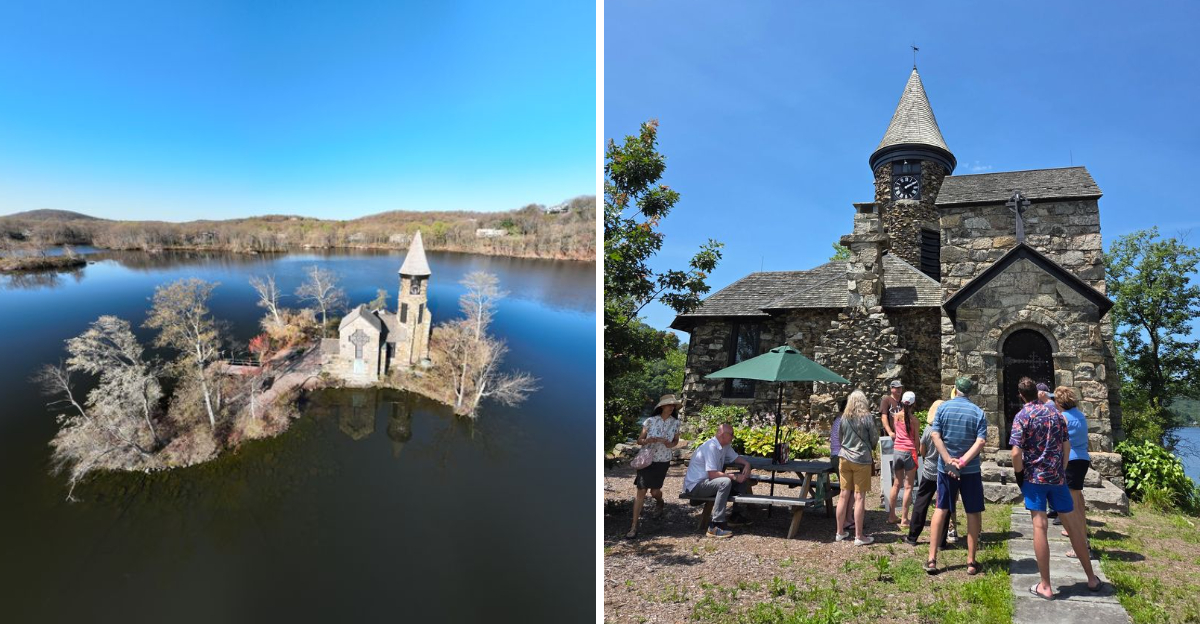
Ever taken a boat ride just to go to church? I have, and let me tell you, Saint Hubert’s Chapel in Kinnelon, New Jersey makes it worth every paddle stroke.
Sitting on its own private island in Smoke Rise Lake, this tiny stone chapel looks like something Disney would sketch if they were designing a fairytale village.
Built back in 1891 and designed by none other than Louis Comfort Tiffany (yes, that Tiffany), it’s basically the architectural equivalent of finding a rare gem in the middle of the woods.
The story goes that Francis S. Kinney commissioned it in 1887, and for over 130 years it’s been quietly charming anyone lucky enough to visit.
The catch? You can’t just stroll up – you need a boat.
Honestly, that’s half the fun. Floating across the lake feels like you’re sneaking into a secret world, and when the chapel comes into view, it’s pure magic.
Between Tiffany’s artistry, the island setting, and the history baked into every stone, Saint Hubert’s Chapel is one of those places that makes you stop and think, “Wow, New Jersey really has some surprises up its sleeve.”
And if you’re anything like me, you’ll leave wondering why more chapels don’t require a boat ride; it’s the ultimate upgrade to Sunday service.
A Tiffany Masterpiece Hidden on an Island
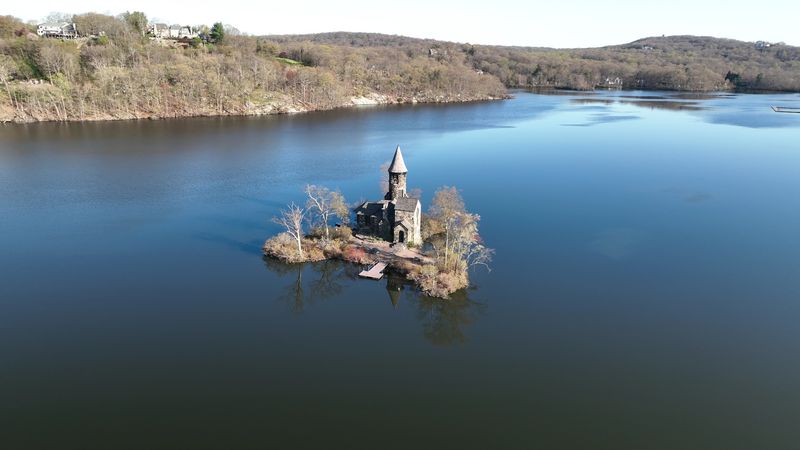
Louis Comfort Tiffany wasn’t just famous for his stunning stained glass lamps and windows. His architectural work on Saint Hubert’s Chapel showcases his incredible range as an artist and designer.
When Francis S. Kinney commissioned this project in 1887, he chose one of America’s most celebrated creative minds to bring his vision to life.
The chapel took four years to complete, finally opening its doors in 1891. Tiffany’s attention to detail shines through every stone, archway, and decorative element.
His signature artistic style transformed what could have been a simple religious structure into something truly extraordinary.
What makes this even more special is how rare Tiffany-designed buildings are compared to his decorative works. While you can find Tiffany glass in museums and collections worldwide, experiencing an entire structure he conceived is incredibly uncommon.
The chapel represents a complete artistic statement, not just a single piece.
Visitors who’ve seen it describe feeling transported to another era. The craftsmanship reflects the dedication and skill of late 1800s artisans working under Tiffany’s direction.
Every angle offers something new to appreciate, from the stonework patterns to the way natural light plays across the surfaces.
Being able to experience Tiffany’s architectural vision in such an intimate setting makes Saint Hubert’s Chapel genuinely priceless. It’s not just a building; it’s a three-dimensional work of art you can walk inside and experience with all your senses.
The Enchanting Boat-Only Access
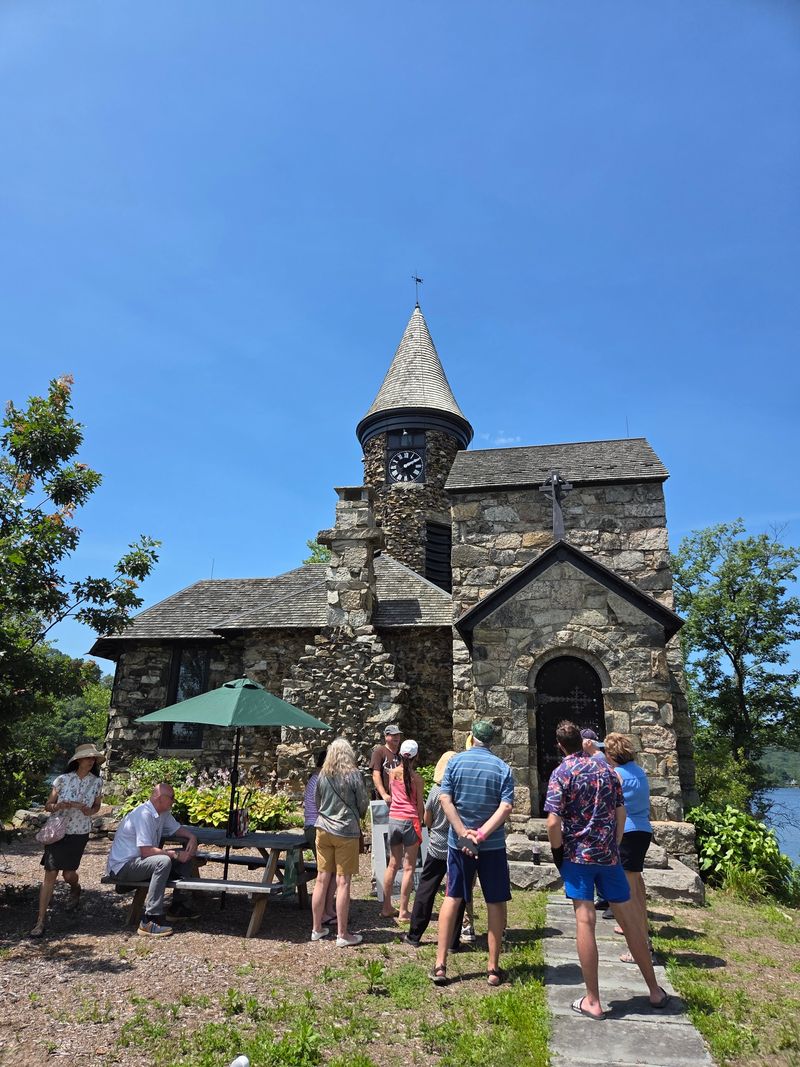
Reaching Saint Hubert’s Chapel isn’t as simple as hopping in your car and parking nearby. You’ll need to travel by boat across Smoke Rise Lake, which transforms a regular church visit into an adventure.
This unique access requirement has preserved the chapel’s secluded charm for over a century.
The boat ride itself becomes part of the magical experience. As you glide across the water, the chapel gradually comes into view, growing larger with each paddle or motor stroke.
The anticipation builds naturally, making your arrival feel even more special and rewarding.
Many visitors compare the journey to stepping into a fairy tale. The combination of water, sky, and the stone structure waiting on its island creates an almost otherworldly atmosphere.
You won’t find crowds or parking lot chaos here, just peaceful water and natural beauty.
This accessibility situation does mean planning ahead is essential. You’ll need to either know someone with boat access or arrange special permission to visit.
The private nature of the location has kept it remarkably well-preserved and protected from excessive tourism.
Some might see the boat requirement as an inconvenience, but it’s actually a blessing in disguise. The journey across the water gives you time to disconnect from everyday stress and prepare yourself mentally for something special.
By the time you step onto the island, you’re already in a completely different headspace than when you started your day.
The Private Smoke Rise Community Connection
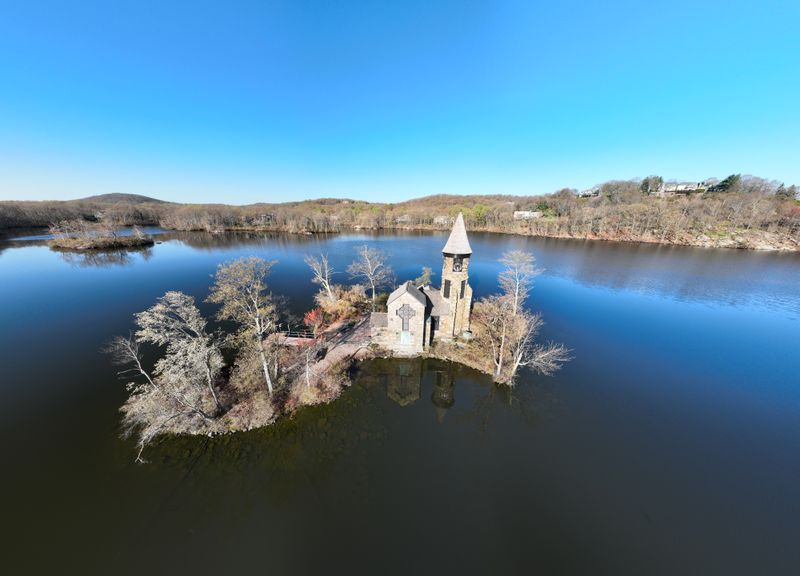
Saint Hubert’s Chapel exists within the private Smoke Rise community, which adds another layer to its mystique and exclusivity. This isn’t a public park or open tourist destination; it’s part of a residential area where access is carefully controlled.
Understanding this context helps explain why visiting requires connections or special arrangements.
The Smoke Rise neighborhood developed around the natural beauty of the area, with the chapel serving as a historic centerpiece. Residents take great pride in this architectural treasure, viewing it as a special feature that makes their community truly unique.
Their stewardship has helped maintain the chapel’s condition over the decades.
For outsiders hoping to visit, the private status can feel frustrating. However, this exclusivity has protected the chapel from vandalism, overcrowding, and the wear-and-tear that comes with unrestricted public access.
The trade-off between accessibility and preservation is real, and in this case, preservation has won.
Some visitors have successfully arranged viewings by contacting community representatives or knowing residents personally. Photography from the lake is possible without landing on the island, allowing people to appreciate the exterior beauty from a respectful distance.
These compromises let admirers enjoy the chapel while respecting property boundaries.
The relationship between the chapel and the Smoke Rise community demonstrates how private stewardship can successfully preserve historic landmarks. While public access would certainly benefit more people, the current arrangement has kept this New Jersey treasure intact and beautiful for future generations to potentially enjoy under controlled circumstances.
The Stunning Stone Architecture and Design
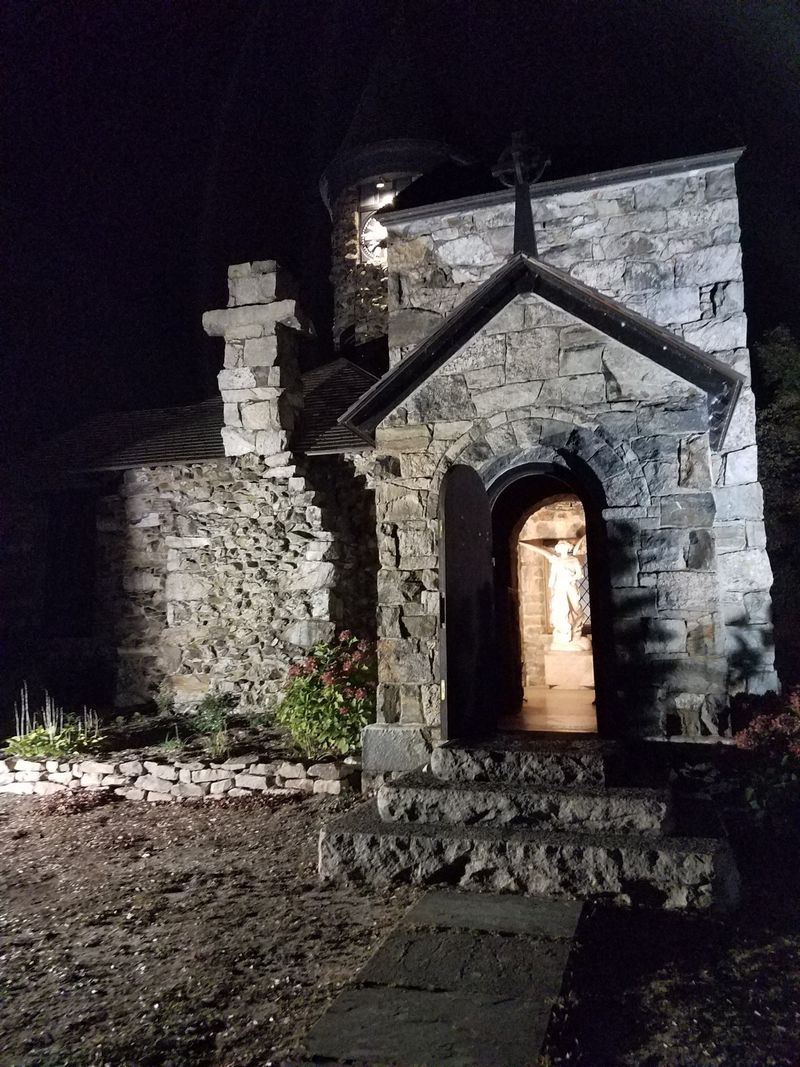
Walking up to Saint Hubert’s Chapel, the first thing that captures your attention is the exquisite stonework. Each stone was carefully selected and placed by skilled craftsmen over 130 years ago.
The weathered texture tells stories of countless seasons, storms, and sunny days that have passed since 1891.
The architectural style blends Gothic Revival elements with a more intimate, cottage-like scale. Rather than the imposing grandeur of large cathedrals, this chapel embraces a cozy, approachable design.
The proportions feel just right for the small island setting, creating harmony between structure and landscape.
Arched doorways and windows add classic elegance without feeling stuffy or overly formal. The design invites you in rather than intimidating you with size or complexity.
Tiffany understood that a sacred space doesn’t need to be enormous to feel meaningful and special.
The roof line and overall silhouette create a distinctly romantic profile against the sky. Whether viewed in morning mist, afternoon sunshine, or evening twilight, the chapel maintains its photogenic appeal.
Artists and photographers have been capturing its beauty from various angles for generations.
Details like the stone texture variations, the way corners are finished, and the window placements show thoughtful planning. Nothing about this building feels accidental or rushed.
Every element serves both functional and aesthetic purposes, creating a cohesive whole that has stood the test of time remarkably well considering its island exposure to weather.
The Historical Significance Since 1887
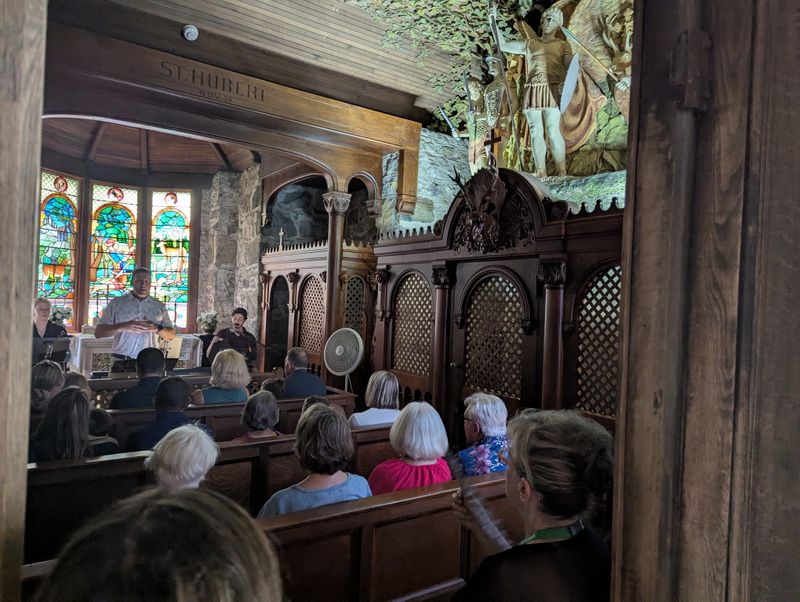
Francis S. Kinney’s decision to commission this chapel in 1887 reflected the values and aesthetics of America’s Gilded Age.
Wealthy individuals often created lasting legacies through architectural projects, and Kinney chose to build something meaningful rather than merely ostentatious. His vision has outlived him by well over a century.
The four-year construction period from 1887 to 1891 represented significant investment and commitment. Building on an island presented unique logistical challenges that modern construction crews would still find demanding.
Materials needed to be transported across water, and workers required boat access daily throughout the project.
During the late 1800s, New Jersey was experiencing rapid development and population growth. Creating a peaceful retreat space showed foresight about preserving natural beauty amid progress.
The chapel became a testament to balancing development with conservation of special places.
Over 135 years later, Saint Hubert’s Chapel continues fulfilling its original purpose as a place of reflection and beauty. Few structures from that era remain so well-preserved and true to their original design.
The building has witnessed enormous changes in the surrounding area while remaining essentially unchanged itself.
Historical landmarks like this chapel connect us to previous generations and their values. They remind us that creating beauty and meaning transcends temporary trends.
The fact that people still seek out this place in 2026 proves that genuine craftsmanship and thoughtful design never go out of style, no matter how much time passes or how technology advances.
The Peaceful Island Setting and Natural Beauty
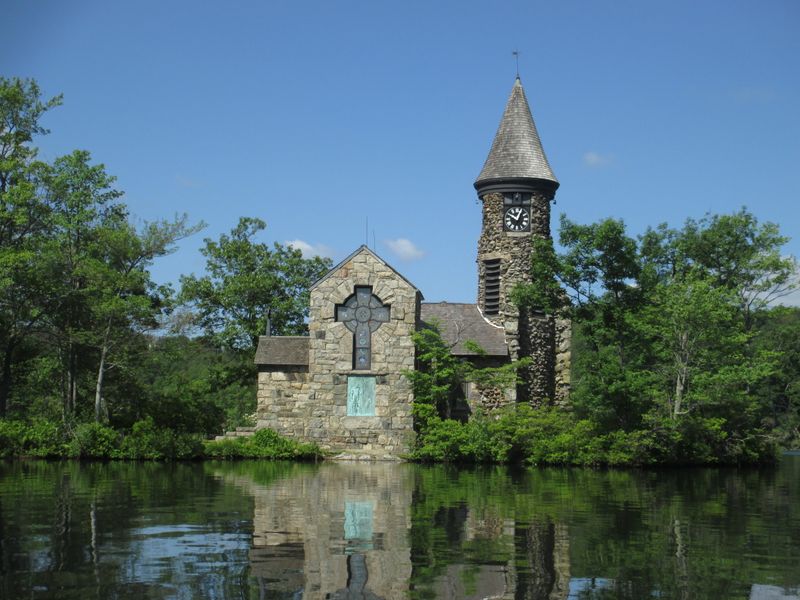
Smoke Rise Lake provides the perfect backdrop for Saint Hubert’s Chapel, creating a natural frame that enhances the structure’s beauty. The water acts as both protection and presentation, isolating the chapel while simultaneously putting it on display.
This geographical arrangement couldn’t have been better planned if someone had designed the landscape from scratch.
Trees and vegetation on the island change with the seasons, offering different visual experiences throughout the year. Spring brings fresh green growth, summer provides lush fullness, autumn delivers spectacular color, and winter reveals the chapel’s bones against bare branches.
Each season offers its own special charm.
The lake’s surface acts like a mirror on calm days, doubling the chapel’s visual impact. Photographers love capturing these reflection moments when conditions align perfectly.
The interplay between water, sky, stone, and vegetation creates endless compositional possibilities.
Wildlife around the lake adds life and movement to the peaceful scene. Birds, fish, and small animals go about their business while the chapel watches silently.
This connection to nature reinforces the spiritual and contemplative atmosphere that makes the location so special.
Being surrounded by water creates a natural sound barrier that muffles modern noise pollution. When you’re on or near the island, you hear waves lapping, birds singing, and wind rustling leaves instead of traffic and machinery.
This acoustic isolation contributes significantly to the sense of stepping outside normal time and space into somewhere genuinely different and restorative.
The Photography and Artistic Inspiration
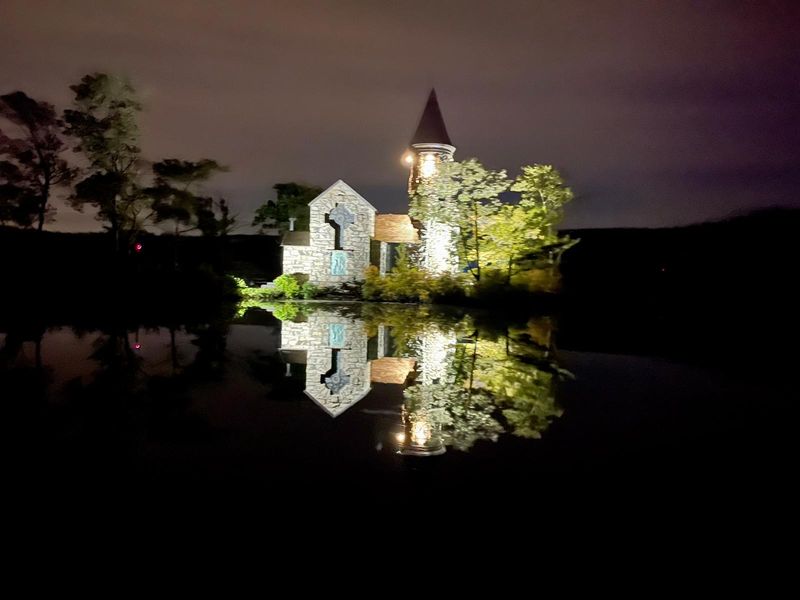
Artists have been drawn to Saint Hubert’s Chapel since its completion, finding endless inspiration in its romantic setting. One reviewer mentioned still having a painting from the late 1950s featuring the chapel prominently displayed.
Generations of creative people have attempted to capture its magic through various mediums.
The challenge of photographing the chapel adds to its appeal for serious photographers. Getting the right light, angle, and weather conditions requires patience and planning.
The boat access means you can’t just show up repeatedly until conditions are perfect without significant effort.
Social media has introduced the chapel to new audiences who might never visit in person. Images shared online spark curiosity and wonder, spreading awareness of this New Jersey treasure.
Digital photography has made it easier to capture and share the beauty, though nothing replaces experiencing it firsthand.
The changing light throughout the day offers dramatically different photographic opportunities. Morning mist can create ethereal, mysterious images, while golden hour light adds warmth and romance.
Stormy skies provide drama, and snow transforms the scene into a winter wonderland.
Beyond just documenting the chapel’s appearance, artists try to capture the feeling of the place. The sense of peace, the connection to history, and the fairy-tale quality all challenge creators to go beyond simple representation.
Successfully conveying the emotional impact through a two-dimensional image or painting requires real skill and sensitivity to what makes the location genuinely special rather than just pretty.
The Chapel’s Role in Local Memory and Nostalgia
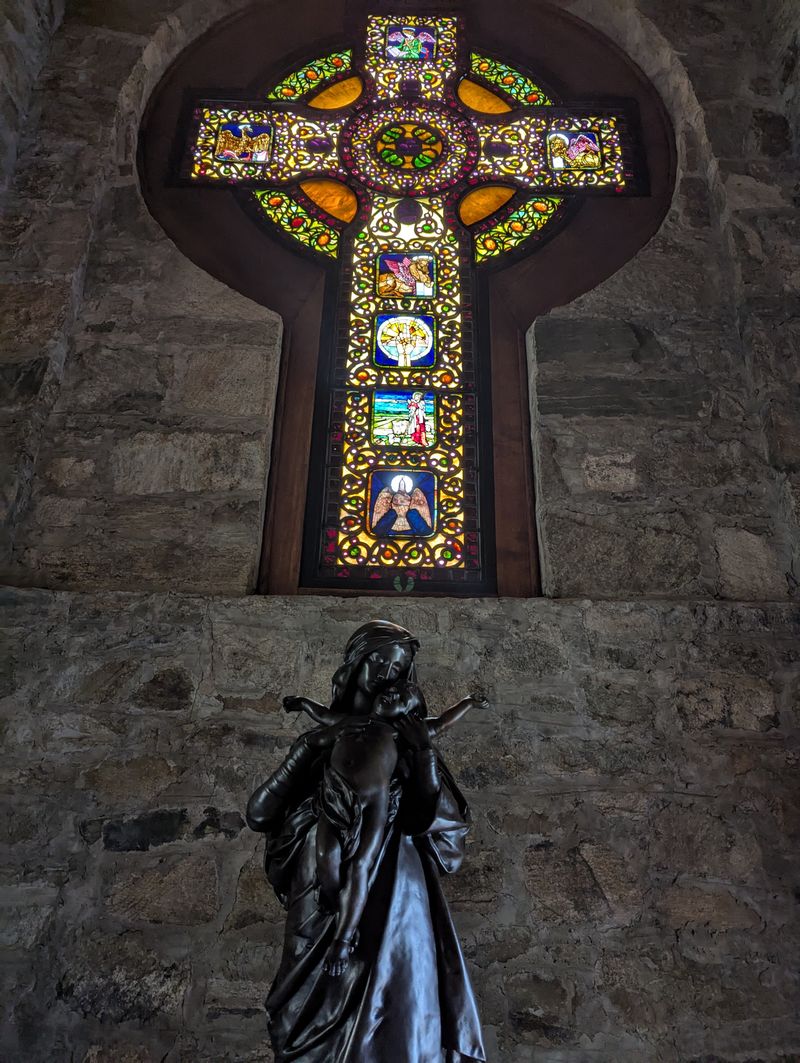
Reading reviews from people who grew up near Saint Hubert’s Chapel reveals how deeply it imprints on childhood memories. One person described growing up on nearby Kitty Ann Mountain, looking down on the chapel from above and sailing around it.
These early experiences created lasting impressions that pulled them back decades later.
The chapel serves as a landmark in people’s personal geography and life stories. When locals give directions or describe the area, they reference it as a known point.
For families who’ve lived in the region for generations, it’s woven into their sense of place and community identity.
Many people express regret about never visiting the chapel up close despite living nearby. The combination of private access and taking familiar sights for granted means residents sometimes miss opportunities.
This common experience makes finally visiting feel like completing unfinished business or honoring younger selves.
The chapel appears in family photo albums, graduation pictures, and engagement shoots for those with access. These personal milestones get associated with the location, deepening its meaning beyond just architectural or historical significance.
It becomes part of individual and family narratives.
As people move away from the area, Saint Hubert’s Chapel often becomes a symbol of home in their memories. The combination of natural beauty, unique character, and personal history makes it represent more than just a building.
It embodies a time, a place, and feelings that can’t be recreated elsewhere, which explains why even people who’ve been gone for decades still think about returning to see it again.
The Challenges of Visiting and Access Restrictions
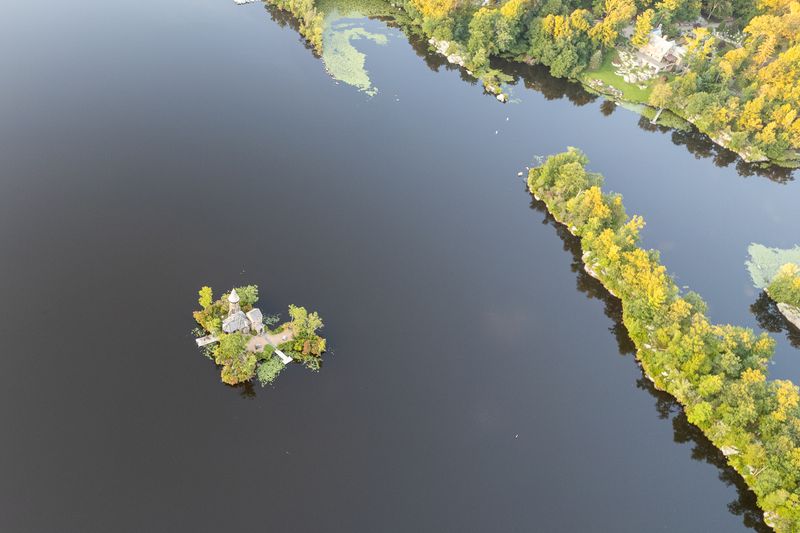
Understanding the access situation prevents disappointment and helps set realistic expectations. Saint Hubert’s Chapel isn’t a public park where you can wander in freely.
The Smoke Rise community maintains control over who can visit, and they have every legal right to restrict access to their private property.
Some reviewers express frustration about the exclusivity, noting that unless you know a resident family, getting permission is extremely difficult. This reality disappoints people who’ve traveled specifically to see the chapel.
The conflict between wanting to experience something beautiful and respecting property rights creates genuine tension.
Photography from public waters offers a compromise that respects boundaries while allowing appreciation. Boaters on the lake can view and photograph the chapel from a distance without trespassing.
This option lets more people experience the exterior beauty even if they can’t step onto the island itself.
The restriction has preserved the chapel remarkably well compared to what might have happened with unrestricted access. Vandalism, littering, and structural damage from heavy foot traffic have been avoided.
The trade-off between preservation and public access represents a legitimate dilemma without perfect solutions.
Prospective visitors should research thoroughly before planning a trip specifically to see Saint Hubert’s Chapel. Contacting the Smoke Rise community in advance might yield permission for special circumstances.
Being respectful, explaining your interest genuinely, and accepting possible rejection gracefully increases your chances while maintaining good relationships between enthusiasts and the community that protects this treasure.
The Enduring Magic That Captivates Visitors
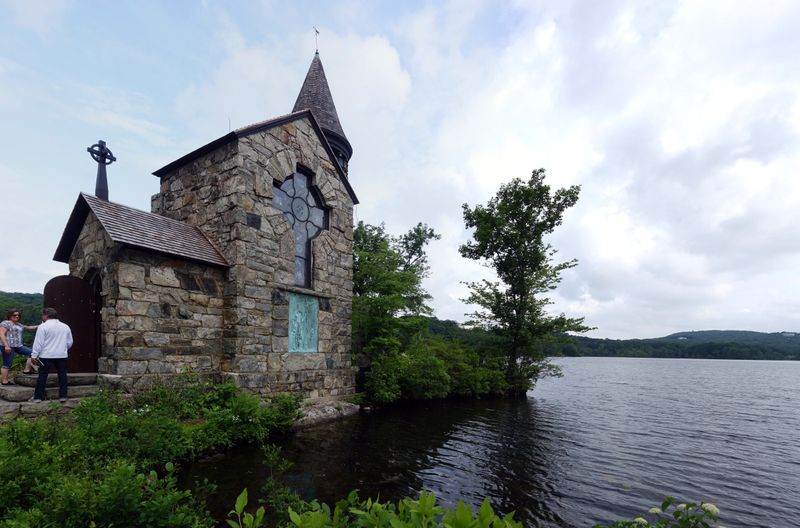
Multiple reviewers describe Saint Hubert’s Chapel as “enchantingly beautiful” and “simply beautiful,” words that capture something beyond ordinary prettiness. The chapel possesses a quality that touches people emotionally and stays with them long after they leave.
This intangible magic is what makes it potentially New Jersey’s most special spot.
The combination of elements creates an experience greater than the sum of its parts. Stone architecture alone wouldn’t be enough, nor would just an island setting or Tiffany’s involvement.
Everything working together produces something genuinely extraordinary that justifies the effort required to visit.
People who’ve only seen the chapel from a distance or in photographs still feel its pull. The longing to experience it up close drives people to research access options and plan potential visits years in advance.
This lasting impression demonstrates real power that goes beyond casual interest.
The chapel represents ideals that resonate across time: beauty, craftsmanship, peace, and connection to something larger than ourselves. In our fast-paced, digital world, places offering genuine serenity and timeless quality become even more valuable.
Saint Hubert’s Chapel delivers these increasingly rare experiences.
Whether you view it as a religious site, an architectural treasure, a piece of New Jersey history, or simply a beautiful place, the chapel offers something meaningful. Its magic lies in how it makes visitors feel rather than just what it looks like.
That emotional and spiritual impact explains why people call it magical rather than just pretty, and why it deserves consideration as the Garden State’s most enchanting destination for those lucky enough to experience it personally.
Dear Reader: This page may contain affiliate links which may earn a commission if you click through and make a purchase. Our independent journalism is not influenced by any advertiser or commercial initiative unless it is clearly marked as sponsored content. As travel products change, please be sure to reconfirm all details and stay up to date with current events to ensure a safe and successful trip.
