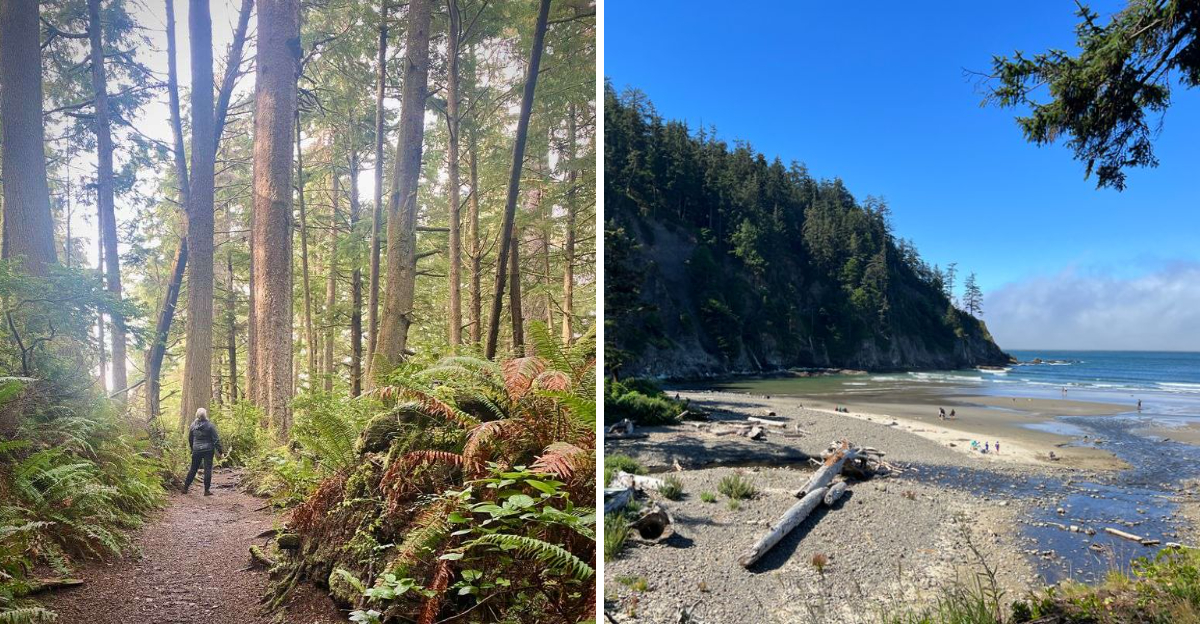
Standing at the edge of Cape Falcon, with wind tearing through my hair and waves crashing hundreds of feet below, I finally understood why this trail has a cult following. Cape Falcon Trail in Oswald West State Park isn’t just a hike – it’s an experience that makes you feel like you’ve stepped into another world.
Towering Sitka spruce, muddy, root-strewn paths, and sweeping Pacific vistas combine into a journey that’s equal parts challenging and magical.
I’ve returned to this trail more than once, and every time it leaves me breathless. The five-mile round trip looks tame on a map, but those roots have a mind of their own, and my shoes can attest to the battle.
Each slippery step, each splash of mud, is a small price to pay for that windswept viewpoint where the ocean stretches endlessly before you. Pack extra socks, a sense of adventure, and leave your distractions behind – Cape Falcon demands your full attention.
Ancient Rainforest Cathedral
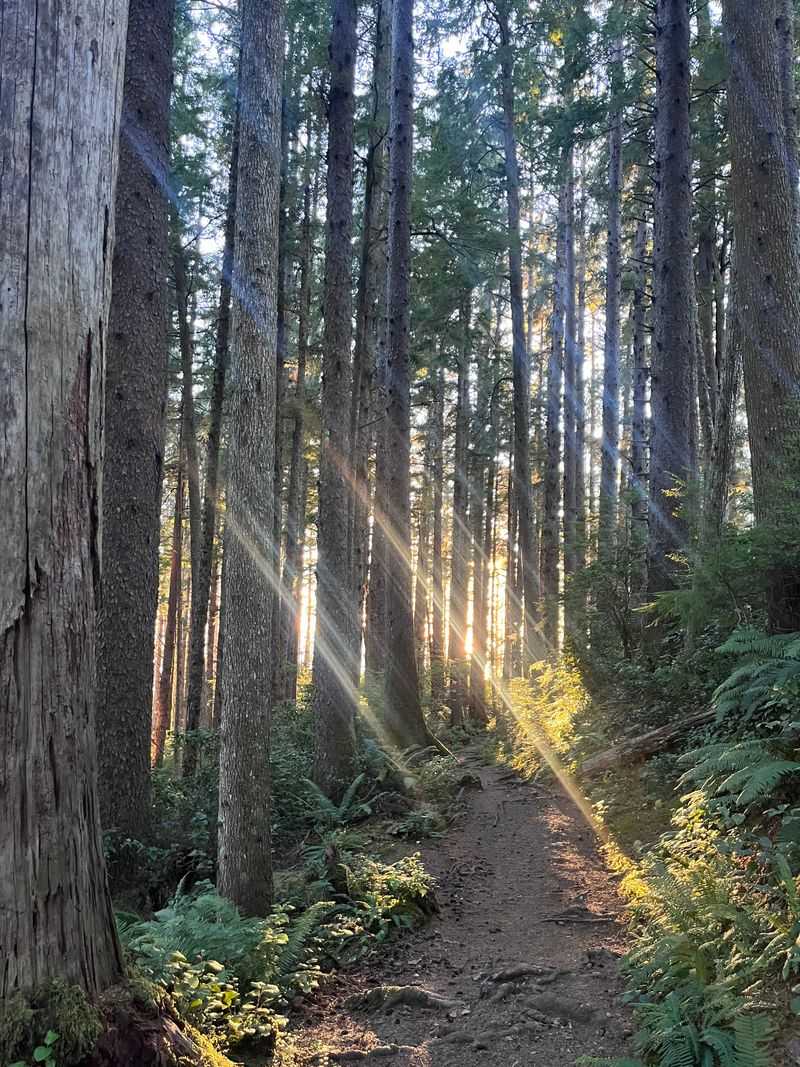
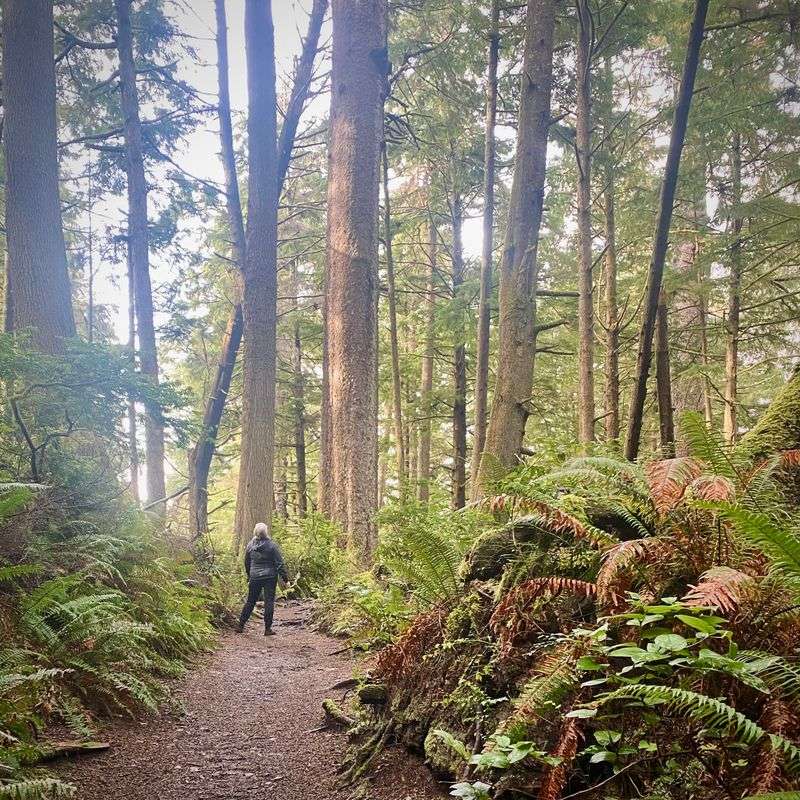
Walking into the Cape Falcon Trail feels like entering nature’s own cathedral. Giant Sitka spruce trees tower overhead, some so massive that three people linking arms couldn’t reach around them.
The forest here is alive in ways that make you want to whisper.
Moss drapes from branches like green curtains, and ferns carpet the forest floor in every shade of emerald imaginable. I’ve hiked through forests all over Oregon, but something about this one hits different.
The air smells like rain and earth, even on sunny days.
These old-growth trees have been standing here for centuries, watching waves roll in and storms pass through. Light filters through the canopy in golden beams that make you want to stop and stare.
The trail winds between these giants for the first mile or so, giving you time to adjust to the otherworldly atmosphere.
My advice? Look up occasionally.
The treetops create patterns against the sky that photographers dream about. Just watch your footing while you’re gazing upward, because those roots are waiting.
The Legendary Mud Challenge
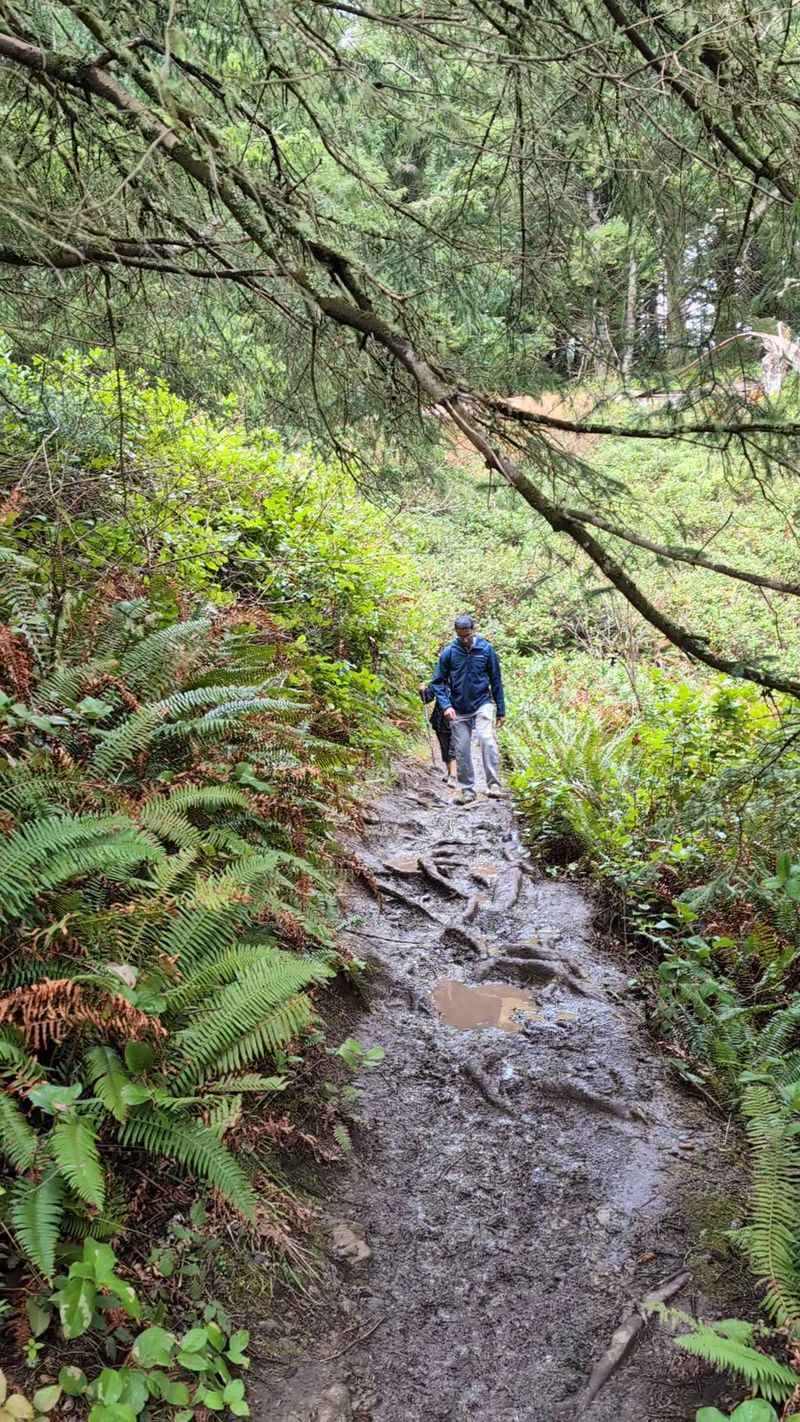
Let me be real with you: the mud on Cape Falcon Trail is legendary. I’m talking shoe-sucking, ankle-deep, Oregon-famous mud that makes you question your life choices for about thirty seconds before you laugh and keep going.
The trail has a split personality.
The first quarter mile lulls you into thinking this will be a casual forest stroll. Then the mud appears, and suddenly you’re playing a real-life version of hopscotch on wooden platforms that are also covered in mud.
Some thoughtful souls have built little bridges and platforms to help, but nature has a sense of humor.
I’ve learned to embrace the mess. Good waterproof hiking boots are non-negotiable here, and bringing a plastic bag for your muddy shoes afterward saves your car interior.
The mud is worst after rain, obviously, but even in drier months, Oregon’s coastal climate keeps things pretty squishy.
Locals joke that if you finish Cape Falcon without mud on your boots, you didn’t really hike it. I wore trail runners my first time and immediately regretted everything.
Root Maze Navigation

The roots on this trail deserve their own warning sign. Honestly, I spent more time looking at the ground than at the scenery for long stretches, which sounds disappointing until you reach the payoff at the end.
The trail is basically a natural obstacle course.
Tree roots crisscross the path in every direction, creating a maze that requires constant attention. Some roots are thick as your thigh, others thin and sneaky, all of them waiting to trip the unwary hiker.
Shadows from the canopy make some roots nearly invisible, especially where sunlight and shade create that dappled effect.
I’ve seen hikers of all ages tackle this trail successfully, but it definitely requires focus. My technique involves a sort of hiking meditation where you find a rhythm, watching each footfall, stepping over or on roots depending on their stability.
Some roots are worn smooth from thousands of boots and make decent stepping stones.
Trekking poles help tremendously here. They give you extra balance points when you’re navigating tricky sections.
The root maze continues pretty much the entire length of the trail, keeping you honest every step of the way.
Cliffside Ocean Panoramas
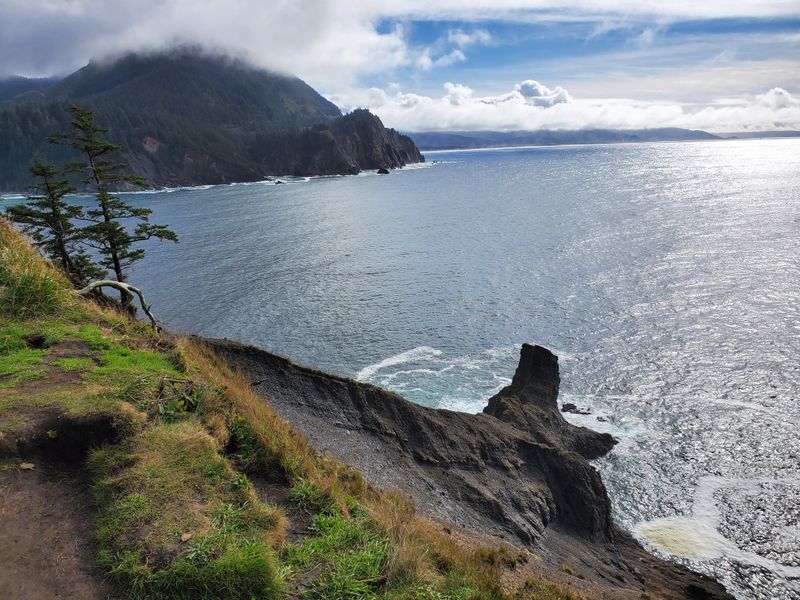
The moment you break out of the forest and see the Pacific stretching to infinity, all that mud and root-dodging suddenly makes perfect sense. Cape Falcon’s viewpoint sits high on cliffs that drop dramatically to the ocean below.
I’m talking serious elevation here.
Standing at the edge on a clear day, you can see miles of coastline curving north and south. Waves crash against rock formations that jut from the water like ancient sculptures.
The ocean changes color depending on the light, from deep navy to bright turquoise in the shallows. Seabirds wheel overhead, riding the updrafts.
I’ve visited in different seasons and weather conditions, and each time offers something unique. Foggy days create an ethereal atmosphere where the ocean fades into mist.
Sunny days bring out every shade of blue imaginable. Storm watching here is spectacular, though you definitely need to stay back from the edge when winds pick up.
The viewpoint area is unfenced and exposed, with steep drop-offs that demand respect. I always keep a safe distance from the edge, especially when it’s windy or wet.
Short Sand Beach Connection
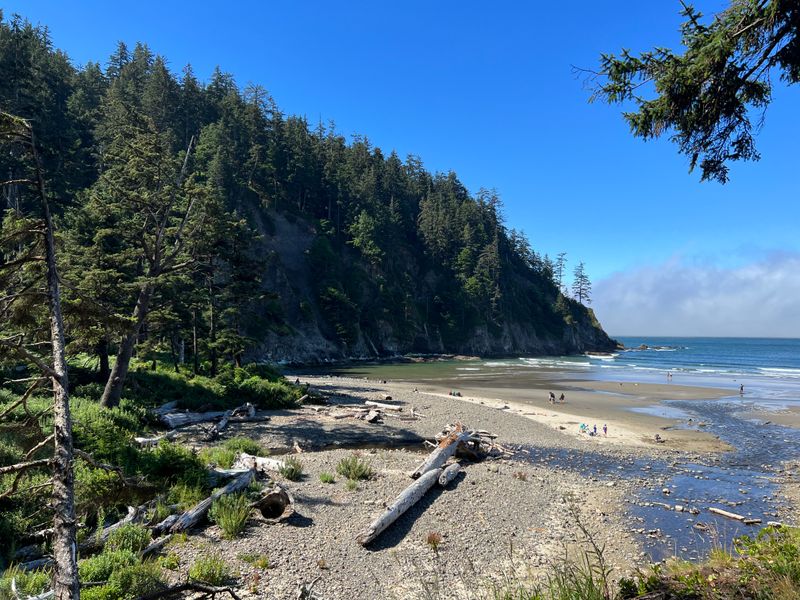
One of my favorite secrets about this hike is the connection to Short Sand Beach, though calling it a connection might be generous. There’s a steep, challenging path down to the beach that definitely qualifies as adventurous.
I tackled it once with friends, and we all agreed it was worth the effort.
Short Sand Beach, also called Smuggler’s Cove by locals, is a gorgeous crescent of sand tucked between forested headlands. Surfers love this spot because the cove creates consistent waves.
Even if you’re not surfing, watching the action from the beach is entertaining. The water is typical Oregon cold, but that doesn’t stop the dedicated.
Getting down requires careful footing and a bit of scrambling. The trail is steep and can be slippery, especially after rain.
I wouldn’t recommend it for young kids or anyone uncomfortable with steep descents. Coming back up is even more challenging, so factor that into your energy calculations.
If you have the time and stamina, combining Cape Falcon with a beach visit makes for an incredible day. Just plan for extra time and bring plenty of water.
Wildlife Watching Opportunities
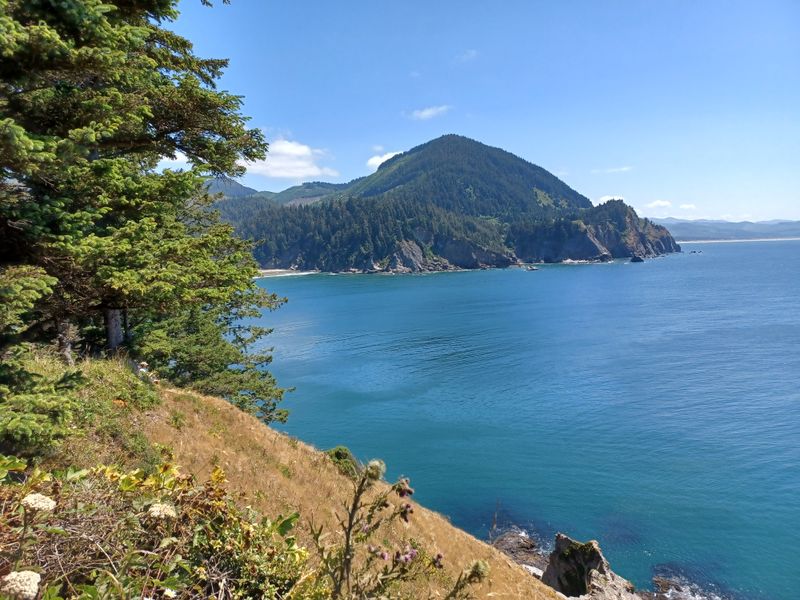
Cape Falcon Trail offers surprisingly good wildlife watching if you’re patient and observant. I’ve spotted everything from banana slugs the size of hot dogs to gray whales migrating offshore.
The variety of ecosystems along this trail supports diverse animal life.
In the forest sections, keep your eyes peeled for deer browsing in the understory. They’re pretty accustomed to hikers and often don’t spook easily.
Birds are everywhere, from tiny wrens flitting through the underbrush to ravens croaking overhead. I once watched a pileated woodpecker hammering away at a dead snag, completely oblivious to the hikers passing below.
At the ocean viewpoint, scan the water for whale spouts during migration seasons. Gray whales pass by Oregon’s coast in spring and winter, and Cape Falcon’s elevation gives you an excellent vantage point.
Harbor seals sometimes haul out on rocks visible from the trail. Bring binoculars if you’re serious about wildlife watching.
The forest floor itself is alive with interesting creatures. Salamanders hide under logs, and if you visit in fall, the mushroom diversity is incredible.
Just remember to look and not touch.
Year-Round Hiking Conditions
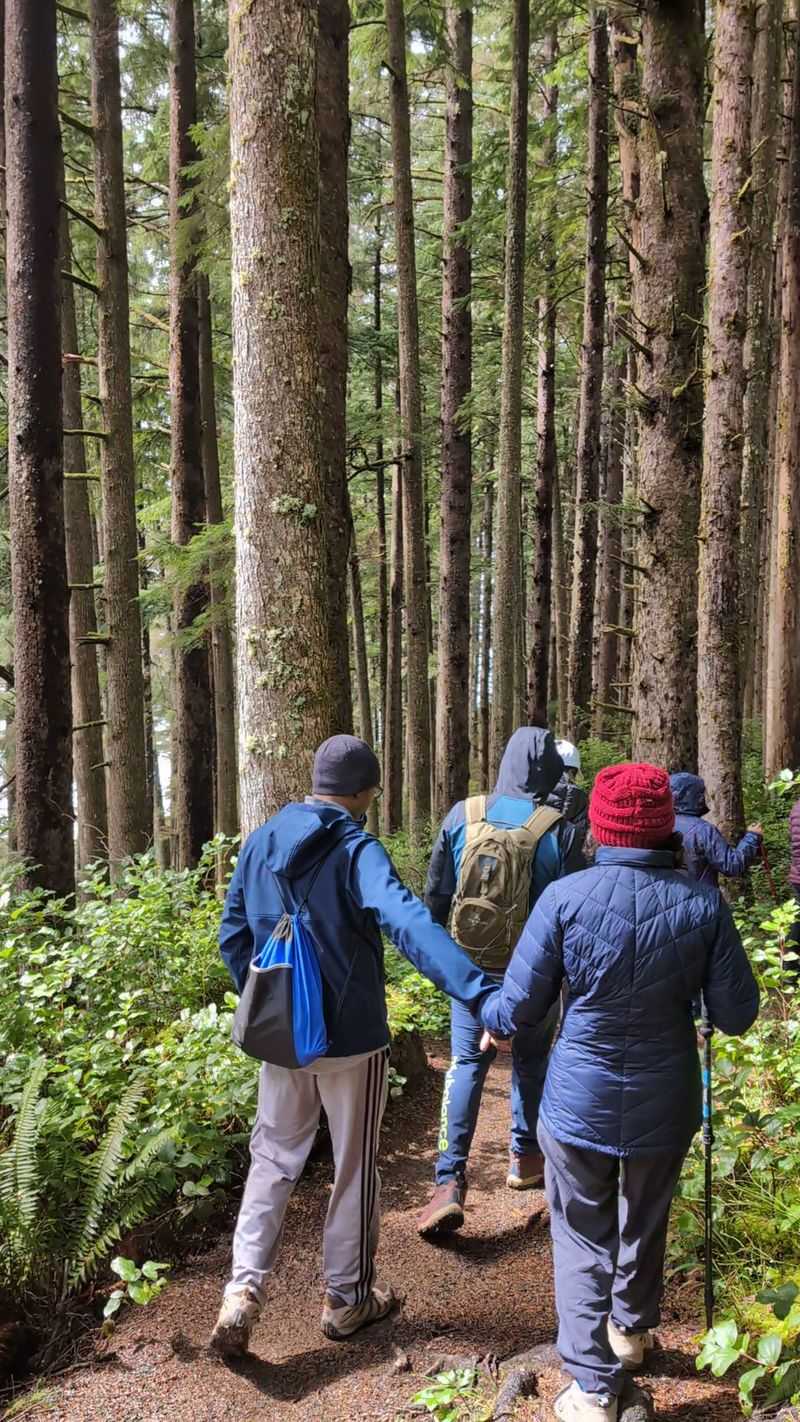
I’ve hiked Cape Falcon in every season, and each brings its own character to the trail. Summer offers the most predictable weather, with occasional sunny days that make the ocean views spectacular.
The trail gets busier in summer, so starting early helps you avoid crowds and snag parking.
Fall is my personal favorite time here. The crowds thin out, temperatures cool down to perfect hiking weather, and the forest takes on golden tones.
Mushrooms pop up everywhere after the rains return, adding splashes of color to the forest floor. The ocean can be moody and dramatic in fall, especially as storms start rolling in.
Winter hiking requires more preparation but rewards you with solitude and wild beauty. The trail gets muddier and more challenging, but I’ve had the entire viewpoint to myself on winter weekdays.
Storm watching from Cape Falcon is unforgettable, though you need proper rain gear and good judgment about when conditions are too extreme.
Spring brings wildflowers and baby animals, plus the tail end of whale migration. Rain is still common, so waterproof everything is essential.
The forest is incredibly lush and green in spring.
Trailhead and Parking Logistics
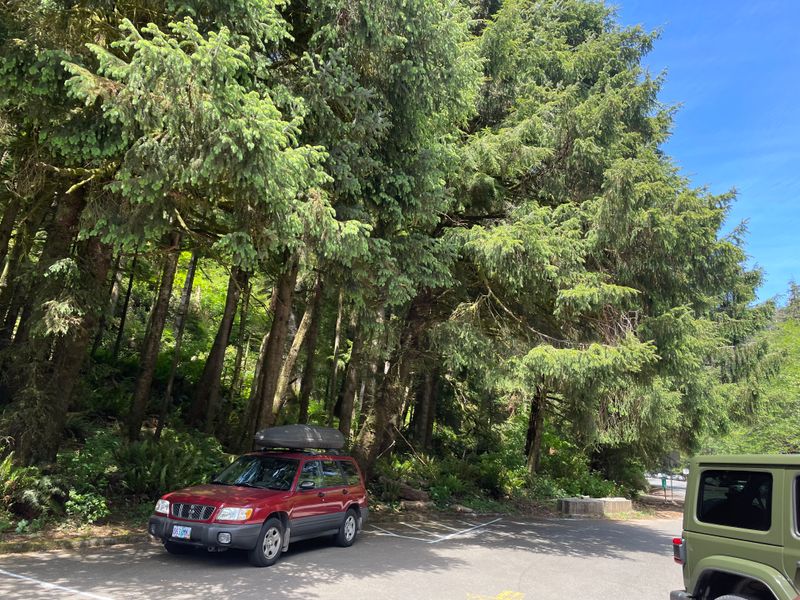
The Cape Falcon Trailhead sits right off Highway 101 in Oswald West State Park, making it easy to find at Arch Cape, OR 97102. The parking lot is paved and decent-sized, but it fills up fast on nice weekends.
I’ve learned to arrive before 9 AM if I want a guaranteed spot during peak season.
If the main lot is full, additional parking exists at Short Sand Beach area just south on Highway 101. Restrooms are located there too, which is handy since the Cape Falcon trailhead itself doesn’t have facilities.
The walk from overflow parking to the trailhead adds maybe ten minutes but isn’t difficult.
There’s no parking fee at Oswald West State Park, which is a nice bonus. The trailhead has an information board with a basic map, though honestly, the trail is pretty straightforward.
You basically follow it until you can’t go any further, then you’re at the viewpoint.
Cell service is spotty to nonexistent once you’re on the trail, so download maps beforehand. The park contact number is 800-551-6949 if you need information before visiting.
Essential Gear and Safety Tips
After multiple trips to Cape Falcon, I’ve dialed in my essential gear list. Waterproof hiking boots are absolutely number one.
I cannot stress this enough. The mud will destroy regular shoes, and good traction on roots is critical for safety.
My boots have saved me from twisted ankles more times than I can count.
Trekking poles help tremendously with balance on the root sections and take pressure off your knees. I resisted using poles for years, thinking they were unnecessary, but now I never hike Cape Falcon without them.
A lightweight rain jacket belongs in every pack, even on sunny days, because Oregon coast weather changes fast.
Bring more water than you think you need. The trail is moderate in distance but challenging enough that you’ll work up a sweat.
Snacks help too, especially if you plan to spend time at the viewpoint or detour to the beach. A basic first aid kit is smart for any hike.
The trail has steep, unfenced drop-offs at the end. Stay alert, watch your footing, and keep back from edges.
Dogs are allowed but must be leashed, and honestly, the roots make this challenging for some pups.
Dear Reader: This page may contain affiliate links which may earn a commission if you click through and make a purchase. Our independent journalism is not influenced by any advertiser or commercial initiative unless it is clearly marked as sponsored content. As travel products change, please be sure to reconfirm all details and stay up to date with current events to ensure a safe and successful trip.
