A Cold War relic bought for a single dollar. That is not a typo.
This New Jersey site once tracked Soviet bombers heading for New York City from its prime elevation. The radar towers still stand, silent and rusting.
But here is the twist.
The army barracks are now colorful art studios where painters, sculptors, and glassblowers create beauty instead of missiles.
You can walk the same grounds where soldiers once monitored the skies. You can peek into studios and watch artists at work.
The military remnants are still there, but they have been reclaimed by creativity. Missile tracking base turned art park.
That is one heck of a transformation. History meets imagination.
Cold War meets canvas. Your curiosity just found its new favorite spot.
Go explore. You will not believe your eyes.
Cold War Concrete, Creative Future
Walking up the hill, the first thing that registers is how military everything still looks. Low buildings.
Flat roofs. Wide asphalt loops built for trucks, not strollers.
From 1954 to 1974, this 42-acre site worked as a Nike missile tracking base with the very unromantic name Control Area, Nike Battery NY-80. Radar equipment sat up here because the elevation gave crews a clean line of sight toward the New York metro area.
Then weapons technology moved on, and the whole system became outdated almost overnight. The base shut down in 1974 and was declared surplus federal property, which is the government’s polite way of saying nobody needed it anymore.
What makes the place worth a visit today is the contrast baked into every corner. Buildings designed for defense drills now hold kilns, canvases, and looms.
Bring a camera and comfortable shoes, since the grounds roll up and down more than you would expect from a park in a quiet suburb.
Hiding Art in Plain Sight
Half the fun here is that nothing announces itself loudly. There is no giant welcome arch, no gift shop, no ticket booth waiting to take your money.
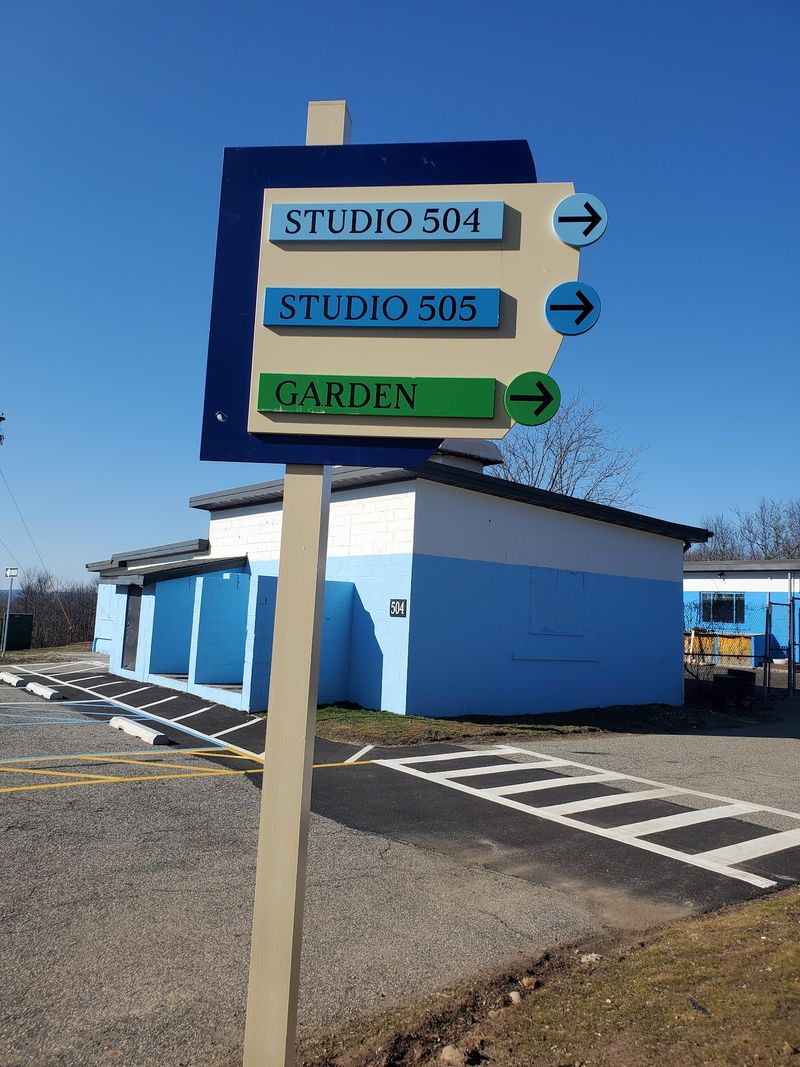
Instead, you drive a quiet loop road and slowly realize that each building has been painted a different color, which is the closest thing to a hint you get. Behind those doors sit working studios for painters, potters, weavers, and metalworkers.
Locals often describe the spot as a hidden gem tucked into an ordinary neighborhood, and that description holds up. Plenty of people pass by for years without stopping.
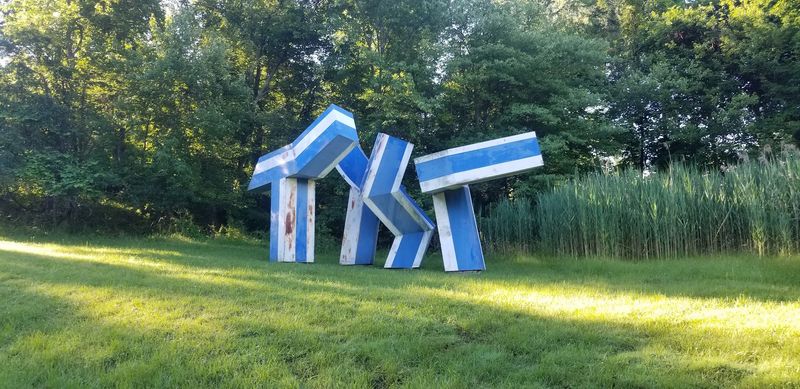
Outdoor sculptures appear in unexpected places, sometimes on a grassy slope, sometimes near a parking curb. Wandering is the whole strategy, because there is no single main attraction pulling you along a fixed route.
Give yourself an hour minimum. Trying to rush a place built on curiosity rather feels like reading only the last page of a book.
Where Radar Gave Way to Easels
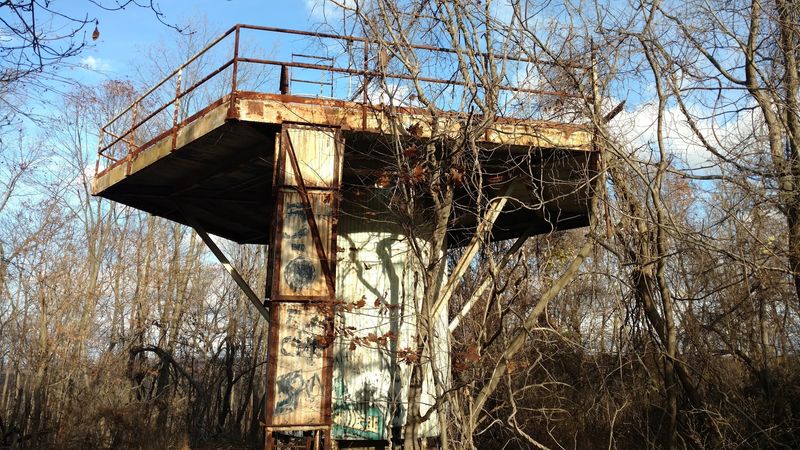
Radar towers still stand on the property, tall and skeletal, and they are easily the strangest neighbors an art studio could ask for. The equipment is long gone, but the frames remain.
In 1982, the Essex County Parks Department handed control of the site to its Division of Cultural Affairs. There was one enormous catch: no budget came with it.
Artists had to fund operations themselves, mostly by teaching classes and selling their work. That arrangement turned the place into something closer to a cooperative than a typical county facility.
Building #509 was the first structure occupied by the new art community, chosen for the deeply practical reason that it was the only one with heat.
Standing between a rusting tower and a studio window today, the swap feels almost poetic. Machinery once scanned the sky for threats from this exact spot, and now people up here spend their afternoons mixing colors and firing clay.
The Quarter That Bought a Base
Real estate stories rarely get better than this one. Essex County picked up the entire former military installation from the federal government in 1974 for a symbolic one dollar, with the official ownership transfer wrapping up in 1977.
One dollar. For 42 acres on the highest point in the county, complete with buildings, roads, and a view that stretches west toward the mountains.
Of course, a bargain price does not mean a bargain property. Everything on site needed work, and the county had no obvious plan for what a decommissioned radar base should become.
The first attempt was a geology museum showing dinosaur footprints and fossils found in the area. That idea eventually closed because of budget limits and thin attendance.
Knowing this backstory changes how the grounds feel underfoot. Every cracked bit of pavement here belonged to a deal that sounds like a typo, and the payoff took decades of patience to arrive.
Living in a Converted Missile Bunker
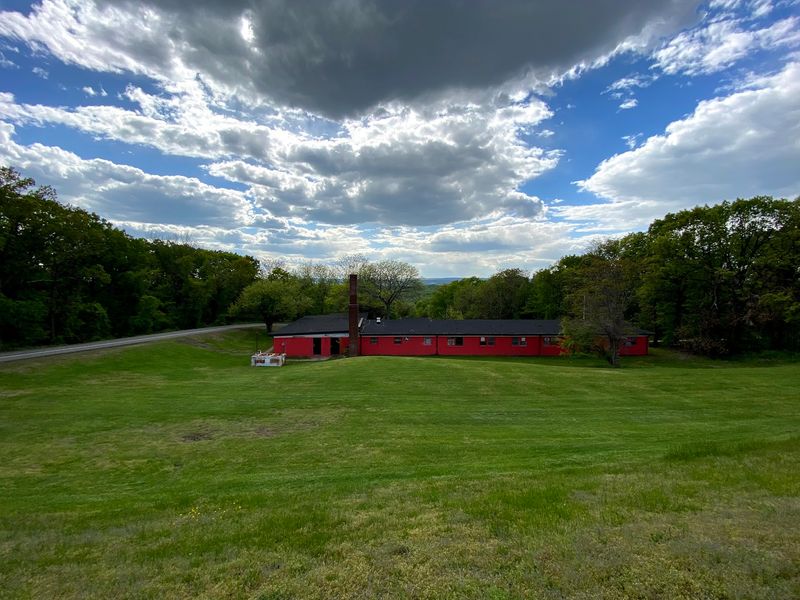
Picture inheriting a building with no roof, no windows, no doors, no heat, no water, and no electricity. That was the welcome package for the first artists who moved onto this hill.
The old army barracks and administration buildings had sat empty long enough to look genuinely abandoned. Renovation happened the slow way, with artists doing much of the labor themselves.
Local companies including NJ Bell Telephone and PSE&G chipped in with donated lighting, electrical supplies, furniture, windows, and doors. Piece by piece, the shells became usable spaces.
By the mid-1990s, the property finally functioned as a complete art facility rather than a construction project with occasional art in it.
What you see now still carries traces of that origin. Thick walls, utilitarian layouts, and hallways that clearly were not designed for kilns give the studios a character no purpose-built art center could fake, and honestly that roughness is the charm.
Artists Now Track Creativity Here
The radar dishes are gone, but tracking still happens on this hill. These days the subject is progress on a sculpture or a stubborn glaze that refuses to behave.
Artists-in-residence work across an unusually wide range of mediums here, including painting, ceramics, glass blowing, woodworking, sculpture, fine metal jewelry, pottery, printmaking, photography, weaving, fiber arts, and mixed media.
Studios function as private workspaces most of the year, so the atmosphere stays focused rather than touristy. That said, classes and workshops for both adults and children run regularly, which is the easiest way to get inside and actually make something.
Curated exhibitions appear throughout the year, and the park has hosted cultural programs such as Jazz Under the Stars and Shakespeare in the Park.
If you like the idea of learning a craft in a building that once supported national defense, sign up for a session early. Class spots tend to fill through word of mouth around the community.
From Nuclear Defense to Ironworks
Heat used to mean something very different on this hill. Now it comes from forges, kilns, and glass furnaces rather than military hardware.
Metalworking has a strong presence among the studios, with artists shaping steel, iron, and fine jewelry inside rooms built for radar crews. The sound of hammering against metal drifting across a former defense site is a little surreal.
Glass blowing adds another layer of heat and drama, while woodworking fills the air with a completely different smell entirely.
These crafts suit the property well. Military buildings were constructed to be tough, with sturdy floors and solid walls that handle heavy equipment without complaint.
The transformation from a place designed around destruction to one built around making things by hand is not subtle, and nobody here pretends otherwise. Interpretive signage on site keeps the history visible instead of hiding it.
Visit during a workshop day if you want to catch the working side of the park rather than just the scenery.
A Steal for 38 Artist Studios
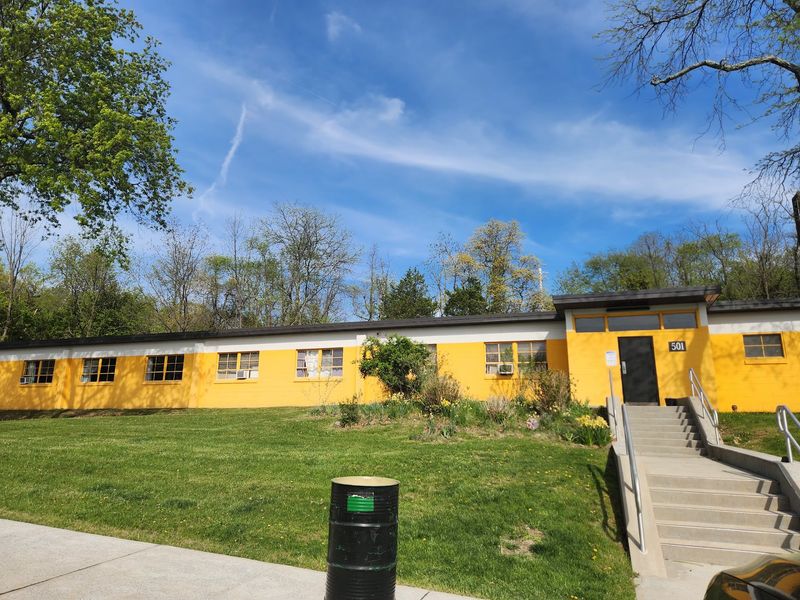
Thirty-eight studios now fill the former barracks and military structures, all descended from that single dollar transaction. Some sources round it down and simply say over 30 artists, which either way is a remarkable return on investment.
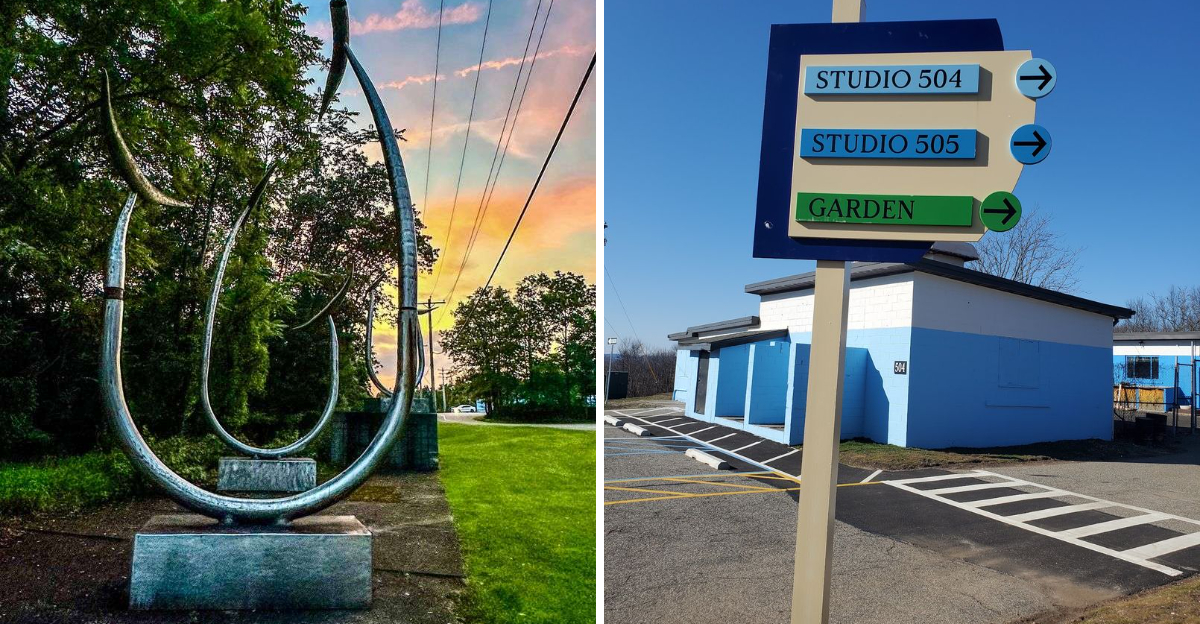
Each building wears its own color, turning the loop road into something like a walk through a paint sample catalog. The scheme makes navigation easy and gives the whole complex a cheerful, slightly offbeat personality.
Affordable working space is genuinely hard to find, and the county’s continued commitment to providing it keeps the community thriving here.
Twice a year the studios open to the public for Open House and Art Sales events, typically on the first weekends of June and November. Those weekends let visitors step inside, see creative processes up close, and buy work directly.
Mark your calendar for one of them. The park is pleasant any day, but those two weekends are when the buildings truly come alive with visitors.
Missile Silos, Paint Brushes, and a Blacksmith
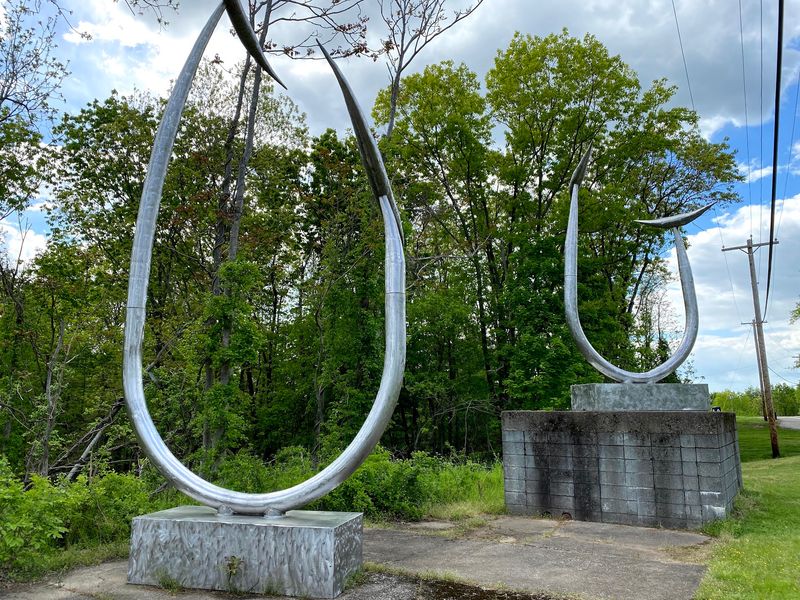
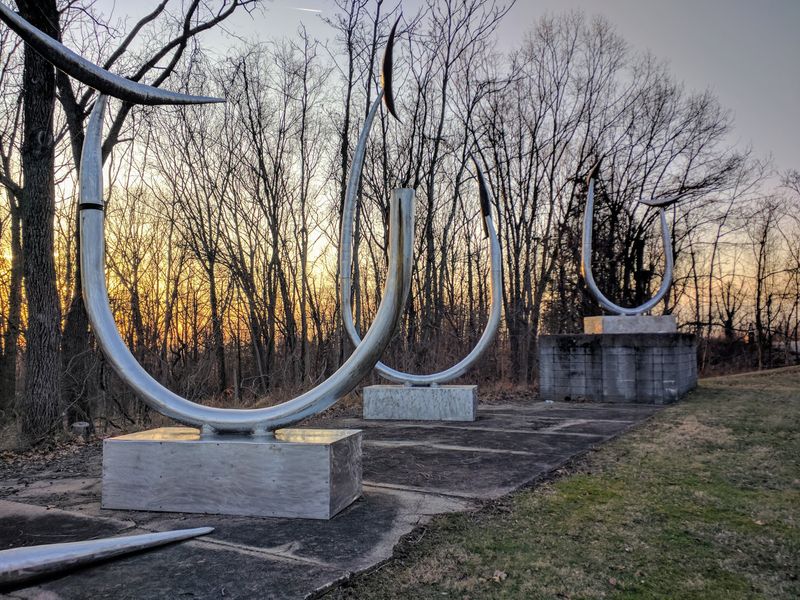
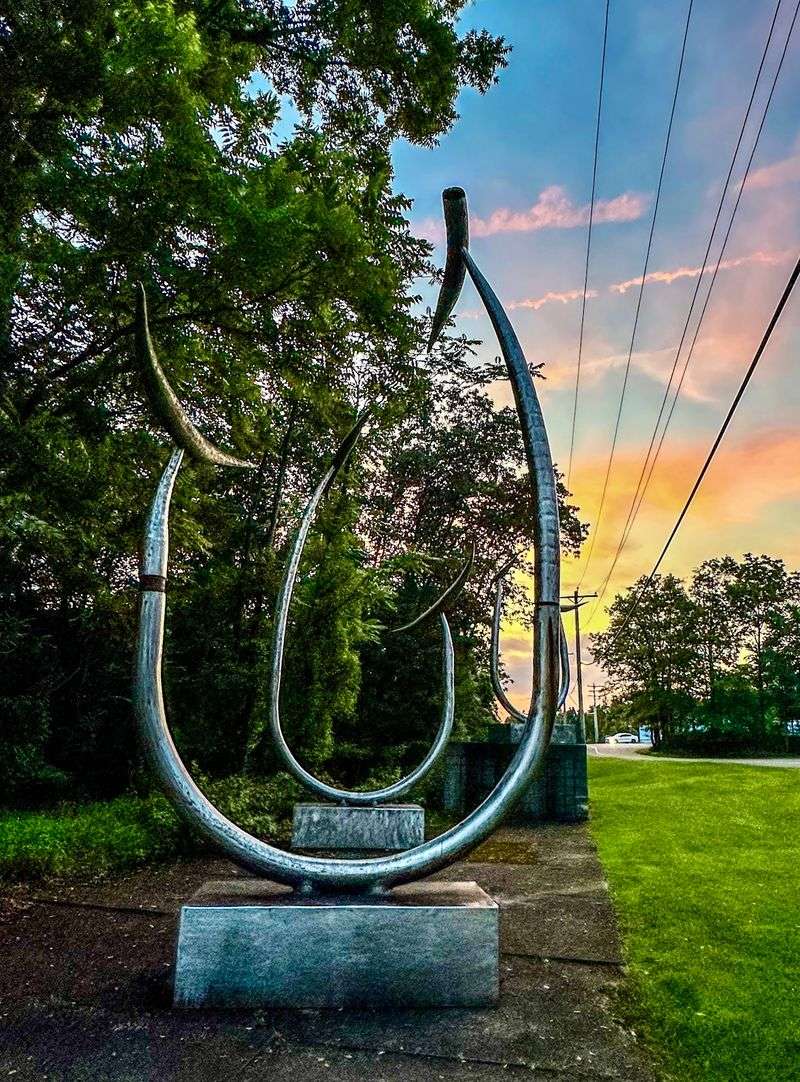
Three stainless steel whale tails, each about 20 feet tall, rise from the grounds and have been part of the scenery since they were donated in 1991. Kids have been tempted to climb them for decades.
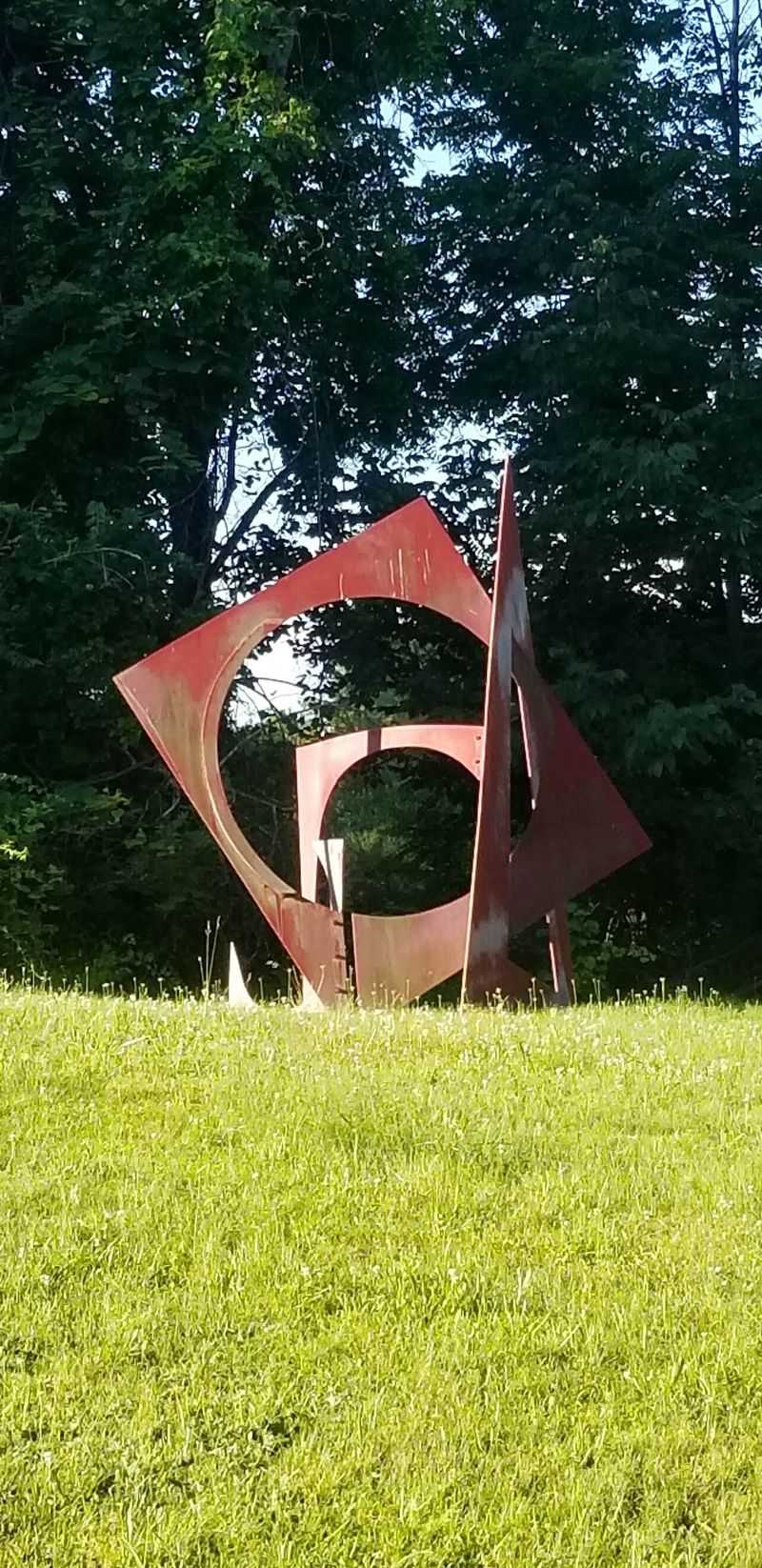
Other outdoor pieces arrived in the park’s early years, carrying names like Urban Bones, Graceful Stones, Creation, Colored Landscape, and Bicycle Flute.
Scattered between them sit the leftovers of the base itself, including old watchtower structures and concrete remnants that give the lawns an unexpectedly cinematic quality.
Wandering here works best without a plan. Sculpture appears where you least expect it, and the military bones of the site frame everything in a way no gallery wall could manage.
A community garden also occupies part of the complex, with plots available to community members, including gardeners with disabilities. Right beside it sits a curiosity called the rainy day labyrinth.
Deer wander the grounds freely, so watch your step and check for ticks afterward.
The Bargain That Built an Art Park
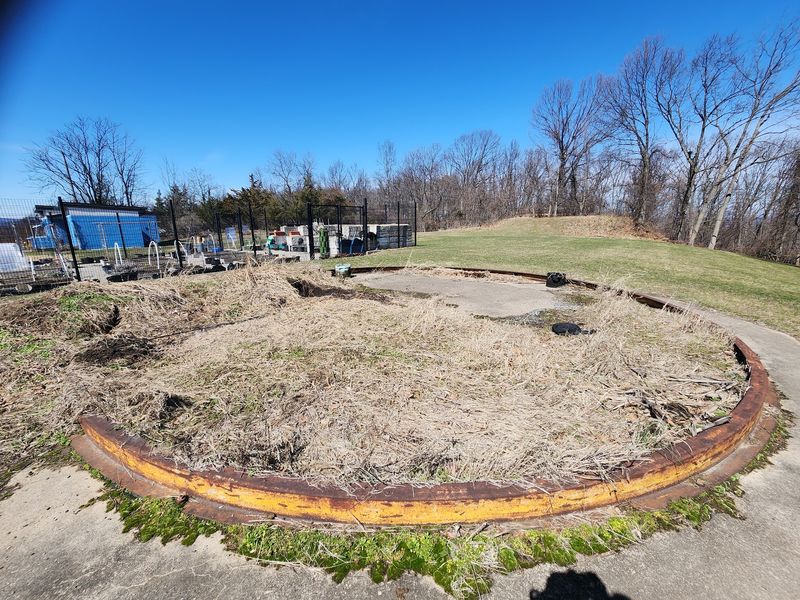
Every good story deserves a good ending spot, and here it is the observation deck. Standing on the highest point in Essex County, it offers wide western views along with historical information about the site’s missile base years.
Sunsets from up here have a following that goes back generations, and the open sky makes the climb worth it even on an ordinary evening.
Grounds are open daily from dawn to dusk, with posted hours running 9 AM to 9 PM, and there is plenty of grass for a picnic blanket.
Pack your own snacks, since this is a working art community rather than a place with cafes. A thermos and a sandwich turn the deck into an excellent lunch table.
What began as one dollar spent on obsolete military property became studios, sculpture, gardens, and one of the more unusual afternoons available in New Jersey.
Address: 276 Beaufort Ave, Livingston, NJ 07039, United States.
