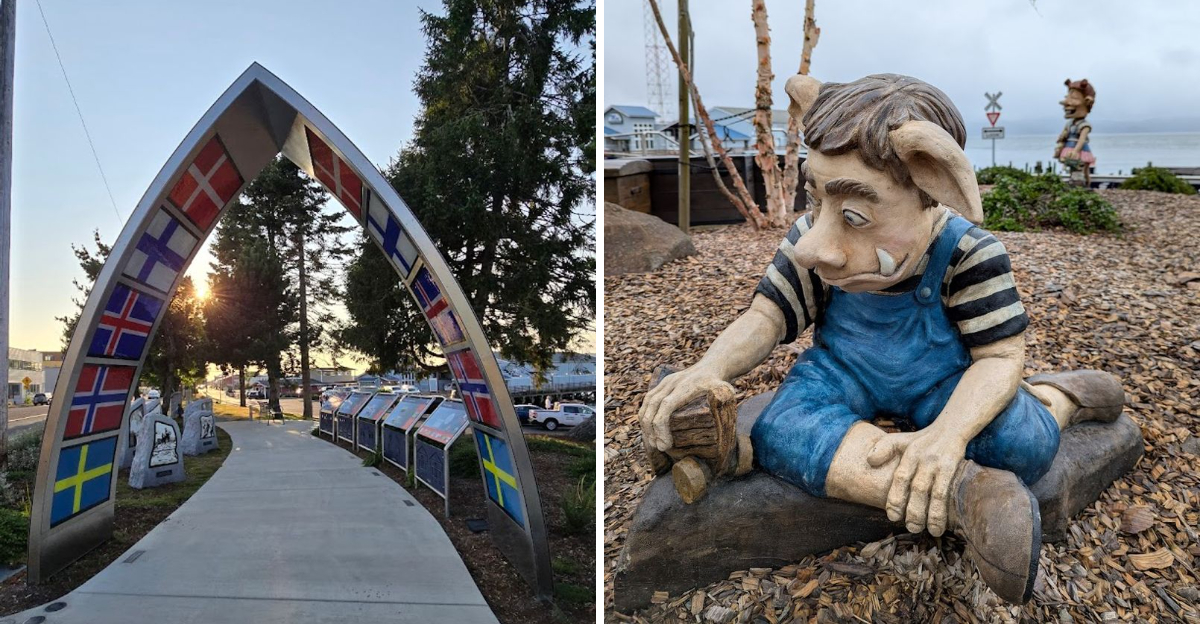
Color explodes the second you step into this Oregon riverfront park, but the real surprise is what’s hiding between the trees. Troll sculptures appear out of nowhere, like they’ve been quietly guarding the landscape for centuries.
The deeper you wander, the more it starts to feel like you’ve slipped into a page of Nordic folklore. I kept slowing down just to scan every corner, half-expecting another wooden figure to be watching from somewhere unexpected.
Nature and art blur together here in a way that feels playful, a little mysterious, and oddly magical. Even the river seems like it’s part of the storytelling, not just the scenery.
And by the time you leave, it feels less like a park visit and more like you accidentally walked through a myth.
A Park Born from Scandinavian Roots
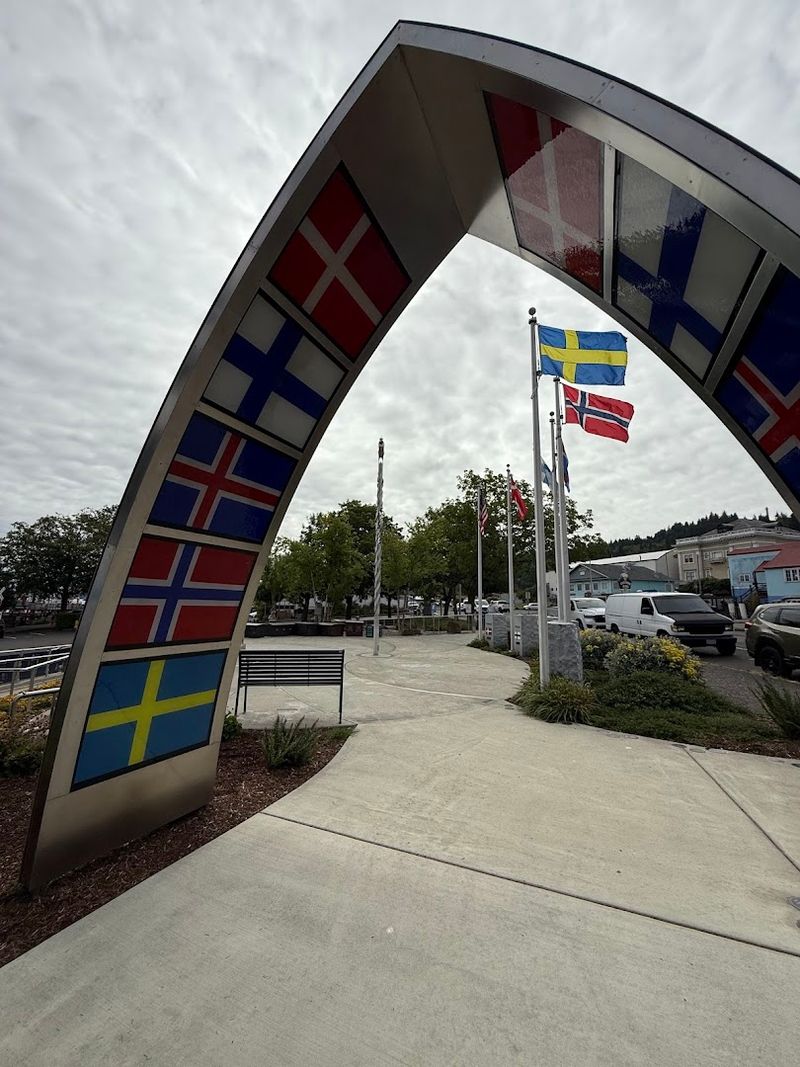
Walking into Astoria Nordic Heritage Park feels like stepping into a different chapter of Oregon history. Most visitors think of Lewis and Clark when they think of Astoria.
Few realize how deeply Scandinavian settlers shaped this town.
The park was created to honor those contributions. Fishermen, shipbuilders, and craftspeople from Norway, Sweden, Finland, Denmark, and Iceland made Astoria what it is today.
Their influence runs through the city’s bones.
Informative signs and plaques line the park. Each one tells a piece of a larger story.
The displays cover everything from early immigration patterns to how Nordic workers helped build key Astoria landmarks.
Reading through them felt genuinely eye-opening. I had no idea Scandinavian workers played such a central role in constructing the famous Astoria Column.
The park makes that connection clear and memorable.
It is a small space, but it carries real historical weight. Free to visit, easy to explore, and filled with details worth slowing down for.
The Troll Sculptures You Cannot Miss
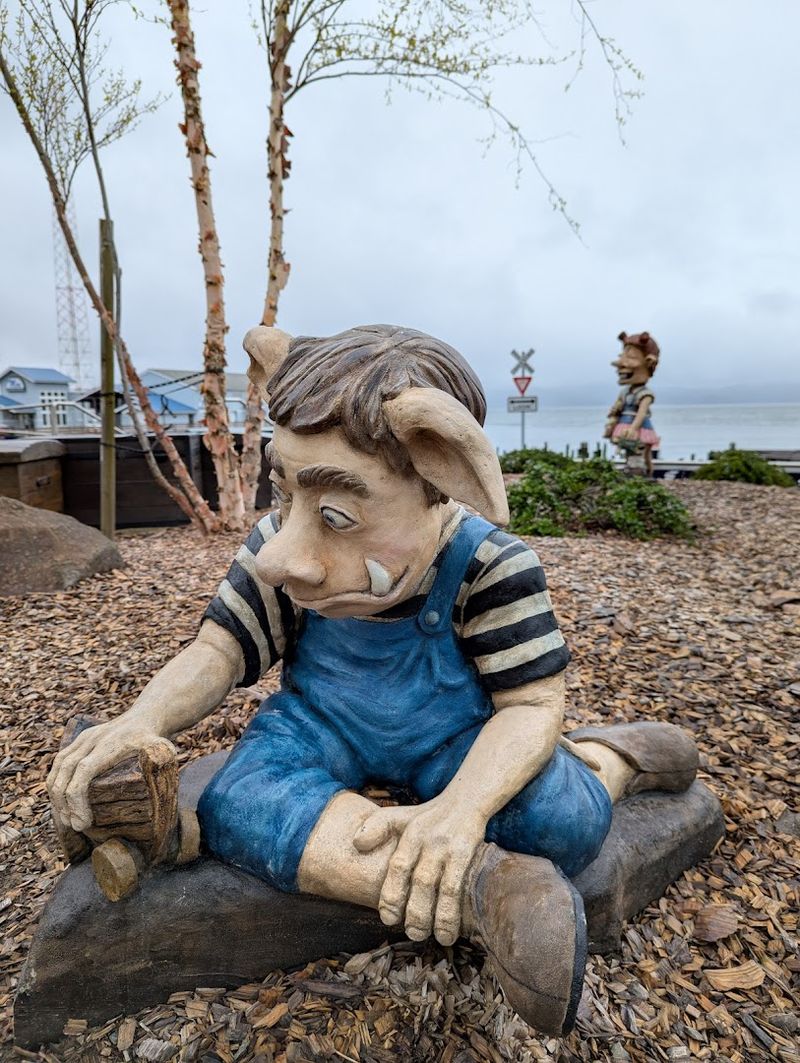
Nothing quite prepares you for your first troll sighting in this park. They are small, sturdy, and surprisingly expressive.
Each sculpture has its own personality.
Nordic folklore is full of trolls. In Scandinavian tradition, trolls are complex creatures tied to nature and mystery.
The park’s troll figures bring that folklore into a coastal Oregon setting in the most delightful way.
Kids absolutely love them. Adults do too, though they might not admit it as quickly.
The trolls make for great photos and even better conversation starters.
They are placed thoughtfully throughout the space. You spot one near a planter, another tucked beside a pathway.
The element of discovery makes exploring the park feel playful.
Local artistry and cultural storytelling come together in these sculptures. They are not just decorations.
They represent a living tradition that Scandinavian communities have carried for generations.
Seeing them in person made me smile immediately. They have a warmth to them that is hard to explain but very easy to feel.
Colorful Flags That Tell Their Own Story
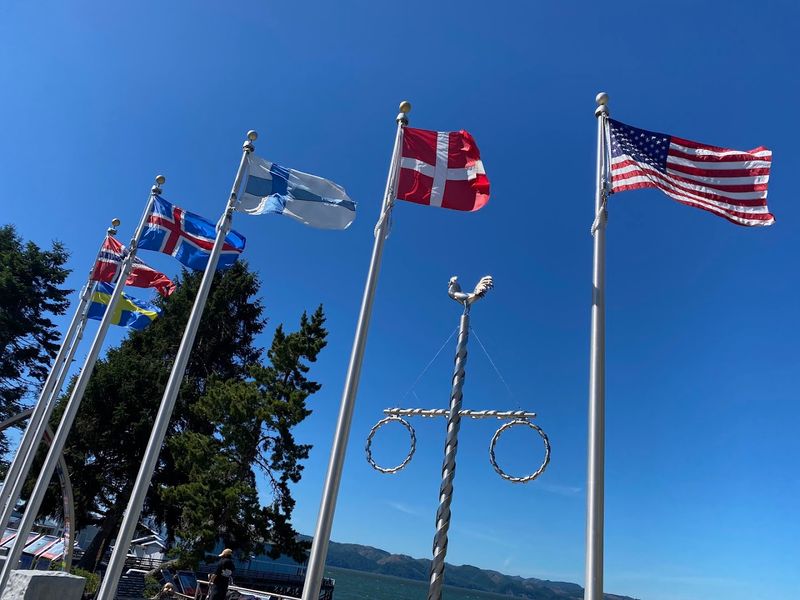
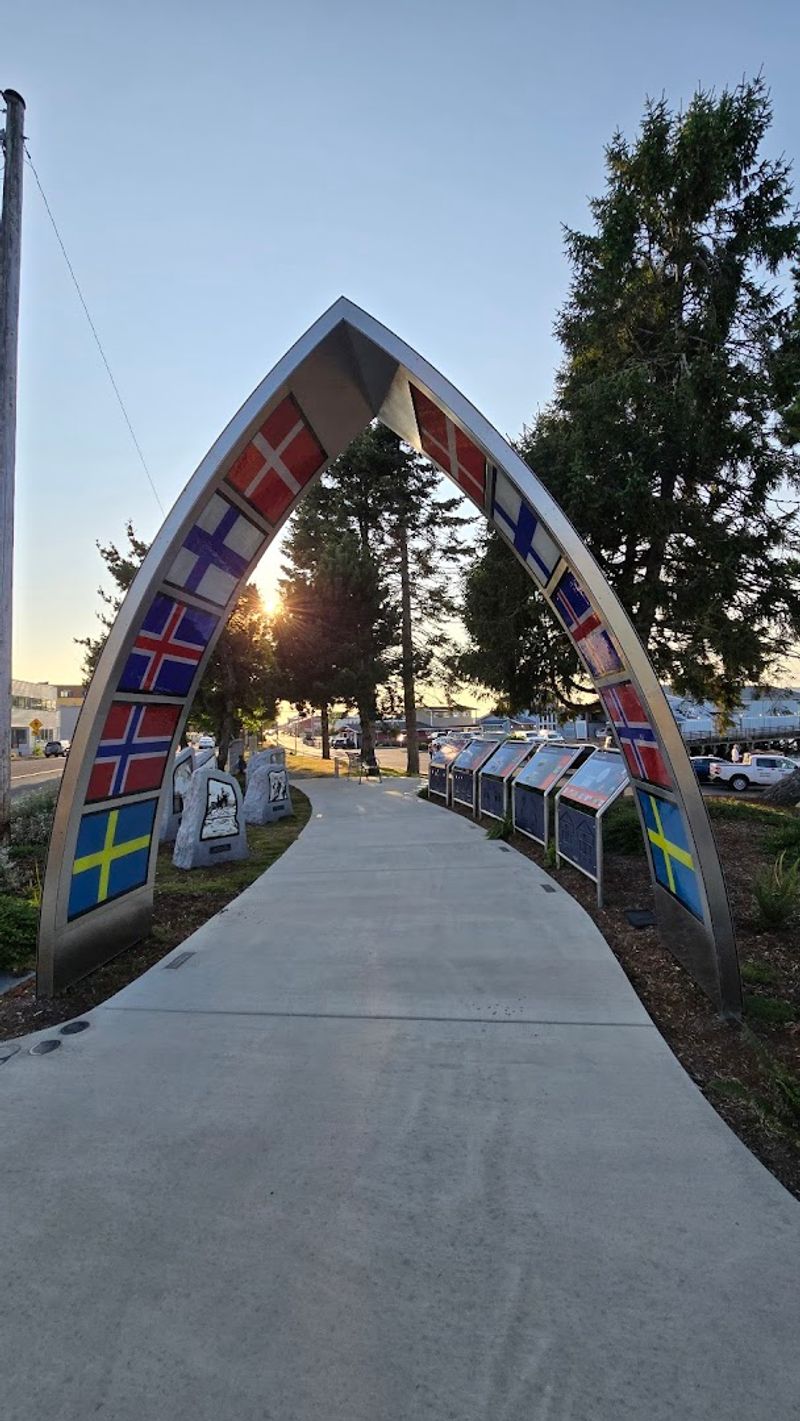
The flags are one of the first things you notice approaching the park. Bright, bold, and snapping in the coastal breeze, they immediately signal something special is here.
Each flag represents one of the Nordic nations connected to Astoria’s history.
Norway, Sweden, Finland, Denmark, and Iceland each have their banner flying proudly. Seeing them together creates a striking visual.
It is a reminder that this community was never just one culture but a rich blend of several.
The flags add movement and color to the park. On overcast Oregon days, they stand out against the grey sky beautifully.
On sunny afternoons, the effect is almost festive.
They also serve an educational purpose. Visitors who may not know much about Nordic countries find themselves curious.
A quick look at the informational signs nearby fills in the gaps.
It is a simple but effective design choice. The flags make the park visible from a distance.
They invite passersby to stop, look closer, and stay a little longer than planned.
Informational Plaques Worth Reading Slowly
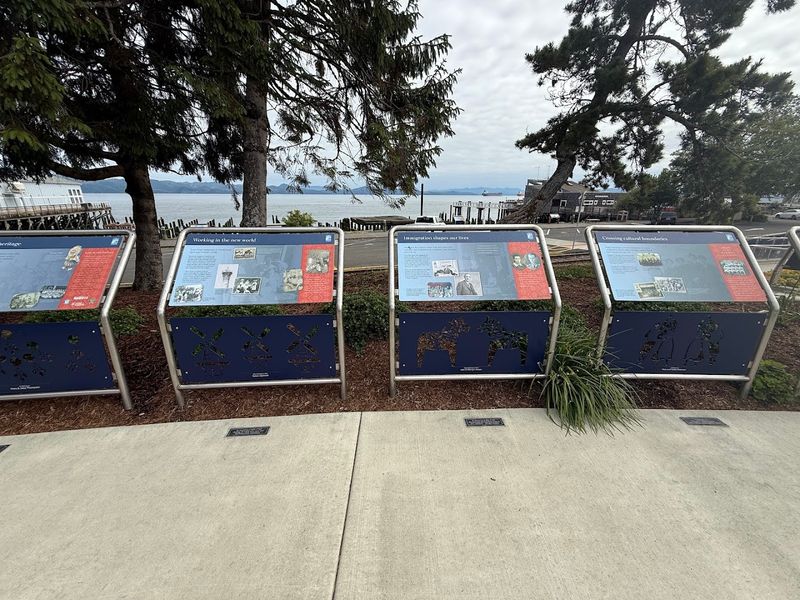
Most park signs get a quick glance and nothing more. The plaques at Astoria Nordic Heritage Park are genuinely worth your full attention.
They are well-written, visually appealing, and packed with surprising details.
One plaque covers the role of Scandinavian immigrants in the local fishing industry. Another focuses on shipbuilding traditions brought over from Nordic countries.
Each topic connects back to Astoria’s larger identity as a working waterfront city.
The writing is clear and accessible. You do not need to be a history buff to enjoy reading through them.
The information flows naturally, almost like a short story told in sections.
Some plaques even include QR codes. Scanning them opens up additional content for visitors who want to go deeper.
It is a smart modern touch in a park that otherwise celebrates the past.
I spent more time reading than I expected to. The history here is genuinely fascinating.
Astoria would look very different today without the generations of Nordic families who built it up from the waterfront outward.
The Riverwalk Connection That Makes It Special
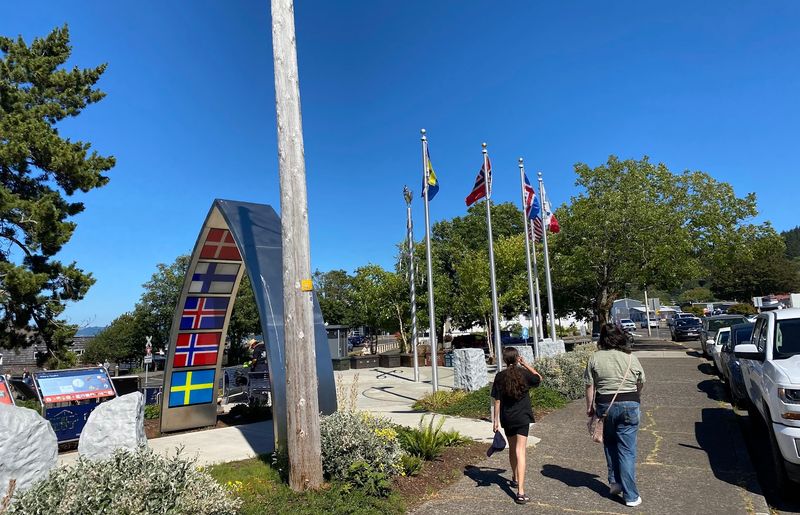
One of the best things about this park is its location. It sits right alongside the Astoria Riverwalk, making it a natural stop on any waterfront stroll.
The Columbia River stretches out just beyond the park’s edge.
The view is genuinely beautiful. Wide water, distant hills, and the occasional ship passing through create a backdrop that feels cinematic.
Sitting in the park and looking out toward the river is a peaceful experience.
The Riverwalk itself is a popular trail for locals and visitors alike. Adding the Nordic Heritage Park to your walk gives the route a cultural layer.
It transforms a simple stroll into something more meaningful.
The park connects seamlessly to the broader waterfront experience. You can approach it from either direction along the Riverwalk.
No need to detour or backtrack.
Standing there with the river in front and the flags behind me, the whole scene felt cohesive. History, nature, and community all sharing the same stretch of shoreline.
That combination is exactly what makes Astoria worth visiting.
Accessibility Features That Welcome Everyone
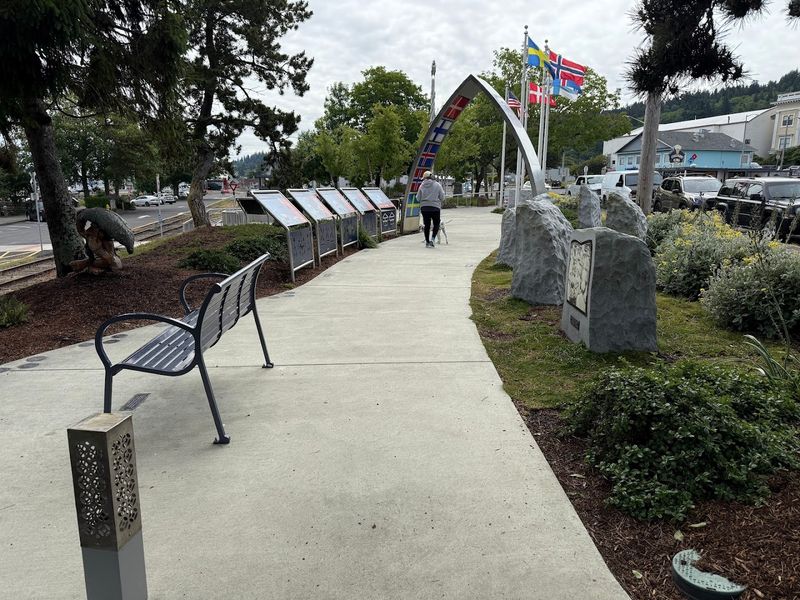
Accessibility is often an afterthought in older parks. At Astoria Nordic Heritage Park, it was clearly part of the original design.
The pathways are smooth, wide, and easy to navigate in a wheelchair or with a stroller.
The park has a public restroom available on site. That detail might sound small, but it matters enormously when you are exploring a waterfront area.
It makes the space genuinely usable for longer visits.
The layout keeps things simple. There are no steep slopes or awkward steps to navigate.
Everything is thoughtfully arranged at a comfortable, flat level.
Seating areas are available throughout the park. You can rest, read the plaques at your own pace, or simply sit and watch the river.
The park does not rush you.
Parking nearby is also available, though spots can fill up on busier days. Arriving in the morning gives you a better chance of finding a space easily.
The park is free to enter, which keeps it open and welcoming to everyone regardless of budget.
The Astoria Column Connection Hidden in Plain Sight
Here is something most visitors to Astoria do not know before arriving. The iconic Astoria Column, one of the most photographed landmarks in Oregon, was largely built by Scandinavian craftspeople.
The park makes this connection explicit and proud.
That fact hit differently once I was standing in the Nordic Heritage Park. The column sits high on Coxcomb Hill, visible from much of the city.
Knowing the hands that built it gives it a whole new layer of meaning.
The park’s displays explain how Nordic immigrants contributed skilled labor to some of Astoria’s most lasting structures. Their craftsmanship is still standing, still drawing visitors, still shaping the skyline.
It is the kind of historical detail that rewrites your understanding of a place. Astoria is not just a port town.
It is a city built in significant part by people who crossed an ocean to find a new home here.
The Nordic Heritage Park honors that journey. It gives those builders a name, a face, and a place in the story that Astoria tells about itself every single day.
Landscaping and Design That Feels Intentional
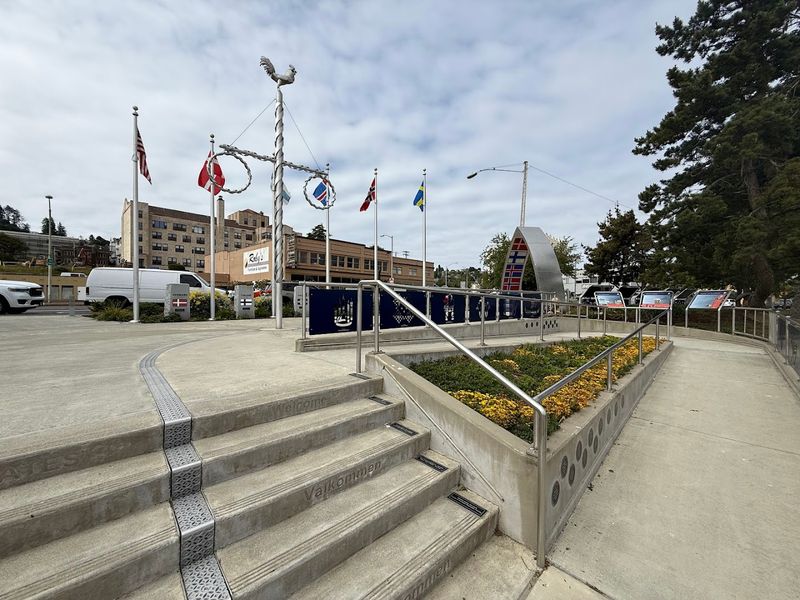
The park is compact, but it never feels cramped. The design makes smart use of every square foot.
Planter areas soften the concrete surfaces and add seasonal color throughout the year.
The railings are detailed and beautiful. They were clearly crafted with care, not just installed for function.
Running your hand along them, you notice the quality of the workmanship.
Flowers and greenery frame the informational displays nicely. The landscaping does not compete with the educational elements.
Instead, it supports them, creating a setting that invites you to slow down and look around.
The overall aesthetic feels clean and modern without losing its cultural character. The design team clearly wanted the space to feel both welcoming and meaningful.
That balance is not easy to strike, but they pulled it off.
Even on a grey Pacific Northwest morning, the park looks well-kept and inviting. There is no litter, no worn-out signage, no neglected corners.
It feels like a space that is genuinely cared for by the community that built it.
A Snapshot of Nordic Culture on the Pacific Coast
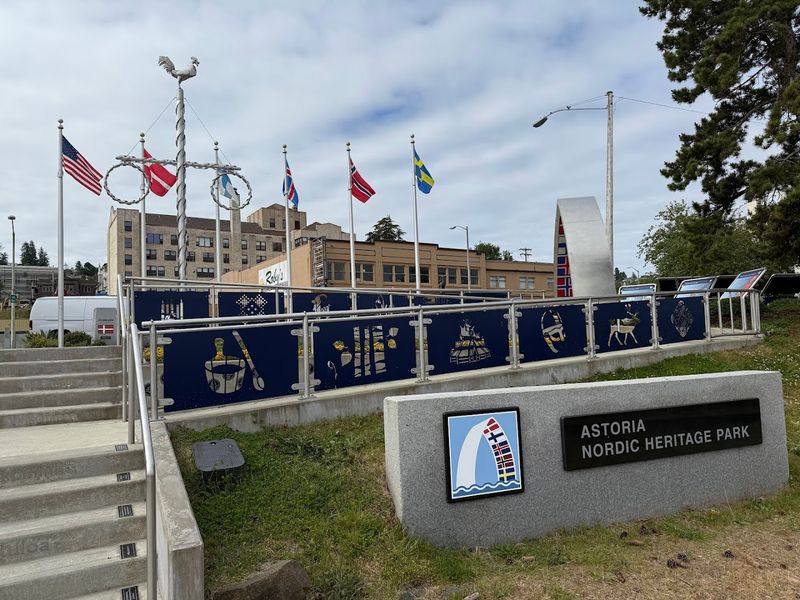
Scandinavia and the Oregon coast might seem like an unlikely pairing at first. But standing in this park, the connection feels completely natural.
Nordic communities found in Astoria the same things they valued at home: water, fish, hard work, and community.
The park captures that shared spirit beautifully. It does not just list facts.
It evokes a feeling, a sense of what it meant to arrive in a new place and build something lasting from nothing.
Fishing culture features prominently in the displays. The Columbia River was central to early Astoria life.
Nordic fishermen developed techniques and built boats that shaped how the industry operated here for decades.
Seeing that history laid out clearly made me think about how many American cities carry similar hidden stories. Communities that shaped everything around them but rarely get the spotlight they deserve.
This park gives that spotlight to Astoria’s Nordic community. It does so without being heavy-handed or overly formal.
The tone is celebratory, warm, and genuinely proud of the heritage it represents.
Why Astoria Nordic Heritage Park Belongs on Your Itinerary
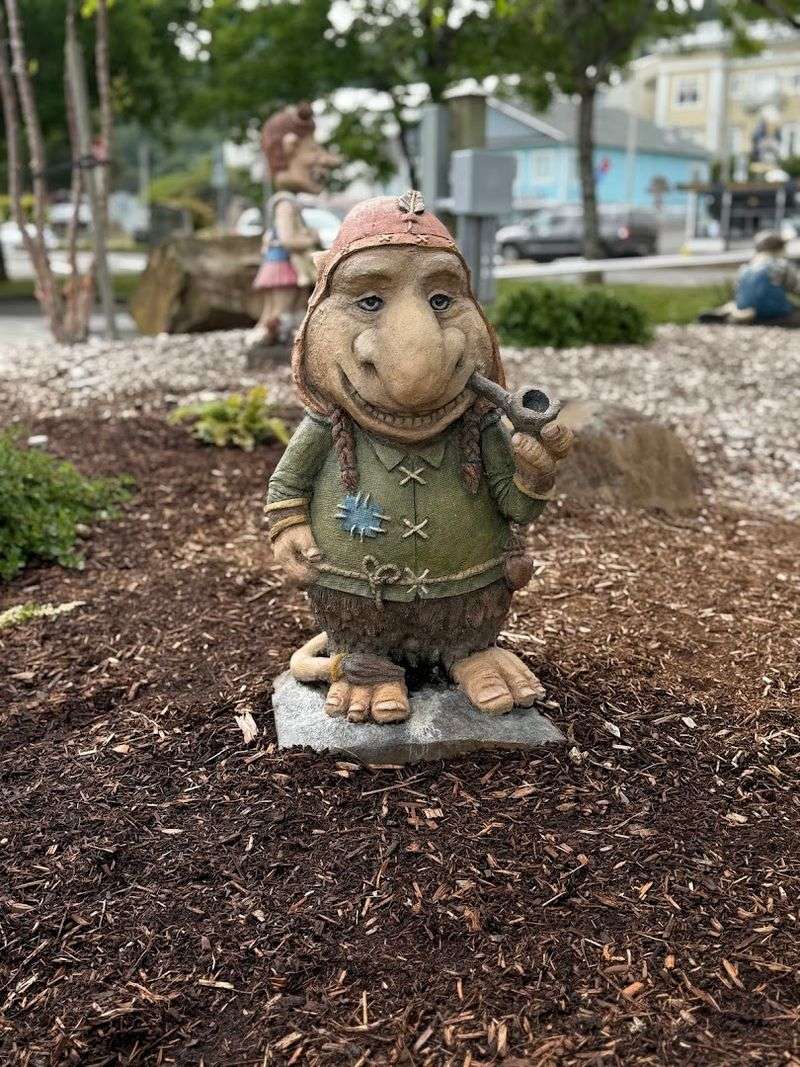
Astoria already has a strong lineup of parks and landmarks. The Garden of Surging Waves, the Astoria Column, and the Maritime Memorial Park are all worth your time.
The Nordic Heritage Park belongs in that same conversation.
It is small, yes. But small does not mean insignificant.
This park delivers history, art, culture, and river views all in one compact stop. That is a lot for a free visit.
The troll sculptures alone are worth seeing in person. Photos do not fully capture their quirky charm.
You need to stand next to one and appreciate the craftsmanship up close.
The park works well as part of a longer Riverwalk exploration. Pair it with a walk along the waterfront and a stop at one of Astoria’s nearby spots.
The whole area rewards slow, curious exploration.
Before leaving, I scanned one of the QR codes and kept reading for another ten minutes. That is the mark of a well-made experience.
It made me want more, not less.
Address: 1590 Marine Dr, Astoria, OR 97103
Dear Reader: This page may contain affiliate links which may earn a commission if you click through and make a purchase. Our independent journalism is not influenced by any advertiser or commercial initiative unless it is clearly marked as sponsored content. As travel products change, please be sure to reconfirm all details and stay up to date with current events to ensure a safe and successful trip.
