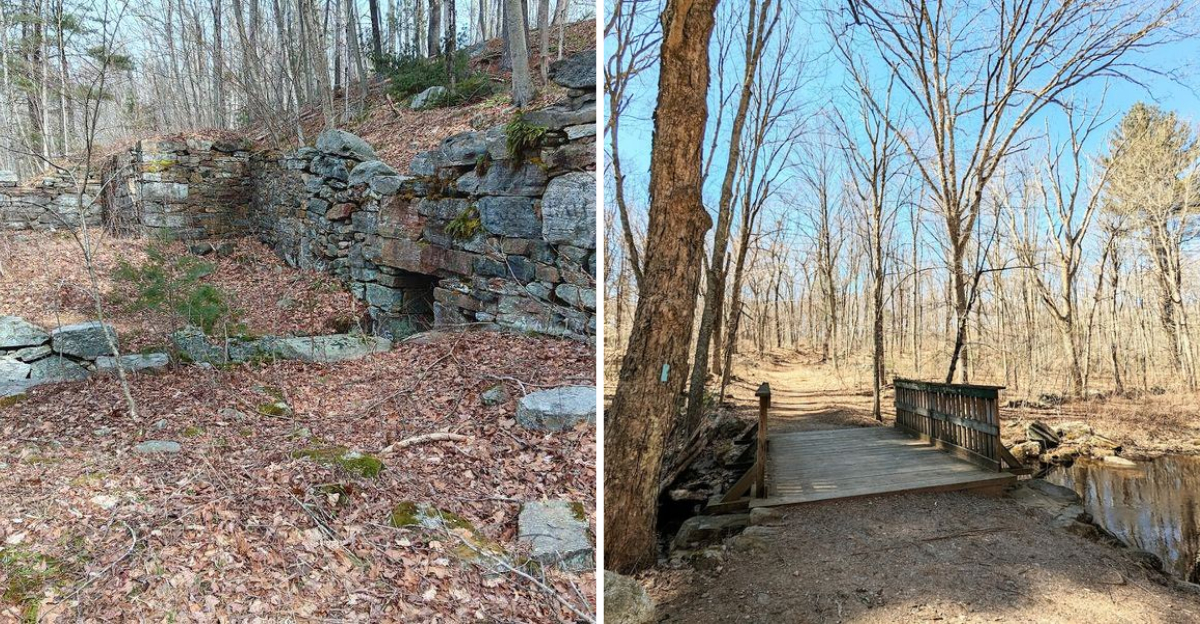
There is something about Gay City State Park in Hebron, Connecticut, that grabs you before you even reach the trailhead. The moment you step past the tree line, the forest gets quiet in a way that feels almost deliberate, like the woods are listening.
Scattered among the roots and moss are stone walls, cellar holes, and crumbling mill foundations that belong to a town that simply stopped existing over a century ago. I first heard about this place from a friend who described it as “a hike with a storyline,” and honestly, that is the most accurate thing anyone has ever said about it.
The ruins of Factory Hollow, later called Gay City, sit right alongside the trails, close enough to touch and strange enough to make you pause. Whether you are here for the history, the scenery, or the ghost stories that have followed this land for generations, Gay City delivers something most parks simply cannot.
The Forgotten Town That Started It All
Back in 1796, a group of Methodists left Hartford looking for a fresh start somewhere with fewer social restrictions. They settled in a hollow in what is now Hebron, Connecticut, calling the area Factory Hollow.
The community grew steadily, and the Gay family eventually became so prominent there that the whole settlement took on their name.
At its peak, Gay City was a functioning mill town with a sawmill, a woolen mill, gristmills, a paper mill, and a distillery all operating within its borders. It was not a quiet backwater; it was a working, breathing community with real industry and real people.
Then things started falling apart. Feuds, fires, and the slow drain of population to larger towns chipped away at the settlement over decades.
The burning of the main textile mill in 1885 was essentially the final blow. By the late 19th century, Gay City was empty.
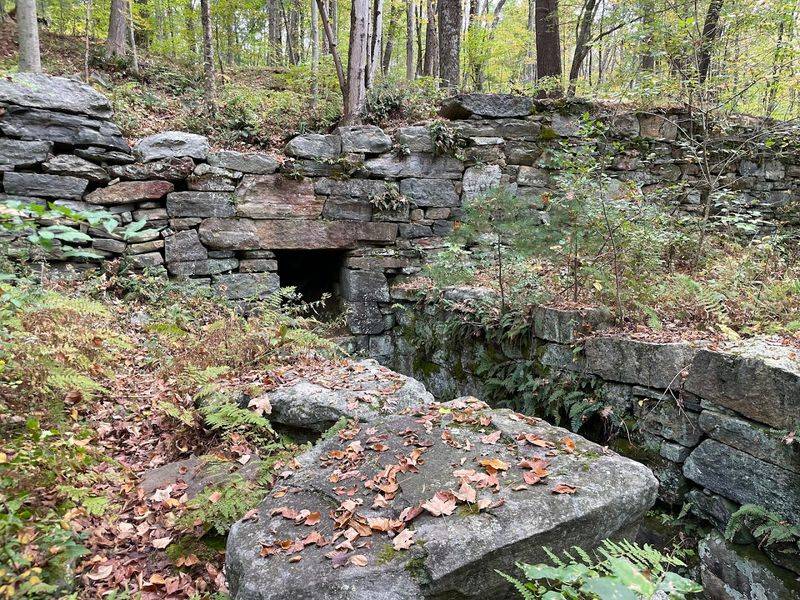
The state of Connecticut acquired the land in 1943, and it officially became a state park shortly after. What remains today are stone foundations, cellar holes, and walls that have outlasted every single person who once called this place home.
Miles of Trails Through Living History
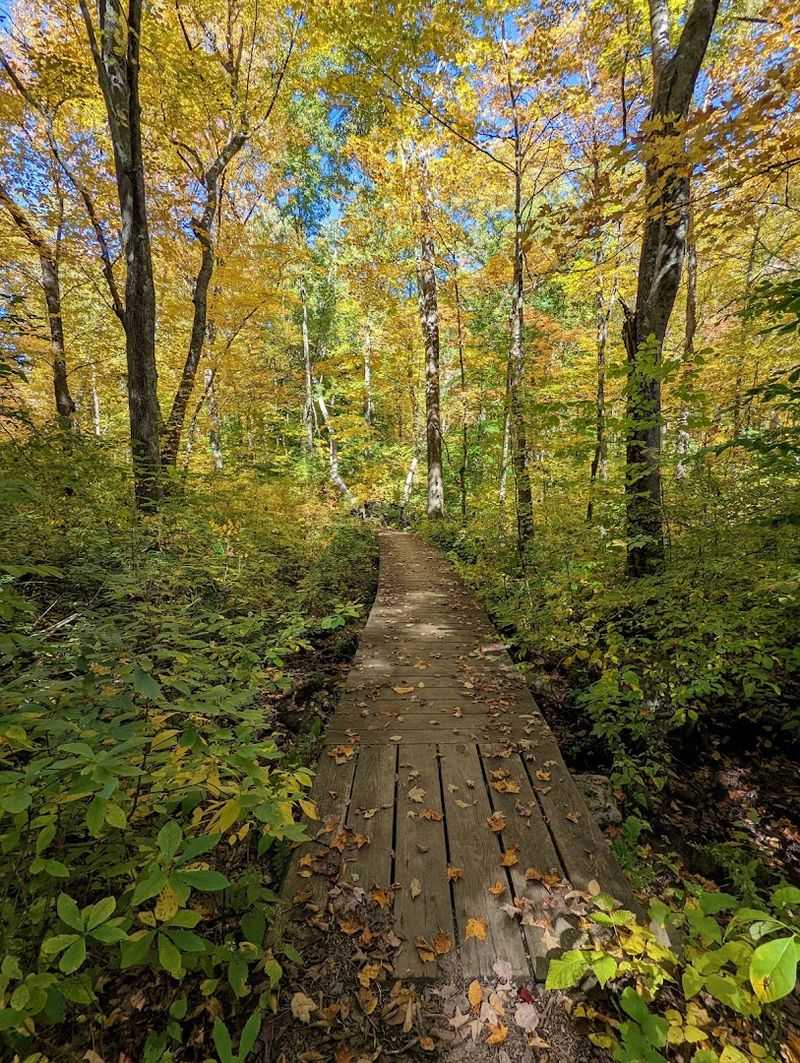
Gay City State Park covers more than 1,500 acres, and the trail network inside it is genuinely impressive. The park offers multiple marked routes including the Gay City Trail marked in blue, the Outer Loop in red, and the Pond View Trail in white, with connecting paths linking them throughout.
The red Outer Loop runs close to five miles and stays mostly flat, making it manageable for hikers of different fitness levels. I found it peaceful in a way that longer, more crowded trails rarely are.
Only a handful of other hikers passed by the whole time.
What makes these trails different from a standard forest walk is that history keeps showing up around every bend. Stone walls appear between the trees, remnants of property lines from a community that no longer exists.
Old foundations sit just off the path, half-swallowed by roots and leaves. The trails also wind past ponds and streams, so the scenery shifts constantly between woodland, water, and ruin.
Whether you go in summer with full green canopy overhead or in winter when the bare trees let you see deeper into the landscape, the park holds its character across every season.
The Paper Mill Walls Still Standing
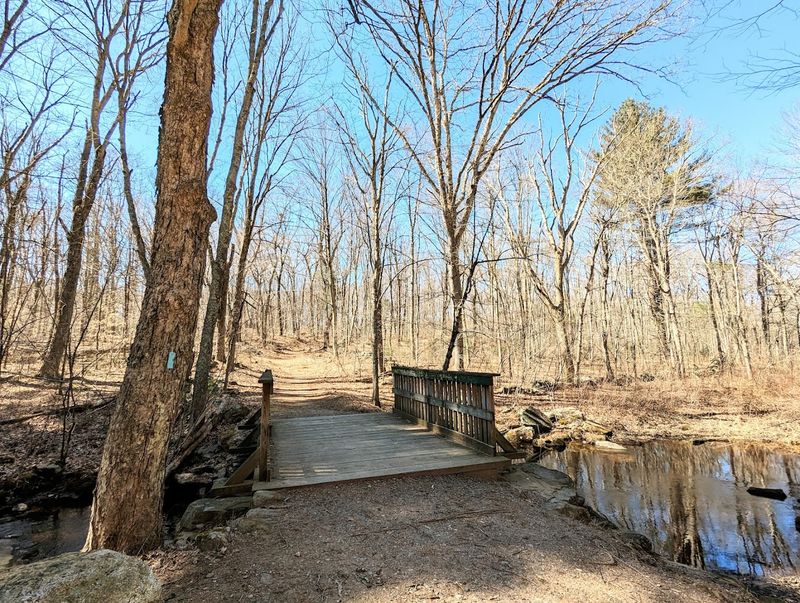
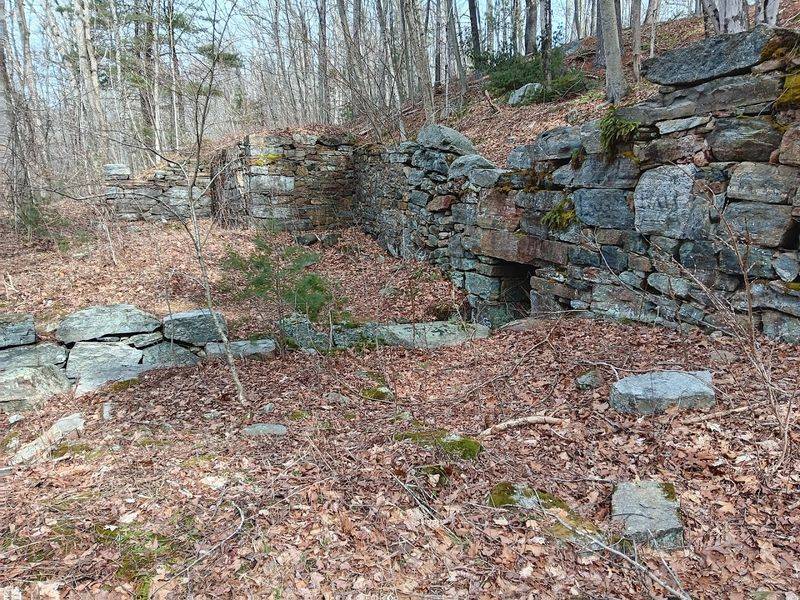
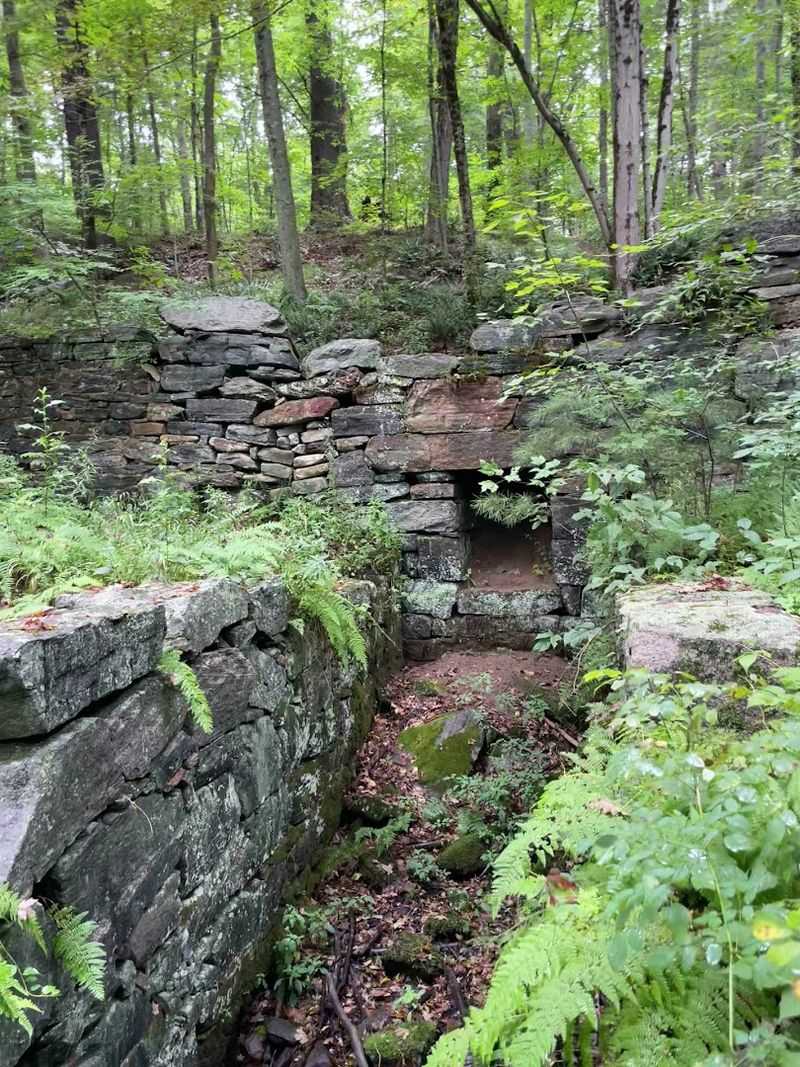
Out of everything left behind in Gay City, the paper mill walls are the most visually striking. They rise out of the forest floor like something from a fairy tale that took a dark turn, solid enough to feel permanent but worn enough to remind you how much time has actually passed.
The mill operated as part of the town’s industrial backbone, processing materials alongside the woolen and grist operations nearby. When the community collapsed, the buildings were not demolished so much as simply left behind.
Nature moved in slowly, and the walls absorbed decades of rain, frost, and root growth without fully giving way.
Getting close to them on the trail, you start to notice small details: the way certain stones are fitted together without mortar, the iron staining on the rock face from old hardware long since rusted away. It is the kind of place where you find yourself slowing down without meaning to.
Hikers frequently stop here for photos, and honestly it earns every single one of them. The walls have a presence that is hard to explain until you are actually standing a few feet away from them, listening to the creek running somewhere nearby.
The Cemetery That Is Easy to Miss
Most visitors drive right past the cemetery without realizing it is there. It sits just before the first parking lot on the right side of the road going into the park, small and easy to overlook because there are no prominent signs pointing toward it.
The gravestones inside are old and worn, some tilted at angles from years of freeze-thaw cycles shifting the ground beneath them. The names and dates are faded on many of the markers, but the ones still legible connect directly to the families who built and lived in Gay City during the 1800s.
Standing among them, you get a real sense of how tight-knit this community once was.
It is worth seeking out deliberately rather than hoping to stumble across it. A few visitors have noted that GPS mapping apps sometimes place the cemetery in the wrong spot, so keep an eye out as you pull into the park rather than relying on navigation.
The cemetery is not large, but it carries a quiet weight that sets the tone for the rest of the visit. Respecting the space is something most visitors seem to do naturally, which says a lot about the kind of people this park tends to attract.
Ghost Stories That Have Aged Like the Stone Walls
Gay City has ghost stories, and they are not the vague, made-up kind that get attached to any old building. The lore here has specific details that make it stick in your memory long after you leave the trail.
One of the most well-known tales involves a traveling jewelry peddler who disappeared in the area. His skeleton was later found in a charcoal pit, and the circumstances strongly suggested he had been killed for the valuables he carried.
The case was never solved. The other story involves a blacksmith who allegedly killed his teenage apprentice in a fit of rage, and tradition holds that the apprentice has been seen running through the woods ever since.
Paranormal investigators have visited the park over the years, claiming to capture EVPs and orb photographs near the ruins. Whether you believe any of that or not, the stories add a layer to the hike that is genuinely hard to shake.
Old-timers reportedly described hearing strange voices and seeing figures moving between the trees on quiet nights. The forest is atmospheric enough on its own, but knowing these stories while you walk through it makes every snapping twig feel slightly more significant than it probably is.
Swimming, Fishing, and the Pond That Anchors It All
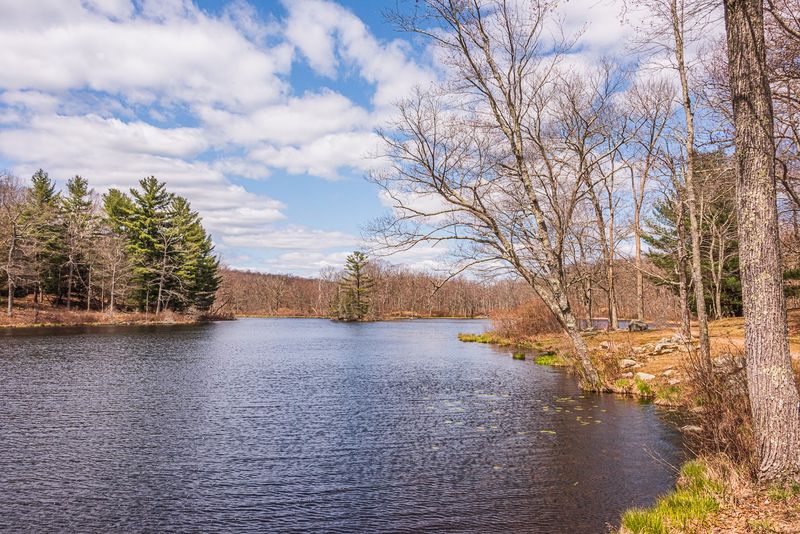
Not everything at Gay City is about ruins and ghost stories. The park has a genuinely lovely pond that draws swimmers and anglers throughout the warmer months, giving the whole place a relaxed, unhurried energy that balances out all the historical weight.
The pond is stocked, which makes it a reliable spot for fishing even if you do not have a favorite secret location. Families set up near the water with picnic gear, dogs wade in from the shallower edges, and the whole scene feels refreshingly low-key.
There is no lifeguard on duty during all hours, so swimmers should keep that in mind and look out for each other.
The swimming area has changed a bit over the years. What used to be a sandy beach has grown over with grass in places, giving it more of a natural shoreline feel than a traditional beach setup.
Some visitors find that charming rather than disappointing. The pond also anchors the visual center of the park in a way that makes it feel like a destination rather than just a backdrop.
Early evening visits when the light hits the water at a low angle are particularly worth the timing effort.
Year-Round Reasons to Keep Coming Back
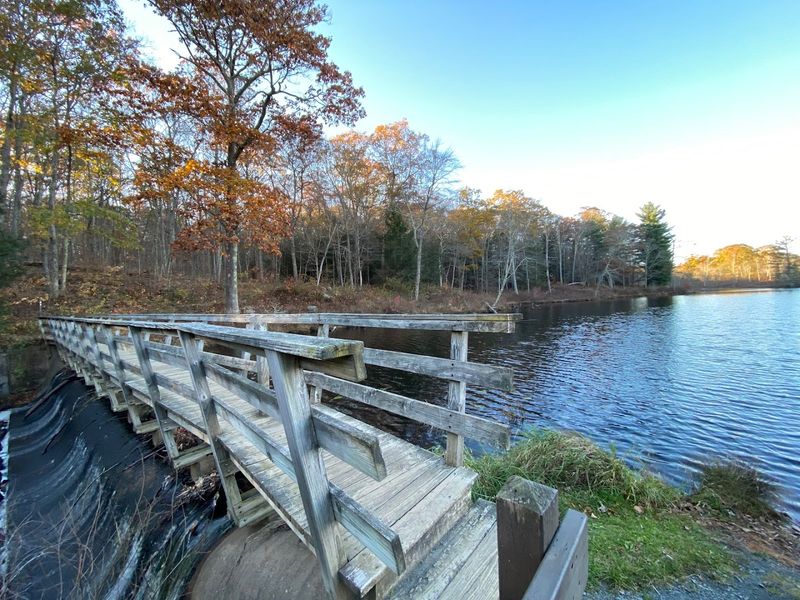
One of the things visitors mention repeatedly about Gay City is that it works in every season. That is not something every park can honestly claim.
Summer brings swimmers and picnickers, fall turns the tree canopy into something worth photographing, and winter transforms the whole park into a genuinely peaceful snowshoeing and cross-country skiing destination.
The park even hosts organized events, including the Hartford Marathon’s annual Summer Solstice Trail Run, which draws runners who appreciate a course with character. Trail maps are posted throughout the park, which helps first-timers navigate without getting turned around.
Bug spray is worth bringing in late spring and summer, particularly for black flies, which can be persistent in shaded areas near the water.
Winter visits require a bit of extra planning since the main gate closes and visitors need to park at the first lot and hike in. Icy roads and muddy trails are real considerations, so solid hiking boots make a difference.
But the park in winter has a stillness that is hard to find elsewhere. The bare trees open up sightlines that the summer canopy hides, and the ruins look even more exposed and dramatic against a cold grey sky.
There is always a new version of Gay City waiting, no matter when you show up.
Address: 435 North St, Hebron, CT 06248
