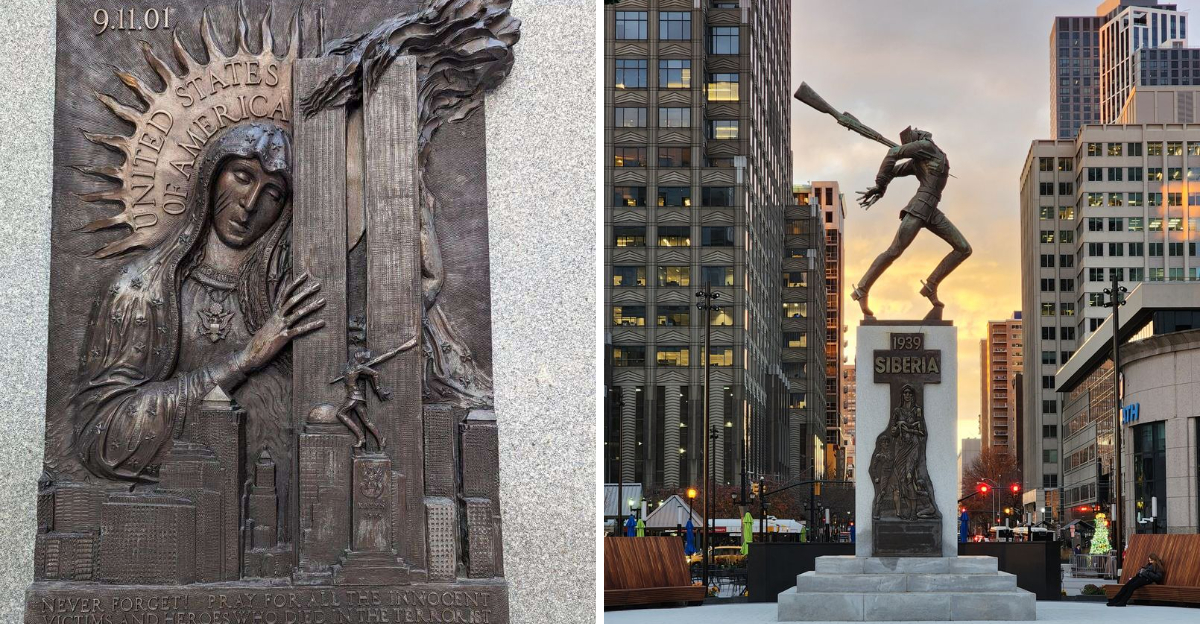
Right along the Jersey City waterfront, I stumbled upon a monument that refuses to be ignored. The Katyn Memorial towers ten meters high, bronze and unflinching, depicting a bound Polish soldier in a moment of unbearable suffering.
It’s not just art; it’s a confrontation with history, a reminder of the 22,000 Polish officers, intellectuals, and prisoners massacred in 1940.
Standing there, I felt the weight of decades of debate and emotion. Some visitors recoil at the raw imagery, while others insist its honesty is exactly what keeps memory alive.
Either way, you can’t walk past without stopping, without thinking.
What struck me most was the contrast: families snapping skyline photos just steps away, history buffs tracing the details, and casual passersby suddenly caught in a story far bigger than themselves.
It’s a collision of art, memory, and public space – and it lingers long after you leave Exchange Place.
For me, the Katyn Memorial isn’t just a monument. It’s a question carved in bronze: how do we remember tragedy, and how much truth can we bear in public view?
A Monument That Refuses To Look Away From History’s Darkest Moments
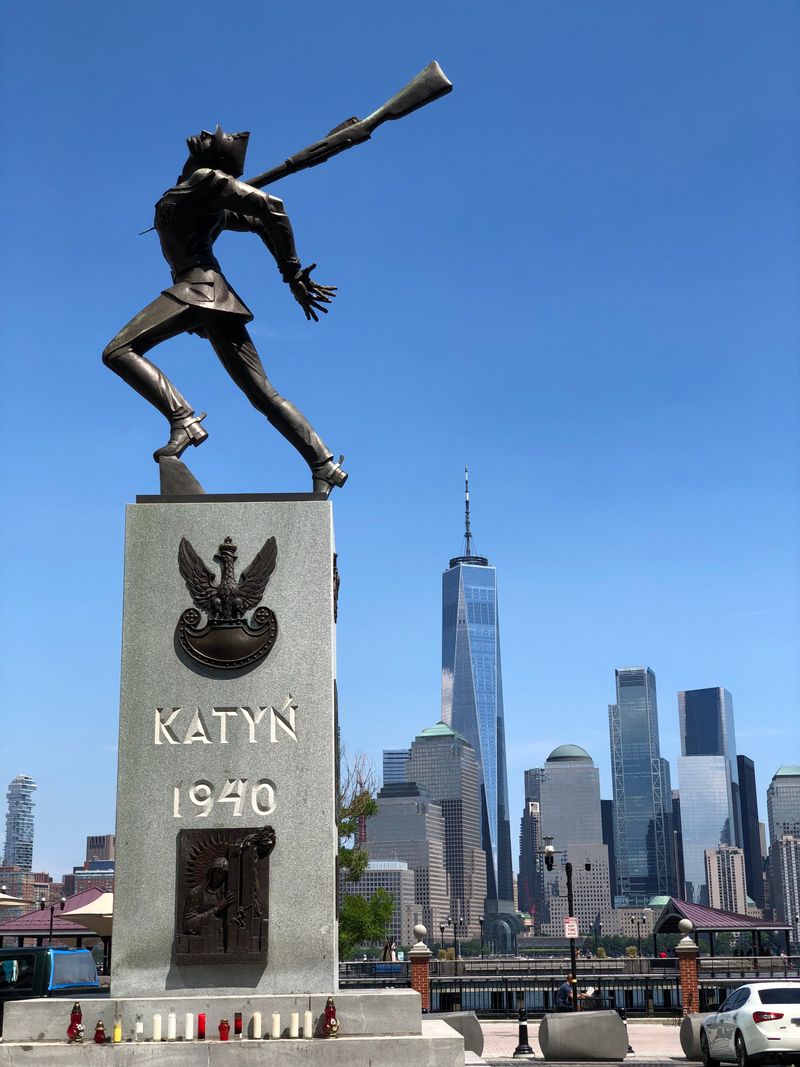
Walking up to this memorial for the first time hits differently than seeing photos online. The bronze figure towers above visitors, showing a Polish soldier with his hands bound behind his back, impaled by a bayoneted rifle in a pose that captures the final moments of unimaginable cruelty.
Unlike traditional war memorials that show heroes in triumphant poses, this sculpture forces viewers to confront the brutal reality of what happened in the Katyn Forest in 1940.
The artist didn’t hold back on the details, which is exactly why some Jersey City residents have called for its removal or relocation over the years. Critics argue that the graphic violence depicted makes it unsuitable for a public space where families with young children gather.
Supporters counter that softening the image would dishonor the victims and erase the truth of Soviet war crimes that were denied for decades.
Standing at the base, you’ll notice detailed engravings that tell the story of the massacre, explaining how Stalin’s secret police systematically executed Polish military officers, intellectuals, doctors, and clergy. The memorial doesn’t just commemorate soldiers who died in battle.
It specifically remembers people who were prisoners of war, murdered not in combat but through calculated genocide designed to eliminate Poland’s leadership class.
What makes this monument controversial isn’t just its graphic nature but also its timing and location. Erected in 1991, it arrived during a period when the full truth about Soviet atrocities was finally being acknowledged internationally.
Placing it prominently in Jersey City, with the Manhattan skyline as backdrop, ensured maximum visibility for a story that had been suppressed for fifty years.
The Historical Tragedy That Still Echoes Through Polish Communities Worldwide
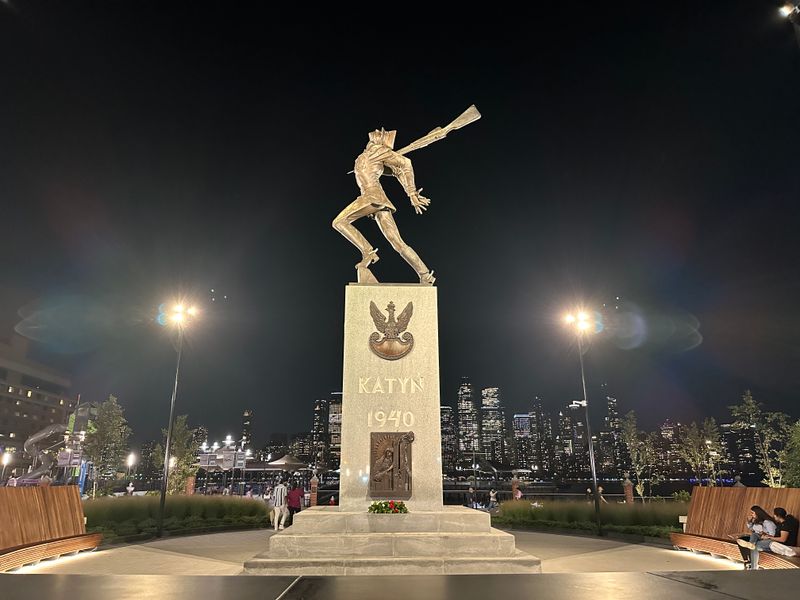
Spring 1940 brought unspeakable horror to the Katyn Forest near Smolensk, Russia, where Soviet secret police executed approximately 22,000 Polish prisoners. These weren’t random casualties of war but carefully selected targets: military officers, police officials, intellectuals, professors, doctors, lawyers, and engineers.
Stalin’s regime aimed to decapitate Polish society by eliminating anyone who might lead resistance against Soviet occupation.
For decades, the Soviet Union blamed Nazi Germany for the massacre, and many Western governments stayed silent to maintain their wartime alliance with Stalin. Polish communities worldwide knew the truth but lacked the political power to force acknowledgment.
Families of victims lived with uncertainty, unable to properly mourn or seek justice while official histories painted a false picture.
The truth finally emerged in 1990 when Soviet leader Mikhail Gorbachev officially admitted Soviet responsibility. Documents revealed that Stalin personally signed the execution orders, making this not just a wartime atrocity but a deliberate act of genocide.
For Polish Americans, especially those in New Jersey’s large Polish community, this acknowledgment came too late for many survivors but opened the door for memorials like the one at Exchange Place.
Understanding this history explains why the monument generates such strong emotions even now in 2026. For descendants of victims, the memorial represents long-denied recognition of their ancestors’ suffering.
For others, it serves as a reminder that powerful nations can commit terrible crimes and hide them for generations. The controversy isn’t really about the statue itself but about whose stories get told in public spaces and how graphic those tellings should be.
Why Jersey City Became Home To This Powerful Statement
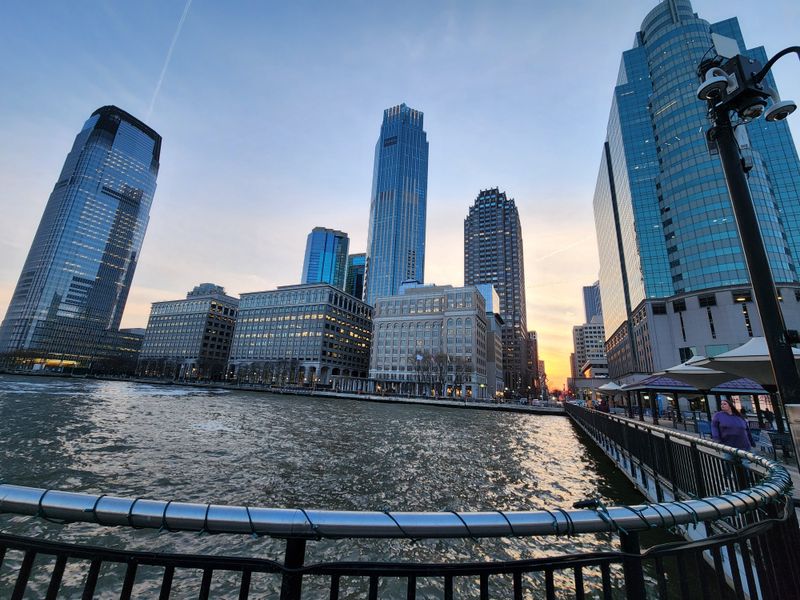
Jersey City might seem like an unexpected location for a memorial about Polish history, but the choice makes perfect sense when you know the area’s demographics. New Jersey has long been home to one of the largest Polish American populations in the United States, with communities that maintained strong cultural ties and historical memory across generations.
Exchange Place, a bustling waterfront area with constant foot traffic, guaranteed that the memorial would reach beyond just Polish visitors.
The site selection also carries symbolic weight that shouldn’t be overlooked. Positioning the memorial with the Manhattan skyline and Statue of Liberty visible in the background creates a visual connection between Polish suffering and American freedom.
The implicit message suggests that America, as a refuge for immigrants and champion of democracy, provides the perfect setting to acknowledge truths that authoritarian regimes tried to bury.
Local Polish organizations worked for years to make this memorial happen, raising funds and navigating political channels to secure the prominent location. Their persistence reflected a determination that the massacre wouldn’t be forgotten as survivor generations passed away.
By placing the monument in a public square rather than a cemetery or ethnic enclave, they ensured that the story would reach people who might never otherwise learn about Katyn.
The waterfront location also means the memorial exists in a space where people come for recreation, not just somber reflection. Families eating from food trucks, joggers passing by, and tourists snapping skyline photos all encounter the statue unexpectedly.
This juxtaposition of leisure and historical tragedy creates the tension that fuels ongoing debates about whether the memorial belongs in such a busy, casual setting.
The Artistic Vision Behind Bronze That Makes People Uncomfortable
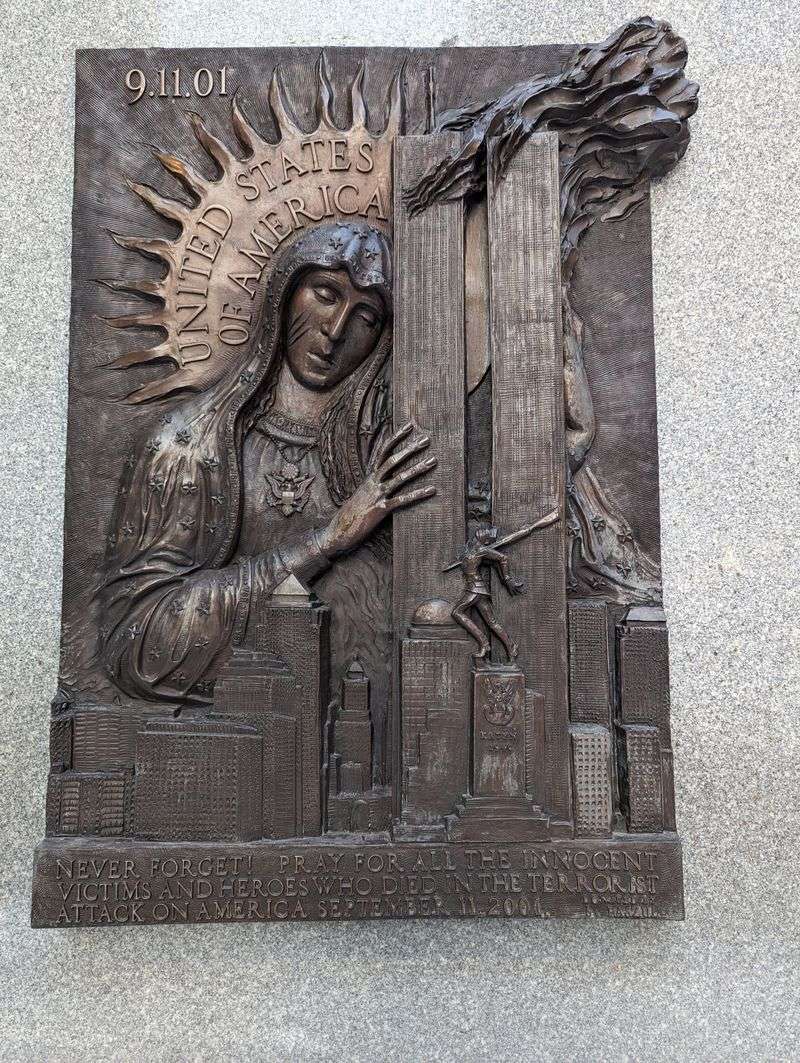
Sculptor Andrzej Pitynski created something that art critics call unflinchingly honest and detractors label gratuitously violent. His design choice to show the soldier at the moment of death, rather than in a heroic pose, breaks from traditional memorial conventions.
The figure’s contorted position, mouth open as if screaming, hands bound helplessly behind his back, communicates suffering in a way that polite monument design typically avoids.
Pitynski, who died in 2020, defended his artistic choices throughout his life. He argued that sanitizing the memorial would be a second betrayal of the victims, allowing viewers to feel comfortable when comfort wasn’t appropriate.
The graphic nature forces an emotional response, whether horror, sadness, or anger, preventing the passive glancing that people give to most public art.
The bronze itself has developed a distinctive patina over three decades, with weathering creating variations in color that add to the sculpture’s impact. Some sections shine brighter where visitors have touched the memorial, creating an unintended interaction between present observers and the historical tragedy.
The material choice of bronze ensures the monument will endure for centuries, outlasting current controversies.
From a technical standpoint, creating a ten-meter bronze statue required extraordinary skill in both design and engineering. The figure appears to defy gravity, leaning backward in an arch that needed careful internal support structures.
This technical achievement sometimes gets lost in debates about content, but the sculpture represents significant artistic accomplishment regardless of one’s feelings about its subject matter or graphic depiction.
How The Memorial Became A Flashpoint For Community Debates
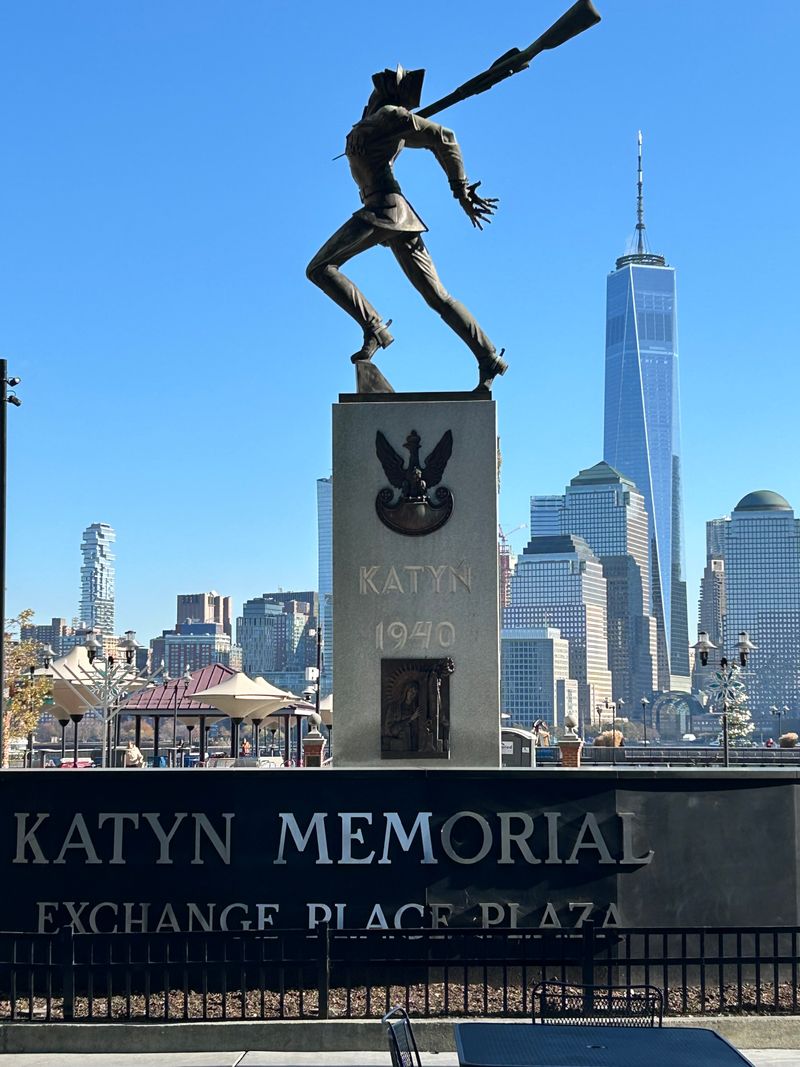
Shortly after installation in 1991, the memorial became a focal point for discussions about public art, historical memory, and community standards. Some Jersey City residents, particularly those without personal connections to Polish history, questioned whether such a graphic depiction belonged in a family-friendly public space.
Letters to local newspapers debated whether children should be exposed to such violent imagery, even in service of historical education.
Polish American community leaders pushed back strongly against any suggestion of removal or modification. They argued that moving the memorial to a less visible location would defeat its purpose of ensuring that Katyn wouldn’t be forgotten.
The debate revealed tensions about whose history deserves prominent public commemoration and whether immigrant communities have the right to shape shared civic spaces according to their own historical narratives.
In recent years, particularly around 2018 and again in 2024, renewed calls for relocation emerged as Jersey City’s waterfront underwent extensive development. Some developers and city planners suggested that the memorial didn’t fit the aesthetic vision for a modern, upscale waterfront district.
These proposals sparked immediate backlash, with Polish organizations mobilizing supporters and gathering thousands of signatures on petitions to keep the memorial in its original location.
The debates often reflect broader cultural tensions about how America should remember difficult histories. Some argue that public spaces should be uplifting and comfortable, while others insist that confronting historical atrocities serves an essential educational purpose.
The Katyn Memorial stands at the intersection of these competing visions, making it a useful case study for similar controversies playing out across the country regarding Confederate monuments, Indigenous history, and other contested memories.
What Visitors Actually Experience When They Visit Today
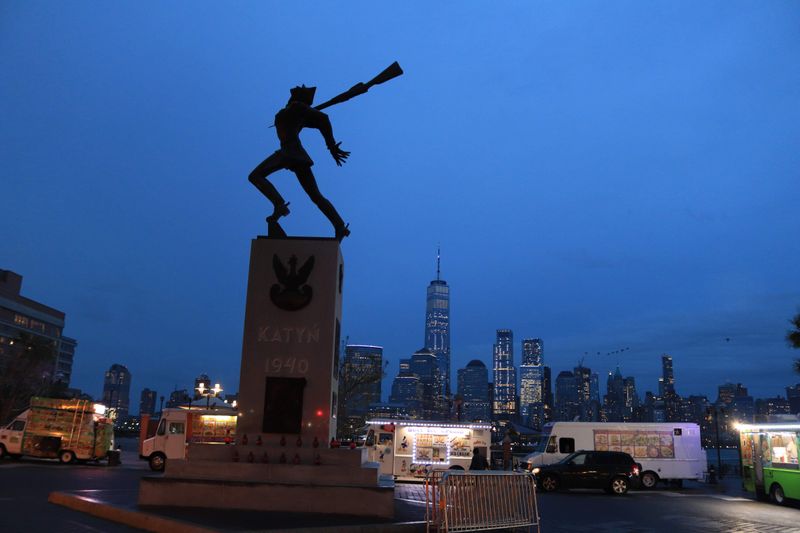
Approaching the memorial in 2026, you’ll find a well-maintained plaza with updated informational plaques that provide historical context in multiple languages. The site received a renovation a few years ago that improved accessibility, added better lighting for evening visits, and enhanced the landscaping around the sculpture.
These improvements addressed some critics’ concerns while preserving the memorial’s essential character and prominent placement.
Most visitors fall into three categories: Polish Americans or other Eastern Europeans who come specifically to pay respects, history enthusiasts who seek out the memorial after learning about Katyn, and casual waterfront visitors who stumble upon it unexpectedly. The reactions from that third group remain the most varied and interesting, ranging from curious engagement with the historical plaques to visible discomfort and quick departures.
On weekends, the area bustles with activity that creates the controversial juxtaposition critics mention. Food trucks line up nearby serving everything from dosas to Mexican fare, while families spread picnic blankets and children play.
The memorial stands in the midst of this recreational scene, creating an unavoidable confrontation between leisure and historical tragedy. Some people find this combination disrespectful, while others see it as life affirming, suggesting that remembering past horrors shouldn’t prevent present joy.
Photography of the memorial has become increasingly common, particularly with the Manhattan skyline providing a dramatic backdrop. Social media posts often focus more on the aesthetic composition than the historical significance, which frustrates some Polish community members who feel the memorial’s message gets lost in Instagram-worthy sunset shots.
Others appreciate any attention that might lead people to research Katyn’s history.
The Educational Mission That Supporters Say Justifies Everything
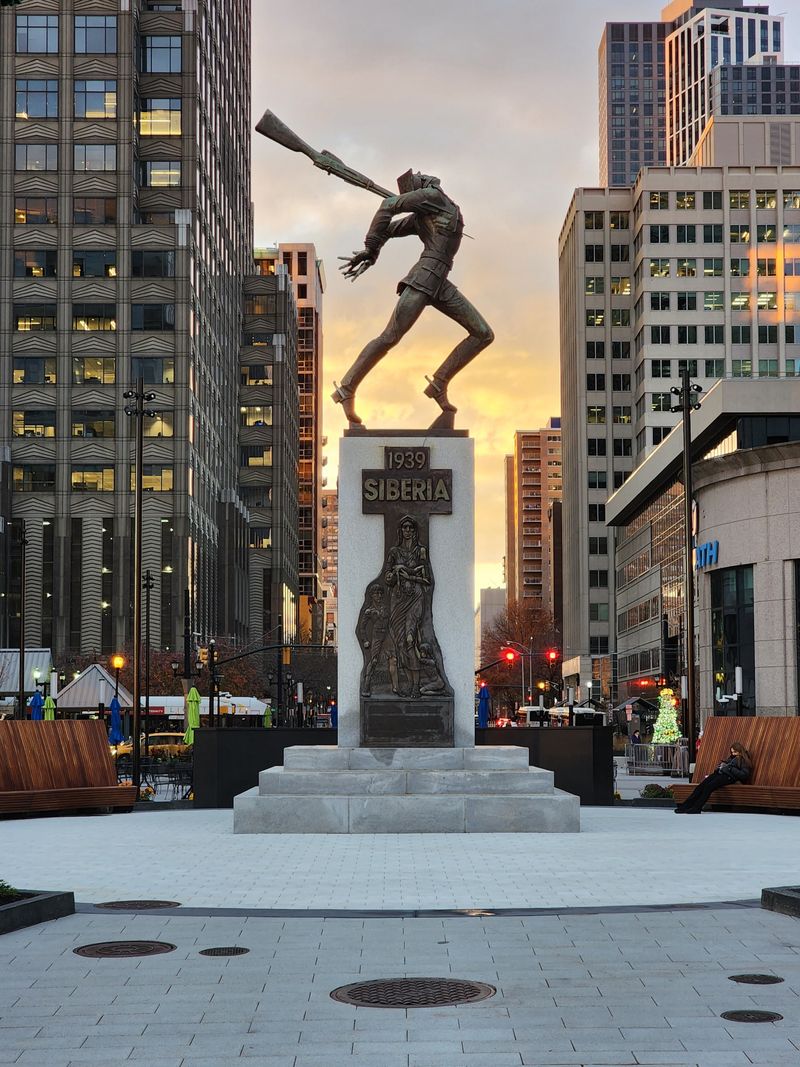
Advocates for the memorial emphasize its educational value, particularly for younger generations who might never learn about Soviet atrocities in standard school curricula. World War II education typically focuses on Nazi crimes, sometimes leaving Soviet actions under-examined despite the millions who suffered under Stalin’s regime.
The memorial serves as a starting point for conversations about totalitarianism, genocide, and the importance of historical truth.
Local schools occasionally organize field trips to the memorial, though these visits remain somewhat controversial. Teachers must navigate parental concerns about age-appropriate content while recognizing the value of confronting difficult history.
Educational materials developed by Polish American organizations provide context that helps students understand not just what happened at Katyn but why it was covered up for fifty years and what that teaches about power and propaganda.
The memorial’s plaques explain that Katyn wasn’t an isolated incident but part of a broader pattern of Soviet deportations and executions affecting hundreds of thousands of Poles. Reading these inscriptions, visitors learn about the Siberian deportations, forced labor camps, and systematic attempts to destroy Polish national identity.
This broader context transforms the memorial from a single-tragedy commemoration into a witness against totalitarian violence in all its forms.
For supporters, the discomfort the memorial provokes is precisely the point. They argue that comfortable, sanitized history lessons fail to convey the reality of human suffering and evil.
If the sculpture makes people uneasy, perhaps that unease motivates them to research the history, question official narratives, and think more critically about how nations remember or forget their crimes. Educational impact, from this perspective, requires emotional impact.
How Modern Geopolitics Keep This Old Memorial Feeling Relevant
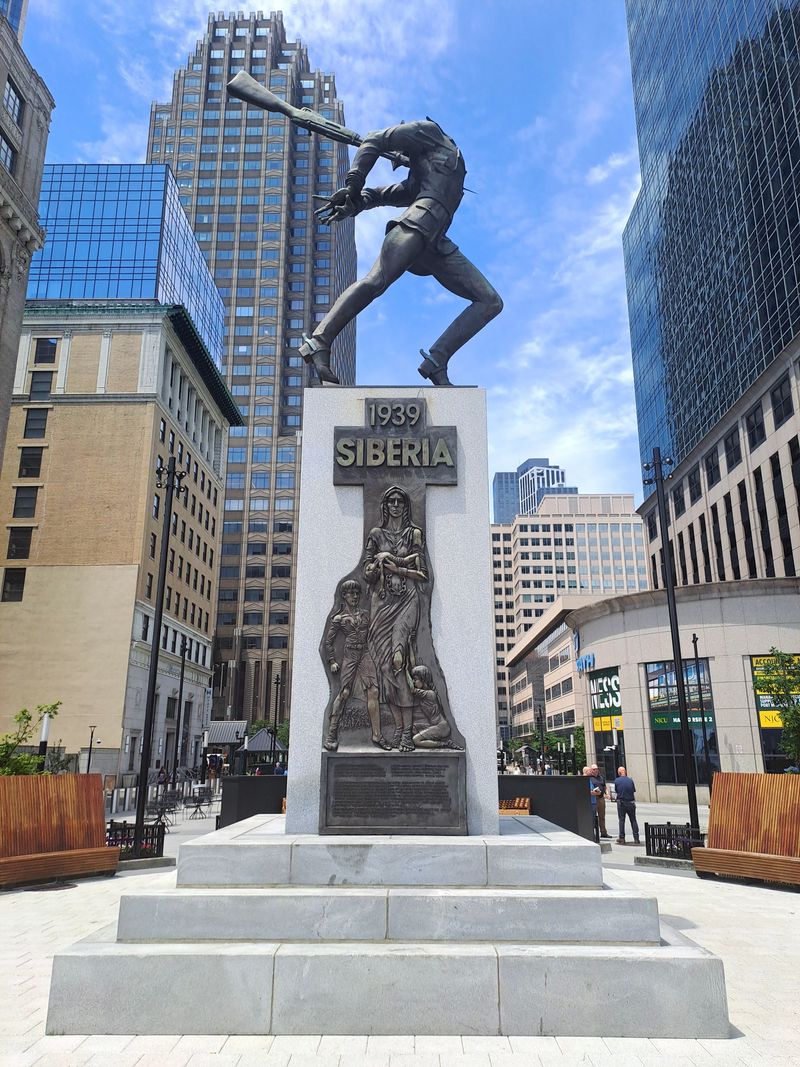
Russia’s 2022 invasion of Ukraine gave the Katyn Memorial unexpected contemporary relevance, with many visitors drawing parallels between Soviet-era atrocities and current Russian actions. People began leaving Ukrainian flags at the memorial’s base alongside traditional Polish tributes, creating a visual connection between historical and present-day suffering.
This evolution shows how memorials can take on new meanings as geopolitical situations change.
The parallels aren’t subtle: both situations involve a powerful authoritarian state attacking a smaller neighbor, both include evidence of war crimes against civilians, and both feature Russian denials and disinformation campaigns. For Polish Americans who remember fighting to get Soviet crimes acknowledged, watching Russia deny documented atrocities in Ukraine feels painfully familiar.
The memorial serves as a reminder that nations can commit terrible acts and spend decades lying about them.
Some political figures have used the memorial as a backdrop for statements about standing firm against Russian aggression, though this politicization makes others uncomfortable. There’s ongoing tension between honoring the memorial’s original purpose and allowing it to become a prop for contemporary political messaging.
Polish community leaders generally welcome attention that highlights Soviet crimes but worry about the memorial being reduced to a talking point in current debates.
Younger visitors who might have dismissed the memorial as ancient history now see it differently in light of Ukraine. Social media posts from 2022 onward show increased engagement with the monument’s history, with people explicitly connecting past and present.
This renewed relevance has strengthened arguments for keeping the memorial in its prominent location, as supporters note that the lessons of Katyn remain urgent rather than merely historical.
The Surprising Mix Of Activities That Happen Around The Monument
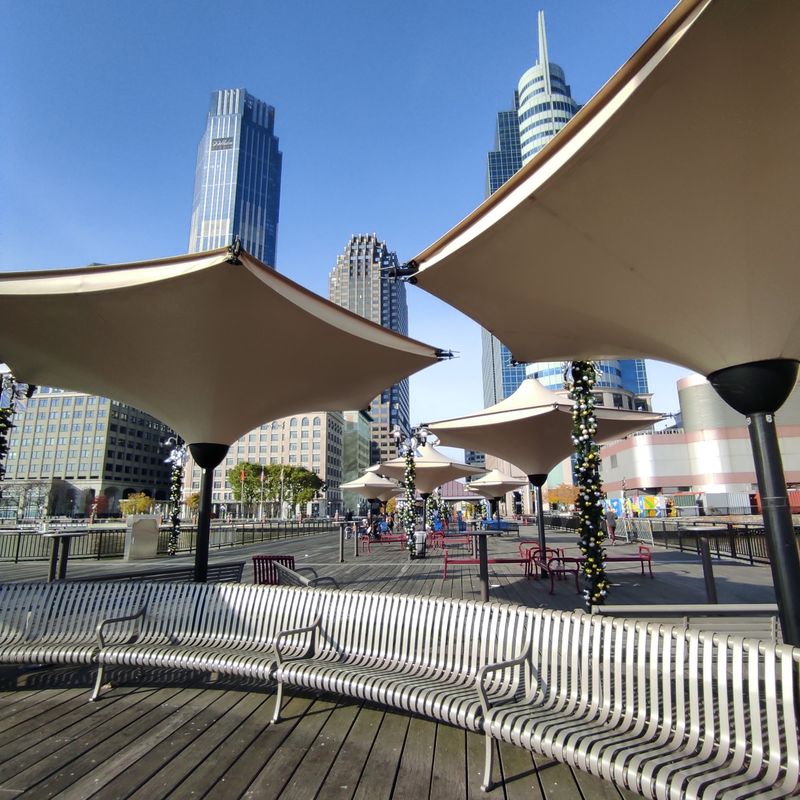
Perhaps nothing fuels controversy more than the cheerful weekend scene that unfolds around the memorial. Food trucks gather regularly at Exchange Place, drawing crowds who eat, socialize, and enjoy Hudson River views while the bronze soldier suffers eternally behind them.
Joggers and cyclists zip past, children chase each other around the plaza, and couples take selfies with Manhattan in the background, sometimes accidentally including the memorial.
This mix of solemnity and celebration strikes different people differently. Some find it offensive that people would eat ice cream and laugh within sight of a genocide memorial.
Others argue that life continuing, people finding joy and community, represents the ultimate victory over those who tried to destroy the Polish nation. The debate touches on deeper questions about how societies should integrate difficult histories into daily life rather than segregating them in separate memorial spaces.
The food truck scene has become particularly popular, with vendors offering diverse cuisines that reflect Jersey City’s multicultural character. Reviews mention everything from dosa to halal food to Mexican grills, creating a weekly festival atmosphere.
For many regular visitors, the memorial simply becomes part of the landscape, a familiar landmark in their recreational routine rather than a focus of contemplation.
Polish community members have mixed feelings about this casual atmosphere. Some appreciate that the memorial exists in a living, active space rather than a forgotten corner where only dedicated visitors would see it.
Others wish for more reverence and perhaps barriers that would create psychological distance between the memorial and surrounding activities. Annual commemorative ceremonies on April 13th, the massacre’s anniversary, temporarily transform the space into something more formally solemn.
Why This Debate Will Likely Continue For Decades To Come
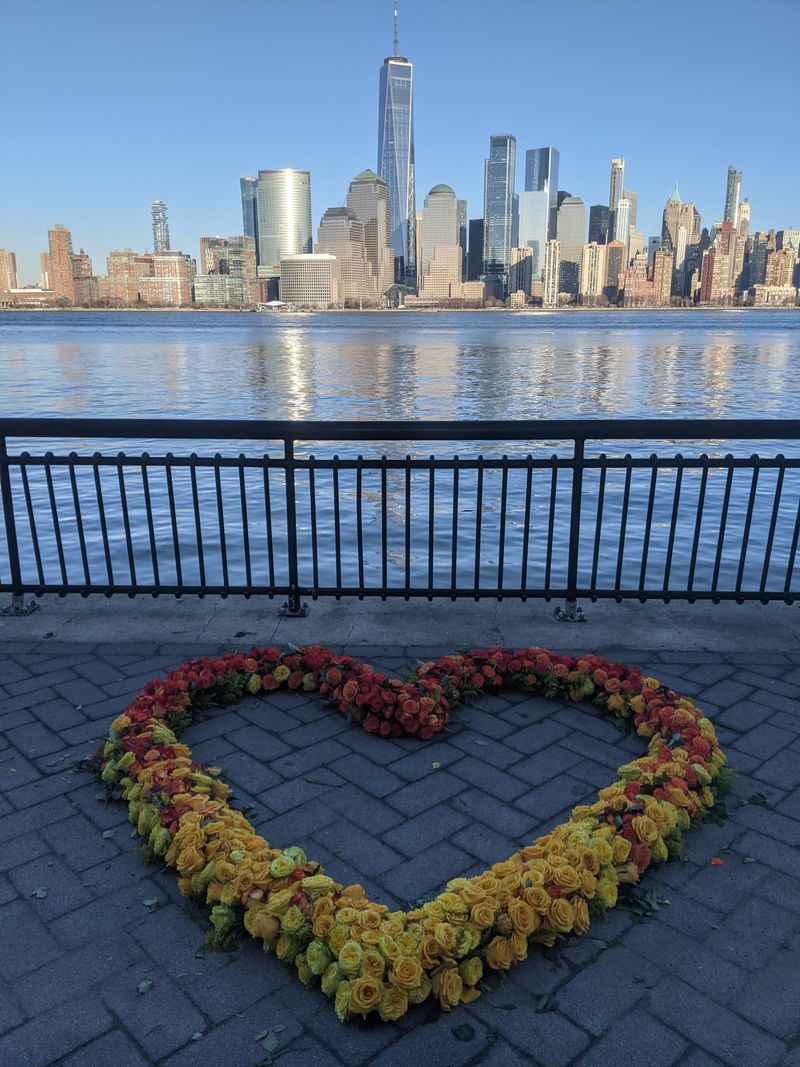
As Jersey City continues developing its waterfront into prime real estate, pressure on the memorial’s location will likely intensify. Developers envision sleek residential towers, upscale retail, and carefully curated public spaces that attract wealthy residents and tourists.
A graphic sculpture commemorating a nearly century-old massacre doesn’t fit neatly into that vision, ensuring that debates about relocation or modification will resurface periodically.
The Polish American community’s determination to preserve the memorial in its current location remains strong but faces demographic challenges. Younger generations, while proud of their heritage, may not feel the same visceral connection to Katyn that their grandparents did.
Maintaining political will to fight relocation attempts requires ongoing education and community engagement that keeps the memorial’s significance alive across generational transitions.
Broader cultural conversations about public monuments, accelerated by recent debates over Confederate statues and colonial-era figures, create a complex environment for the Katyn Memorial. While most people distinguish between memorials to victims versus tributes to perpetrators, the general scrutiny of public monuments means nothing is immune from reconsideration.
The memorial’s supporters must continually articulate why this particular monument deserves its prominent placement.
Looking ahead to 2030 and beyond, the memorial will likely remain exactly where it stands, protected by political considerations and genuine recognition of its historical importance. Jersey City’s Polish community, though smaller than in previous decades, maintains enough influence to block removal, and few politicians want to be seen as erasing genocide history.
The controversy will continue not because the memorial will move but because its presence keeps forcing uncomfortable questions about memory, public space, and whose stories deserve prominent telling.
Dear Reader: This page may contain affiliate links which may earn a commission if you click through and make a purchase. Our independent journalism is not influenced by any advertiser or commercial initiative unless it is clearly marked as sponsored content. As travel products change, please be sure to reconfirm all details and stay up to date with current events to ensure a safe and successful trip.
